Climate Change
Standard: 7.2E.2 Describe the composition of
Earth’s atmosphere, how it has changed over
time, and implications for the future.
Tectonic plate motion has
contributed to long-term
climate change over billions
of years. (Still Moving)
Our continents once fit
together as a single
landmass called Pangaea.
What are some natural causes of
climate change?
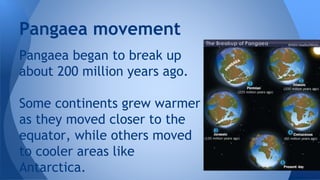
Pangaea began to break up
about 200 million years ago.
Some continents grew warmer
as they moved closer to the
equator, while others moved
to cooler areas like
Antarctica.
Pangaea movement
Particles in the Atmosphere (dust) that
reflect sun’s energy back to space and
lower temperature of earth temporarily.
● Asteroid impacts send up large amounts.
○ K-T Boundary asteroid in Mexico 65 million
years ago. (No more Dinos)
● Volcanic eruptions send up ash.
○ Super-volcanoes have caused global
extinction events.
Other natural causes of climate
change
Weather changes frequently. Patterns in
weather are the result of changes in the
way energy is distributed around Earth.
This includes:
● Sun Cycles
● El Nino or La Nina
● Ice Ages
Repeating patterns of climate
change
Repeating pattern of climate
change.
Sunspot cycle last 11 years.
Minor effect on Earth’s
temperatures.
Sun Cycles
Extreme Ultra-violet Image
During El Nino years, ocean
temperatures are higher than usual.
● Causes global weather patterns
La Nina years create cooler than
normal ocean temperatures.
Conditions usual alternate and can lead to
droughts and flooding.
El Nino and La Nina
An ice age is a long period of
cooling during which ice sheets
spread beyond the polar regions.
Geologic evidence indicates ice
ages occurring every 200 million
years.
Ice Ages
Last one peaked 20,000 years ago
The greenhouse effect is the
process by which gases in the
atmosphere absorb and reflect
heat back to Earth.
● Without this, Earth would be cooler
● Humans Burn Fossil Fuels
● Humans Deforest (cut down trees)
How do humans affect climate
change?
Since 1950’s scientists have
measured increasing levels of CO2.
During this same period, average
global surface temperature has
also been rising.
Burning Fossil Fuels
A carbon sink removes carbon
from the atmosphere.
Deforestation is the mass
removal of trees for farming,
timber, and land development.
Loss of trees represents a loss of
an important carbon sink.
Deforestation
Global Warming is a gradual increase
in average global temperatures.
● effects the Atmosphere
● effects the Hydrosphere
and Cryosphere
● effects the Biosphere
What are some predictable
effects of climate change?
Scientist predict that Global
Warming will generate more sever
weather.
● Bigger and Badder Storms
As much as half of Earth’s surface
may be affected by drought.
Effects on the Atmosphere
Ice is melting due to increased
temperatures.
● Global sea levels rise
● Increased flooding
● Loss of habitat
Effects on the Hydrosphere and
Cryosphere
Scientist predict that Global
Warming will change ecosystems.
● Threaten survival of plants
and animals. (some may
benefit)
● Effect crops and livestock
Effects on the Biosphere
Data is collected and
compared over long term.
(since late 1800’s)
Look at rates of change
(speed)
How do we make climate
predictions?
❏ Reduce Greenhouse Gas Emissions
❏ Reduce the Rate of Deforestation
❏ Use New Technologies
How can people reduce their
impact on climate change?
In 1997 the Kyoto Protocol was adopted.
● International treaty to reduce CO2 emissions.
● 191 Countries have signed it.
Individuals can help by:
● Conserving energy.
● Increasing efficiency
● Reducing use of fossil fuels
Reduce Greenhouse gas
Emissions
Deforestation contributes up
to 20% of greenhouse gases
globally.
Planting trees and supporting
reforestation programs are
ways to increase carbon sinks.
Reduce the Rate of Deforestation
Energy-efficient practices
● homes
● businesses
● industry
● transportation
Use New Technologies

Climate Change

  • 1.
    Climate Change Standard: 7.2E.2Describe the composition of Earth’s atmosphere, how it has changed over time, and implications for the future.
  • 2.
    Tectonic plate motionhas contributed to long-term climate change over billions of years. (Still Moving) Our continents once fit together as a single landmass called Pangaea. What are some natural causes of climate change?
  • 3.
    Pangaea began tobreak up about 200 million years ago. Some continents grew warmer as they moved closer to the equator, while others moved to cooler areas like Antarctica. Pangaea movement
  • 4.
    Particles in theAtmosphere (dust) that reflect sun’s energy back to space and lower temperature of earth temporarily. ● Asteroid impacts send up large amounts. ○ K-T Boundary asteroid in Mexico 65 million years ago. (No more Dinos) ● Volcanic eruptions send up ash. ○ Super-volcanoes have caused global extinction events. Other natural causes of climate change
  • 5.
    Weather changes frequently.Patterns in weather are the result of changes in the way energy is distributed around Earth. This includes: ● Sun Cycles ● El Nino or La Nina ● Ice Ages Repeating patterns of climate change
  • 6.
    Repeating pattern ofclimate change. Sunspot cycle last 11 years. Minor effect on Earth’s temperatures. Sun Cycles Extreme Ultra-violet Image
  • 7.
    During El Ninoyears, ocean temperatures are higher than usual. ● Causes global weather patterns La Nina years create cooler than normal ocean temperatures. Conditions usual alternate and can lead to droughts and flooding. El Nino and La Nina
  • 8.
    An ice ageis a long period of cooling during which ice sheets spread beyond the polar regions. Geologic evidence indicates ice ages occurring every 200 million years. Ice Ages Last one peaked 20,000 years ago
  • 9.
    The greenhouse effectis the process by which gases in the atmosphere absorb and reflect heat back to Earth. ● Without this, Earth would be cooler ● Humans Burn Fossil Fuels ● Humans Deforest (cut down trees) How do humans affect climate change?
  • 10.
    Since 1950’s scientistshave measured increasing levels of CO2. During this same period, average global surface temperature has also been rising. Burning Fossil Fuels
  • 11.
    A carbon sinkremoves carbon from the atmosphere. Deforestation is the mass removal of trees for farming, timber, and land development. Loss of trees represents a loss of an important carbon sink. Deforestation
  • 12.
    Global Warming isa gradual increase in average global temperatures. ● effects the Atmosphere ● effects the Hydrosphere and Cryosphere ● effects the Biosphere What are some predictable effects of climate change?
  • 13.
    Scientist predict thatGlobal Warming will generate more sever weather. ● Bigger and Badder Storms As much as half of Earth’s surface may be affected by drought. Effects on the Atmosphere
  • 14.
    Ice is meltingdue to increased temperatures. ● Global sea levels rise ● Increased flooding ● Loss of habitat Effects on the Hydrosphere and Cryosphere
  • 15.
    Scientist predict thatGlobal Warming will change ecosystems. ● Threaten survival of plants and animals. (some may benefit) ● Effect crops and livestock Effects on the Biosphere
  • 16.
    Data is collectedand compared over long term. (since late 1800’s) Look at rates of change (speed) How do we make climate predictions?
  • 17.
    ❏ Reduce GreenhouseGas Emissions ❏ Reduce the Rate of Deforestation ❏ Use New Technologies How can people reduce their impact on climate change?
  • 18.
    In 1997 theKyoto Protocol was adopted. ● International treaty to reduce CO2 emissions. ● 191 Countries have signed it. Individuals can help by: ● Conserving energy. ● Increasing efficiency ● Reducing use of fossil fuels Reduce Greenhouse gas Emissions
  • 19.
    Deforestation contributes up to20% of greenhouse gases globally. Planting trees and supporting reforestation programs are ways to increase carbon sinks. Reduce the Rate of Deforestation
  • 20.
    Energy-efficient practices ● homes ●businesses ● industry ● transportation Use New Technologies