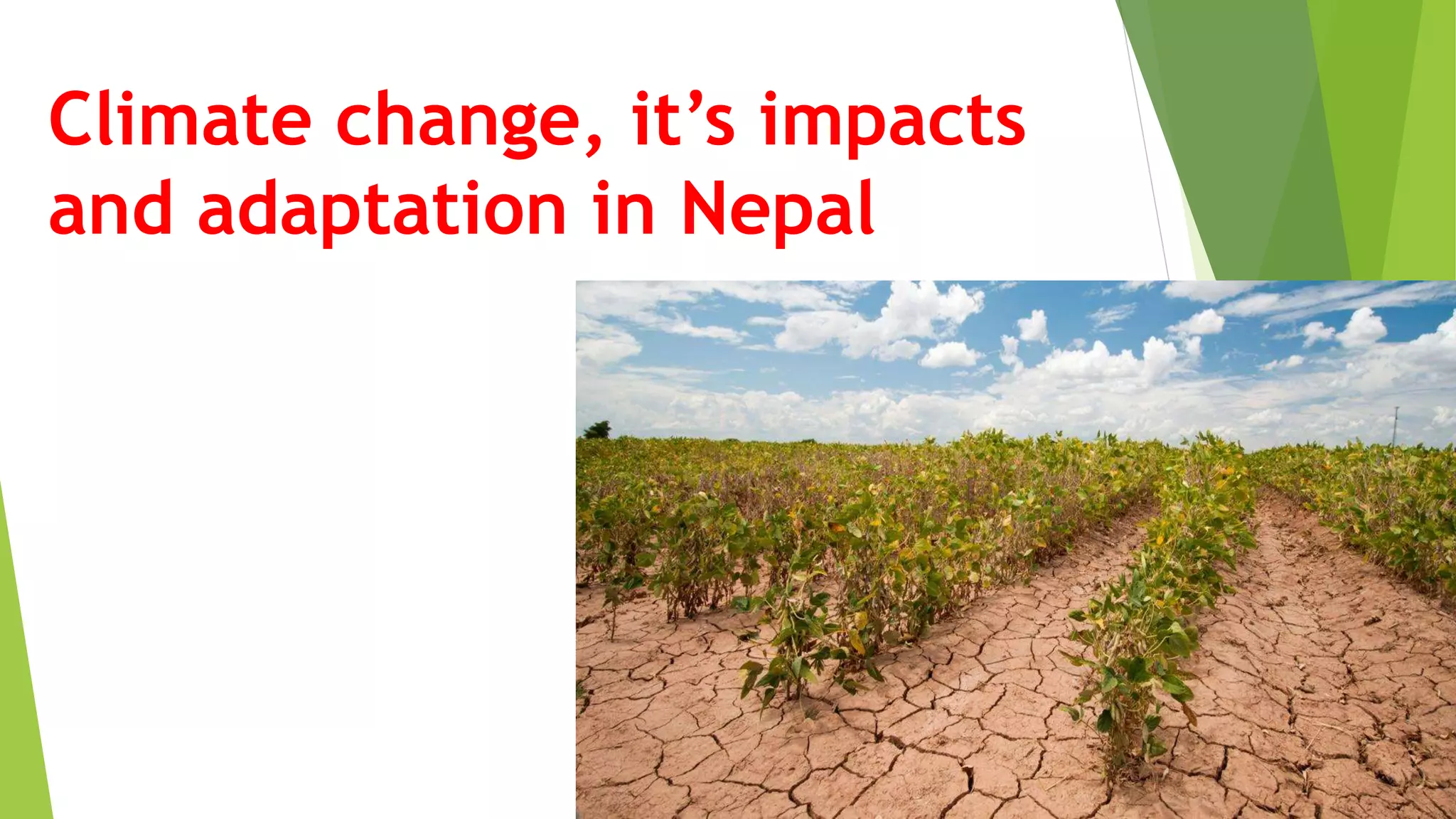
Climate change, it’s impacts
and adaptation in Nepal
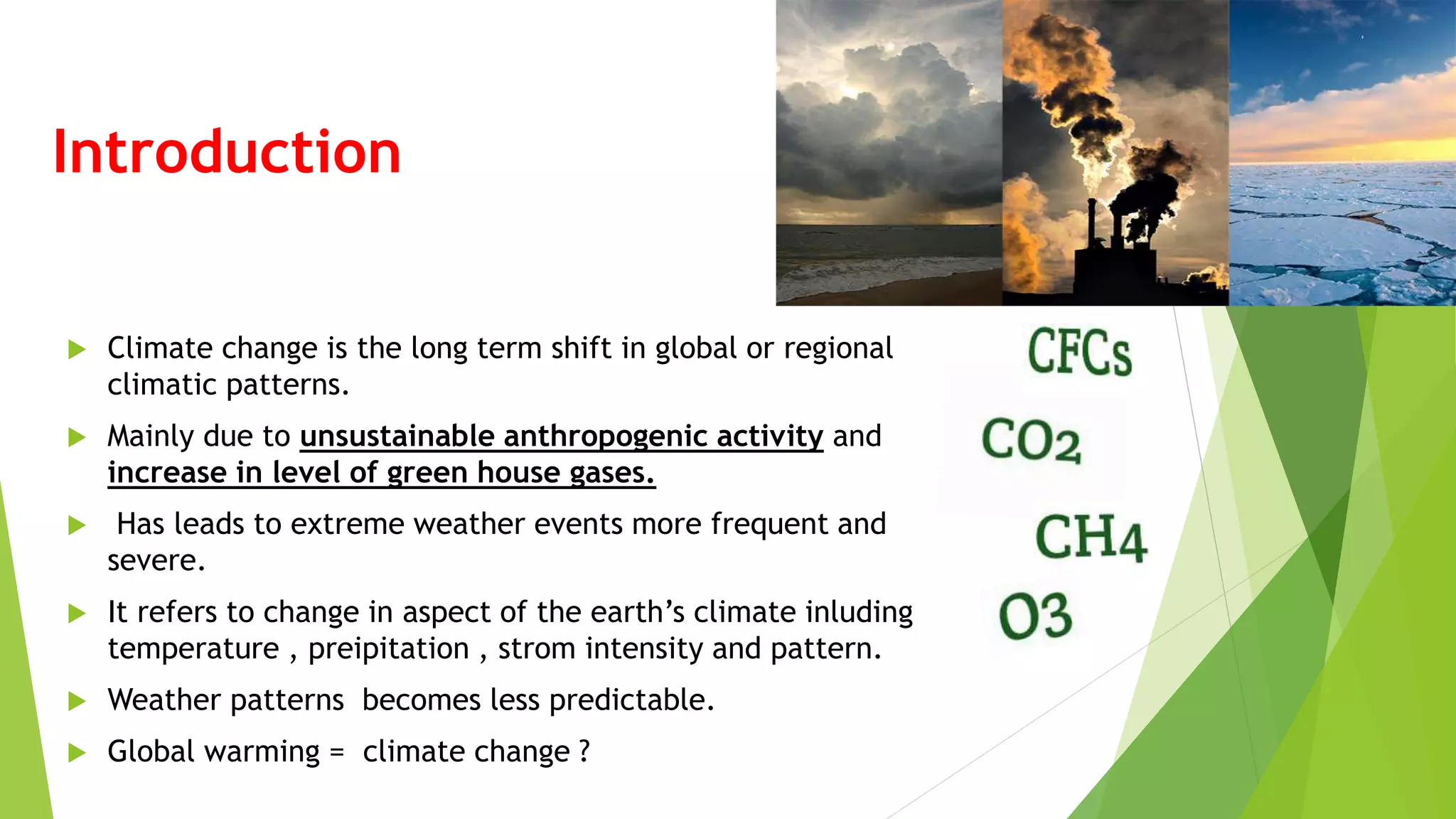
Introduction
 Climate change is the long term shift in global or regional
climatic patterns.
 Mainly due to unsustainable anthropogenic activity and
increase in level of green house gases.
 Has leads to extreme weather events more frequent and
severe.
 It refers to change in aspect of the earth’s climate inluding
temperature , preipitation , strom intensity and pattern.
 Weather patterns becomes less predictable.
 Global warming = climate change ?
Impacts of climate change
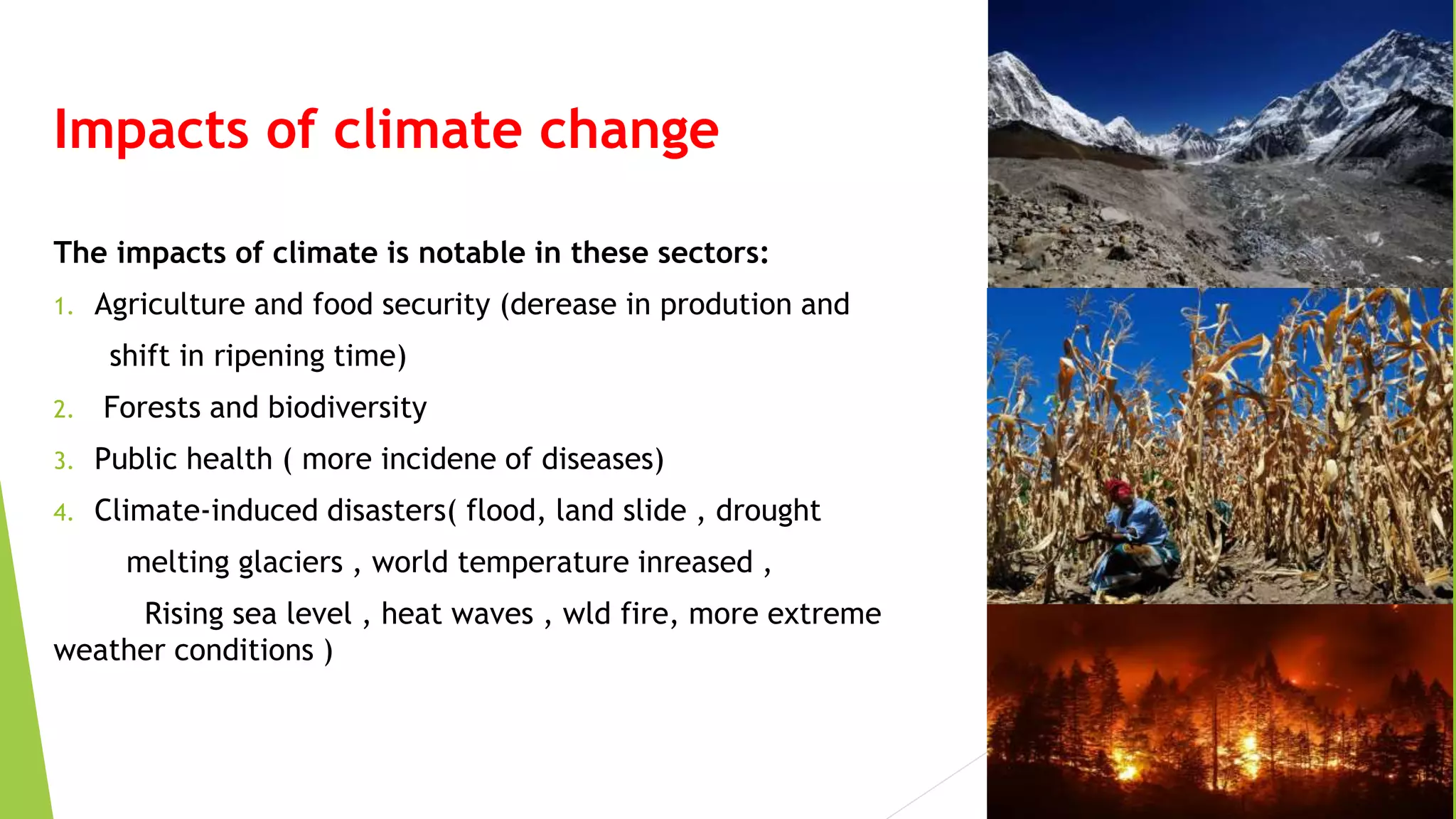
The impacts of climate is notable in these sectors:
1. Agriculture and food security (derease in prodution and
shift in ripening time)
2. Forests and biodiversity
3. Public health ( more incidene of diseases)
4. Climate-induced disasters( flood, land slide , drought
melting glaciers , world temperature inreased ,
Rising sea level , heat waves , wld fire, more extreme
weather conditions )
Climate change impact on Nepal
 Nepal has experienced changes in temperature and precipitation at a
faster rate than the global average.
 Himalayan peaks are warming between 0.3 to 0.7oC faster than the
global average.
 Due to this Nepal is exposed to a range of climate risks and water-
related hazards triggered by rapid snow- and ice-melt in the
mountains.
 The rapidly retreating glaciers (average retreat of more than 30
m/year), rapid rise in temperature (> 0.06 C).
 Most of the big rivers of Nepal are glacier-fed and its main resources
of water and hydroelectricity will be seriously affected due to the
ongoing changes in glacier reserves, snowfall and natural hazards.
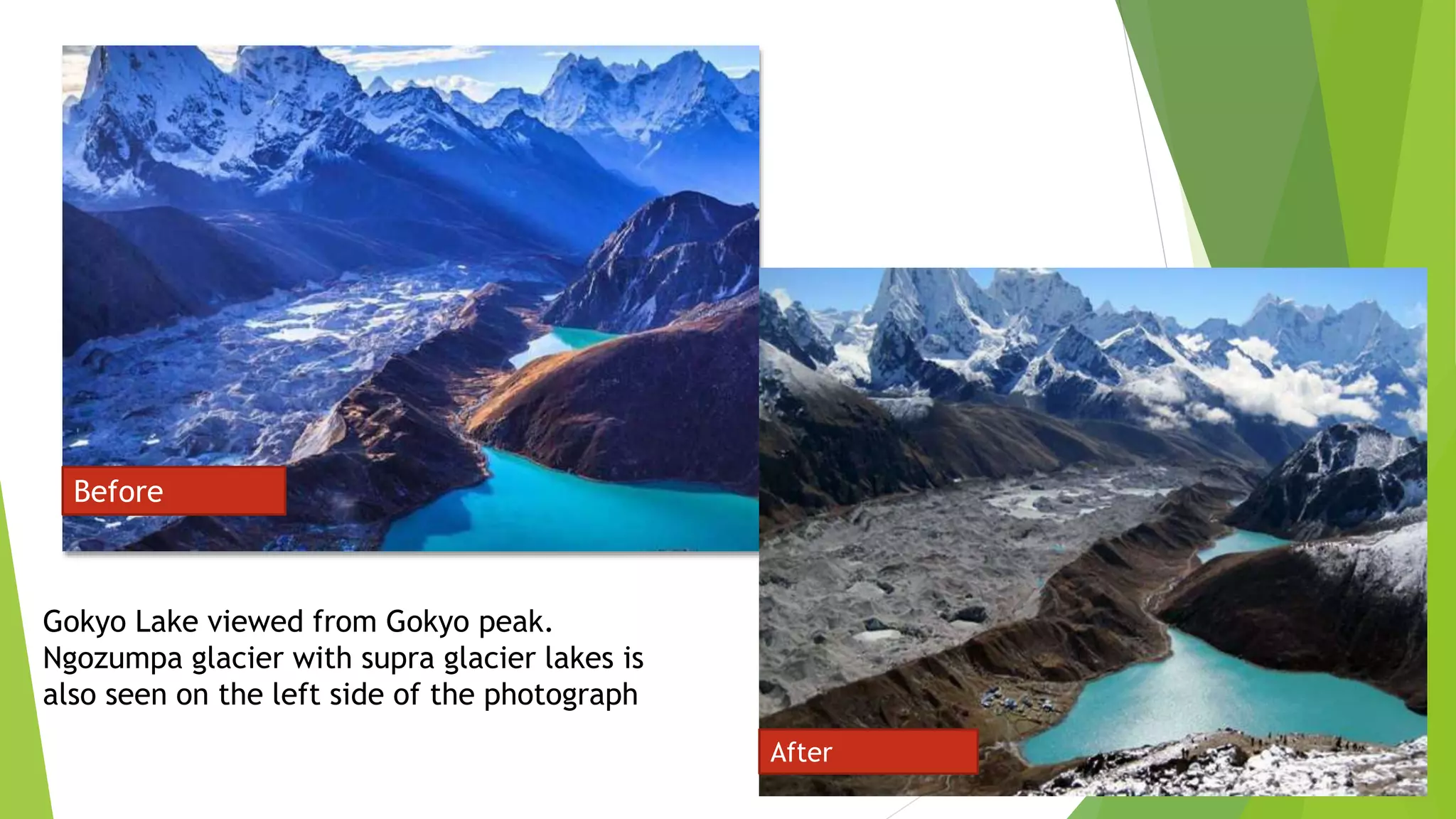
Before
After
Gokyo Lake viewed from Gokyo peak.
Ngozumpa glacier with supra glacier lakes is
also seen on the left side of the photograph
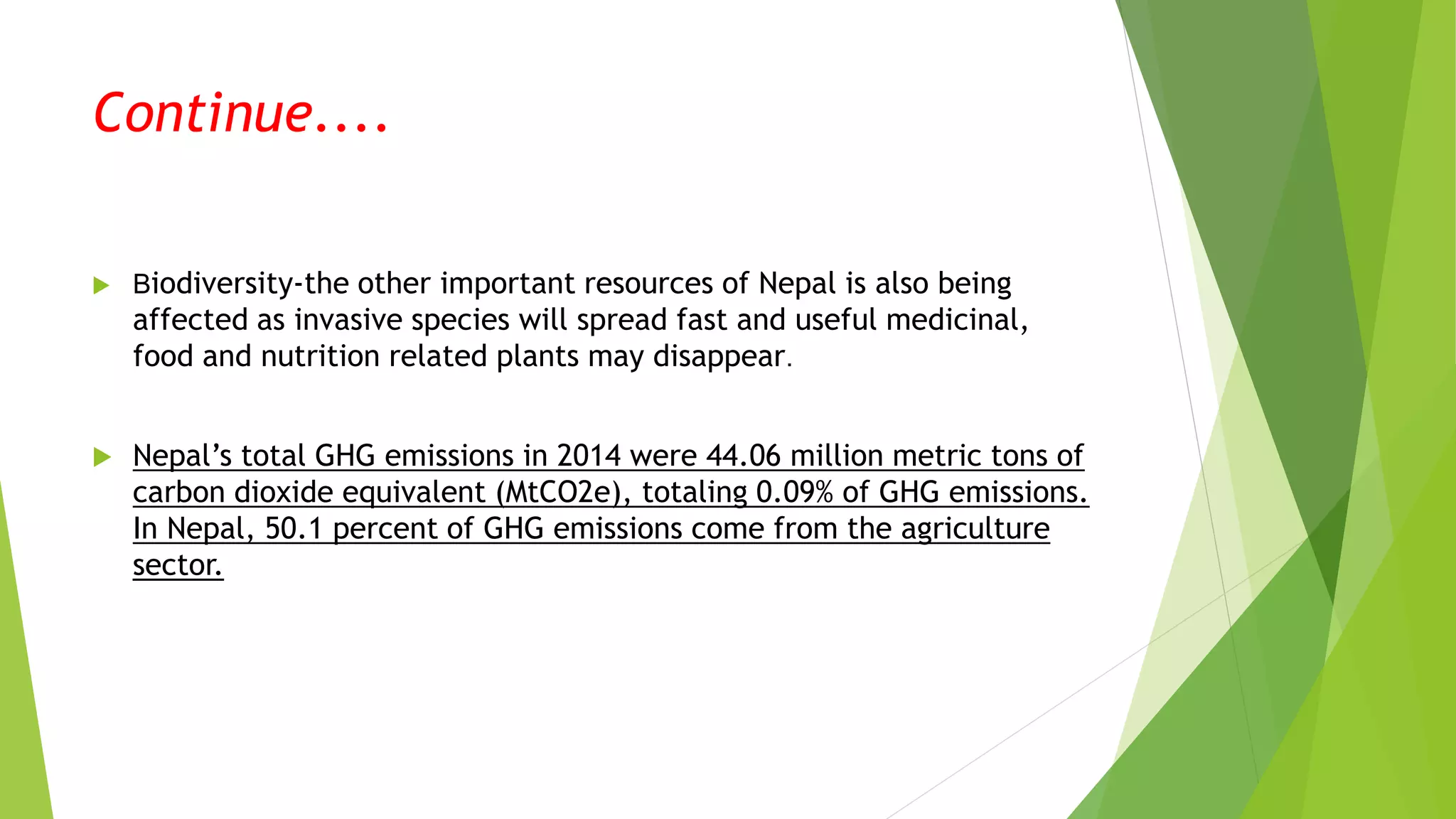
Receding Imja Glacier in Everest region of
Nepal.
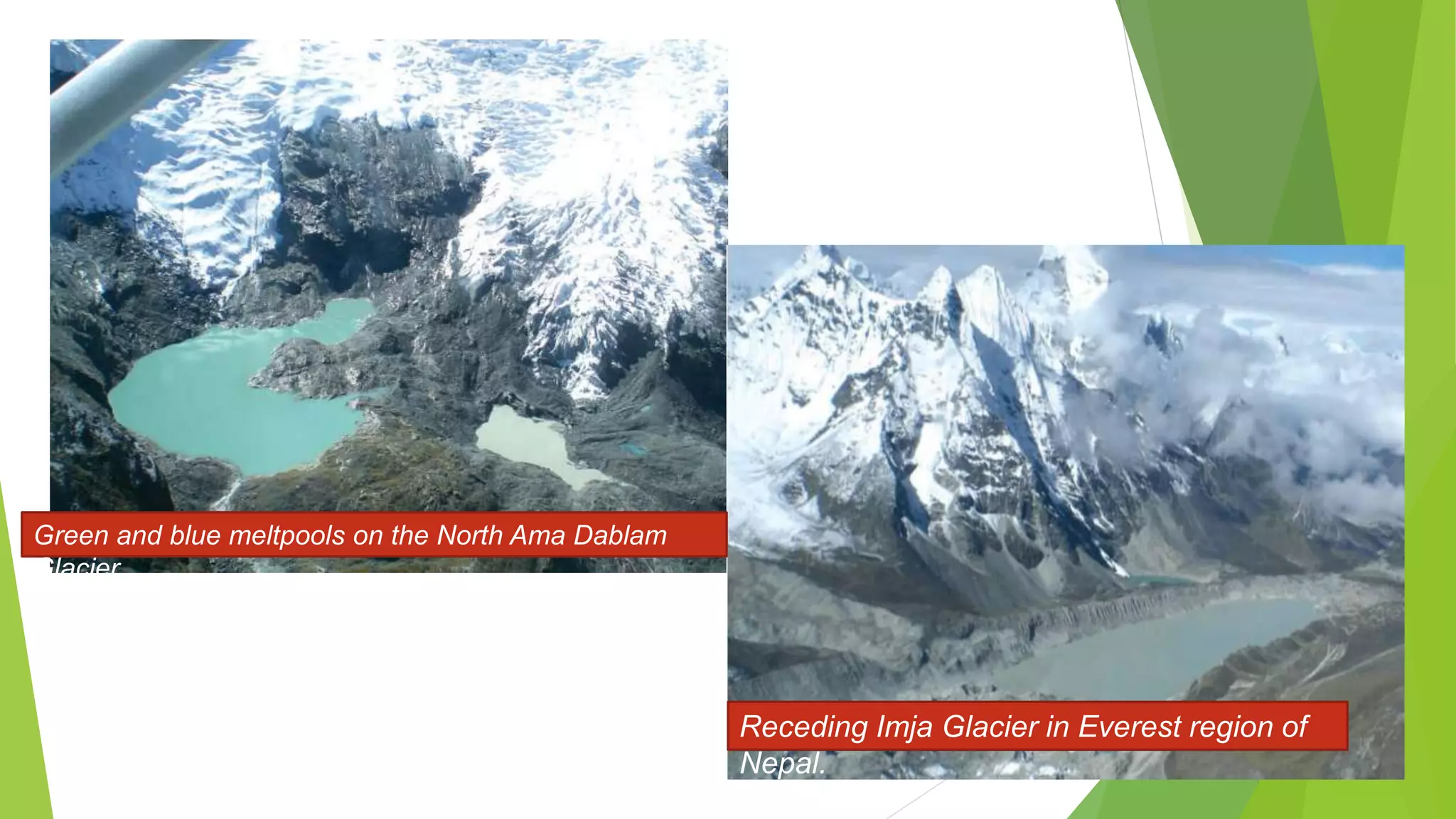
Green and blue meltpools on the North Ama Dablam
Glacier
Continue....
 Biodiversity-the other important resources of Nepal is also being
affected as invasive species will spread fast and useful medicinal,
food and nutrition related plants may disappear.
 Nepal’s total GHG emissions in 2014 were 44.06 million metric tons of
carbon dioxide equivalent (MtCO2e), totaling 0.09% of GHG emissions.
In Nepal, 50.1 percent of GHG emissions come from the agriculture
sector.
Adaptation
Adaptations are the adjustments or modifications in environment
condition.
In a well adapted system, people thrive despite challenging conditions.
Adaptation types are ;
 Ecological adaptation : Development of new varieties, modification of
practices.
( mix cropping , rain water harvesting , plastic house farming ,
........)
 Social adaptation : Migration, Changes in lifestyles and occupation.
 Autonomous adaptation : Includes insurances, diversification of
livelihood etc.
Impacts on Agriculture
 Agriculture is major economic sector as two thirds of population are engaged in
it
and it contributes 27% of the GDP approximately.
 70% of the yield depends upon climate variability.
 Disasters like flood and droughts have caused a significant decline in crop yield
(10-30%).
 Rise in temperature also caused great decline in fisheries production.
Climate hazards will affect agriculture through;
1. Heat stress on plant
2. Changes in soil moisture and temperature
3. Loss of soil fertility through erosion of top soil.
4.Loss water available for crop production.
Continue...
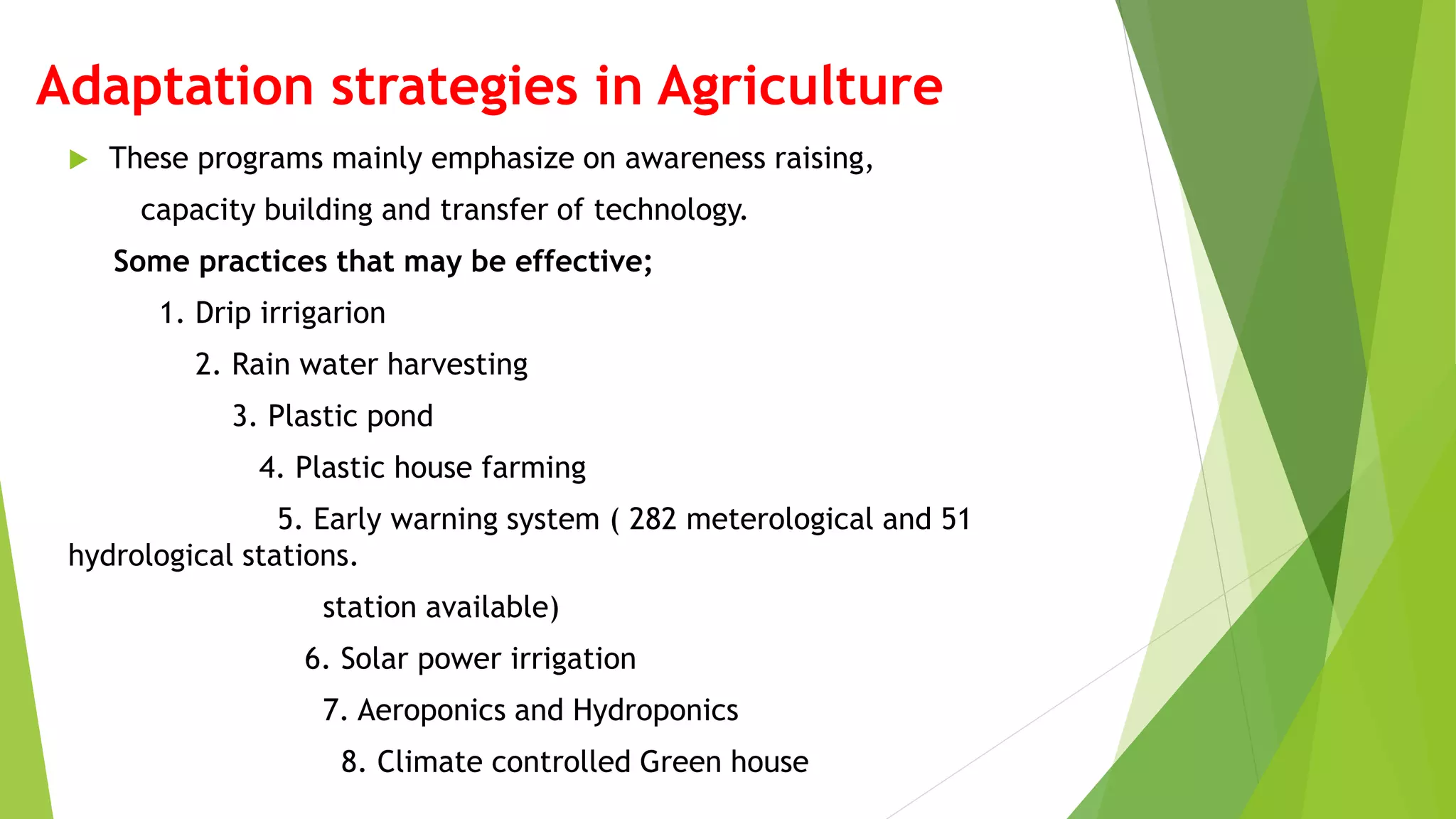
5. Changes in height of water table
6. Salinization of fresh water aquifer.
7. Loss of land through sea level rise.
Positive impacts of climate change ;
 CO2 fertilization, growing season extension and increase
production by enhancing photosynthetic processes.
 More CO2 level increase water use efficiency.
 Decrease energy consumption due to warmer climate.
 Production of tropical plants in higher altitude due to increase
in global temperarure.
Adaptation strategies in Agriculture
 These programs mainly emphasize on awareness raising,
capacity building and transfer of technology.
Some practices that may be effective;
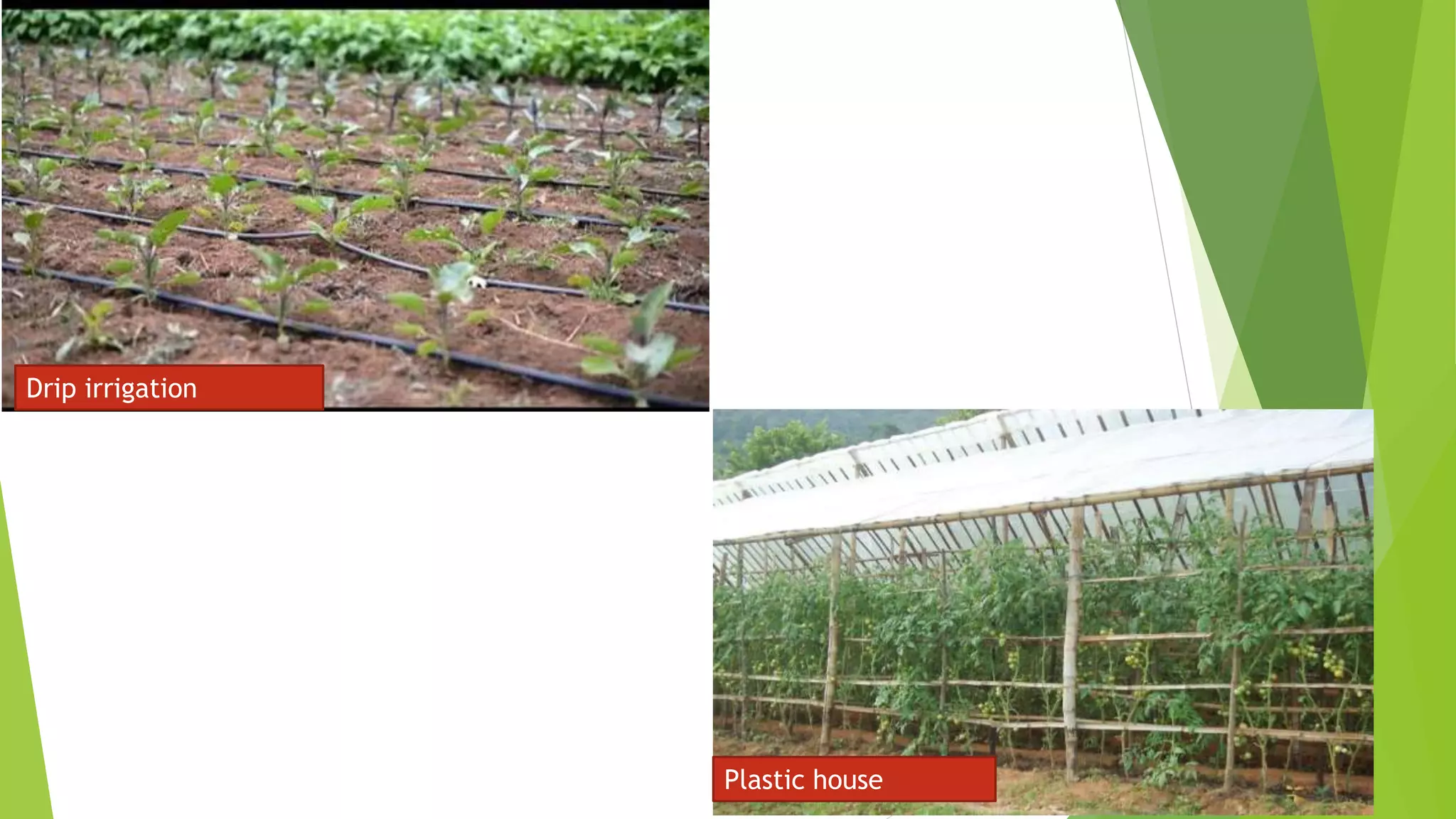
1. Drip irrigarion
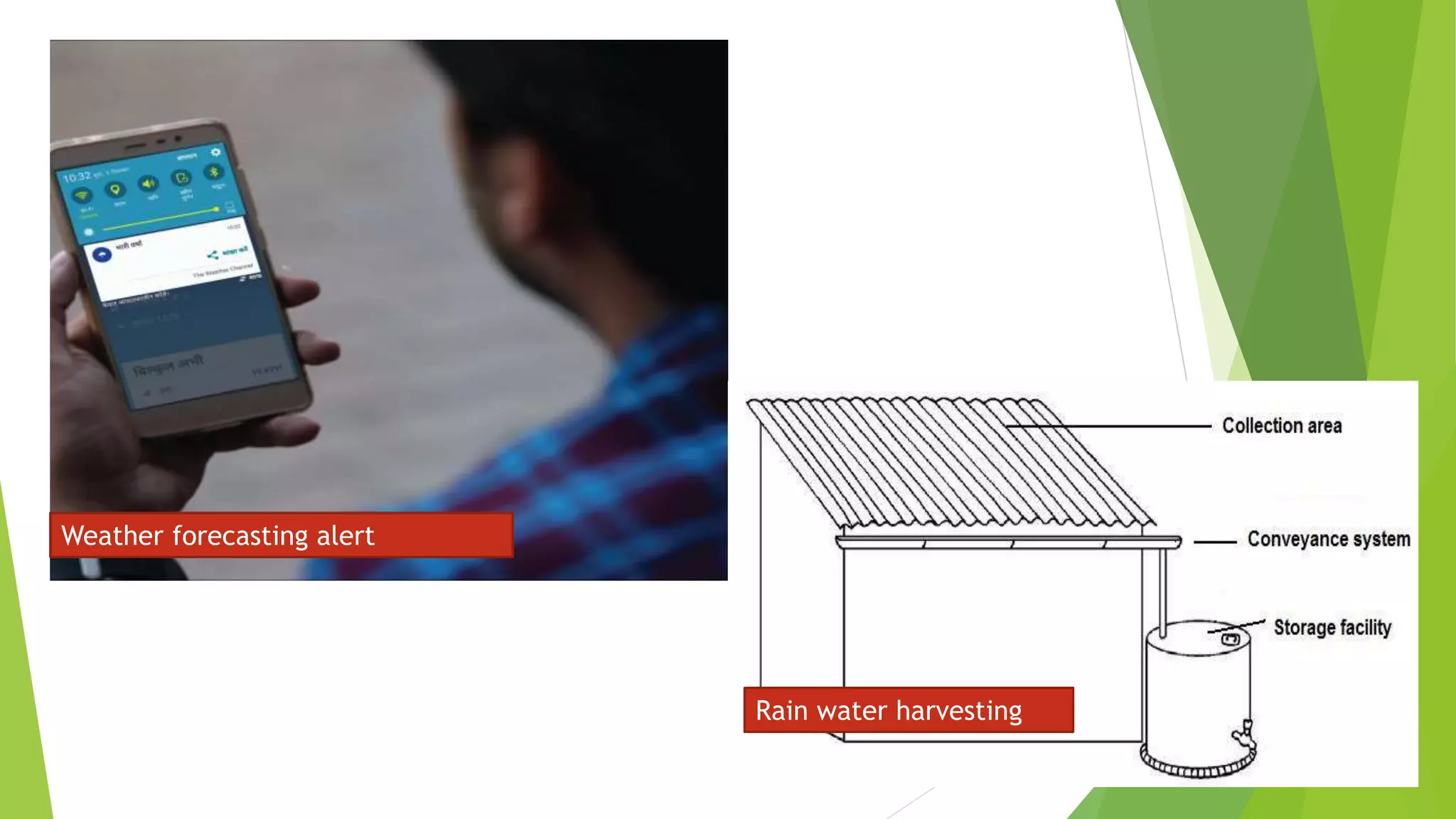
2. Rain water harvesting
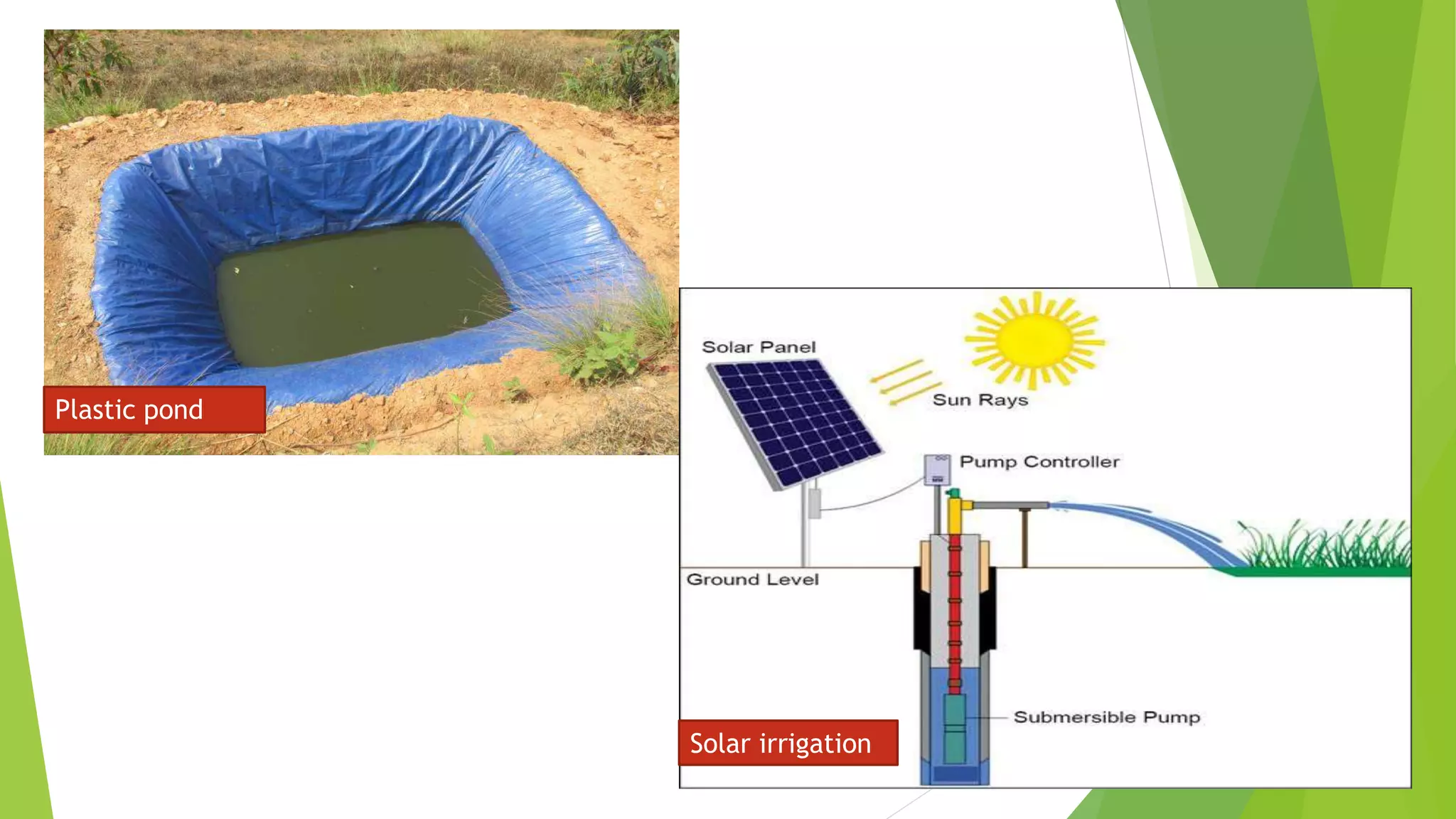
3. Plastic pond
4. Plastic house farming
5. Early warning system ( 282 meterological and 51
hydrological stations.
station available)
6. Solar power irrigation
7. Aeroponics and Hydroponics
8. Climate controlled Green house
Continue....
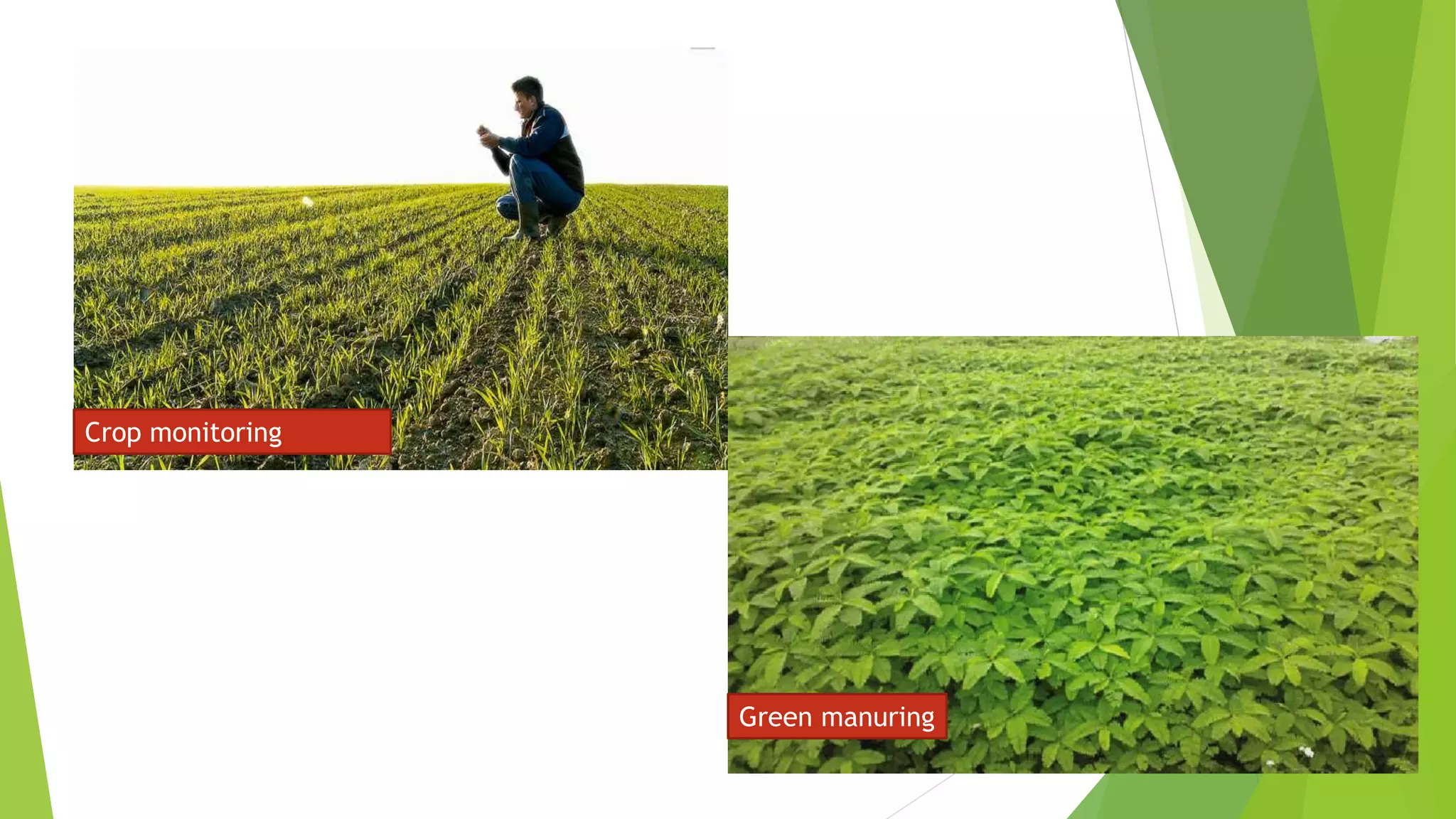
9. SRI cultivation, minimum or zero tillage cultivation, green manuring,
sustainable use of water, fertilizer, IPM, INM, etc.
10. Crop monitoring system, disease forecasting system has also played
huge part reducing the effect of climate.
11. Adoption of climate smart agriculture
ie. carbon smart, water smart , energy smart , knowledge smart ,weather smart and
nutrient smart agriculture practices.
12. Similarly life insurances of crops or livestock
Drip irrigation
Plastic house
Plastic pond
Solar irrigation
Weather forecasting alert
Rain water harvesting
Aeroponics
Hydroponics
Crop monitoring
Green manuring
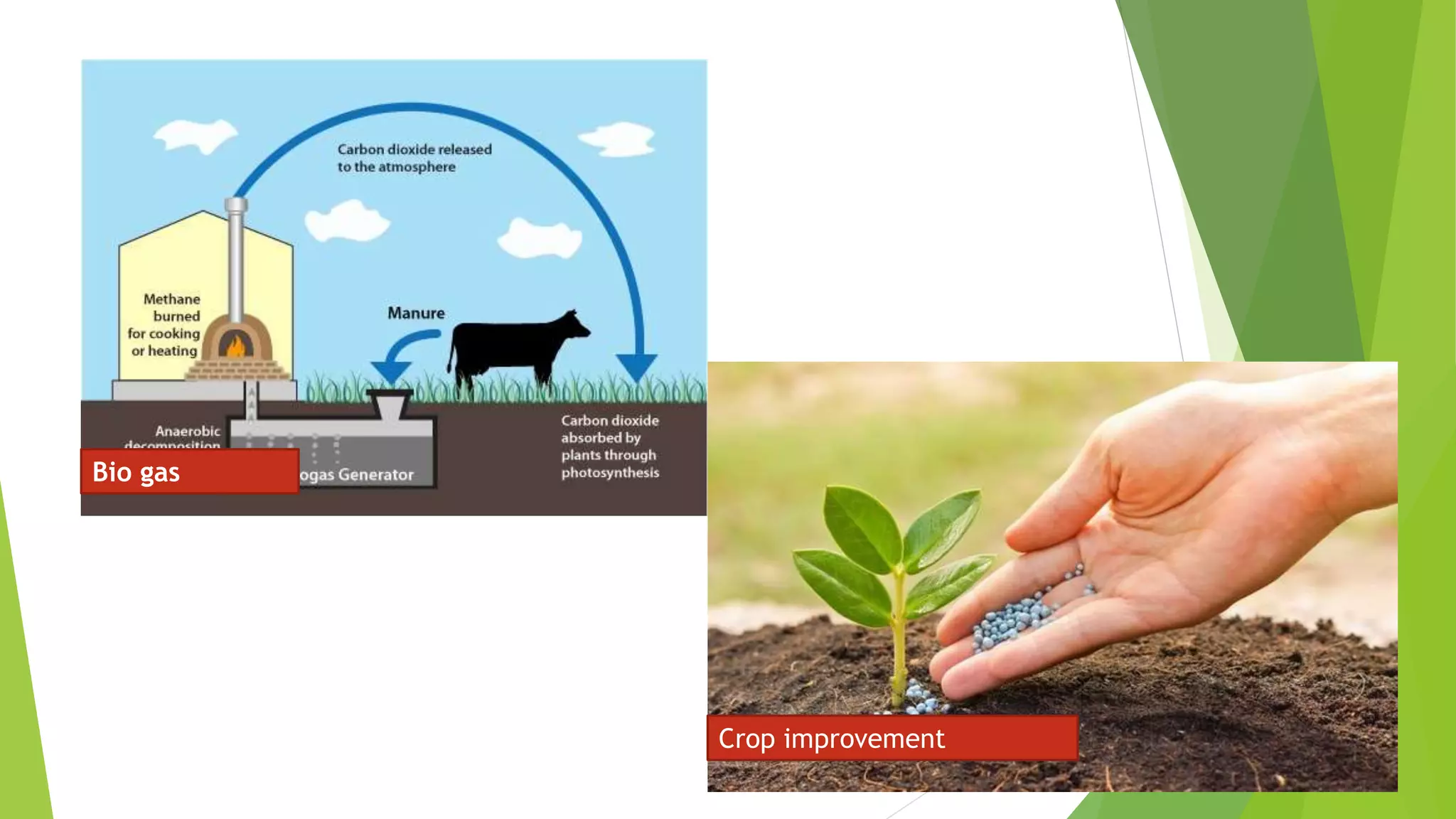
Bio gas
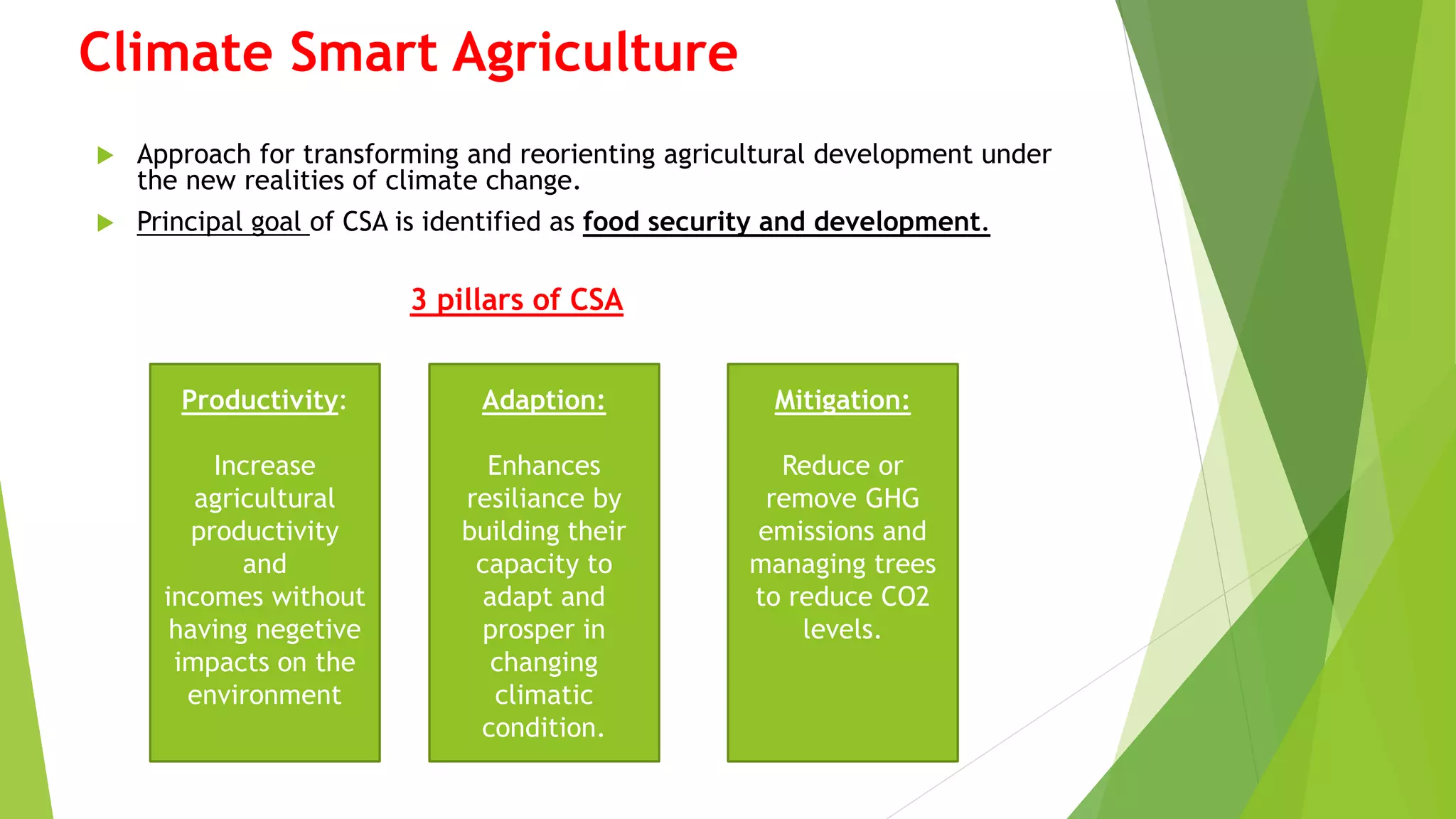
Crop improvement
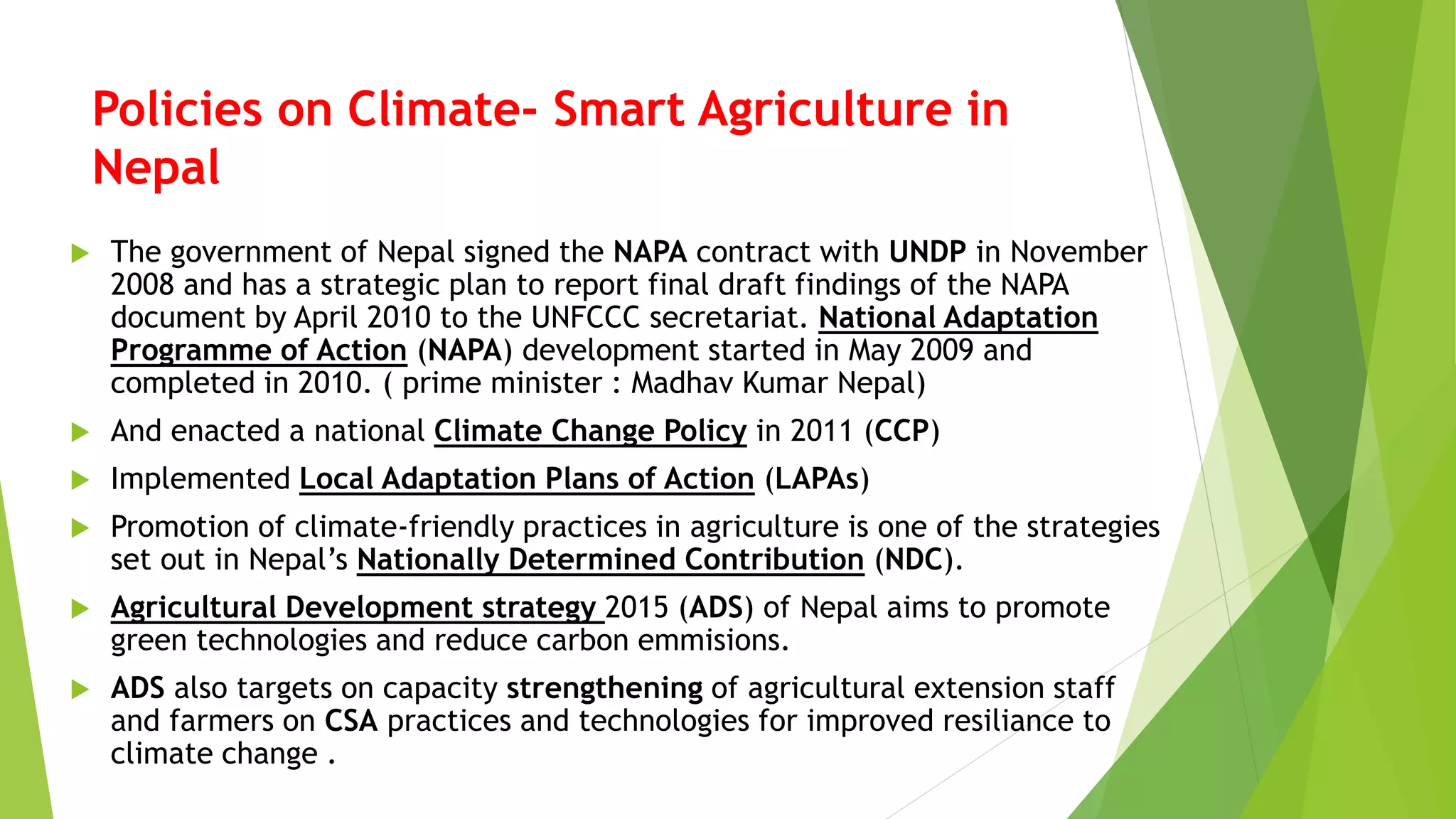
Climate Smart Agriculture
 Approach for transforming and reorienting agricultural development under
the new realities of climate change.
 Principal goal of CSA is identified as food security and development.
3 pillars of CSA
Productivity:
Increase
agricultural
productivity
and
incomes without
having negetive
impacts on the
environment
Adaption:
Enhances
resiliance by
building their
capacity to
adapt and
prosper in
changing
climatic
condition.
Mitigation:
Reduce or
remove GHG
emissions and
managing trees
to reduce CO2
levels.
Policies on Climate- Smart Agriculture in
Nepal
 The government of Nepal signed the NAPA contract with UNDP in November
2008 and has a strategic plan to report final draft findings of the NAPA
document by April 2010 to the UNFCCC secretariat. National Adaptation
Programme of Action (NAPA) development started in May 2009 and
completed in 2010. ( prime minister : Madhav Kumar Nepal)
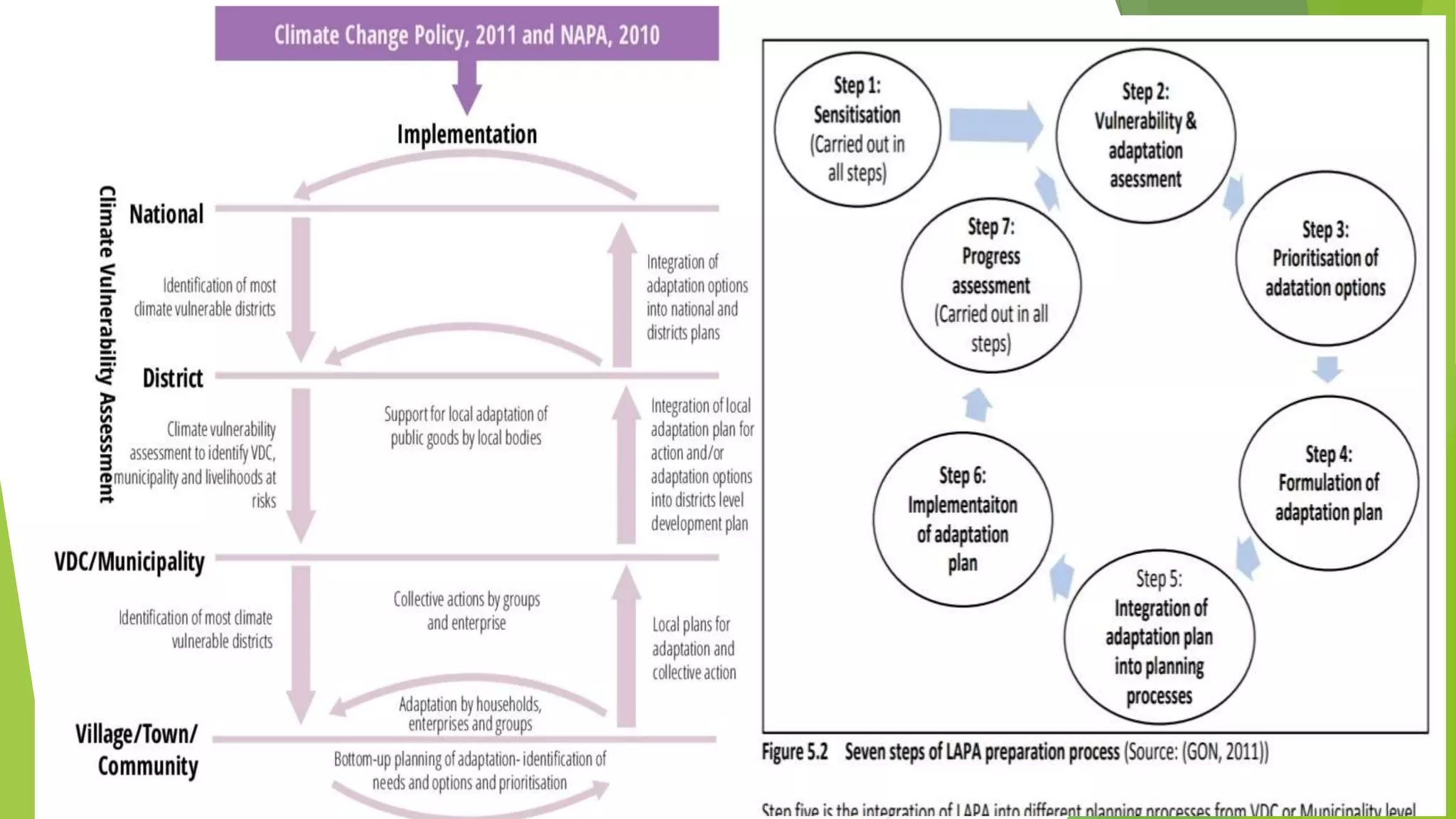
 And enacted a national Climate Change Policy in 2011 (CCP)
 Implemented Local Adaptation Plans of Action (LAPAs)
 Promotion of climate-friendly practices in agriculture is one of the strategies
set out in Nepal’s Nationally Determined Contribution (NDC).
 Agricultural Development strategy 2015 (ADS) of Nepal aims to promote
green technologies and reduce carbon emmisions.
 ADS also targets on capacity strengthening of agricultural extension staff
and farmers on CSA practices and technologies for improved resiliance to
climate change .
NAPA
 Intend to take into account the existing coping strategies at the community level and to
build upon these to identify priority activities, rather than focusing on scenario-based
modeling to assess future vulnerability and long-term policy at the national level.
 It is therefore, important for the least developed countries, such as Nepal, to identify
community-based coping strategies of climate induced vulnerability.
 The goal of a NAPA :
1. to enable countries to respond strategically to the challenges and opportunities
posed by climate change.
 A key strategy of the NAPA :
1. to ensure comprehensive stakeholder input in all stages of the implementation
process, involving national and local level government institutions, non-governmental
organization, civil societies groups, academia, international organization and donor
agencies.
 In Nepal the Ministry of Environment is the lead agency for the preparation of the
NAPA.
Continue....
 The steps for the preparation of NAPA include :
1.Synthesis of available information, participatory assessment of vulnerability to
current climate variability and extreme events and of areas where risks would
increase due to climate change
2. identification of key adaptation measures as well as criteria for prioritising
activities and selection of a prioritised short list of activities by each development
sectors (UNFCCC, 2002).
 The NAPA will develop a strategic framework based on:
1. the identified immediate priorities for climate resilient and low carbon
development, based on which stakeholders can align their responses.
2. the analysis of climate change impacts on various sectors, the key climate
change adaptation priorities will be identified, including capacity development .
 There were a number of problems contributing to the delay of the NAPA process in
Nepal. These included difficulties in accessing and managing the fund, the political
turmoil in Nepal and the lack of government priority.
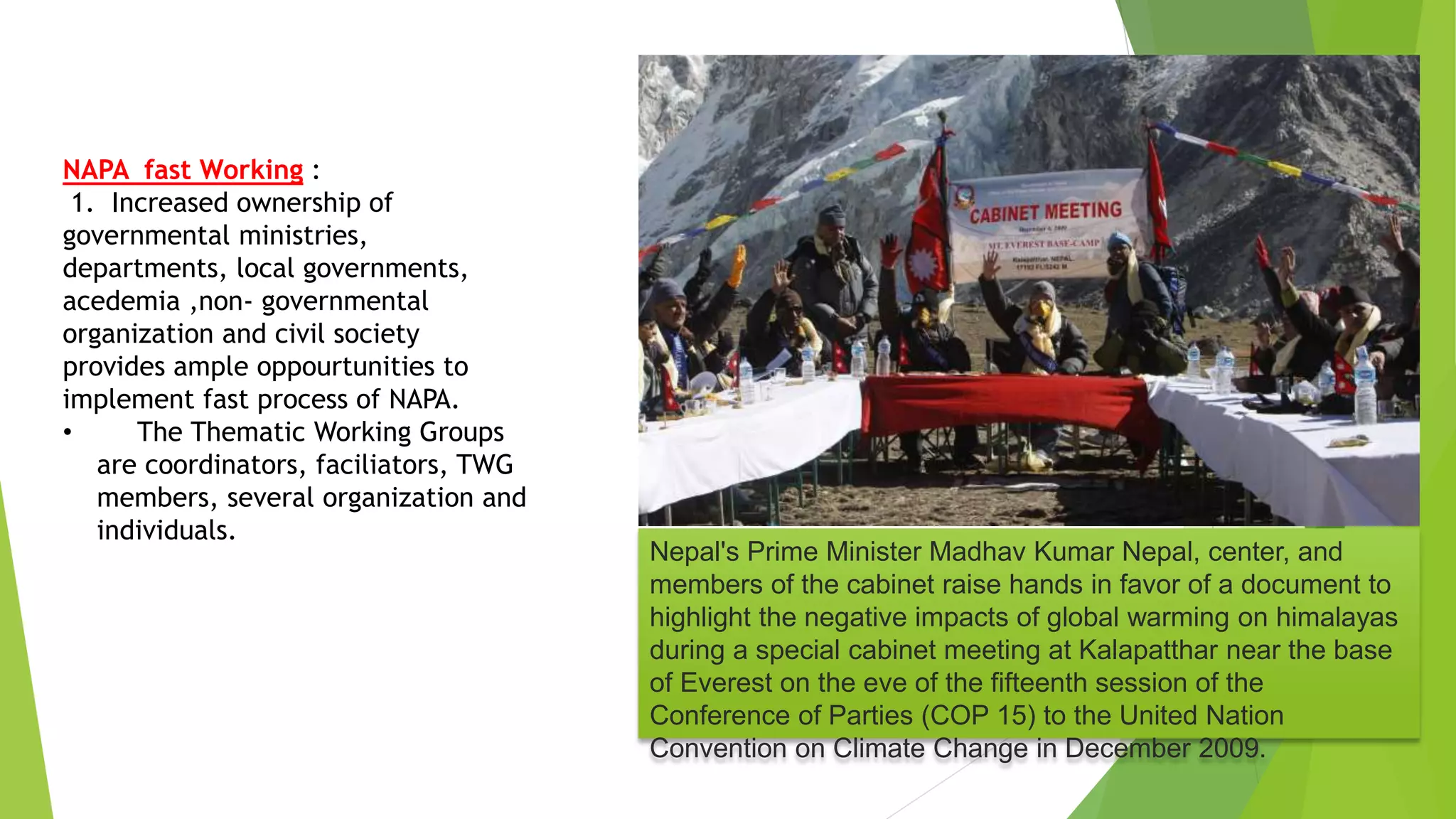
Nepal's Prime Minister Madhav Kumar Nepal, center, and
members of the cabinet raise hands in favor of a document to
highlight the negative impacts of global warming on himalayas
during a special cabinet meeting at Kalapatthar near the base
of Everest on the eve of the fifteenth session of the
Conference of Parties (COP 15) to the United Nation
Convention on Climate Change in December 2009.
NAPA fast Working :
1. Increased ownership of
governmental ministries,
departments, local governments,
acedemia ,non- governmental
organization and civil society
provides ample oppourtunities to
implement fast process of NAPA.
• The Thematic Working Groups
are coordinators, faciliators, TWG
members, several organization and
individuals.
National policy responses to climate change
 Nepal ratified the United Nations Framework Convention on Climate
Change (UNFCCC) in May 1994 and signed the Kyoto Protocol in September
1995.
 The Government of Nepal identified the Ministry of Environment (MoE) as
the Designated National Authority (DNA) as part of its commitment to the
effective implementation of climate change policies.
 The Government of Nepal prepared a National Greenhouse Gas Inventory
Report and an Initial National Communication Report (2004).
 In 2008, the Government and the United Nations Development Programme
(UNDP) began work on the preparation and implementation of the NAPA.
 There are other national initiatives like the Pilot Programme on Climate
Resilience (PPCR) and Reducing Emissions from Deforestation in
Developing Countries (REDD).
Policies for vulnerability and adaptation
 Policies and rate of adaptation depends on ability to identify the
likely extent and nature of its impact and the vulnerability of
economic and social systems.
 Various constraints have been identified, the most important of which
is the lack of national level data and technical capability to apply the
results of Global Climate Models (GCMs) to local areas.
 Impact and vulnerability studies are also needed to identify and
analyse potential adaptation measures vital for sustainable
development in Nepal, particularly in the agriculture and water
resources sectors.
 The lack of comprehensive research in these areas seriously limits the
ability to make appropriate national policy recommendations.
Attention to climate change in Nepal’s
planning documents
 While the current Tenth Five Years Plan (hereafter referred to as the Tenth
Plan) of the government acknowledges the important influence weather can
have on the overall economic performance, there is only one paragraph in the
entire document wherein the development impacts of weather and climate
are mentioned.
 An analysis of climate change related risks and the ways to reduce them is
not included.
 The overall national Medium-Term Expenditure Framework (MTEF) developed
to ensure appropriate allocation of resources to different sectors does not
discuss climate risks either.
 The sectoral MTEF paper for agriculture pays some attention to climate-
related factors. It mentions the criticality of the monsoon season for the
sector and lists the country’s agro-climatic potential as an opportunity.
 A number of investments likely to reduce vulnerability to climate related
risks are identified and a general proposal is made to use research funds to
support needs based adaptive research.
Gaps in government policies and
development plans
 At the national level, evidence suggests that the impact of climate change
and the actions needed to confront climate change have yet to be embedded
into policy and planning processes.
 The Tenth Plan has poverty reduction as a central focal area, which in turn
has been developed as the country’s Poverty Reduction Strategy Plan.
 As noted above, both the overall and sectoral MTEF papers pay little attention
to climate change .
 Climate change has also been given little attention in the Nepal
Environment Policy and Action Plan recent reports to the UN Convention on
Biodiversity, UN Convention on Combating Desertification or in its report to
the World Summit on Sustainable Development (WSSD).
 In the context of the maintenance and use of agrobiodiversity there is a
particular need to strengthen existing agriculture policy in order to take
account of climate change.
LI- BIRD
 lI-BIRD ( Local Initiatives for Biodiversity and Development )a NGO located in
Pokhara.
 Helping farmers by funding and providing appropriate training programs which
focuses on adaption of farm production against climate change.
Impact goal of LI-BIRD :
1. reduce poverty by strengthening resiliant livelihood systems
2. Improving ecosystems healths and services
3. Ensuring food, nutrition and income security of smallholder farmers.
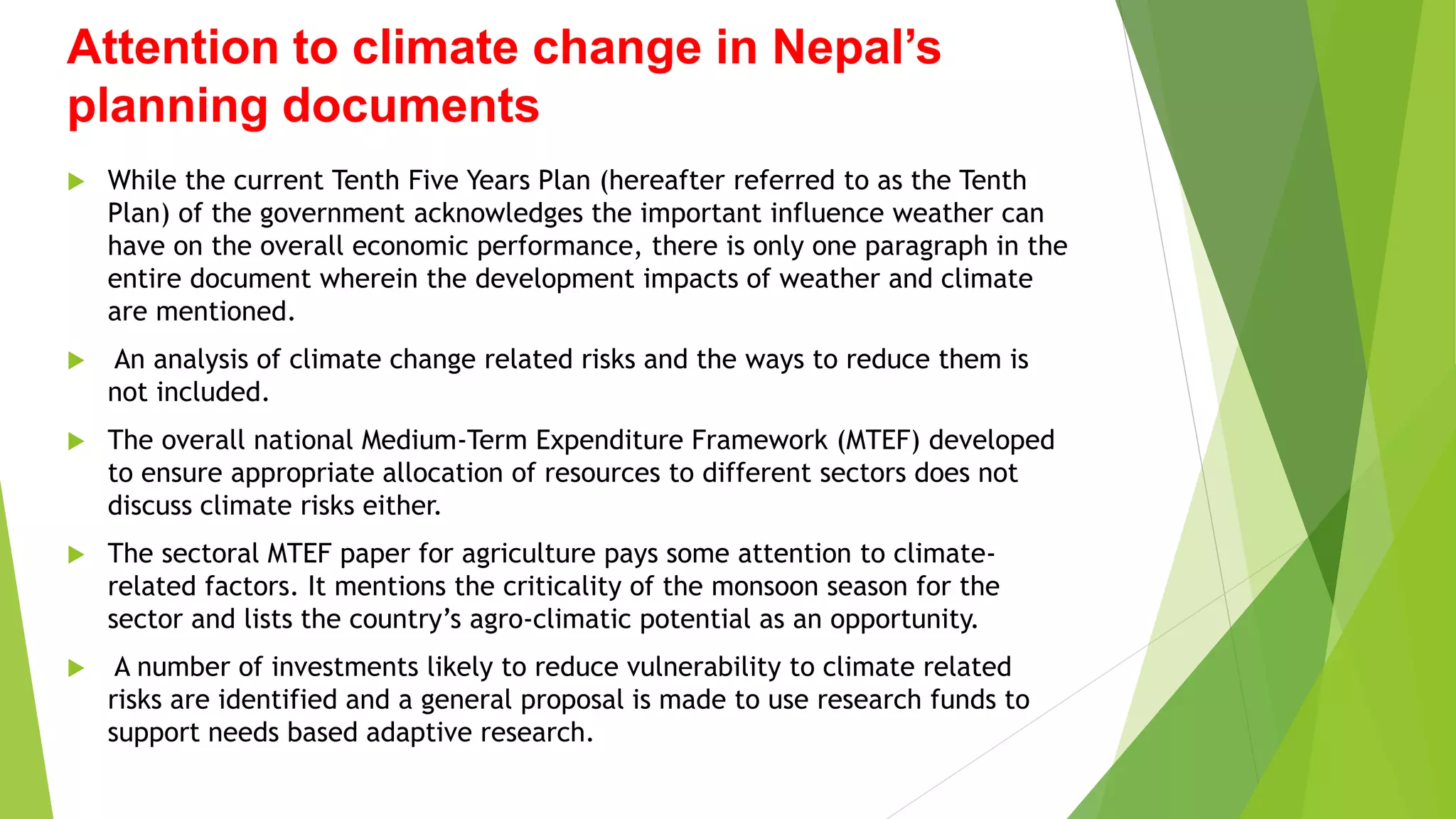
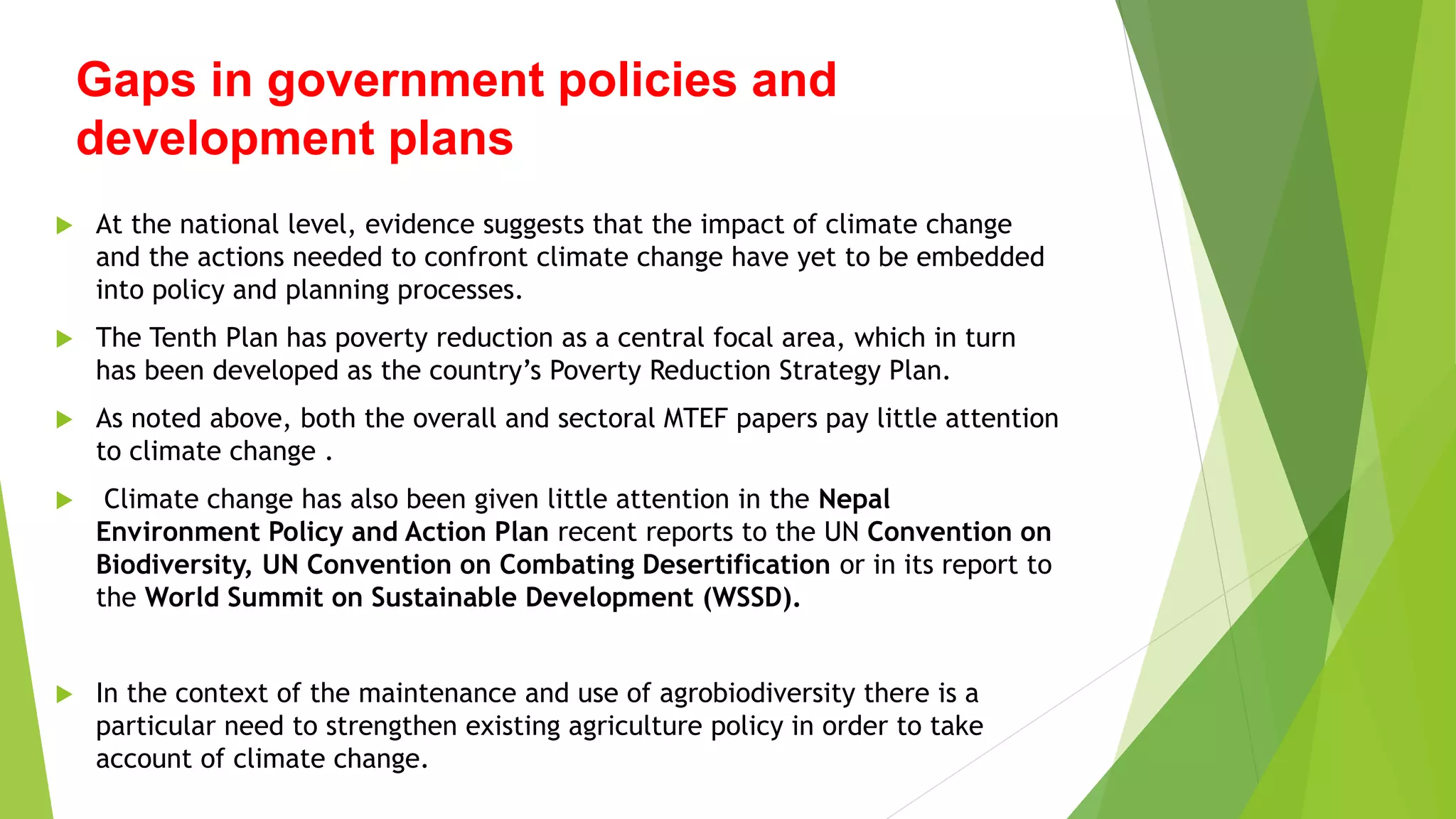
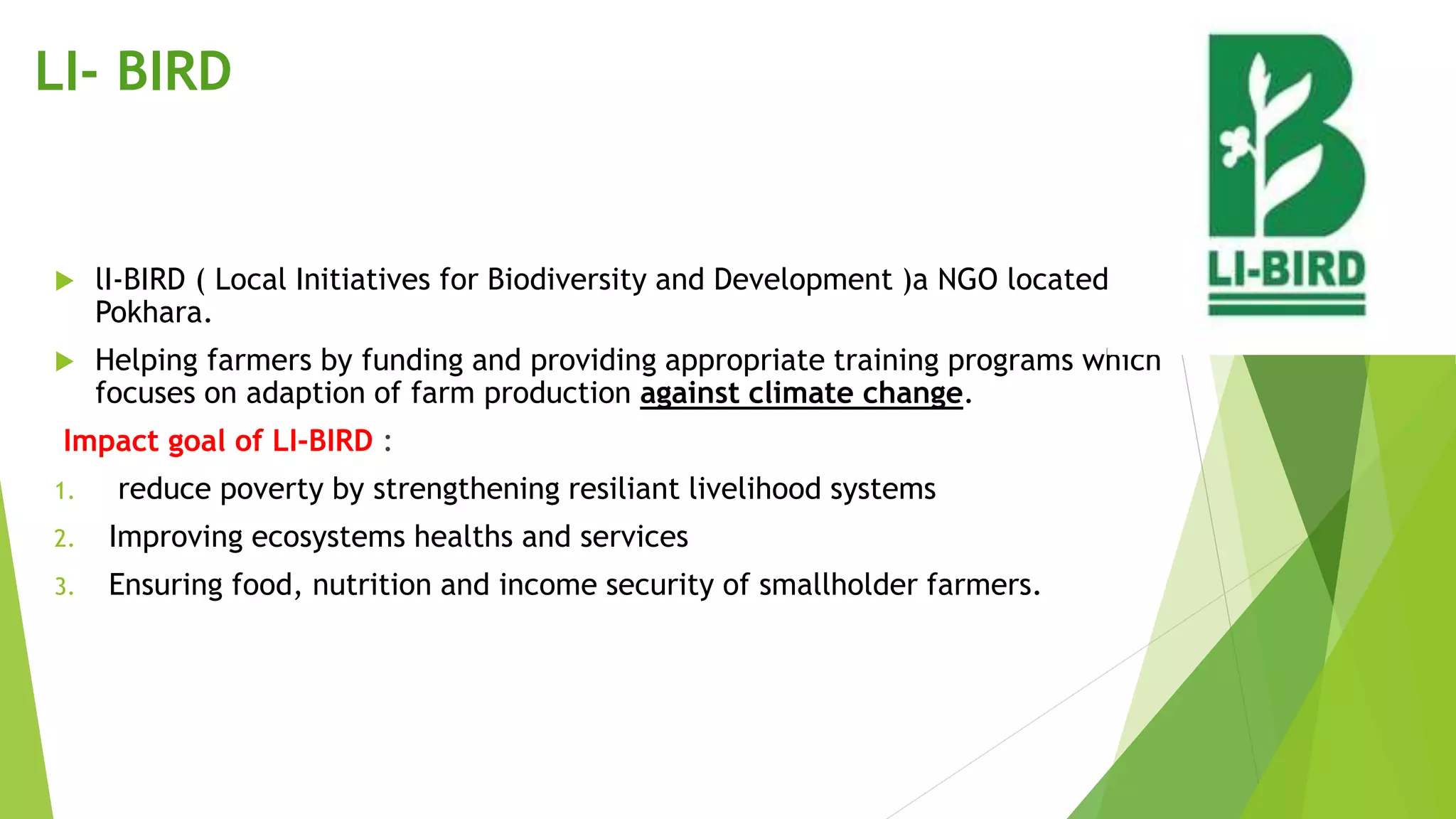
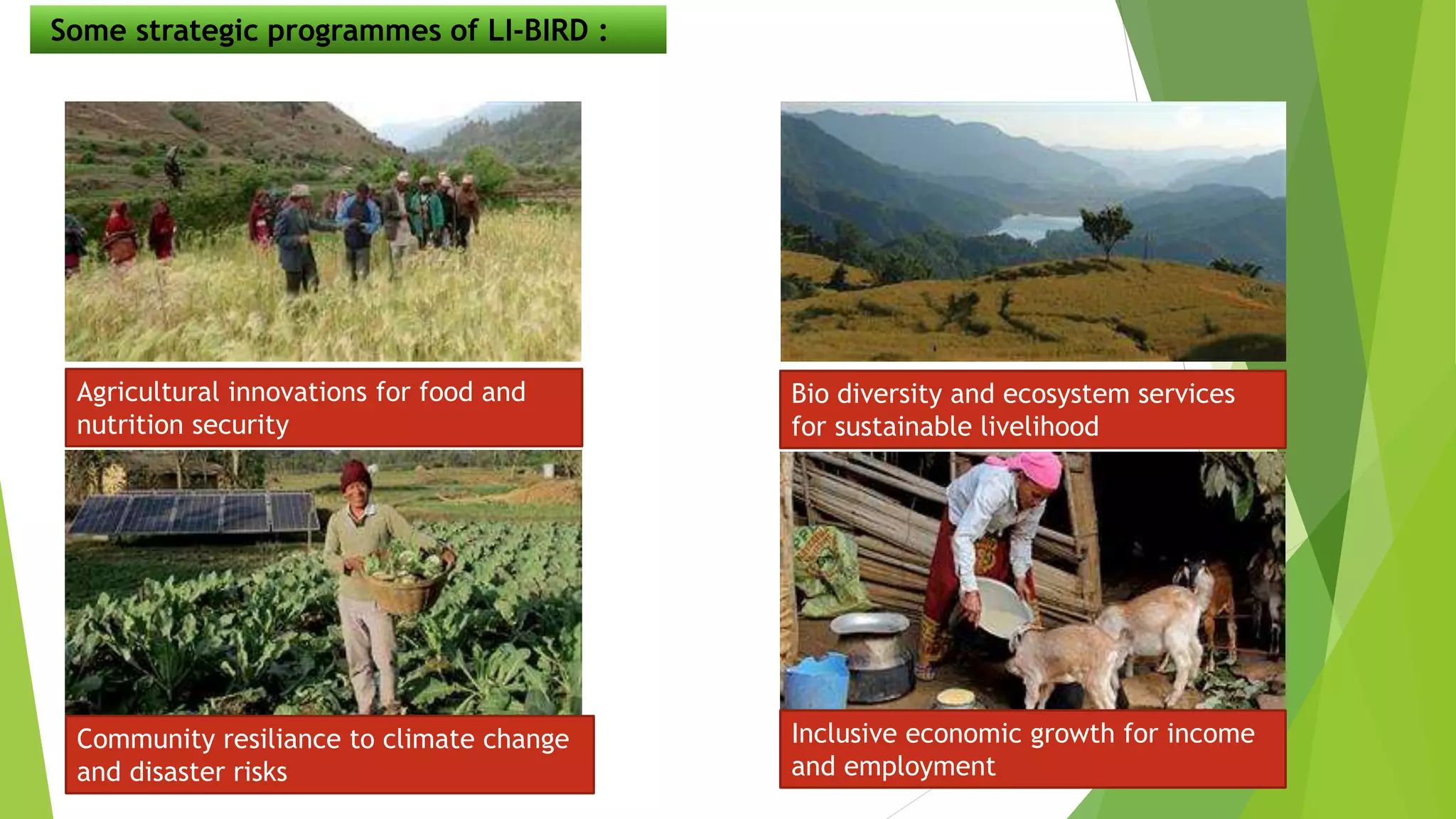
Some strategic programmes of LI-BIRD :
Agricultural innovations for food and
nutrition security
Bio diversity and ecosystem services
for sustainable livelihood
Community resiliance to climate change
and disaster risks
Inclusive economic growth for income
and employment
Other NGOs working Against Climate
change
1. Eco – Nepal ( Environment and Child Concern Organization )
 Climate change and natural resources conservation with right based
approach to the community people as well as policy makers,
development workers and civil society.
Strategies and work of Eco Nepal.
 Introduction and progress evaluation programme
 International Conference on DRR
 Disaster relief support
 Monitoring Hon embassadors of Finland and Norway
Intergovernmental Panels on Climate
Change (IPCC)
 Established in 1988 by UNEP and WMO.
 To provide policy mekers with regular scientific asesessment on
climate change.
 Is a group of governments about 195 from across the globe who
wants information on state of climate and human origin.
 First report published published in 1990.
 Experts from many country involved , over 250 scientist all over
world.
 Without green house gases ,earth’s average temperature will be
-18°celcius
 Provide funds and scholarships to students who are greatly involved
in climate change issue and research ..
IPCC Special Report on Global Warming of
1.5°celcius( Summary for policymakers)
In its decision on the adoption of the Paris Agreement, the Conference of
Parties (COP) to the United Nations Framework Convention on Climate Change
(UNFCCC) at its 21st Session in Paris, France (30 November to 11 December
2015), invited the IPCC to provide a special report in 2018 on the impacts of
global warming of 1.5 °C above pre-industrial levels and related global
greenhouse gas emission pathways.
Summary:
 Human activities have caused about 1°C of global warming, expected to
reach 1.5°C between 2030 and 2050.
 Risks for ecosystems, food and water security, health, development and
economic growth are lower for 1.5°C compared to 2° C.
 Transformative systems change in all sectors are implied.( Emissions of CO2
would fall by about 50 % by 2030 reaching net zero around 2050.)
 Pathways to 1.5 °C include a steep decline in coal, increased energy
efficiency, use of wide range of technologies, and behavioral changes.
Continue....
 Ethical and fair transitions can achieve sustainable development.
 A careful mix of policies to adapt, mitigate and develop need
cooperation , multi – level governance, innovation and investment.
 Limiting global warming is not impossible but political will to
accelerate transitions is key.
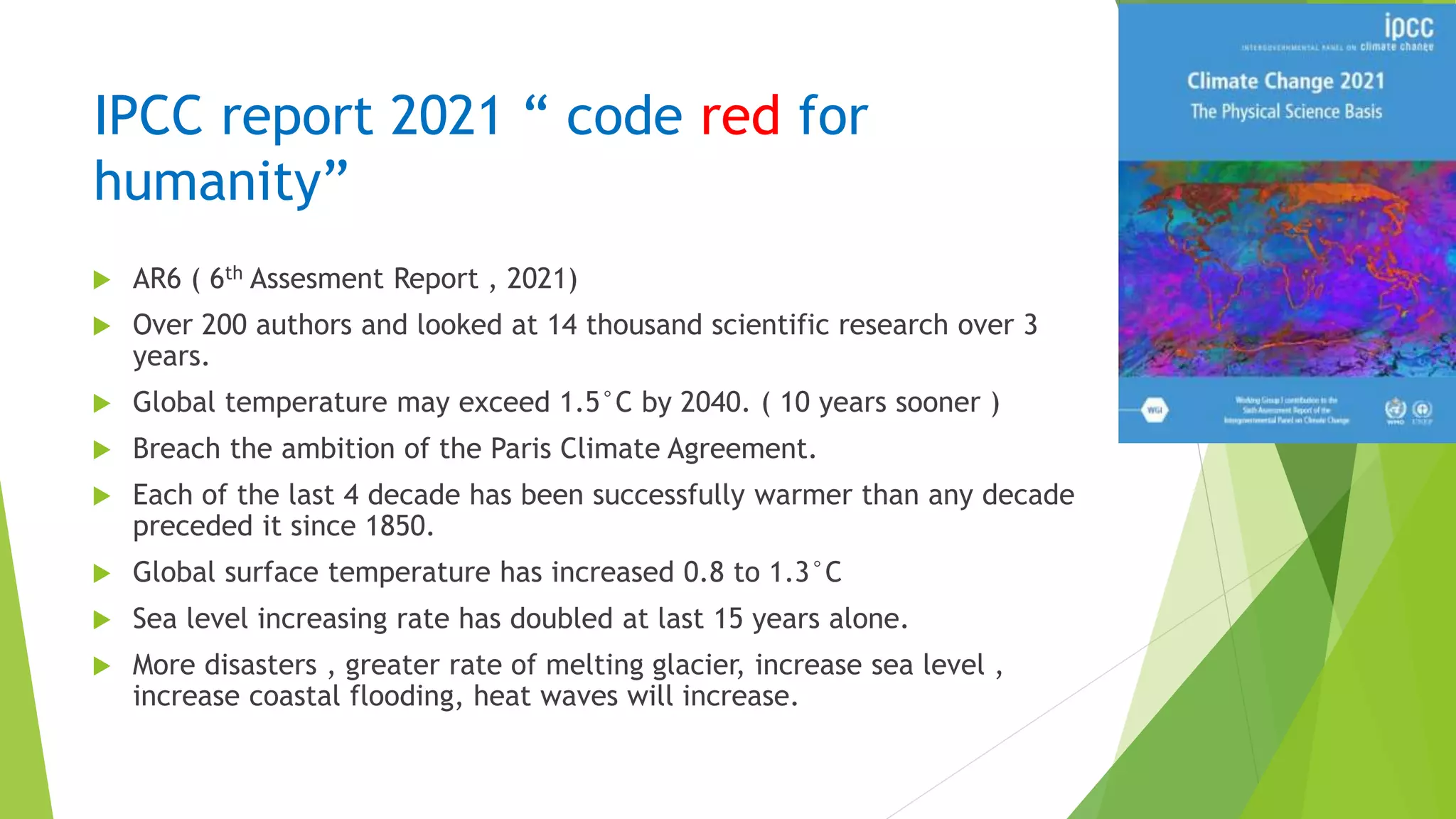
IPCC report 2021 “ code red for
humanity”
 AR6 ( 6th Assesment Report , 2021)
 Over 200 authors and looked at 14 thousand scientific research over 3
years.
 Global temperature may exceed 1.5°C by 2040. ( 10 years sooner )
 Breach the ambition of the Paris Climate Agreement.
 Each of the last 4 decade has been successfully warmer than any decade
preceded it since 1850.
 Global surface temperature has increased 0.8 to 1.3°C
 Sea level increasing rate has doubled at last 15 years alone.
 More disasters , greater rate of melting glacier, increase sea level ,
increase coastal flooding, heat waves will increase.
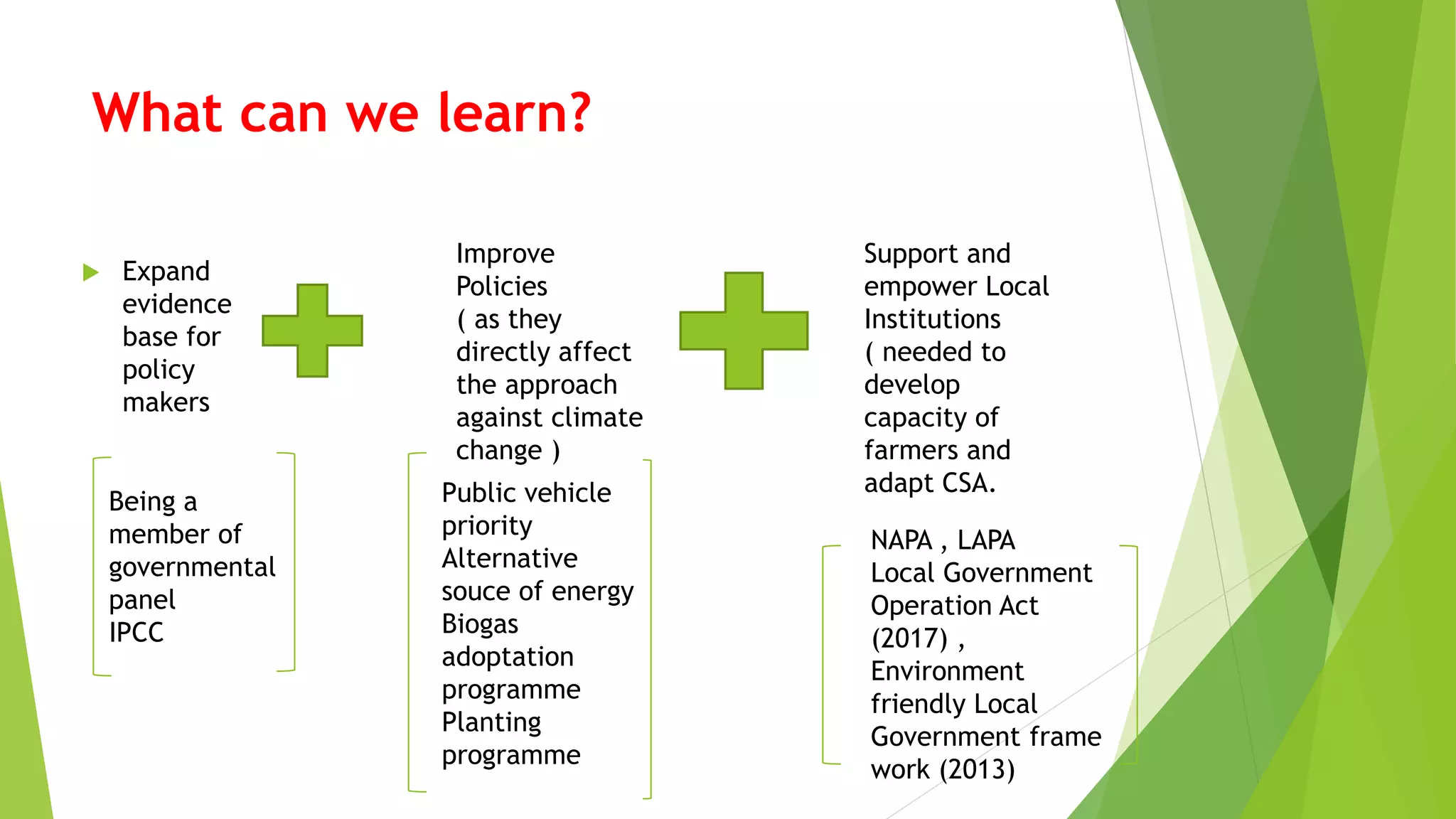
What can we learn?
 Expand
evidence
base for
policy
makers
Improve
Policies
( as they
directly affect
the approach
against climate
change )
Support and
empower Local
Institutions
( needed to
develop
capacity of
farmers and
adapt CSA.
Being a
member of
governmental
panel
IPCC
NAPA , LAPA
Local Government
Operation Act
(2017) ,
Environment
friendly Local
Government frame
work (2013)
Public vehicle
priority
Alternative
souce of energy
Biogas
adoptation
programme
Planting
programme
Climate financing
 seeks to support mitigation and adaptation actions that will
address climate change.
 The Convention, the Kyoto Protocol and the Paris Agreement call
for financial assistance from Parties with more financial resources
to those that are less endowed and more vulnerable.
 needed for mitigation, because large-scale investments are
required to significantly reduce emissions
 Overall, efforts under the Paris Agreement are guided by its aim of
making finance flows consistent with a pathway towards low
greenhouse gas emissions and climate-resilient development.
Continue .....
 The Global Environment Facility(GEF) has served as an operating
entity of the financial mechanism since the Convention’s entry into
force in 199
 At COP 16, in 2010, Parties established the Green Climate Fund (GCF)
and in 2011 also designated it as an operating entity of the financial
mechanism
 The financial mechanism is accountable to the COP, which decides on
its policies, programme priorities and eligibility criteria for funding.
 Parties have established two special funds—theSpecial Climate
Change Fund (SCCF) and the Least Developed Countries
Fund (LDCF), both managed by the GEF—and the Adaptation
Fund (AF) established under the Kyoto Protocol in 2001.
 All above funds Shall serve the paris Agreement 2015.
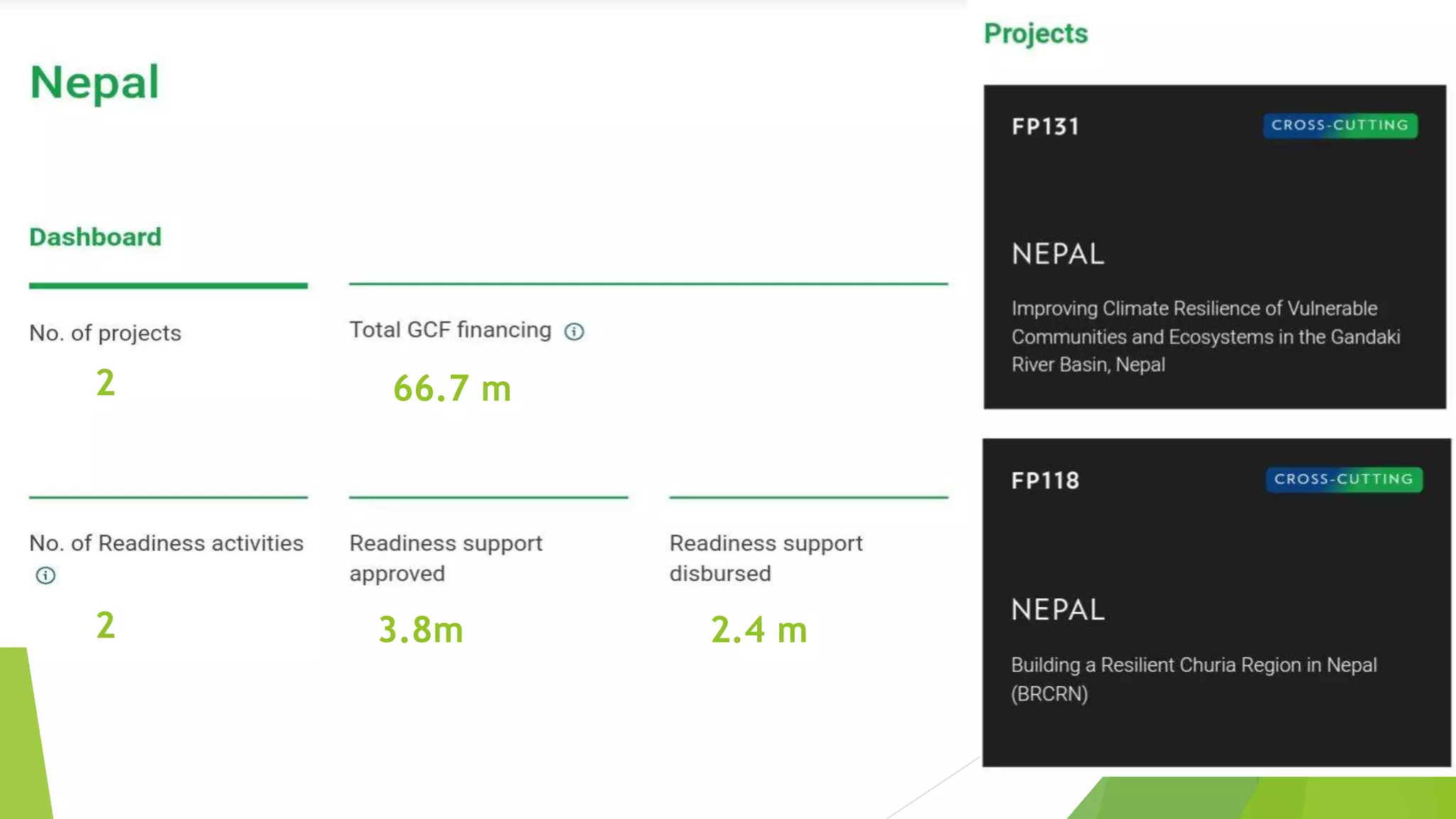
Climate Funds and Finance for Nepal
 National Designated Authority for Green Climate Funds is
International Economic Cooperation Coordination Division,
Ministry of Finance.
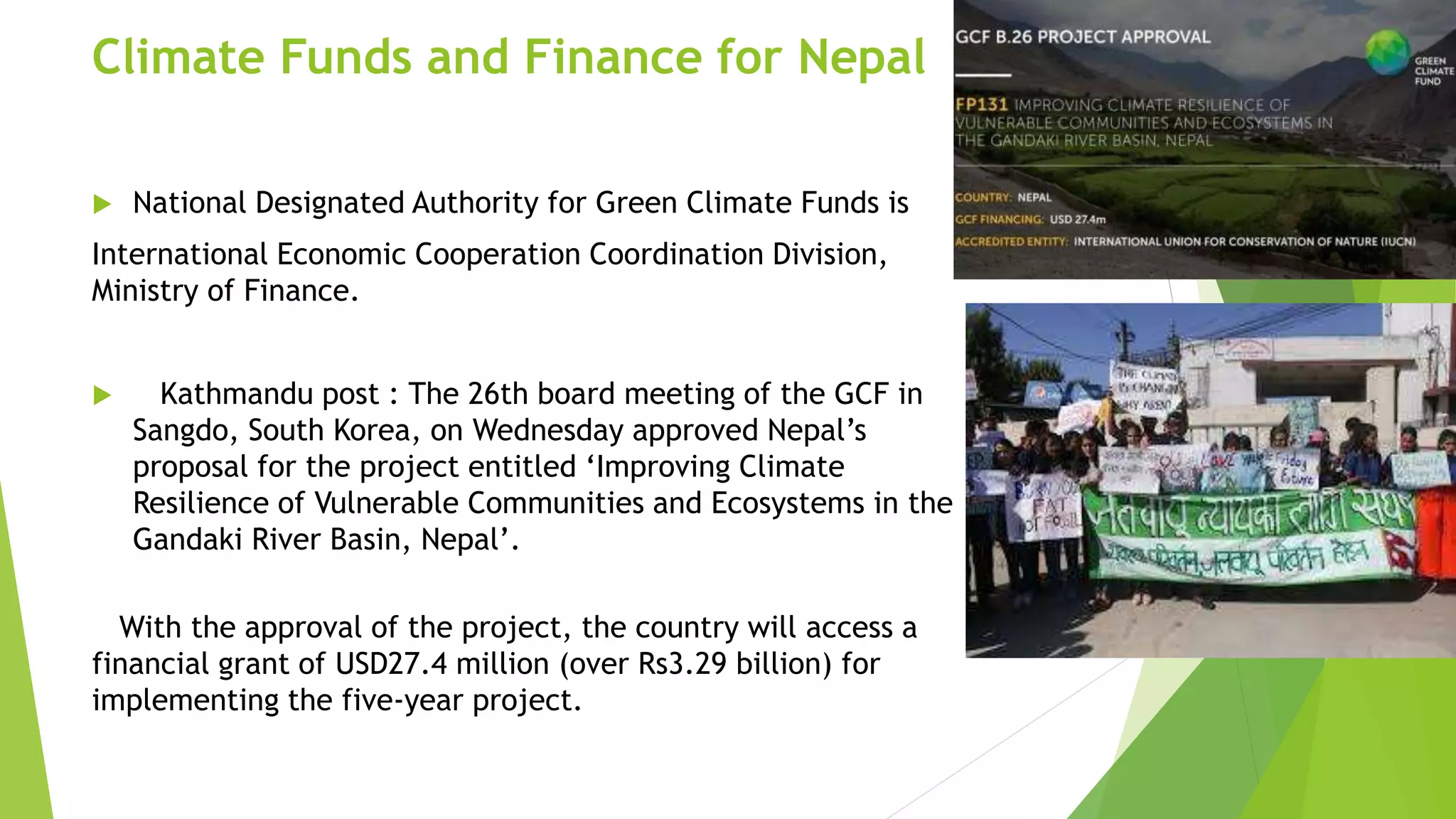
 Kathmandu post : The 26th board meeting of the GCF in
Sangdo, South Korea, on Wednesday approved Nepal’s
proposal for the project entitled ‘Improving Climate
Resilience of Vulnerable Communities and Ecosystems in the
Gandaki River Basin, Nepal’.
With the approval of the project, the country will access a
financial grant of USD27.4 million (over Rs3.29 billion) for
implementing the five-year project.
2 66.7 m
2 3.8m 2.4 m

Climate change , it's impacts and adaption in Nepal

  • 1.
    Climate change, it’simpacts and adaptation in Nepal
  • 2.
    Introduction  Climate changeis the long term shift in global or regional climatic patterns.  Mainly due to unsustainable anthropogenic activity and increase in level of green house gases.  Has leads to extreme weather events more frequent and severe.  It refers to change in aspect of the earth’s climate inluding temperature , preipitation , strom intensity and pattern.  Weather patterns becomes less predictable.  Global warming = climate change ?
  • 3.
    Impacts of climatechange The impacts of climate is notable in these sectors: 1. Agriculture and food security (derease in prodution and shift in ripening time) 2. Forests and biodiversity 3. Public health ( more incidene of diseases) 4. Climate-induced disasters( flood, land slide , drought melting glaciers , world temperature inreased , Rising sea level , heat waves , wld fire, more extreme weather conditions )
  • 4.
    Climate change impacton Nepal  Nepal has experienced changes in temperature and precipitation at a faster rate than the global average.  Himalayan peaks are warming between 0.3 to 0.7oC faster than the global average.  Due to this Nepal is exposed to a range of climate risks and water- related hazards triggered by rapid snow- and ice-melt in the mountains.  The rapidly retreating glaciers (average retreat of more than 30 m/year), rapid rise in temperature (> 0.06 C).  Most of the big rivers of Nepal are glacier-fed and its main resources of water and hydroelectricity will be seriously affected due to the ongoing changes in glacier reserves, snowfall and natural hazards.
  • 5.
    Before After Gokyo Lake viewedfrom Gokyo peak. Ngozumpa glacier with supra glacier lakes is also seen on the left side of the photograph
  • 6.
    Receding Imja Glacierin Everest region of Nepal. Green and blue meltpools on the North Ama Dablam Glacier
  • 7.
    Continue....  Biodiversity-the otherimportant resources of Nepal is also being affected as invasive species will spread fast and useful medicinal, food and nutrition related plants may disappear.  Nepal’s total GHG emissions in 2014 were 44.06 million metric tons of carbon dioxide equivalent (MtCO2e), totaling 0.09% of GHG emissions. In Nepal, 50.1 percent of GHG emissions come from the agriculture sector.
  • 8.
    Adaptation Adaptations are theadjustments or modifications in environment condition. In a well adapted system, people thrive despite challenging conditions. Adaptation types are ;  Ecological adaptation : Development of new varieties, modification of practices. ( mix cropping , rain water harvesting , plastic house farming , ........)  Social adaptation : Migration, Changes in lifestyles and occupation.  Autonomous adaptation : Includes insurances, diversification of livelihood etc.
  • 9.
    Impacts on Agriculture Agriculture is major economic sector as two thirds of population are engaged in it and it contributes 27% of the GDP approximately.  70% of the yield depends upon climate variability.  Disasters like flood and droughts have caused a significant decline in crop yield (10-30%).  Rise in temperature also caused great decline in fisheries production. Climate hazards will affect agriculture through; 1. Heat stress on plant 2. Changes in soil moisture and temperature 3. Loss of soil fertility through erosion of top soil. 4.Loss water available for crop production.
  • 10.
    Continue... 5. Changes inheight of water table 6. Salinization of fresh water aquifer. 7. Loss of land through sea level rise. Positive impacts of climate change ;  CO2 fertilization, growing season extension and increase production by enhancing photosynthetic processes.  More CO2 level increase water use efficiency.  Decrease energy consumption due to warmer climate.  Production of tropical plants in higher altitude due to increase in global temperarure.
  • 11.
    Adaptation strategies inAgriculture  These programs mainly emphasize on awareness raising, capacity building and transfer of technology. Some practices that may be effective; 1. Drip irrigarion 2. Rain water harvesting 3. Plastic pond 4. Plastic house farming 5. Early warning system ( 282 meterological and 51 hydrological stations. station available) 6. Solar power irrigation 7. Aeroponics and Hydroponics 8. Climate controlled Green house
  • 12.
    Continue.... 9. SRI cultivation,minimum or zero tillage cultivation, green manuring, sustainable use of water, fertilizer, IPM, INM, etc. 10. Crop monitoring system, disease forecasting system has also played huge part reducing the effect of climate. 11. Adoption of climate smart agriculture ie. carbon smart, water smart , energy smart , knowledge smart ,weather smart and nutrient smart agriculture practices. 12. Similarly life insurances of crops or livestock
  • 13.
  • 14.
  • 15.
  • 16.
  • 17.
  • 18.
  • 19.
    Climate Smart Agriculture Approach for transforming and reorienting agricultural development under the new realities of climate change.  Principal goal of CSA is identified as food security and development. 3 pillars of CSA Productivity: Increase agricultural productivity and incomes without having negetive impacts on the environment Adaption: Enhances resiliance by building their capacity to adapt and prosper in changing climatic condition. Mitigation: Reduce or remove GHG emissions and managing trees to reduce CO2 levels.
  • 20.
    Policies on Climate-Smart Agriculture in Nepal  The government of Nepal signed the NAPA contract with UNDP in November 2008 and has a strategic plan to report final draft findings of the NAPA document by April 2010 to the UNFCCC secretariat. National Adaptation Programme of Action (NAPA) development started in May 2009 and completed in 2010. ( prime minister : Madhav Kumar Nepal)  And enacted a national Climate Change Policy in 2011 (CCP)  Implemented Local Adaptation Plans of Action (LAPAs)  Promotion of climate-friendly practices in agriculture is one of the strategies set out in Nepal’s Nationally Determined Contribution (NDC).  Agricultural Development strategy 2015 (ADS) of Nepal aims to promote green technologies and reduce carbon emmisions.  ADS also targets on capacity strengthening of agricultural extension staff and farmers on CSA practices and technologies for improved resiliance to climate change .
  • 21.
    NAPA  Intend totake into account the existing coping strategies at the community level and to build upon these to identify priority activities, rather than focusing on scenario-based modeling to assess future vulnerability and long-term policy at the national level.  It is therefore, important for the least developed countries, such as Nepal, to identify community-based coping strategies of climate induced vulnerability.  The goal of a NAPA : 1. to enable countries to respond strategically to the challenges and opportunities posed by climate change.  A key strategy of the NAPA : 1. to ensure comprehensive stakeholder input in all stages of the implementation process, involving national and local level government institutions, non-governmental organization, civil societies groups, academia, international organization and donor agencies.  In Nepal the Ministry of Environment is the lead agency for the preparation of the NAPA.
  • 22.
    Continue....  The stepsfor the preparation of NAPA include : 1.Synthesis of available information, participatory assessment of vulnerability to current climate variability and extreme events and of areas where risks would increase due to climate change 2. identification of key adaptation measures as well as criteria for prioritising activities and selection of a prioritised short list of activities by each development sectors (UNFCCC, 2002).  The NAPA will develop a strategic framework based on: 1. the identified immediate priorities for climate resilient and low carbon development, based on which stakeholders can align their responses. 2. the analysis of climate change impacts on various sectors, the key climate change adaptation priorities will be identified, including capacity development .  There were a number of problems contributing to the delay of the NAPA process in Nepal. These included difficulties in accessing and managing the fund, the political turmoil in Nepal and the lack of government priority.
  • 23.
    Nepal's Prime MinisterMadhav Kumar Nepal, center, and members of the cabinet raise hands in favor of a document to highlight the negative impacts of global warming on himalayas during a special cabinet meeting at Kalapatthar near the base of Everest on the eve of the fifteenth session of the Conference of Parties (COP 15) to the United Nation Convention on Climate Change in December 2009. NAPA fast Working : 1. Increased ownership of governmental ministries, departments, local governments, acedemia ,non- governmental organization and civil society provides ample oppourtunities to implement fast process of NAPA. • The Thematic Working Groups are coordinators, faciliators, TWG members, several organization and individuals.
  • 24.
    National policy responsesto climate change  Nepal ratified the United Nations Framework Convention on Climate Change (UNFCCC) in May 1994 and signed the Kyoto Protocol in September 1995.  The Government of Nepal identified the Ministry of Environment (MoE) as the Designated National Authority (DNA) as part of its commitment to the effective implementation of climate change policies.  The Government of Nepal prepared a National Greenhouse Gas Inventory Report and an Initial National Communication Report (2004).  In 2008, the Government and the United Nations Development Programme (UNDP) began work on the preparation and implementation of the NAPA.  There are other national initiatives like the Pilot Programme on Climate Resilience (PPCR) and Reducing Emissions from Deforestation in Developing Countries (REDD).
  • 25.
    Policies for vulnerabilityand adaptation  Policies and rate of adaptation depends on ability to identify the likely extent and nature of its impact and the vulnerability of economic and social systems.  Various constraints have been identified, the most important of which is the lack of national level data and technical capability to apply the results of Global Climate Models (GCMs) to local areas.  Impact and vulnerability studies are also needed to identify and analyse potential adaptation measures vital for sustainable development in Nepal, particularly in the agriculture and water resources sectors.  The lack of comprehensive research in these areas seriously limits the ability to make appropriate national policy recommendations.
  • 26.
    Attention to climatechange in Nepal’s planning documents  While the current Tenth Five Years Plan (hereafter referred to as the Tenth Plan) of the government acknowledges the important influence weather can have on the overall economic performance, there is only one paragraph in the entire document wherein the development impacts of weather and climate are mentioned.  An analysis of climate change related risks and the ways to reduce them is not included.  The overall national Medium-Term Expenditure Framework (MTEF) developed to ensure appropriate allocation of resources to different sectors does not discuss climate risks either.  The sectoral MTEF paper for agriculture pays some attention to climate- related factors. It mentions the criticality of the monsoon season for the sector and lists the country’s agro-climatic potential as an opportunity.  A number of investments likely to reduce vulnerability to climate related risks are identified and a general proposal is made to use research funds to support needs based adaptive research.
  • 27.
    Gaps in governmentpolicies and development plans  At the national level, evidence suggests that the impact of climate change and the actions needed to confront climate change have yet to be embedded into policy and planning processes.  The Tenth Plan has poverty reduction as a central focal area, which in turn has been developed as the country’s Poverty Reduction Strategy Plan.  As noted above, both the overall and sectoral MTEF papers pay little attention to climate change .  Climate change has also been given little attention in the Nepal Environment Policy and Action Plan recent reports to the UN Convention on Biodiversity, UN Convention on Combating Desertification or in its report to the World Summit on Sustainable Development (WSSD).  In the context of the maintenance and use of agrobiodiversity there is a particular need to strengthen existing agriculture policy in order to take account of climate change.
  • 28.
    LI- BIRD  lI-BIRD( Local Initiatives for Biodiversity and Development )a NGO located in Pokhara.  Helping farmers by funding and providing appropriate training programs which focuses on adaption of farm production against climate change. Impact goal of LI-BIRD : 1. reduce poverty by strengthening resiliant livelihood systems 2. Improving ecosystems healths and services 3. Ensuring food, nutrition and income security of smallholder farmers.
  • 29.
    Some strategic programmesof LI-BIRD : Agricultural innovations for food and nutrition security Bio diversity and ecosystem services for sustainable livelihood Community resiliance to climate change and disaster risks Inclusive economic growth for income and employment
  • 30.
    Other NGOs workingAgainst Climate change 1. Eco – Nepal ( Environment and Child Concern Organization )  Climate change and natural resources conservation with right based approach to the community people as well as policy makers, development workers and civil society. Strategies and work of Eco Nepal.  Introduction and progress evaluation programme  International Conference on DRR  Disaster relief support  Monitoring Hon embassadors of Finland and Norway
  • 31.
    Intergovernmental Panels onClimate Change (IPCC)  Established in 1988 by UNEP and WMO.  To provide policy mekers with regular scientific asesessment on climate change.  Is a group of governments about 195 from across the globe who wants information on state of climate and human origin.  First report published published in 1990.  Experts from many country involved , over 250 scientist all over world.  Without green house gases ,earth’s average temperature will be -18°celcius  Provide funds and scholarships to students who are greatly involved in climate change issue and research ..
  • 32.
    IPCC Special Reporton Global Warming of 1.5°celcius( Summary for policymakers) In its decision on the adoption of the Paris Agreement, the Conference of Parties (COP) to the United Nations Framework Convention on Climate Change (UNFCCC) at its 21st Session in Paris, France (30 November to 11 December 2015), invited the IPCC to provide a special report in 2018 on the impacts of global warming of 1.5 °C above pre-industrial levels and related global greenhouse gas emission pathways. Summary:  Human activities have caused about 1°C of global warming, expected to reach 1.5°C between 2030 and 2050.  Risks for ecosystems, food and water security, health, development and economic growth are lower for 1.5°C compared to 2° C.  Transformative systems change in all sectors are implied.( Emissions of CO2 would fall by about 50 % by 2030 reaching net zero around 2050.)  Pathways to 1.5 °C include a steep decline in coal, increased energy efficiency, use of wide range of technologies, and behavioral changes.
  • 33.
    Continue....  Ethical andfair transitions can achieve sustainable development.  A careful mix of policies to adapt, mitigate and develop need cooperation , multi – level governance, innovation and investment.  Limiting global warming is not impossible but political will to accelerate transitions is key.
  • 34.
    IPCC report 2021“ code red for humanity”  AR6 ( 6th Assesment Report , 2021)  Over 200 authors and looked at 14 thousand scientific research over 3 years.  Global temperature may exceed 1.5°C by 2040. ( 10 years sooner )  Breach the ambition of the Paris Climate Agreement.  Each of the last 4 decade has been successfully warmer than any decade preceded it since 1850.  Global surface temperature has increased 0.8 to 1.3°C  Sea level increasing rate has doubled at last 15 years alone.  More disasters , greater rate of melting glacier, increase sea level , increase coastal flooding, heat waves will increase.
  • 35.
    What can welearn?  Expand evidence base for policy makers Improve Policies ( as they directly affect the approach against climate change ) Support and empower Local Institutions ( needed to develop capacity of farmers and adapt CSA. Being a member of governmental panel IPCC NAPA , LAPA Local Government Operation Act (2017) , Environment friendly Local Government frame work (2013) Public vehicle priority Alternative souce of energy Biogas adoptation programme Planting programme
  • 37.
    Climate financing  seeksto support mitigation and adaptation actions that will address climate change.  The Convention, the Kyoto Protocol and the Paris Agreement call for financial assistance from Parties with more financial resources to those that are less endowed and more vulnerable.  needed for mitigation, because large-scale investments are required to significantly reduce emissions  Overall, efforts under the Paris Agreement are guided by its aim of making finance flows consistent with a pathway towards low greenhouse gas emissions and climate-resilient development.
  • 38.
    Continue .....  TheGlobal Environment Facility(GEF) has served as an operating entity of the financial mechanism since the Convention’s entry into force in 199  At COP 16, in 2010, Parties established the Green Climate Fund (GCF) and in 2011 also designated it as an operating entity of the financial mechanism  The financial mechanism is accountable to the COP, which decides on its policies, programme priorities and eligibility criteria for funding.  Parties have established two special funds—theSpecial Climate Change Fund (SCCF) and the Least Developed Countries Fund (LDCF), both managed by the GEF—and the Adaptation Fund (AF) established under the Kyoto Protocol in 2001.  All above funds Shall serve the paris Agreement 2015.
  • 39.
    Climate Funds andFinance for Nepal  National Designated Authority for Green Climate Funds is International Economic Cooperation Coordination Division, Ministry of Finance.  Kathmandu post : The 26th board meeting of the GCF in Sangdo, South Korea, on Wednesday approved Nepal’s proposal for the project entitled ‘Improving Climate Resilience of Vulnerable Communities and Ecosystems in the Gandaki River Basin, Nepal’. With the approval of the project, the country will access a financial grant of USD27.4 million (over Rs3.29 billion) for implementing the five-year project.
  • 40.
    2 66.7 m 23.8m 2.4 m