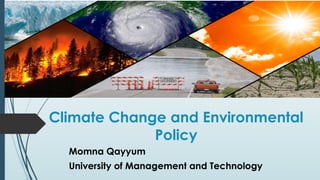
Climate Change and Environmental
Policy
Momna Qayyum
University of Management and Technology
TABLE of CONTENTS
 Overview
 Causes of Climate Change
 Impacts of Climate Change
 Natural Disasters and Climate Change
 Global Greenhouse Gas Emissions
 Key Indicators of Climate Change
 International Climate Agreements
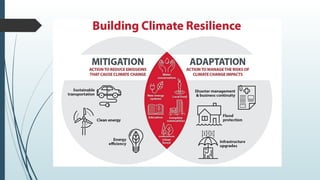
 Role of Policy in Climate Mitigation
 Renewable Energy Policies
 Carbon Pricing Mechanisms
 Role of Technology in Climate Policy
 Adaptation Strategies
 Climate Finance
 Case Study: European Union’s Green Deal
 Case Study: Developing Countries
 Challenges in Implementing Policies
 Public Awareness Campaigns
 Future Scenarios
 Conclusion
 References
Overview
Definition: Climate change refers to long-term changes in
temperature, precipitation, and other atmospheric conditions.
Importance: Addressing climate change is crucial to prevent
irreversible environmental damage and ensure sustainable
development.
Role of Policies: Environmental policies are frameworks and
regulations to mitigate climate impacts and promote adaptation
strategies.
Stakeholders: Governments, NGOs, businesses, and individuals all
play a role in addressing climate change.
Urgency: Scientific consensus emphasizes immediate action to
limit global warming.
Causes of Climate Change
Natural causes:
Volcanic eruptions: Release of aerosols and greenhouse gases.
Solar variations: Changes in solar radiation impacting Earth’s climate.
Human-induced causes:
Greenhouse gas emissions: CO from fossil fuel combustion.
₂
Deforestation: Reduces carbon sequestration capacity.
Industrial activities: High energy consumption and pollution.
Urbanization: Increased energy demand and heat island effects.
Agricultural practices: Methane emissions from livestock and rice paddies.
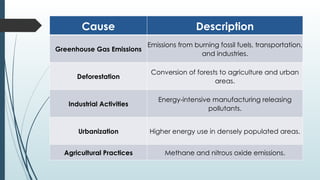
Cause Description
Greenhouse Gas Emissions
Emissions from burning fossil fuels, transportation,
and industries.
Deforestation
Conversion of forests to agriculture and urban
areas.
Industrial Activities
Energy-intensive manufacturing releasing
pollutants.
Urbanization Higher energy use in densely populated areas.
Agricultural Practices Methane and nitrous oxide emissions.
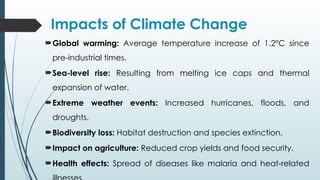
Impacts of Climate Change
Global warming: Average temperature increase of 1.2°C since
pre-industrial times.
Sea-level rise: Resulting from melting ice caps and thermal
expansion of water.
Extreme weather events: Increased hurricanes, floods, and
droughts.
Biodiversity loss: Habitat destruction and species extinction.
Impact on agriculture: Reduced crop yields and food security.
Health effects: Spread of diseases like malaria and heat-related
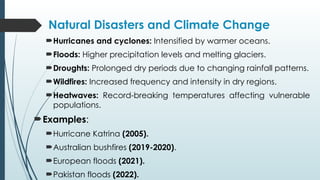
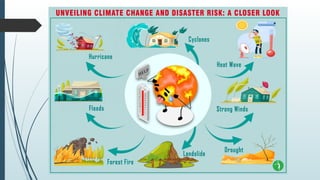
Natural Disasters and Climate Change
Hurricanes and cyclones: Intensified by warmer oceans.
Floods: Higher precipitation levels and melting glaciers.
Droughts: Prolonged dry periods due to changing rainfall patterns.
Wildfires: Increased frequency and intensity in dry regions.
Heatwaves: Record-breaking temperatures affecting vulnerable
populations.
Examples:
Hurricane Katrina (2005).
Australian bushfires (2019-2020).
European floods (2021).
Pakistan floods (2022).
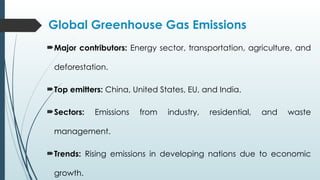
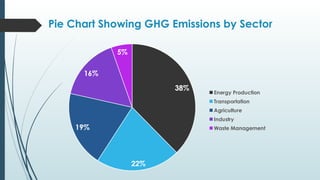
Global Greenhouse Gas Emissions
Major contributors: Energy sector, transportation, agriculture, and
deforestation.
Top emitters: China, United States, EU, and India.
Sectors: Emissions from industry, residential, and waste
management.
Trends: Rising emissions in developing nations due to economic
growth.
Pie Chart Showing GHG Emissions by Sector
38%
22%
19%
16%
5%
Energy Production
Transportation
Agriculture
Industry
Waste Management
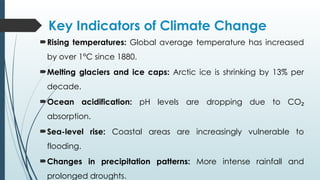
Key Indicators of Climate Change
Rising temperatures: Global average temperature has increased
by over 1°C since 1880.
Melting glaciers and ice caps: Arctic ice is shrinking by 13% per
decade.
Ocean acidification: pH levels are dropping due to CO₂
absorption.
Sea-level rise: Coastal areas are increasingly vulnerable to
flooding.
Changes in precipitation patterns: More intense rainfall and
prolonged droughts.
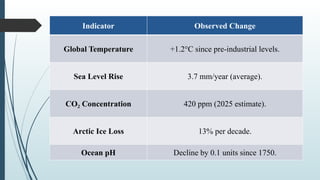
Indicator Observed Change
Global Temperature +1.2°C since pre-industrial levels.
Sea Level Rise 3.7 mm/year (average).
CO Concentration
₂ 420 ppm (2025 estimate).
Arctic Ice Loss 13% per decade.
Ocean pH Decline by 0.1 units since 1750.
International Climate Agreements
Kyoto Protocol (1997): Binding targets for developed countries to
reduce emissions.
Paris Agreement (2015): Global pact to limit temperature rise to
below 2°C.
COP26 Outcomes: Commitments to net-zero emissions and
climate finance.
Montreal Protocol: Phasing out ozone-depleting substances.
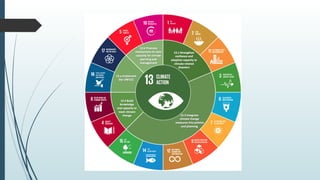
SDGs: Integration of climate action in the Sustainable
Development Goals.
Role of Policy in Climate Mitigation
Policies aim to reduce emissions and promote sustainable
practices.
Examples of effective policies:
European Union Green Deal.
Renewable Energy Standards in various nations.
Incentives for renewable energy adoption and emissions
reduction.
Nationally Determined Contributions (NDCs): Key component of
Paris Agreement.
Public-private partnerships: Collaboration for clean energy
projects.
Renewable Energy Policies
Goals: Replace fossil fuels with solar, wind, and hydro energy.
Examples:
Germany’s Energiewende: Transition to renewable energy.
U.S. tax credits for renewable energy installations.
India’s solar energy mission: Expanding photovoltaic installations.
Benefits: Reducing dependence on imported fuels and creating
green jobs.
Challenges: High initial costs and grid integration issues.
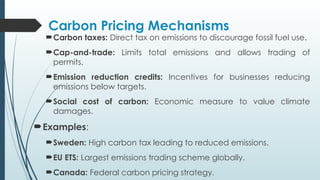
Carbon Pricing Mechanisms
Carbon taxes: Direct tax on emissions to discourage fossil fuel use.
Cap-and-trade: Limits total emissions and allows trading of
permits.
Emission reduction credits: Incentives for businesses reducing
emissions below targets.
Social cost of carbon: Economic measure to value climate
damages.
Examples:
Sweden: High carbon tax leading to reduced emissions.
EU ETS: Largest emissions trading scheme globally.
Canada: Federal carbon pricing strategy.
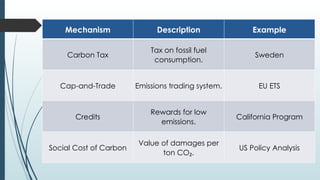
Mechanism Description Example
Carbon Tax
Tax on fossil fuel
consumption.
Sweden
Cap-and-Trade Emissions trading system. EU ETS
Credits
Rewards for low
emissions.
California Program
Social Cost of Carbon
Value of damages per
ton CO .
₂
US Policy Analysis
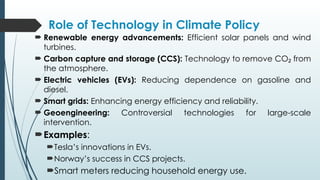
Role of Technology in Climate Policy
 Renewable energy advancements: Efficient solar panels and wind
turbines.
 Carbon capture and storage (CCS): Technology to remove CO from
₂
the atmosphere.
 Electric vehicles (EVs): Reducing dependence on gasoline and
diesel.
 Smart grids: Enhancing energy efficiency and reliability.
 Geoengineering: Controversial technologies for large-scale
intervention.
Examples:
Tesla’s innovations in EVs.
Norway’s success in CCS projects.
Smart meters reducing household energy use.
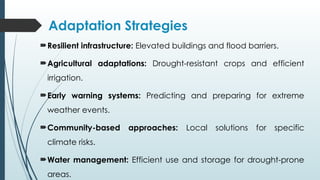
Adaptation Strategies
Resilient infrastructure: Elevated buildings and flood barriers.
Agricultural adaptations: Drought-resistant crops and efficient
irrigation.
Early warning systems: Predicting and preparing for extreme
weather events.
Community-based approaches: Local solutions for specific
climate risks.
Water management: Efficient use and storage for drought-prone
areas.
Climate Finance
Importance of funding: Support for mitigation and
adaptation efforts.
Green Climate Fund: Assists developing nations in
combating climate change.
Private sector involvement: Investments in clean energy
and sustainable projects.
Challenges: Ensuring transparency and equitable
distribution.
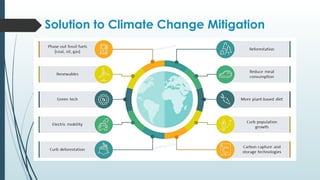
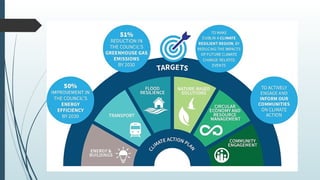
Solution to Climate Change Mitigation
Case Study: European Union’s Green Deal
Objective: Achieve carbon neutrality by 2050.
Key initiatives:
Circular economy.
Investments in clean energy and sustainable infrastructure.
Biodiversity protection measures.
Enhanced emissions trading.
Success metrics: Progress reports on emission reductions
and energy transition
Case Study: Developing Countries
Challenges:
Limited financial and technological resources.
High vulnerability to climate impacts.
Examples:
India’s National Action Plan on Climate Change.
Bangladesh’s adaptation strategies for rising sea levels.
Kenya’s solar microgrid projects.
Brazil’s Amazon rainforest preservation efforts.
Challenges in Implementing Policies
Political resistance: Short-term economic interests vs. long-term
sustainability.
Economic barriers: High initial costs of renewable energy
infrastructure.
Public awareness: Lack of understanding about climate impacts
and solutions.
Coordination issues: Global disparities in policy enforcement.
Technological gaps: Limited access to modern solutions in
developing nations.
Public Awareness Campaigns
Importance: Educating people to adopt sustainable
practices.
Examples:
Greta Thunberg’s Fridays for Future.
Earth Hour by WWF.
United Nations’ ActNow Campaign.
Media campaigns: Documentaries like "An Inconvenient Truth."
Impact: Increased participation in climate actions.
Corporate Responsibility
Role of businesses:
Reducing carbon footprint in operations.
Investing in sustainable supply chains.
Examples:
Microsoft’s carbon-negative pledge.
Tesla’s advancements in EV technology.
IKEA’s commitment to renewable energy use.
Green certifications: LEED and ISO 14001 for sustainable
operations.
Role of NGOs
Advocacy: Lobbying for stricter environmental
regulations.
Grassroots movements: Mobilizing local communities.
Examples: Greenpeace, WWF.
Projects: Conservation of endangered species and
ecosystems.
Educational outreach: Climate literacy programs for
youth.
Future Scenarios
IPCC projections:
High emissions scenario: Warming of 4°C by 2100.
Low emissions scenario: Warming limited to 1.5°C.
Importance of achieving net-zero emissions.
Risks of inaction: Irreversible climate tipping points.
Opportunities: Economic growth through green
technology.
Future Scenarios
High Emissions Scenario
 Warming of 4°C by 2100
A scenario marked by unchecked emissions, leading to catastrophic impacts, including
extreme weather events, rising sea levels, and significant disruptions to ecosystems and
human societies.
Low Emissions Scenario
 Warming Limited to 1.5°C by 2100
Achieved through rapid and extensive efforts to reduce emissions, focusing on
transitioning to renewable energy, enhancing energy efficiency, and fostering
sustainable practices. This path offers a chance to mitigate some of the worst impacts of
climate change.
Future Scenarios
 The Importance of Achieving Net-Zero Emissions by 2050
To avoid the most severe consequences, it is crucial to reach net-zero emissions by mid-
century. This will require collective action across governments, industries, and individuals,
emphasizing renewable energy, sustainable agriculture, and carbon capture technologies.
 Risks of Inaction
Failing to act could push the planet beyond critical thresholds, triggering irreversible climate
tipping points, such as the collapse of ice sheets, ocean acidification, and the loss of
biodiversity, which will be difficult or impossible to reverse.
 Opportunities in the Transition
The shift toward a green economy opens doors for innovation, green jobs, and new
industries. By prioritizing sustainable living, we can build more resilient communities, reduce
pollution, and foster a healthier planet for future generations.
Key Takeaways
Summary:
Climate change poses severe global challenges.
Policies and technologies are essential for mitigation and
adaptation.
Collective efforts are required to ensure a sustainable future.
Importance of public awareness and international
cooperation.
Urgency: Immediate action can prevent catastrophic
impacts.
Call to Action
Encouraging:
Advocacy for stronger climate policies.
Adoption of sustainable practices.
Participation in public awareness campaigns.
Support for renewable energy projects.
Collaboration with organizations working on climate
solutions.
Conclusion
Climate change is a pressing global challenge requiring immediate
action.
Environmental policies are essential to mitigate impacts and
promote adaptation.
Collaboration among governments, businesses, and individuals is
crucial.
Technological advancements and financial support can accelerate
progress.
Public awareness and education are vital for fostering a sustainable
future.
Call to Action: "Together, we can build a resilient and sustainable
planet for future generations."
References
 Bolan, S., Padhye, L. P., Jasemizad, T., Govarthanan, M., Karmegam, N., Wijesekara, H., ... & Bolan, N.
(2024). Impacts of climate change on the fate of contaminants through extreme weather
events. Science of The Total Environment, 909, 168388.
 Suprayitno, D., Iskandar, S., Dahurandi, K., Hendarto, T., & Rumambi, F. J. (2024). Public Policy In The Era
Of Climate Change: Adapting Strategies For Sustainable Futures. Migration Letters, 21(S6), 945-958.
 Suprayitno, D., Iskandar, S., Dahurandi, K., Hendarto, T., & Rumambi, F. J. (2024). Public Policy In The Era
Of Climate Change: Adapting Strategies For Sustainable Futures. Migration Letters, 21(S6), 945-958.
 Rawat, A., Kumar, D., & Khati, B. S. (2024). A review on climate change impacts, models, and its
consequences on different sectors: a systematic approach. Journal of Water and Climate
Change, 15(1), 104-126.
 Emmerling, J., Andreoni, P., & Tavoni, M. (2024). Global inequality consequences of climate policies
when accounting for avoided climate impacts. Cell Reports Sustainability, 1(1).
THANK
YOU

Climate Change and Environmental Policy.

  • 1.
    Climate Change andEnvironmental Policy Momna Qayyum University of Management and Technology
  • 2.
    TABLE of CONTENTS Overview  Causes of Climate Change  Impacts of Climate Change  Natural Disasters and Climate Change  Global Greenhouse Gas Emissions  Key Indicators of Climate Change  International Climate Agreements  Role of Policy in Climate Mitigation  Renewable Energy Policies  Carbon Pricing Mechanisms  Role of Technology in Climate Policy  Adaptation Strategies  Climate Finance  Case Study: European Union’s Green Deal  Case Study: Developing Countries  Challenges in Implementing Policies  Public Awareness Campaigns  Future Scenarios  Conclusion  References
  • 3.
    Overview Definition: Climate changerefers to long-term changes in temperature, precipitation, and other atmospheric conditions. Importance: Addressing climate change is crucial to prevent irreversible environmental damage and ensure sustainable development. Role of Policies: Environmental policies are frameworks and regulations to mitigate climate impacts and promote adaptation strategies. Stakeholders: Governments, NGOs, businesses, and individuals all play a role in addressing climate change. Urgency: Scientific consensus emphasizes immediate action to limit global warming.
  • 4.
    Causes of ClimateChange Natural causes: Volcanic eruptions: Release of aerosols and greenhouse gases. Solar variations: Changes in solar radiation impacting Earth’s climate. Human-induced causes: Greenhouse gas emissions: CO from fossil fuel combustion. ₂ Deforestation: Reduces carbon sequestration capacity. Industrial activities: High energy consumption and pollution. Urbanization: Increased energy demand and heat island effects. Agricultural practices: Methane emissions from livestock and rice paddies.
  • 5.
    Cause Description Greenhouse GasEmissions Emissions from burning fossil fuels, transportation, and industries. Deforestation Conversion of forests to agriculture and urban areas. Industrial Activities Energy-intensive manufacturing releasing pollutants. Urbanization Higher energy use in densely populated areas. Agricultural Practices Methane and nitrous oxide emissions.
  • 6.
    Impacts of ClimateChange Global warming: Average temperature increase of 1.2°C since pre-industrial times. Sea-level rise: Resulting from melting ice caps and thermal expansion of water. Extreme weather events: Increased hurricanes, floods, and droughts. Biodiversity loss: Habitat destruction and species extinction. Impact on agriculture: Reduced crop yields and food security. Health effects: Spread of diseases like malaria and heat-related
  • 7.
    Natural Disasters andClimate Change Hurricanes and cyclones: Intensified by warmer oceans. Floods: Higher precipitation levels and melting glaciers. Droughts: Prolonged dry periods due to changing rainfall patterns. Wildfires: Increased frequency and intensity in dry regions. Heatwaves: Record-breaking temperatures affecting vulnerable populations. Examples: Hurricane Katrina (2005). Australian bushfires (2019-2020). European floods (2021). Pakistan floods (2022).
  • 8.
    Global Greenhouse GasEmissions Major contributors: Energy sector, transportation, agriculture, and deforestation. Top emitters: China, United States, EU, and India. Sectors: Emissions from industry, residential, and waste management. Trends: Rising emissions in developing nations due to economic growth.
  • 9.
    Pie Chart ShowingGHG Emissions by Sector 38% 22% 19% 16% 5% Energy Production Transportation Agriculture Industry Waste Management
  • 10.
    Key Indicators ofClimate Change Rising temperatures: Global average temperature has increased by over 1°C since 1880. Melting glaciers and ice caps: Arctic ice is shrinking by 13% per decade. Ocean acidification: pH levels are dropping due to CO₂ absorption. Sea-level rise: Coastal areas are increasingly vulnerable to flooding. Changes in precipitation patterns: More intense rainfall and prolonged droughts.
  • 12.
    Indicator Observed Change GlobalTemperature +1.2°C since pre-industrial levels. Sea Level Rise 3.7 mm/year (average). CO Concentration ₂ 420 ppm (2025 estimate). Arctic Ice Loss 13% per decade. Ocean pH Decline by 0.1 units since 1750.
  • 13.
    International Climate Agreements KyotoProtocol (1997): Binding targets for developed countries to reduce emissions. Paris Agreement (2015): Global pact to limit temperature rise to below 2°C. COP26 Outcomes: Commitments to net-zero emissions and climate finance. Montreal Protocol: Phasing out ozone-depleting substances. SDGs: Integration of climate action in the Sustainable Development Goals.
  • 15.
    Role of Policyin Climate Mitigation Policies aim to reduce emissions and promote sustainable practices. Examples of effective policies: European Union Green Deal. Renewable Energy Standards in various nations. Incentives for renewable energy adoption and emissions reduction. Nationally Determined Contributions (NDCs): Key component of Paris Agreement. Public-private partnerships: Collaboration for clean energy projects.
  • 16.
    Renewable Energy Policies Goals:Replace fossil fuels with solar, wind, and hydro energy. Examples: Germany’s Energiewende: Transition to renewable energy. U.S. tax credits for renewable energy installations. India’s solar energy mission: Expanding photovoltaic installations. Benefits: Reducing dependence on imported fuels and creating green jobs. Challenges: High initial costs and grid integration issues.
  • 17.
    Carbon Pricing Mechanisms Carbontaxes: Direct tax on emissions to discourage fossil fuel use. Cap-and-trade: Limits total emissions and allows trading of permits. Emission reduction credits: Incentives for businesses reducing emissions below targets. Social cost of carbon: Economic measure to value climate damages. Examples: Sweden: High carbon tax leading to reduced emissions. EU ETS: Largest emissions trading scheme globally. Canada: Federal carbon pricing strategy.
  • 18.
    Mechanism Description Example CarbonTax Tax on fossil fuel consumption. Sweden Cap-and-Trade Emissions trading system. EU ETS Credits Rewards for low emissions. California Program Social Cost of Carbon Value of damages per ton CO . ₂ US Policy Analysis
  • 19.
    Role of Technologyin Climate Policy  Renewable energy advancements: Efficient solar panels and wind turbines.  Carbon capture and storage (CCS): Technology to remove CO from ₂ the atmosphere.  Electric vehicles (EVs): Reducing dependence on gasoline and diesel.  Smart grids: Enhancing energy efficiency and reliability.  Geoengineering: Controversial technologies for large-scale intervention. Examples: Tesla’s innovations in EVs. Norway’s success in CCS projects. Smart meters reducing household energy use.
  • 20.
    Adaptation Strategies Resilient infrastructure:Elevated buildings and flood barriers. Agricultural adaptations: Drought-resistant crops and efficient irrigation. Early warning systems: Predicting and preparing for extreme weather events. Community-based approaches: Local solutions for specific climate risks. Water management: Efficient use and storage for drought-prone areas.
  • 22.
    Climate Finance Importance offunding: Support for mitigation and adaptation efforts. Green Climate Fund: Assists developing nations in combating climate change. Private sector involvement: Investments in clean energy and sustainable projects. Challenges: Ensuring transparency and equitable distribution.
  • 23.
    Solution to ClimateChange Mitigation
  • 24.
    Case Study: EuropeanUnion’s Green Deal Objective: Achieve carbon neutrality by 2050. Key initiatives: Circular economy. Investments in clean energy and sustainable infrastructure. Biodiversity protection measures. Enhanced emissions trading. Success metrics: Progress reports on emission reductions and energy transition
  • 25.
    Case Study: DevelopingCountries Challenges: Limited financial and technological resources. High vulnerability to climate impacts. Examples: India’s National Action Plan on Climate Change. Bangladesh’s adaptation strategies for rising sea levels. Kenya’s solar microgrid projects. Brazil’s Amazon rainforest preservation efforts.
  • 26.
    Challenges in ImplementingPolicies Political resistance: Short-term economic interests vs. long-term sustainability. Economic barriers: High initial costs of renewable energy infrastructure. Public awareness: Lack of understanding about climate impacts and solutions. Coordination issues: Global disparities in policy enforcement. Technological gaps: Limited access to modern solutions in developing nations.
  • 27.
    Public Awareness Campaigns Importance:Educating people to adopt sustainable practices. Examples: Greta Thunberg’s Fridays for Future. Earth Hour by WWF. United Nations’ ActNow Campaign. Media campaigns: Documentaries like "An Inconvenient Truth." Impact: Increased participation in climate actions.
  • 28.
    Corporate Responsibility Role ofbusinesses: Reducing carbon footprint in operations. Investing in sustainable supply chains. Examples: Microsoft’s carbon-negative pledge. Tesla’s advancements in EV technology. IKEA’s commitment to renewable energy use. Green certifications: LEED and ISO 14001 for sustainable operations.
  • 29.
    Role of NGOs Advocacy:Lobbying for stricter environmental regulations. Grassroots movements: Mobilizing local communities. Examples: Greenpeace, WWF. Projects: Conservation of endangered species and ecosystems. Educational outreach: Climate literacy programs for youth.
  • 30.
    Future Scenarios IPCC projections: Highemissions scenario: Warming of 4°C by 2100. Low emissions scenario: Warming limited to 1.5°C. Importance of achieving net-zero emissions. Risks of inaction: Irreversible climate tipping points. Opportunities: Economic growth through green technology.
  • 31.
    Future Scenarios High EmissionsScenario  Warming of 4°C by 2100 A scenario marked by unchecked emissions, leading to catastrophic impacts, including extreme weather events, rising sea levels, and significant disruptions to ecosystems and human societies. Low Emissions Scenario  Warming Limited to 1.5°C by 2100 Achieved through rapid and extensive efforts to reduce emissions, focusing on transitioning to renewable energy, enhancing energy efficiency, and fostering sustainable practices. This path offers a chance to mitigate some of the worst impacts of climate change.

  • 32.
    Future Scenarios  TheImportance of Achieving Net-Zero Emissions by 2050 To avoid the most severe consequences, it is crucial to reach net-zero emissions by mid- century. This will require collective action across governments, industries, and individuals, emphasizing renewable energy, sustainable agriculture, and carbon capture technologies.  Risks of Inaction Failing to act could push the planet beyond critical thresholds, triggering irreversible climate tipping points, such as the collapse of ice sheets, ocean acidification, and the loss of biodiversity, which will be difficult or impossible to reverse.  Opportunities in the Transition The shift toward a green economy opens doors for innovation, green jobs, and new industries. By prioritizing sustainable living, we can build more resilient communities, reduce pollution, and foster a healthier planet for future generations.
  • 34.
    Key Takeaways Summary: Climate changeposes severe global challenges. Policies and technologies are essential for mitigation and adaptation. Collective efforts are required to ensure a sustainable future. Importance of public awareness and international cooperation. Urgency: Immediate action can prevent catastrophic impacts.
  • 35.
    Call to Action Encouraging: Advocacyfor stronger climate policies. Adoption of sustainable practices. Participation in public awareness campaigns. Support for renewable energy projects. Collaboration with organizations working on climate solutions.
  • 36.
    Conclusion Climate change isa pressing global challenge requiring immediate action. Environmental policies are essential to mitigate impacts and promote adaptation. Collaboration among governments, businesses, and individuals is crucial. Technological advancements and financial support can accelerate progress. Public awareness and education are vital for fostering a sustainable future. Call to Action: "Together, we can build a resilient and sustainable planet for future generations."
  • 37.
    References  Bolan, S.,Padhye, L. P., Jasemizad, T., Govarthanan, M., Karmegam, N., Wijesekara, H., ... & Bolan, N. (2024). Impacts of climate change on the fate of contaminants through extreme weather events. Science of The Total Environment, 909, 168388.  Suprayitno, D., Iskandar, S., Dahurandi, K., Hendarto, T., & Rumambi, F. J. (2024). Public Policy In The Era Of Climate Change: Adapting Strategies For Sustainable Futures. Migration Letters, 21(S6), 945-958.  Suprayitno, D., Iskandar, S., Dahurandi, K., Hendarto, T., & Rumambi, F. J. (2024). Public Policy In The Era Of Climate Change: Adapting Strategies For Sustainable Futures. Migration Letters, 21(S6), 945-958.  Rawat, A., Kumar, D., & Khati, B. S. (2024). A review on climate change impacts, models, and its consequences on different sectors: a systematic approach. Journal of Water and Climate Change, 15(1), 104-126.  Emmerling, J., Andreoni, P., & Tavoni, M. (2024). Global inequality consequences of climate policies when accounting for avoided climate impacts. Cell Reports Sustainability, 1(1).
  • 38.