By
Siva sankar
1225112247
 Basis of classification
 Brief about different types
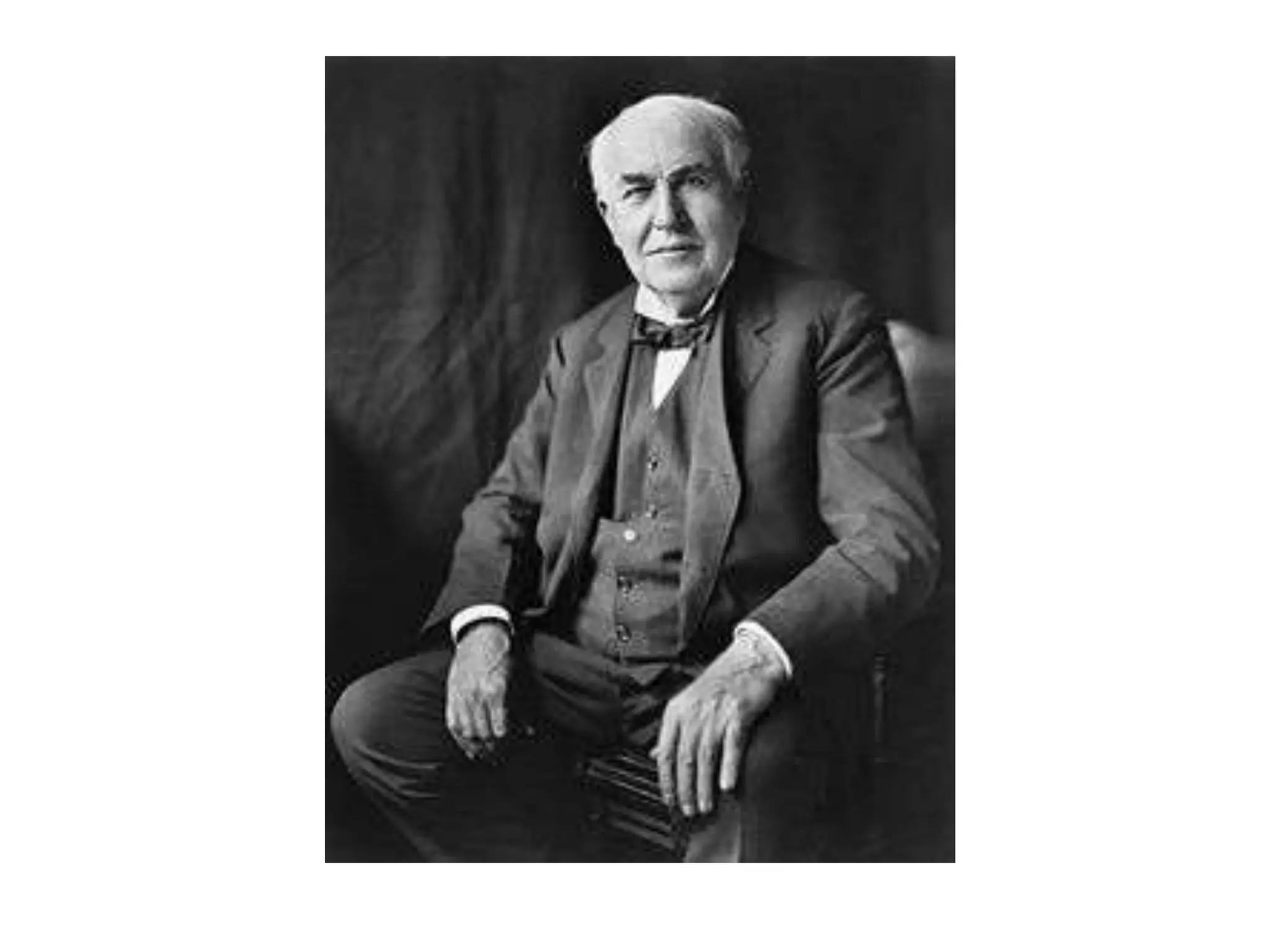
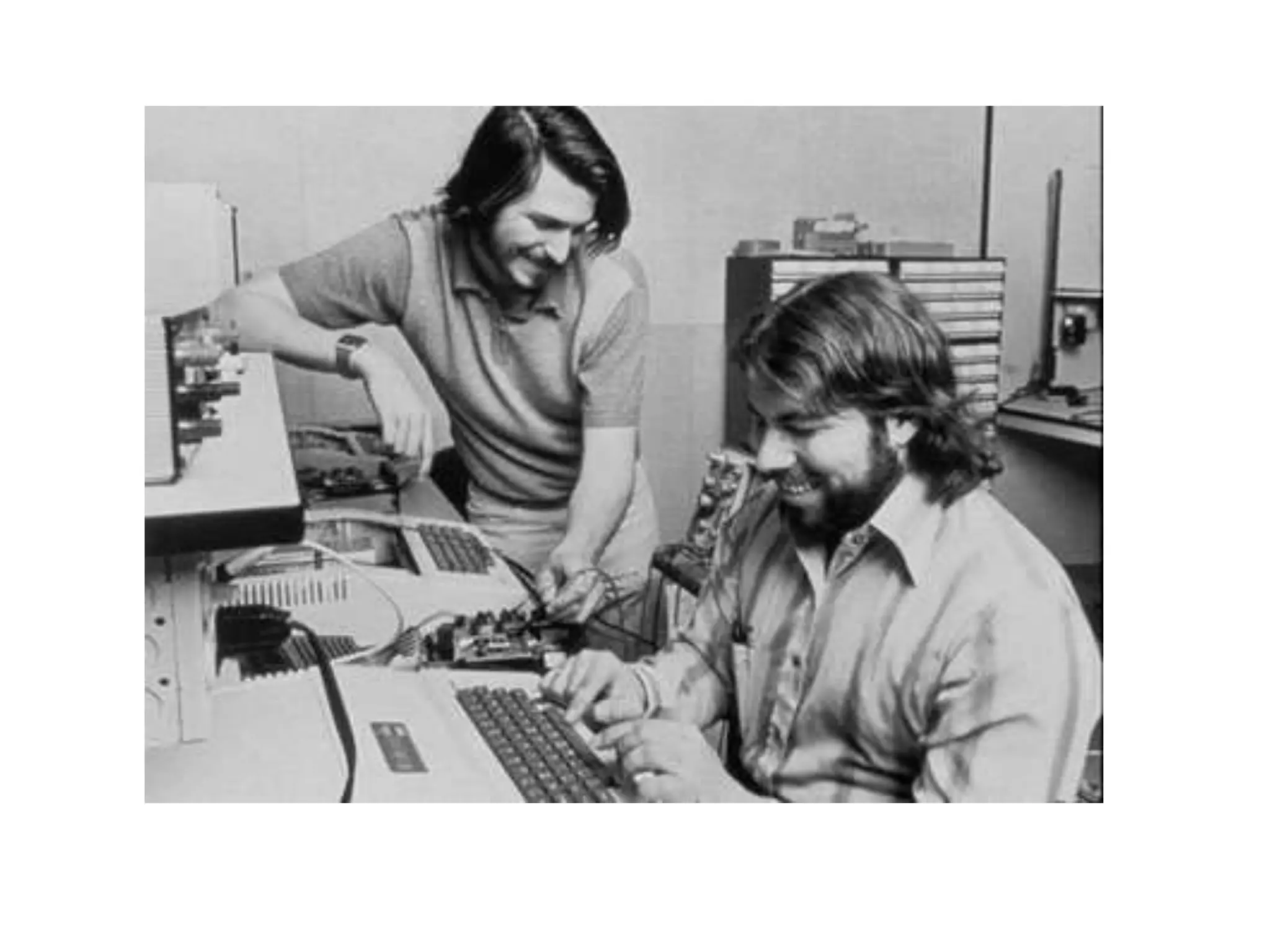
 Examples
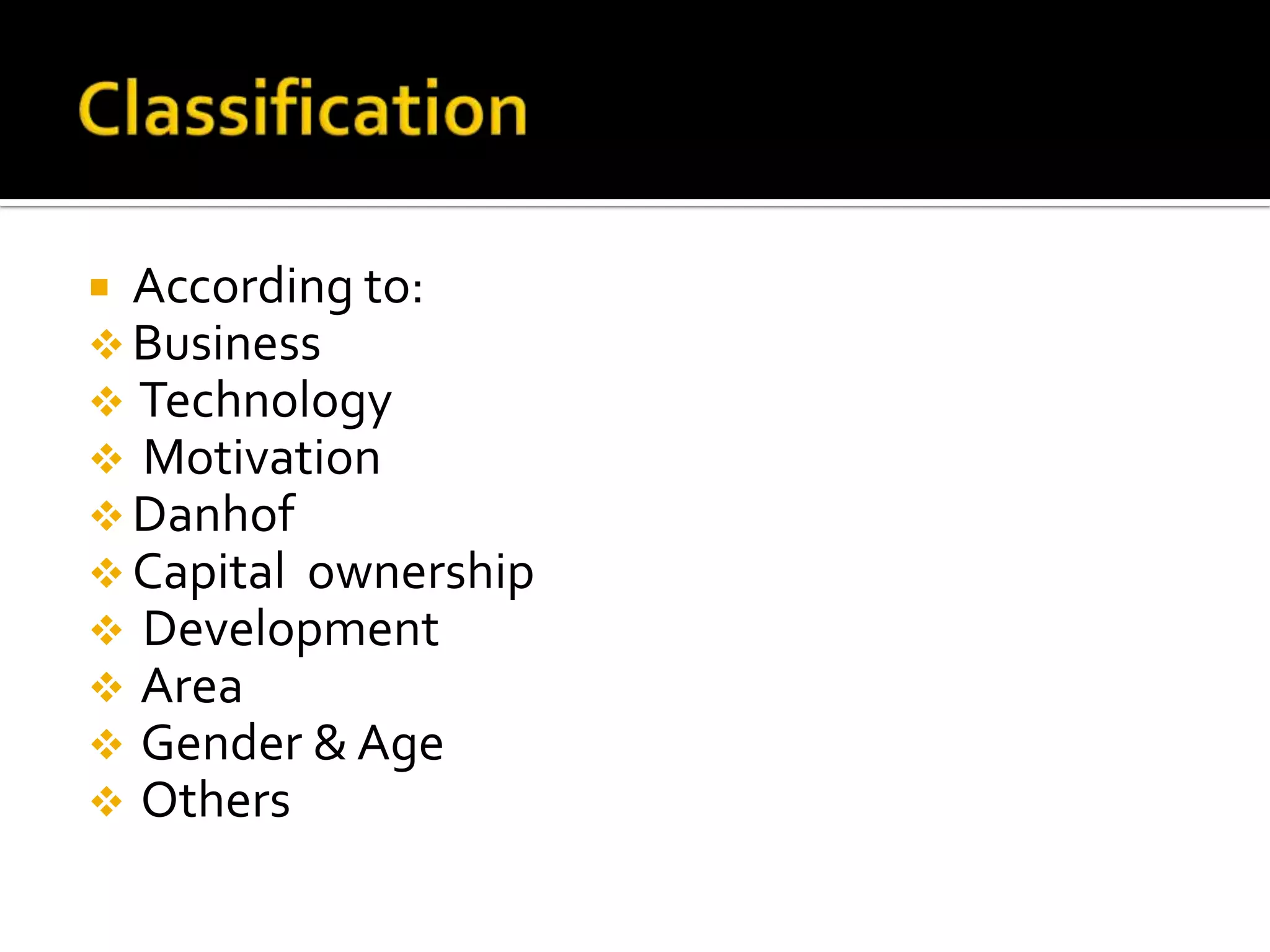
 According to:
 Business
 Technology
 Motivation
 Danhof
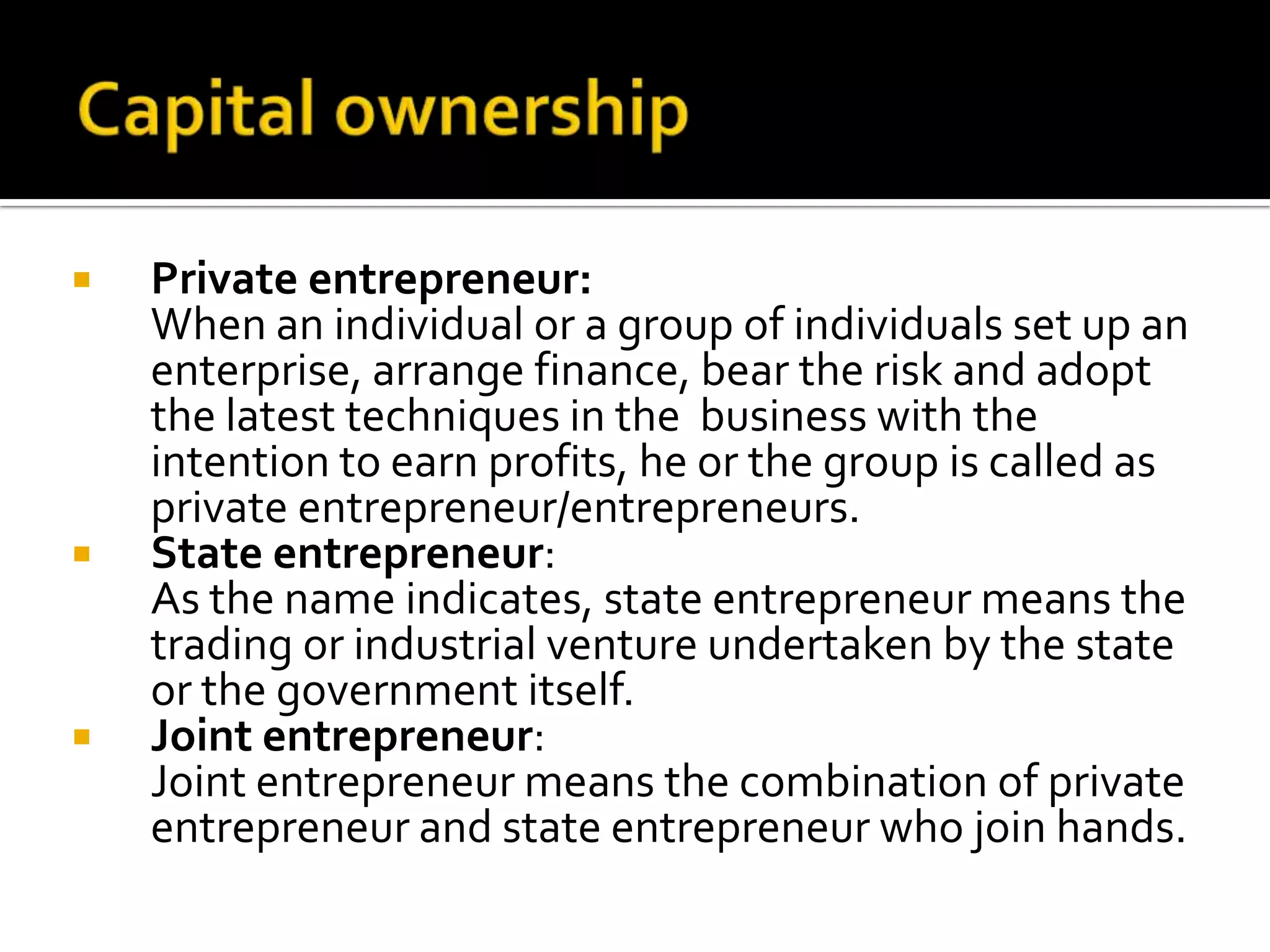
 Capital ownership
 Development
 Area
 Gender & Age
 Others
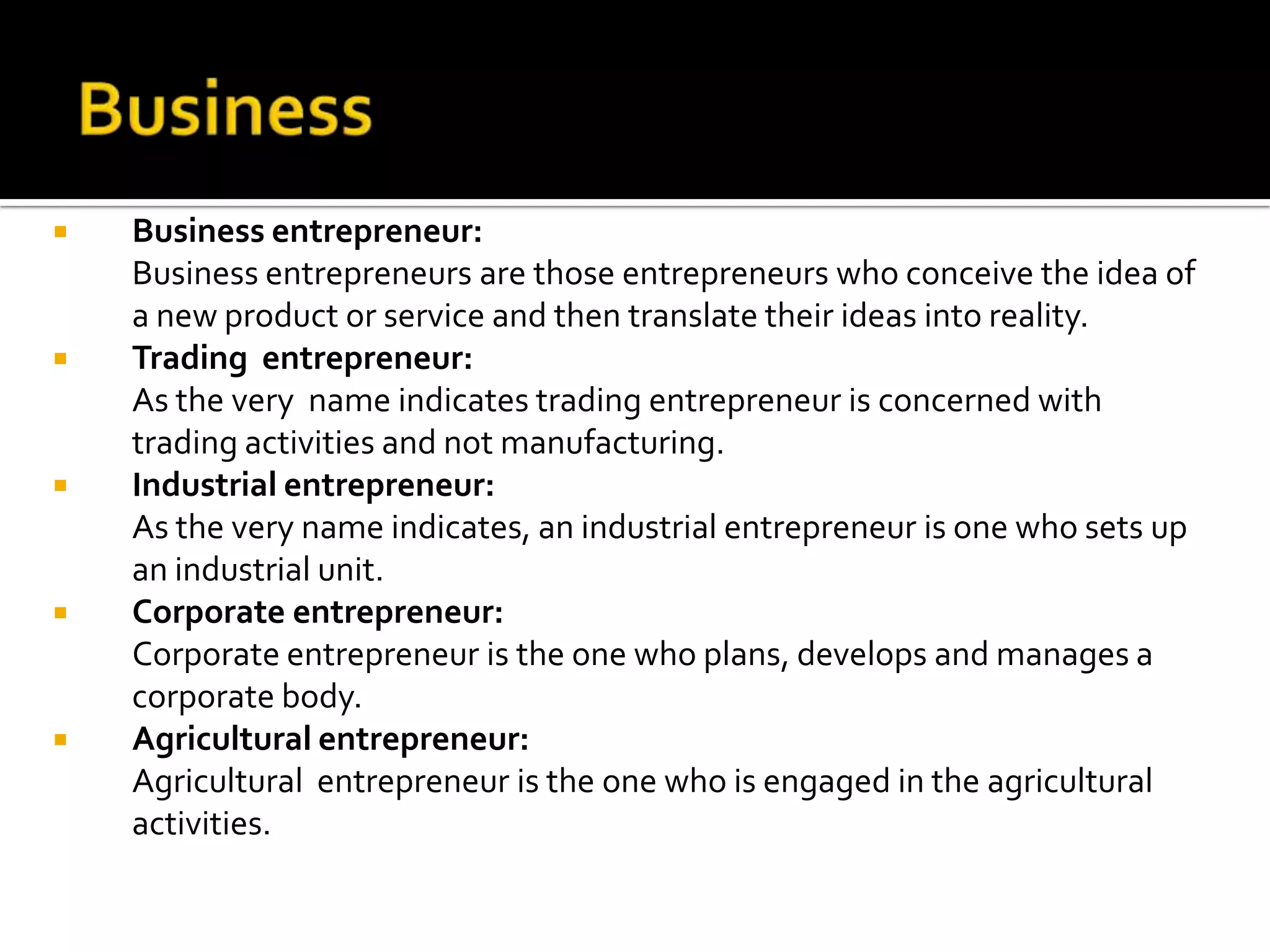
 Business entrepreneur:
Business entrepreneurs are those entrepreneurs who conceive the idea of
a new product or service and then translate their ideas into reality.
 Trading entrepreneur:
As the very name indicates trading entrepreneur is concerned with
trading activities and not manufacturing.
 Industrial entrepreneur:
As the very name indicates, an industrial entrepreneur is one who sets up
an industrial unit.
 Corporate entrepreneur:
Corporate entrepreneur is the one who plans, develops and manages a
corporate body.
 Agricultural entrepreneur:
Agricultural entrepreneur is the one who is engaged in the agricultural
activities.
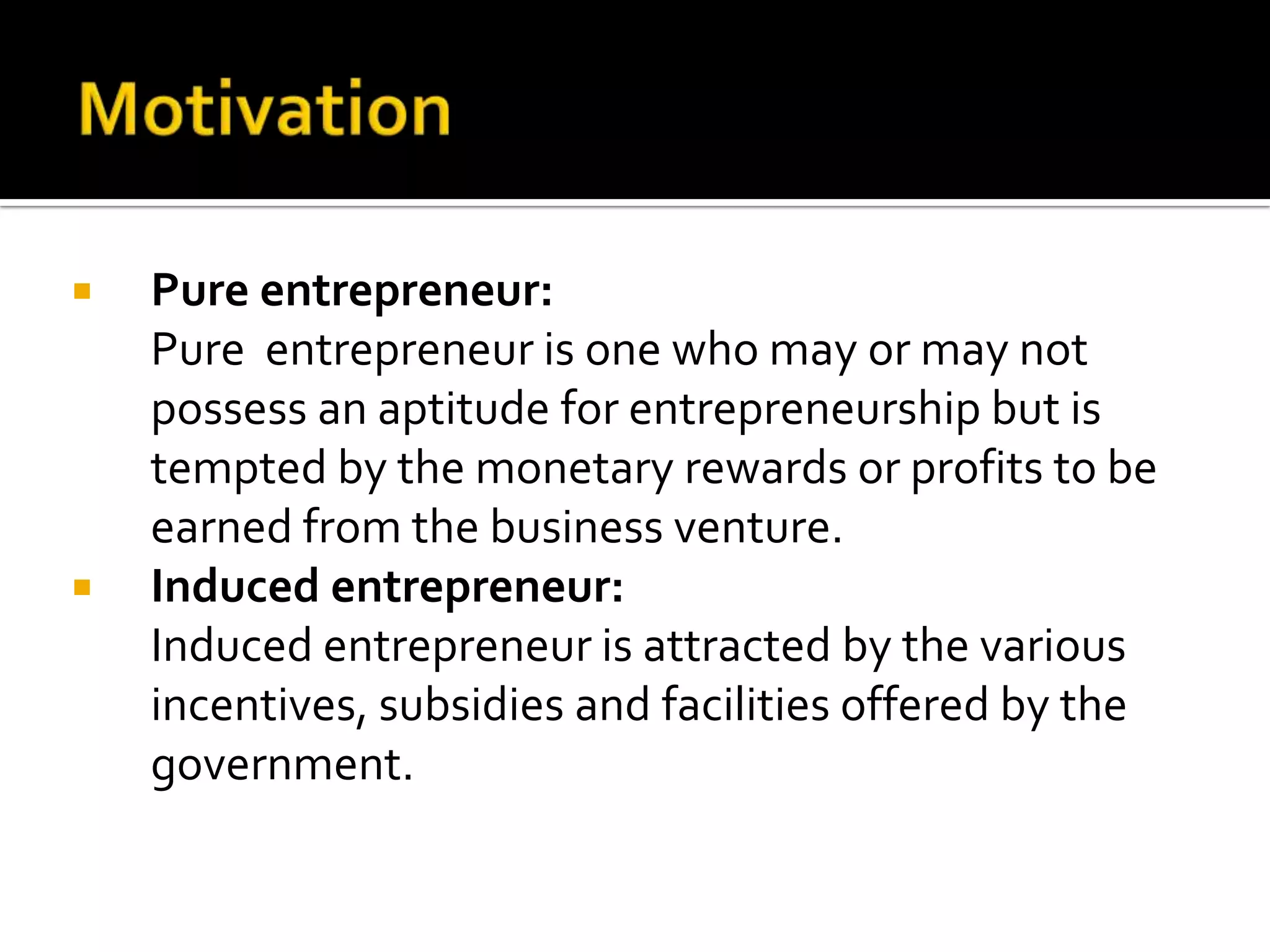
 Pure entrepreneur:
Pure entrepreneur is one who may or may not
possess an aptitude for entrepreneurship but is
tempted by the monetary rewards or profits to be
earned from the business venture.
 Induced entrepreneur:
Induced entrepreneur is attracted by the various
incentives, subsidies and facilities offered by the
government.
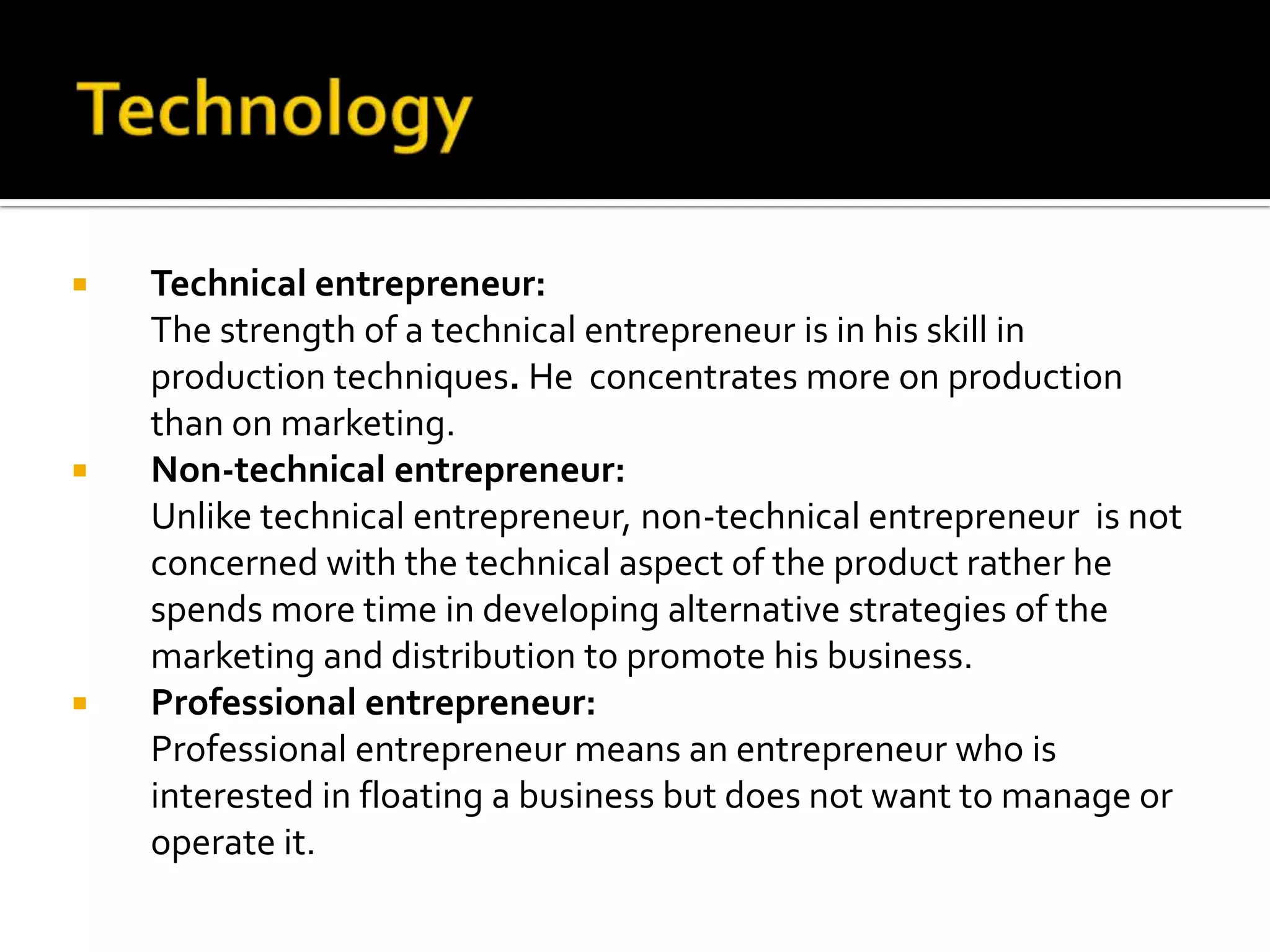
 Technical entrepreneur:
The strength of a technical entrepreneur is in his skill in
production techniques. He concentrates more on production
than on marketing.
 Non-technical entrepreneur:
Unlike technical entrepreneur, non-technical entrepreneur is not
concerned with the technical aspect of the product rather he
spends more time in developing alternative strategies of the
marketing and distribution to promote his business.
 Professional entrepreneur:
Professional entrepreneur means an entrepreneur who is
interested in floating a business but does not want to manage or
operate it.
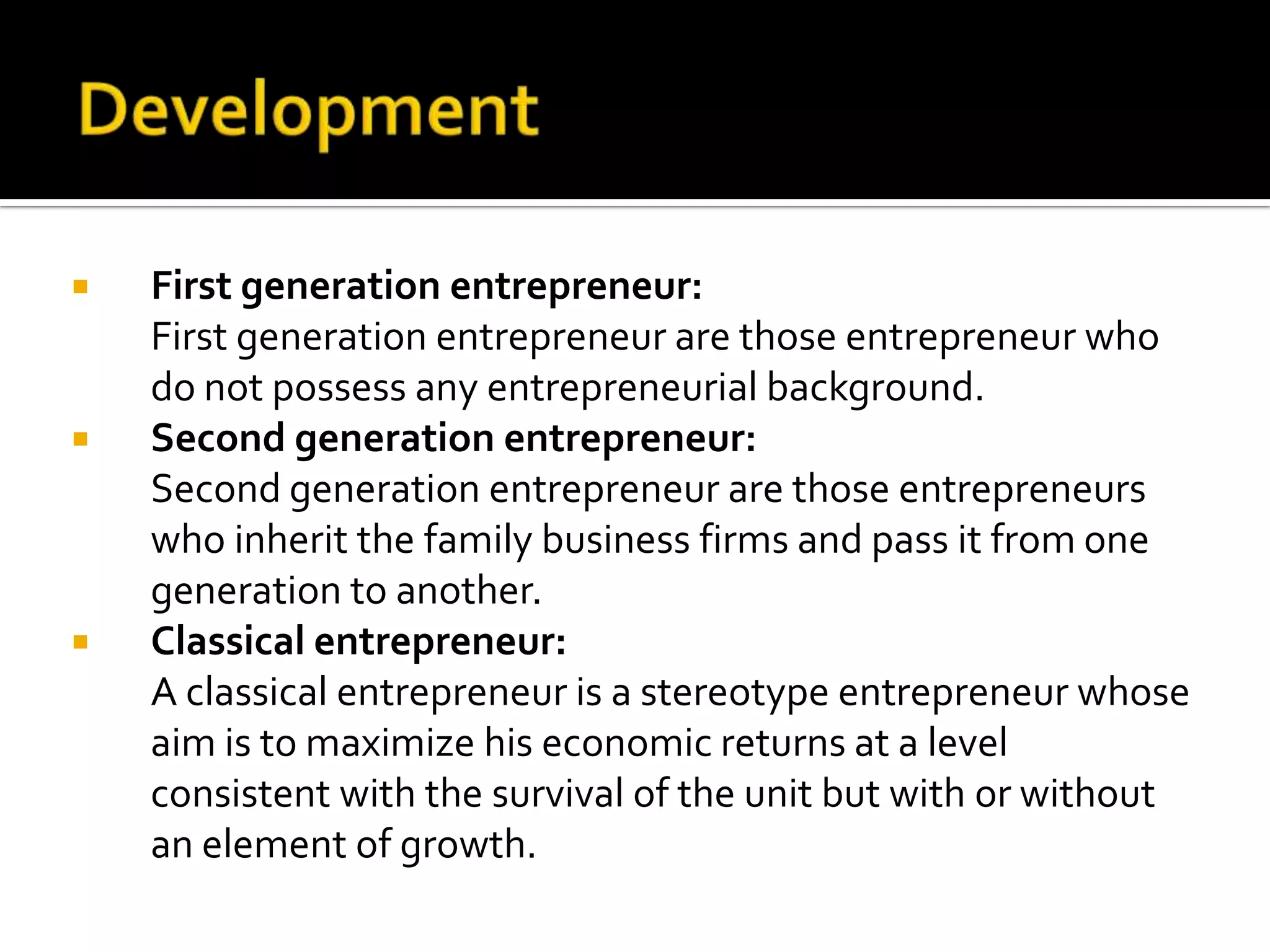
 First generation entrepreneur:
First generation entrepreneur are those entrepreneur who
do not possess any entrepreneurial background.
 Second generation entrepreneur:
Second generation entrepreneur are those entrepreneurs
who inherit the family business firms and pass it from one
generation to another.
 Classical entrepreneur:
A classical entrepreneur is a stereotype entrepreneur whose
aim is to maximize his economic returns at a level
consistent with the survival of the unit but with or without
an element of growth.
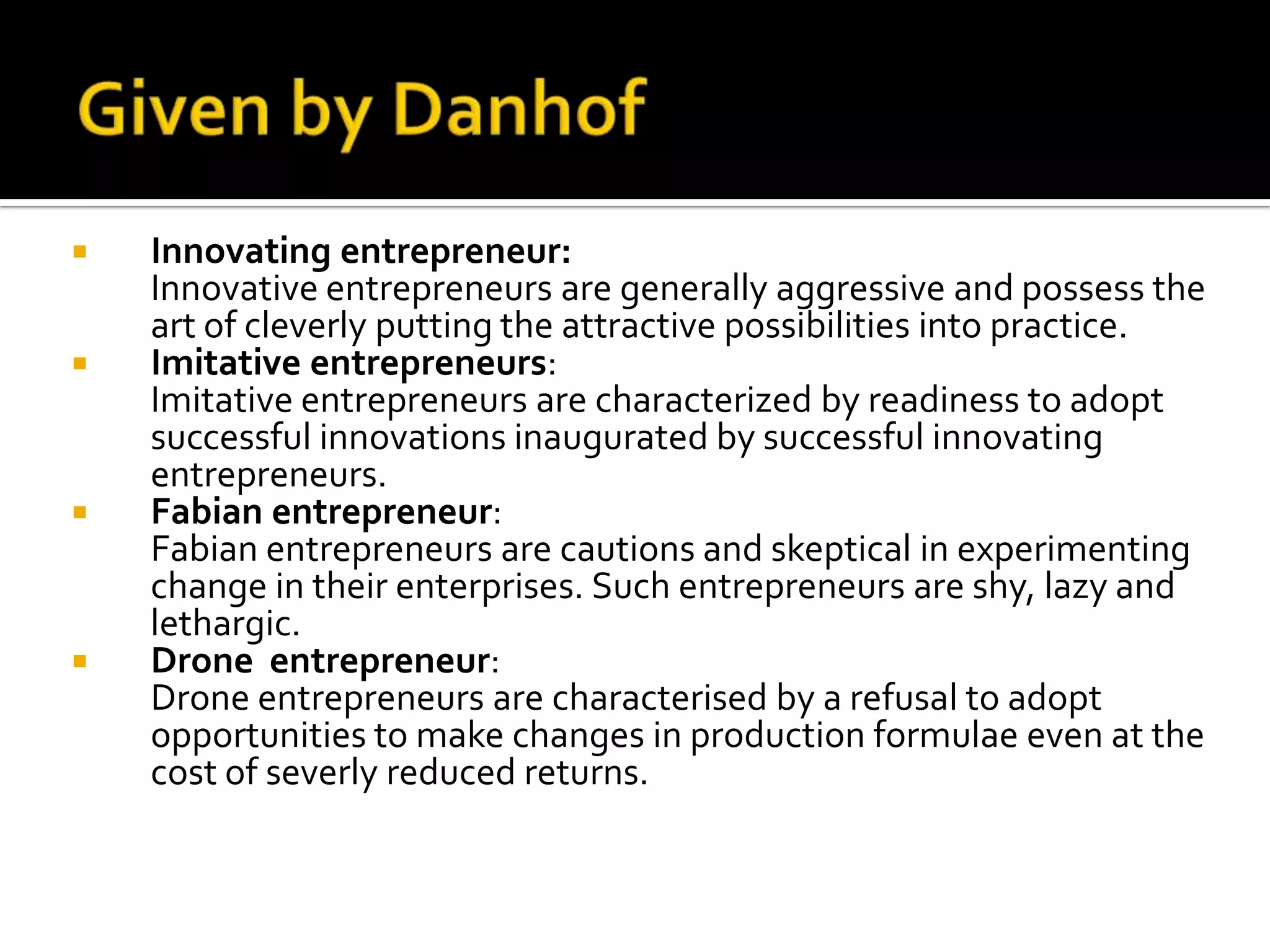
 Innovating entrepreneur:
Innovative entrepreneurs are generally aggressive and possess the
art of cleverly putting the attractive possibilities into practice.
 Imitative entrepreneurs:
Imitative entrepreneurs are characterized by readiness to adopt
successful innovations inaugurated by successful innovating
entrepreneurs.
 Fabian entrepreneur:
Fabian entrepreneurs are cautions and skeptical in experimenting
change in their enterprises. Such entrepreneurs are shy, lazy and
lethargic.
 Drone entrepreneur:
Drone entrepreneurs are characterised by a refusal to adopt
opportunities to make changes in production formulae even at the
cost of severly reduced returns.
 Private entrepreneur:
When an individual or a group of individuals set up an
enterprise, arrange finance, bear the risk and adopt
the latest techniques in the business with the
intention to earn profits, he or the group is called as
private entrepreneur/entrepreneurs.
 State entrepreneur:
As the name indicates, state entrepreneur means the
trading or industrial venture undertaken by the state
or the government itself.
 Joint entrepreneur:
Joint entrepreneur means the combination of private
entrepreneur and state entrepreneur who join hands.
 Man entrepreneur
 Woman entrepreneur
 Young entrepreneur
 Old entrepreneur
 Middle-aged entrepreneur
 Urban entrepreneur
 Rural entrepreneur
 Large scale industry entrepreneur
 Medium scale industry entrepreneur
 Small scale industry entrepreneur
 Tiny industry entrepreneur
 Solo operators
 Active Partners
 Simply partners
 Inventors
 Buyers
 Life timers
Classification of entreprenuers

Classification of entreprenuers

  • 1.
  • 2.
     Basis ofclassification  Brief about different types  Examples
  • 3.
     According to: Business  Technology  Motivation  Danhof  Capital ownership  Development  Area  Gender & Age  Others
  • 4.
     Business entrepreneur: Businessentrepreneurs are those entrepreneurs who conceive the idea of a new product or service and then translate their ideas into reality.  Trading entrepreneur: As the very name indicates trading entrepreneur is concerned with trading activities and not manufacturing.  Industrial entrepreneur: As the very name indicates, an industrial entrepreneur is one who sets up an industrial unit.  Corporate entrepreneur: Corporate entrepreneur is the one who plans, develops and manages a corporate body.  Agricultural entrepreneur: Agricultural entrepreneur is the one who is engaged in the agricultural activities.
  • 5.
     Pure entrepreneur: Pureentrepreneur is one who may or may not possess an aptitude for entrepreneurship but is tempted by the monetary rewards or profits to be earned from the business venture.  Induced entrepreneur: Induced entrepreneur is attracted by the various incentives, subsidies and facilities offered by the government.
  • 6.
     Technical entrepreneur: Thestrength of a technical entrepreneur is in his skill in production techniques. He concentrates more on production than on marketing.  Non-technical entrepreneur: Unlike technical entrepreneur, non-technical entrepreneur is not concerned with the technical aspect of the product rather he spends more time in developing alternative strategies of the marketing and distribution to promote his business.  Professional entrepreneur: Professional entrepreneur means an entrepreneur who is interested in floating a business but does not want to manage or operate it.
  • 7.
     First generationentrepreneur: First generation entrepreneur are those entrepreneur who do not possess any entrepreneurial background.  Second generation entrepreneur: Second generation entrepreneur are those entrepreneurs who inherit the family business firms and pass it from one generation to another.  Classical entrepreneur: A classical entrepreneur is a stereotype entrepreneur whose aim is to maximize his economic returns at a level consistent with the survival of the unit but with or without an element of growth.
  • 8.
     Innovating entrepreneur: Innovativeentrepreneurs are generally aggressive and possess the art of cleverly putting the attractive possibilities into practice.  Imitative entrepreneurs: Imitative entrepreneurs are characterized by readiness to adopt successful innovations inaugurated by successful innovating entrepreneurs.  Fabian entrepreneur: Fabian entrepreneurs are cautions and skeptical in experimenting change in their enterprises. Such entrepreneurs are shy, lazy and lethargic.  Drone entrepreneur: Drone entrepreneurs are characterised by a refusal to adopt opportunities to make changes in production formulae even at the cost of severly reduced returns.
  • 9.
     Private entrepreneur: Whenan individual or a group of individuals set up an enterprise, arrange finance, bear the risk and adopt the latest techniques in the business with the intention to earn profits, he or the group is called as private entrepreneur/entrepreneurs.  State entrepreneur: As the name indicates, state entrepreneur means the trading or industrial venture undertaken by the state or the government itself.  Joint entrepreneur: Joint entrepreneur means the combination of private entrepreneur and state entrepreneur who join hands.
  • 10.
     Man entrepreneur Woman entrepreneur  Young entrepreneur  Old entrepreneur  Middle-aged entrepreneur
  • 11.
     Urban entrepreneur Rural entrepreneur
  • 12.
     Large scaleindustry entrepreneur  Medium scale industry entrepreneur  Small scale industry entrepreneur  Tiny industry entrepreneur
  • 13.
     Solo operators Active Partners  Simply partners  Inventors  Buyers  Life timers