Classical Conditioning
Ivan Pavlov – 1904 Nobel Prize
Winner in Physiology
Stimulus, Response, Neutral Stimulus
Conditioned Stimulus, & Conditioned Response
Here’s What He Used…
 Stimulus
 Conditioned Stimulus (CS)
 Unconditioned Stimulus (UCS)
 Neutral Stimulus (NS)
 Unconditioned Response (UCR)
 Conditioned Response (CR)
Diagram This Situation…
 Connor loves Chocolate
Chip Cookie Dough ice
cream from the local ice
cream shop. He never paid
much attention to the ice
cream scooper they used to
scoop the ice cream until
one day the scooper flew
out of the server’s hand and
hit him in the head and gave
him a terrible headache.
Now every time he walks by
the ice cream shop he gets
a splitting headache.
In the story above, list the following:
Neutral Stimulus (NS): _______________
Response (R): ______________________________
Unconditioned Stimulus (UCS): __________________
Unconditioned Response (UCR): _________________
Conditioned Stimulus (CS): ___________________
Conditioned Response (CR): ___________________
Tough to do when you don’t know
what the terms mean. So let’s
learn what they mean…
What’s a STIMULUS?
 A stimulus is
something that
causes a response
Unconditioned Stimulus
 A stimulus that you
did not have to be
TAUGHT to react to.
 You react by instinct
Unconditioned Response
 A response from a
stimulus that you
DID NOT have to be
trained to react to
Conditioned Stimulus
 A stimulus that you
have to be TAUGHT
to react to.
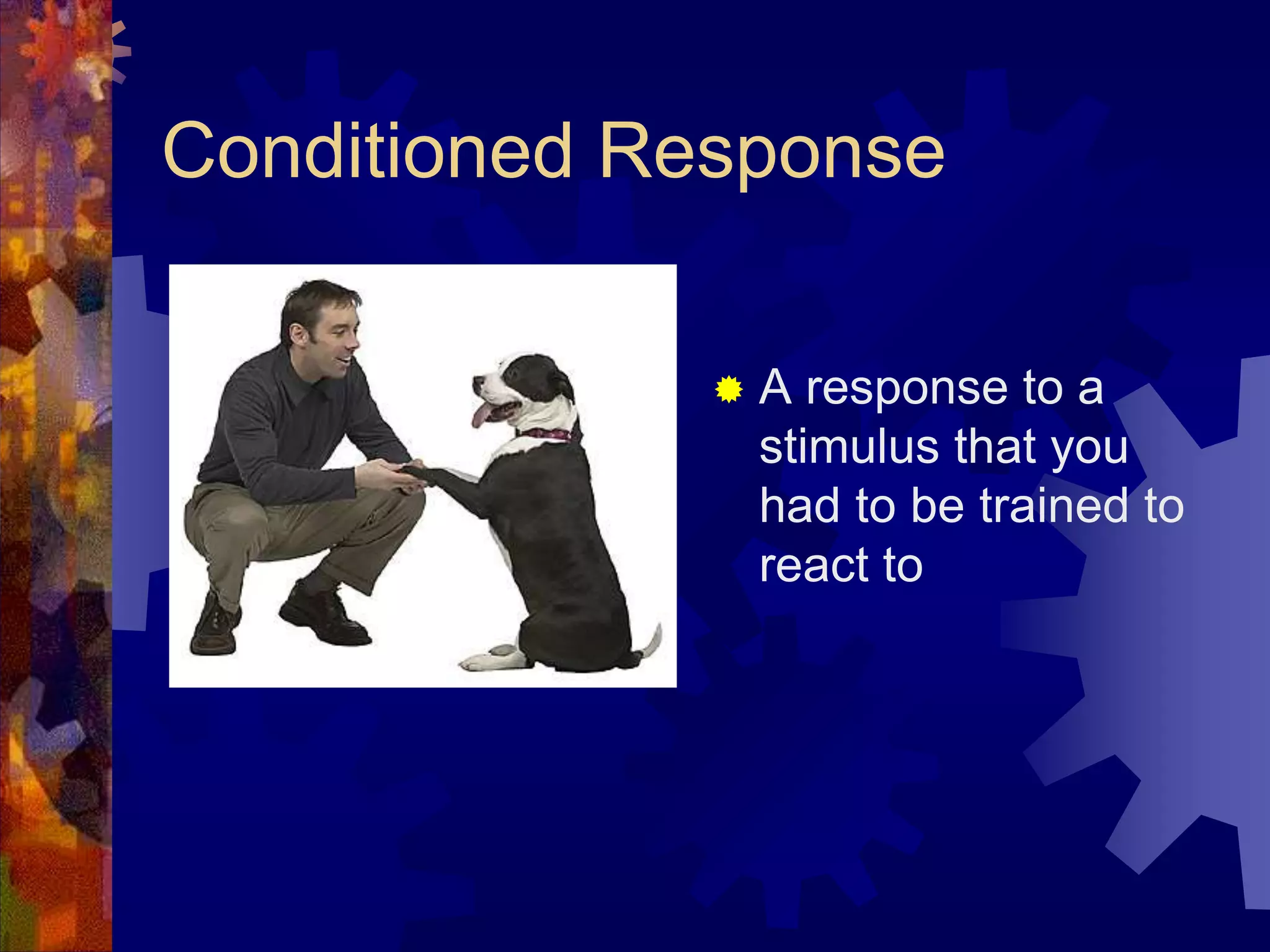
Conditioned Response
 A response to a
stimulus that you
had to be trained to
react to
Neutral Stimulus
 A stimulus that
doesn’t mean
anything to you yet
What’s
My
Name?
Classical Conditioning
 Pavlov studied how
a person could
control a dog’s
behavior
 He especially
focused on dog
drool
Classical Conditioning
 Pavlov wanted the
dogs to drool every
time he rang a bell
What’s happening here?
Now the Learning Process…
 Pavlov then rang the bell as he showed the
dog food…
 And the dog drooled!
 After awhile, Pavlov only had to ring the bell)
and the dog would drool!
Diagram This Situation…
 Connor loves Chocolate
Chip Cookie Dough ice
cream from the local ice
cream shop. He never paid
much attention to the ice
cream scooper they used to
scoop the ice cream until
one day the scooper flew
out of the server’s hand and
hit him in the head and gave
him a terrible headache.
Now every time he walks by
the ice cream shop and
sees the server reach for
the ice cream scooper he
gets a splitting headache.
In the story above, list the following:
Neutral Stimulus (NS): _______________
Response (R): ______________________________
Unconditioned Stimulus (UCS): __________________
Unconditioned Response (UCR): _________________
Conditioned Stimulus (CS): ___________________
Conditioned Response (CR): ___________________
You will see the terms of
Classical Conditioning
everywhere now that you
know about them.

Classical Conditioning Presentation.pptx

  • 1.
    Classical Conditioning Ivan Pavlov– 1904 Nobel Prize Winner in Physiology Stimulus, Response, Neutral Stimulus Conditioned Stimulus, & Conditioned Response
  • 2.
    Here’s What HeUsed…  Stimulus  Conditioned Stimulus (CS)  Unconditioned Stimulus (UCS)  Neutral Stimulus (NS)  Unconditioned Response (UCR)  Conditioned Response (CR)
  • 3.
    Diagram This Situation… Connor loves Chocolate Chip Cookie Dough ice cream from the local ice cream shop. He never paid much attention to the ice cream scooper they used to scoop the ice cream until one day the scooper flew out of the server’s hand and hit him in the head and gave him a terrible headache. Now every time he walks by the ice cream shop he gets a splitting headache. In the story above, list the following: Neutral Stimulus (NS): _______________ Response (R): ______________________________ Unconditioned Stimulus (UCS): __________________ Unconditioned Response (UCR): _________________ Conditioned Stimulus (CS): ___________________ Conditioned Response (CR): ___________________
  • 4.
    Tough to dowhen you don’t know what the terms mean. So let’s learn what they mean…
  • 5.
    What’s a STIMULUS? A stimulus is something that causes a response
  • 6.
    Unconditioned Stimulus  Astimulus that you did not have to be TAUGHT to react to.  You react by instinct
  • 7.
    Unconditioned Response  Aresponse from a stimulus that you DID NOT have to be trained to react to
  • 8.
    Conditioned Stimulus  Astimulus that you have to be TAUGHT to react to.
  • 9.
    Conditioned Response  Aresponse to a stimulus that you had to be trained to react to
  • 10.
    Neutral Stimulus  Astimulus that doesn’t mean anything to you yet
  • 11.
  • 12.
    Classical Conditioning  Pavlovstudied how a person could control a dog’s behavior  He especially focused on dog drool
  • 13.
    Classical Conditioning  Pavlovwanted the dogs to drool every time he rang a bell
  • 14.
  • 15.
    Now the LearningProcess…
  • 16.
     Pavlov thenrang the bell as he showed the dog food…  And the dog drooled!
  • 18.
     After awhile,Pavlov only had to ring the bell) and the dog would drool!
  • 20.
    Diagram This Situation… Connor loves Chocolate Chip Cookie Dough ice cream from the local ice cream shop. He never paid much attention to the ice cream scooper they used to scoop the ice cream until one day the scooper flew out of the server’s hand and hit him in the head and gave him a terrible headache. Now every time he walks by the ice cream shop and sees the server reach for the ice cream scooper he gets a splitting headache. In the story above, list the following: Neutral Stimulus (NS): _______________ Response (R): ______________________________ Unconditioned Stimulus (UCS): __________________ Unconditioned Response (UCR): _________________ Conditioned Stimulus (CS): ___________________ Conditioned Response (CR): ___________________
  • 21.
    You will seethe terms of Classical Conditioning everywhere now that you know about them.