Question Design and
Methodological
Considerations
ADLT 673 – Teaching
as Scholarship in
Medical Education
Class Session 4
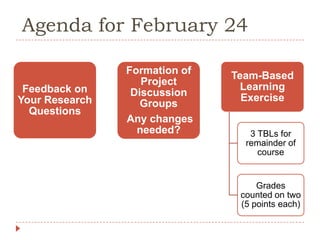
Agenda for February 24
Feedback on
Your Research
Questions

Formation of
Project
Discussion
Groups
Any changes
needed?

Team-Based
Learning
Exercise

3 TBLs for
remainder of
course

Grades
counted on two
(5 points each)
To move from opinionbased curricula to
evidence-based as a
result of research
findings

What do you perceive as
the goal of SoTL in Medical
Education?
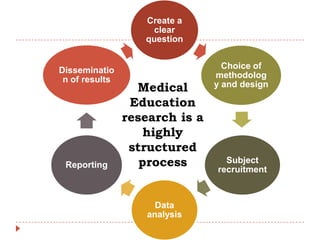
Create a
clear
question

Disseminatio
n of results

Reporting

Medical
Education
research is a
highly
structured
process

Data
analysis

Choice of
methodolog
y and design

Subject
recruitment
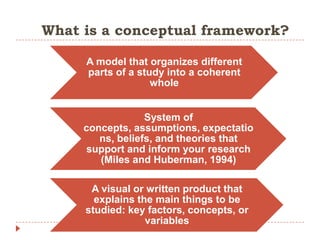
What is a conceptual framework?
A model that organizes different
parts of a study into a coherent
whole
System of
concepts, assumptions, expectatio
ns, beliefs, and theories that
support and inform your research
(Miles and Huberman, 1994)
A visual or written product that
explains the main things to be
studied: key factors, concepts, or
variables
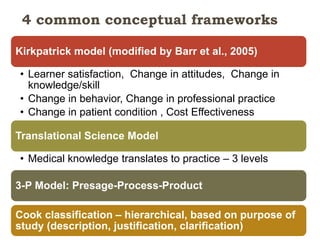
4 common conceptual frameworks
Kirkpatrick model (modified by Barr et al., 2005)
• Learner satisfaction, Change in attitudes, Change in
knowledge/skill
• Change in behavior, Change in professional practice
• Change in patient condition , Cost Effectiveness
Translational Science Model
• Medical knowledge translates to practice – 3 levels
3-P Model: Presage-Process-Product
Cook classification – hierarchical, based on purpose of
study (description, justification, clarification)
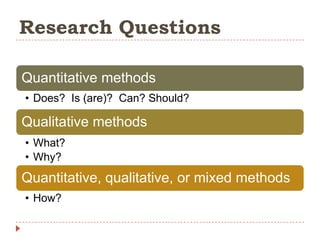
Research Questions
Quantitative methods
• Does? Is (are)? Can? Should?

Qualitative methods
• What?
• Why?

Quantitative, qualitative, or mixed methods
• How?
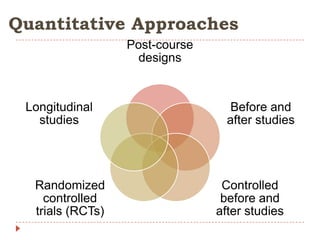
Quantitative Approaches
Post-course
designs

Longitudinal
studies

Randomized
controlled
trials (RCTs)

Before and
after studies

Controlled
before and
after studies
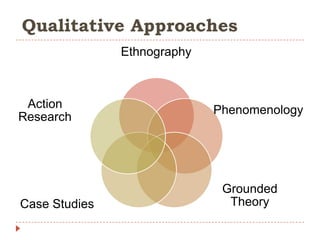
Qualitative Approaches
Ethnography

Action
Research

Case Studies

Phenomenology

Grounded
Theory
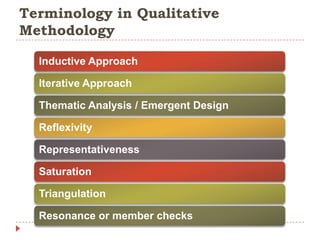
Terminology in Qualitative
Methodology
Inductive Approach
Iterative Approach
Thematic Analysis / Emergent Design
Reflexivity
Representativeness
Saturation

Triangulation
Resonance or member checks
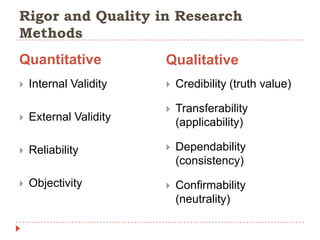
Rigor and Quality in Research
Methods
Quantitative


Internal Validity

Qualitative


Credibility (truth value)



Transferability
(applicability)



External Validity



Reliability



Dependability
(consistency)



Objectivity



Confirmability
(neutrality)
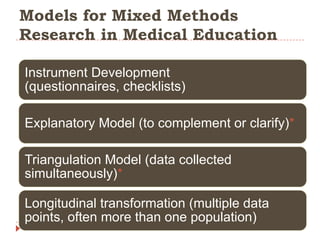
Models for Mixed Methods
Research in Medical Education
Instrument Development
(questionnaires, checklists)
Explanatory Model (to complement or clarify)*
Triangulation Model (data collected
simultaneously)*
Longitudinal transformation (multiple data
points, often more than one population)
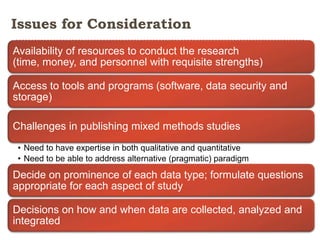
Issues for Consideration
Availability of resources to conduct the research
(time, money, and personnel with requisite strengths)

Access to tools and programs (software, data security and
storage)
Challenges in publishing mixed methods studies
• Need to have expertise in both qualitative and quantitative
• Need to be able to address alternative (pragmatic) paradigm

Decide on prominence of each data type; formulate questions
appropriate for each aspect of study
Decisions on how and when data are collected, analyzed and
integrated

Class session 4 question design and methodological choices

  • 1.
    Question Design and Methodological Considerations ADLT673 – Teaching as Scholarship in Medical Education Class Session 4
  • 2.
    Agenda for February24 Feedback on Your Research Questions Formation of Project Discussion Groups Any changes needed? Team-Based Learning Exercise 3 TBLs for remainder of course Grades counted on two (5 points each)
  • 3.
    To move fromopinionbased curricula to evidence-based as a result of research findings What do you perceive as the goal of SoTL in Medical Education?
  • 4.
    Create a clear question Disseminatio n ofresults Reporting Medical Education research is a highly structured process Data analysis Choice of methodolog y and design Subject recruitment
  • 5.
    What is aconceptual framework? A model that organizes different parts of a study into a coherent whole System of concepts, assumptions, expectatio ns, beliefs, and theories that support and inform your research (Miles and Huberman, 1994) A visual or written product that explains the main things to be studied: key factors, concepts, or variables
  • 6.
    4 common conceptualframeworks Kirkpatrick model (modified by Barr et al., 2005) • Learner satisfaction, Change in attitudes, Change in knowledge/skill • Change in behavior, Change in professional practice • Change in patient condition , Cost Effectiveness Translational Science Model • Medical knowledge translates to practice – 3 levels 3-P Model: Presage-Process-Product Cook classification – hierarchical, based on purpose of study (description, justification, clarification)
  • 7.
    Research Questions Quantitative methods •Does? Is (are)? Can? Should? Qualitative methods • What? • Why? Quantitative, qualitative, or mixed methods • How?
  • 8.
  • 9.
  • 10.
    Terminology in Qualitative Methodology InductiveApproach Iterative Approach Thematic Analysis / Emergent Design Reflexivity Representativeness Saturation Triangulation Resonance or member checks
  • 11.
    Rigor and Qualityin Research Methods Quantitative  Internal Validity Qualitative  Credibility (truth value)  Transferability (applicability)  External Validity  Reliability  Dependability (consistency)  Objectivity  Confirmability (neutrality)
  • 12.
    Models for MixedMethods Research in Medical Education Instrument Development (questionnaires, checklists) Explanatory Model (to complement or clarify)* Triangulation Model (data collected simultaneously)* Longitudinal transformation (multiple data points, often more than one population)
  • 13.
    Issues for Consideration Availabilityof resources to conduct the research (time, money, and personnel with requisite strengths) Access to tools and programs (software, data security and storage) Challenges in publishing mixed methods studies • Need to have expertise in both qualitative and quantitative • Need to be able to address alternative (pragmatic) paradigm Decide on prominence of each data type; formulate questions appropriate for each aspect of study Decisions on how and when data are collected, analyzed and integrated