Presented by: Tooba Gul
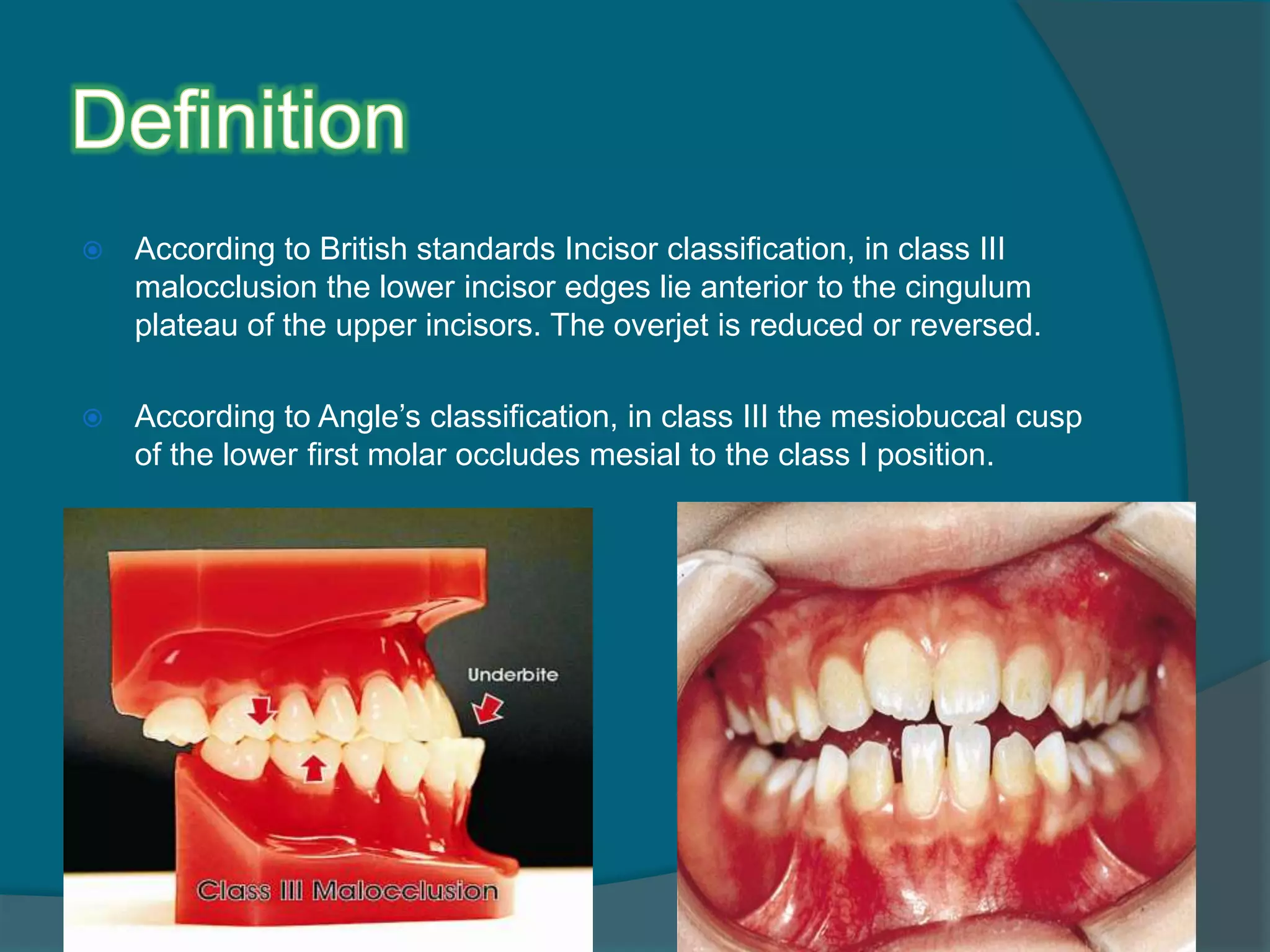
 According to British standards Incisor classification, in class III
malocclusion the lower incisor edges lie anterior to the cingulum
plateau of the upper incisors. The overjet is reduced or reversed.
 According to Angle’s classification, in class III the mesiobuccal cusp
of the lower first molar occludes mesial to the class I position.
Aetiology
 Skeletal pattern
 Dental factors
 Soft tissues
 Specific conditions
 Familial tendency
Skeletal Pattern
 Most important aetiological factor
 Skeletal pattern can be any of the
following:
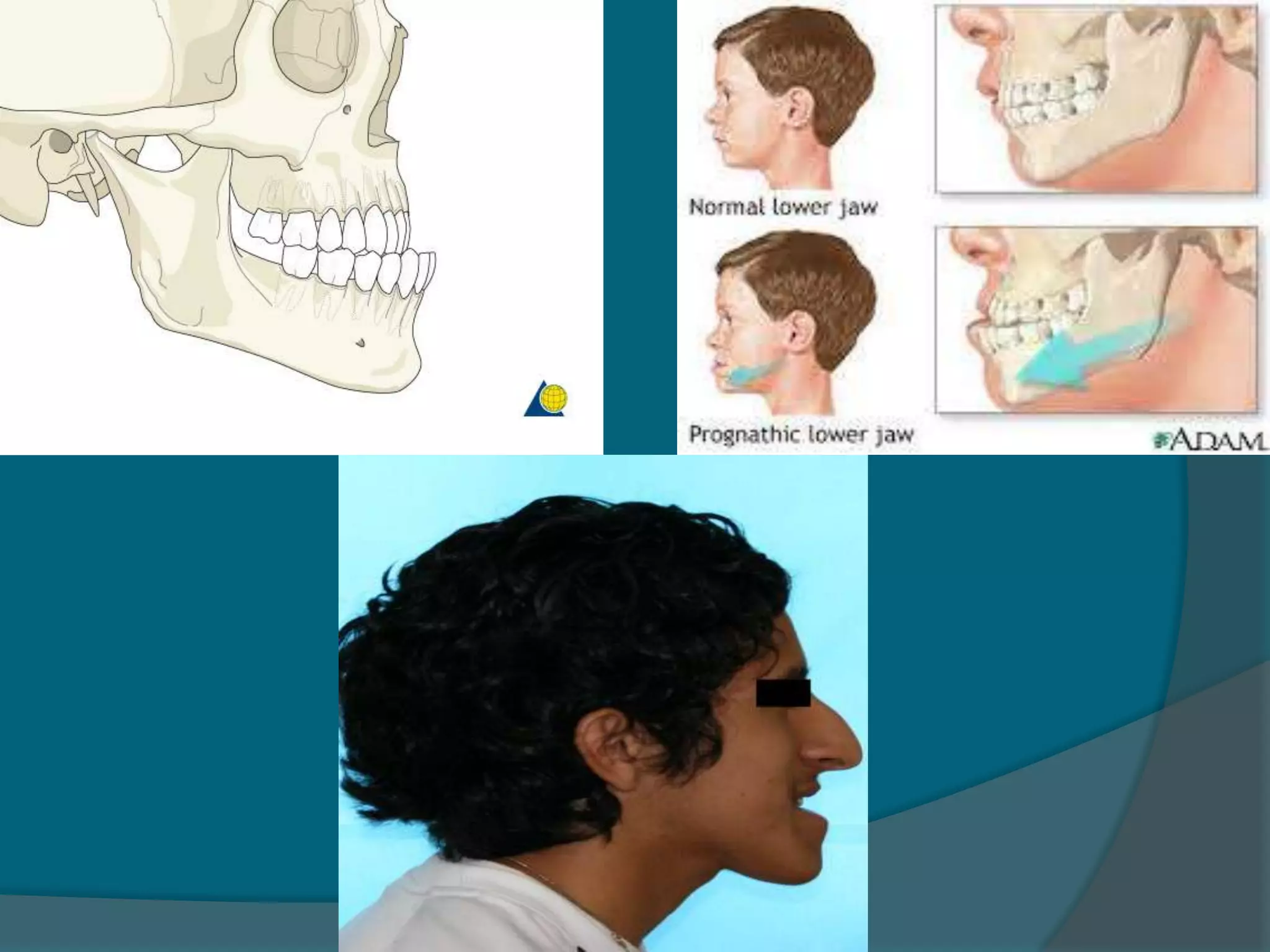
1. Mandibular prognathism
2. Maxillary retrognathism
3. Combination of both
Features of class III
malocclusion
 A concave facial profile
 A retrusive nasomaxillary area
 Prominent lower third of the face
 Narrow upper arch
 Reduced or reversed overjet
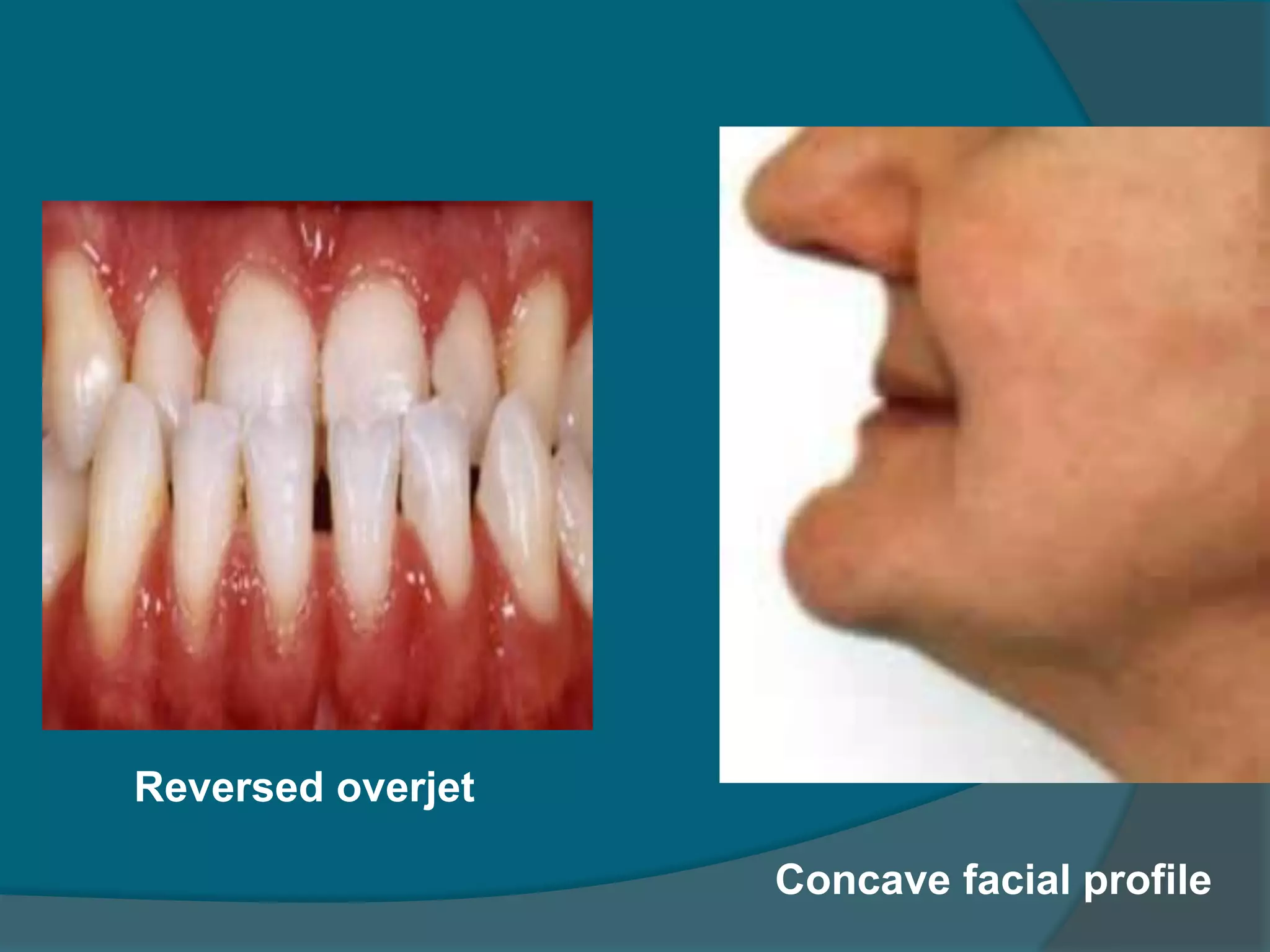
Concave facial profile
Reversed overjet
Diagnosis
 A successful treatment plan depends on
an accurate diagnosis
 For treating class III malocclusion a
direct cause must be identified, that is,
true class III should be differentiated
from pseudo class III malocclusion.
Pseudo Class III
Malocclusion
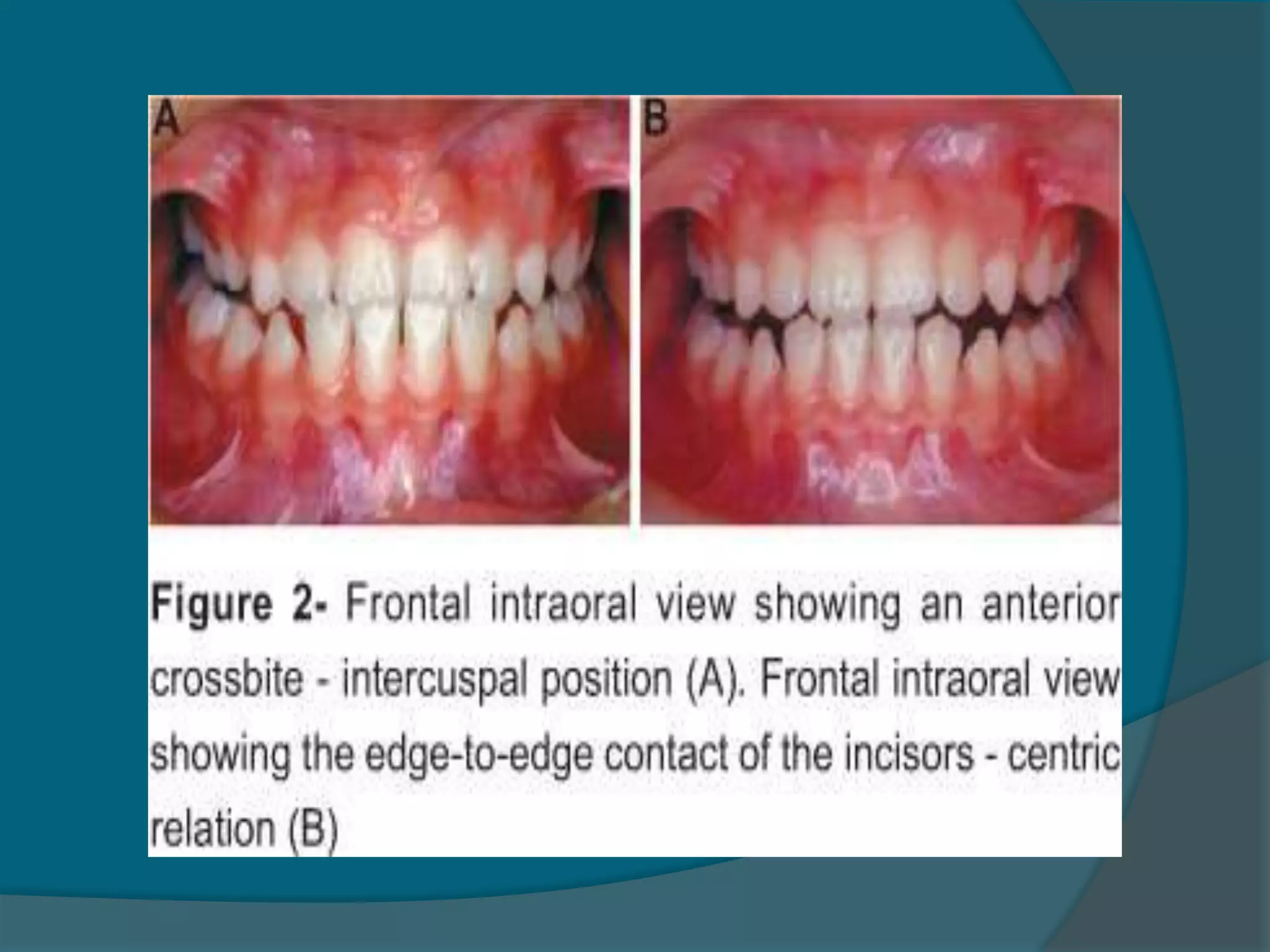
 Pseudo class III malocclusion is a
habitual established cross bite of all
anterior teeth, without any skeletal
discrepancy, resulting from functional
forward positioning/shift of the mandible
on closure.
 Causes include:
 occlusal prematurity
 Enlarged adenoids
How to differentiate between a true class
III and pseudo class III malocclusion?
 Mandible should be guided in a centric relationship, this will reveal a
normal overjet or edge to edge incisor relation in pseudo class III
 On cephalometric analysis, pseudo class III malocclusion shows a
normal SNA if diagnosed early, whereas SNB could be slightly
increased because of forward positioning of the mandible.
 In contrast, in true class III cases, a large SNB angle or a small SNA
angle may be found, depending on whether the result is due to an
underdeveloped maxilla or a long mandibular base, or both.
 Most true class III cases have a strong hereditary component
 The final diagnosis of the type of class III malocclusion
relies heavily on:
(i) clinically establishing the dual closure pattern by asking and
guiding the patient to bite in normal centric and habitual positions,
(ii) observing any familial tendency,
(iii) cephalometric parameters
(iv) incisor relationships.
Treatment objectives
 To achieve growth modulation in skeletal case
 To relieve crowding and produce alignment of teeth
 To correct incisor relationship to obtain normal overjet and
overbite
 To achieve stable molar relationship
Factors considered while treatment
planning
 Patient’s opinion
 Severity of skeletal pattern
 Amount and expected pattern of future
growth
 Degree of crowding
 If an edge to edge incisor contact can be
achieved or not
 Amount of dento-alveolar compensation
present
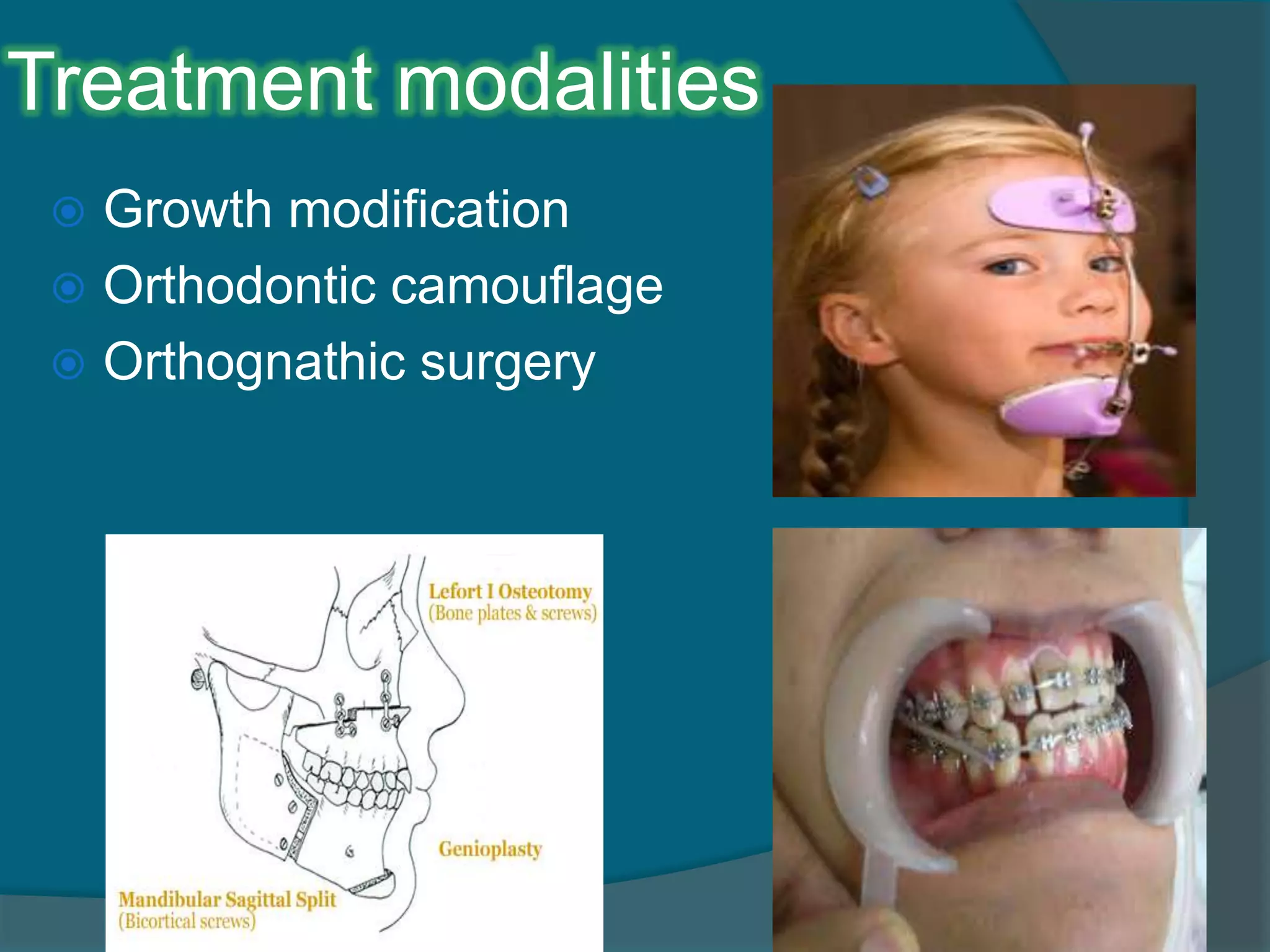
Treatment modalities
 Growth modification
 Orthodontic camouflage
 Orthognathic surgery
Growth Modification
 In young patients who are still in their
growing phase orthopedic and myo-
functional appliances can be used in
cases of skeletal class III malocclusion.
 Either there is deficient growth of maxilla
or excess growth of mandible.
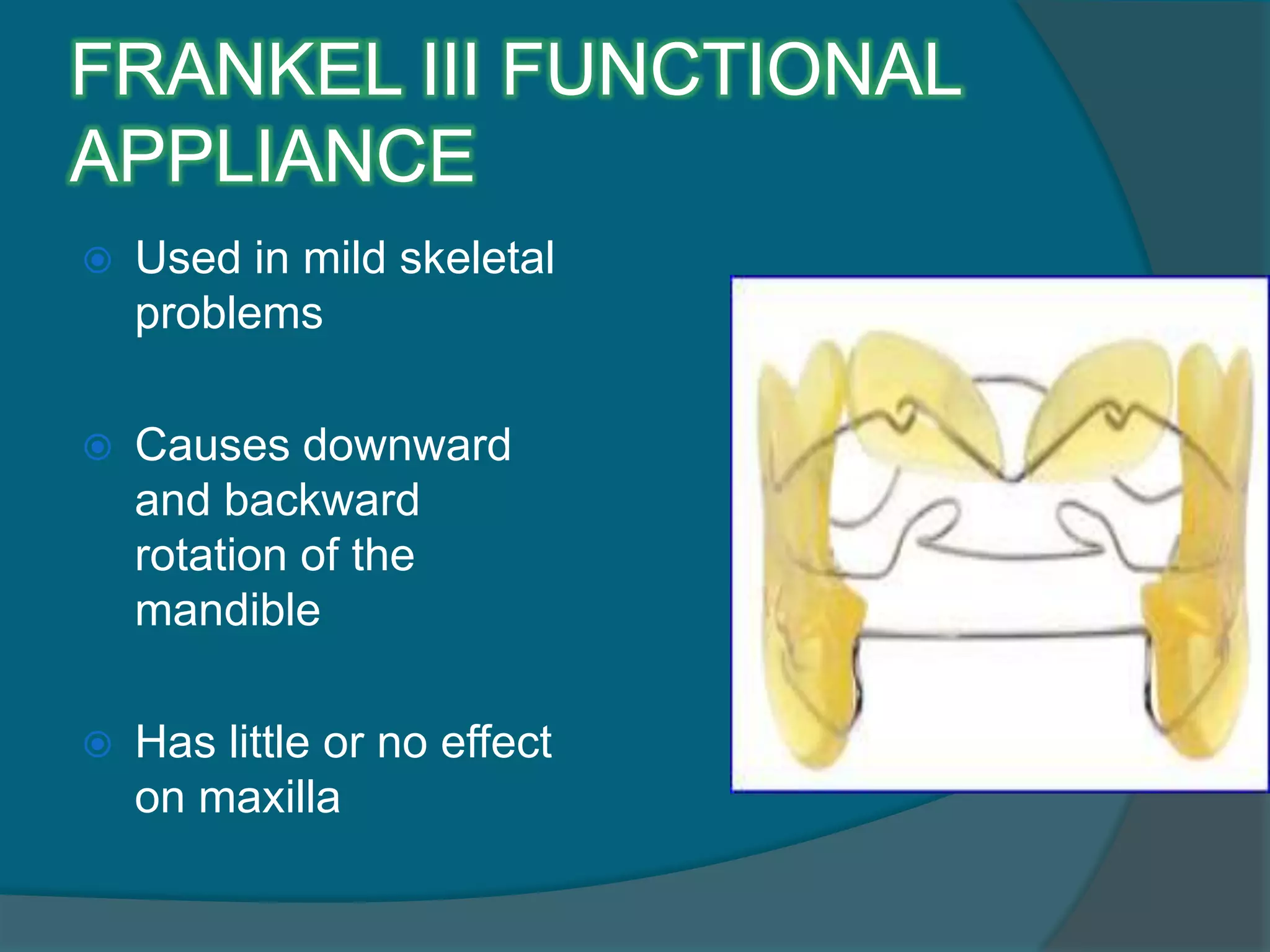
FRANKEL III FUNCTIONAL
APPLIANCE
 Used in mild skeletal
problems
 Causes downward
and backward
rotation of the
mandible
 Has little or no effect
on maxilla
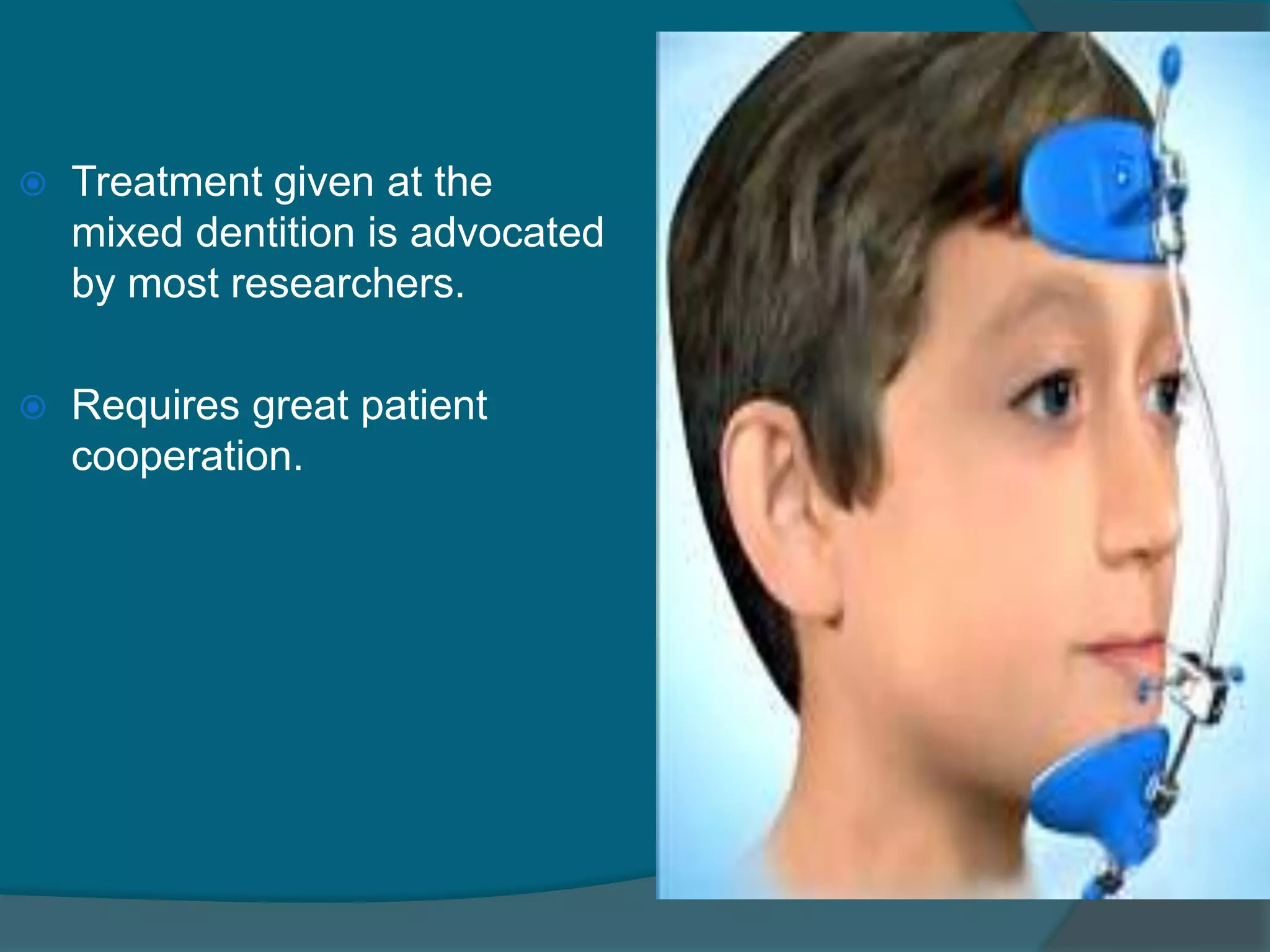
Reverse pull headgear
(facemask)
 Indicated in patients with retrusive maxilla
 Obtains anchorage from forehead and chin
 Exerts force on maxilla via elastics that attach to
maxillary splints
 Effects include:
1. Forward and downward movement of maxilla
2. Downward and backward rotation of mandible
3. Lingual tipping of lower incisors
 Treatment given at the
mixed dentition is advocated
by most researchers.
 Requires great patient
cooperation.
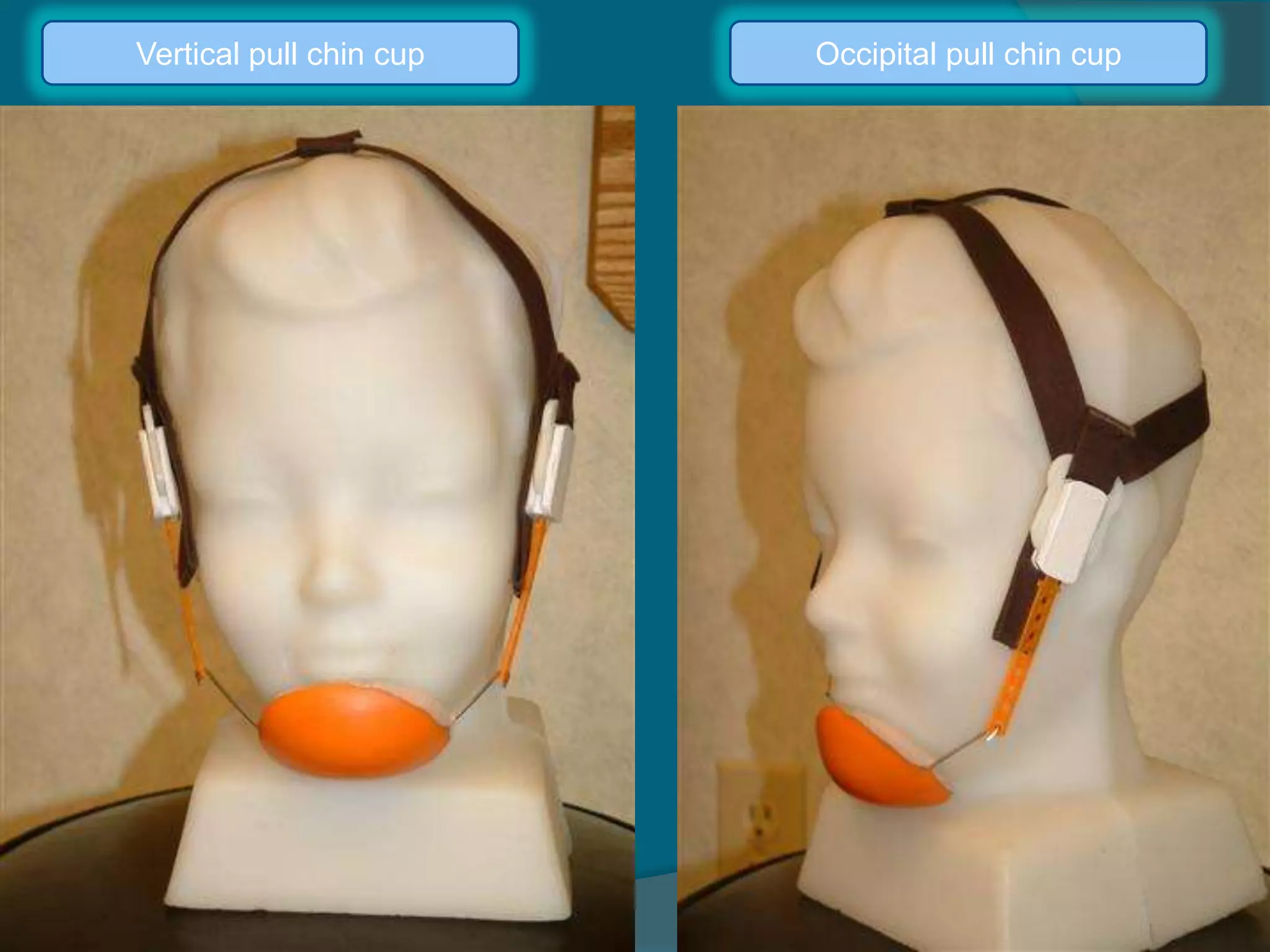
Chin Cup Therapy
 An effort to restrain mandibular growth
 Redirects mandibular growth in a more vertical direction
 Ideal in patients with
 mild skeletal problem
 reduced lower anterior facial height
 normal or proclined lower incisors
 Most of the reported studies recommended an orthopedic
force of 300 to 500 g per side
 Patients are instructed to wear the appliance 14 hours per
day.
Vertical pull chin cup Occipital pull chin cup
Orthodontic Camouflage
 Proclination of the upper labial segment
 Retroclination of the lower labial
segment
 Combination of both
 Extraction pattern may vary from
extraction of lower first bicuspids only to
extraction of upper second premolar and
lower first premolar and sometimes even
lower incisor
Proclination of upper labial segment
 Correction of incisor relationship by proclination of the upper
incisors can only be considered with the following features:
 a class I or mild class III skeletal pattern
 The upper incisors are not already significantly proclined
 Adequate overbite will be present at the end of treatment to
retain the corrected position of the upper incisors
Retroclination of lower labial
segment
 In cases with mild to moderate class III skeletal pattern
or in case of reduced over bite
 Space is required in the lower arch for retroclination of
lower labial segment and extractions are required
Orthognathic Surgery
 In some cases the severity of skeletal pattern and/or the
presence of a reduced overbite or an anterior open bite
precludes orthodontics alone.
 Orthognathic surgery is almost always indicated if:
Value of ANB is -4 Inclination of lower incisors to
mandibular plane is 83
Common Surgical
Procedures
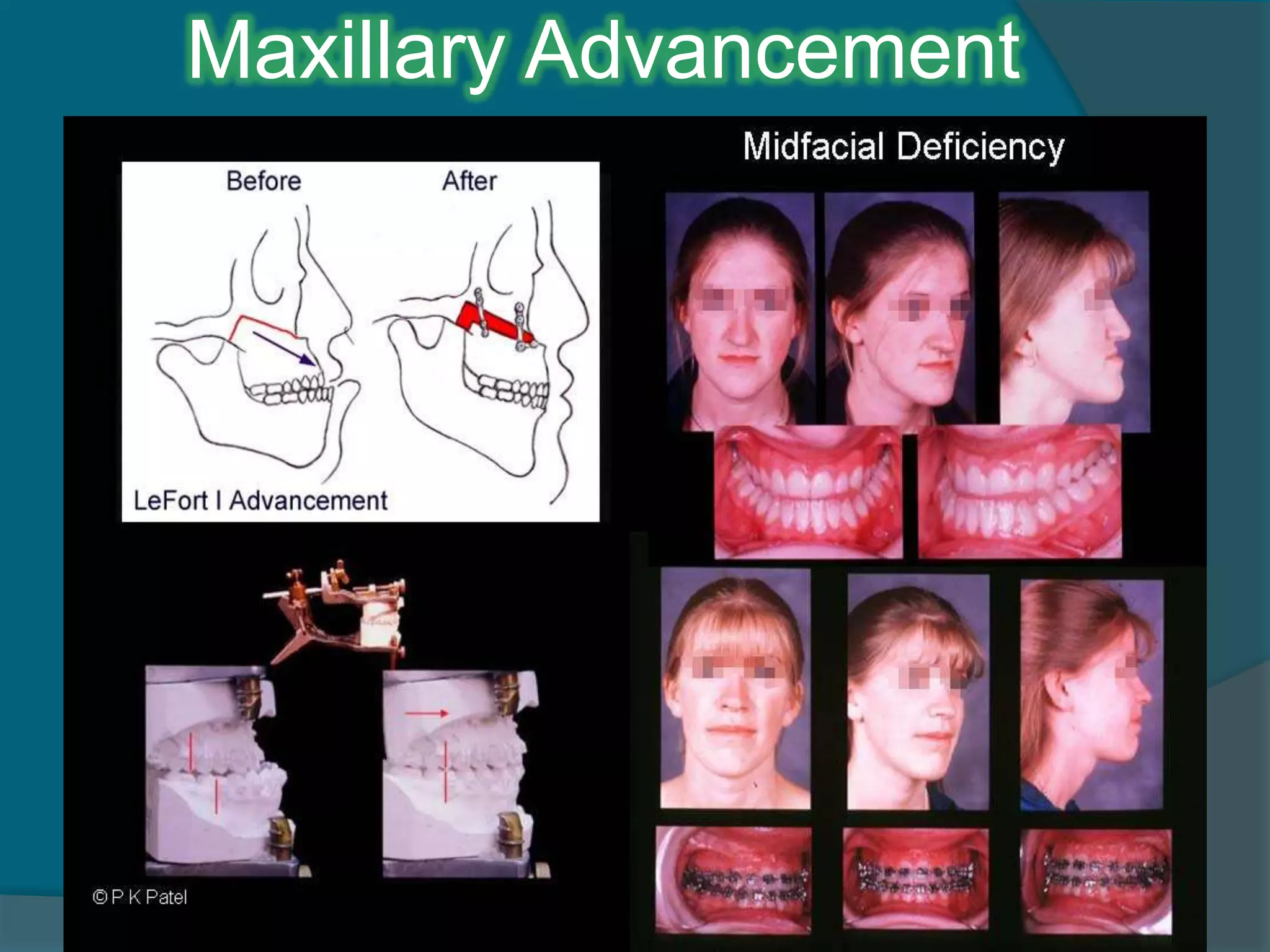
 Lefort I maxillary advancement
For retrognathic maxilla
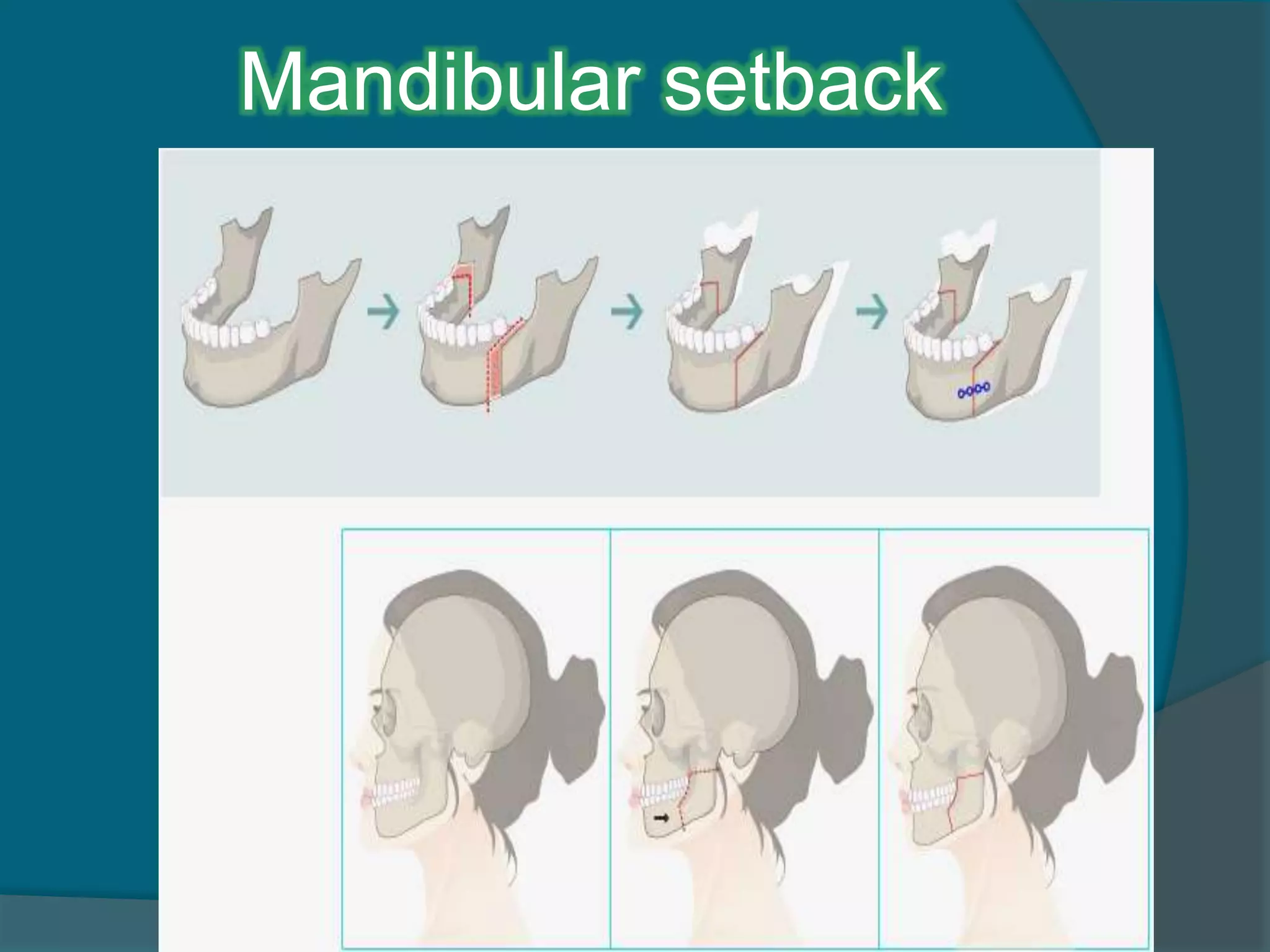
 bilateral saggital split (BSSO) mandibular
setback
For prognathic mandible
 Surgically assisted RPE
Maxillary Advancement
Mandibular setback
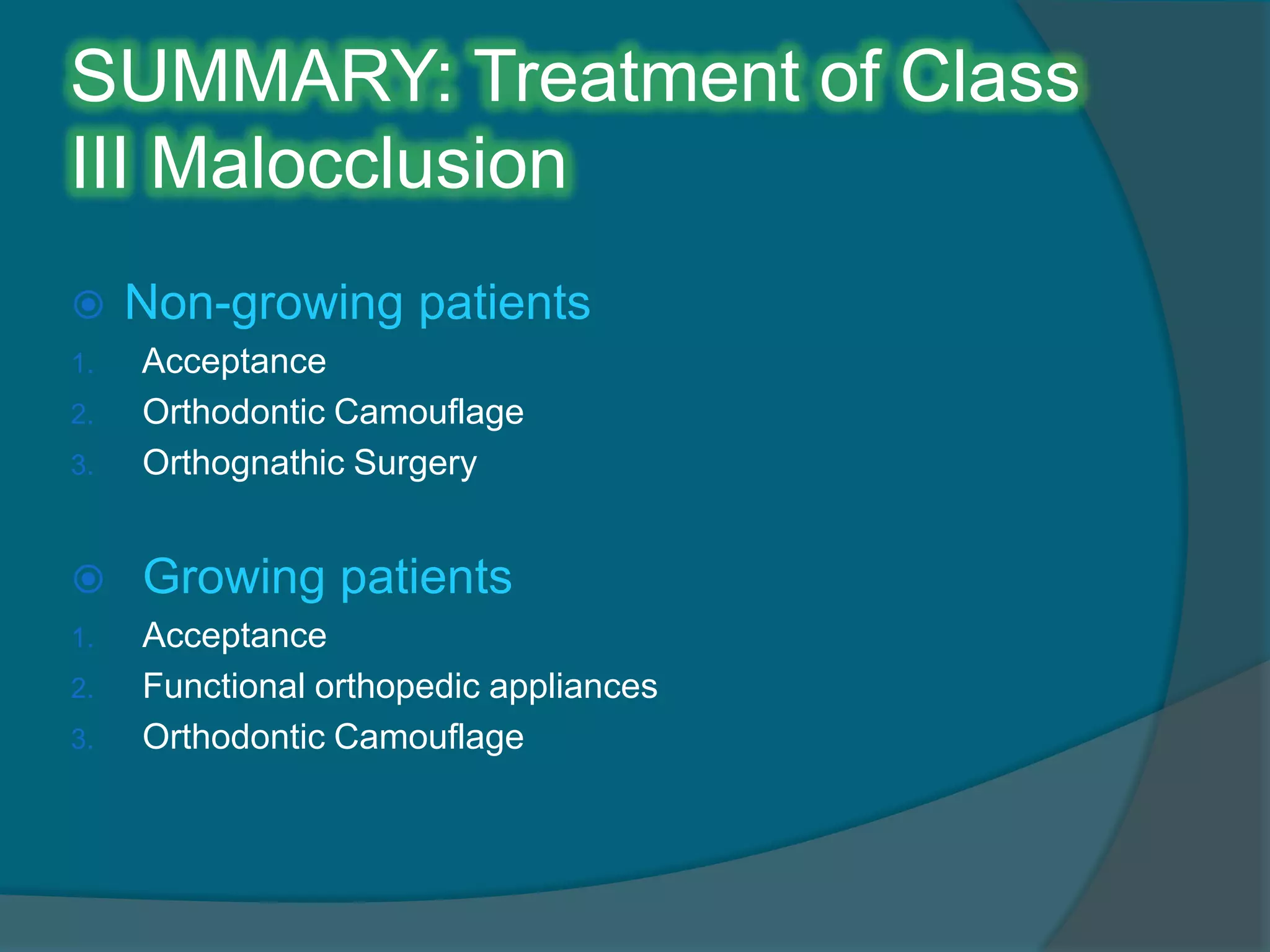
SUMMARY: Treatment of Class
III Malocclusion
 Non-growing patients
1. Acceptance
2. Orthodontic Camouflage
3. Orthognathic Surgery
 Growing patients
1. Acceptance
2. Functional orthopedic appliances
3. Orthodontic Camouflage
Class iii malocclusion

Class iii malocclusion

  • 1.
  • 2.
     According toBritish standards Incisor classification, in class III malocclusion the lower incisor edges lie anterior to the cingulum plateau of the upper incisors. The overjet is reduced or reversed.  According to Angle’s classification, in class III the mesiobuccal cusp of the lower first molar occludes mesial to the class I position.
  • 3.
    Aetiology  Skeletal pattern Dental factors  Soft tissues  Specific conditions  Familial tendency
  • 4.
    Skeletal Pattern  Mostimportant aetiological factor  Skeletal pattern can be any of the following: 1. Mandibular prognathism 2. Maxillary retrognathism 3. Combination of both
  • 6.
    Features of classIII malocclusion  A concave facial profile  A retrusive nasomaxillary area  Prominent lower third of the face  Narrow upper arch  Reduced or reversed overjet
  • 7.
  • 8.
    Diagnosis  A successfultreatment plan depends on an accurate diagnosis  For treating class III malocclusion a direct cause must be identified, that is, true class III should be differentiated from pseudo class III malocclusion.
  • 9.
    Pseudo Class III Malocclusion Pseudo class III malocclusion is a habitual established cross bite of all anterior teeth, without any skeletal discrepancy, resulting from functional forward positioning/shift of the mandible on closure.  Causes include:  occlusal prematurity  Enlarged adenoids
  • 11.
    How to differentiatebetween a true class III and pseudo class III malocclusion?  Mandible should be guided in a centric relationship, this will reveal a normal overjet or edge to edge incisor relation in pseudo class III  On cephalometric analysis, pseudo class III malocclusion shows a normal SNA if diagnosed early, whereas SNB could be slightly increased because of forward positioning of the mandible.  In contrast, in true class III cases, a large SNB angle or a small SNA angle may be found, depending on whether the result is due to an underdeveloped maxilla or a long mandibular base, or both.  Most true class III cases have a strong hereditary component
  • 12.
     The finaldiagnosis of the type of class III malocclusion relies heavily on: (i) clinically establishing the dual closure pattern by asking and guiding the patient to bite in normal centric and habitual positions, (ii) observing any familial tendency, (iii) cephalometric parameters (iv) incisor relationships.
  • 13.
    Treatment objectives  Toachieve growth modulation in skeletal case  To relieve crowding and produce alignment of teeth  To correct incisor relationship to obtain normal overjet and overbite  To achieve stable molar relationship
  • 14.
    Factors considered whiletreatment planning  Patient’s opinion  Severity of skeletal pattern  Amount and expected pattern of future growth  Degree of crowding  If an edge to edge incisor contact can be achieved or not  Amount of dento-alveolar compensation present
  • 15.
    Treatment modalities  Growthmodification  Orthodontic camouflage  Orthognathic surgery
  • 16.
    Growth Modification  Inyoung patients who are still in their growing phase orthopedic and myo- functional appliances can be used in cases of skeletal class III malocclusion.  Either there is deficient growth of maxilla or excess growth of mandible.
  • 17.
    FRANKEL III FUNCTIONAL APPLIANCE Used in mild skeletal problems  Causes downward and backward rotation of the mandible  Has little or no effect on maxilla
  • 18.
    Reverse pull headgear (facemask) Indicated in patients with retrusive maxilla  Obtains anchorage from forehead and chin  Exerts force on maxilla via elastics that attach to maxillary splints  Effects include: 1. Forward and downward movement of maxilla 2. Downward and backward rotation of mandible 3. Lingual tipping of lower incisors
  • 19.
     Treatment givenat the mixed dentition is advocated by most researchers.  Requires great patient cooperation.
  • 20.
    Chin Cup Therapy An effort to restrain mandibular growth  Redirects mandibular growth in a more vertical direction  Ideal in patients with  mild skeletal problem  reduced lower anterior facial height  normal or proclined lower incisors  Most of the reported studies recommended an orthopedic force of 300 to 500 g per side  Patients are instructed to wear the appliance 14 hours per day.
  • 21.
    Vertical pull chincup Occipital pull chin cup
  • 22.
    Orthodontic Camouflage  Proclinationof the upper labial segment  Retroclination of the lower labial segment  Combination of both  Extraction pattern may vary from extraction of lower first bicuspids only to extraction of upper second premolar and lower first premolar and sometimes even lower incisor
  • 23.
    Proclination of upperlabial segment  Correction of incisor relationship by proclination of the upper incisors can only be considered with the following features:  a class I or mild class III skeletal pattern  The upper incisors are not already significantly proclined  Adequate overbite will be present at the end of treatment to retain the corrected position of the upper incisors
  • 24.
    Retroclination of lowerlabial segment  In cases with mild to moderate class III skeletal pattern or in case of reduced over bite  Space is required in the lower arch for retroclination of lower labial segment and extractions are required
  • 26.
    Orthognathic Surgery  Insome cases the severity of skeletal pattern and/or the presence of a reduced overbite or an anterior open bite precludes orthodontics alone.  Orthognathic surgery is almost always indicated if: Value of ANB is -4 Inclination of lower incisors to mandibular plane is 83
  • 27.
    Common Surgical Procedures  LefortI maxillary advancement For retrognathic maxilla  bilateral saggital split (BSSO) mandibular setback For prognathic mandible  Surgically assisted RPE
  • 28.
  • 29.
  • 30.
    SUMMARY: Treatment ofClass III Malocclusion  Non-growing patients 1. Acceptance 2. Orthodontic Camouflage 3. Orthognathic Surgery  Growing patients 1. Acceptance 2. Functional orthopedic appliances 3. Orthodontic Camouflage

Editor's Notes

  • #12 SNA- 82 +- 2SNB 80 +- 2
  • #19 Splints minimize dental movement and promotes orthopedic movement
  • #23 Extractions allow orthodontist to reduce the amount of negative overjet and camouflage the skeletal discrepancy
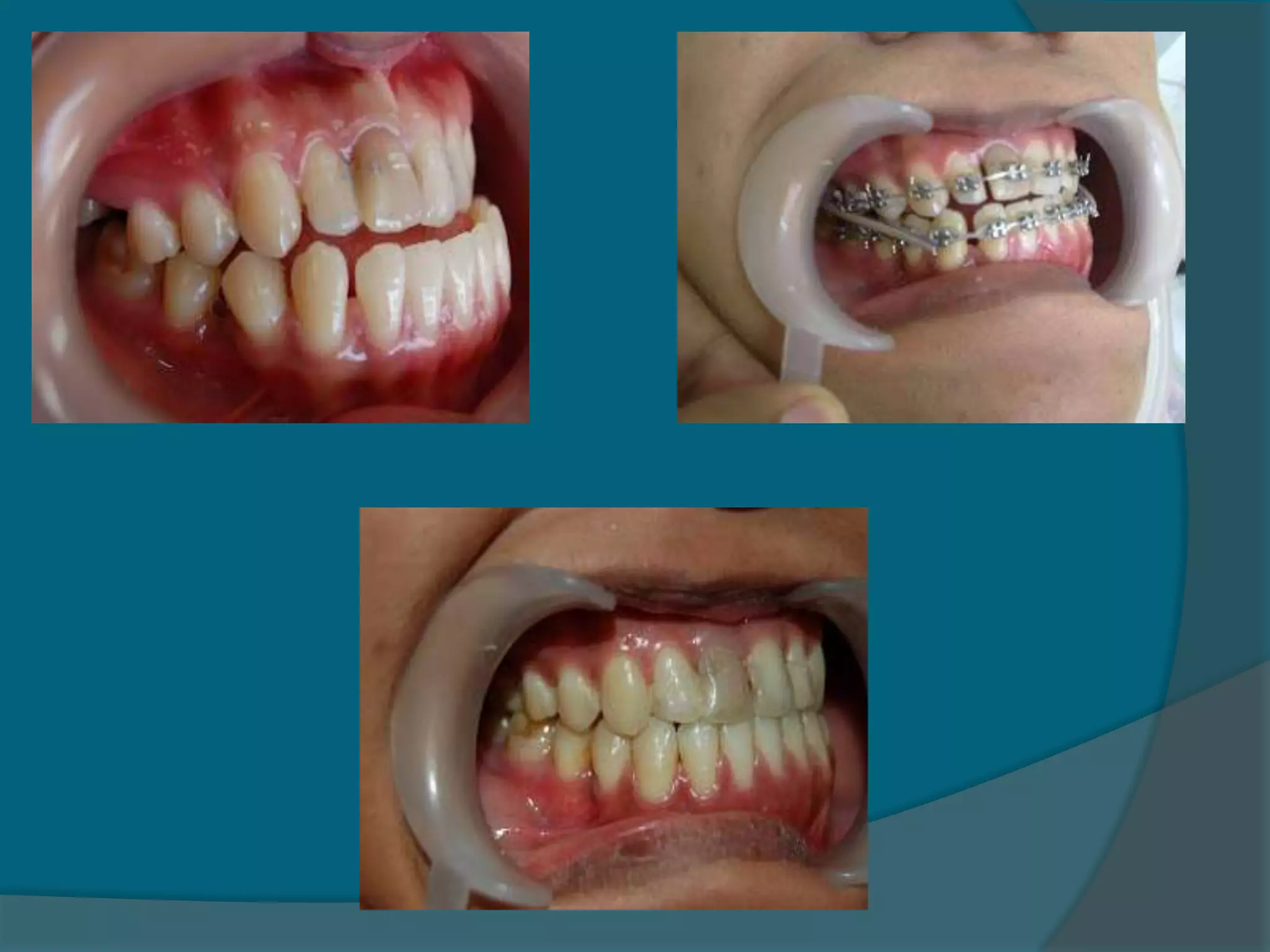
  • #26 A female patient, 21 year old with concave facial profile complaining for the difficulty of occlusion due to anterior crossbite and openbite. Case Management : Extraction of the poor conditioned mandibular first molars to gain space for anterior segment retraction, placement of lingual arch bar to prevent anchorage loss and class III intermaxillary elastics for dentoalveolar compensation by proclining maxillary incisor and retroclining mandibular incisors (orthodontic camouflage).