Civics/Chapter 6
Rural Administration
• CLASS-VI (CIVICS)
• SUBJECT- SOCIAL
SCIENCE
• PREPARED BY-
PAVAN KR SAHU
(TGT-SOST)
• KV,BARGARH
Rural Administration
• Administration in villages called Rural
administration.
• It take care of peoples need of water,
electricity, road connections etc.
• In addition maintenance of land records, and
dealing with conflicts are its work.
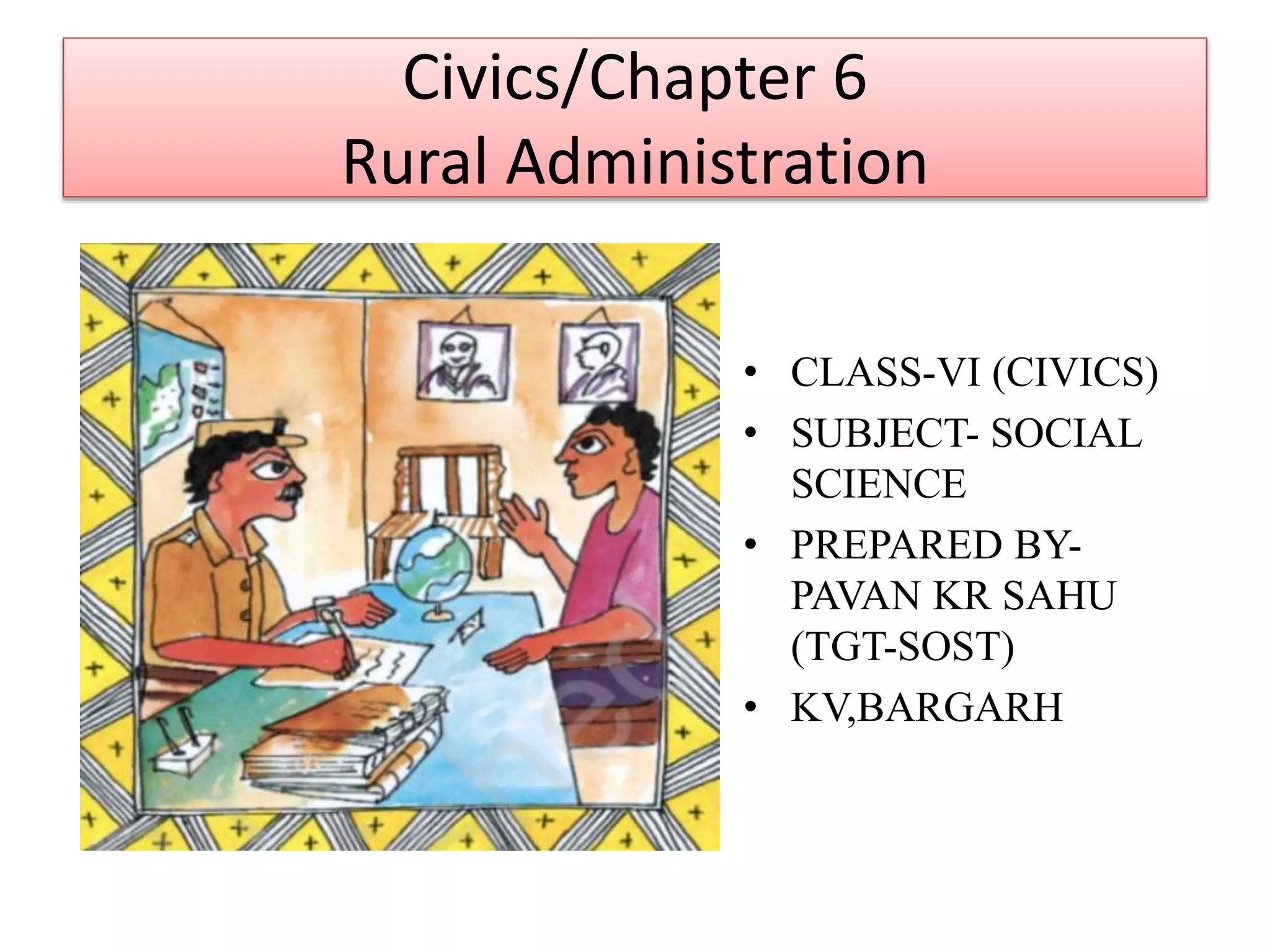
Area of the Police Station
• Every police station has a fixed area which
comes under its control.
• All persons of a particular area can register
complaints in their local police station.
• → The complaints can vary from theft,
injury, fight or accident.
The work at the Police Station
• The report lodged is known as First Information Report
(F.I.R.).
• The Station House Officer (S.H.O.) is in charge of every
police station.
• To get a case registered, one has to report in writing at
the police station.
• → Then, the police officials examine the case and take
action as per the law.
• In the rural areas, disputes occur over land very often.
Maintenance of Land Records
• The Patwari is known by different names in different states - in
some villages such officers are called Lekhpal, in others
Kanungo or Karamchari or Village Officer etc.
Functions of Patwari
• The Patwari maintains and updates the records of the village.
• Measuring land and keeping land records is the main work of
the Patwari.
• Responsible for organising the collection of land revenue from
the farmers and providing information to the government
about the crops grown in this area.
Management of Landof Village
• All states in India are divided into districts.
• These districts are further sub-divided known by different names
such as tehsil, taluka, etc.
• At the head is the District Collector and under her are the revenue
officers, also known as tehsildars.
• The revenue officers or tehsildars come under the district collector.
• The tehsildar is responsible for supervising the work of Patwari
regarding collection of land revenue.
• They also perform administrative tasks like providing farmers with
copies of their land records and hearing land disputes.
A New Law: Hindu Succession
Amendment Act (2005)
• The Hindu Succession Amendment Act
(2005) came into force from September
2005.
• In the new law sons, daughters and their
mothers can get an equal share in the
land.
• The same law will apply to all states and
union territories of the country.
Class 6 rural administration

Class 6 rural administration

  • 1.
    Civics/Chapter 6 Rural Administration •CLASS-VI (CIVICS) • SUBJECT- SOCIAL SCIENCE • PREPARED BY- PAVAN KR SAHU (TGT-SOST) • KV,BARGARH
  • 2.
    Rural Administration • Administrationin villages called Rural administration. • It take care of peoples need of water, electricity, road connections etc. • In addition maintenance of land records, and dealing with conflicts are its work.
  • 3.
    Area of thePolice Station • Every police station has a fixed area which comes under its control. • All persons of a particular area can register complaints in their local police station. • → The complaints can vary from theft, injury, fight or accident.
  • 4.
    The work atthe Police Station • The report lodged is known as First Information Report (F.I.R.). • The Station House Officer (S.H.O.) is in charge of every police station. • To get a case registered, one has to report in writing at the police station. • → Then, the police officials examine the case and take action as per the law. • In the rural areas, disputes occur over land very often.
  • 5.
    Maintenance of LandRecords • The Patwari is known by different names in different states - in some villages such officers are called Lekhpal, in others Kanungo or Karamchari or Village Officer etc. Functions of Patwari • The Patwari maintains and updates the records of the village. • Measuring land and keeping land records is the main work of the Patwari. • Responsible for organising the collection of land revenue from the farmers and providing information to the government about the crops grown in this area.
  • 6.
    Management of LandofVillage • All states in India are divided into districts. • These districts are further sub-divided known by different names such as tehsil, taluka, etc. • At the head is the District Collector and under her are the revenue officers, also known as tehsildars. • The revenue officers or tehsildars come under the district collector. • The tehsildar is responsible for supervising the work of Patwari regarding collection of land revenue. • They also perform administrative tasks like providing farmers with copies of their land records and hearing land disputes.
  • 7.
    A New Law:Hindu Succession Amendment Act (2005) • The Hindu Succession Amendment Act (2005) came into force from September 2005. • In the new law sons, daughters and their mothers can get an equal share in the land. • The same law will apply to all states and union territories of the country.