April 2015
Citizen Engagement
“two-way interaction between citizens and
governments or the private sector that give
citizens a stake in decision-making, with
the objective of improving development
outcomes.”
SOURCE: McNeil, Mary. “Citizen Engagement: History and Definitions”. Week 1: Video transcript. World Bank Group. March 2015.
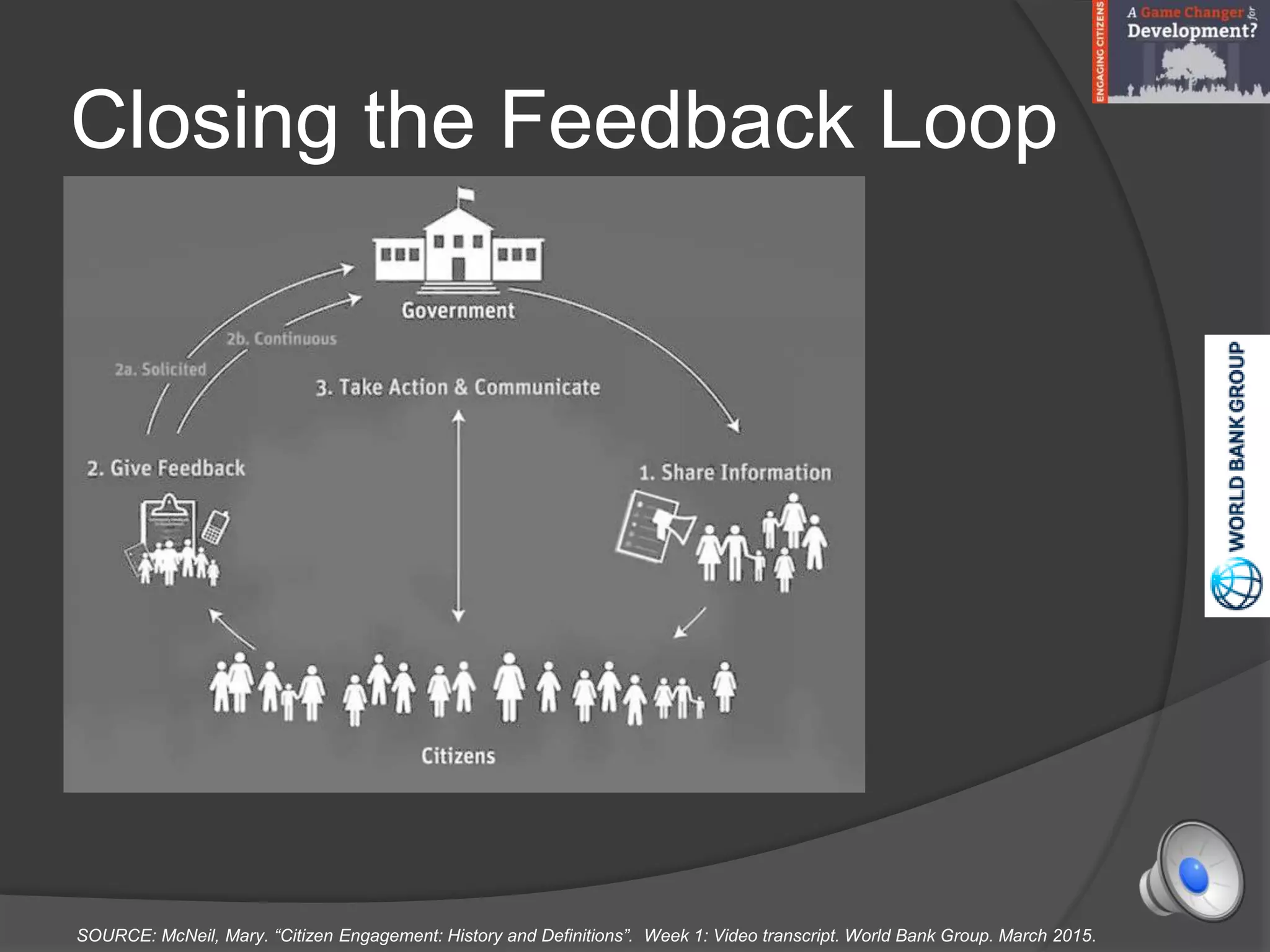
Closing the Feedback Loop
SOURCE: McNeil, Mary. “Citizen Engagement: History and Definitions”. Week 1: Video transcript. World Bank Group. March 2015.
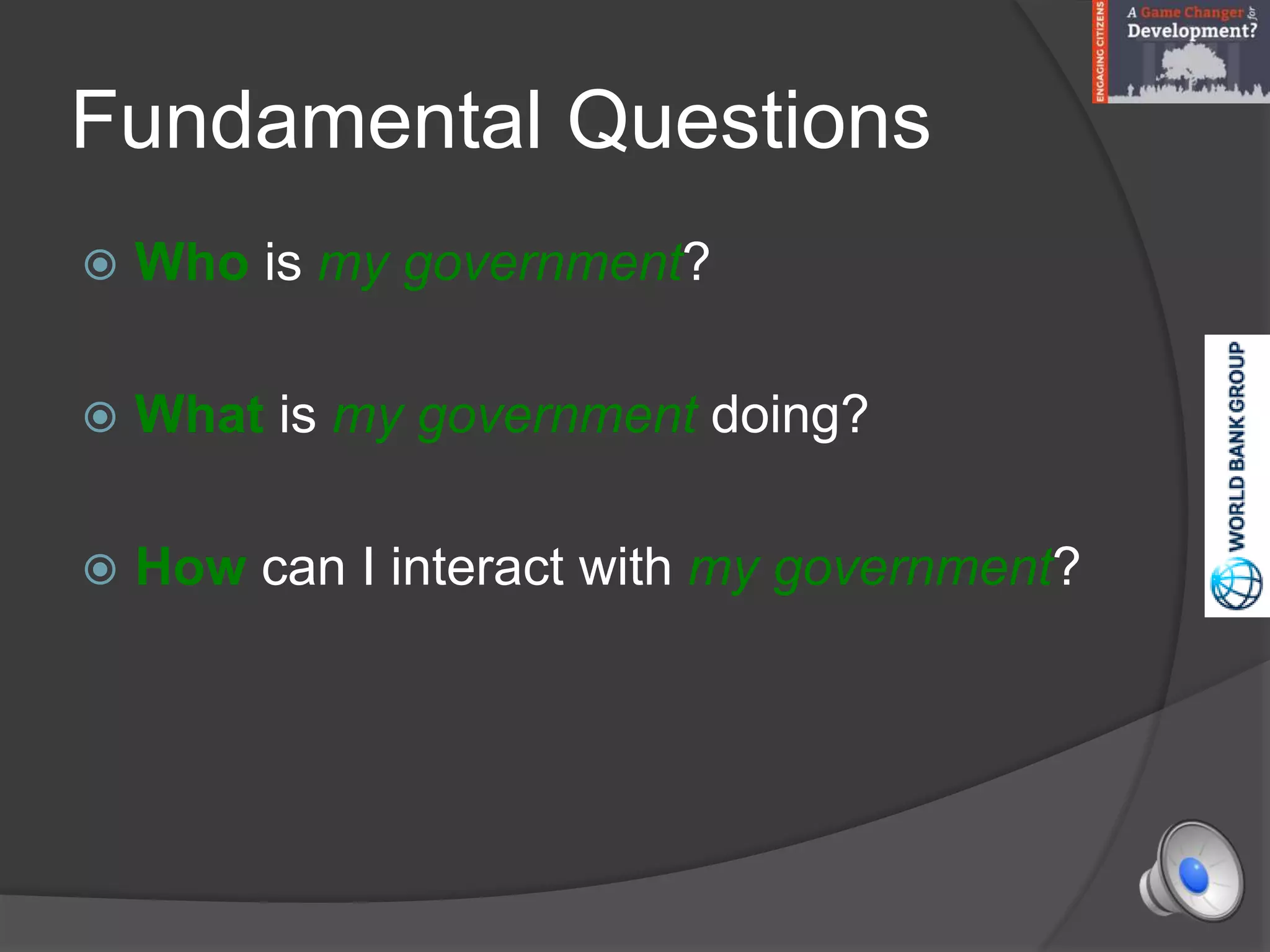
Fundamental Questions
 Who is my government?
 What is my government doing?
 How can I interact with my government?
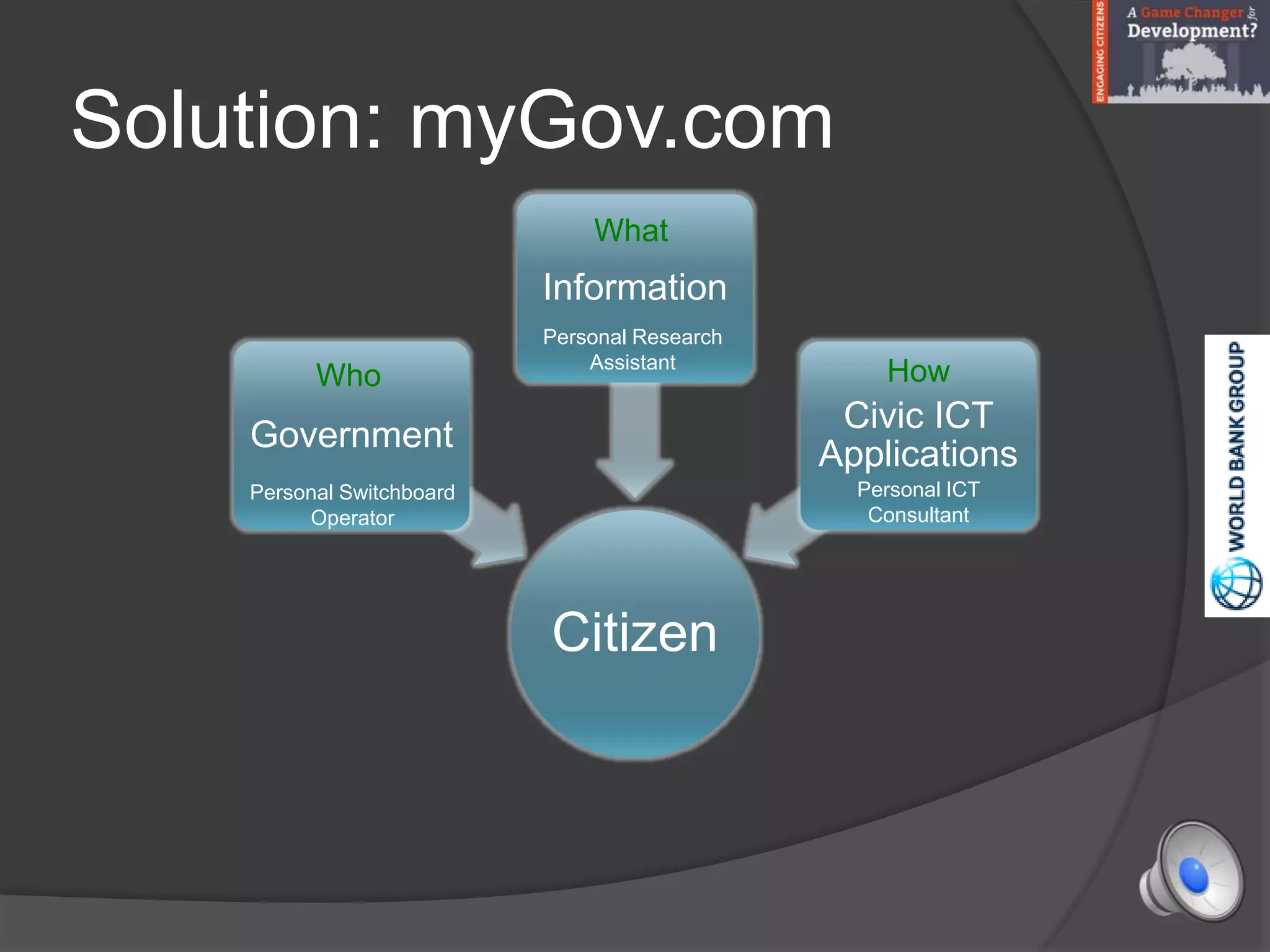
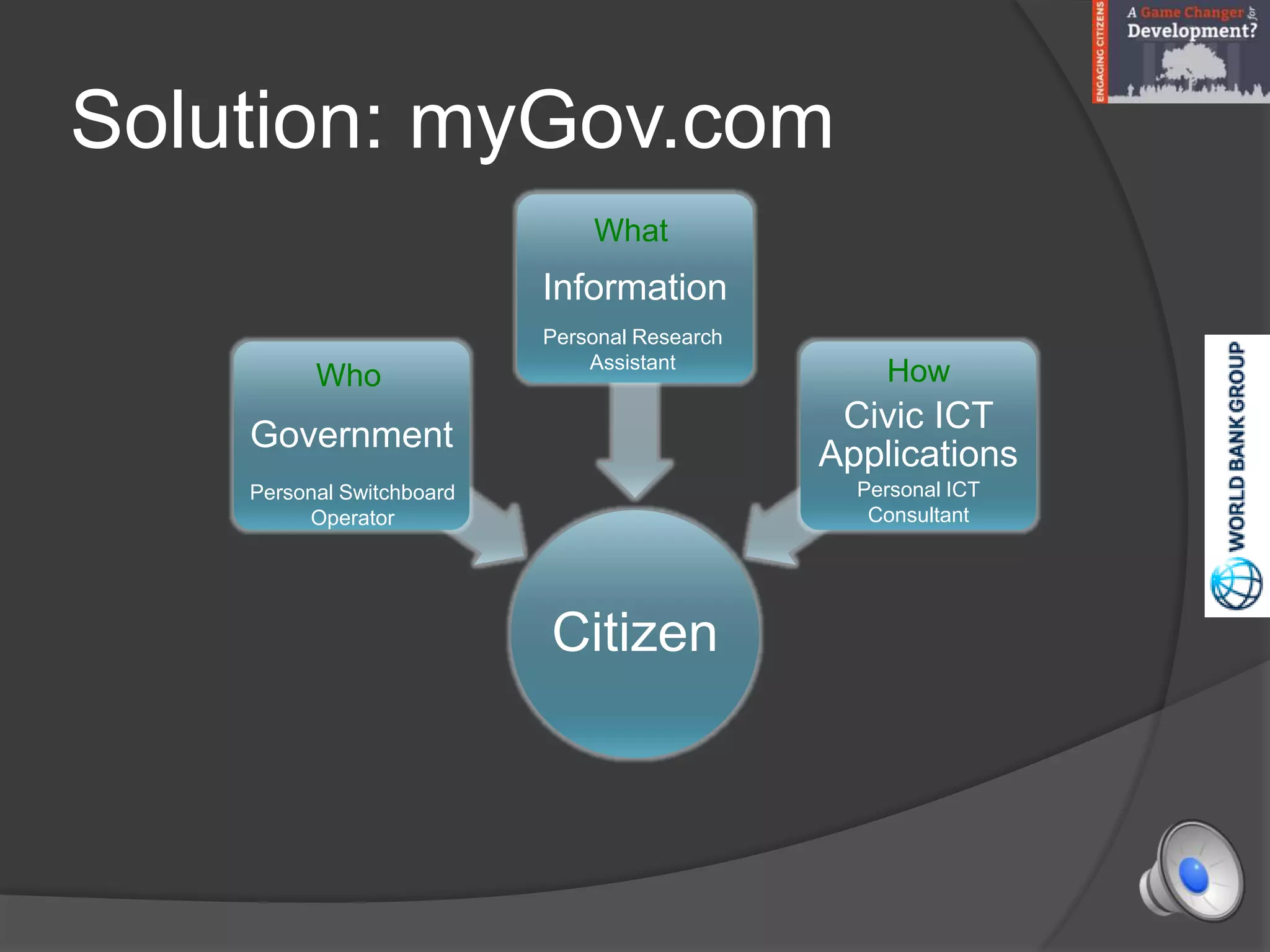
Solution: myGov.com
Citizen
Government
Information
Civic ICT
Applications
Personal Research
Assistant
Personal ICT
Consultant
Personal Switchboard
Operator
Who
What
How
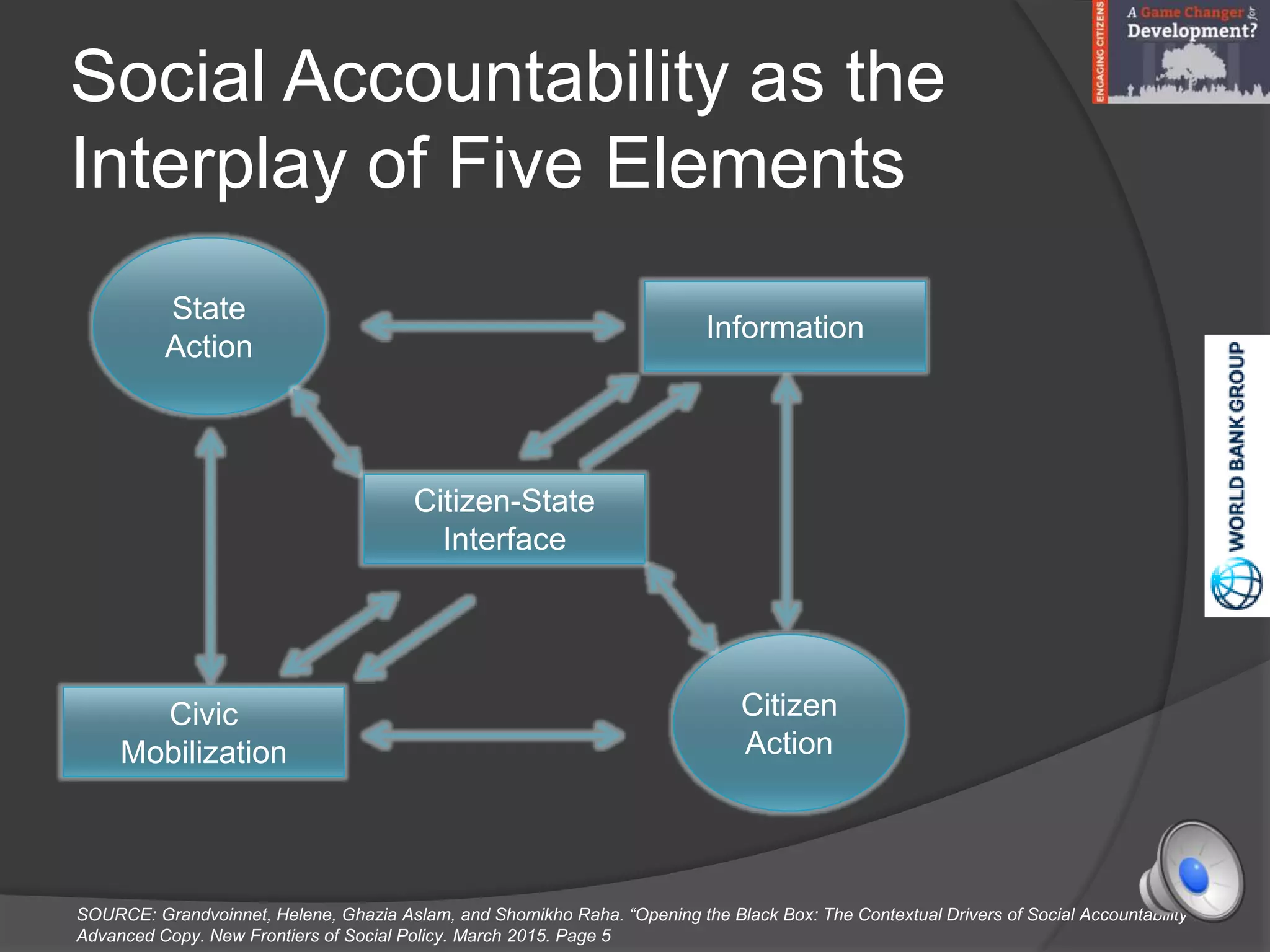
Social Accountability as the
Interplay of Five Elements
State
Action
Information
Citizen
Action
Citizen-State
Interface
Civic
Mobilization
SOURCE: Grandvoinnet, Helene, Ghazia Aslam, and Shomikho Raha. “Opening the Black Box: The Contextual Drivers of Social Accountability”.
Advanced Copy. New Frontiers of Social Policy. March 2015. Page 5
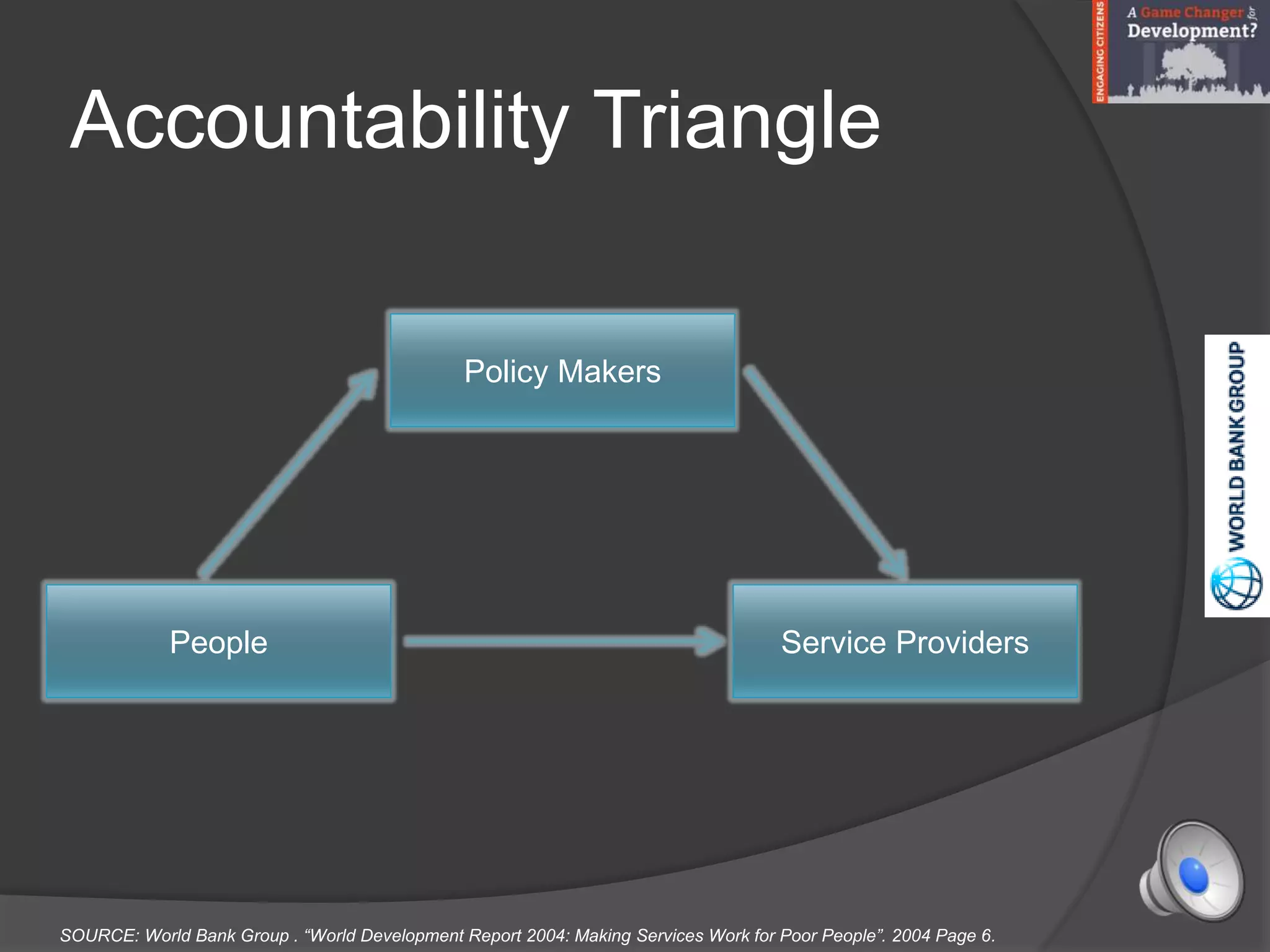
Accountability Triangle
Service Providers
Policy Makers
People
SOURCE: World Bank Group . “World Development Report 2004: Making Services Work for Poor People”. 2004 Page 6.
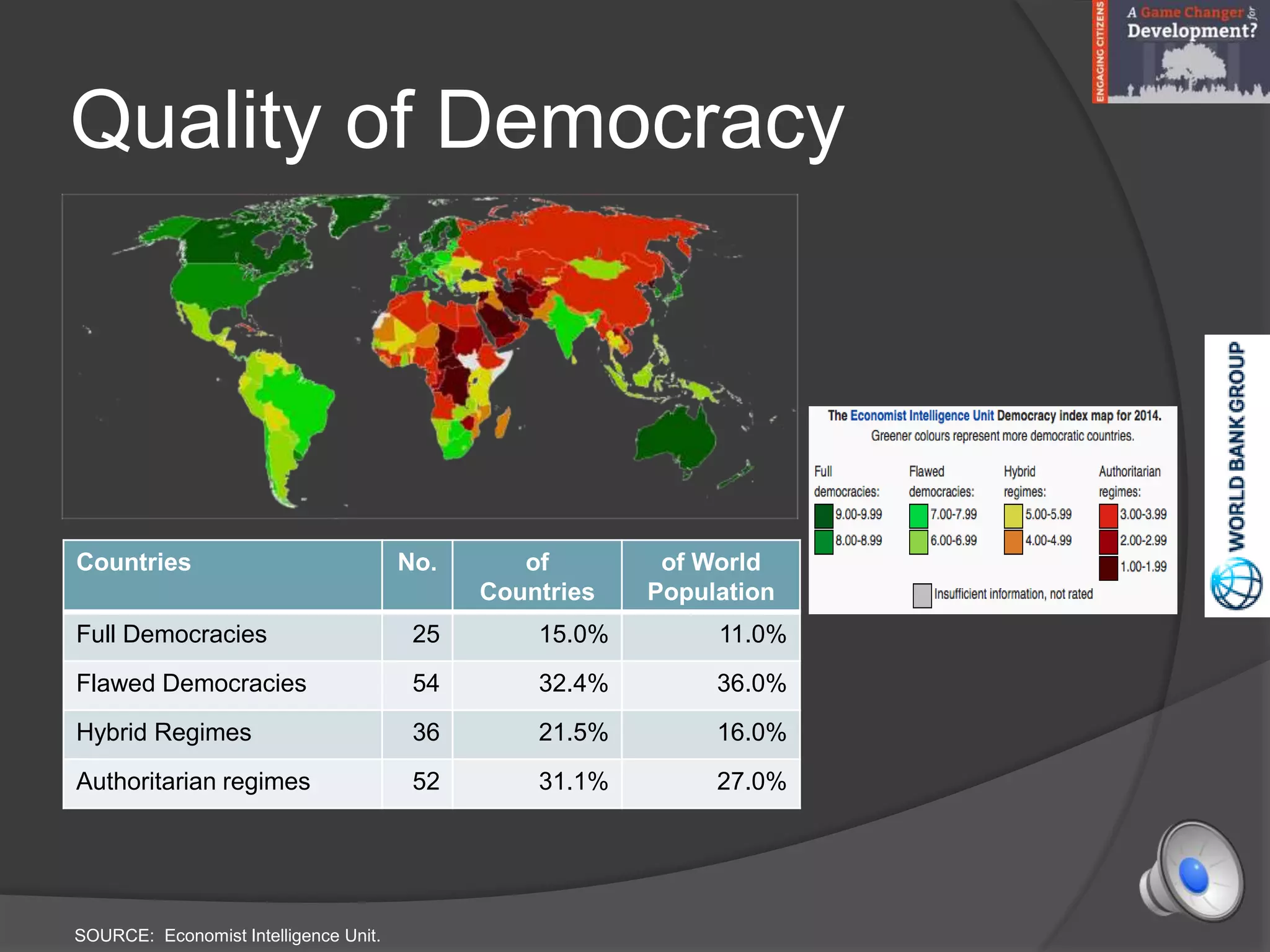
Quality of Democracy
SOURCE: Economist Intelligence Unit.
Countries No. of
Countries
of World
Population
Full Democracies 25 15.0% 11.0%
Flawed Democracies 54 32.4% 36.0%
Hybrid Regimes 36 21.5% 16.0%
Authoritarian regimes 52 31.1% 27.0%
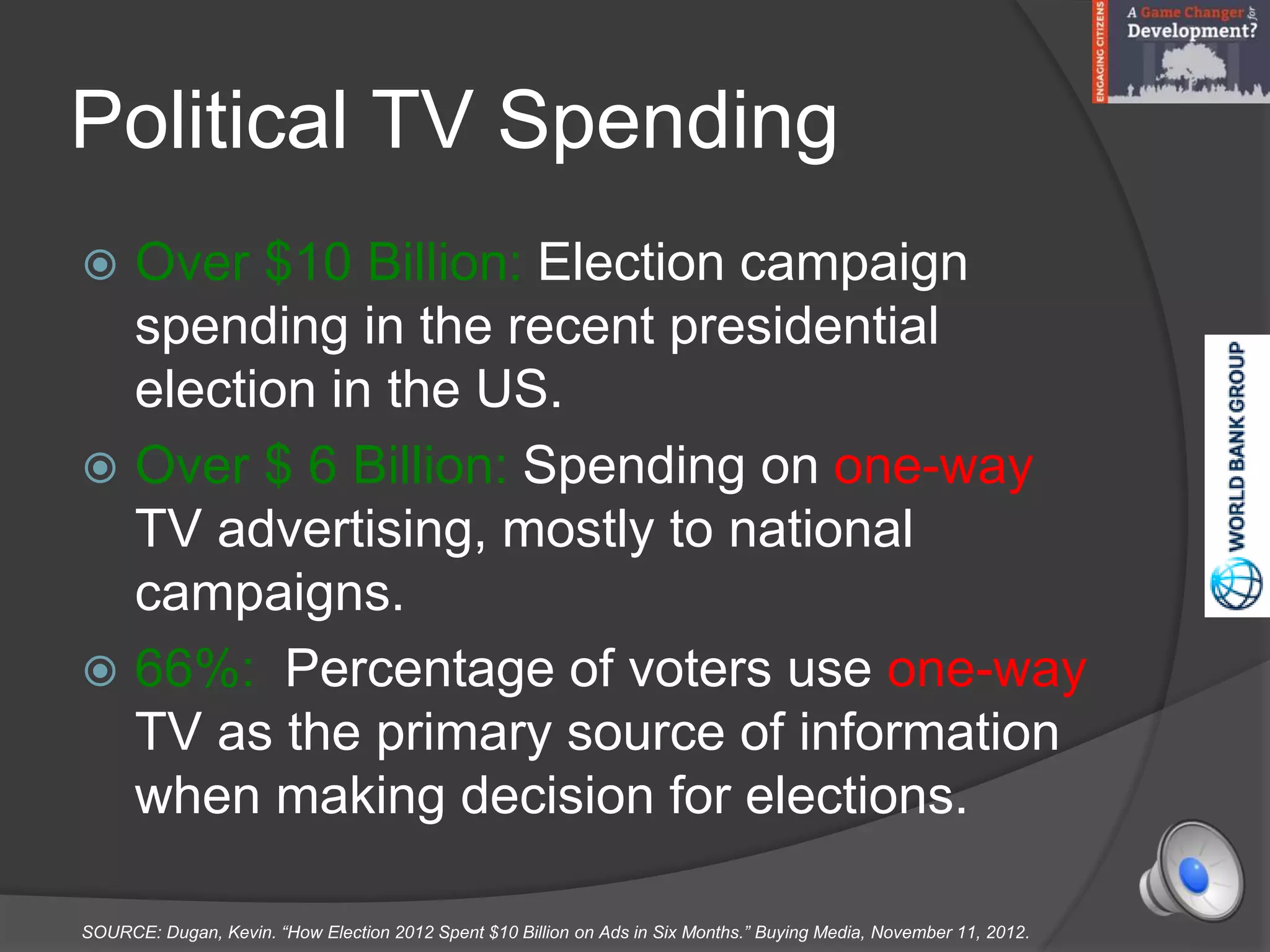
Political TV Spending
 Over $10 Billion: Election campaign
spending in the recent presidential
election in the US.
 Over $ 6 Billion: Spending on one-way
TV advertising, mostly to national
campaigns.
 66%: Percentage of voters use one-way
TV as the primary source of information
when making decision for elections.
SOURCE: Dugan, Kevin. “How Election 2012 Spent $10 Billion on Ads in Six Months.” Buying Media, November 11, 2012.
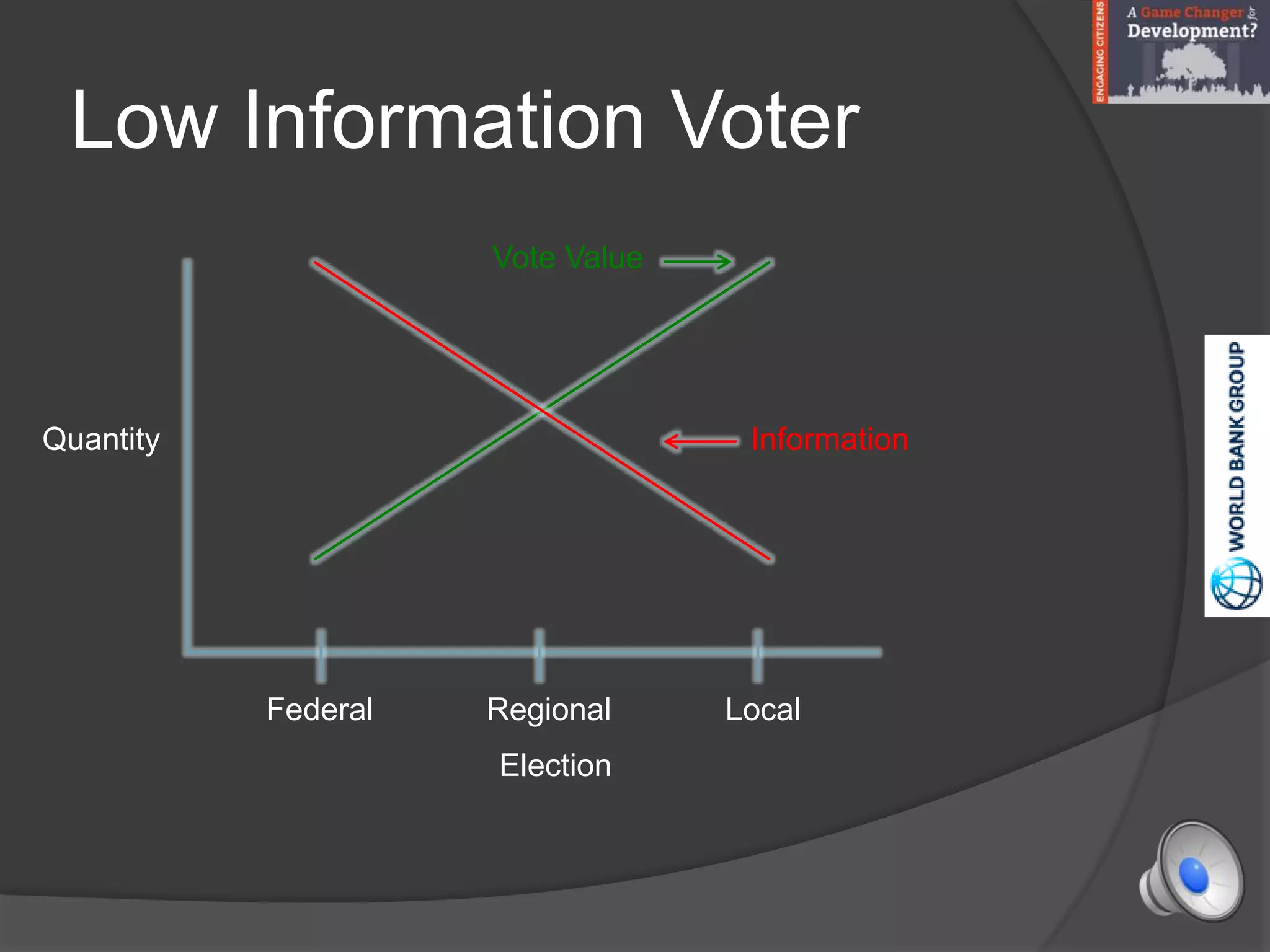
Low Information Voter
Federal Regional Local
Election
Information
Vote Value
Quantity
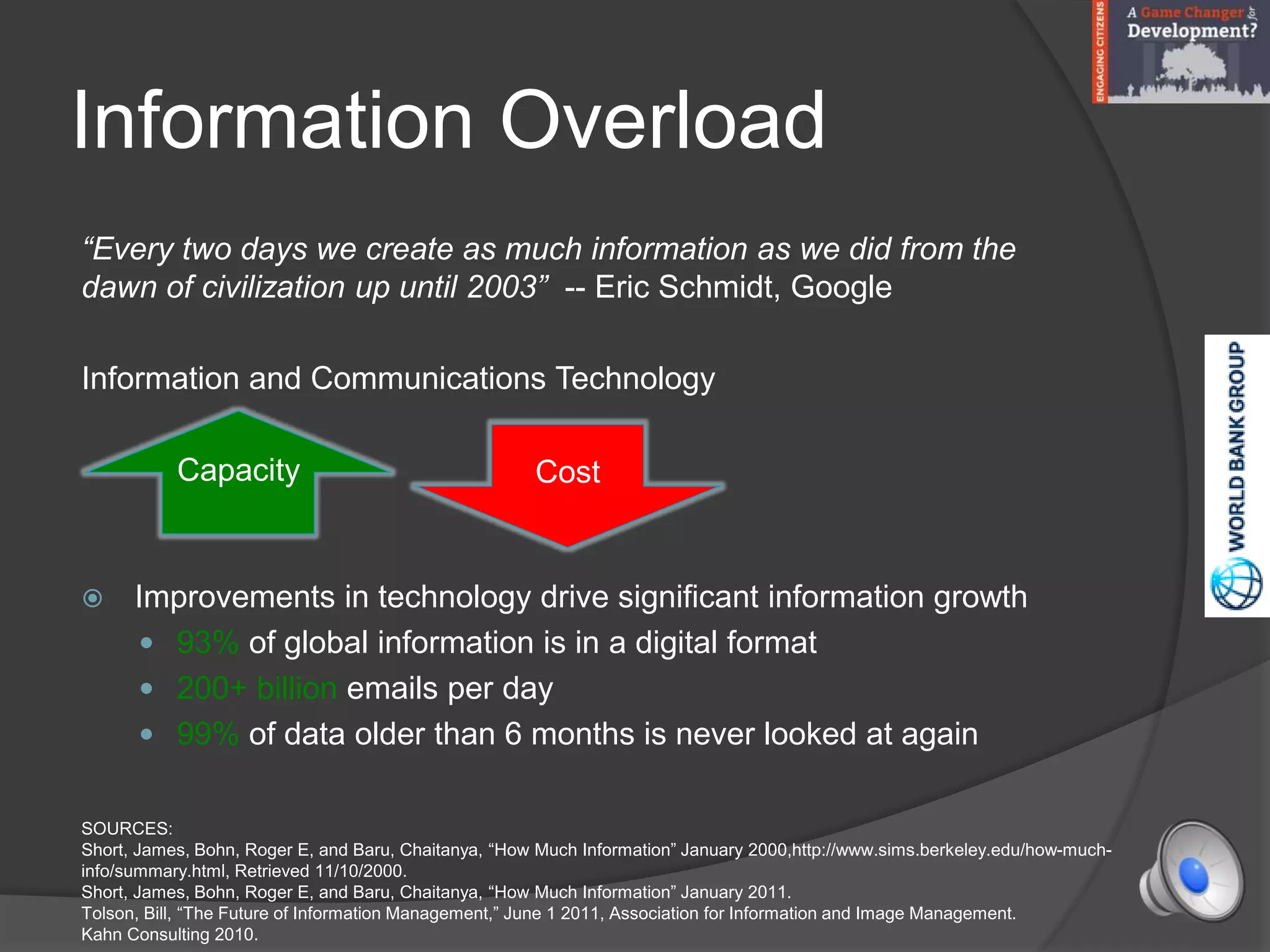
Information Overload
“Every two days we create as much information as we did from the
dawn of civilization up until 2003” -- Eric Schmidt, Google
Information and Communications Technology
 Improvements in technology drive significant information growth
 93% of global information is in a digital format
 200+ billion emails per day
 99% of data older than 6 months is never looked at again
SOURCES:
Short, James, Bohn, Roger E, and Baru, Chaitanya, “How Much Information” January 2000,http://www.sims.berkeley.edu/how-much-
info/summary.html, Retrieved 11/10/2000.
Short, James, Bohn, Roger E, and Baru, Chaitanya, “How Much Information” January 2011.
Tolson, Bill, “The Future of Information Management,” June 1 2011, Association for Information and Image Management.
Kahn Consulting 2010.
Capacity Cost
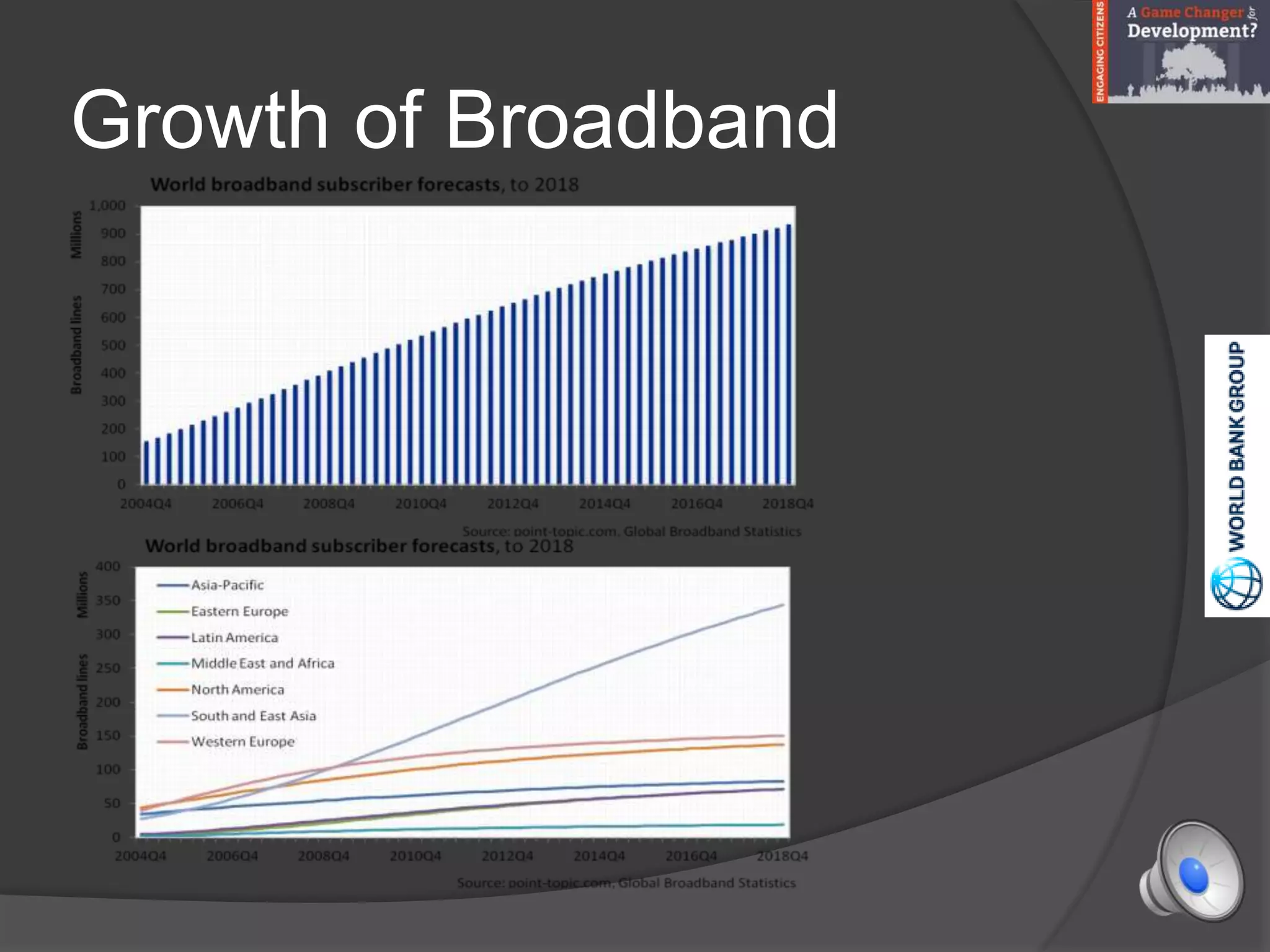
Growth of Broadband
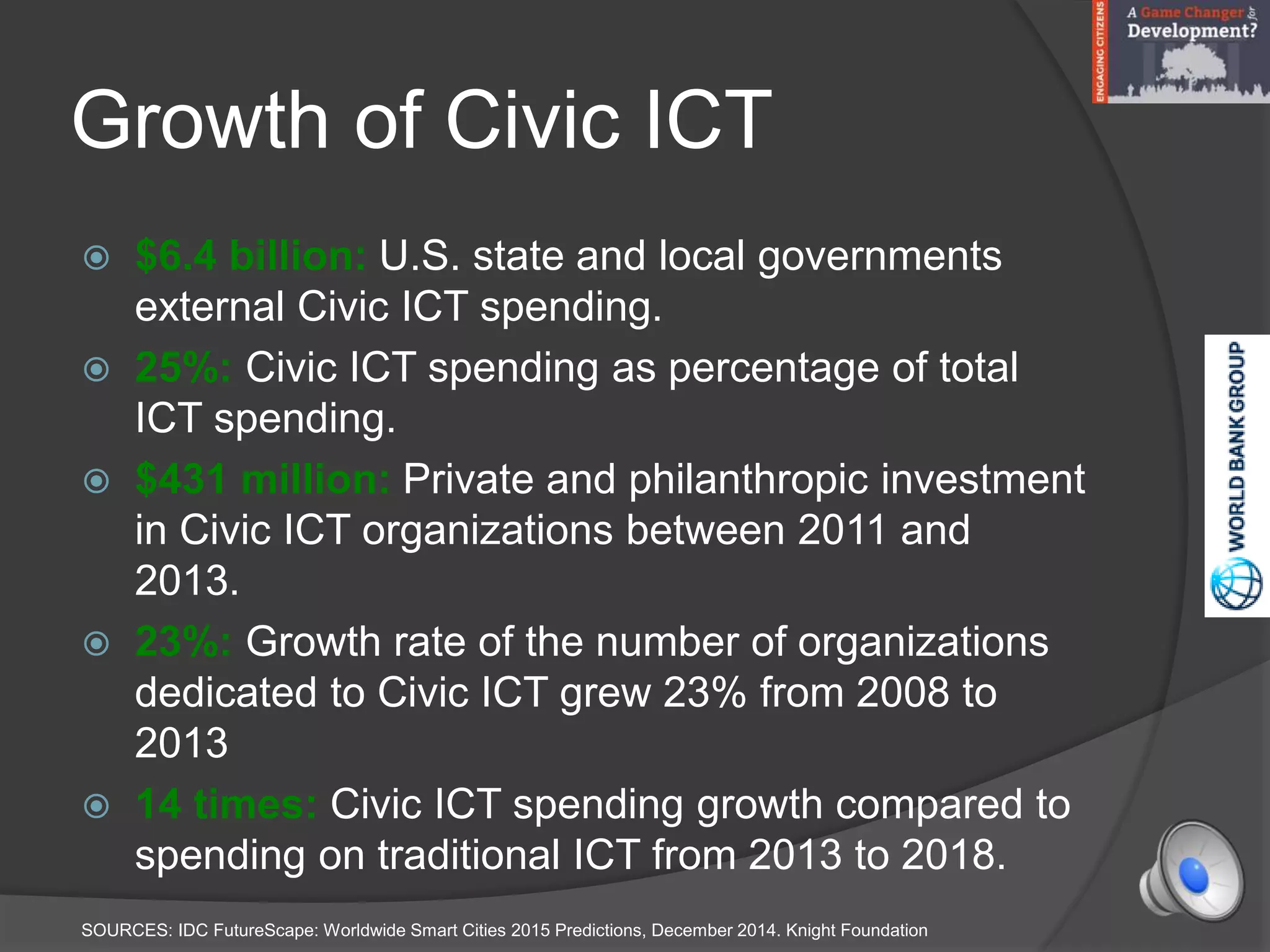
Growth of Civic ICT
 $6.4 billion: U.S. state and local governments
external Civic ICT spending.
 25%: Civic ICT spending as percentage of total
ICT spending.
 $431 million: Private and philanthropic investment
in Civic ICT organizations between 2011 and
2013.
 23%: Growth rate of the number of organizations
dedicated to Civic ICT grew 23% from 2008 to
2013
 14 times: Civic ICT spending growth compared to
spending on traditional ICT from 2013 to 2018.
SOURCES: IDC FutureScape: Worldwide Smart Cities 2015 Predictions, December 2014. Knight Foundation
Fundamental Questions
 Who is my government?
 What is my government doing?
 How can I interact with my government?
Solution: myGov.com
Citizen
Government
Information
Civic ICT
Applications
Personal Research
Assistant
Personal ICT
Consultant
Personal Switchboard
Operator
Who
What
How
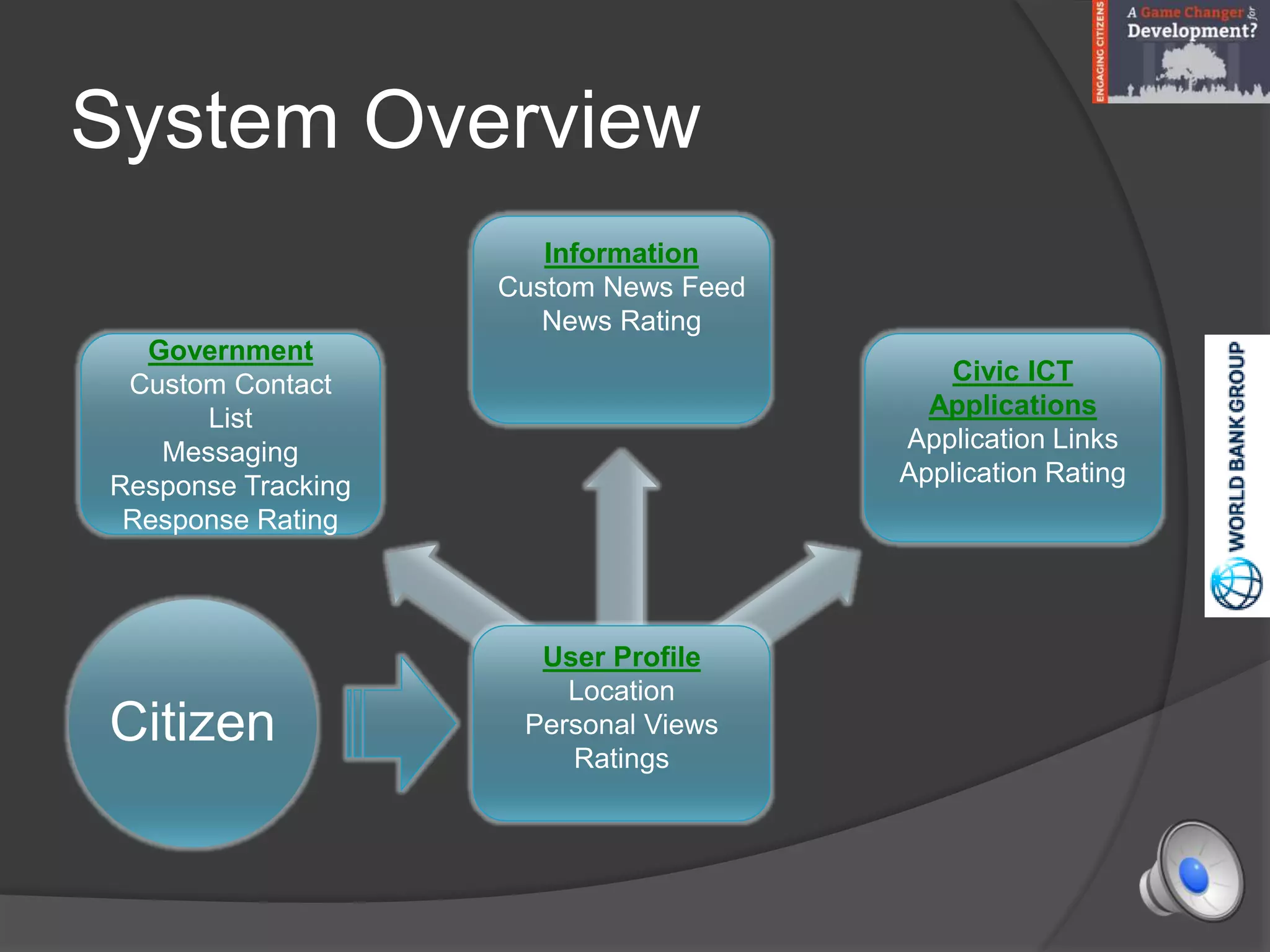
System Overview
Citizen
Government
Custom Contact
List
Messaging
Response Tracking
Response Rating
Civic ICT
Applications
Application Links
Application Rating
Information
Custom News Feed
News Rating
User Profile
Location
Personal Views
Ratings
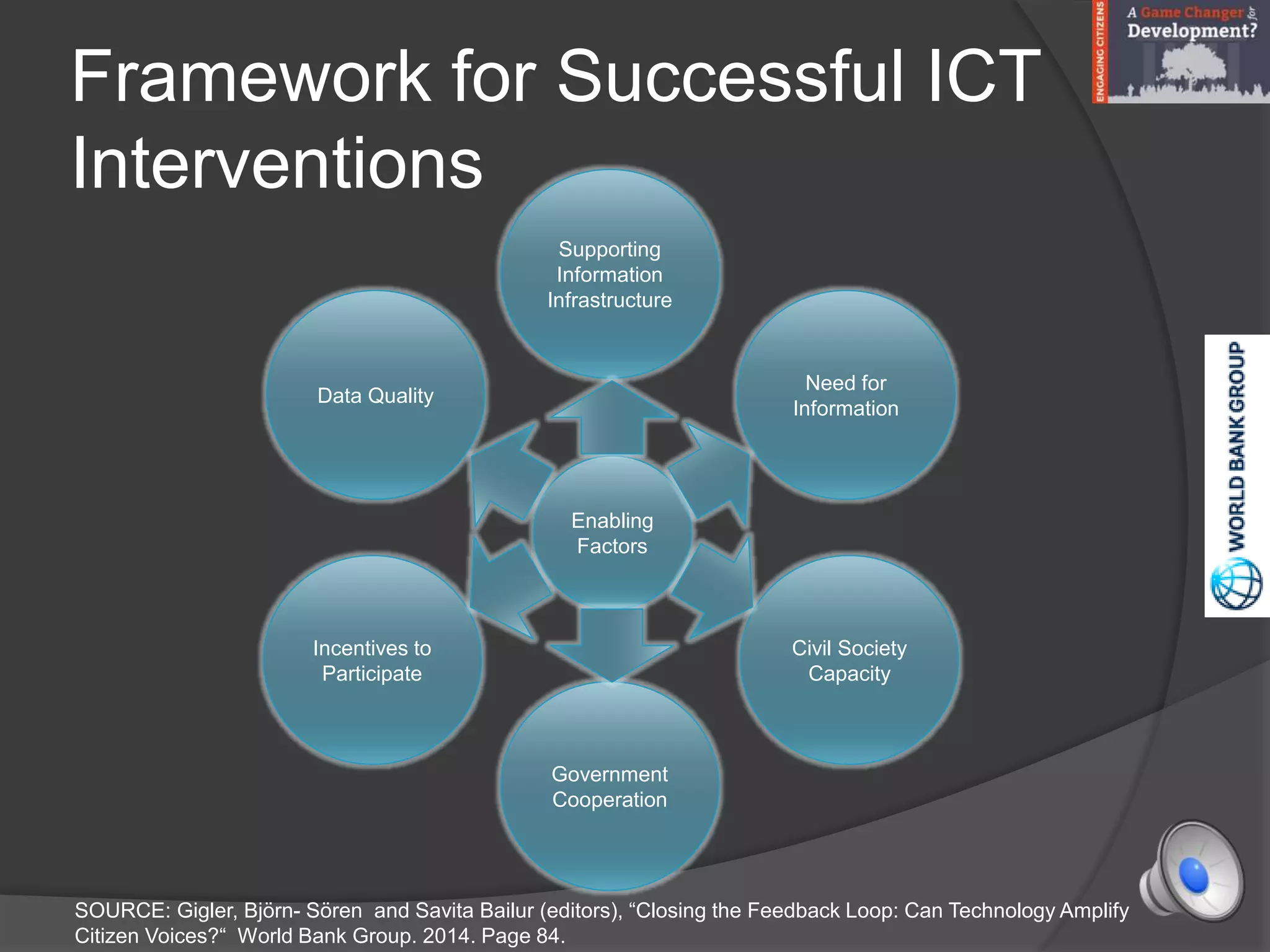
Framework for Successful ICT
Interventions
Enabling
Factors
Need for
Information
Supporting
Information
Infrastructure
Civil Society
Capacity
Government
Cooperation
Incentives to
Participate
Data Quality
SOURCE: Gigler, Björn- Sören and Savita Bailur (editors), “Closing the Feedback Loop: Can Technology Amplify
Citizen Voices?“ World Bank Group. 2014. Page 84.

Citizen Engagement Project

  • 1.
  • 2.
    Citizen Engagement “two-way interactionbetween citizens and governments or the private sector that give citizens a stake in decision-making, with the objective of improving development outcomes.” SOURCE: McNeil, Mary. “Citizen Engagement: History and Definitions”. Week 1: Video transcript. World Bank Group. March 2015.
  • 3.
    Closing the FeedbackLoop SOURCE: McNeil, Mary. “Citizen Engagement: History and Definitions”. Week 1: Video transcript. World Bank Group. March 2015.
  • 4.
    Fundamental Questions  Whois my government?  What is my government doing?  How can I interact with my government?
  • 5.
    Solution: myGov.com Citizen Government Information Civic ICT Applications PersonalResearch Assistant Personal ICT Consultant Personal Switchboard Operator Who What How
  • 6.
    Social Accountability asthe Interplay of Five Elements State Action Information Citizen Action Citizen-State Interface Civic Mobilization SOURCE: Grandvoinnet, Helene, Ghazia Aslam, and Shomikho Raha. “Opening the Black Box: The Contextual Drivers of Social Accountability”. Advanced Copy. New Frontiers of Social Policy. March 2015. Page 5
  • 7.
    Accountability Triangle Service Providers PolicyMakers People SOURCE: World Bank Group . “World Development Report 2004: Making Services Work for Poor People”. 2004 Page 6.
  • 9.
    Quality of Democracy SOURCE:Economist Intelligence Unit. Countries No. of Countries of World Population Full Democracies 25 15.0% 11.0% Flawed Democracies 54 32.4% 36.0% Hybrid Regimes 36 21.5% 16.0% Authoritarian regimes 52 31.1% 27.0%
  • 10.
    Political TV Spending Over $10 Billion: Election campaign spending in the recent presidential election in the US.  Over $ 6 Billion: Spending on one-way TV advertising, mostly to national campaigns.  66%: Percentage of voters use one-way TV as the primary source of information when making decision for elections. SOURCE: Dugan, Kevin. “How Election 2012 Spent $10 Billion on Ads in Six Months.” Buying Media, November 11, 2012.
  • 11.
    Low Information Voter FederalRegional Local Election Information Vote Value Quantity
  • 12.
    Information Overload “Every twodays we create as much information as we did from the dawn of civilization up until 2003” -- Eric Schmidt, Google Information and Communications Technology  Improvements in technology drive significant information growth  93% of global information is in a digital format  200+ billion emails per day  99% of data older than 6 months is never looked at again SOURCES: Short, James, Bohn, Roger E, and Baru, Chaitanya, “How Much Information” January 2000,http://www.sims.berkeley.edu/how-much- info/summary.html, Retrieved 11/10/2000. Short, James, Bohn, Roger E, and Baru, Chaitanya, “How Much Information” January 2011. Tolson, Bill, “The Future of Information Management,” June 1 2011, Association for Information and Image Management. Kahn Consulting 2010. Capacity Cost
  • 13.
  • 14.
    Growth of CivicICT  $6.4 billion: U.S. state and local governments external Civic ICT spending.  25%: Civic ICT spending as percentage of total ICT spending.  $431 million: Private and philanthropic investment in Civic ICT organizations between 2011 and 2013.  23%: Growth rate of the number of organizations dedicated to Civic ICT grew 23% from 2008 to 2013  14 times: Civic ICT spending growth compared to spending on traditional ICT from 2013 to 2018. SOURCES: IDC FutureScape: Worldwide Smart Cities 2015 Predictions, December 2014. Knight Foundation
  • 16.
    Fundamental Questions  Whois my government?  What is my government doing?  How can I interact with my government?
  • 17.
    Solution: myGov.com Citizen Government Information Civic ICT Applications PersonalResearch Assistant Personal ICT Consultant Personal Switchboard Operator Who What How
  • 18.
    System Overview Citizen Government Custom Contact List Messaging ResponseTracking Response Rating Civic ICT Applications Application Links Application Rating Information Custom News Feed News Rating User Profile Location Personal Views Ratings
  • 19.
    Framework for SuccessfulICT Interventions Enabling Factors Need for Information Supporting Information Infrastructure Civil Society Capacity Government Cooperation Incentives to Participate Data Quality SOURCE: Gigler, Björn- Sören and Savita Bailur (editors), “Closing the Feedback Loop: Can Technology Amplify Citizen Voices?“ World Bank Group. 2014. Page 84.

Editor's Notes

  • #3 When looking at the definition of Citizen Engagement, it is important to note that Citizen Engagement begins with TWO-WAY interaction between citizens and government.
  • #4 This project will improve civic performance through superior design, convenience and use-ability of civic information that closes the feedback loop by providing two-way communication platform linking citizens and their government, AND news relevant to the citizen’s location
  • #5 This project will enable Citizens to answer three fundamental questions ONE: WHO is my government? TWO: WHAT is my government doing? THREE: HOW can I interact with my government?
  • #6 The solution is myGov.com This ICT application is built around the individual citizen’s location and consists of three modules providing information based on the citizens residential address which is part of their user profile. Government: A Personal Switchboard Operator that will connect citizens with a customized contact list for Elected Officials, Service Providers, Candidates. Information: A Personal Research Assistant that will connect citizens to a customized research service about their government. Civic ICT Applications: A Personal ICT Consultant that will connect citizens with relevant ICT Applications available.
  • #7 MyGov.com is a innovative Citizen-state interface supporting the interplay of THE five elements of Social Accountability
  • #8 My.Gov.com enables citizens to take both the short route and long routes to accountability linking citizens directly with service providers and policy makers.
  • #10 Research from the Economist shows that most countries are democracies in need to more transparency and improvement in government services.
  • #11 Even one of the oldest and wealthiest democracies in the world does not have a robust two-way state-citizen interface Over TEN Billion was spent in the recent presidential election in the US AND Over SIX Billion was spent on one-way Television advertising Two-thirds of voters use one-way Television as the primary source of information when making decision for elections.
  • #12 There is also the problem of the low information voter. The value of a vote is greatest in a local elections Yet The amount of information available to citizens regarding their local elections and services is limited. It is the local government that has the greatest impact on the citizen, yet the citizen has the least amount of information about the local government.
  • #13 With the low cost of ICT Citizens are overwhelmed with information and they require better information management tools CEO of Google, Eric Schmidt, notes “Every two days we create as much information as we did from the dawn of civilization up until 2003” --
  • #14 Broadband is also getting cheaper and access is growing delivering more information However, broadband growth and access is not equal across regions and this must be taken into consideration.
  • #15 Looking again at one of the oldest and wealthiest democracies, in the United States, there is significant growth in Civic ICT and this trend is expected to extend to other countries.
  • #17 TO REVIEW myGov.com will enable Citizens to answer three fundamental questions ONE: WHO is my government? TWO: WHAT is my government doing? THREE: HOW can I interact with my government?
  • #18 The solution is myGov.com This ICT application is built around the individual citizen’s location and consists of three modules Government: A Personal Switchboard Operator that will connect citizens with a customized contact list for Elected Officials, Service Providers, Candidates based on the citizens residential address which is part of their user profile. The Messaging system will allow citizens contact their elected representatives and candidates for office via mail, email, Facebook, Twitter, or other means. Information: A Personal Research Assistant that will connect citizens to a customized research service about their government including Traditional Media, New Media and Official Publications based on the citizens residential address and the government contact list. Civic ICT Applications: A Personal ICT Consultant that will connect citizens with relevant ICT Applications available.
  • #19  As the citizen interacts with the government and the system, the user can rate the quality of messages, news items, and applications. This rating information will be taken into account as news searches are executed to increase relevance and value of information.
  • #20 To be successful, mvGom.com must support the enabling factor for a successful civic ICT Implementation Game-ification techniques can be employed to increase engagement activity Within each community resources must be allocated to insure accurate information is availably on the system. Access to computer, communications and training are required and may need to be developed