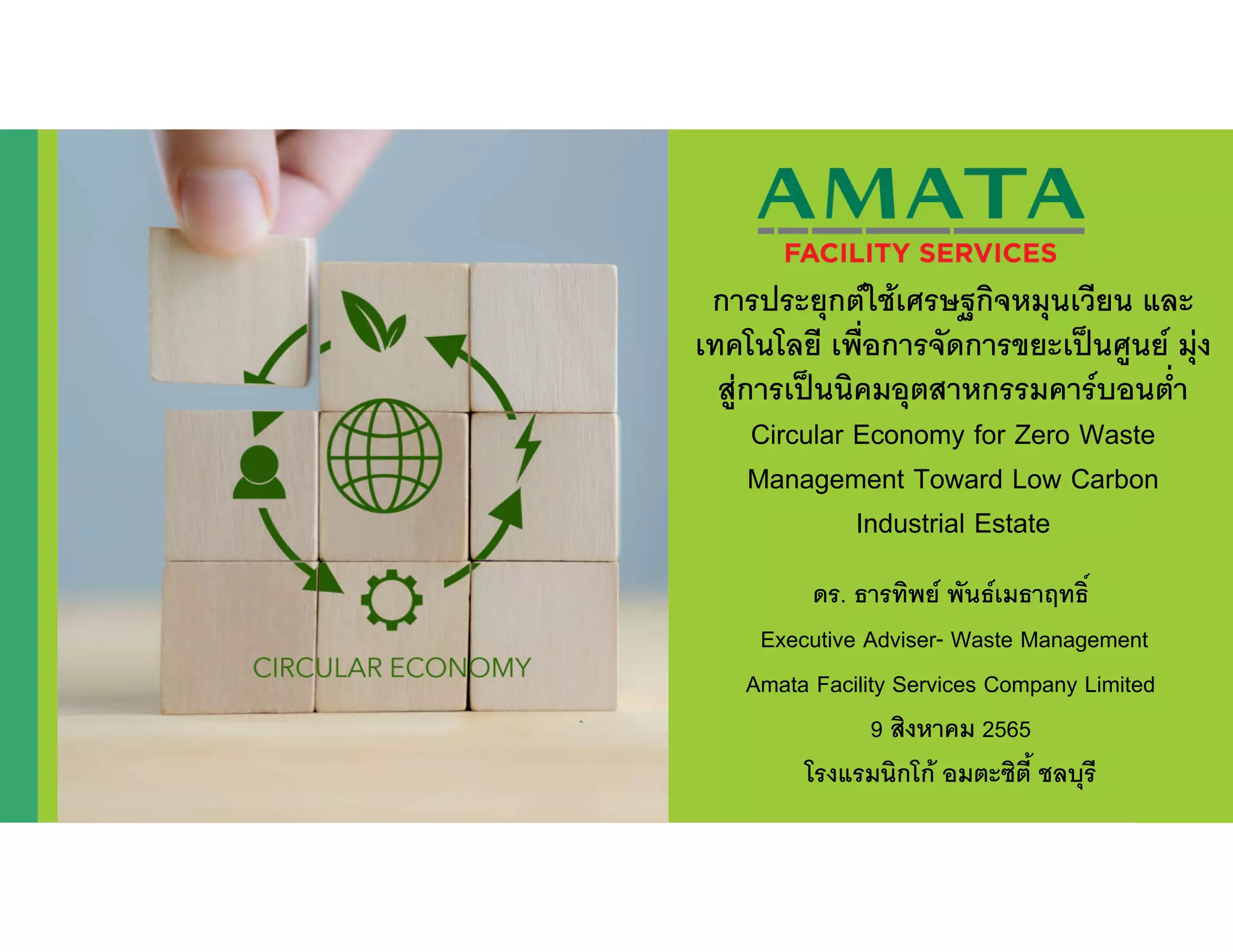
การประยุกต์ใช้เศรษฐกิจหมุนเวียน และ
เทคโนโลยี เพือการจัดการขยะเป็นศูนย์ มุ่ง
สู่การเป็นนิคมอุตสาหกรรมคาร์บอนตํา
Circular Economy for Zero Waste
Management Toward Low Carbon
Industrial Estate
ดร. ธารทิพย์ พันธ์เมธาฤทธิ
Executive Adviser- Waste Management
Amata Facility Services Company Limited
9 สิงหาคม 2565
โรงแรมนิกโก้ อมตะซิตี ชลบุรี
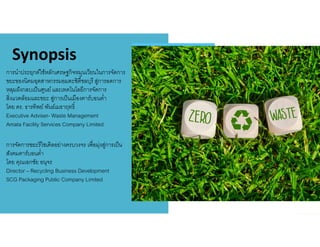
Synopsis
การนําประยุกต์ใช้หลักเศรษฐกิจหมุนเวียนในการจัดการ
ขยะของนิคมอุตสาหกรรมอมตะซิตีชลบุรี สู่การลดการ
หลุมฝังกลบเป็นศูนย์และเทคโนโลยีการจัดการ
สิงแวดล้อมและขยะ สู่การเป็นเมืองคาร์บอนตํา
โดย ดร. ธารทิพย์ พันธ์เมธาฤทธิ
Executive Adviser- Waste Management
Amata Facility Services Company Limited
การจัดการขยะรีไซเคิลอย่างครบวงจร เพือมุ่งสู่การเป็น
สังคมคาร์บอนตํา
โดย คุณเอกชัย อนุจร
Director – Recycling Business Development
SCG Packaging Public Company Limited
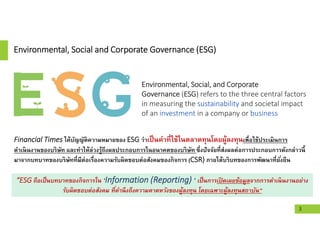
Environmental, Social and Corporate Governance (ESG)
Financial Times ได้บัญญัติความหมายของ ESG ว่าเป็นคําทีใช้ในตลาดทุนโดยผู้ลงทุนเพือใช้ประเมินการ
ดําเนินงานของบริษัท และทําให้ล่วงรู้ถึงผลประกอบการในอนาคตของบริษัท ซึงปัจจัยทีส่งผลต่อการประกอบการดังกล่าวนี
มาจากบทบาทของบริษัททีมีต่อเรืองความรับผิดชอบต่อสังคมของกิจการ (CSR) ภายใต้บริบทของการพัฒนาทียังยืน
“ESG ถือเป็นบทบาทของกิจการใน ‘Information (Reporting) ’ เป็นการเปิ ดเผยข้อมูลจากการดําเนินงานอย่าง
รับผิดชอบต่อสังคม ทีคํานึงถึงความคาดหวังของผู้ลงทุน โดยเฉพาะผู้ลงทุนสถาบัน”
Environmental, Social, and Corporate
Governance (ESG) refers to the three central factors
in measuring the sustainability and societal impact
of an investment in a company or business
3
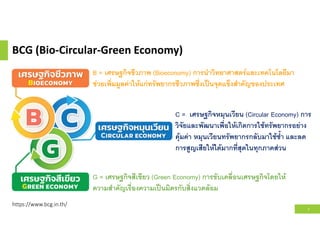
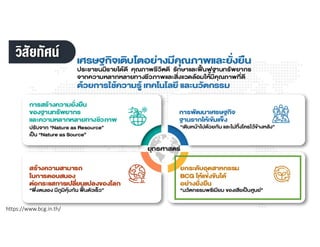
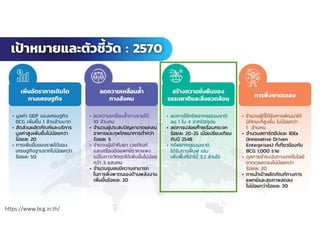
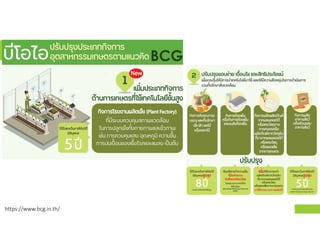
BCG (Bio-Circular-Green Economy)
4
B = เศรษฐกิจชีวภาพ (Bioeconomy) การนําวิทยาศาสตร์และเทคโนโลยีมา
ช่วยเพิมมูลค่าให้แก่ทรัพยากรชีวภาพซึงเป็นจุดแข็งสําคัญของประเทศ
C = เศรษฐกิจหมุนเวียน (Circular Economy) การ
วิจัยและพัฒนาเพือให้เกิดการใช้ทรัพยากรอย่าง
คุ้มค่า หมุนเวียนทรัพยากรกลับมาใช้ซํา และลด
การสูญเสียให้ได้มากทีสุดในทุกภาคส่วน
G = เศรษฐกิจสีเขียว (Green Economy) การขับเคลือนเศรษฐกิจโดยให้
ความสําคัญเรืองความเป็นมิตรกับสิงแวดล้อม
https://www.bcg.in.th/
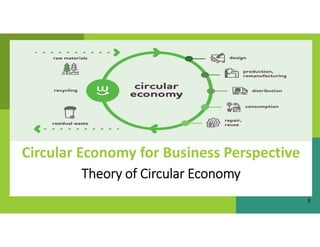
Circular Economy for Business Perspective
Theory of Circular Economy
8
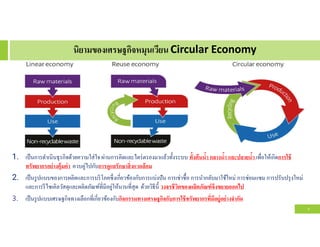
1. เป็นการดําเนินธุรกิจด้วยความใส่ใจ ผ่านการคิดและไตร่ตรองมาแล้วทังระบบ ทังต้นนํา กลางนํา และปลายนํา เพือให้เกิดการใช้
ทรัพยากรอย่างคุ้มค่า ควบคู่ไปกับการดูแลรักษาสิงแวดล้อม
2. เป็นรูปแบบของการผลิตและการบริโภคซึงเกียวข้องกับการแบ่งปัน การเช่าซือ การนํากลับมาใช้ใหม่ การซ่อมแซม การปรับปรุงใหม่
และการรีไซเคิลวัสดุและผลิตภัณฑ์ทีมีอยู่ให้นานทีสุด ด้วยวิธีนี วงจรชีวิตของผลิตภัณฑ์จึงขยายออกไป
3. เป็นรูปแบบเศรษฐกิจทางเลือกทีเกียวข้องกับกิจกรรมทางเศรษฐกิจกับการใช้ทรัพยากรทีมีอยู่อย่างจํากัด
9
นิยามของเศรษฐกิจหมุนเวียน Circular Economy
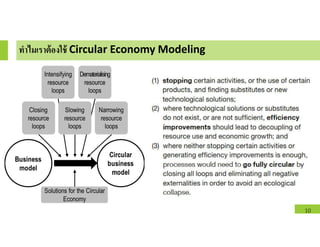
ทําไมเราต้องใช้ Circular Economy Modeling
10
11
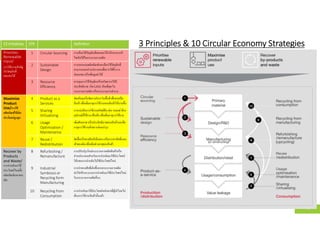
CE Initiatives STR Definition
Priorities
Renewable
Input/
การให้ความสําคัญ
กับวัตถุดิบที
ทดแทนได้
1 Circular Sourcing การเลือกใช้วัตถุดิบทีทดแทนได้หรือสามารถรี
ไซเคิลได้ในกระบวนการผลิต
2 Sustainable
Design
การออกแบบผลิตภัณฑ์และเลือกใช้วัตถุดิบที
สามารถแยกส่วนประกอบเพือการใช้ซําการ
ซ่อมแซมหรือเพิมมูลค่าได้
3 Resource
Efficiency
ควบคุมการใช้วัตถุดิบหรือทรัพยากรให้มี
ประสิทธิภาพ เกิดLoss น้อยทีสุดใน
กระบวนการผลิตหรือกระบวนการทํางาน
Maximize
Product
Use/การใช้
ผลิตภัณฑ์ให้เกิด
ประโยชน์สูงสุด
4 Product as a
Services
จัดเตรียมหรือจัดหาบริการในพืนทีเพือขายเป็น
สินค้าเพือเพิมอายุการใช้งานของสินค้าให้นานขึน
5 Sharing
Virtualizing
การแบ่งปันการใช้งานทรัพย์สินเช่น รถยนต์ห้อง
อุปกรณ์ทีใช้งานเป็นต้น เพือเพิมอายุการใช้งาน
6 Usage
Optimization /
Maintenance
เพิมศักยภาพ หรือประสิทธิภาพของสินค้าและยืด
อายุการใช้งานด้วยการซ่อมบํารุง
7 Reuse /
Redistribution
จัดซือหรือขายสินค้ามือสองหรือการสวสิทธิแทน
เจ้าของเดิมเพือเพิมช่วงอายุของสินค้า
Recover by
Products
and Waste/
การนํากลับมาใช้
ประโยชน์ใหม่ทัง
ผลิตภัณฑ์และของ
เสีย
8 Refurbishing /
Remanufacture
การปรับปรุงใหม่กระบวนการผลิตสินค้าหรือ
ส่วนประกอบสําหรับการนํากลับมาใช้ประโยชน์
ให้แทนการนํากลับไปใช้ประโยชน์ใหม่
9 Industrial
Symbiosis or
Recycling form
Manufacturing
การนําของเสียทีเกิดขึนจากกระบวนการผลิต
ส่งไปเข้ากระบวนการนํากลับมาใช้ประโยชน์ใหม่
ในกระบวนการผลิตอืนๆ
10 Recycling from
Consumption
การนํากลับมาใช้ประโยชน์หลังจากทีผู้บริโภคไม่
ต้องการใช้งานสินค้านันแล้ว
3 Principles & 10 Circular Economy Strategies
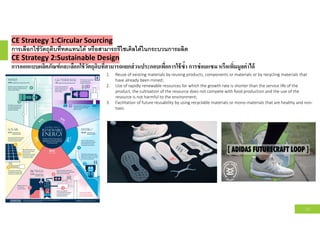
CE Strategy 1:Circular Sourcing
การเลือกใช้วัตถุดิบทีทดแทนได้ หรือสามารถรีไซเคิลได้ในกระบวนการผลิต
CE Strategy 2:Sustainable Design
การออกแบบผลิตภัณฑ์และเลือกใช้วัตถุดิบทีสามารถแยกส่วนประกอบเพือการใช้ซํา การซ่อมแซม หรือเพิมมูลค่าได้
12
1. Reuse of existing materials by reusing products, components or materials or by recycling materials that
have already been mined;
2. Use of rapidly renewable resources for which the growth rate is shorter than the service life of the
product, the cultivation of the resource does not compete with food production and the use of the
resource is not harmful to the environment;
3. Facilitation of future reusability by using recyclable materials or mono-materials that are healthy and non-
toxic.
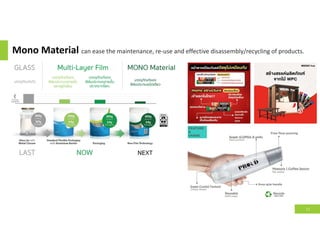
Mono Material can ease the maintenance, re-use and effective disassembly/recycling of products.
13
14
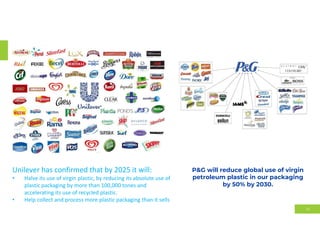
Unilever has confirmed that by 2025 it will:
• Halve its use of virgin plastic, by reducing its absolute use of
plastic packaging by more than 100,000 tones and
accelerating its use of recycled plastic.
• Help collect and process more plastic packaging than it sells
P&G will reduce global use of virgin
petroleum plastic in our packaging
by 50% by 2030.
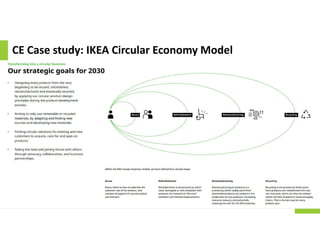
CE Case study: IKEA Circular Economy Model
การประยุกต์ใช้เศรษฐกิจหมุนเวียน และเทคโนโลยีเพือการจัดการ
ขยะเป็นศูนย์ มุ่งสู่การเป็นนิคมอุตสาหกรรมคาร์บอนตํา
19
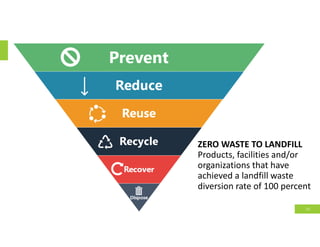
ZERO WASTE TO LANDFILL
Products, facilities and/or
organizations that have
achieved a landfill waste
diversion rate of 100 percent
20
21
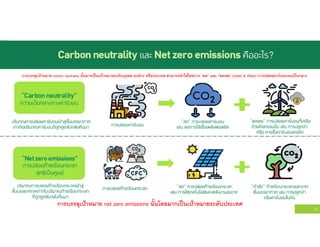
การบรรลุเป้าหมาย carbon neutrality นันอาจเป็นเป้าหมายระดับบุคคล องค์กร หรือประเทศ สามารถทําได้โดยการ "ลด" และ "ชดเชย" (lower & offset) การปล่อยคาร์บอนจนเป็นกลาง
การบรรลุเป้าหมาย net zero emissions นันโดยมากเป็นเป้าหมายระดับประเทศ
How to Zero waste to Landfill with Circular
Economy Model?
Case study: Amata Facility Services
CE STR 3 : Resource Efficiency
CE STR 4 : Product as a Services
CE STR 5 : Sharing Virtualizing
CE STR 9 : Industrial Symbiosis or Recycling form Manufacturing
CE STR 10: Recycling from Consumption
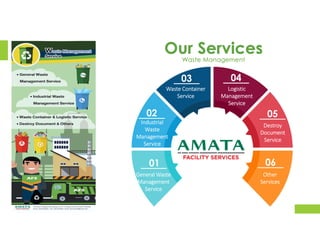
General Waste
Management
Service
Destroy
Document
Service
Waste Container
Service
Other
Services
Logistic
Management
Service
Industrial
Waste
Management
Service
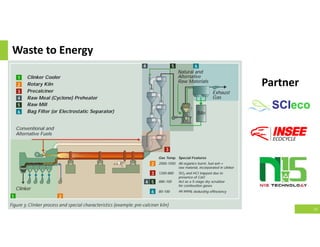
Waste to Energy
26
Partner
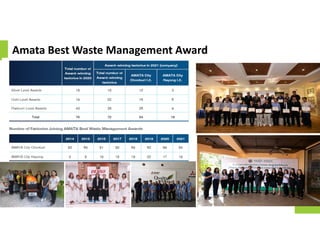
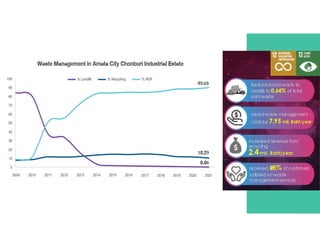
Amata Best Waste Management Award
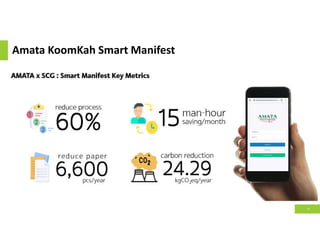
Amata KoomKah Smart Manifest
28
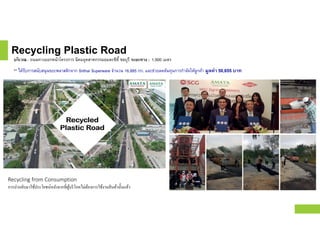
Recycling Plastic Road
บริเวณ : ถนนทางออกหน้าโครงการ นิคมอุตสาหกรรมอมตะซิตี ชลบุรี ระยะทาง : 1,500 เมตร
** ได้รับการสนับสนุนขยะพลาสติกจาก Srithai Superware จํานวน 16,885 กก. และช่วยลดต้นทุนการกําจัดให้ลูกค้า มูลค่า 50,655 บาท
Recycling from Consumption
การนํากลับมาใช้ประโยชน์หลังจากทีผู้บริโภคไม่ต้องการใช้งานสินค้านันแล้ว
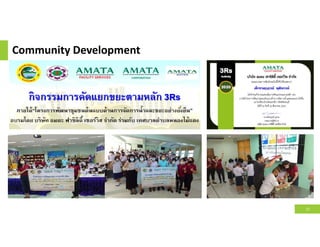
Community Development
30
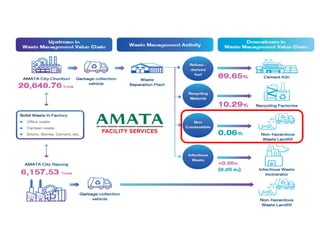
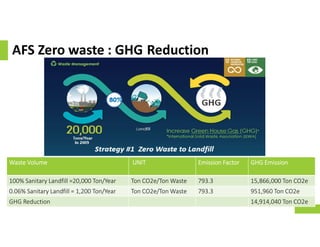
AFS Zero waste : GHG Reduction
Waste Volume UNIT Emission Factor GHG Emission
100% Sanitary Landfill =20,000 Ton/Year Ton CO2e/Ton Waste 793.3 15,866,000 Ton CO2e
0.06% Sanitary Landfill = 1,200 Ton/Year Ton CO2e/Ton Waste 793.3 951,960 Ton CO2e
GHG Reduction 14,914,040 Ton CO2e
Circularity refers to the
technical design, assembly and
manufacturing of products that
enable high-value future reuse.
The circular economy is based
on an economic system in
which circular products are
used in a circular manner.
33
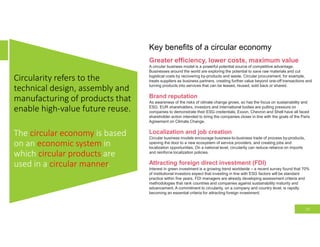
Key benefits of a circular economy
Greater efficiency, lower costs, maximum value
A circular business model is a powerful potential source of competitive advantage.
Businesses around the world are exploring the potential to save raw materials and cut
logistical costs by recovering by-products and waste. Circular procurement, for example,
treats suppliers as business partners, creating further value beyond one-off transactions and
turning products into services that can be leased, reused, sold back or shared.
Brand reputation
As awareness of the risks of climate change grows, so has the focus on sustainability and
ESG. EUR shareholders, investors and international bodies are putting pressure on
companies to demonstrate their ESG credentials; Exxon, Chevron and Shell have all faced
shareholder action intended to bring the companies closer in line with the goals of the Paris
Agreement on Climate Change.
Localization and job creation
Circular business models encourage business-to-business trade of process by-products,
opening the door to a new ecosystem of service providers, and creating jobs and
localization opportunities. On a national level, circularity can reduce reliance on imports
and reinforce localization policies.
Attracting foreign direct investment (FDI)
Interest in green investment is a growing trend worldwide – a recent survey found that 70%
of institutional investors expect that investing in line with ESG factors will be standard
practice within five years. FDI managers are already developing assessment criteria and
methodologies that rank countries and companies against sustainability maturity and
advancement. A commitment to circularity, on a company and country level, is rapidly
becoming an essential criteria for attracting foreign investment.
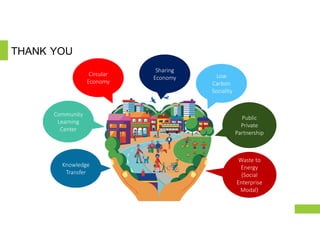
THANK YOU
Knowledge
Transfer
Community
Learning
Center
Circular
Economy
Sharing
Economy
Public
Private
Partnership
Waste to
Energy
(Social
Enterprise
Modal)
Low
Carbon
Sociality

Circular economy to Zero Waste

  • 1.
    การประยุกต์ใช้เศรษฐกิจหมุนเวียน และ เทคโนโลยี เพือการจัดการขยะเป็นศูนย์มุ่ง สู่การเป็นนิคมอุตสาหกรรมคาร์บอนตํา Circular Economy for Zero Waste Management Toward Low Carbon Industrial Estate ดร. ธารทิพย์ พันธ์เมธาฤทธิ Executive Adviser- Waste Management Amata Facility Services Company Limited 9 สิงหาคม 2565 โรงแรมนิกโก้ อมตะซิตี ชลบุรี
  • 2.
    Synopsis การนําประยุกต์ใช้หลักเศรษฐกิจหมุนเวียนในการจัดการ ขยะของนิคมอุตสาหกรรมอมตะซิตีชลบุรี สู่การลดการ หลุมฝังกลบเป็นศูนย์และเทคโนโลยีการจัดการ สิงแวดล้อมและขยะ สู่การเป็นเมืองคาร์บอนตํา โดยดร. ธารทิพย์ พันธ์เมธาฤทธิ Executive Adviser- Waste Management Amata Facility Services Company Limited การจัดการขยะรีไซเคิลอย่างครบวงจร เพือมุ่งสู่การเป็น สังคมคาร์บอนตํา โดย คุณเอกชัย อนุจร Director – Recycling Business Development SCG Packaging Public Company Limited
  • 3.
    Environmental, Social andCorporate Governance (ESG) Financial Times ได้บัญญัติความหมายของ ESG ว่าเป็นคําทีใช้ในตลาดทุนโดยผู้ลงทุนเพือใช้ประเมินการ ดําเนินงานของบริษัท และทําให้ล่วงรู้ถึงผลประกอบการในอนาคตของบริษัท ซึงปัจจัยทีส่งผลต่อการประกอบการดังกล่าวนี มาจากบทบาทของบริษัททีมีต่อเรืองความรับผิดชอบต่อสังคมของกิจการ (CSR) ภายใต้บริบทของการพัฒนาทียังยืน “ESG ถือเป็นบทบาทของกิจการใน ‘Information (Reporting) ’ เป็นการเปิ ดเผยข้อมูลจากการดําเนินงานอย่าง รับผิดชอบต่อสังคม ทีคํานึงถึงความคาดหวังของผู้ลงทุน โดยเฉพาะผู้ลงทุนสถาบัน” Environmental, Social, and Corporate Governance (ESG) refers to the three central factors in measuring the sustainability and societal impact of an investment in a company or business 3
  • 4.
    BCG (Bio-Circular-Green Economy) 4 B= เศรษฐกิจชีวภาพ (Bioeconomy) การนําวิทยาศาสตร์และเทคโนโลยีมา ช่วยเพิมมูลค่าให้แก่ทรัพยากรชีวภาพซึงเป็นจุดแข็งสําคัญของประเทศ C = เศรษฐกิจหมุนเวียน (Circular Economy) การ วิจัยและพัฒนาเพือให้เกิดการใช้ทรัพยากรอย่าง คุ้มค่า หมุนเวียนทรัพยากรกลับมาใช้ซํา และลด การสูญเสียให้ได้มากทีสุดในทุกภาคส่วน G = เศรษฐกิจสีเขียว (Green Economy) การขับเคลือนเศรษฐกิจโดยให้ ความสําคัญเรืองความเป็นมิตรกับสิงแวดล้อม https://www.bcg.in.th/
  • 5.
  • 6.
  • 7.
  • 8.
    Circular Economy forBusiness Perspective Theory of Circular Economy 8
  • 9.
    1. เป็นการดําเนินธุรกิจด้วยความใส่ใจ ผ่านการคิดและไตร่ตรองมาแล้วทังระบบทังต้นนํา กลางนํา และปลายนํา เพือให้เกิดการใช้ ทรัพยากรอย่างคุ้มค่า ควบคู่ไปกับการดูแลรักษาสิงแวดล้อม 2. เป็นรูปแบบของการผลิตและการบริโภคซึงเกียวข้องกับการแบ่งปัน การเช่าซือ การนํากลับมาใช้ใหม่ การซ่อมแซม การปรับปรุงใหม่ และการรีไซเคิลวัสดุและผลิตภัณฑ์ทีมีอยู่ให้นานทีสุด ด้วยวิธีนี วงจรชีวิตของผลิตภัณฑ์จึงขยายออกไป 3. เป็นรูปแบบเศรษฐกิจทางเลือกทีเกียวข้องกับกิจกรรมทางเศรษฐกิจกับการใช้ทรัพยากรทีมีอยู่อย่างจํากัด 9 นิยามของเศรษฐกิจหมุนเวียน Circular Economy
  • 10.
  • 11.
    11 CE Initiatives STRDefinition Priorities Renewable Input/ การให้ความสําคัญ กับวัตถุดิบที ทดแทนได้ 1 Circular Sourcing การเลือกใช้วัตถุดิบทีทดแทนได้หรือสามารถรี ไซเคิลได้ในกระบวนการผลิต 2 Sustainable Design การออกแบบผลิตภัณฑ์และเลือกใช้วัตถุดิบที สามารถแยกส่วนประกอบเพือการใช้ซําการ ซ่อมแซมหรือเพิมมูลค่าได้ 3 Resource Efficiency ควบคุมการใช้วัตถุดิบหรือทรัพยากรให้มี ประสิทธิภาพ เกิดLoss น้อยทีสุดใน กระบวนการผลิตหรือกระบวนการทํางาน Maximize Product Use/การใช้ ผลิตภัณฑ์ให้เกิด ประโยชน์สูงสุด 4 Product as a Services จัดเตรียมหรือจัดหาบริการในพืนทีเพือขายเป็น สินค้าเพือเพิมอายุการใช้งานของสินค้าให้นานขึน 5 Sharing Virtualizing การแบ่งปันการใช้งานทรัพย์สินเช่น รถยนต์ห้อง อุปกรณ์ทีใช้งานเป็นต้น เพือเพิมอายุการใช้งาน 6 Usage Optimization / Maintenance เพิมศักยภาพ หรือประสิทธิภาพของสินค้าและยืด อายุการใช้งานด้วยการซ่อมบํารุง 7 Reuse / Redistribution จัดซือหรือขายสินค้ามือสองหรือการสวสิทธิแทน เจ้าของเดิมเพือเพิมช่วงอายุของสินค้า Recover by Products and Waste/ การนํากลับมาใช้ ประโยชน์ใหม่ทัง ผลิตภัณฑ์และของ เสีย 8 Refurbishing / Remanufacture การปรับปรุงใหม่กระบวนการผลิตสินค้าหรือ ส่วนประกอบสําหรับการนํากลับมาใช้ประโยชน์ ให้แทนการนํากลับไปใช้ประโยชน์ใหม่ 9 Industrial Symbiosis or Recycling form Manufacturing การนําของเสียทีเกิดขึนจากกระบวนการผลิต ส่งไปเข้ากระบวนการนํากลับมาใช้ประโยชน์ใหม่ ในกระบวนการผลิตอืนๆ 10 Recycling from Consumption การนํากลับมาใช้ประโยชน์หลังจากทีผู้บริโภคไม่ ต้องการใช้งานสินค้านันแล้ว 3 Principles & 10 Circular Economy Strategies
  • 12.
    CE Strategy 1:CircularSourcing การเลือกใช้วัตถุดิบทีทดแทนได้ หรือสามารถรีไซเคิลได้ในกระบวนการผลิต CE Strategy 2:Sustainable Design การออกแบบผลิตภัณฑ์และเลือกใช้วัตถุดิบทีสามารถแยกส่วนประกอบเพือการใช้ซํา การซ่อมแซม หรือเพิมมูลค่าได้ 12 1. Reuse of existing materials by reusing products, components or materials or by recycling materials that have already been mined; 2. Use of rapidly renewable resources for which the growth rate is shorter than the service life of the product, the cultivation of the resource does not compete with food production and the use of the resource is not harmful to the environment; 3. Facilitation of future reusability by using recyclable materials or mono-materials that are healthy and non- toxic.
  • 13.
    Mono Material canease the maintenance, re-use and effective disassembly/recycling of products. 13
  • 14.
    14 Unilever has confirmedthat by 2025 it will: • Halve its use of virgin plastic, by reducing its absolute use of plastic packaging by more than 100,000 tones and accelerating its use of recycled plastic. • Help collect and process more plastic packaging than it sells P&G will reduce global use of virgin petroleum plastic in our packaging by 50% by 2030.
  • 15.
    CE Case study:IKEA Circular Economy Model
  • 16.
    CE Case study:IKEA Circular Economy Model
  • 17.
  • 19.
    19 ZERO WASTE TOLANDFILL Products, facilities and/or organizations that have achieved a landfill waste diversion rate of 100 percent
  • 20.
  • 21.
    21 การบรรลุเป้าหมาย carbon neutralityนันอาจเป็นเป้าหมายระดับบุคคล องค์กร หรือประเทศ สามารถทําได้โดยการ "ลด" และ "ชดเชย" (lower & offset) การปล่อยคาร์บอนจนเป็นกลาง การบรรลุเป้าหมาย net zero emissions นันโดยมากเป็นเป้าหมายระดับประเทศ
  • 23.
    How to Zerowaste to Landfill with Circular Economy Model? Case study: Amata Facility Services CE STR 3 : Resource Efficiency CE STR 4 : Product as a Services CE STR 5 : Sharing Virtualizing CE STR 9 : Industrial Symbiosis or Recycling form Manufacturing CE STR 10: Recycling from Consumption
  • 24.
  • 26.
  • 27.
    Amata Best WasteManagement Award
  • 28.
  • 29.
    Recycling Plastic Road บริเวณ: ถนนทางออกหน้าโครงการ นิคมอุตสาหกรรมอมตะซิตี ชลบุรี ระยะทาง : 1,500 เมตร ** ได้รับการสนับสนุนขยะพลาสติกจาก Srithai Superware จํานวน 16,885 กก. และช่วยลดต้นทุนการกําจัดให้ลูกค้า มูลค่า 50,655 บาท Recycling from Consumption การนํากลับมาใช้ประโยชน์หลังจากทีผู้บริโภคไม่ต้องการใช้งานสินค้านันแล้ว
  • 30.
  • 32.
    AFS Zero waste: GHG Reduction Waste Volume UNIT Emission Factor GHG Emission 100% Sanitary Landfill =20,000 Ton/Year Ton CO2e/Ton Waste 793.3 15,866,000 Ton CO2e 0.06% Sanitary Landfill = 1,200 Ton/Year Ton CO2e/Ton Waste 793.3 951,960 Ton CO2e GHG Reduction 14,914,040 Ton CO2e
  • 33.
    Circularity refers tothe technical design, assembly and manufacturing of products that enable high-value future reuse. The circular economy is based on an economic system in which circular products are used in a circular manner. 33 Key benefits of a circular economy Greater efficiency, lower costs, maximum value A circular business model is a powerful potential source of competitive advantage. Businesses around the world are exploring the potential to save raw materials and cut logistical costs by recovering by-products and waste. Circular procurement, for example, treats suppliers as business partners, creating further value beyond one-off transactions and turning products into services that can be leased, reused, sold back or shared. Brand reputation As awareness of the risks of climate change grows, so has the focus on sustainability and ESG. EUR shareholders, investors and international bodies are putting pressure on companies to demonstrate their ESG credentials; Exxon, Chevron and Shell have all faced shareholder action intended to bring the companies closer in line with the goals of the Paris Agreement on Climate Change. Localization and job creation Circular business models encourage business-to-business trade of process by-products, opening the door to a new ecosystem of service providers, and creating jobs and localization opportunities. On a national level, circularity can reduce reliance on imports and reinforce localization policies. Attracting foreign direct investment (FDI) Interest in green investment is a growing trend worldwide – a recent survey found that 70% of institutional investors expect that investing in line with ESG factors will be standard practice within five years. FDI managers are already developing assessment criteria and methodologies that rank countries and companies against sustainability maturity and advancement. A commitment to circularity, on a company and country level, is rapidly becoming an essential criteria for attracting foreign investment.
  • 34.