D I G I T A L C E R T I F I C AT E
Dr. Wisanu Tuntawiroon
Genia Solution
(Thailand)
Symmetric Key
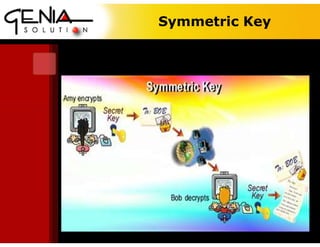
Symmetric Key
• An encryption system in which the sender
and receiver of a message share a single,
common key that is used to encrypt and
decrypt the message.
• Symmetric-key systems are simpler and
faster, but their main drawback is that the
two parties must somehow exchange the
key in a secure way.
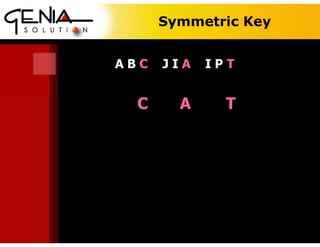
Symmetric Key
A B C J I A I P T
C A T
Asymmetric Key
• Asymmetric encryption (also called
public-key encryption) involves a pair
of keys - a public and a private key.
• The public key is published in a public
directory and the corresponding private
key is kept secret.
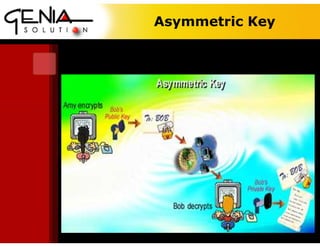
• The sender of the data encrypts the data
with the public key of the receiver. The
data can be decrypted only with the
private key of the receiver.
Asymmetric Key
The problem with Trusting Public Key
• The imposter claims to be a certain true
person in an effort to deceive the verifier
• The imposter could sends is own public
key to the verifier
• The verifier holds will wrongly
“authenticate” the digital signature as
being that of the true person
• In other words, if a verifier does not
independently verify an applicant’s public
key
Digital Certificate
Digital Certificate
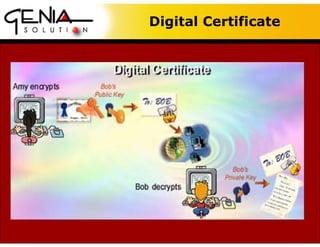
Certificate is an electronic tool equivalent to
a sealed enveloped or your signature
affixed to a document when you would like
to submit information through the network.
Certificate has a major feature in providing
security and confidentiality to a message
transmitted online. Business using
certification service can have a confidence
that they can trace the record and source
of information received.
Digital Certificates
• Non-repudiation. A service (proof of
origin) that allows the recipient of a
message to verify the originator of the
message.
• Confidentiality. A service that creates
confidence that a message can be read
only by those for whom it is intended.
• Integrity. A service that allows the
recipient to verify that the message has
not been altered since it left the originator.
X.509 Digital Certificates
Digital certificate normally follow the
ITU-T x.509 standard
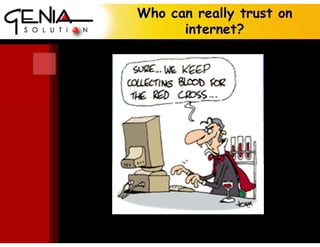
Who can really trust on
internet?
Signatures and the Law
• Evidence: A signature authenticates a writing by
identifying the signer with the signed document.
• Ceremony: The act of signing a document calls to the
signer's attention the legal significance of the
signer's act, and thereby helps prevent
"inconsiderate engagements.
• Approval: In certain contexts defined by law or
custom, a signature expresses the signer's approval
or authorization of the writing, or the signer's
intention that it have legal effect.
• Efficiency and logistics: A signature on a written
document often imparts a sense of clarity and
finality to the transaction and may lessen the
subsequent need to inquire beyond the face of a
document
“ Thank You ”
Genia Solution (Thailand) Co., Ltd.
2339/1 , Soi Ramkhamheang 63,
Hua Mark, Ban Kapi, Bangkok 10240

Genia Solution

  • 1.
    D I GI T A L C E R T I F I C AT E Dr. Wisanu Tuntawiroon Genia Solution (Thailand)
  • 2.
  • 3.
    Symmetric Key • Anencryption system in which the sender and receiver of a message share a single, common key that is used to encrypt and decrypt the message. • Symmetric-key systems are simpler and faster, but their main drawback is that the two parties must somehow exchange the key in a secure way.
  • 4.
    Symmetric Key A BC J I A I P T C A T
  • 5.
    Asymmetric Key • Asymmetricencryption (also called public-key encryption) involves a pair of keys - a public and a private key. • The public key is published in a public directory and the corresponding private key is kept secret. • The sender of the data encrypts the data with the public key of the receiver. The data can be decrypted only with the private key of the receiver.
  • 6.
  • 7.
    The problem withTrusting Public Key • The imposter claims to be a certain true person in an effort to deceive the verifier • The imposter could sends is own public key to the verifier • The verifier holds will wrongly “authenticate” the digital signature as being that of the true person • In other words, if a verifier does not independently verify an applicant’s public key
  • 8.
  • 9.
    Digital Certificate Certificate isan electronic tool equivalent to a sealed enveloped or your signature affixed to a document when you would like to submit information through the network. Certificate has a major feature in providing security and confidentiality to a message transmitted online. Business using certification service can have a confidence that they can trace the record and source of information received.
  • 10.
    Digital Certificates • Non-repudiation.A service (proof of origin) that allows the recipient of a message to verify the originator of the message. • Confidentiality. A service that creates confidence that a message can be read only by those for whom it is intended. • Integrity. A service that allows the recipient to verify that the message has not been altered since it left the originator.
  • 11.
    X.509 Digital Certificates Digitalcertificate normally follow the ITU-T x.509 standard
  • 12.
    Who can reallytrust on internet?
  • 13.
    Signatures and theLaw • Evidence: A signature authenticates a writing by identifying the signer with the signed document. • Ceremony: The act of signing a document calls to the signer's attention the legal significance of the signer's act, and thereby helps prevent "inconsiderate engagements. • Approval: In certain contexts defined by law or custom, a signature expresses the signer's approval or authorization of the writing, or the signer's intention that it have legal effect. • Efficiency and logistics: A signature on a written document often imparts a sense of clarity and finality to the transaction and may lessen the subsequent need to inquire beyond the face of a document
  • 14.
    “ Thank You” Genia Solution (Thailand) Co., Ltd. 2339/1 , Soi Ramkhamheang 63, Hua Mark, Ban Kapi, Bangkok 10240