CHRONIC PAIN MANAGEMENT: TIPS
AND STRATEGIES
PRESENTED BY
DR.ABU BAKAR SIDDIQUE
ORTHOPAEDIC CONSULTANT
SADAR HOSPITAL,CHUADANGA
HUGE IMPACT OF CR. PAIN
 Chronic pain is clearly a major health care
problem in USA.
 Significant and costly problem in developed
country and
 Throughout the industrialized world as well
 One third of total health care cost are
involved in managing chronic pain
management
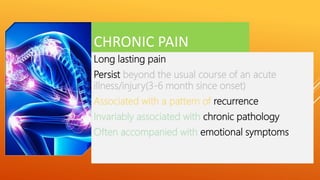
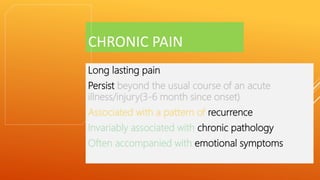
CHRONIC PAIN
Long lasting pain
Persist beyond the usual course of an acute
illness/injury(3-6 month since onset)
Associated with a pattern of recurrence
Invariably associated with chronic pathology
Often accompanied with emotional symptoms
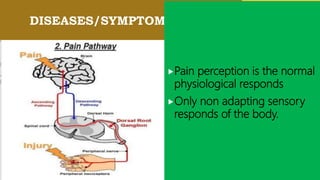
DISEASES/SYMPTOM?
Pain perception is the normal
physiological responds
Only non adapting sensory
responds of the body.
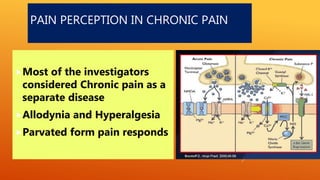
PAIN PERCEPTION IN CHRONIC PAIN
Most of the investigators
considered Chronic pain as a
separate disease
Allodynia and Hyperalgesia
Parvated form pain responds
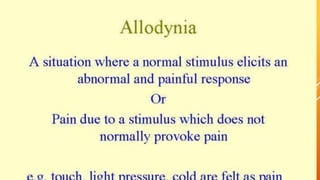
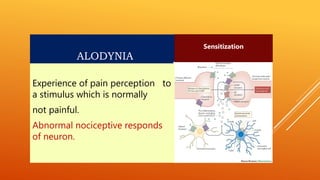
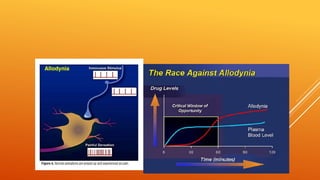
ALODYNIA
Experience of pain perception to
a stimulus which is normally
not painful.
Abnormal nociceptive responds
of neuron.
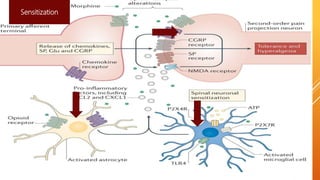
Sensitization
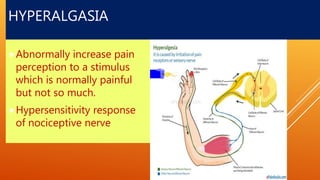
HYPERALGASIA
Abnormally increase pain
perception to a stimulus
which is normally painful
but not so much.
Hypersensitivity response
of nociceptive nerve
WHY & HOW DOES IT
HAPPEN
Sensitization
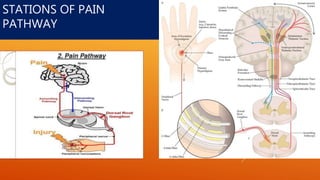
STATIONS OF PAIN
PATHWAY
acute
Peripheral pain
Soft tissue damage
Trauma,accident,
Response well with
analgesics,cold,rest,massa
ge etc
chronic
Central
Connective tissue.nerve,
disc,joints,ligaments,cartilages etc
Sequel of acute or chronic denovo
Usually does not responds with
analgesic alone
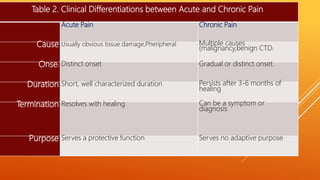
Table 2. Clinical Differentiations between Acute and Chronic Pain
Acute Pain Chronic Pain
Cause Usually obvious tissue damage,Pheripheral Multiple causes
(malignancy,benign CTD)
Onset Distinct onset Gradual or distinct onset.
Duration Short, well characterized duration Persists after 3-6 months of
healing
Termination Resolves with healing Can be a symptom or
diagnosis
Purpose Serves a protective function Serves no adaptive purpose
CHRONIC PAIN
Long lasting pain
Persist beyond the usual course of an acute
illness/injury(3-6 month since onset)
Associated with a pattern of recurrence
Invariably associated with chronic pathology
Often accompanied with emotional symptoms
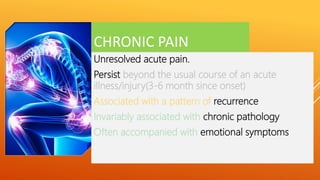
CHRONIC PAIN
Unresolved acute pain.
Persist beyond the usual course of an acute
illness/injury(3-6 month since onset)
Associated with a pattern of recurrence
Invariably associated with chronic pathology
Often accompanied with emotional symptoms
ACUTE PAINFULL CONDITION WAS NOT
TREATED ADEQUATELY ?
Why unresolved? Or persistent?
Undertreated severe acute pain has
dangerous consequences
•Number of harmful physiological and psy
chological effects
•Emotional and physical suffering; • •.
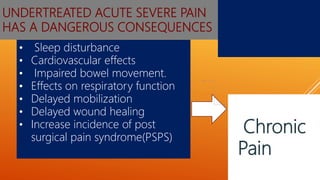
UNDERTREATED ACUTE SEVERE PAIN
HAS A DANGEROUS CONSEQUENCES
Chronic
Pain
• Sleep disturbance
• Cardiovascular effects
• Impaired bowel movement.
• Effects on respiratory function
• Delayed mobilization
• Delayed wound healing
• Increase incidence of post
surgical pain syndrome(PSPS)
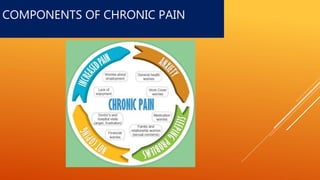
COMPONENTS OF CHRONIC PAIN
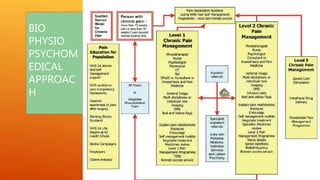
BIO
PHYSIO
PSYCHOM
EDICAL
APPROAC
H
STRATEGIES OF MANAGEMENT
Adequate and aggressive management of acute pain
With its aetiology
Primary factors
Precipitating factors
Psycho social factors
Biopscychosocial approach:
CONTROVERSIES IN ANALGESIC USE
 Controversial
 Masking the diagnosis
 After diagnosis it can use for short period of time
 Combination of central and peripheral acting analgesic are
superiority to non combined analgesic.
 Act good when prescribed with neuromodulating drugs
CENTRALLY ACTING
DRUGS
 Antidepressant:a
Amitriptyline,TCA depressant,SNRIs,Mirtazipine,
Nortriptylin
 Anticonvulsants:
Gabapentin, Pregabalin. Tegretol
 Opioids:Morphin,Pethidine,Oximorphin,Methadones
 Opioids like drugs:
Nelbuphin,Tramadol,Phentanyl,tapentadol
 Centrally acting muscle relaxant
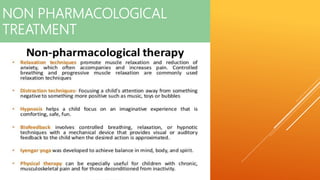
NON PHARMACOLOGICAL
TREATMENT
CHRONIC PAIN NURSING
THANK YOU

Chronic pain management

  • 1.
    CHRONIC PAIN MANAGEMENT:TIPS AND STRATEGIES
  • 2.
    PRESENTED BY DR.ABU BAKARSIDDIQUE ORTHOPAEDIC CONSULTANT SADAR HOSPITAL,CHUADANGA
  • 3.
    HUGE IMPACT OFCR. PAIN  Chronic pain is clearly a major health care problem in USA.  Significant and costly problem in developed country and  Throughout the industrialized world as well  One third of total health care cost are involved in managing chronic pain management
  • 4.
    CHRONIC PAIN Long lastingpain Persist beyond the usual course of an acute illness/injury(3-6 month since onset) Associated with a pattern of recurrence Invariably associated with chronic pathology Often accompanied with emotional symptoms
  • 5.
    DISEASES/SYMPTOM? Pain perception isthe normal physiological responds Only non adapting sensory responds of the body.
  • 6.
    PAIN PERCEPTION INCHRONIC PAIN Most of the investigators considered Chronic pain as a separate disease Allodynia and Hyperalgesia Parvated form pain responds
  • 8.
    ALODYNIA Experience of painperception to a stimulus which is normally not painful. Abnormal nociceptive responds of neuron. Sensitization
  • 10.
    HYPERALGASIA Abnormally increase pain perceptionto a stimulus which is normally painful but not so much. Hypersensitivity response of nociceptive nerve
  • 11.
    WHY & HOWDOES IT HAPPEN
  • 12.
  • 13.
  • 14.
    acute Peripheral pain Soft tissuedamage Trauma,accident, Response well with analgesics,cold,rest,massa ge etc chronic Central Connective tissue.nerve, disc,joints,ligaments,cartilages etc Sequel of acute or chronic denovo Usually does not responds with analgesic alone
  • 15.
    Table 2. ClinicalDifferentiations between Acute and Chronic Pain Acute Pain Chronic Pain Cause Usually obvious tissue damage,Pheripheral Multiple causes (malignancy,benign CTD) Onset Distinct onset Gradual or distinct onset. Duration Short, well characterized duration Persists after 3-6 months of healing Termination Resolves with healing Can be a symptom or diagnosis Purpose Serves a protective function Serves no adaptive purpose
  • 16.
    CHRONIC PAIN Long lastingpain Persist beyond the usual course of an acute illness/injury(3-6 month since onset) Associated with a pattern of recurrence Invariably associated with chronic pathology Often accompanied with emotional symptoms
  • 17.
    CHRONIC PAIN Unresolved acutepain. Persist beyond the usual course of an acute illness/injury(3-6 month since onset) Associated with a pattern of recurrence Invariably associated with chronic pathology Often accompanied with emotional symptoms
  • 18.
    ACUTE PAINFULL CONDITIONWAS NOT TREATED ADEQUATELY ? Why unresolved? Or persistent?
  • 19.
    Undertreated severe acutepain has dangerous consequences •Number of harmful physiological and psy chological effects •Emotional and physical suffering; • •.
  • 20.
    UNDERTREATED ACUTE SEVEREPAIN HAS A DANGEROUS CONSEQUENCES Chronic Pain • Sleep disturbance • Cardiovascular effects • Impaired bowel movement. • Effects on respiratory function • Delayed mobilization • Delayed wound healing • Increase incidence of post surgical pain syndrome(PSPS)
  • 21.
  • 22.
  • 23.
    STRATEGIES OF MANAGEMENT Adequateand aggressive management of acute pain With its aetiology Primary factors Precipitating factors Psycho social factors Biopscychosocial approach:
  • 24.
    CONTROVERSIES IN ANALGESICUSE  Controversial  Masking the diagnosis  After diagnosis it can use for short period of time  Combination of central and peripheral acting analgesic are superiority to non combined analgesic.  Act good when prescribed with neuromodulating drugs
  • 25.
    CENTRALLY ACTING DRUGS  Antidepressant:a Amitriptyline,TCAdepressant,SNRIs,Mirtazipine, Nortriptylin  Anticonvulsants: Gabapentin, Pregabalin. Tegretol  Opioids:Morphin,Pethidine,Oximorphin,Methadones  Opioids like drugs: Nelbuphin,Tramadol,Phentanyl,tapentadol  Centrally acting muscle relaxant
  • 26.
  • 27.
  • 28.