CHRA
Chemical Hazard Risk Assessment
CHRA: to ensure the environment is safe from the threat of
harmful chemicals before, during or after doing a job.
• store chemical storage is safe
• chemicals being purchased must have safety guide –
CSDS
• chemicals used must be registered
• chemicals that are used daily should have a label
• always wear safety equipment when using hazardous
chemicals – PPE
• safety training using harmful chemicals are always
done at least twice a year
• always record the flow of the intake of harmful
chemicals from storage storeroom.
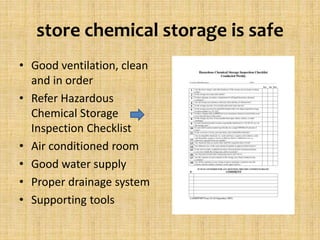
store chemical storage is safe
• Good ventilation, clean
and in order
• Refer Hazardous
Chemical Storage
Inspection Checklist
• Air conditioned room
• Good water supply
• Proper drainage system
• Supporting tools
chemicals being purchased must have safety guide –
CSDS
• CSDS had being place at
strategic location around
production area : each kitchen
level, Steward office, Chef
Office, Steward’s chemical
store, Housekeeping office and
chemical store.
• Once the exactly chemicals
room is ready, CSDS should be
in one folder for chemicals
room.
• Whatever chemicals do not
have CSDS will be replaced
with chemicals registered
immediately.
chemicals used must be registered
chemicals that are used daily should
have a label
• Dilution containers
must have a label of the
chemical i.e. daily
washing detergent
• Soaking bin must be
label with chemical
name used
• Spray bottle also need
to be label
Misuse of tools for soaking
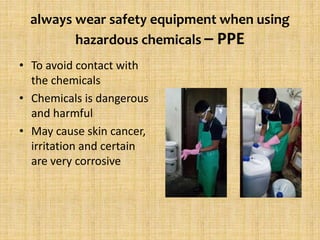
always wear safety equipment when using
hazardous chemicals – PPE
• To avoid contact with
the chemicals
• Chemicals is dangerous
and harmful
• May cause skin cancer,
irritation and certain
are very corrosive
safety training using harmful chemicals are
always done at least twice a year
• TRAINING PLAN FOR YEAR 2014
• The Training Programme / Topics for your
F&B Stewarding Department for the year
2014:-
Date Time Topics Department
• 29/5/2014
• [Thurs] 10.00am Science of Cleaning/
Chemical Knowledge F&B
• 29/5/2014
• [Thurs] 3.00pm Ware washing Procedures F&B
• 18/12/2014
• [Thurs] 10.00am Science of Cleaning/
Chemical Knowledge F&B
• 18/12/2014
• [Thurs] 3.00pm Ware washing Procedures F&B
always record the flow of the intake of
harmful chemicals from storage storeroom.
• To ensure the
movement of the
chemicals in daily
operations being
monitored
Supporting devices for chemical
applications
• Mixing station will improve of
correction dilutions of the
chemical and water
• Mixing station will control the
usage of the chemical
• Hydrochem will make the
process of cleaning easier and
faster by mixing unit provided
• Chemical easily spray on the
floor by turning on valve
provided.
• No more job to fix the rubber
hose for cleaning progress
CHRA & PPE 2
CHRA & PPE 2
CHRA & PPE 2

CHRA & PPE 2

  • 1.
  • 2.
    CHRA: to ensurethe environment is safe from the threat of harmful chemicals before, during or after doing a job. • store chemical storage is safe • chemicals being purchased must have safety guide – CSDS • chemicals used must be registered • chemicals that are used daily should have a label • always wear safety equipment when using hazardous chemicals – PPE • safety training using harmful chemicals are always done at least twice a year • always record the flow of the intake of harmful chemicals from storage storeroom.
  • 3.
    store chemical storageis safe • Good ventilation, clean and in order • Refer Hazardous Chemical Storage Inspection Checklist • Air conditioned room • Good water supply • Proper drainage system • Supporting tools
  • 7.
    chemicals being purchasedmust have safety guide – CSDS • CSDS had being place at strategic location around production area : each kitchen level, Steward office, Chef Office, Steward’s chemical store, Housekeeping office and chemical store. • Once the exactly chemicals room is ready, CSDS should be in one folder for chemicals room. • Whatever chemicals do not have CSDS will be replaced with chemicals registered immediately.
  • 8.
    chemicals used mustbe registered
  • 9.
    chemicals that areused daily should have a label • Dilution containers must have a label of the chemical i.e. daily washing detergent • Soaking bin must be label with chemical name used • Spray bottle also need to be label
  • 11.
    Misuse of toolsfor soaking
  • 14.
    always wear safetyequipment when using hazardous chemicals – PPE • To avoid contact with the chemicals • Chemicals is dangerous and harmful • May cause skin cancer, irritation and certain are very corrosive
  • 16.
    safety training usingharmful chemicals are always done at least twice a year • TRAINING PLAN FOR YEAR 2014 • The Training Programme / Topics for your F&B Stewarding Department for the year 2014:- Date Time Topics Department • 29/5/2014 • [Thurs] 10.00am Science of Cleaning/ Chemical Knowledge F&B • 29/5/2014 • [Thurs] 3.00pm Ware washing Procedures F&B • 18/12/2014 • [Thurs] 10.00am Science of Cleaning/ Chemical Knowledge F&B • 18/12/2014 • [Thurs] 3.00pm Ware washing Procedures F&B
  • 17.
    always record theflow of the intake of harmful chemicals from storage storeroom. • To ensure the movement of the chemicals in daily operations being monitored
  • 18.
    Supporting devices forchemical applications • Mixing station will improve of correction dilutions of the chemical and water • Mixing station will control the usage of the chemical • Hydrochem will make the process of cleaning easier and faster by mixing unit provided • Chemical easily spray on the floor by turning on valve provided. • No more job to fix the rubber hose for cleaning progress