• Chlamydia is an infection with Chlamydia
bacteria. When an infection is present, the
bacteria can be present in the cervix,
urethra, vagina, and rectum of an infected
person, It can also live in the throat.
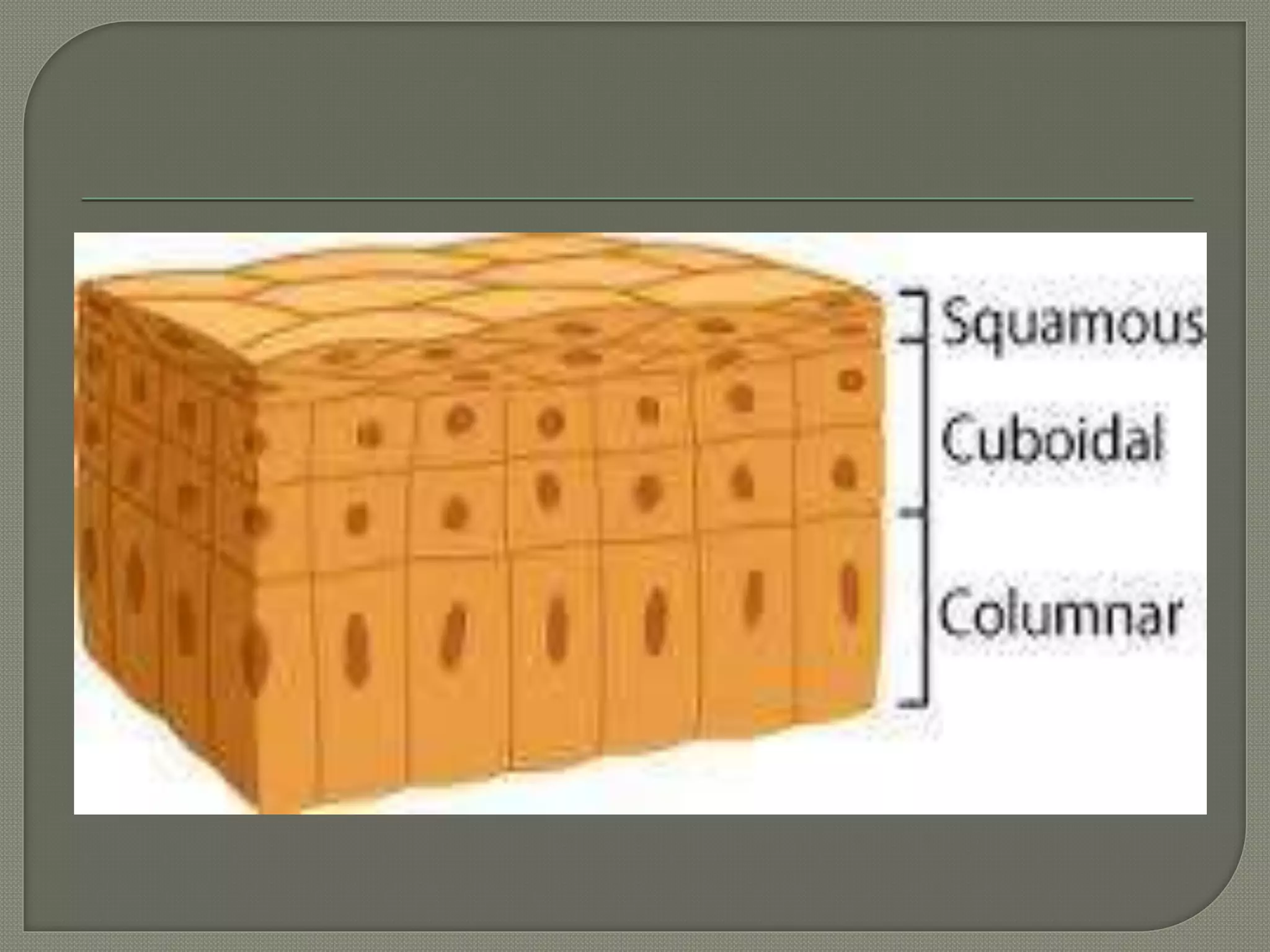
• Lives inside cells
• Infect columnar epithelial cells
• results in the death of the cells
Species (genus) Disease
C. trachomatis conjunctivitis, Infant pneumonia,
C. pneumoniae Pharyngitis, bronchitis, pneumonia
C. psittaci Psittacosis (parrot fever)
• Transmission is sexual
• Incubation period 7-21 days
• Highly transmissible
• Significant asymptomatic reservoir exists in
the population
• Re-infection is common
• Any type of sexual contact (vaginal/vagina,
anal/ anus, or oral) with an infected person
can spread the infection.
• Chlamydia can also be passed during vaginal
birth to the infant, 30% - 50%
• Adolescence (old people)
• New or multiple sex partners
• Oral contraceptive user
• Majority (50%) asymptomatic
• Conjunctivitis
• Urethritis
• Prostatitis
• Symptoms/signs: mucoid or clear urethral
discharge, dysuria (pain during urination)
• Incubation period unknown (probably 5-10 days
in symptomatic infection)
Conjunctivitis
 Proctitis
 Cervicitis
o Majority (70%-80%) are asymptomatic
 Urethritis
o Usually asymptomatic
o Signs/symptoms, include dysuria, frequency.
• Conjunctivitis
• Pneumonitis
• Pharyngitis
• Rhinitis (affect mucous membrane)
 Reduce its happening by more than 50%
 Most infections are asymptomatic.
 reduces the transmission of disease
 Screening Recommendations: Non-pregnant Women
 Sexually active women age 25 years and under
should be screened yearly.
 Repeat screening of women 3-4 months after
treatment for C. trachomatis infection.
 Screening recommendations: non-pregnant women:
 Screen all pregnant women at the first prenatal visit.
 Pregnant women aged more than 25 years and those
at increased risk for chlamydia should be screened
again in the third trimester.
Chlamydia is commonly asymptomatic in men
and women.
- Azithromycin 1 g orally in a single dose OR
- Doxycycline 100 mg orally twice daily for 7 days

- Erythromycin 500 mg orally 4 times a day for 7
days, OR
- Erythromycin ethylsuccinate 800 mg orally 4
times a day for 7 days, OR
- Ofloxacin 300 mg orally twice a day for 7 days, OR
- Levofloxacin 500 mg orally once a day for 7 days
- Erythromycin base 500 mg orally 4 times a day for 7
days, OR
- Amoxicillin 500 mg orally 3 times a day for 7 days
- Erythromycin base 250 mg orally 4 times a day for 14
days, OR
- Erythromycin ethylsuccinate 800 mg orally 4 times a
day for 7 days, OR
- Erythromycin ethylsuccinate 400 mg orally 4 times a
day for 14 days, OR
- Azithromycin 1 g orally (single dose)
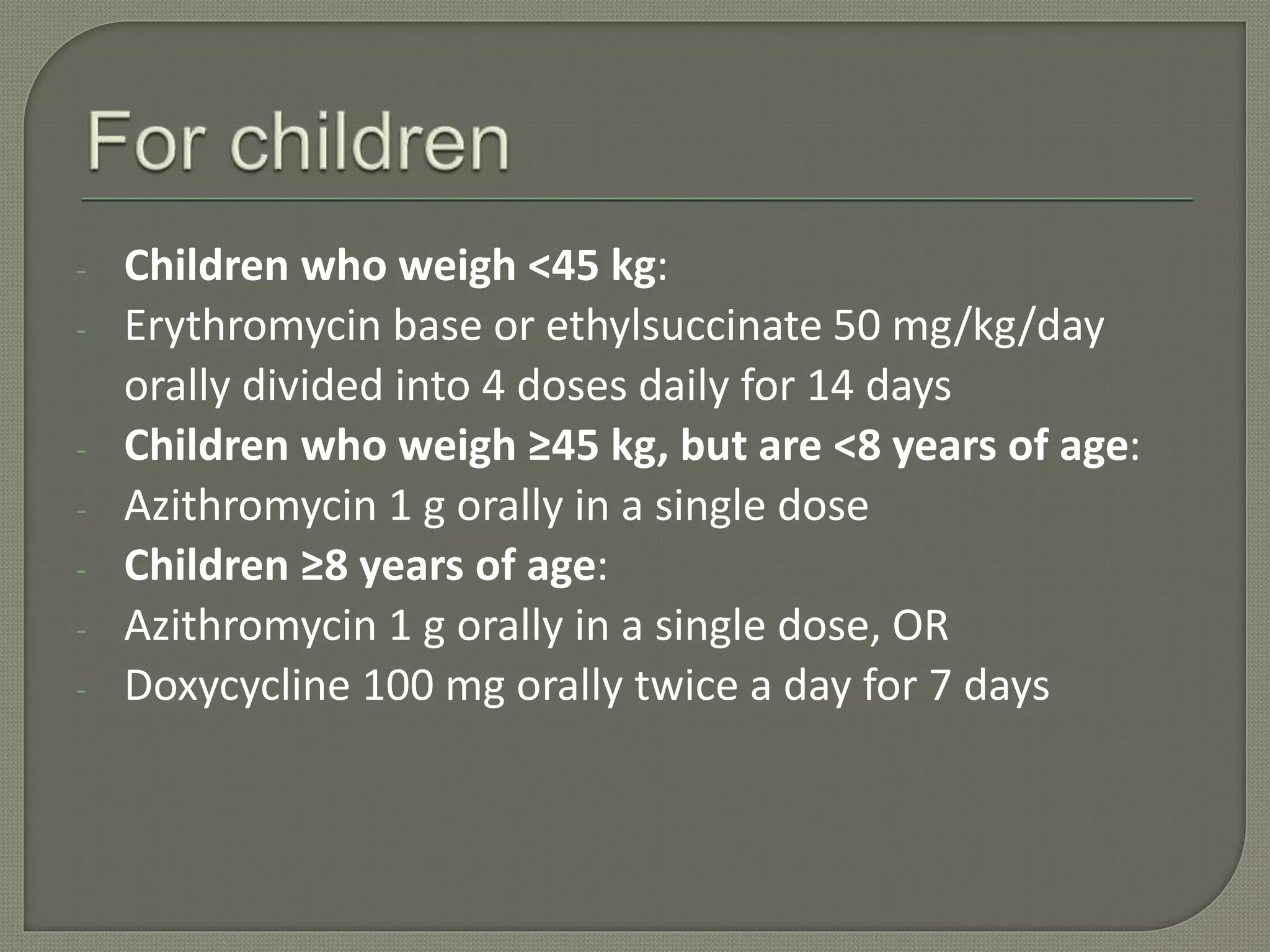
- Children who weigh <45 kg:
- Erythromycin base or ethylsuccinate 50 mg/kg/day
orally divided into 4 doses daily for 14 days
- Children who weigh ≥45 kg, but are <8 years of age:
- Azithromycin 1 g orally in a single dose
- Children ≥8 years of age:
- Azithromycin 1 g orally in a single dose, OR
- Doxycycline 100 mg orally twice a day for 7 days
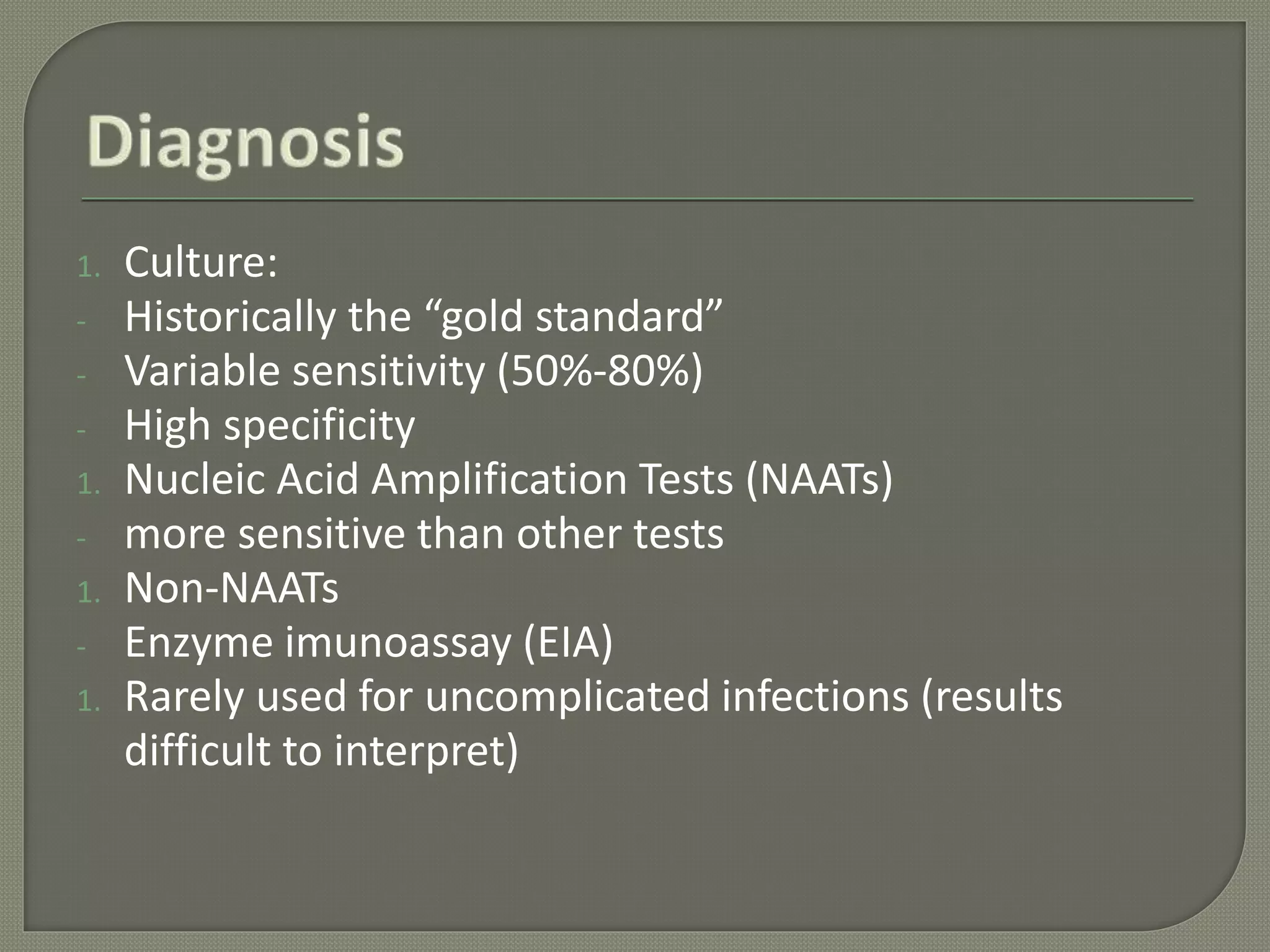
1. Culture:
- Historically the “gold standard”
- Variable sensitivity (50%-80%)
- High specificity
1. Nucleic Acid Amplification Tests (NAATs)
- more sensitive than other tests
1. Non-NAATs
- Enzyme imunoassay (EIA)
1. Rarely used for uncomplicated infections (results
difficult to interpret)

Chlamydia Infection

  • 2.
    • Chlamydia isan infection with Chlamydia bacteria. When an infection is present, the bacteria can be present in the cervix, urethra, vagina, and rectum of an infected person, It can also live in the throat. • Lives inside cells • Infect columnar epithelial cells • results in the death of the cells
  • 4.
    Species (genus) Disease C.trachomatis conjunctivitis, Infant pneumonia, C. pneumoniae Pharyngitis, bronchitis, pneumonia C. psittaci Psittacosis (parrot fever)
  • 5.
    • Transmission issexual • Incubation period 7-21 days • Highly transmissible • Significant asymptomatic reservoir exists in the population • Re-infection is common • Any type of sexual contact (vaginal/vagina, anal/ anus, or oral) with an infected person can spread the infection. • Chlamydia can also be passed during vaginal birth to the infant, 30% - 50%
  • 6.
    • Adolescence (oldpeople) • New or multiple sex partners • Oral contraceptive user
  • 7.
    • Majority (50%)asymptomatic • Conjunctivitis • Urethritis • Prostatitis • Symptoms/signs: mucoid or clear urethral discharge, dysuria (pain during urination) • Incubation period unknown (probably 5-10 days in symptomatic infection)
  • 8.
    Conjunctivitis  Proctitis  Cervicitis oMajority (70%-80%) are asymptomatic  Urethritis o Usually asymptomatic o Signs/symptoms, include dysuria, frequency.
  • 9.
    • Conjunctivitis • Pneumonitis •Pharyngitis • Rhinitis (affect mucous membrane)
  • 11.
     Reduce itshappening by more than 50%  Most infections are asymptomatic.  reduces the transmission of disease  Screening Recommendations: Non-pregnant Women  Sexually active women age 25 years and under should be screened yearly.  Repeat screening of women 3-4 months after treatment for C. trachomatis infection.  Screening recommendations: non-pregnant women:  Screen all pregnant women at the first prenatal visit.  Pregnant women aged more than 25 years and those at increased risk for chlamydia should be screened again in the third trimester.
  • 12.
    Chlamydia is commonlyasymptomatic in men and women.
  • 13.
    - Azithromycin 1g orally in a single dose OR - Doxycycline 100 mg orally twice daily for 7 days  - Erythromycin 500 mg orally 4 times a day for 7 days, OR - Erythromycin ethylsuccinate 800 mg orally 4 times a day for 7 days, OR - Ofloxacin 300 mg orally twice a day for 7 days, OR - Levofloxacin 500 mg orally once a day for 7 days
  • 14.
    - Erythromycin base500 mg orally 4 times a day for 7 days, OR - Amoxicillin 500 mg orally 3 times a day for 7 days - Erythromycin base 250 mg orally 4 times a day for 14 days, OR - Erythromycin ethylsuccinate 800 mg orally 4 times a day for 7 days, OR - Erythromycin ethylsuccinate 400 mg orally 4 times a day for 14 days, OR - Azithromycin 1 g orally (single dose)
  • 15.
    - Children whoweigh <45 kg: - Erythromycin base or ethylsuccinate 50 mg/kg/day orally divided into 4 doses daily for 14 days - Children who weigh ≥45 kg, but are <8 years of age: - Azithromycin 1 g orally in a single dose - Children ≥8 years of age: - Azithromycin 1 g orally in a single dose, OR - Doxycycline 100 mg orally twice a day for 7 days
  • 16.
    1. Culture: - Historicallythe “gold standard” - Variable sensitivity (50%-80%) - High specificity 1. Nucleic Acid Amplification Tests (NAATs) - more sensitive than other tests 1. Non-NAATs - Enzyme imunoassay (EIA) 1. Rarely used for uncomplicated infections (results difficult to interpret)