by
Muhammad Getso
Department of Medical Mycology, TUMS-Iran
• Fungal cell walls are dynamic structures that are essential for
protection of cellular contents, cell viability, morphogenesis, and
pathogenesis.
• One-fifth of the yeast genome is devoted to the
biosynthesis of the cell wall (e.g. S. cerevisea).
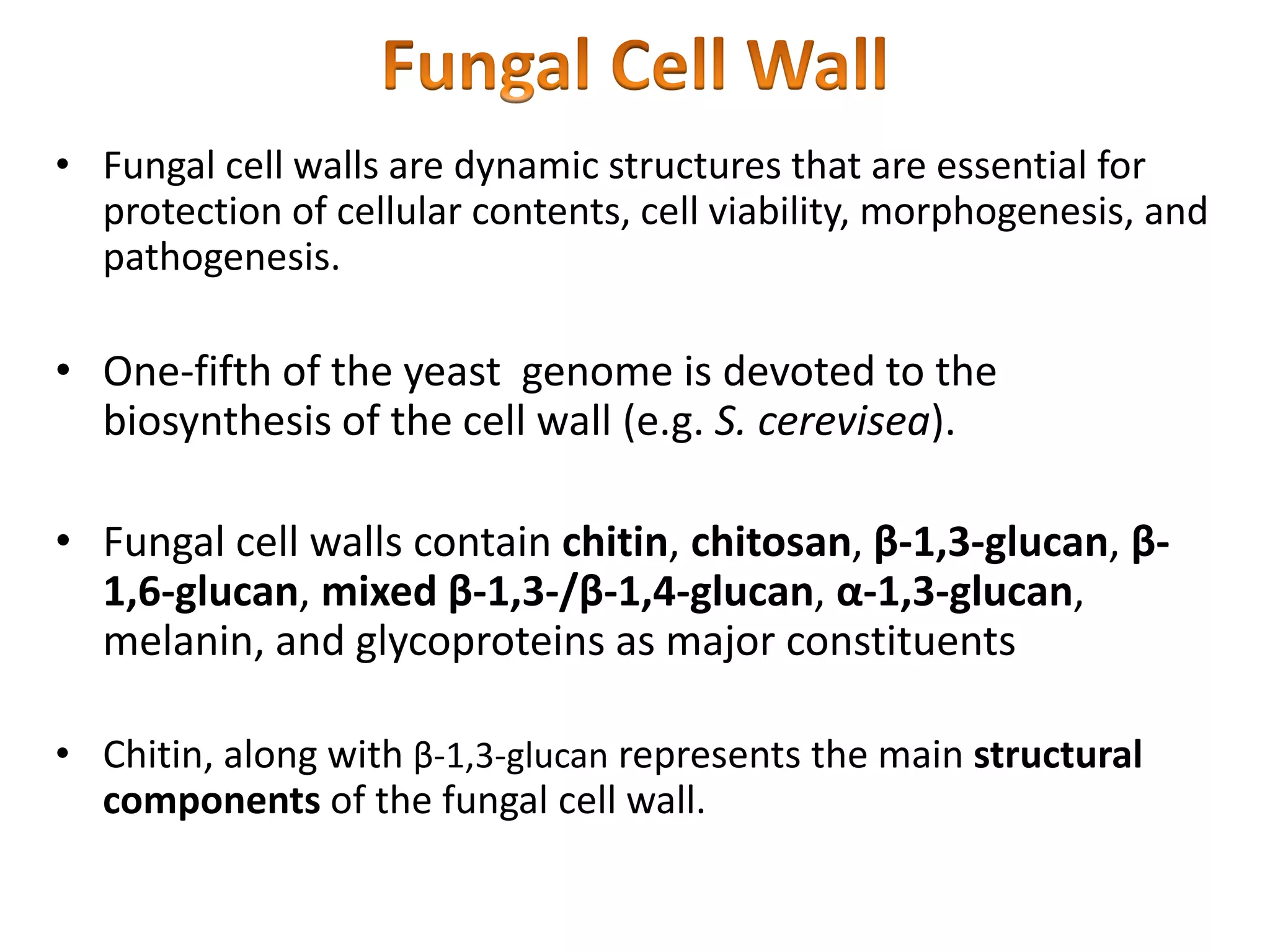
• Fungal cell walls contain chitin, chitosan, β-1,3-glucan, β-
1,6-glucan, mixed β-1,3-/β-1,4-glucan, α-1,3-glucan,
melanin, and glycoproteins as major constituents
• Chitin, along with β-1,3-glucan represents the main structural
components of the fungal cell wall.
• The relative proportion of the cell wall polysaccharide can vary according
to cultures conditions, process fermentation, strain background, etc., but s
generally 50 % of the cell wall dry mass is made of β-glucan (10-15 % β-
1,6-glucan).
• The structure and biosynthesis of a fungal cell wall is unique to the fungi,
and is therefore an excellent target for the development of antifungal
drugs.
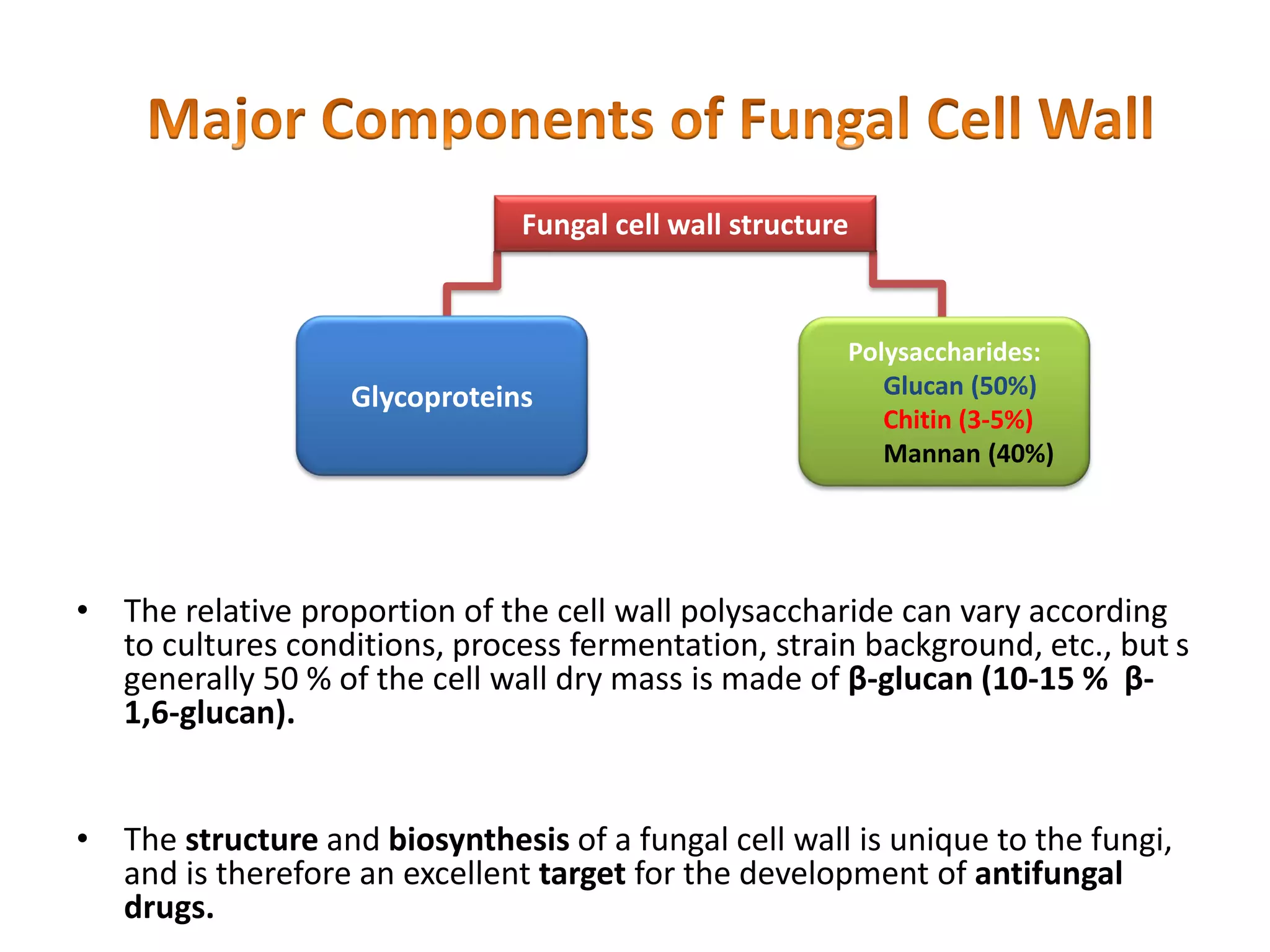
Fungal cell wall structure
Polysaccharides:
Glucan (50%)
Chitin (3-5%)
Mannan (40%)
Glycoproteins
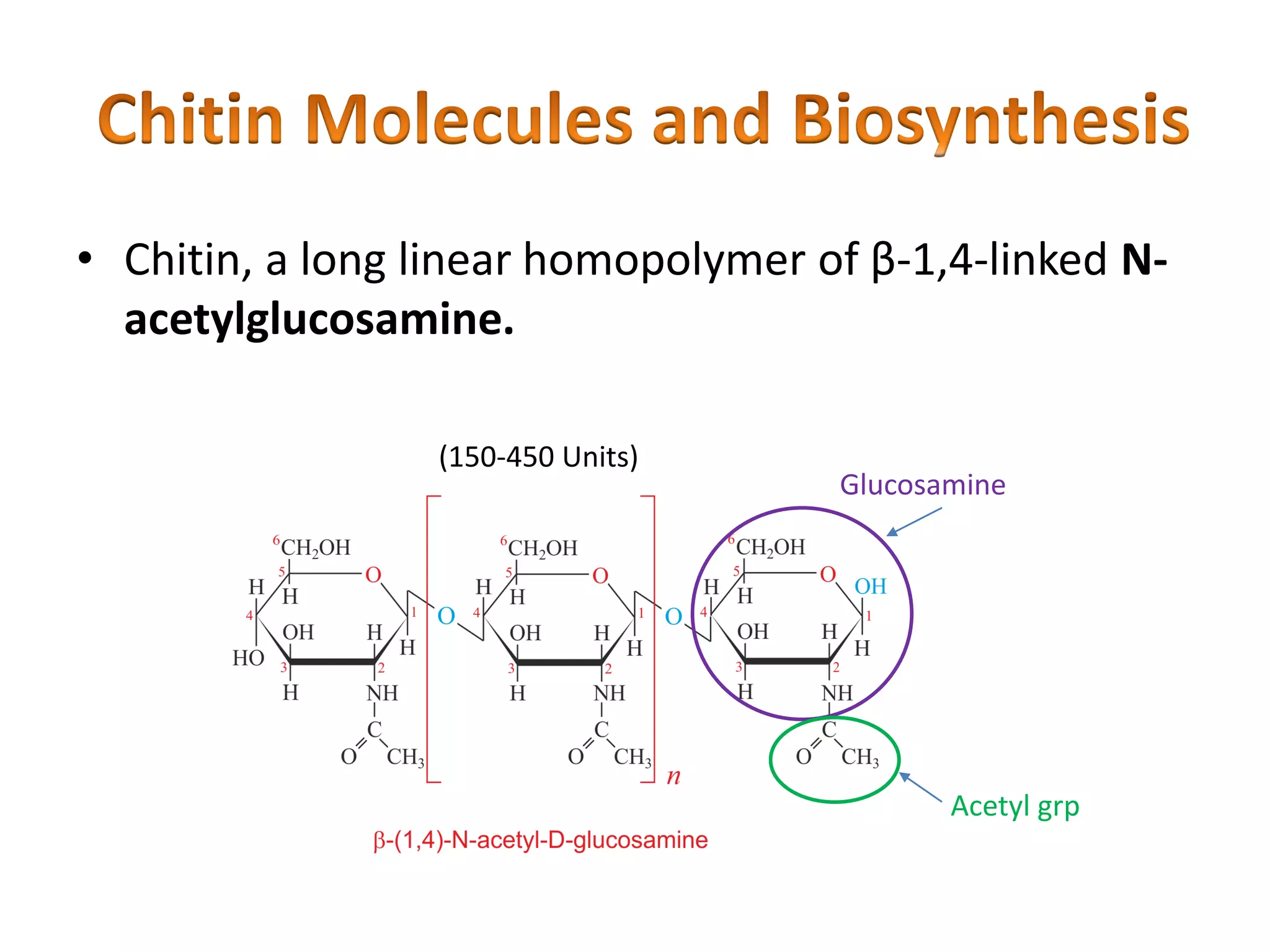
• Chitin, a long linear homopolymer of β-1,4-linked N-
acetylglucosamine.
Glucosamine
Acetyl grp
(150-450 Units)
• Chitin accounts for 1–2% of the yeast cell wall (dry weight)
and 10-20% of mycelial cell walls.
• Chitin microfibrils are formed from inter-chain H2- bonding.
They crystallize on EC surface to give enormous tensile
strength and contribute to the overall integrity of the cell wall.
• When chitin synthesis is disrupted, the wall becomes
disordered and the fungus succumbs to osmotic stress
• The synthesis of chitin is mediated by chitin synthase, that
catalyzes the transfer of N-acetylglucosamine from UDP-N-
acetylglucosamine to a growing chitin chain.
• Chitin synthesis primarily occurs at sites of active growth and
cell wall remodeling (hyphal apex, tip/neck of bud).
• The elongation of the chitin polymers occurs via ‘vectorial
synthesis’.
• The specific roles of the chitin synthases of several fungi have been
studied using both genetic and biochemical analyses.
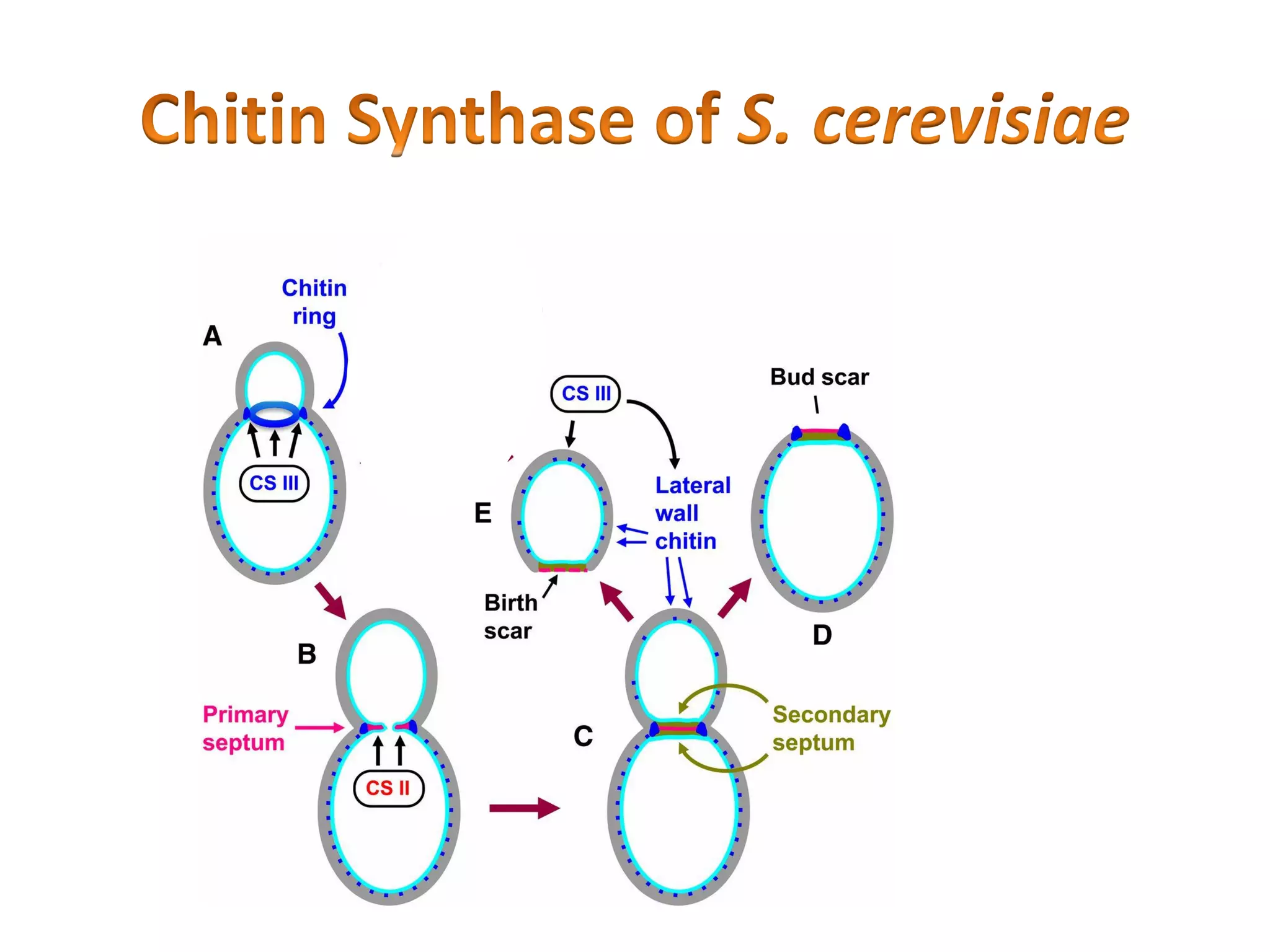
• S. cerevisiae has 3 chitin synthases: Chs1p, Chs2p and Chs3p.
• Chs1p functions in cell wall repair, replenishing chitin polymers lost
during cytokinesis.
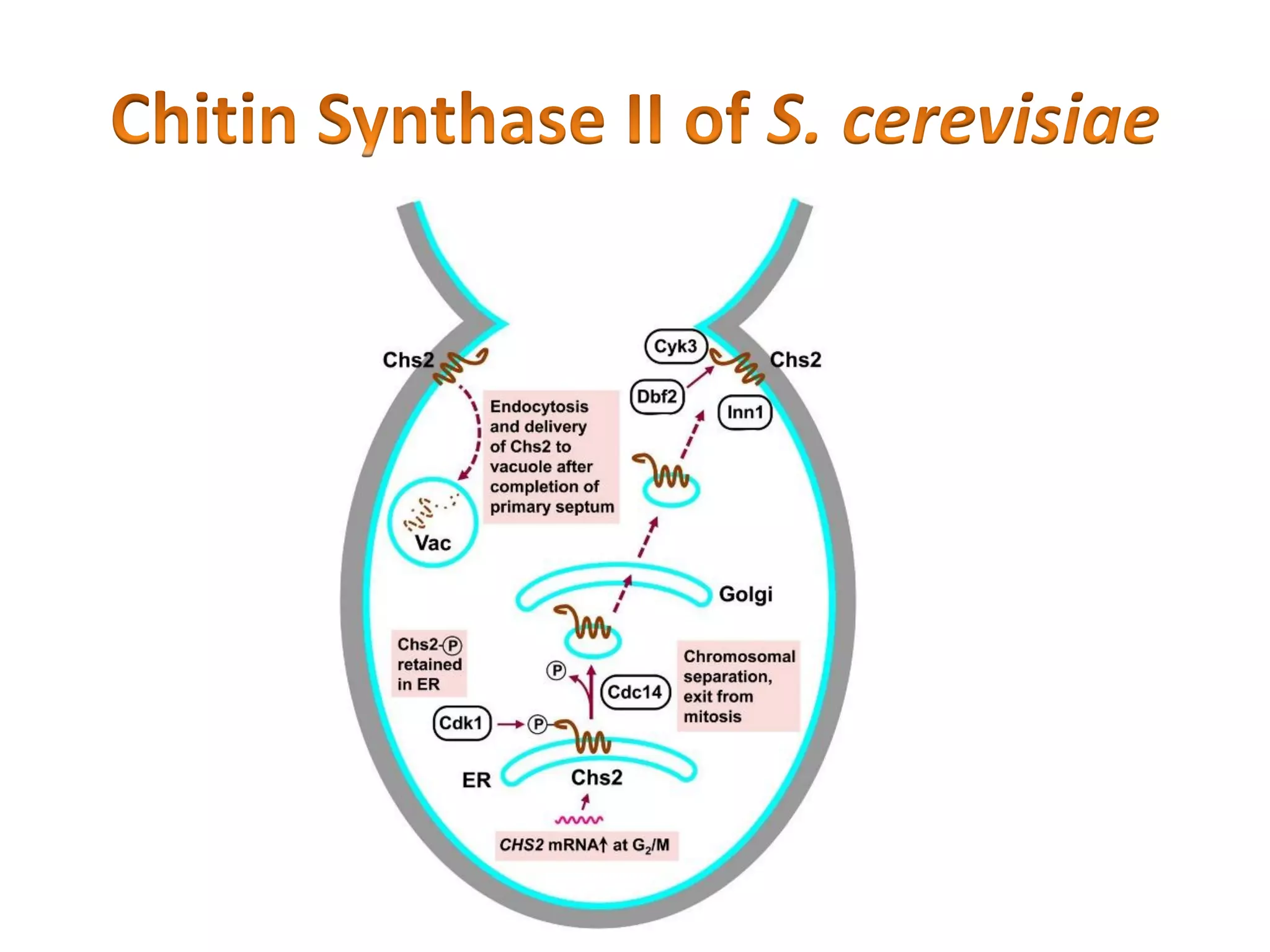
• Chs2p: formation of the primary septum within the dividing yeast
cell.
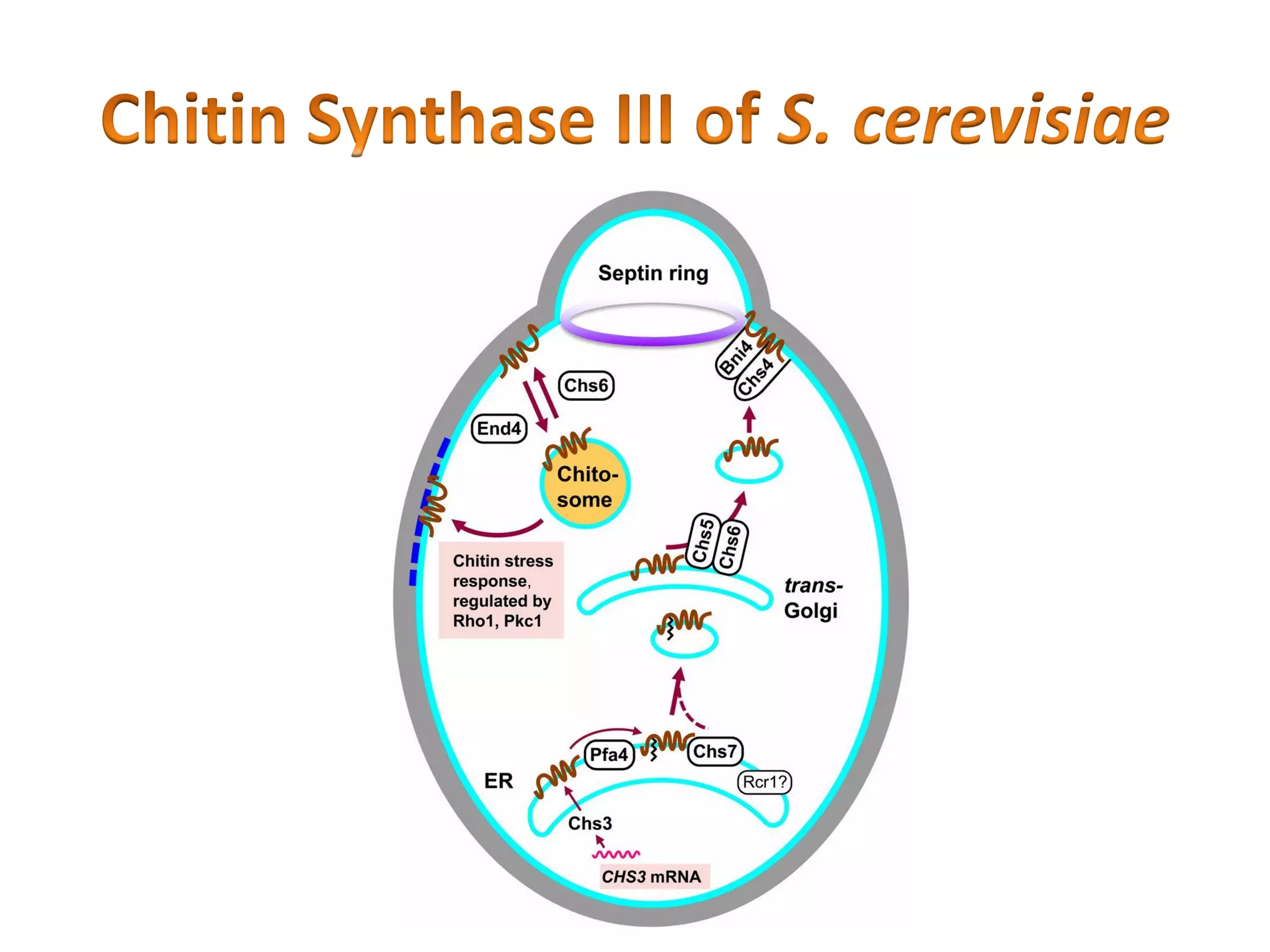
• Chs3p: generates approximately 80–90% of the total cellular chitin.
• This includes the chitin ring during bud emergence, as well as the
chitin that becomes covalently linked to the beta-1,3-glucan of the
cell wall.
• The best-known chitin synthesis inhibitors are nikkomycins
and polyoxins, as well as their synthetic derivatives.
• The nikkomycins and polyoxins are substrate analogs of the
chitin synthase (competitive inhibitors).
• However, they are not effective in controlling mycoses; due to
their limited uptake into the cytoplasm.
• Currently, agents that target the chitin component have found
limited therapeutic use
• Glucan is the major structural polysaccharide of the fungal
cell wall, constituting 50–60% of dry weight of the wall.
• It is a polymers of repeating glucose residues assembled
through a variety of chemical linkages.
• 65% - 90% of the cell wall glucan is found to be β-1,3-
glucan.
• Other glucans polymers include:
• β-1,6-glucan
• mixed β-1,3- and β-1,4-glucan
• α-1,3-glucan and
• α-1,4-glucan
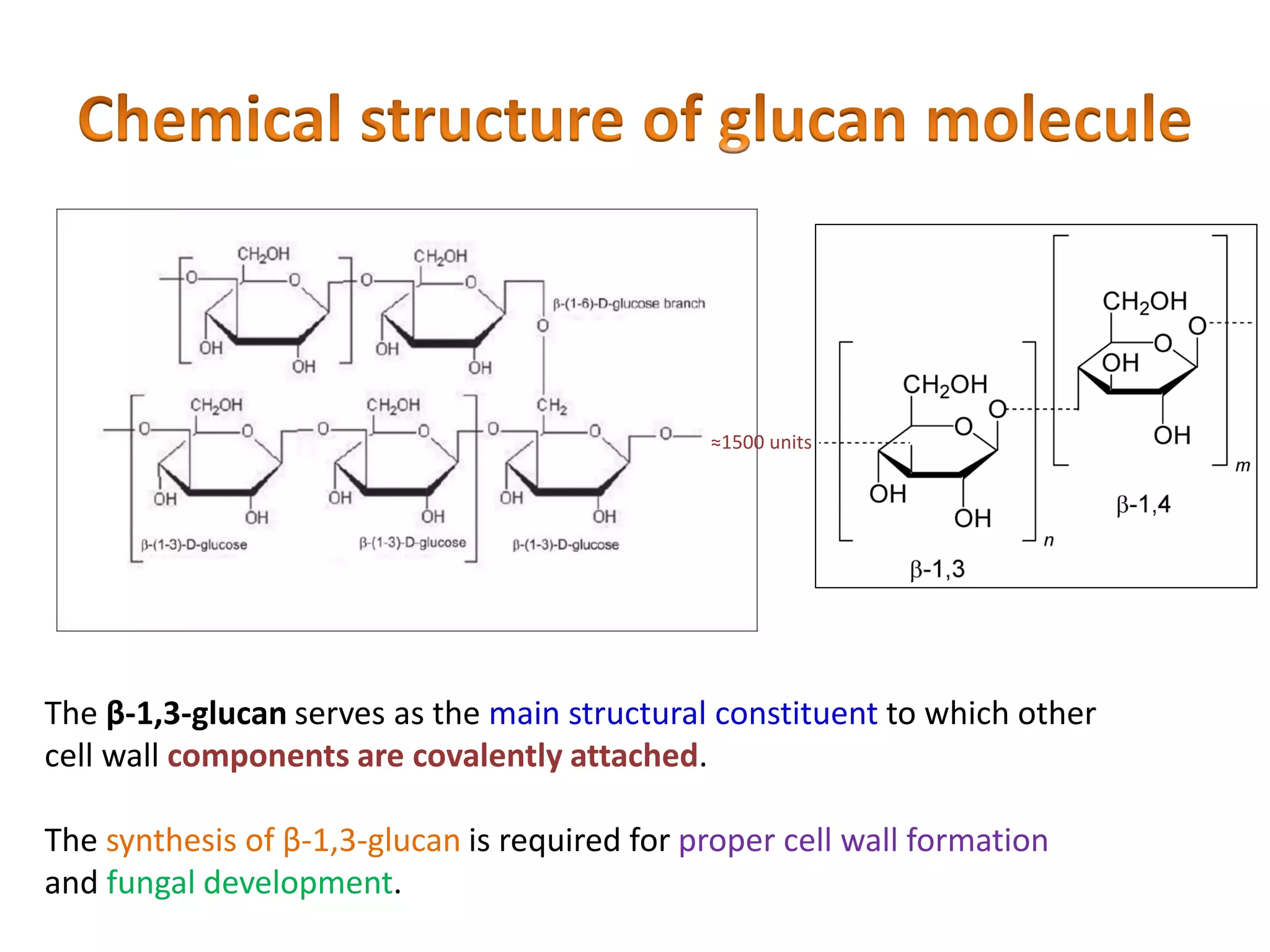
≈1500 units
The β-1,3-glucan serves as the main structural constituent to which other
cell wall components are covalently attached.
The synthesis of β-1,3-glucan is required for proper cell wall formation
and fungal development.
• Yeast cell walls contain branched β-1,3- and β-1,6-glucans;
where as many filamentous fungi (N. crassa, A. fumigatus) do
not contain β-1,6-glucan
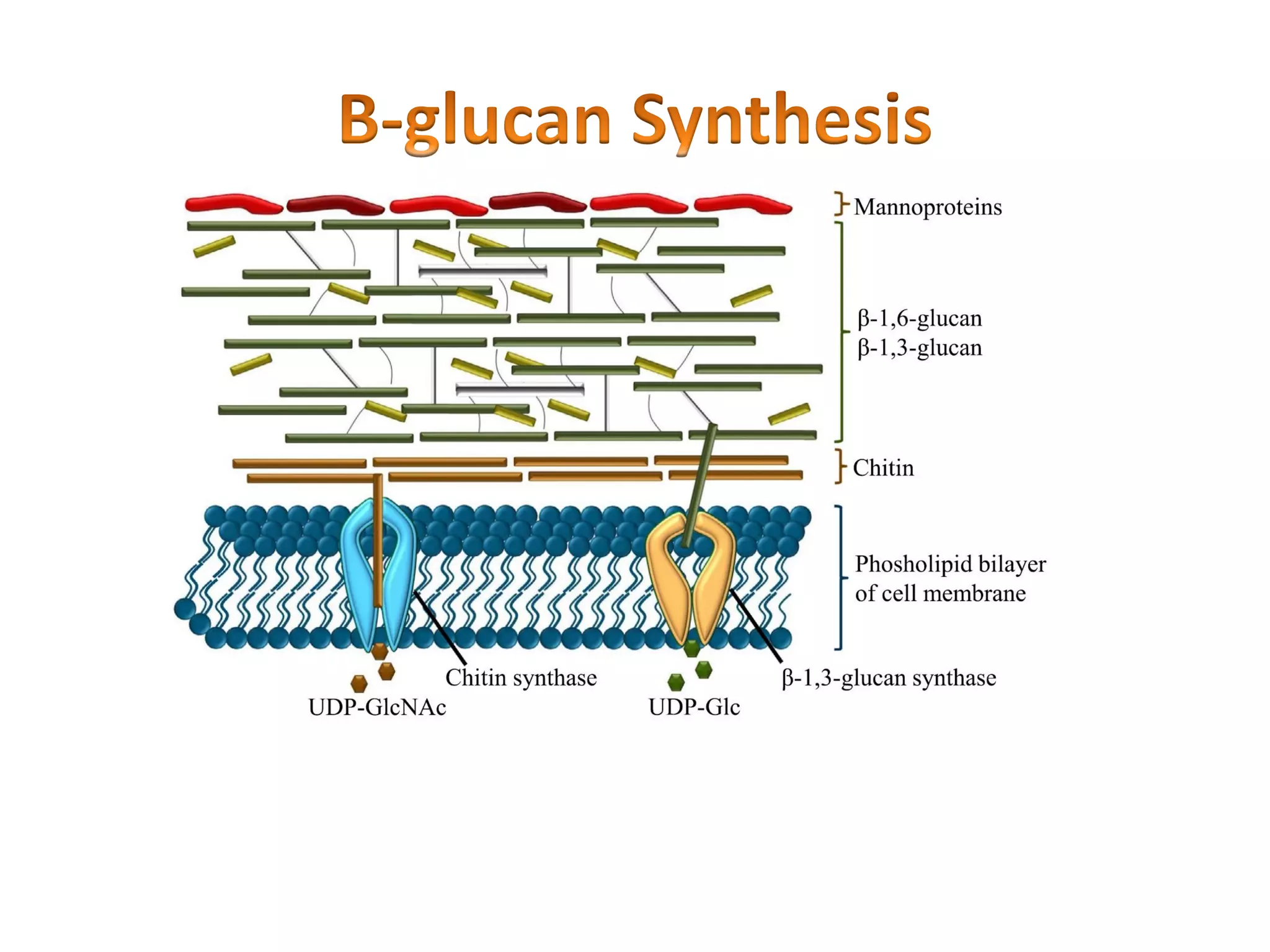
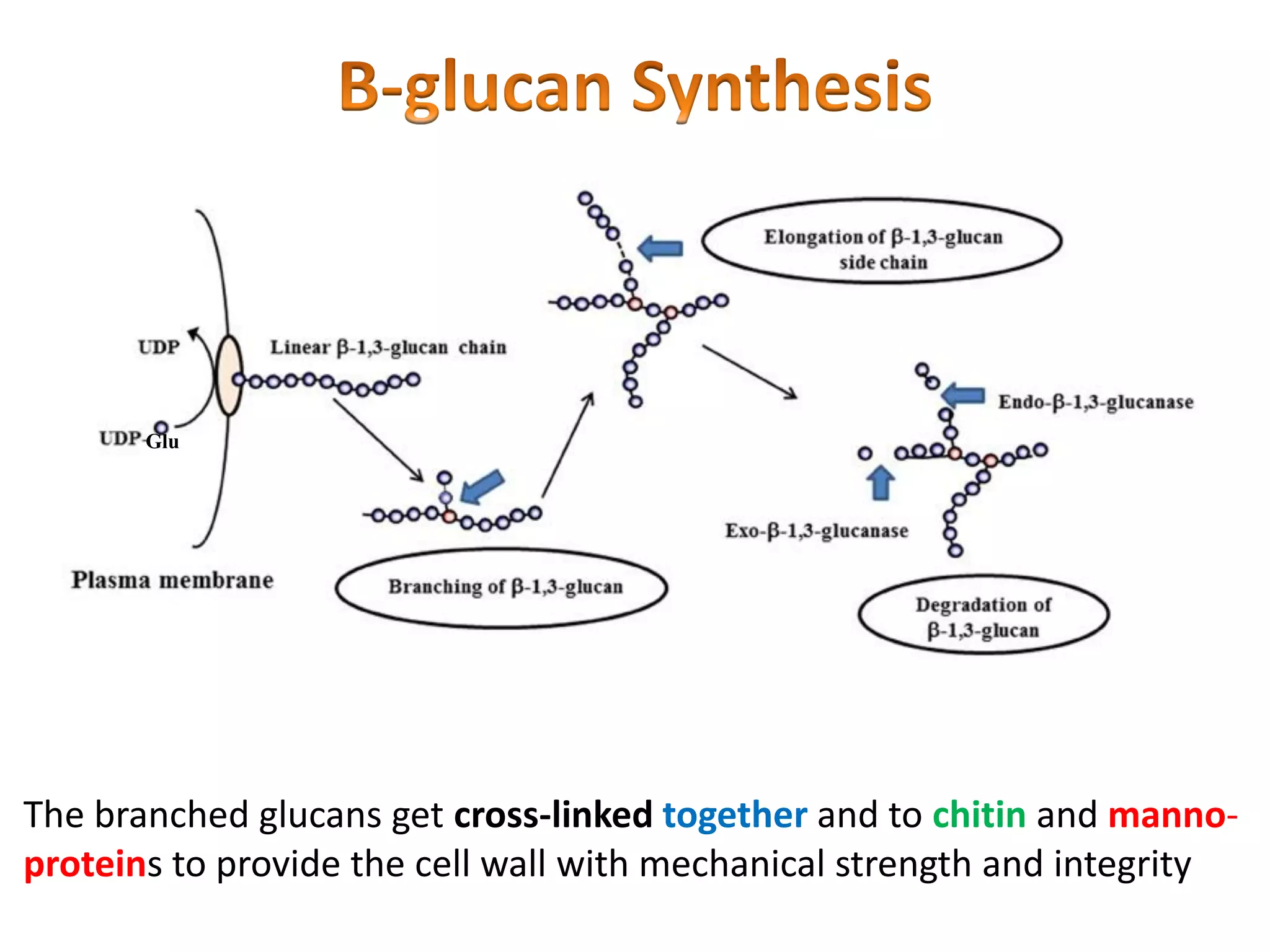
• Glucan polymers are synthesized by membrane associated
enzyme complex; Glucan Synthase Complex (GSC).
• GSC are primarily localized to areas of active growth,
budding or branching.
• The elongation of the chitin polymers occurs via vectorial
synthesis
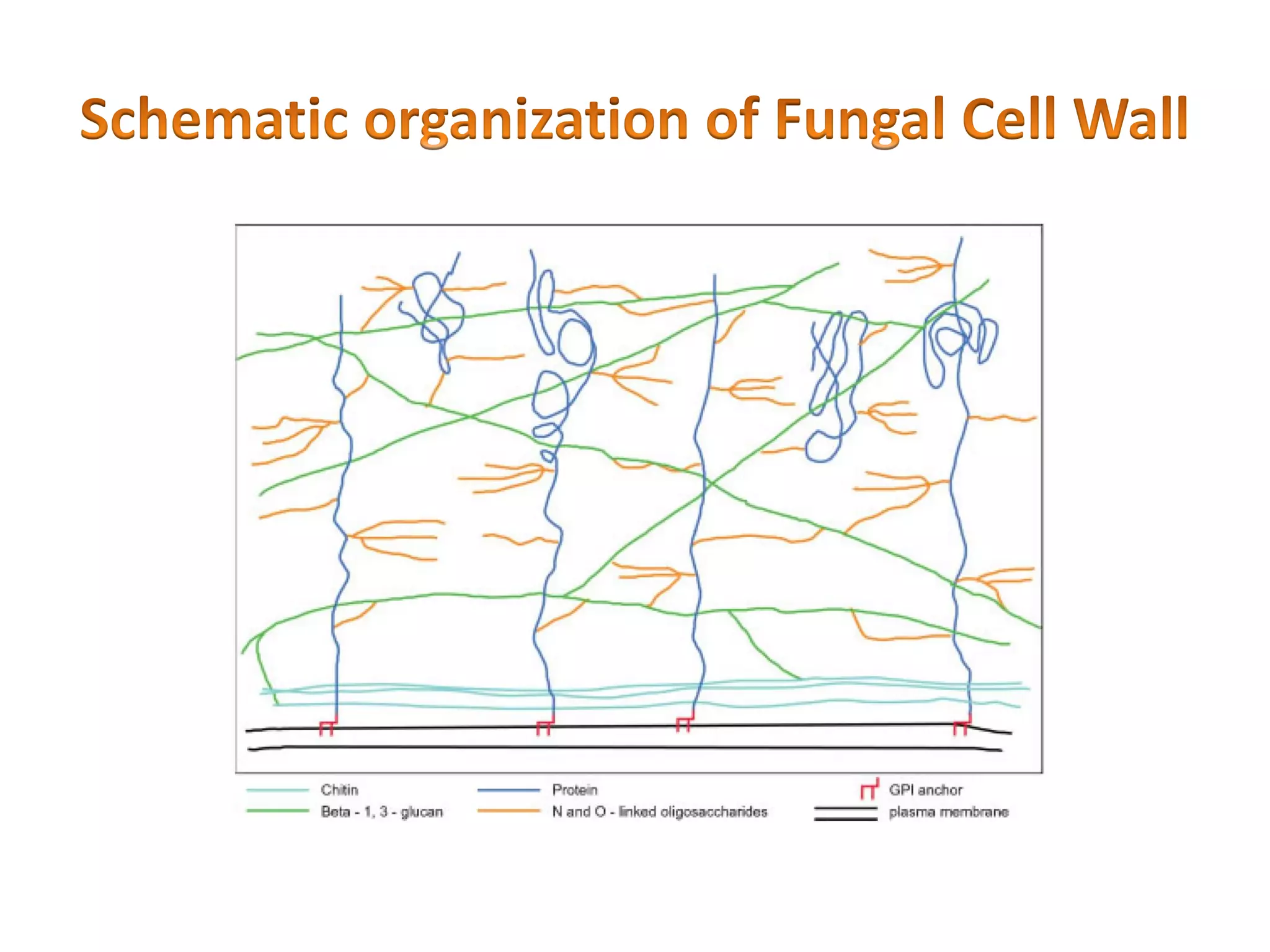
The branched glucans get cross-linked together and to chitin and manno-
proteins to provide the cell wall with mechanical strength and integrity
Glu
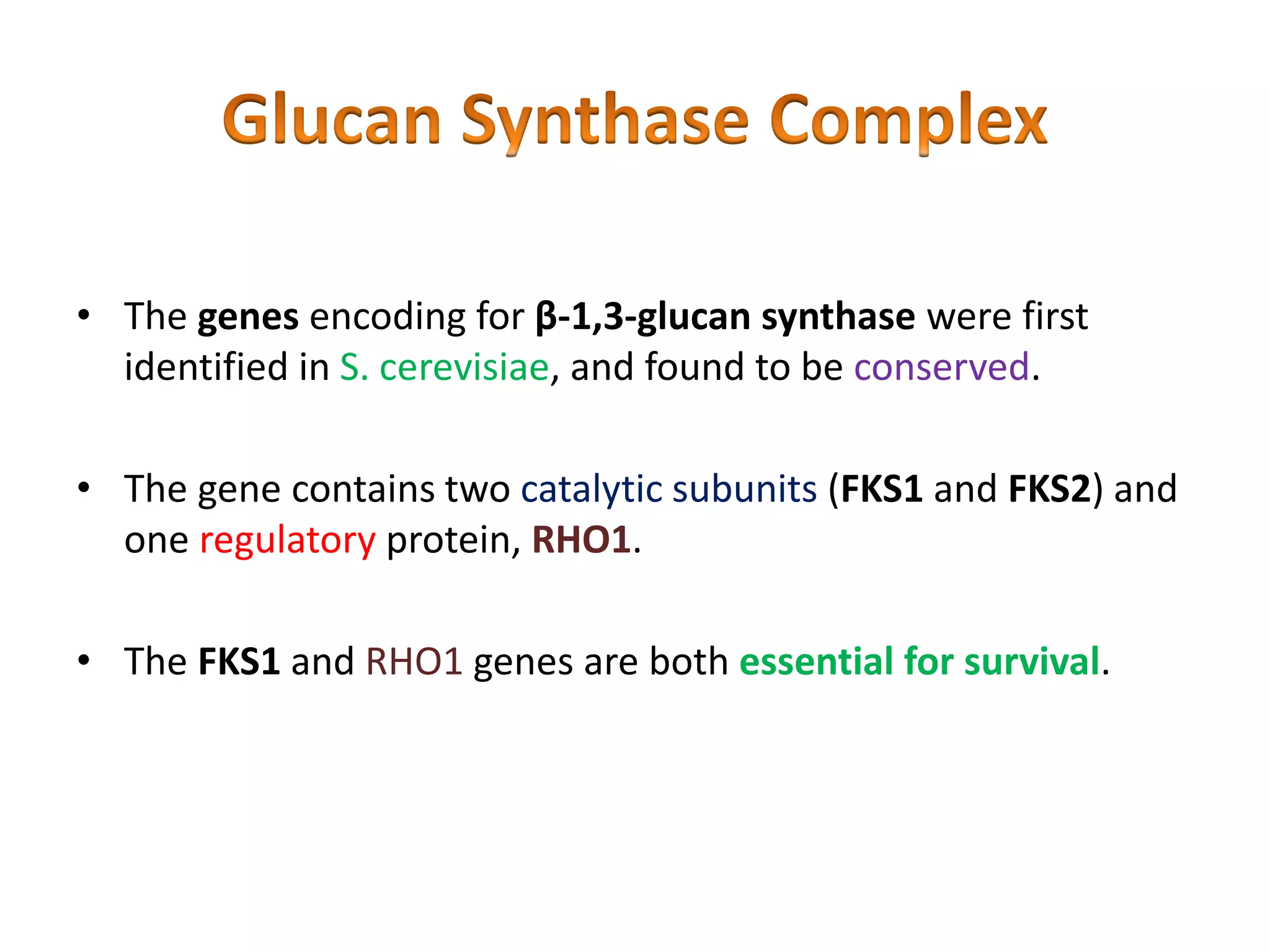
• The genes encoding for β-1,3-glucan synthase were first
identified in S. cerevisiae, and found to be conserved.
• The gene contains two catalytic subunits (FKS1 and FKS2) and
one regulatory protein, RHO1.
• The FKS1 and RHO1 genes are both essential for survival.
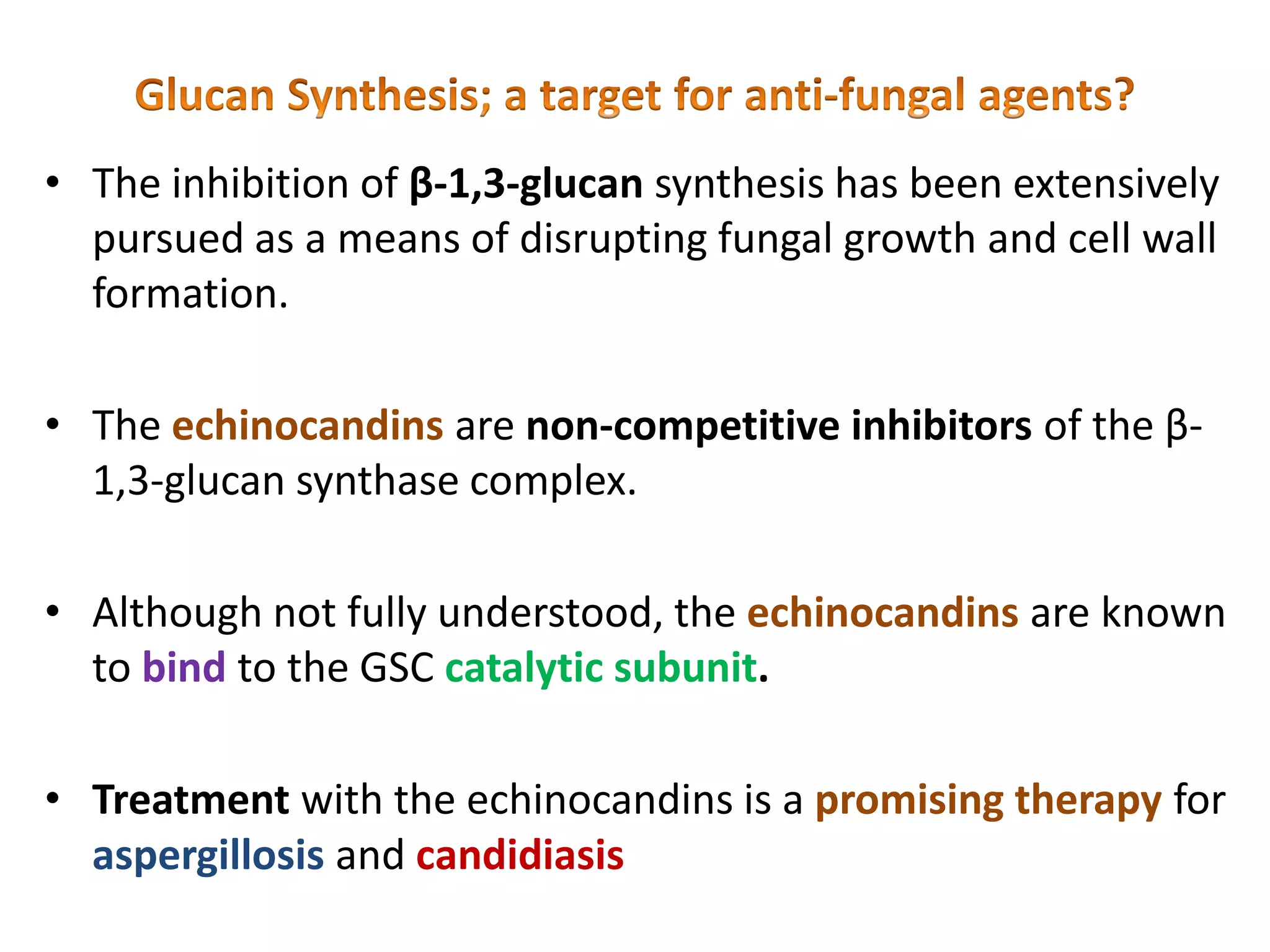
• The inhibition of β-1,3-glucan synthesis has been extensively
pursued as a means of disrupting fungal growth and cell wall
formation.
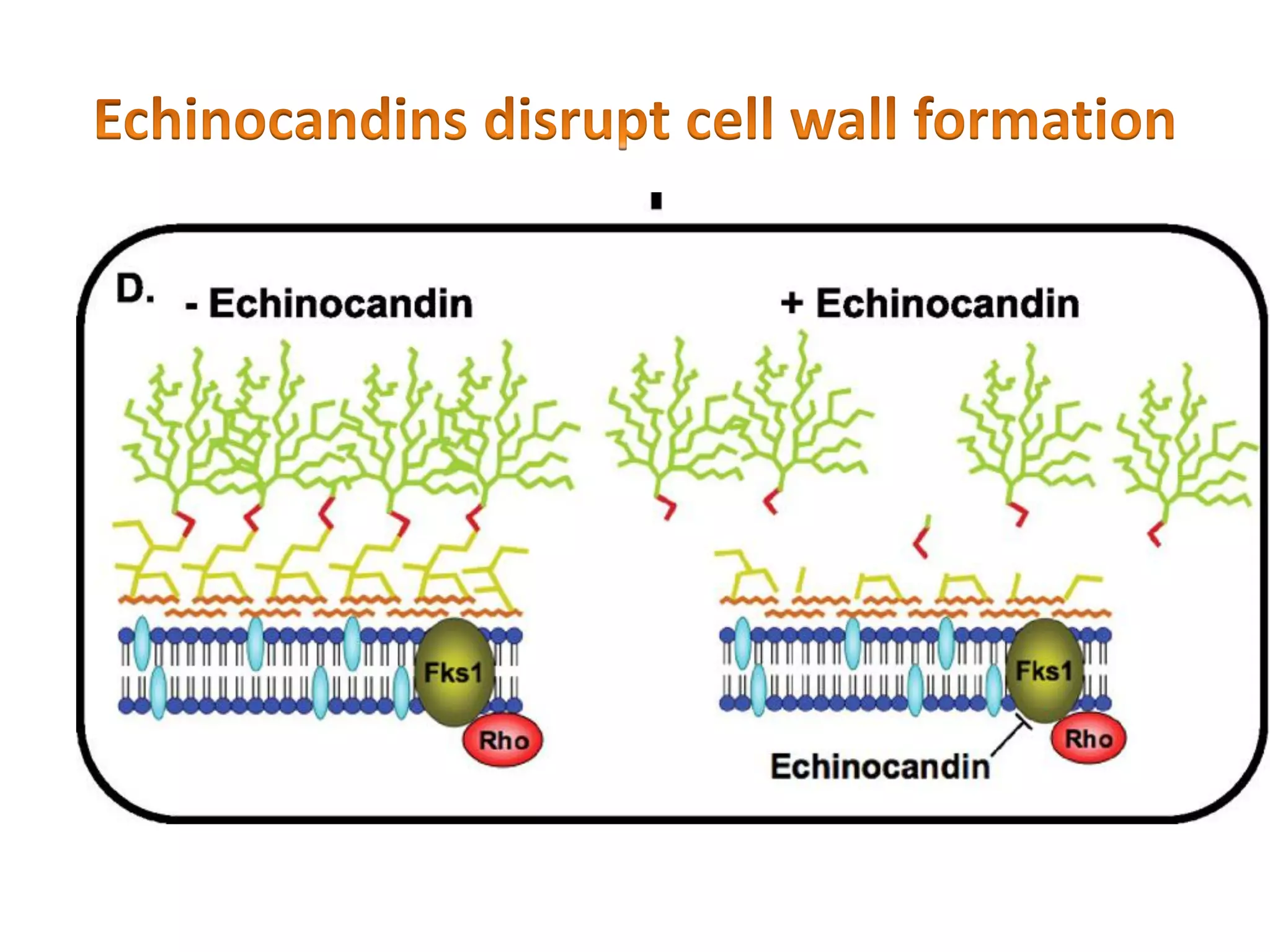
• The echinocandins are non-competitive inhibitors of the β-
1,3-glucan synthase complex.
• Although not fully understood, the echinocandins are known
to bind to the GSC catalytic subunit.
• Treatment with the echinocandins is a promising therapy for
aspergillosis and candidiasis
• Gow, N. A., Latge, J. P., & Munro, C. A. (2017). The fungal cell wall:
structure, biosynthesis, and function. Microbiology spectrum.
• Free, S. J. (2013). Fungal cell wall organization and biosynthesis.
In Advances in genetics (Vol. 81, pp. 33-82). Academic Press.
• Latgé, J. P. (2010). Tasting the fungal cell wall. Cellular
microbiology, 12(7), 863-872.
• Bowman, S. M., & Free, S. J. (2006). The structure and synthesis of the
fungal cell wall. Bioessays, 28(8), 799-808.
Chitin and Glucan synthesis in fungi

Chitin and Glucan synthesis in fungi

  • 1.
    by Muhammad Getso Department ofMedical Mycology, TUMS-Iran
  • 2.
    • Fungal cellwalls are dynamic structures that are essential for protection of cellular contents, cell viability, morphogenesis, and pathogenesis. • One-fifth of the yeast genome is devoted to the biosynthesis of the cell wall (e.g. S. cerevisea). • Fungal cell walls contain chitin, chitosan, β-1,3-glucan, β- 1,6-glucan, mixed β-1,3-/β-1,4-glucan, α-1,3-glucan, melanin, and glycoproteins as major constituents • Chitin, along with β-1,3-glucan represents the main structural components of the fungal cell wall.
  • 3.
    • The relativeproportion of the cell wall polysaccharide can vary according to cultures conditions, process fermentation, strain background, etc., but s generally 50 % of the cell wall dry mass is made of β-glucan (10-15 % β- 1,6-glucan). • The structure and biosynthesis of a fungal cell wall is unique to the fungi, and is therefore an excellent target for the development of antifungal drugs. Fungal cell wall structure Polysaccharides: Glucan (50%) Chitin (3-5%) Mannan (40%) Glycoproteins
  • 5.
    • Chitin, along linear homopolymer of β-1,4-linked N- acetylglucosamine. Glucosamine Acetyl grp (150-450 Units)
  • 6.
    • Chitin accountsfor 1–2% of the yeast cell wall (dry weight) and 10-20% of mycelial cell walls. • Chitin microfibrils are formed from inter-chain H2- bonding. They crystallize on EC surface to give enormous tensile strength and contribute to the overall integrity of the cell wall. • When chitin synthesis is disrupted, the wall becomes disordered and the fungus succumbs to osmotic stress
  • 7.
    • The synthesisof chitin is mediated by chitin synthase, that catalyzes the transfer of N-acetylglucosamine from UDP-N- acetylglucosamine to a growing chitin chain. • Chitin synthesis primarily occurs at sites of active growth and cell wall remodeling (hyphal apex, tip/neck of bud). • The elongation of the chitin polymers occurs via ‘vectorial synthesis’.
  • 8.
    • The specificroles of the chitin synthases of several fungi have been studied using both genetic and biochemical analyses. • S. cerevisiae has 3 chitin synthases: Chs1p, Chs2p and Chs3p. • Chs1p functions in cell wall repair, replenishing chitin polymers lost during cytokinesis. • Chs2p: formation of the primary septum within the dividing yeast cell. • Chs3p: generates approximately 80–90% of the total cellular chitin. • This includes the chitin ring during bud emergence, as well as the chitin that becomes covalently linked to the beta-1,3-glucan of the cell wall.
  • 12.
    • The best-knownchitin synthesis inhibitors are nikkomycins and polyoxins, as well as their synthetic derivatives. • The nikkomycins and polyoxins are substrate analogs of the chitin synthase (competitive inhibitors). • However, they are not effective in controlling mycoses; due to their limited uptake into the cytoplasm. • Currently, agents that target the chitin component have found limited therapeutic use
  • 13.
    • Glucan isthe major structural polysaccharide of the fungal cell wall, constituting 50–60% of dry weight of the wall. • It is a polymers of repeating glucose residues assembled through a variety of chemical linkages. • 65% - 90% of the cell wall glucan is found to be β-1,3- glucan. • Other glucans polymers include: • β-1,6-glucan • mixed β-1,3- and β-1,4-glucan • α-1,3-glucan and • α-1,4-glucan
  • 14.
    ≈1500 units The β-1,3-glucanserves as the main structural constituent to which other cell wall components are covalently attached. The synthesis of β-1,3-glucan is required for proper cell wall formation and fungal development.
  • 15.
    • Yeast cellwalls contain branched β-1,3- and β-1,6-glucans; where as many filamentous fungi (N. crassa, A. fumigatus) do not contain β-1,6-glucan • Glucan polymers are synthesized by membrane associated enzyme complex; Glucan Synthase Complex (GSC). • GSC are primarily localized to areas of active growth, budding or branching. • The elongation of the chitin polymers occurs via vectorial synthesis
  • 17.
    The branched glucansget cross-linked together and to chitin and manno- proteins to provide the cell wall with mechanical strength and integrity Glu
  • 18.
    • The genesencoding for β-1,3-glucan synthase were first identified in S. cerevisiae, and found to be conserved. • The gene contains two catalytic subunits (FKS1 and FKS2) and one regulatory protein, RHO1. • The FKS1 and RHO1 genes are both essential for survival.
  • 19.
    • The inhibitionof β-1,3-glucan synthesis has been extensively pursued as a means of disrupting fungal growth and cell wall formation. • The echinocandins are non-competitive inhibitors of the β- 1,3-glucan synthase complex. • Although not fully understood, the echinocandins are known to bind to the GSC catalytic subunit. • Treatment with the echinocandins is a promising therapy for aspergillosis and candidiasis
  • 21.
    • Gow, N.A., Latge, J. P., & Munro, C. A. (2017). The fungal cell wall: structure, biosynthesis, and function. Microbiology spectrum. • Free, S. J. (2013). Fungal cell wall organization and biosynthesis. In Advances in genetics (Vol. 81, pp. 33-82). Academic Press. • Latgé, J. P. (2010). Tasting the fungal cell wall. Cellular microbiology, 12(7), 863-872. • Bowman, S. M., & Free, S. J. (2006). The structure and synthesis of the fungal cell wall. Bioessays, 28(8), 799-808.