Do now: 3 minutes

 Take a notecard from the front. Do all of
  your DO NOWs on it today for a grade.
 DO NOW: When you think of Chinese
  religion(s), what comes to your mind?
We will

1. Learn how Chinese religion combines
   animism, Daoism, Confucianism &
   Buddhism
2. Explore historical developments of this
   syncretic tradition
3. Discover ways Chinese govt has tried to
   regulate religion
Difficulties in studying

 Syncretic
    Emperor story
    Temples = shared
 Govt
History
 Earliest history to Shang dynasty (11th
  century BC) was
    polytheistic
    ancestor worship
 Chou dynasty (11th century BC) until
  common era had
    one supreme god above other gods
     and spirits
    focus on morality
       Lao-Tzu
       Confucious
History, cont
 CE – 11th century Buddhism & Taoism
  developed
 11th century – present = eclectic synthesis
Basic Chinese Religious Concepts
 Multiple gods & spirits
   Focus on gods of heaven & earth
   Local deities & spirits
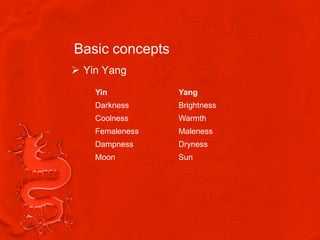
Basic concepts
 Yin Yang
    Yin          Yang
    Darkness     Brightness
    Coolness     Warmth
    Femaleness   Maleness
    Dampness     Dryness
    Moon         Sun
Basic concepts
 Filial Piety & Ancestor Worship
    Old & aged = worthy of respect
    Life begins at 60
    Aged rule the home
    Children support elders
    Give elders proper burial
    Maintain grave sites
Basic concepts
 Ancestor worship
    Ancestors can help family after death
    Forget ancestors and you may become
     a homeless ghost
    Forget ancestors and you may be
     afflicted by dangerous spirits
    Small shrine in home w/names and
     deeds of previous generations
      Offerings of wine & rice
      Paper money
Basic concepts
 Divination
    Unity of universe means future is
     predictable
    One way to tell future by looking at shell
     of tortoise
    I Ching
Basic concepts
 Shang Ti (Supreme God)
    Chou dynasty – 11th century BC
    Right to rule based on morality and
     religion
    One Supreme God controlled destiny of
     humankind
      Responsible for fall of previous
         dynasty – they were bad
    Govt should be based on virtue
Decline of feudal system
 By 3rd century BC, feudal system declining
 New schools of thought (Confucianism,
  Taolism, Legalism) to address problems of
  society
Taoism
 Lao-Tzu (old master)
    6th century BC
    50 years before Confucius
    Left life at royal court to seek nature
    Gatekeeper: write Tao Te Ching
Tao Te Ching
 “The Classic of the Way and Its Power and
  Virtue”
    81 chapters of poetry
    Debate over author/s
    Theme: Folly of human achievement,
     especially govt
Do Now: True or False 2 minutes

1. Chinese religion focuses on one supreme
   god.
2. Some Chinese religion focuses on
   morality and one supreme god.
3. Lao-tzu’s nickname meant “Silly old goat”
4. Chinese religion generally allows its
   followers to be Buddhist and Confucius at
   the same time.
5. The govt system in China has affected its
   religious movements.
Do Now: Finish the statement
4 minutes
1. Lao-tzu __________________________.
2. Taoism __________________________.
3. _____________ is important to many
   Chinese religious practices.
4. Early ________________, believed
   _____________________.
5. Yin and yang ____________________.
Early Taoist Teaching
 Basic unity of universe is mysterious force
  called Tao – “The Way” yet impossible to
  define
 Life is greatest of all possessions (fame,
  wealth power will all decay)
 Life is to be lived simply
 Pomp & glory are to be despised
Later Taoist Developments
 One group followed teachings of LaoTzu
  (not popular appeal)
 Another group looking for very long life
    Properly attuned to the Tao = long life
    Food, fasting, breath control
    Alchemy – preserve life via minerals
 Persecution between Taoists/Buddhists,
  then merging to common religion
Confucianism
 Debate about religion
 Life – 551 BC - 497
    Kung
    Kung Fu-tzu (Kung the master)
    Analects of Confucius
 Childhood
 Teens – govt worker
 Twenties – teacher
 50s – prime minister
 55 – retired, then wandering teacher
Confucian Teaching
 Focus on social order
 Religion should not interfere with social
  duty
 System of ethics
Confucian Teaching
 Central Themes
    Li – properties, rites, ceremonies,
     courtesy
    Five Lis
      Father to son
      Elder brother to younger brother
      Husband to wife
      Elder to junior
      Ruler to subject
Confucian Teaching
    Jen – inward expression of Confucian
     ideals – love, goodness, human-
     heartedness
    Reciprocity – “Do not do to others what
     you would not want others to do to you.”
 Humans are naturally good
 People need good government so that
  they can be good
 Good conduct is its own reward

Chinese religion

  • 1.
    Do now: 3minutes  Take a notecard from the front. Do all of your DO NOWs on it today for a grade.  DO NOW: When you think of Chinese religion(s), what comes to your mind?
  • 2.
    We will 1. Learnhow Chinese religion combines animism, Daoism, Confucianism & Buddhism 2. Explore historical developments of this syncretic tradition 3. Discover ways Chinese govt has tried to regulate religion
  • 3.
    Difficulties in studying Syncretic  Emperor story  Temples = shared  Govt
  • 4.
    History  Earliest historyto Shang dynasty (11th century BC) was  polytheistic  ancestor worship  Chou dynasty (11th century BC) until common era had  one supreme god above other gods and spirits  focus on morality Lao-Tzu Confucious
  • 5.
    History, cont  CE– 11th century Buddhism & Taoism developed  11th century – present = eclectic synthesis
  • 6.
    Basic Chinese ReligiousConcepts  Multiple gods & spirits  Focus on gods of heaven & earth  Local deities & spirits
  • 7.
    Basic concepts  YinYang Yin Yang Darkness Brightness Coolness Warmth Femaleness Maleness Dampness Dryness Moon Sun
  • 8.
    Basic concepts  FilialPiety & Ancestor Worship  Old & aged = worthy of respect  Life begins at 60  Aged rule the home  Children support elders  Give elders proper burial  Maintain grave sites
  • 9.
    Basic concepts  Ancestorworship  Ancestors can help family after death  Forget ancestors and you may become a homeless ghost  Forget ancestors and you may be afflicted by dangerous spirits  Small shrine in home w/names and deeds of previous generations Offerings of wine & rice Paper money
  • 10.
    Basic concepts  Divination  Unity of universe means future is predictable  One way to tell future by looking at shell of tortoise  I Ching
  • 11.
    Basic concepts  ShangTi (Supreme God)  Chou dynasty – 11th century BC  Right to rule based on morality and religion  One Supreme God controlled destiny of humankind Responsible for fall of previous dynasty – they were bad  Govt should be based on virtue
  • 12.
    Decline of feudalsystem  By 3rd century BC, feudal system declining  New schools of thought (Confucianism, Taolism, Legalism) to address problems of society
  • 13.
    Taoism  Lao-Tzu (oldmaster)  6th century BC  50 years before Confucius  Left life at royal court to seek nature  Gatekeeper: write Tao Te Ching
  • 14.
    Tao Te Ching “The Classic of the Way and Its Power and Virtue”  81 chapters of poetry  Debate over author/s  Theme: Folly of human achievement, especially govt
  • 15.
    Do Now: Trueor False 2 minutes 1. Chinese religion focuses on one supreme god. 2. Some Chinese religion focuses on morality and one supreme god. 3. Lao-tzu’s nickname meant “Silly old goat” 4. Chinese religion generally allows its followers to be Buddhist and Confucius at the same time. 5. The govt system in China has affected its religious movements.
  • 16.
    Do Now: Finishthe statement 4 minutes 1. Lao-tzu __________________________. 2. Taoism __________________________. 3. _____________ is important to many Chinese religious practices. 4. Early ________________, believed _____________________. 5. Yin and yang ____________________.
  • 17.
    Early Taoist Teaching Basic unity of universe is mysterious force called Tao – “The Way” yet impossible to define  Life is greatest of all possessions (fame, wealth power will all decay)  Life is to be lived simply  Pomp & glory are to be despised
  • 18.
    Later Taoist Developments One group followed teachings of LaoTzu (not popular appeal)  Another group looking for very long life  Properly attuned to the Tao = long life  Food, fasting, breath control  Alchemy – preserve life via minerals  Persecution between Taoists/Buddhists, then merging to common religion
  • 19.
    Confucianism  Debate aboutreligion  Life – 551 BC - 497  Kung  Kung Fu-tzu (Kung the master)  Analects of Confucius  Childhood  Teens – govt worker  Twenties – teacher  50s – prime minister  55 – retired, then wandering teacher
  • 20.
    Confucian Teaching  Focuson social order  Religion should not interfere with social duty  System of ethics
  • 21.
    Confucian Teaching  CentralThemes  Li – properties, rites, ceremonies, courtesy  Five Lis Father to son Elder brother to younger brother Husband to wife Elder to junior Ruler to subject
  • 22.
    Confucian Teaching  Jen – inward expression of Confucian ideals – love, goodness, human- heartedness  Reciprocity – “Do not do to others what you would not want others to do to you.”  Humans are naturally good  People need good government so that they can be good  Good conduct is its own reward