CHILDREN’S TELEVISION
The Changing Face of Children’s Television | Norma Pecora
   Home is Where the Brand is | Sarah Banet-Weiser


            FTVS 512 | September 22, 2011
                  Rachel Brethauer
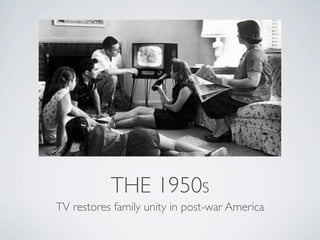
THE 1950S
TV restores family unity in post-war America
WHAT HAPPENED?
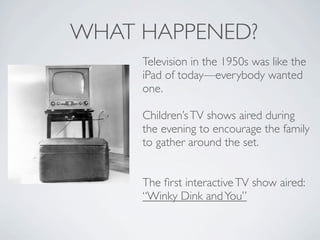
     Television in the 1950s was like the
     iPad of today—everybody wanted
     one.

     Children’s TV shows aired during
     the evening to encourage the family
     to gather around the set.


     The first interactive TV show aired:
     “Winky Dink and You”
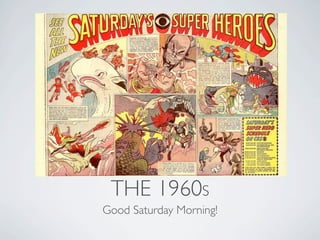
THE 1960S
Good Saturday Morning!
WHAT HAPPENED?
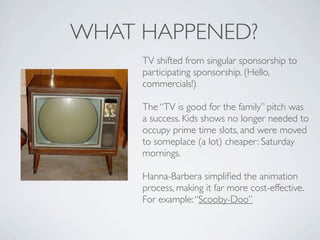
     TV shifted from singular sponsorship to
     participating sponsorship. (Hello,
     commercials!)

     The “TV is good for the family” pitch was
     a success. Kids shows no longer needed to
     occupy prime time slots, and were moved
     to someplace (a lot) cheaper: Saturday
     mornings.

     Hanna-Barbera simplified the animation
     process, making it far more cost-effective.
     For example: “Scooby-Doo”
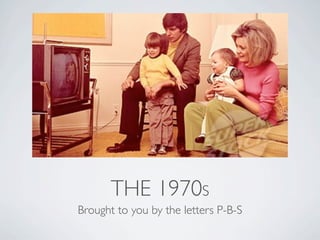
THE 1970S
Brought to you by the letters P-B-S
WHAT HAPPENED?
     “Mr. Rogers’ Neighborhood” and “Sesame
     Street” succeeded on PBS, proving that
     preschoolers would watch high-quality
     educational programming.

     The networks completely ignored this, to
     chase the golden goose of children’s TV
     demos: 6- to 11-year-olds.

     Government legislation in the late ‘70s
     created a large number of independent TV
     stations with many programming hours to
     fill.
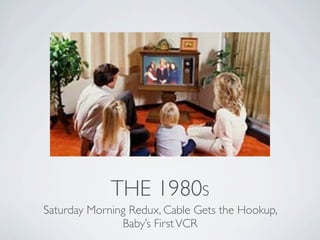
THE 1980S
Saturday Morning Redux, Cable Gets the Hookup,
               Baby’s First VCR
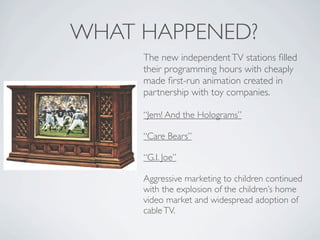
WHAT HAPPENED?
     The new independent TV stations filled
     their programming hours with cheaply
     made first-run animation created in
     partnership with toy companies.

     “Jem! And the Holograms”

     “Care Bears”

     “G.I. Joe”

     Aggressive marketing to children continued
     with the explosion of the children’s home
     video market and widespread adoption of
     cable TV.
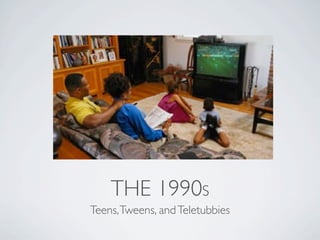
THE 1990S
Teens, Tweens, and Teletubbies
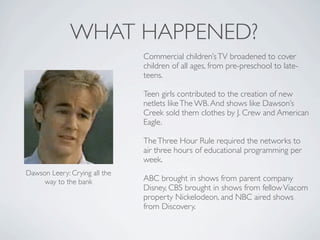
WHAT HAPPENED?
                               Commercial children’s TV broadened to cover
                               children of all ages, from pre-preschool to late-
                               teens.

                               Teen girls contributed to the creation of new
                               netlets like The WB. And shows like Dawson’s
                               Creek sold them clothes by J. Crew and American
                               Eagle.

                               The Three Hour Rule required the networks to
                               air three hours of educational programming per
                               week.
Dawson Leery: Crying all the
     way to the bank           ABC brought in shows from parent company
                               Disney, CBS brought in shows from fellow Viacom
                               property Nickelodeon, and NBC aired shows
                               from Discovery.
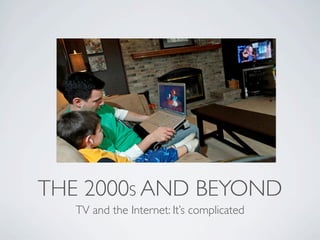
THE 2000S AND BEYOND
   TV and the Internet: It’s complicated
WHAT’S HAPPENING?
      Kids today engage with television in a
      completely different way, in a number of
      different formats. Or, it’s more than just TV.

      Audiences are no longer just passive. iCarly
      viewers can create videos that may be used
      in the fictional webcast on the actual
      program.

      Web 2.0 and social media properties for TV
      shows make you write sentences like the
      one above.

      Traditional models of understanding children
      as media watchers no longer apply.
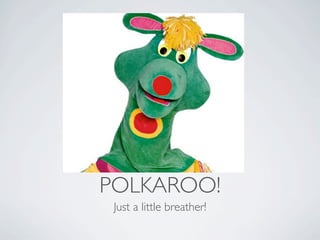
POLKAROO!
 Just a little breather!
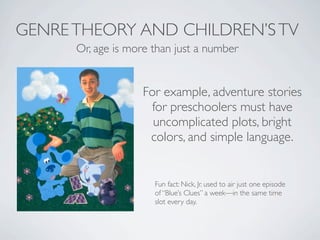
GENRE THEORY AND CHILDREN’S TV
      Or, age is more than just a number


                    For example, adventure stories
                     for preschoolers must have
                      uncomplicated plots, bright
                     colors, and simple language.


                      Fun fact: Nick, Jr. used to air just one episode
                      of “Blue’s Clues” a week—in the same time
                      slot every day.
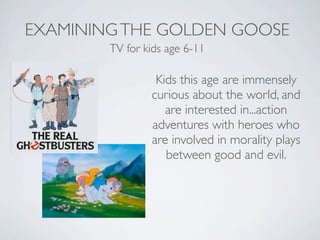
EXAMINING THE GOLDEN GOOSE
        TV for kids age 6-11

                 Kids this age are immensely
                curious about the world, and
                   are interested in...action
                adventures with heroes who
                are involved in morality plays
                   between good and evil.
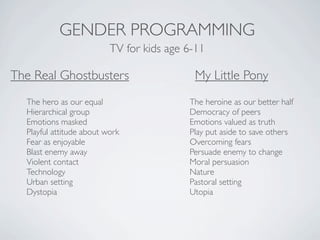
GENDER PROGRAMMING
                          TV for kids age 6-11

The Real Ghostbusters                      My Little Pony
  The hero as our equal                   The heroine as our better half
  Hierarchical group                      Democracy of peers
  Emotions masked                         Emotions valued as truth
  Playful attitude about work             Play put aside to save others
  Fear as enjoyable                       Overcoming fears
  Blast enemy away                        Persuade enemy to change
  Violent contact                         Moral persuasion
  Technology                              Nature
  Urban setting                           Pastoral setting
  Dystopia                                Utopia
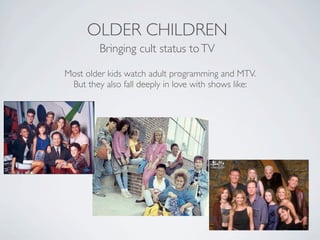
OLDER CHILDREN
         Bringing cult status to TV

Most older kids watch adult programming and MTV.
 But they also fall deeply in love with shows like:
HOCUS POCUS ALIMAGOCUS!
       Just a little breather!
MARKETING AND CHILDREN’S TV
                       There’s nothing new under the sun

                                             Marketing has been served up
                                             to kids since the advent of TV.

                                             It continues on a broader scale
                                             in the post-network era.

                                             It will continue to evolve
                                             alongside the media children
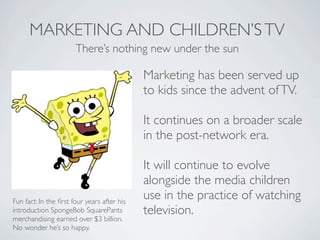
Fun fact: In the first four years after his
                                             use in the practice of watching
introduction SpongeBob SquarePants           television.
merchandising earned over $3 billion.
No wonder he’s so happy.

Children's Television | Seminar Presentation

  • 1.
    CHILDREN’S TELEVISION The ChangingFace of Children’s Television | Norma Pecora Home is Where the Brand is | Sarah Banet-Weiser FTVS 512 | September 22, 2011 Rachel Brethauer
  • 2.
    THE 1950S TV restoresfamily unity in post-war America
  • 3.
    WHAT HAPPENED? Television in the 1950s was like the iPad of today—everybody wanted one. Children’s TV shows aired during the evening to encourage the family to gather around the set. The first interactive TV show aired: “Winky Dink and You”
  • 4.
  • 5.
    WHAT HAPPENED? TV shifted from singular sponsorship to participating sponsorship. (Hello, commercials!) The “TV is good for the family” pitch was a success. Kids shows no longer needed to occupy prime time slots, and were moved to someplace (a lot) cheaper: Saturday mornings. Hanna-Barbera simplified the animation process, making it far more cost-effective. For example: “Scooby-Doo”
  • 6.
    THE 1970S Brought toyou by the letters P-B-S
  • 7.
    WHAT HAPPENED? “Mr. Rogers’ Neighborhood” and “Sesame Street” succeeded on PBS, proving that preschoolers would watch high-quality educational programming. The networks completely ignored this, to chase the golden goose of children’s TV demos: 6- to 11-year-olds. Government legislation in the late ‘70s created a large number of independent TV stations with many programming hours to fill.
  • 8.
    THE 1980S Saturday MorningRedux, Cable Gets the Hookup, Baby’s First VCR
  • 9.
    WHAT HAPPENED? The new independent TV stations filled their programming hours with cheaply made first-run animation created in partnership with toy companies. “Jem! And the Holograms” “Care Bears” “G.I. Joe” Aggressive marketing to children continued with the explosion of the children’s home video market and widespread adoption of cable TV.
  • 10.
    THE 1990S Teens, Tweens,and Teletubbies
  • 11.
    WHAT HAPPENED? Commercial children’s TV broadened to cover children of all ages, from pre-preschool to late- teens. Teen girls contributed to the creation of new netlets like The WB. And shows like Dawson’s Creek sold them clothes by J. Crew and American Eagle. The Three Hour Rule required the networks to air three hours of educational programming per week. Dawson Leery: Crying all the way to the bank ABC brought in shows from parent company Disney, CBS brought in shows from fellow Viacom property Nickelodeon, and NBC aired shows from Discovery.
  • 12.
    THE 2000S ANDBEYOND TV and the Internet: It’s complicated
  • 13.
    WHAT’S HAPPENING? Kids today engage with television in a completely different way, in a number of different formats. Or, it’s more than just TV. Audiences are no longer just passive. iCarly viewers can create videos that may be used in the fictional webcast on the actual program. Web 2.0 and social media properties for TV shows make you write sentences like the one above. Traditional models of understanding children as media watchers no longer apply.
  • 14.
    POLKAROO! Just alittle breather!
  • 15.
    GENRE THEORY ANDCHILDREN’S TV Or, age is more than just a number For example, adventure stories for preschoolers must have uncomplicated plots, bright colors, and simple language. Fun fact: Nick, Jr. used to air just one episode of “Blue’s Clues” a week—in the same time slot every day.
  • 16.
    EXAMINING THE GOLDENGOOSE TV for kids age 6-11 Kids this age are immensely curious about the world, and are interested in...action adventures with heroes who are involved in morality plays between good and evil.
  • 17.
    GENDER PROGRAMMING TV for kids age 6-11 The Real Ghostbusters My Little Pony The hero as our equal The heroine as our better half Hierarchical group Democracy of peers Emotions masked Emotions valued as truth Playful attitude about work Play put aside to save others Fear as enjoyable Overcoming fears Blast enemy away Persuade enemy to change Violent contact Moral persuasion Technology Nature Urban setting Pastoral setting Dystopia Utopia
  • 18.
    OLDER CHILDREN Bringing cult status to TV Most older kids watch adult programming and MTV. But they also fall deeply in love with shows like:
  • 19.
    HOCUS POCUS ALIMAGOCUS! Just a little breather!
  • 20.
    MARKETING AND CHILDREN’STV There’s nothing new under the sun Marketing has been served up to kids since the advent of TV. It continues on a broader scale in the post-network era. It will continue to evolve alongside the media children Fun fact: In the first four years after his use in the practice of watching introduction SpongeBob SquarePants television. merchandising earned over $3 billion. No wonder he’s so happy.

Editor's Notes

  • #2 The readings presented a largely historical overview of children’s television, and then moved into an explanation of how marketing is so closely matched with children’s television, and how that relationship has changed from the network era to today. The explosion of media has created an explosion of branding opportunities for advertisers—and the networks and shows they help pay for. \n\n
  • #3 \n
  • #4 \n
  • #5 \n
  • #6 \n
  • #7 \n
  • #8 \n
  • #9 \n
  • #10 \n
  • #11 \n
  • #12 \n
  • #13 \n
  • #14 \n
  • #15 \n
  • #16 There’s limited research and data on children’s television, and what is out there is usually in the context of violent content. \n\nChildren’s television cuts across numerous formats, which reflect adult programming—action adventure, comedy, drama, etc. The defining characteristic of children’s TV as a genre is age (e.g. TV for preschoolers, 6-11 year olds, teens or tweens). Gendered programming is also common. \n\n
  • #17 \n
  • #18 \n
  • #19 \n
  • #20 \n
  • #21 “children are the future not as citizens in a democracy but as consumers in an economic system that targets their purchasing power” Thoughts on this? \n