The impact of Advertisements on children: An observation on Food choice and behavior
The objective of this study is to understand the impact of television advertising on the psyche of the kids aged 0-12 It is implicit through various studies and observations that the food habits, buying behavior and attitude of the children tend to change with respect to the kind of television advertisements and other programs
Food routine of children, needs more attention for the obvious reason that the total buying behavior and choice of food of the growing kids have been transforming gradually at a faster pace, which is not for the good.  They are inclined towards buying stylish, tasty food items to be accepted by their peers and also to gratify their taste buds.
This paper tries to analyze few advertisements which have and could have great impact on the children’s perception of food, food choice in turn and behavior of the kids.  Methodology Qualitative  In-depth interviews - children aged 0-12 & parents of young kids.  Content analysis of chosen ads  Ad recall tests.
Theoretical Framework George Gerbner’s cultivation theory suggests that television is responsible for shaping, or ‘cultivating’ viewers’ conceptions of social reality.  The combined effect of massive television exposure by viewers over time subtly shapes the perception of social reality for individuals and, ultimately, for our culture as a whole.
Findings and discussions Kids say that they do not like watching ads  But it has become unavoidable for them to watch ads Most kids do not understand the actual motive of the ads kids interviewed do not spend more than 2 hours a day watching TV they have demanded many products edible and others after watching the ads.
Role of advertising in children’s food choice The excerpt of the interviews make it clear that the food substance shown on the advertisements are colorful, attractive, crunchy and tempting when contrasted with home-made food which may not be visually attractive and interesting.
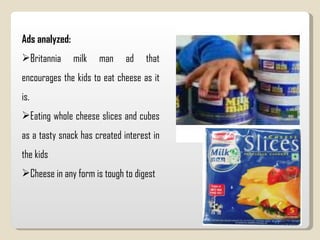
Ads analyzed: Britannia milk man ad that encourages the kids to eat cheese as it is. Eating whole cheese slices and cubes as a tasty snack has created interest in the kids  Cheese in any form is tough to digest
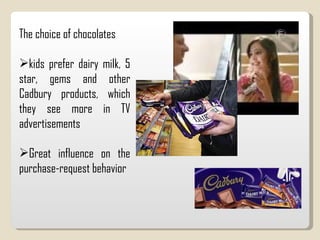
The choice of chocolates kids prefer dairy milk, 5 star, gems and other Cadbury products, which they see more in TV advertisements Great influence on the purchase-request behavior
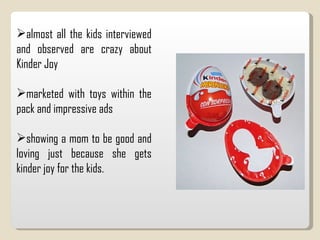
almost all the kids interviewed and observed are crazy about Kinder Joy marketed with toys within the pack and impressive ads showing a mom to be good and loving just because she gets kinder joy for the kids.
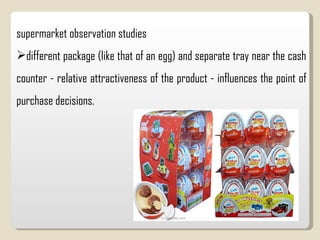
supermarket observation studies  different package (like that of an egg) and separate tray near the cash counter - relative attractiveness of the product - influences the point of purchase decisions.
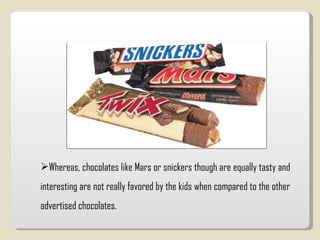
Whereas, chocolates like Mars or snickers though are equally tasty and interesting are not really favored by the kids when compared to the other advertised chocolates.
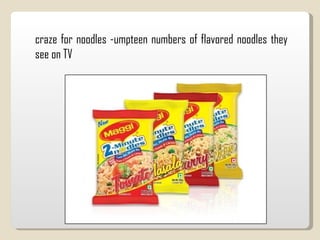
craze for noodles -umpteen numbers of flavored noodles they see on TV
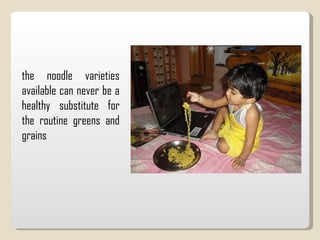
the noodle varieties available can never be a healthy substitute for the routine greens and grains
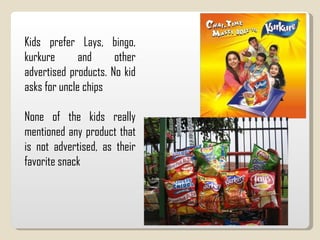
Kids prefer Lays, bingo, kurkure and other advertised products. No kid asks for uncle chips None of the kids really mentioned any product that is not advertised, as their favorite snack
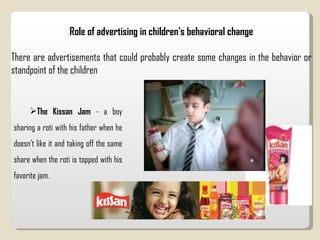
Role of advertising in children’s behavioral change There are advertisements that could probably create some changes in the behavior or standpoint of the children   The Kissan Jam  - a boy sharing a roti with his father when he doesn’t like it and taking off the same share when the roti is topped with his favorite jam.
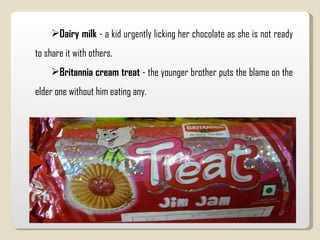
Dairy milk  - a kid urgently licking her chocolate as she is not ready to share it with others.  Britannia cream treat  - the younger brother puts the blame on the elder one without him eating any.
We can easily ignore these advertisements, saying that it’s just for fun.  But repeated viewing of these concepts by the kids, would foster a tendency to be materialistic and this could gradually develop reluctance to share things even with their family members, which perceptibly is not an attitude to be nurtured.
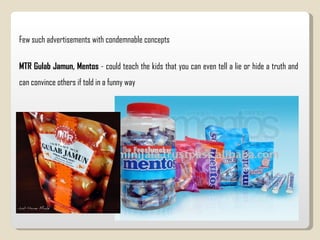
Few such advertisements with condemnable concepts MTR Gulab Jamun, Mentos  - could teach the kids that you can even tell a lie or hide a truth and can convince others if told in a funny way
Rin  – judging people with their dress Clinic Plus  –women are developing their professional lives as well on par with men, showing that in a negative light is not good.  Complan   - short stature as a matter of ridicule Coca-Cola  - makes a mother’s food complete – misleading Kids have become/becoming brand sensitive – can lead to an addiction to brands Lava Phones  –  Condom for change
Conclusion choice of food, their  perception,  buying behavior  and their  behavioral pattern  are  transforming  eventually.  The  impact  of the advertisements though  seems   subtle  now,  could create a sea change in the total food consumption pattern and attitude over a long period of time .  The  advertised food products are not going to foster health consciousness  in the growing generation.  monitor what the kids are watching on TV  and how long  Parental guidance  and control can certainly give the child a better  understanding  of the  real intent of the ads .
Parents  need to  elucidate  the  reasons   for denying  certain advertised  products , when the kids ask for them.  Make kids understand that the  always bright  and happy  atmosphere/life  that the advertisements create  is not in real life .  The  economic constraints  of a family, the  health check  that is  necessary   for a normal living  and upshot of bad behaviors need to be explained to the kids.  This  rationale  could help the kids  to   handle the advertised message  in a better way

Children n tv

  • 1.
    The impact ofAdvertisements on children: An observation on Food choice and behavior
  • 2.
    The objective ofthis study is to understand the impact of television advertising on the psyche of the kids aged 0-12 It is implicit through various studies and observations that the food habits, buying behavior and attitude of the children tend to change with respect to the kind of television advertisements and other programs
  • 3.
    Food routine ofchildren, needs more attention for the obvious reason that the total buying behavior and choice of food of the growing kids have been transforming gradually at a faster pace, which is not for the good. They are inclined towards buying stylish, tasty food items to be accepted by their peers and also to gratify their taste buds.
  • 4.
    This paper triesto analyze few advertisements which have and could have great impact on the children’s perception of food, food choice in turn and behavior of the kids. Methodology Qualitative In-depth interviews - children aged 0-12 & parents of young kids. Content analysis of chosen ads Ad recall tests.
  • 5.
    Theoretical Framework GeorgeGerbner’s cultivation theory suggests that television is responsible for shaping, or ‘cultivating’ viewers’ conceptions of social reality. The combined effect of massive television exposure by viewers over time subtly shapes the perception of social reality for individuals and, ultimately, for our culture as a whole.
  • 6.
    Findings and discussionsKids say that they do not like watching ads But it has become unavoidable for them to watch ads Most kids do not understand the actual motive of the ads kids interviewed do not spend more than 2 hours a day watching TV they have demanded many products edible and others after watching the ads.
  • 7.
    Role of advertisingin children’s food choice The excerpt of the interviews make it clear that the food substance shown on the advertisements are colorful, attractive, crunchy and tempting when contrasted with home-made food which may not be visually attractive and interesting.
  • 8.
    Ads analyzed: Britanniamilk man ad that encourages the kids to eat cheese as it is. Eating whole cheese slices and cubes as a tasty snack has created interest in the kids Cheese in any form is tough to digest
  • 9.
    The choice ofchocolates kids prefer dairy milk, 5 star, gems and other Cadbury products, which they see more in TV advertisements Great influence on the purchase-request behavior
  • 10.
    almost all thekids interviewed and observed are crazy about Kinder Joy marketed with toys within the pack and impressive ads showing a mom to be good and loving just because she gets kinder joy for the kids.
  • 11.
    supermarket observation studies different package (like that of an egg) and separate tray near the cash counter - relative attractiveness of the product - influences the point of purchase decisions.
  • 12.
    Whereas, chocolates likeMars or snickers though are equally tasty and interesting are not really favored by the kids when compared to the other advertised chocolates.
  • 13.
    craze for noodles-umpteen numbers of flavored noodles they see on TV
  • 14.
    the noodle varietiesavailable can never be a healthy substitute for the routine greens and grains
  • 15.
    Kids prefer Lays,bingo, kurkure and other advertised products. No kid asks for uncle chips None of the kids really mentioned any product that is not advertised, as their favorite snack
  • 16.
    Role of advertisingin children’s behavioral change There are advertisements that could probably create some changes in the behavior or standpoint of the children The Kissan Jam - a boy sharing a roti with his father when he doesn’t like it and taking off the same share when the roti is topped with his favorite jam.
  • 17.
    Dairy milk - a kid urgently licking her chocolate as she is not ready to share it with others. Britannia cream treat - the younger brother puts the blame on the elder one without him eating any.
  • 18.
    We can easilyignore these advertisements, saying that it’s just for fun. But repeated viewing of these concepts by the kids, would foster a tendency to be materialistic and this could gradually develop reluctance to share things even with their family members, which perceptibly is not an attitude to be nurtured.
  • 19.
    Few such advertisementswith condemnable concepts MTR Gulab Jamun, Mentos - could teach the kids that you can even tell a lie or hide a truth and can convince others if told in a funny way
  • 20.
    Rin –judging people with their dress Clinic Plus –women are developing their professional lives as well on par with men, showing that in a negative light is not good. Complan - short stature as a matter of ridicule Coca-Cola - makes a mother’s food complete – misleading Kids have become/becoming brand sensitive – can lead to an addiction to brands Lava Phones – Condom for change
  • 21.
    Conclusion choice offood, their perception, buying behavior and their behavioral pattern are transforming eventually. The impact of the advertisements though seems subtle now, could create a sea change in the total food consumption pattern and attitude over a long period of time . The advertised food products are not going to foster health consciousness in the growing generation. monitor what the kids are watching on TV and how long Parental guidance and control can certainly give the child a better understanding of the real intent of the ads .
  • 22.
    Parents needto elucidate the reasons for denying certain advertised products , when the kids ask for them. Make kids understand that the always bright and happy atmosphere/life that the advertisements create is not in real life . The economic constraints of a family, the health check that is necessary for a normal living and upshot of bad behaviors need to be explained to the kids. This rationale could help the kids to handle the advertised message in a better way