CHEST
PHYSIOTHERAPY &
POSTURAL
DRAINAGE
Rudani Krupali J.
F.Y. M.Sc. Nursing,
I.K.D.R.C.
College of nursing,
Ahmedabad
Definition
• Chest physiotherapy (CPT) is a group of
therapies for mobilizing pulmonary secretions.
These therapies include chest percussion,
vibration and postural drainage.
• CPT is followed by productive coughing or
suctioning of a patient who has a decreased
ability to cough.
• This is especially helpful for patients with large
amount of secretions or ineffective cough.
Chest Physiotherapy
The goals of CPT are :
-To move bronchial secretions to the central
airways via gravity,
-External manipulation of the chest, and to
eliminate secretions by cough or aspiration
with a catheter.
Improved mobilization of bronchial secretions contributes
to improved ventilation-perfusion matching and the
normalization of the functional residual capacity.
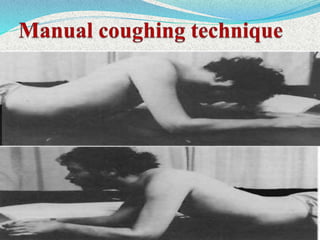
1. Airway clearance techniques
2. Facilitating airway clearance
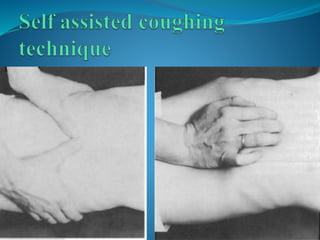
technique with effective coughing
techniques
3. Technique to facilitate ventilation
pattern
4. Mobilization and Exercises
1. Postural drainage
2. Percussion
3. Vibration/shaking
4. Manual hyperinflation
5. Active cycle of breathing technique
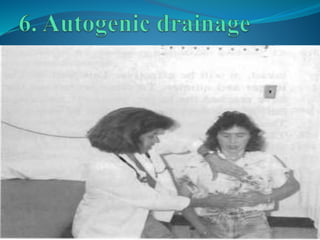
6. Autogenic drainage
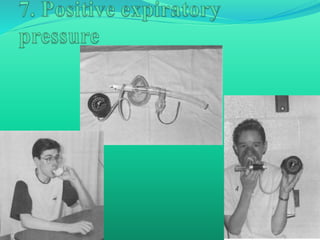
7. Positive expiratory pressure
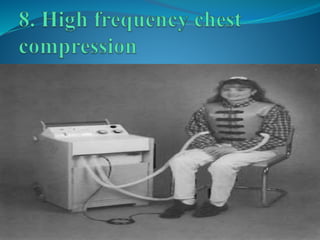
8. High frequency chest compression
9. Exercises for airway clearance
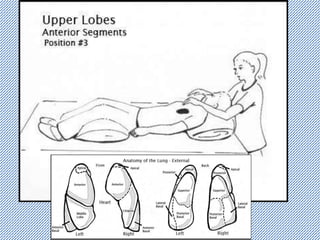
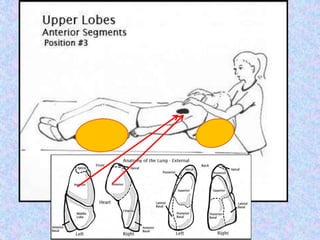
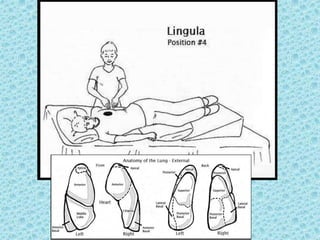
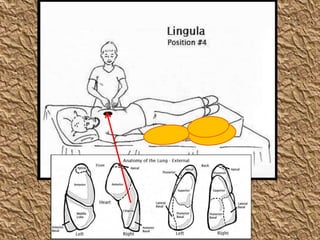
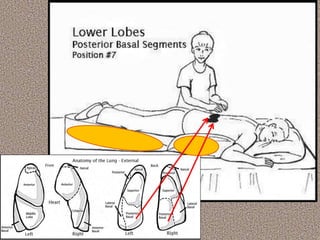
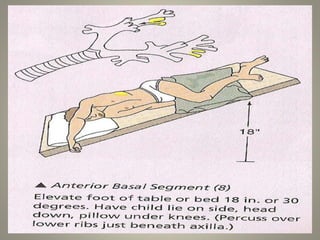
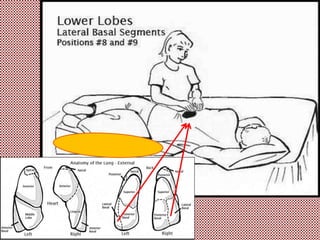
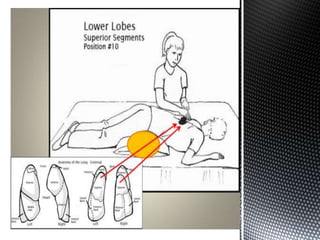
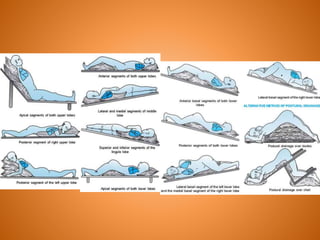
1.Postural drainage
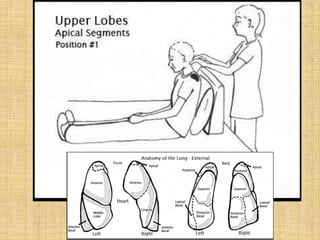
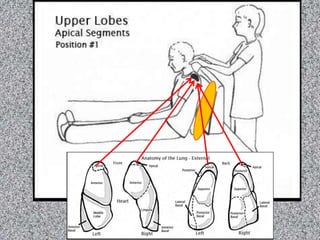
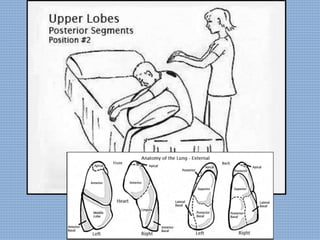
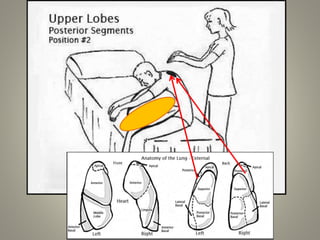
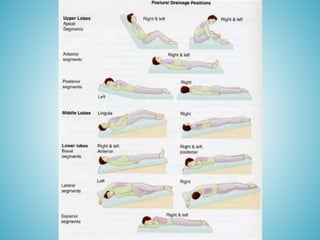
It is getting in positions that make it easier for
mucus to drain. Chest physiotherapy is gently
"clapping" parts of the body to remove mucus
from the lungs. They are often used together in
conditions such as cystic fibrosis or a spinal cord
injury (SCI) to help loosen and remove mucus
from the lungs. When mucus collects in your
lungs, it increases your risk for lung infections,
such as pneumonia.
1. Cystic fibrosis
2. Atelectasis
3. Asthama
4. Respiratpry muscle weakness
5. Bronchiectasis
6. Mechanical ventilation
7. Neonatal respiratory distress syndrome
1. Intracranial pressure (ICP) > 20 mm Hg
2. Head and neck injury until stabilized
3. Active hemorrhage with hemodynamic instability
4. Recent spinal surgery (e.g .• laminectomy) or acute spinal
injury
5. Active hemoptysis Empyema
6. Bronchopleural fistula
7. Large pleural effusions
8. Pulmonary embolism
9. Aged, confused, or anxious patients
10. Rib fracture. with or without flail chest
11. Surgical wound or healing tissue
Following are general instructions for chest physiotherapy
and postural drainage.
 Be sure your back is covered. Wear a shirt or blouse, or
cover your back with a towel.
 Hold each position for 5 minutes to help the mucus drain
from your lungs.
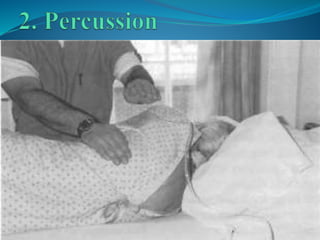
 For each position, your caregiver claps your back quickly
and rhythmically.
 When your caregiver claps, you should hear a hollow
sound. If you hear a slapping, the hand is not cupped
enough.
 Do not clap over the spine.
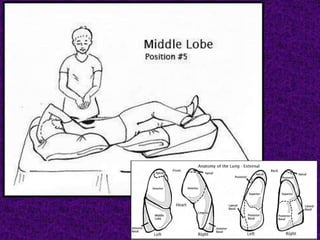
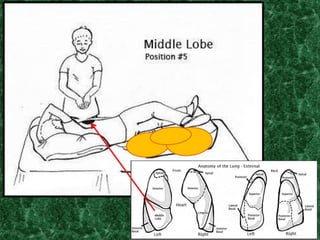
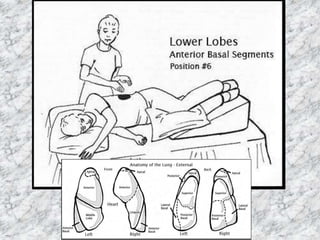
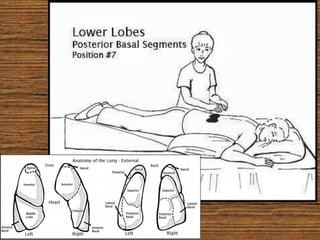
Position for chest
physiotherapy
Hyperinflation therapy (HIT) is a very
common therapy performed on patients who
are suffering from some sort of respiratory
distress. The therapy involves applying
volumes greater than normal to re inflate the
collapsed alveoli in the lungs. There are many
different techniques used to administer
hyperinflation therapy. The respiratory
therapist typically decides which method is
best for each patient.
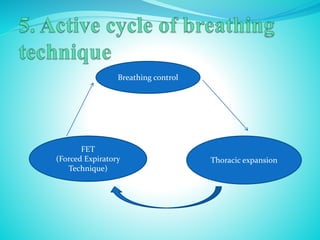
Breathing control
Thoracic expansion
FET
(Forced Expiratory
Technique)
Autogenic drainage is a respiratory self-drainage
technique that utilizes controlled expiatory airflow
(tidal breathing) to mobilize secretions. It consists of
three phases:
1.Loosening peripheral secretions by breathing at low
lung volumes (slow, deep air movement)
2.Collecting secretions from central airways by
breathing at low to middle lung volumes
(slow, mid-range air movement)
3.Expelling secretions from the central airways by
breathing at mid to high lung volumes (shallow air
movements)
1. Body positioning
2. Breathing technique
3. Mobilizing the thorax
4. Facilitating the accessory
muscles of respiration
1. Standing upright position
2. Erect sitting (self supported or with assist) with feet
moving (e.g., active, active assisted or passive cycling
motion)
3. Erect silting (self-supported or with assist) with feet
dependent
4. Lean forward sitting with arms supported and feet
dependent
5. 24S degree sitting with legs dependent
6. Erect long sitting (legs non dependent)
7. < 4S degrees sitting (legs non dependenl)
8. Prone and semi prone/side lying
9. Supine
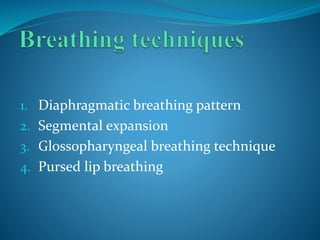
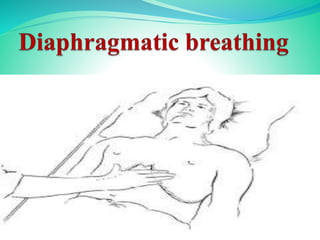
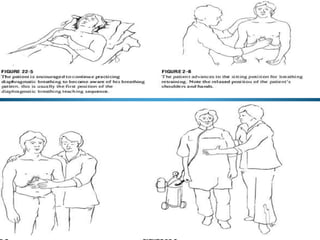
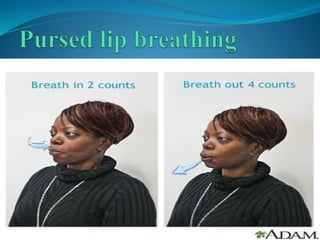
1. Diaphragmatic breathing pattern
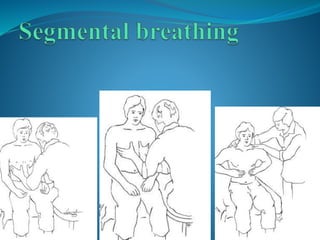
2. Segmental expansion
3. Glossopharyngeal breathing technique
4. Pursed lip breathing
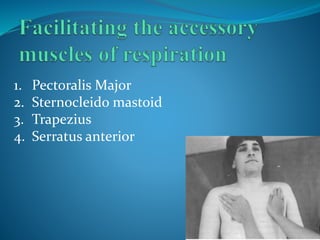
1. Pectoralis Major
2. Sternocleido mastoid
3. Trapezius
4. Serratus anterior
1. To increase ventilation
2. Respiratory muscle weakness
CHEST PHYSIOTHERAPY & POSTURAL DRAINAGE

CHEST PHYSIOTHERAPY & POSTURAL DRAINAGE

  • 1.
    CHEST PHYSIOTHERAPY & POSTURAL DRAINAGE Rudani KrupaliJ. F.Y. M.Sc. Nursing, I.K.D.R.C. College of nursing, Ahmedabad
  • 2.
    Definition • Chest physiotherapy(CPT) is a group of therapies for mobilizing pulmonary secretions. These therapies include chest percussion, vibration and postural drainage. • CPT is followed by productive coughing or suctioning of a patient who has a decreased ability to cough. • This is especially helpful for patients with large amount of secretions or ineffective cough.
  • 3.
    Chest Physiotherapy The goalsof CPT are : -To move bronchial secretions to the central airways via gravity, -External manipulation of the chest, and to eliminate secretions by cough or aspiration with a catheter. Improved mobilization of bronchial secretions contributes to improved ventilation-perfusion matching and the normalization of the functional residual capacity.
  • 4.
    1. Airway clearancetechniques 2. Facilitating airway clearance technique with effective coughing techniques 3. Technique to facilitate ventilation pattern 4. Mobilization and Exercises
  • 5.
    1. Postural drainage 2.Percussion 3. Vibration/shaking 4. Manual hyperinflation 5. Active cycle of breathing technique 6. Autogenic drainage 7. Positive expiratory pressure 8. High frequency chest compression 9. Exercises for airway clearance
  • 6.
    1.Postural drainage It isgetting in positions that make it easier for mucus to drain. Chest physiotherapy is gently "clapping" parts of the body to remove mucus from the lungs. They are often used together in conditions such as cystic fibrosis or a spinal cord injury (SCI) to help loosen and remove mucus from the lungs. When mucus collects in your lungs, it increases your risk for lung infections, such as pneumonia.
  • 7.
    1. Cystic fibrosis 2.Atelectasis 3. Asthama 4. Respiratpry muscle weakness 5. Bronchiectasis 6. Mechanical ventilation 7. Neonatal respiratory distress syndrome
  • 8.
    1. Intracranial pressure(ICP) > 20 mm Hg 2. Head and neck injury until stabilized 3. Active hemorrhage with hemodynamic instability 4. Recent spinal surgery (e.g .• laminectomy) or acute spinal injury 5. Active hemoptysis Empyema 6. Bronchopleural fistula 7. Large pleural effusions 8. Pulmonary embolism 9. Aged, confused, or anxious patients 10. Rib fracture. with or without flail chest 11. Surgical wound or healing tissue
  • 13.
    Following are generalinstructions for chest physiotherapy and postural drainage.  Be sure your back is covered. Wear a shirt or blouse, or cover your back with a towel.  Hold each position for 5 minutes to help the mucus drain from your lungs.  For each position, your caregiver claps your back quickly and rhythmically.  When your caregiver claps, you should hear a hollow sound. If you hear a slapping, the hand is not cupped enough.  Do not clap over the spine.
  • 14.
  • 41.
    Hyperinflation therapy (HIT)is a very common therapy performed on patients who are suffering from some sort of respiratory distress. The therapy involves applying volumes greater than normal to re inflate the collapsed alveoli in the lungs. There are many different techniques used to administer hyperinflation therapy. The respiratory therapist typically decides which method is best for each patient.
  • 42.
  • 43.
    Autogenic drainage isa respiratory self-drainage technique that utilizes controlled expiatory airflow (tidal breathing) to mobilize secretions. It consists of three phases: 1.Loosening peripheral secretions by breathing at low lung volumes (slow, deep air movement) 2.Collecting secretions from central airways by breathing at low to middle lung volumes (slow, mid-range air movement) 3.Expelling secretions from the central airways by breathing at mid to high lung volumes (shallow air movements)
  • 52.
    1. Body positioning 2.Breathing technique 3. Mobilizing the thorax 4. Facilitating the accessory muscles of respiration
  • 53.
    1. Standing uprightposition 2. Erect sitting (self supported or with assist) with feet moving (e.g., active, active assisted or passive cycling motion) 3. Erect silting (self-supported or with assist) with feet dependent 4. Lean forward sitting with arms supported and feet dependent 5. 24S degree sitting with legs dependent 6. Erect long sitting (legs non dependent) 7. < 4S degrees sitting (legs non dependenl) 8. Prone and semi prone/side lying 9. Supine
  • 54.
    1. Diaphragmatic breathingpattern 2. Segmental expansion 3. Glossopharyngeal breathing technique 4. Pursed lip breathing
  • 60.
    1. Pectoralis Major 2.Sternocleido mastoid 3. Trapezius 4. Serratus anterior
  • 61.
    1. To increaseventilation 2. Respiratory muscle weakness