CHEMICAL MUTAGENIC
AGENTS
Shirin Shahana.N
BSc.Biotechnology
SIAS
CHEMICAL MUTAGENS
• A mutagen is any substance or agent that can cause
a mutation, or change in the sequence or structure
of DNA.
• Chemicals are actually dangerous for the entire
world.
• The first mutagenic effect of the nitrogen mustard
was reported by Charlotte Aurebach in 1942.
• Nitrogen mustard is a gas used during Worldwar 1
and 2.
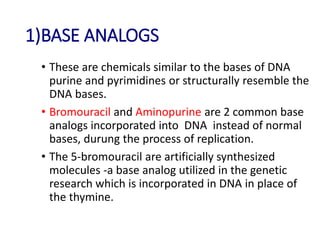
1)BASE ANALOGS
• These are chemicals similar to the bases of DNA
purine and pyrimidines or structurally resemble the
DNA bases.
• Bromouracil and Aminopurine are 2 common base
analogs incorporated into DNA instead of normal
bases, durung the process of replication.
• The 5-bromouracil are artificially synthesized
molecules -a base analog utilized in the genetic
research which is incorporated in DNA in place of
the thymine.
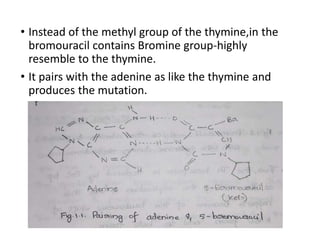
• Instead of the methyl group of the thymine,in the
bromouracil contains Bromine group-highly
resemble to the thymine.
• It pairs with the adenine as like the thymine and
produces the mutation.
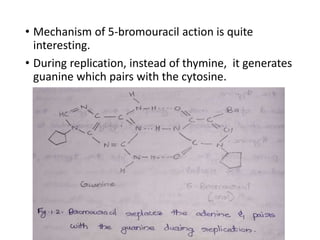
• Mechanism of 5-bromouracil action is quite
interesting.
• During replication, instead of thymine, it generates
guanine which pairs with the cytosine.
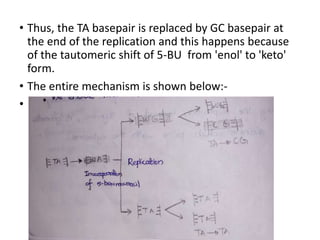
• Thus, the TA basepair is replaced by GC basepair at
the end of the replication and this happens because
of the tautomeric shift of 5-BU from 'enol' to 'keto'
form.
• The entire mechanism is shown below:-
•
Aminopurines
• Another base analogue is amino purine which is
similar to the adenine and can pair with either T or
C, although pairing with C is less frequent.
• It can also cause AT - GC or GC - AT transition during
the replication.
2)ALKYLATING AGENTS
• Ethylnitrosourea, mustard gas and vinyl chloride are
common alkylating agents that add alkyl group to
the DNA and damages it.
• The agents induce base-pairing errors by increasing
ionization and produces gaps in the DNA strand.
• The alkylated purine bases are removed by the
phenomenon called depurination, although
depurination is not mutagenic and can be repaired
by the DNA -repair pathway.
Common Alkylating Agents
• Methylhydrazine.
• Temozolomide
• Dacarbazine
• Busulfan
• Iomustin
• "When nitrites are added to smoked meat, it forms
nitrosamine like mutagen that can break DNA or
creates DNA crosslinking.
3)INTERCALATING AGENTS
• EtBr - Ethidium Bromide is an example.
• Other intercalating agents like proflavin, acridine
orange operated by the same mechanism alike the
EtBr.
• The molecules intercalate between the bases of
DNA and disrupt its structure.
• If it is incorporated during the replication, it can
cause frameshift mutation and also blocks
transcription.
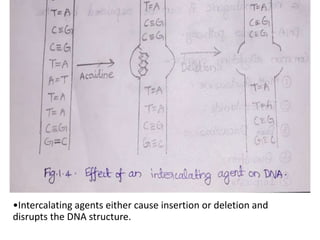
•Intercalating agents either cause insertion or deletion and
disrupts the DNA structure.
4)METAL IONS
• Nickel, chromium, cobalt, cadmium, arsenic, iron
are some examples.
• The metal ion work by priducing ROS(reactive
oxygen species) hindering the DNA repair pathway,
cause DNA hypermethylation or may directly
damages the DNA.
OTHER CHEMICAL MUTAGENS
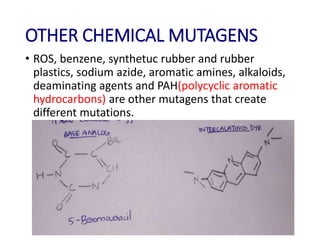
• ROS, benzene, synthetuc rubber and rubber
plastics, sodium azide, aromatic amines, alkaloids,
deaminating agents and PAH(polycyclic aromatic
hydrocarbons) are other mutagens that create
different mutations.
THANK YOU...

CHEMICAL MUTAGENIC AGENTS

  • 1.
  • 2.
    CHEMICAL MUTAGENS • Amutagen is any substance or agent that can cause a mutation, or change in the sequence or structure of DNA. • Chemicals are actually dangerous for the entire world. • The first mutagenic effect of the nitrogen mustard was reported by Charlotte Aurebach in 1942. • Nitrogen mustard is a gas used during Worldwar 1 and 2.
  • 3.
    1)BASE ANALOGS • Theseare chemicals similar to the bases of DNA purine and pyrimidines or structurally resemble the DNA bases. • Bromouracil and Aminopurine are 2 common base analogs incorporated into DNA instead of normal bases, durung the process of replication. • The 5-bromouracil are artificially synthesized molecules -a base analog utilized in the genetic research which is incorporated in DNA in place of the thymine.
  • 4.
    • Instead ofthe methyl group of the thymine,in the bromouracil contains Bromine group-highly resemble to the thymine. • It pairs with the adenine as like the thymine and produces the mutation.
  • 5.
    • Mechanism of5-bromouracil action is quite interesting. • During replication, instead of thymine, it generates guanine which pairs with the cytosine.
  • 6.
    • Thus, theTA basepair is replaced by GC basepair at the end of the replication and this happens because of the tautomeric shift of 5-BU from 'enol' to 'keto' form. • The entire mechanism is shown below:- •
  • 7.
    Aminopurines • Another baseanalogue is amino purine which is similar to the adenine and can pair with either T or C, although pairing with C is less frequent. • It can also cause AT - GC or GC - AT transition during the replication.
  • 8.
    2)ALKYLATING AGENTS • Ethylnitrosourea,mustard gas and vinyl chloride are common alkylating agents that add alkyl group to the DNA and damages it. • The agents induce base-pairing errors by increasing ionization and produces gaps in the DNA strand. • The alkylated purine bases are removed by the phenomenon called depurination, although depurination is not mutagenic and can be repaired by the DNA -repair pathway.
  • 9.
    Common Alkylating Agents •Methylhydrazine. • Temozolomide • Dacarbazine • Busulfan • Iomustin • "When nitrites are added to smoked meat, it forms nitrosamine like mutagen that can break DNA or creates DNA crosslinking.
  • 10.
    3)INTERCALATING AGENTS • EtBr- Ethidium Bromide is an example. • Other intercalating agents like proflavin, acridine orange operated by the same mechanism alike the EtBr. • The molecules intercalate between the bases of DNA and disrupt its structure. • If it is incorporated during the replication, it can cause frameshift mutation and also blocks transcription.
  • 11.
    •Intercalating agents eithercause insertion or deletion and disrupts the DNA structure.
  • 12.
    4)METAL IONS • Nickel,chromium, cobalt, cadmium, arsenic, iron are some examples. • The metal ion work by priducing ROS(reactive oxygen species) hindering the DNA repair pathway, cause DNA hypermethylation or may directly damages the DNA.
  • 13.
    OTHER CHEMICAL MUTAGENS •ROS, benzene, synthetuc rubber and rubber plastics, sodium azide, aromatic amines, alkaloids, deaminating agents and PAH(polycyclic aromatic hydrocarbons) are other mutagens that create different mutations.
  • 14.