Chatbots for Brand Representation in
Comparison with Traditional Websites
Johannes Kühnel, BSc
May 28, 2020
Institute of Interactive Systems and Data Science
Graz University of Technology, Austria
Table of contents
1. Introduction
2. Proof of Concept
3. User Study
4. Conclusion
1
Intro
What are Chatbots?
Chatbots are computer programs that interact with users us-
ing natural languages. (Shawar and Atwell 2007)
Usually chatbots ...
• provide a service (e.g. bookings)
• use conversational interfaces
• feature simple or more complex AI
2
“Bots are the new apps”
Satya Nadella, Microso t CEO
2
Motivation
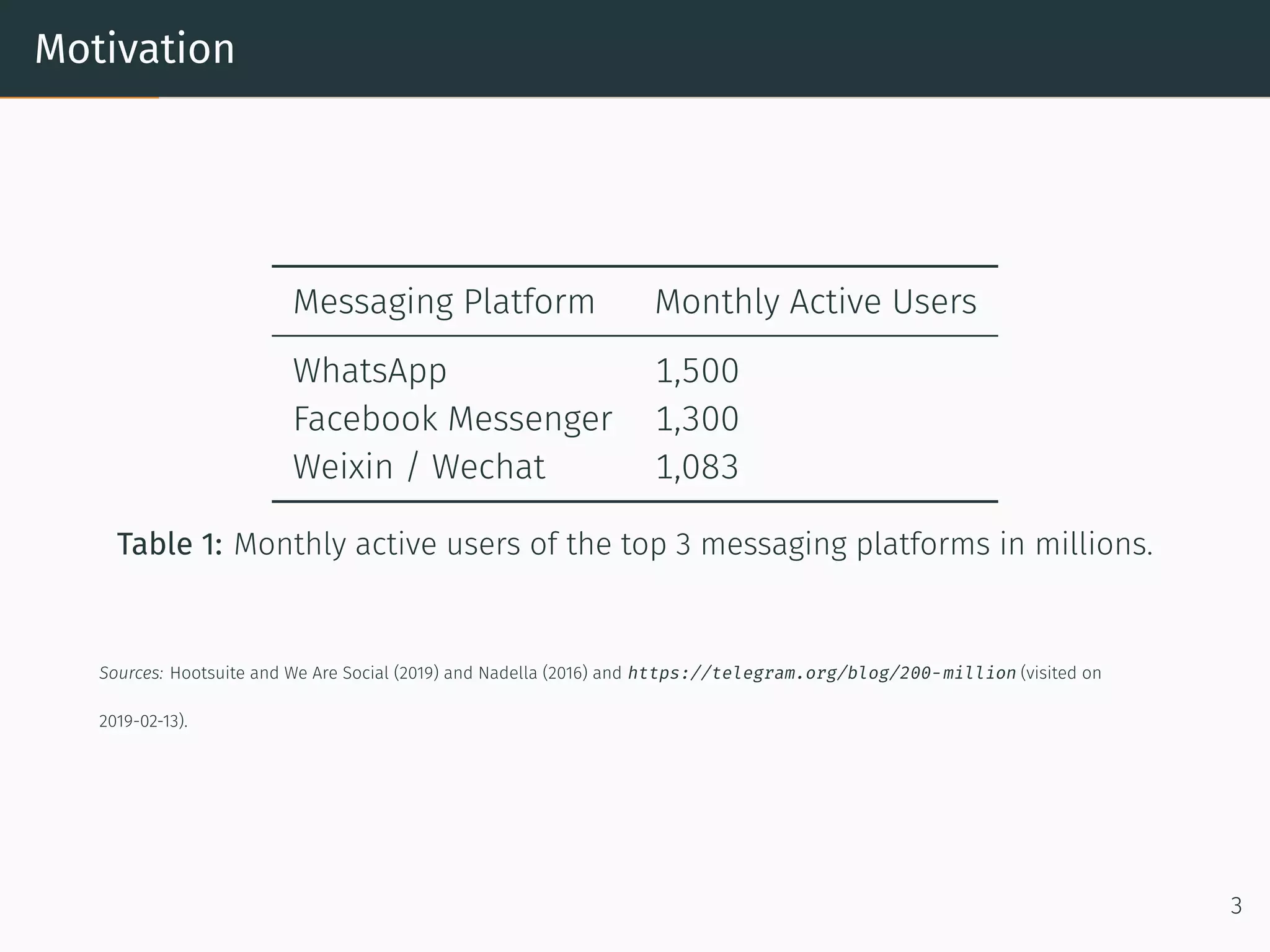
Messaging Platform Monthly Active Users
WhatsApp 1,500
Facebook Messenger 1,300
Weixin / Wechat 1,083
Table 1: Monthly active users of the top 3 messaging platforms in millions.
Sources: Hootsuite and We Are Social (2019) and Nadella (2016) and https://telegram.org/blog/200-million (visited on
2019-02-13).
3
Related Work
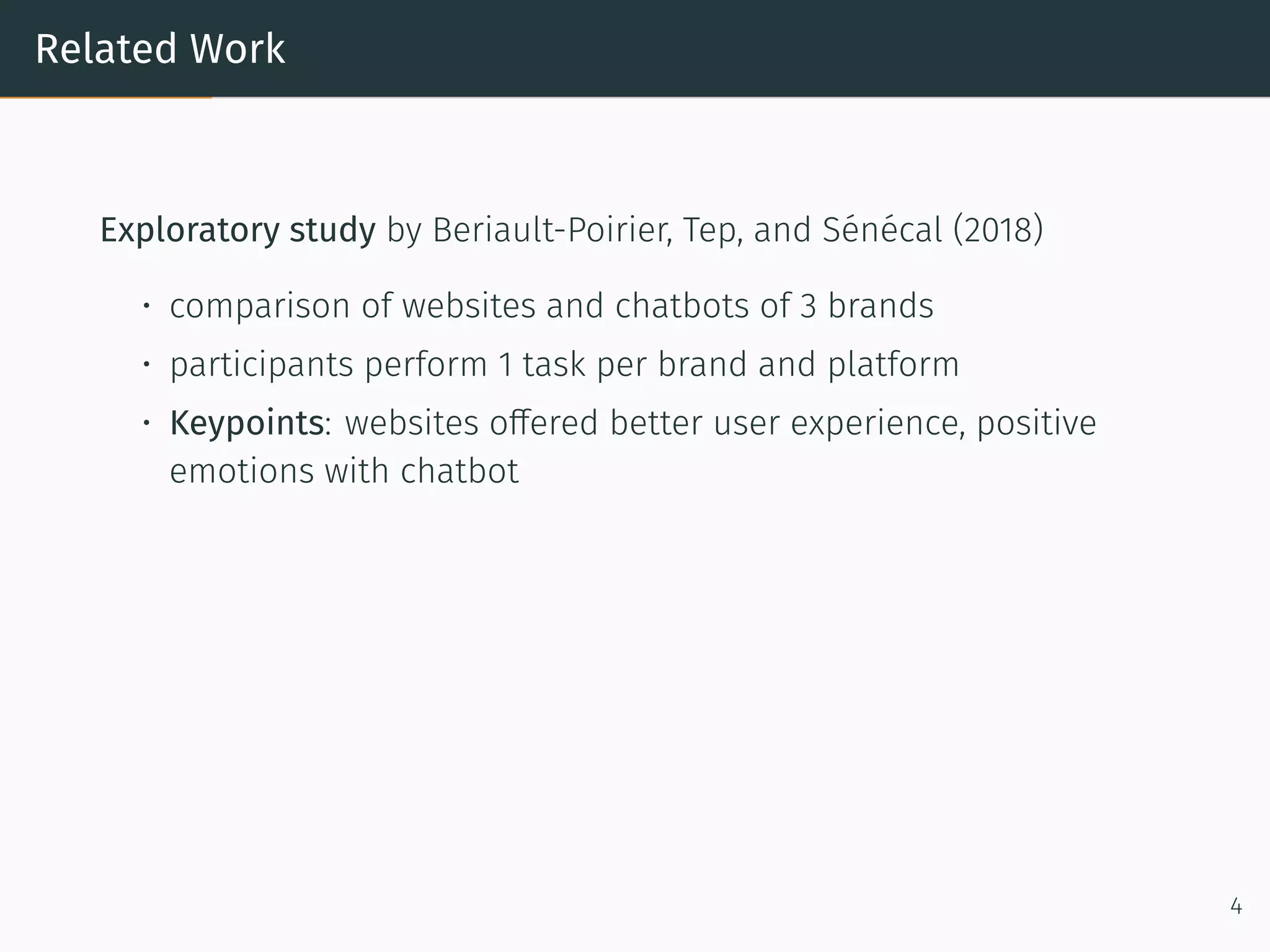
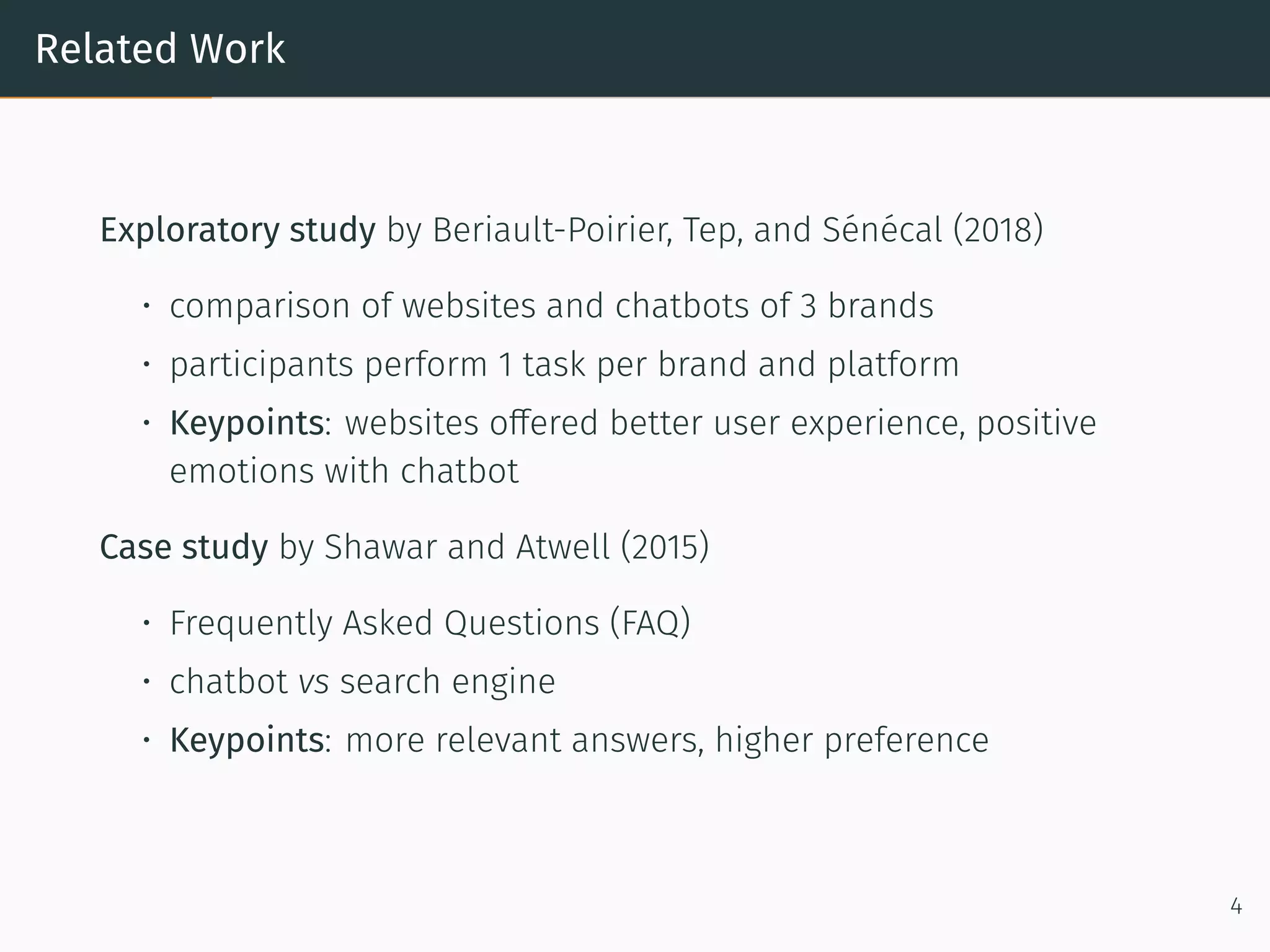
Exploratory study by Beriault-Poirier, Tep, and Sénécal (2018)
• comparison of websites and chatbots of 3 brands
• participants perform 1 task per brand and platform
• Keypoints: websites offered better user experience, positive
emotions with chatbot
4
Related Work
Exploratory study by Beriault-Poirier, Tep, and Sénécal (2018)
• comparison of websites and chatbots of 3 brands
• participants perform 1 task per brand and platform
• Keypoints: websites offered better user experience, positive
emotions with chatbot
Case study by Shawar and Atwell (2015)
• Frequently Asked Questions (FAQ)
• chatbot vs search engine
• Keypoints: more relevant answers, higher preference
4
Proof of Concept
Theodore, a Company Chatbot
A chatbot — named Theodore — to represent Graz based so tware
developer CodeFlügel was created.
5
Theodore, a Company Chatbot
A chatbot — named Theodore — to represent Graz based so tware
developer CodeFlügel was created.
Goal: chatbot capable of representing and informing about the
company (like the existing website)
5
Theodore, a Company Chatbot
A chatbot — named Theodore — to represent Graz based so tware
developer CodeFlügel was created.
Goal: chatbot capable of representing and informing about the
company (like the existing website)
Theodore should
• reproduce most of the website’s features
• run on Facebook Messenger and a custom webchat
• re-use existing Application Programming Interfaces (APIs)
5
Dialog Design
Chatbot has to provide information about
• the company itself
• products & services
• contact information
• vacancies
• newsletter subscription
• social media & blog posts
6
Dialog Design
Chatbot has to provide information about
• the company itself
• products & services
• contact information
• vacancies
• newsletter subscription
• social media & blog posts
Additional requirements include
• help function & fallback mechanism
• informal language
• aware of being a bot
6
Technologies
Backend
Languages & Frameworks: Node.js with Express.js and Socket.IO
APIs: Facebook, Dialogflow, Mailchimp, Wordpress 1
Webchat
Languages & Frameworks: Angular (using TypeScript) with Socket.IO
APIs: Backend 2
1connection via REST API / HTTP requests
2connection via WebSockets
7
Message Format
Facebook Messenger’s message format (JSON) used for both
Messenger and webchat.
Support for various components:
• Generic Template
• List
• Button
• Media
• Quick Replies
8
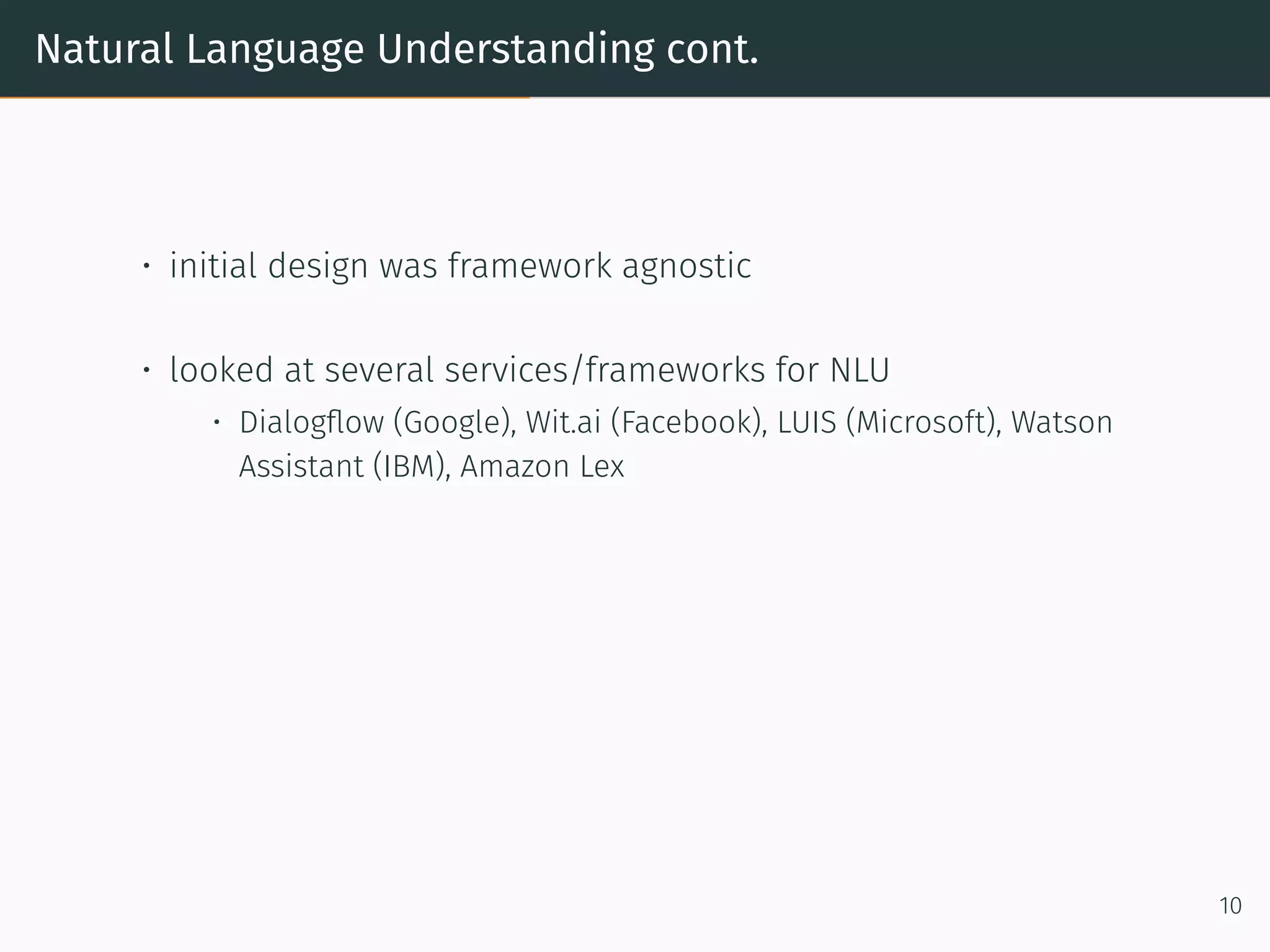
Natural Language Understanding
Natural Language Understanding (NLU): process of “understanding”
natural language in computer science
Intents: the meaning or purpose of the user input
Parameters (entities): terms tied to the intents (e.g. context, amount,
time etc.)
9
Natural Language Understanding
Natural Language Understanding (NLU): process of “understanding”
natural language in computer science
Intents: the meaning or purpose of the user input
Parameters (entities): terms tied to the intents (e.g. context, amount,
time etc.)
Figure 1: Dialogflow Basics — Intents
Source: https://cloud.google.com/dialogflow/docs/basics
9
Natural Language Understanding cont.
• initial design was framework agnostic
• looked at several services/frameworks for NLU
• Dialogflow (Google), Wit.ai (Facebook), LUIS (Microso t), Watson
Assistant (IBM), Amazon Lex
10
Natural Language Understanding cont.
• initial design was framework agnostic
• looked at several services/frameworks for NLU
• Dialogflow (Google), Wit.ai (Facebook), LUIS (Microso t), Watson
Assistant (IBM), Amazon Lex
• final implementation only for Dialogflow
• scope of thesis / PoC
• differences in framework/service concepts
• pricing
10
Bot Frameworks
Evaluated bot development frameworks:
• Microso t Bot Framework
• Botkit
• Botmaster.ai
• Botpress
• BotMan
11
Bot Frameworks
Evaluated bot development frameworks:
• Microso t Bot Framework
• Botkit
• Botmaster.ai
• Botpress
• BotMan
Disadvantages include:
• reliance on third party services, higher latencies
• only one platform per instance
• slow development
• limited content handling
• poor platform support
11
Bot Frameworks
Evaluated bot development frameworks:
• Microso t Bot Framework
• Botkit
• Botmaster.ai
• Botpress
• BotMan
Disadvantages include:
• reliance on third party services, higher latencies
• only one platform per instance
• slow development
• limited content handling
• poor platform support
Due to these shortcomings, a custom implementation was chosen.
11
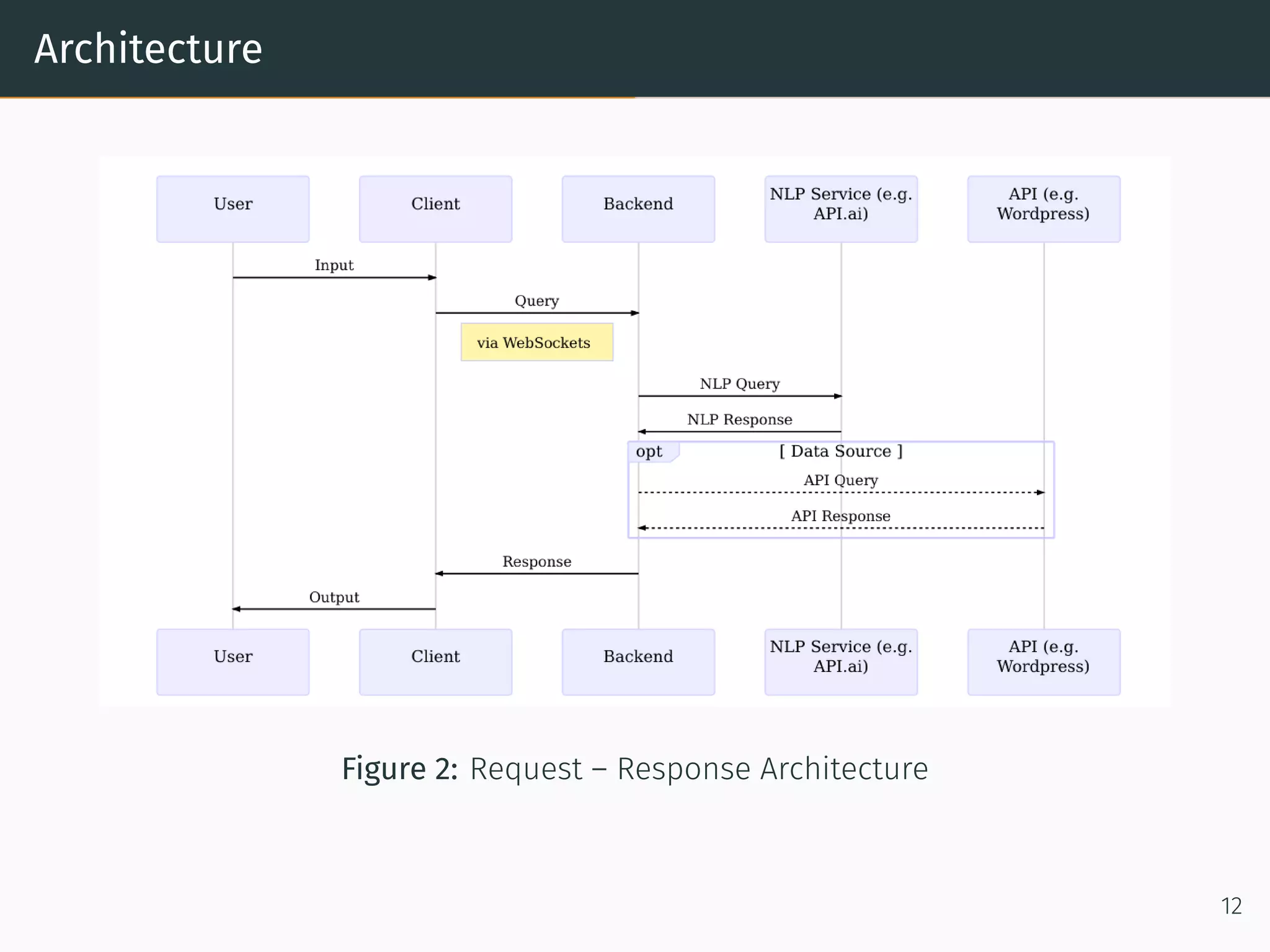
Architecture
Figure 2: Request – Response Architecture
12
UI Components
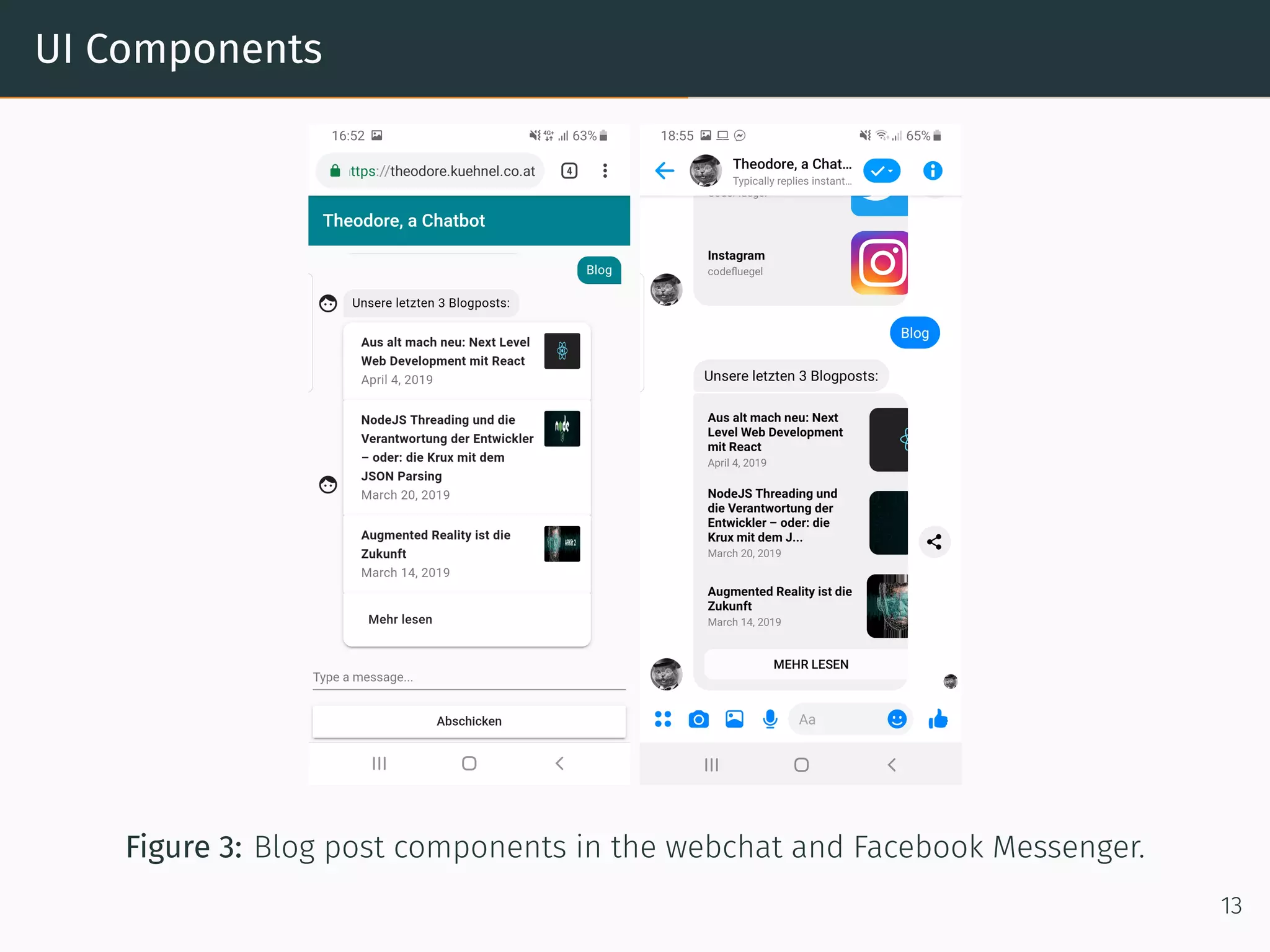
Figure 3: Blog post components in the webchat and Facebook Messenger.
13
UI Components cont.
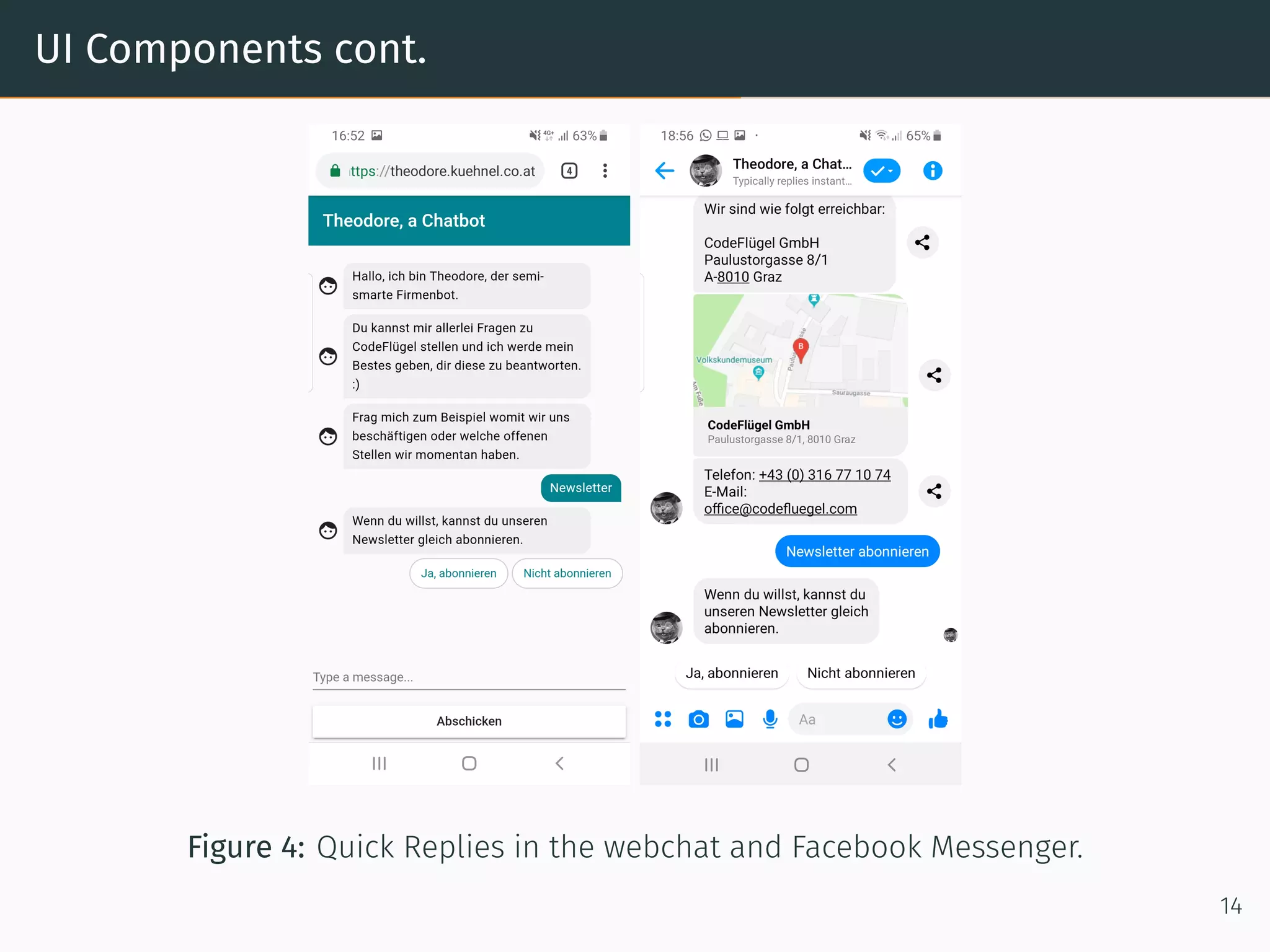
Figure 4: Quick Replies in the webchat and Facebook Messenger.
14
UI Components cont.
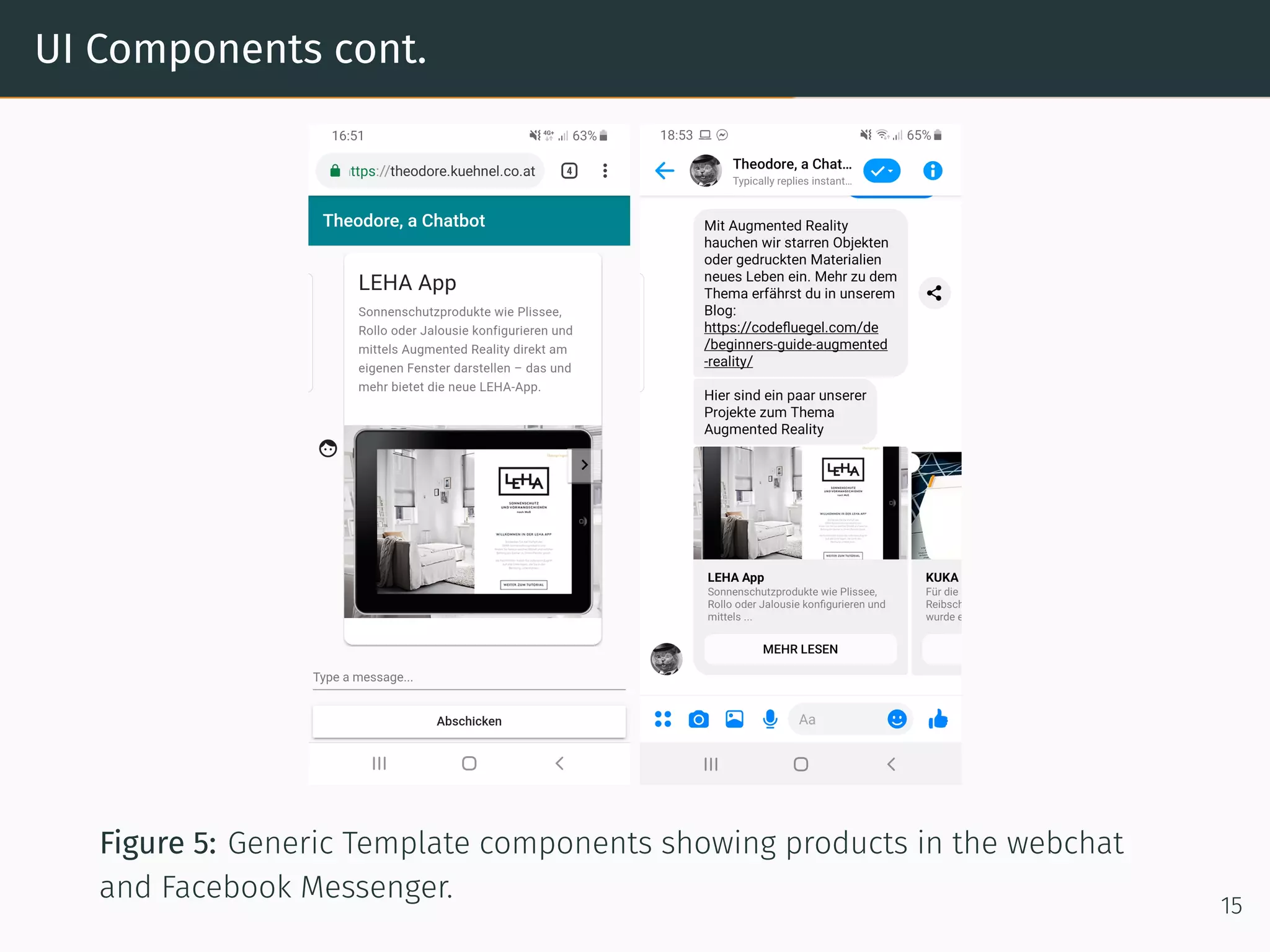
Figure 5: Generic Template components showing products in the webchat
and Facebook Messenger.
15
User Study
User Study
• comparison of chatbot and website
• identify advantages and weaknesses
• selection based on relevance to the company
• 3 groups
• (potential) clients
• potential employees
• blog readers and everyone else
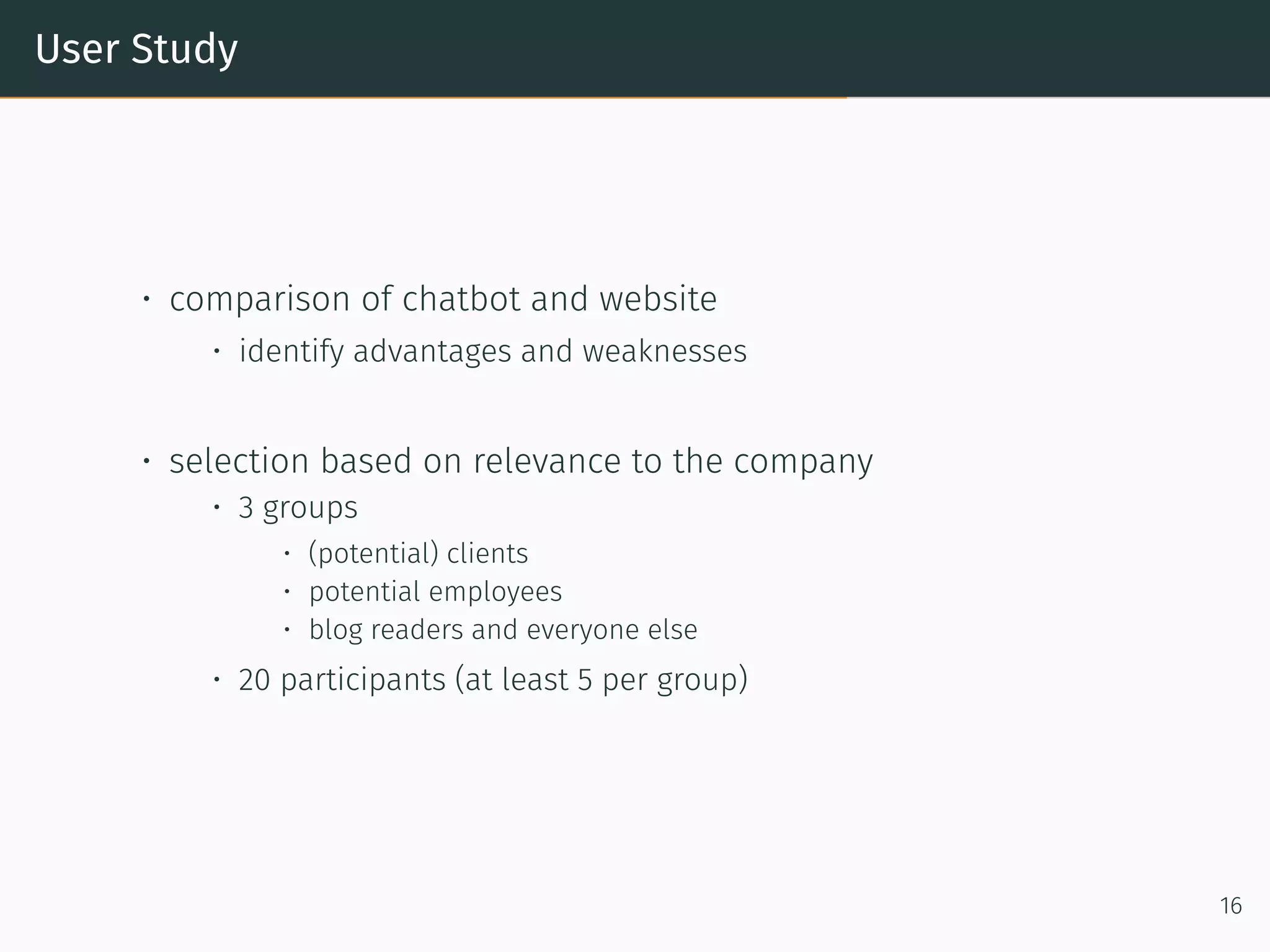
• 20 participants (at least 5 per group)
16
User Study cont.
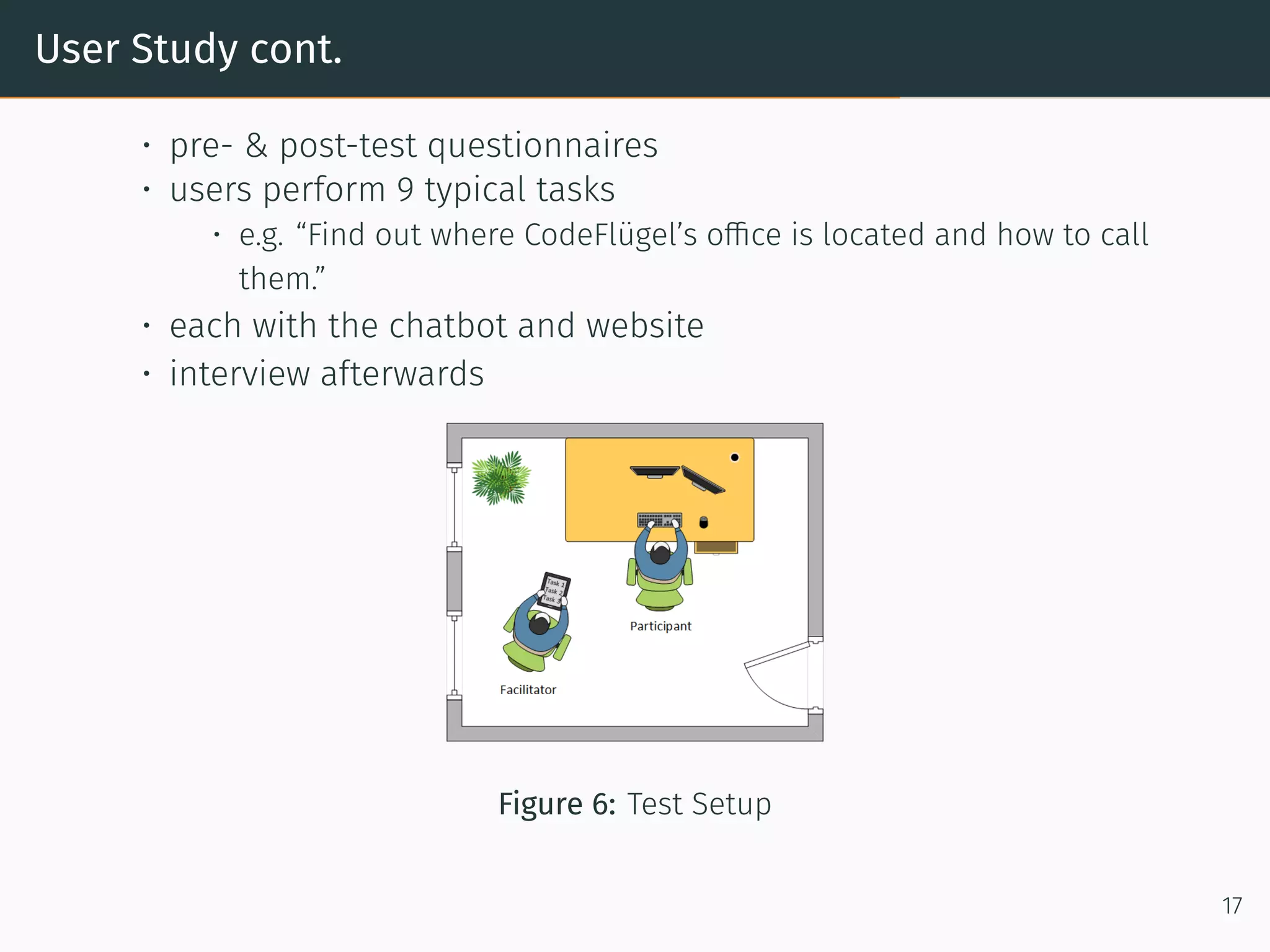
• pre- & post-test questionnaires
• users perform 9 typical tasks
• e.g. “Find out where CodeFlügel’s office is located and how to call
them.”
• each with the chatbot and website
• interview a terwards
Figure 6: Test Setup
17
Results cont.
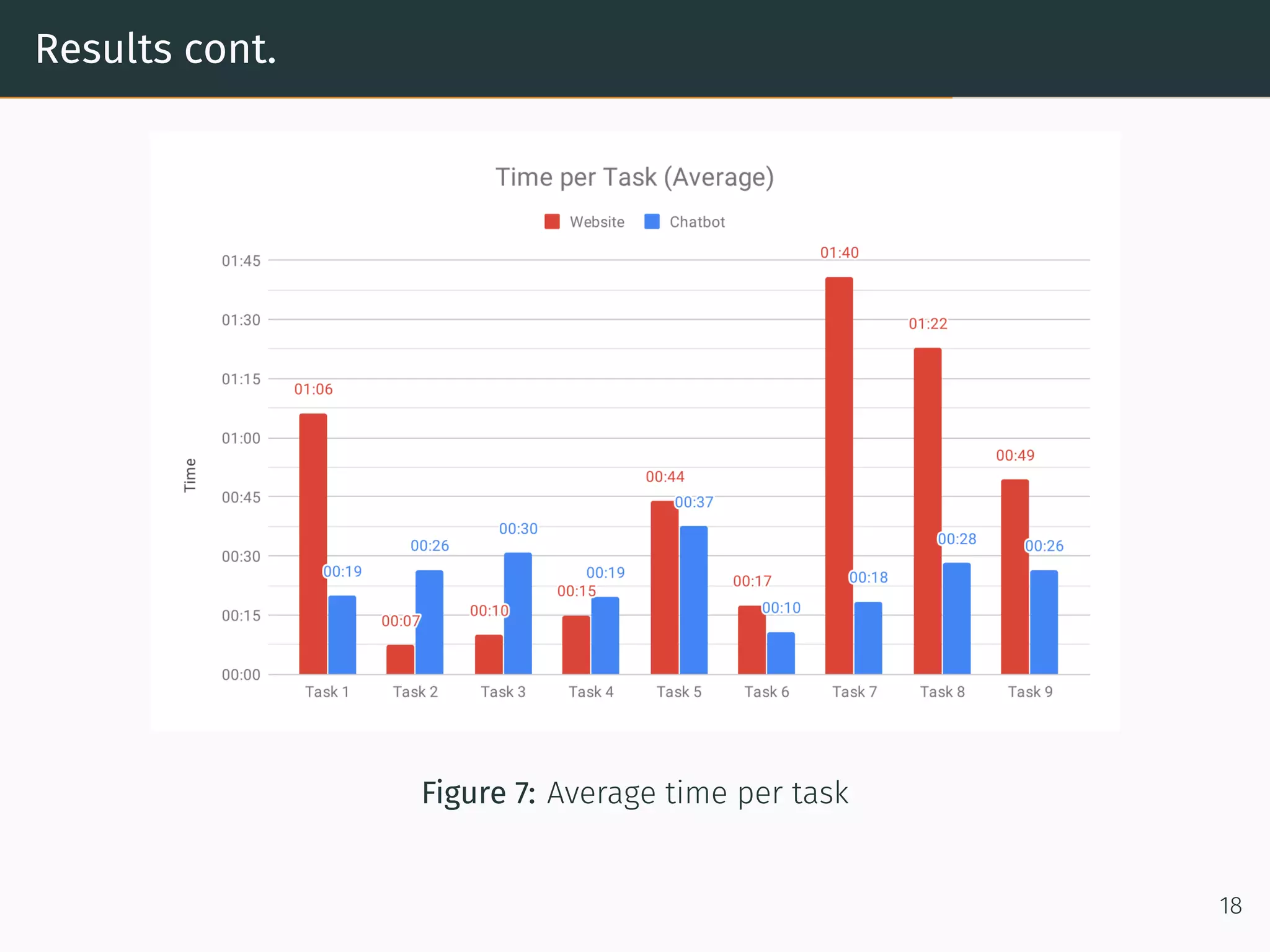
Figure 7: Average time per task
18
Results
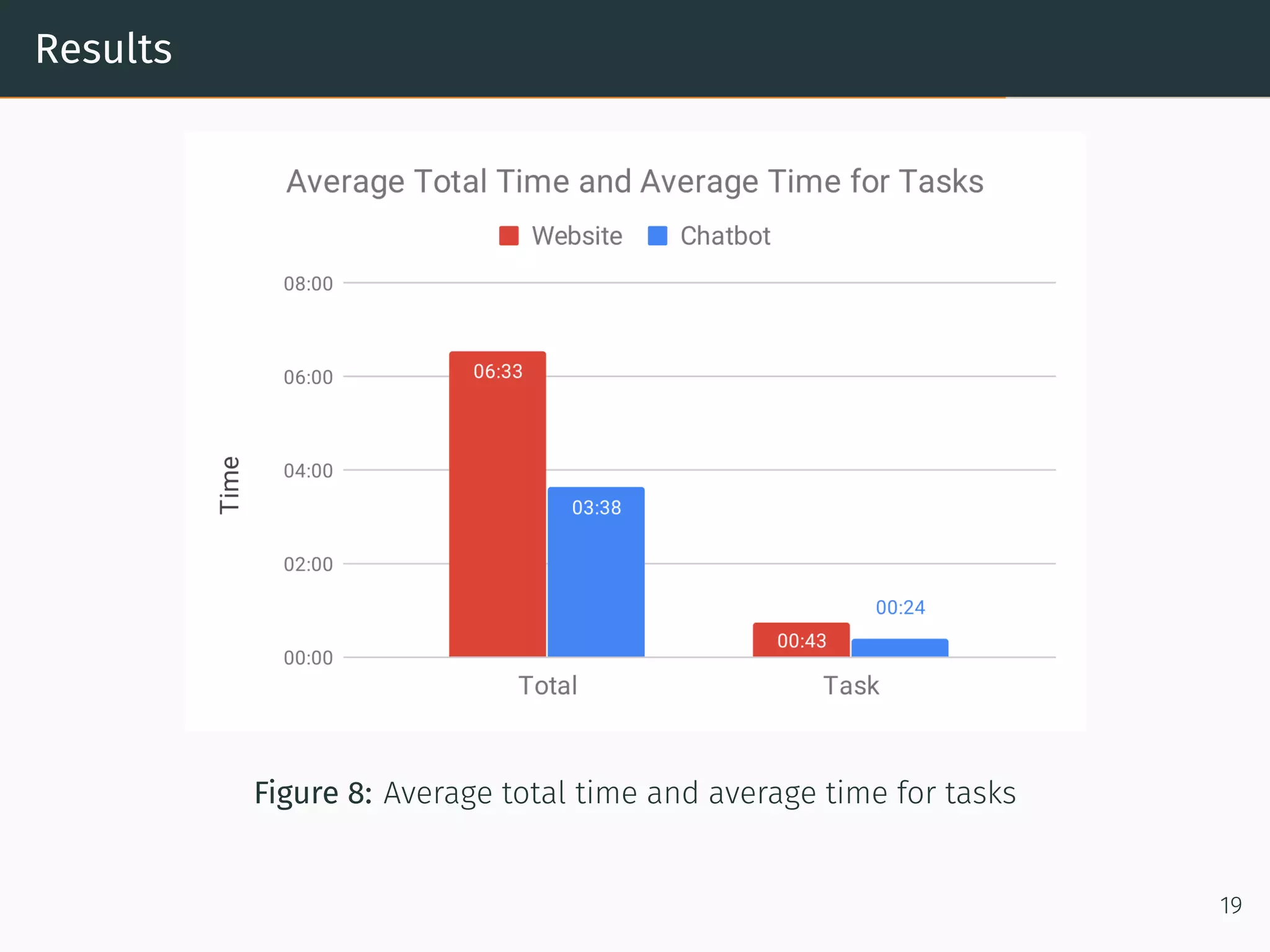
Figure 8: Average total time and average time for tasks
19
Results cont.
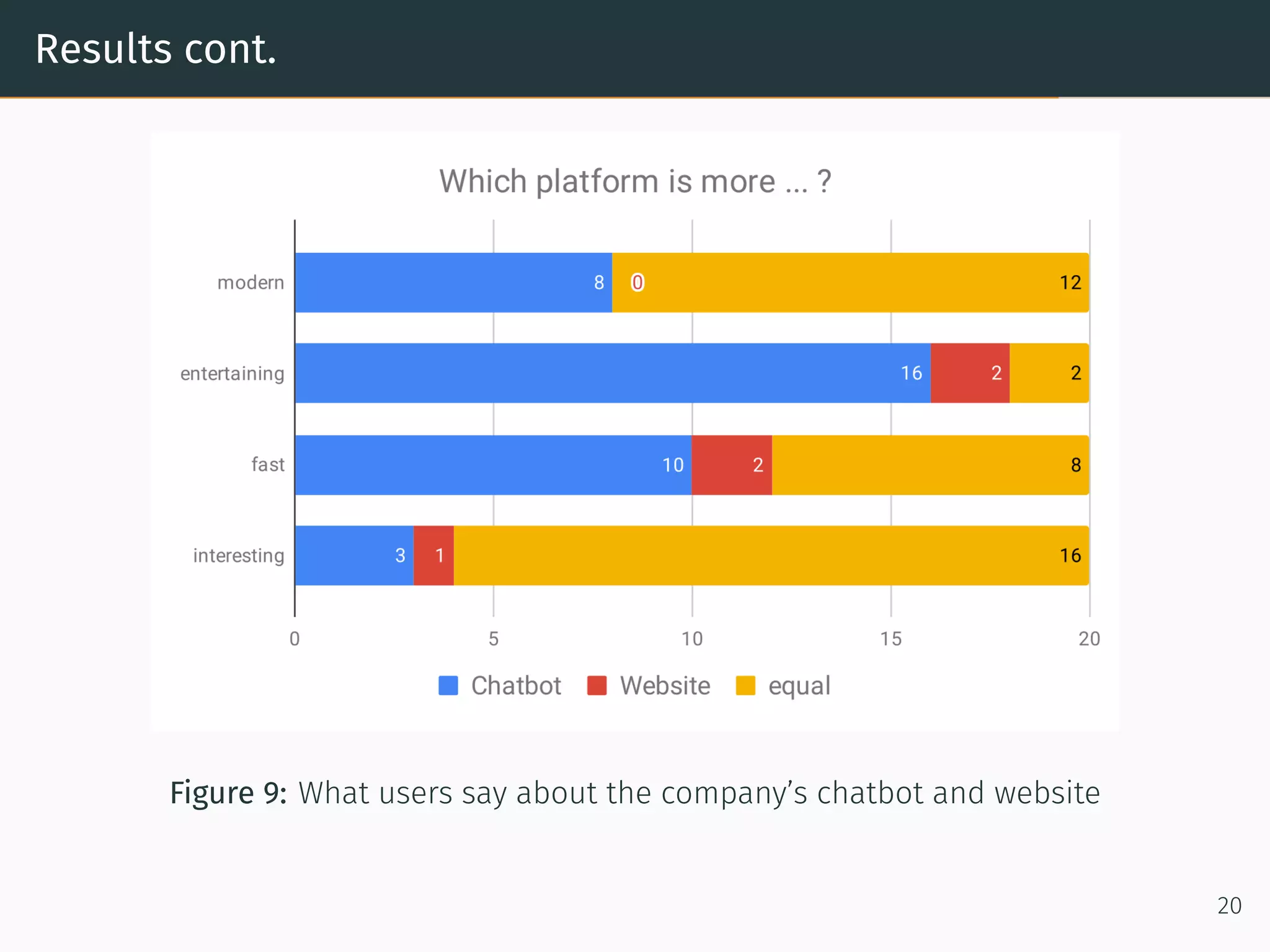
Figure 9: What users say about the company’s chatbot and website
20
Results cont.
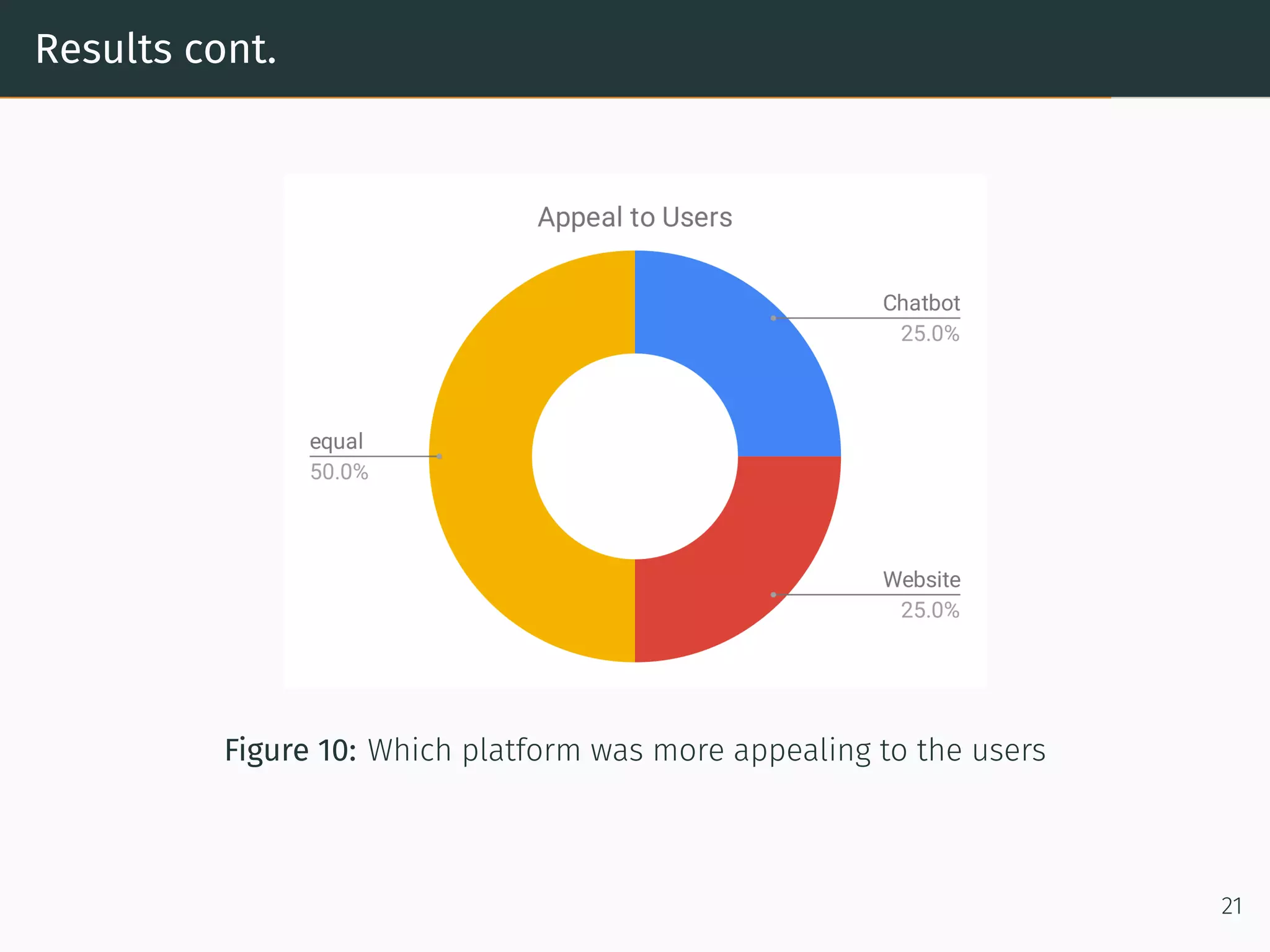
Figure 10: Which platform was more appealing to the users
21
Results cont.
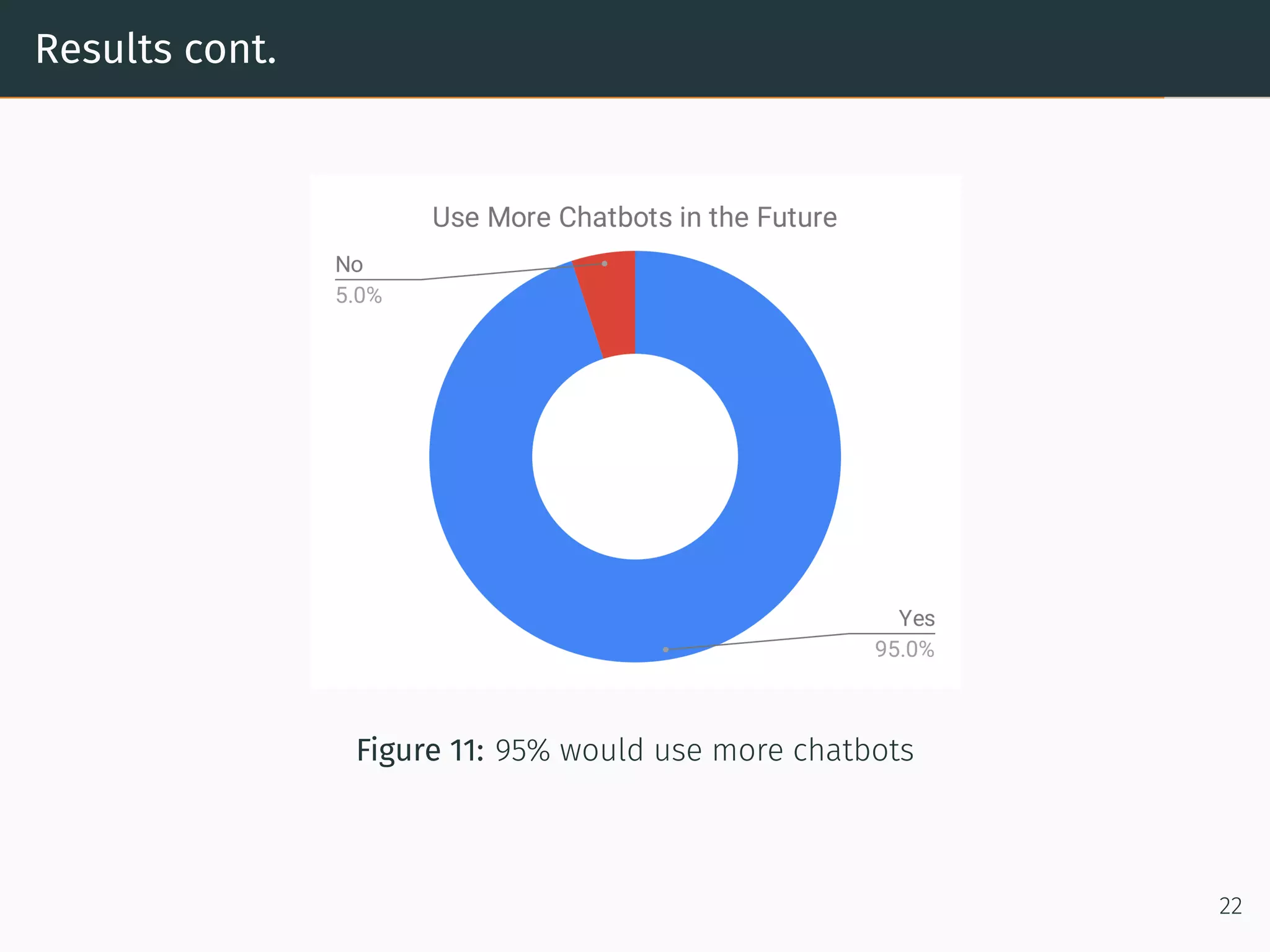
Figure 11: 95% would use more chatbots
22
Conclusion
Conclusion
• positive feedback about the chatbot
• train for whole sentences and keywords
• chatbot more entertaining
• high acceptance rate
• chatbot was faster (specific information)
23
Conclusion
• positive feedback about the chatbot
• train for whole sentences and keywords
• chatbot more entertaining
• high acceptance rate
• chatbot was faster (specific information)
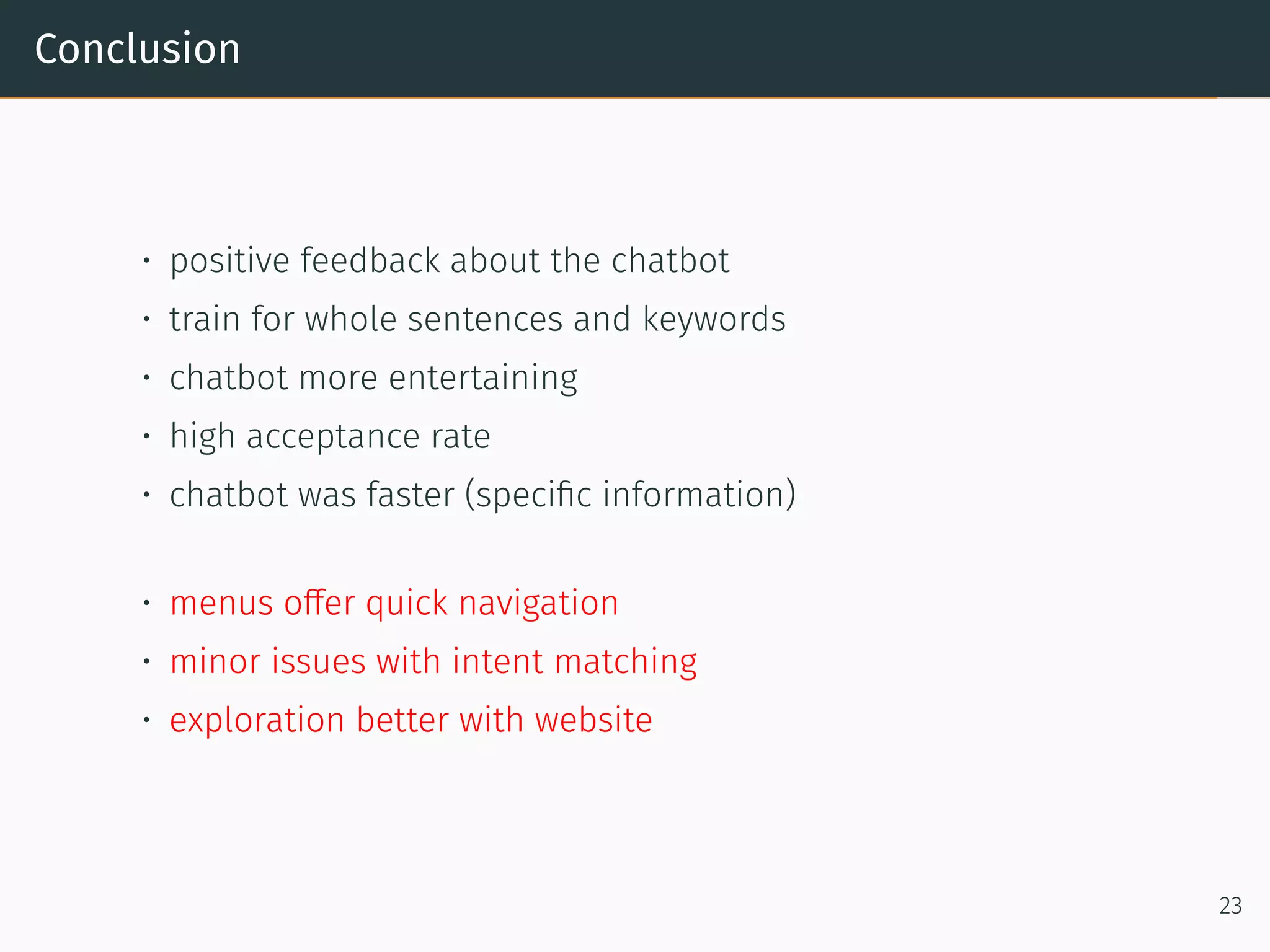
• menus offer quick navigation
• minor issues with intent matching
• exploration better with website
23
Future Work
• improve intent matching
• broader audience / more participants
• different chatbots and personas
• brand perception
• conversion rates and other Key Performance Indicators (KPIs)
24
Live Demo
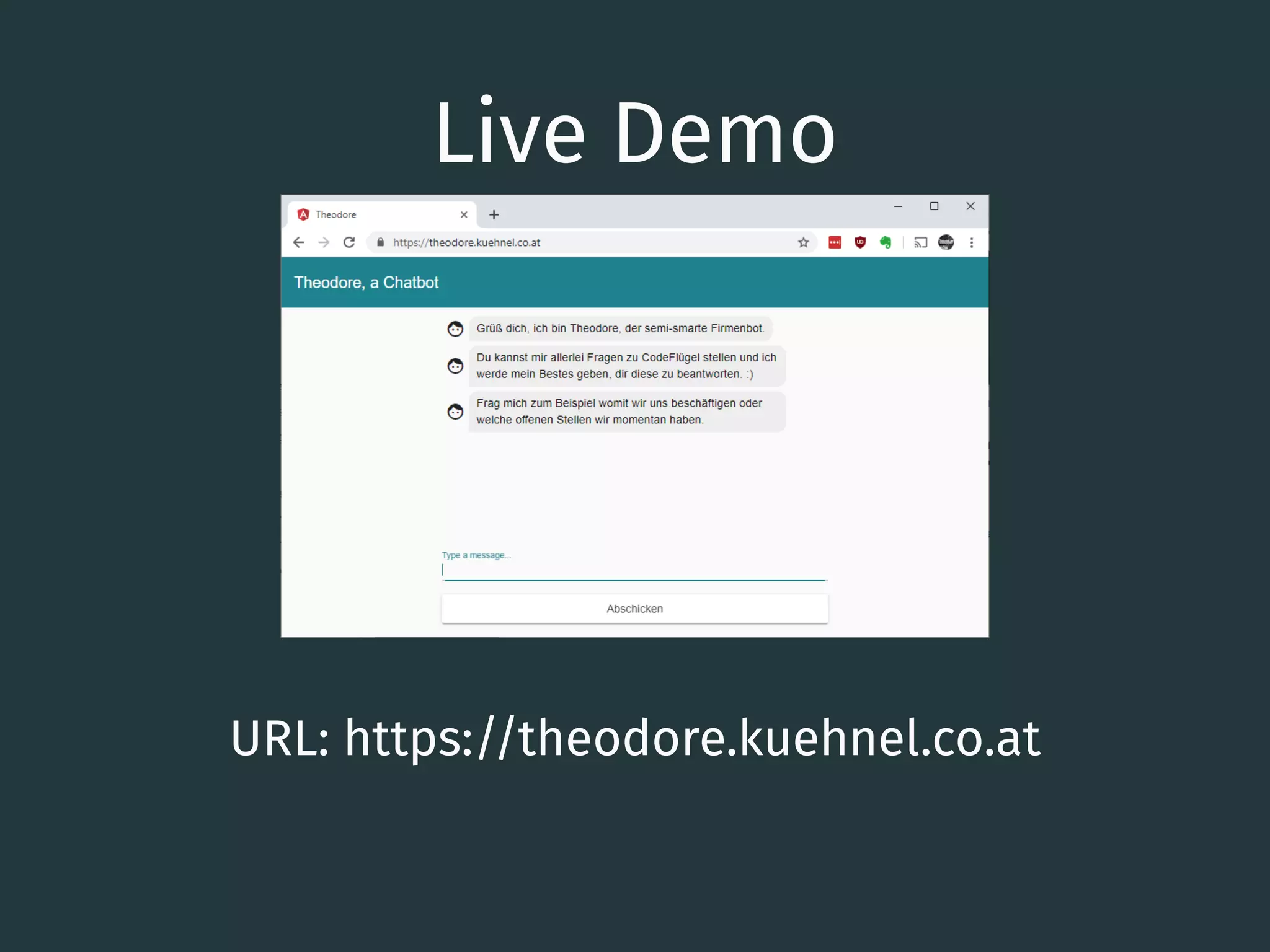
URL: https://theodore.kuehnel.co.at
24
Questions?
24
Website
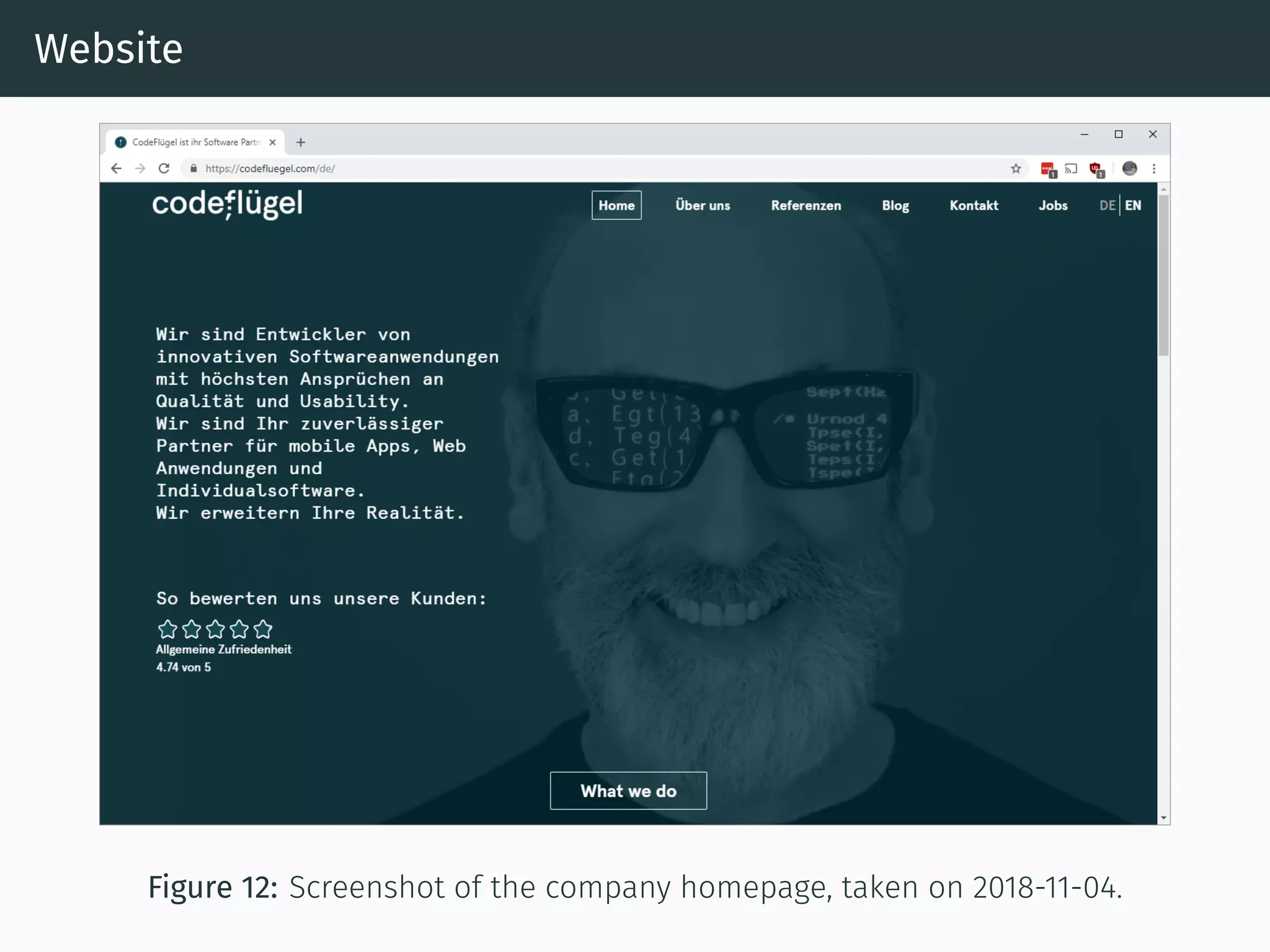
Figure 12: Screenshot of the company homepage, taken on 2018-11-04.
Webchat cont.
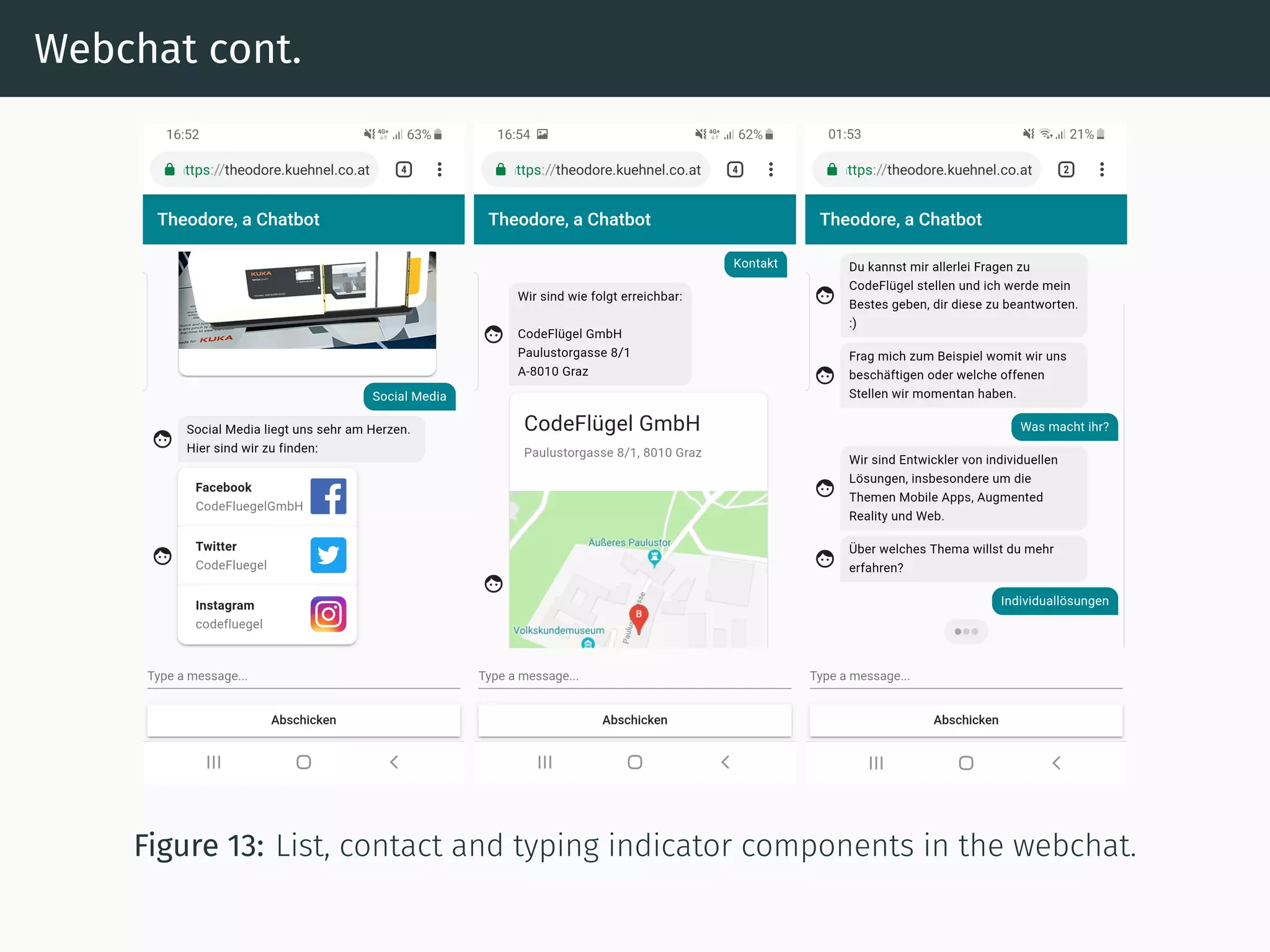
Figure 13: List, contact and typing indicator components in the webchat.
Facebook Messenger cont.
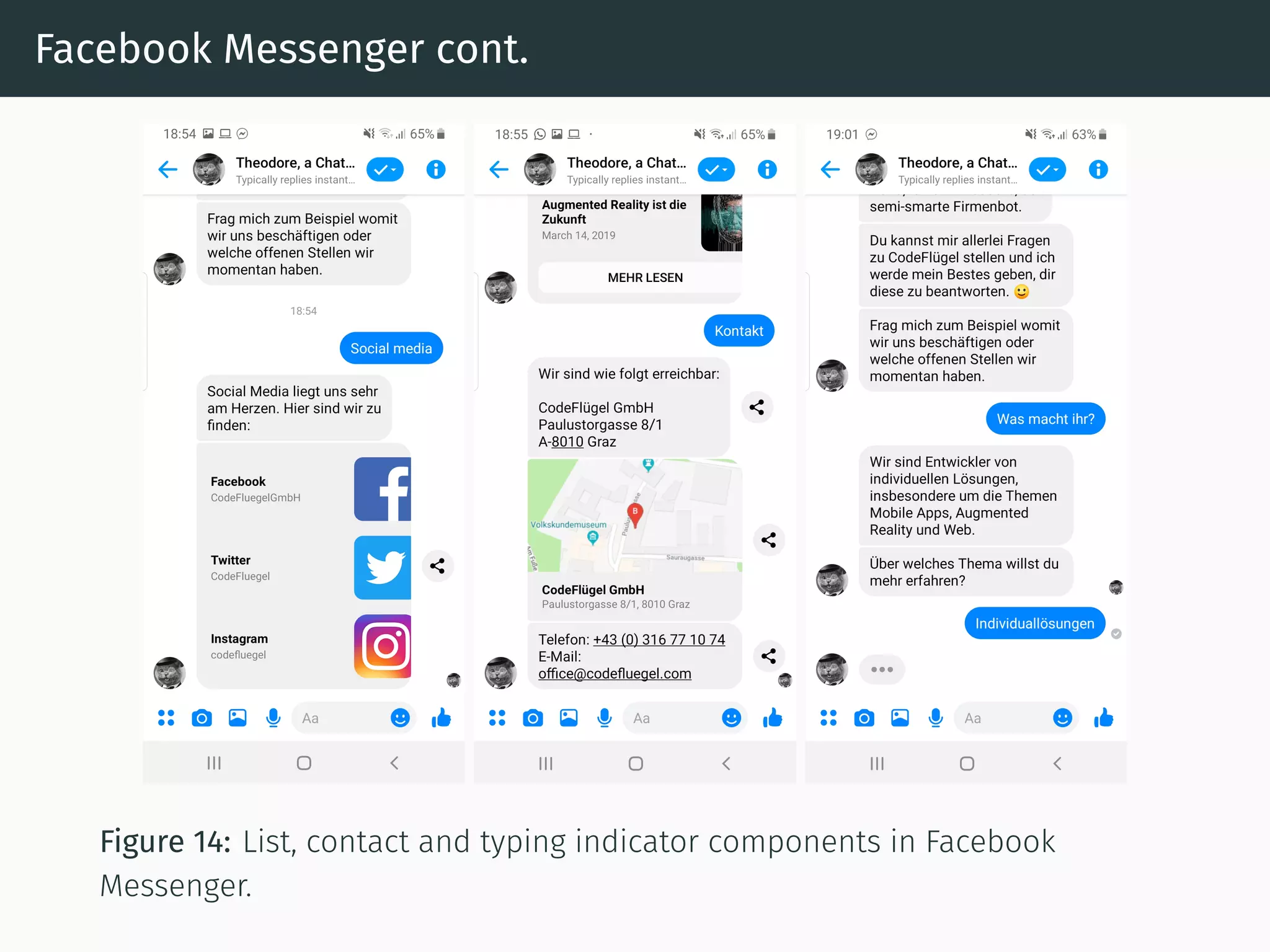
Figure 14: List, contact and typing indicator components in Facebook
Messenger.
Message Format - Details
{
"message" : {
"attachment" : {
"type" : "template" ,
"payload" : {
"template_type" : "generic" ,
"elements" : [
{
"title" : "<TITLE_TEXT>" ,
"image_url" : "<IMAGE_URL_TO_DISPLAY>" ,
"subtitle" : "<SUBTITLE_TEXT>" ,
"default_action" : {
"type" : "web_url" ,
"url" : "<DEFAULT_URL_TO_OPEN>" ,
"messenger_extensions" : <TRUE | FALSE > ,
"webview_height_ratio" : "<COMPACT | TALL | FULL>"
} ,
"buttons" : [ < BUTTON_OBJECT > , . . . ]
} ,
. . .
]
}
}
}
}
Listing 1: A generic template JSON message in Facebook Messenger’s
format.
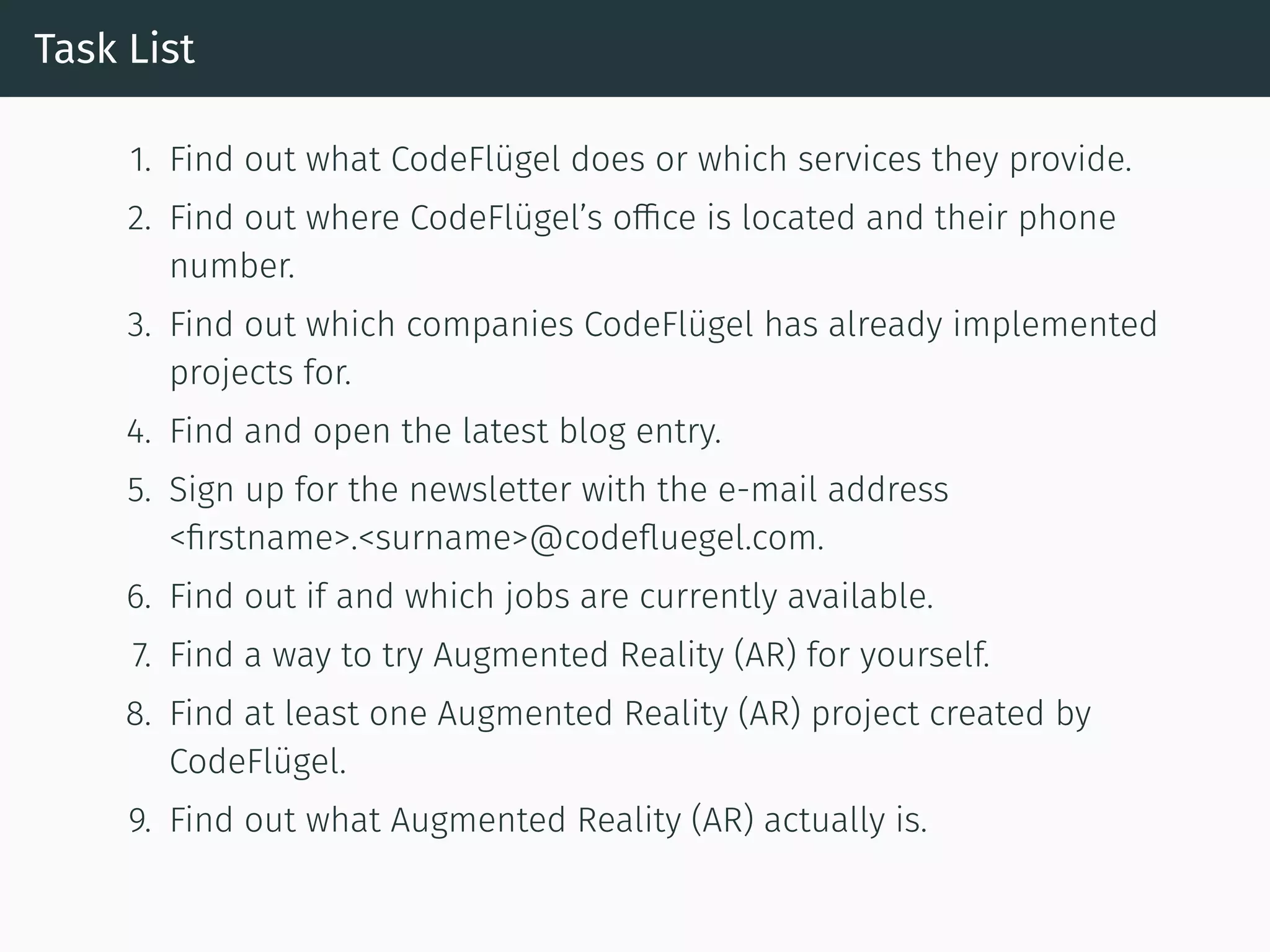
Task List
1. Find out what CodeFlügel does or which services they provide.
2. Find out where CodeFlügel’s office is located and their phone
number.
3. Find out which companies CodeFlügel has already implemented
projects for.
4. Find and open the latest blog entry.
5. Sign up for the newsletter with the e-mail address
<firstname>.<surname>@codefluegel.com.
6. Find out if and which jobs are currently available.
7. Find a way to try Augmented Reality (AR) for yourself.
8. Find at least one Augmented Reality (AR) project created by
CodeFlügel.
9. Find out what Augmented Reality (AR) actually is.
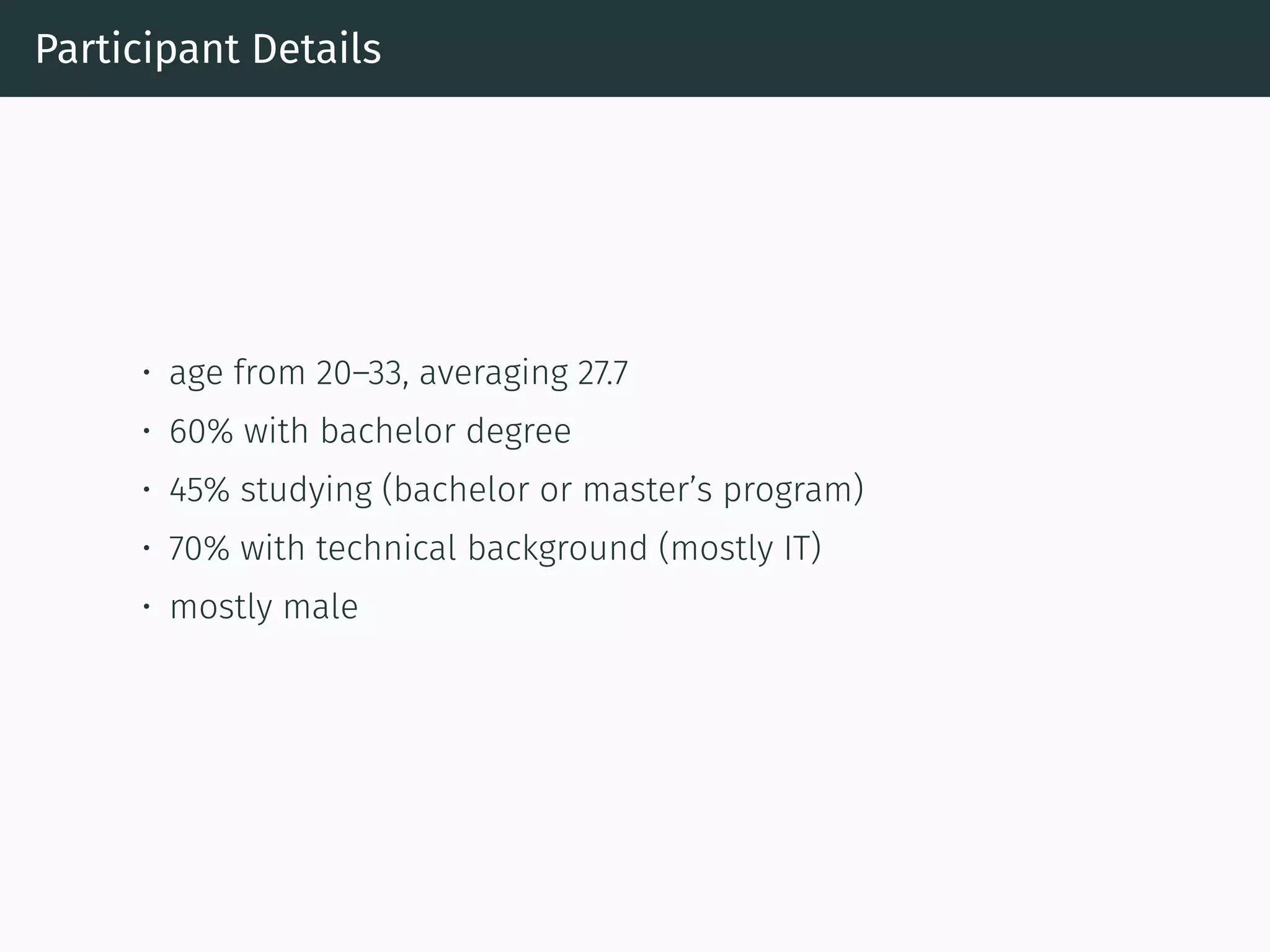
Participant Details
• age from 20–33, averaging 27.7
• 60% with bachelor degree
• 45% studying (bachelor or master’s program)
• 70% with technical background (mostly IT)
• mostly male
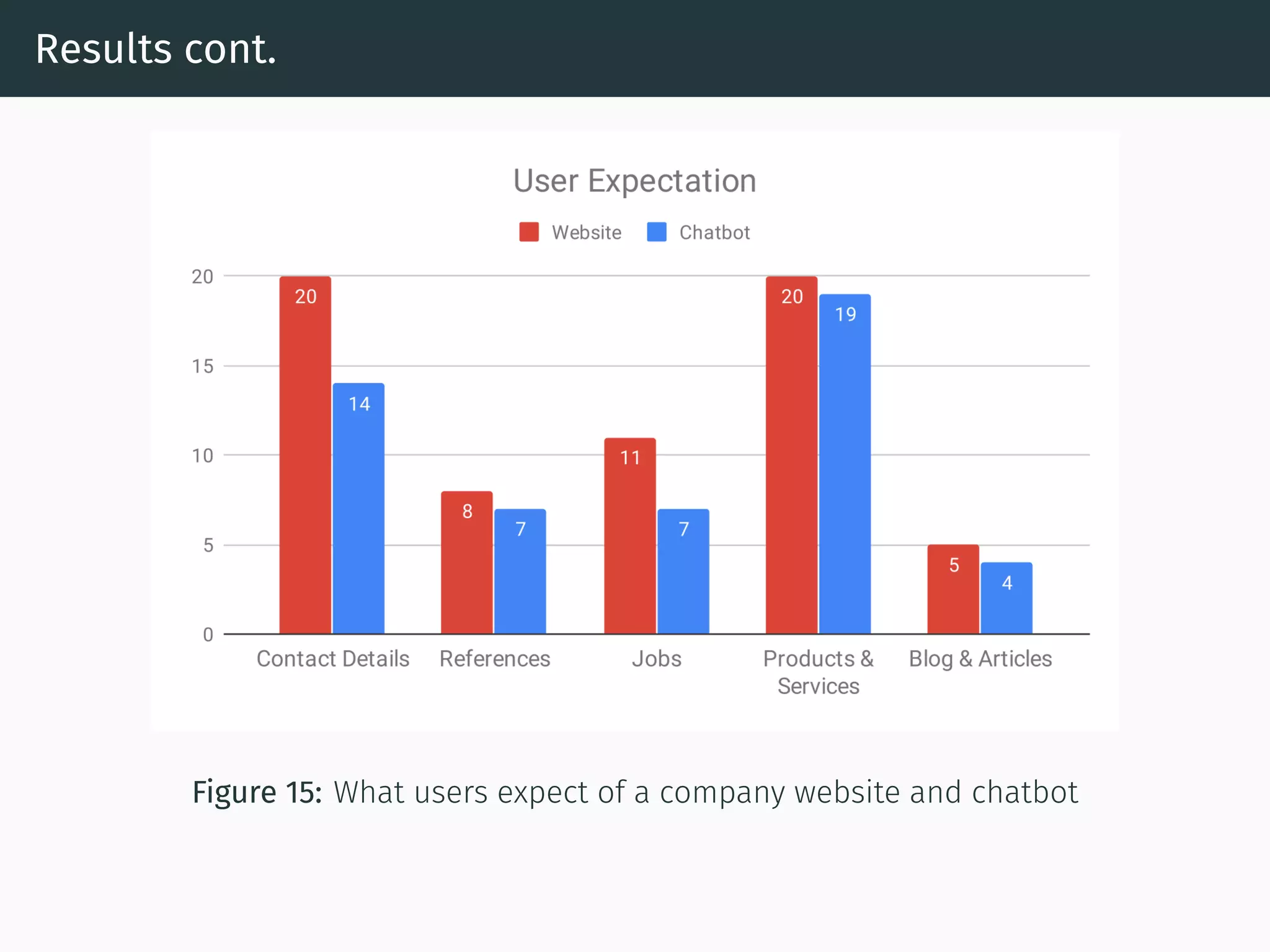
Results cont.
Figure 15: What users expect of a company website and chatbot
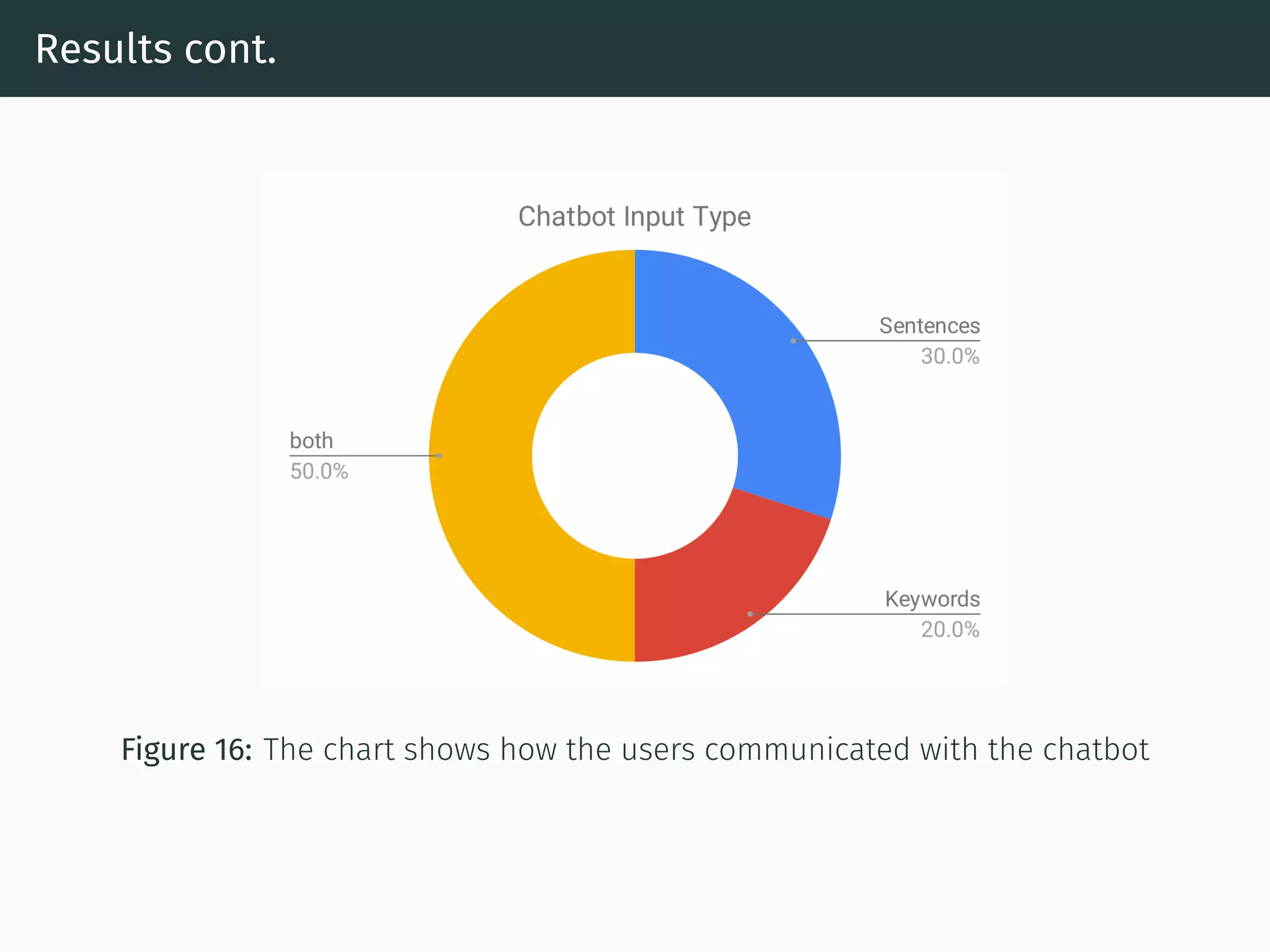
Results cont.
Figure 16: The chart shows how the users communicated with the chatbot
Results cont.
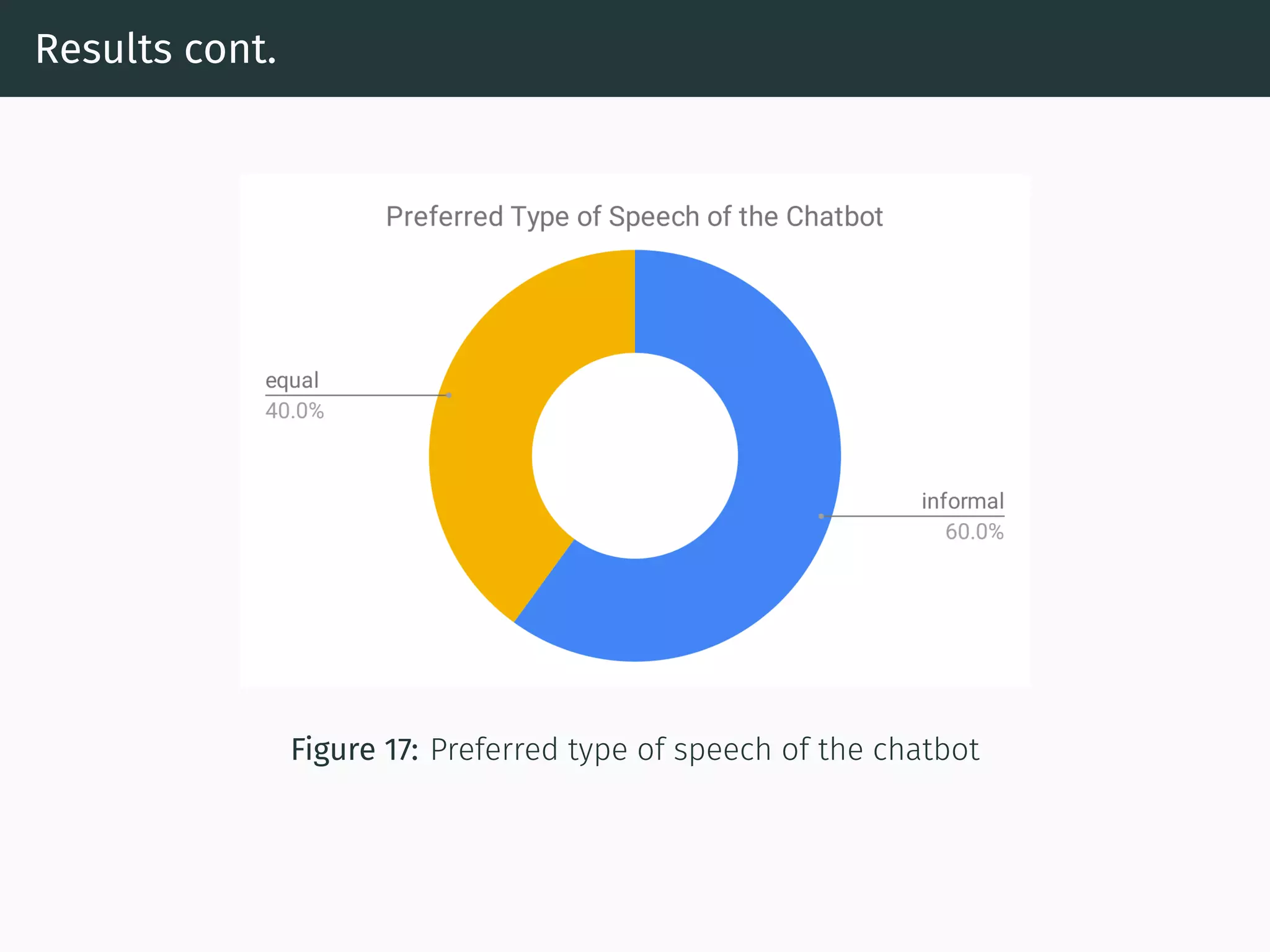
Figure 17: Preferred type of speech of the chatbot
Results cont.
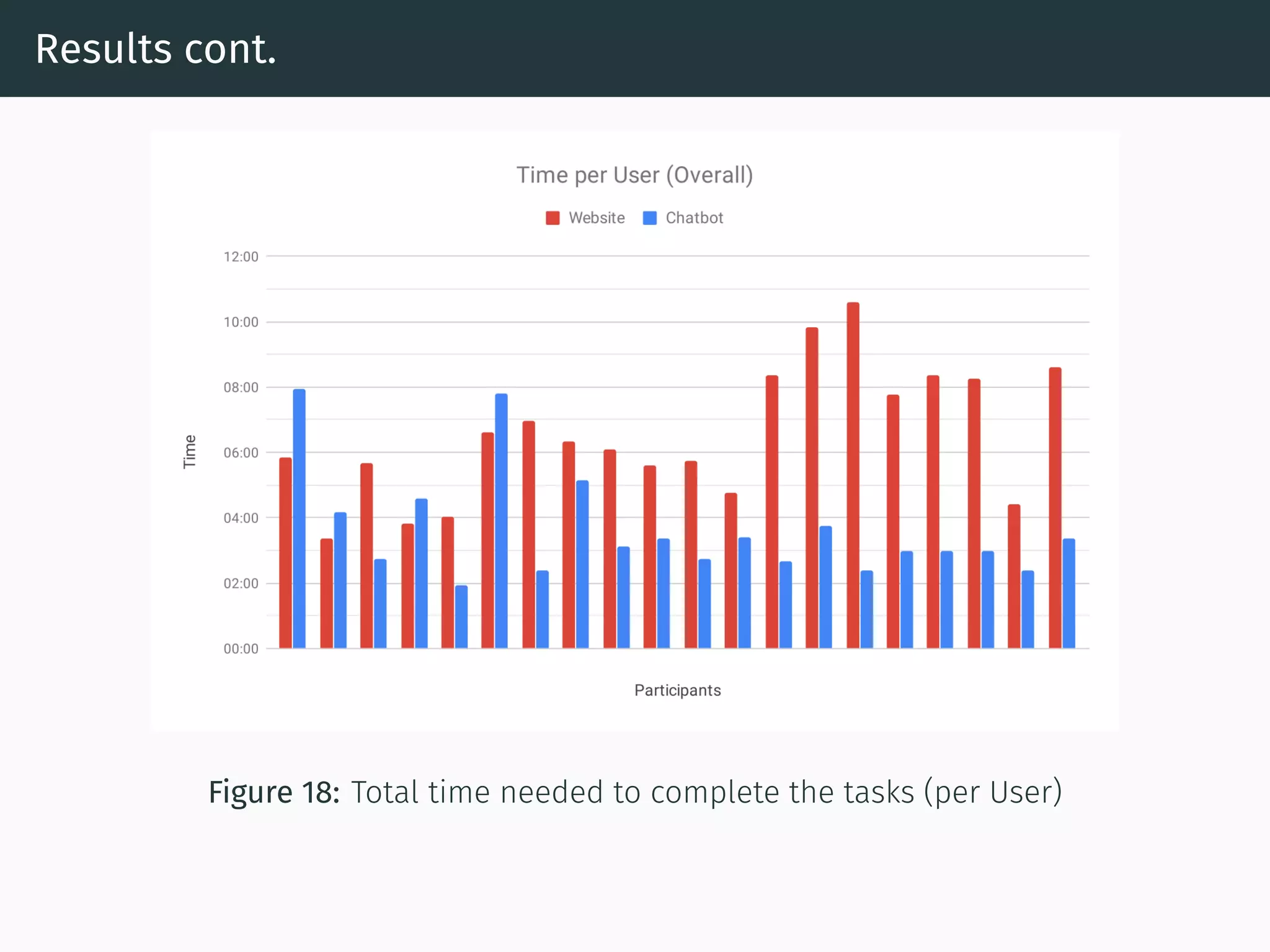
Figure 18: Total time needed to complete the tasks (per User)
References i
Beriault-Poirier, Amélie, Sandrine Prom Tep, and Sylvain Sénécal (Oct.
2018). “Putting Chatbots to the Test: Does the User Experience
Score Higher with Chatbots Than Websites?” In: Human Systems
Engineering and Design. Springer International Publishing,
pp. 204–212. isbn: 978-3-030-02053-8. doi:
10.1007/978-3-030-02053-8_32.
Hootsuite and We Are Social (2019). Digital 2019. Global Digital
Overview. Tech. rep. Mindbowser. url:
https://datareportal.com/reports/digital-2019-
global-digital-overview (visited on 02/04/2019).
Nadella, Satya (Mar. 25, 2016). Build 2016. Keynote Presentation.
Microso t. url: https://channel9.msdn.com/Events/
Build/2016/KEY01#time=1h41m11s (visited on 02/13/2019).
References ii
Shawar, Bayan Abu and Eric Atwell (2007). “Chatbots: Are They Really
Useful?” In: LDV-Forum 22.1, pp. 29–49. url:
https://jlcl.org/content/2-allissues/20-Heft1-
2007/Bayan_Abu-Shawar_and_Eric_Atwell.pdf (visited on
01/24/2019).
– (Sept. 2015). “A chatbot as a Question Answering Tool”. In: 2015
International Conference on Advances in So tware, Control and
Mechanical Engineering. 2015 International Conference on
Advances in So tware, Control and Mechanical Engineering, pp. 1–6.
isbn: 978-93-84422-37-0. doi: 10.17758/UR.U0915120.

Chatbots for Brand Representation in Comparison with Traditional Websites

  • 1.
    Chatbots for BrandRepresentation in Comparison with Traditional Websites Johannes Kühnel, BSc May 28, 2020 Institute of Interactive Systems and Data Science Graz University of Technology, Austria
  • 2.
    Table of contents 1.Introduction 2. Proof of Concept 3. User Study 4. Conclusion 1
  • 3.
  • 4.
    What are Chatbots? Chatbotsare computer programs that interact with users us- ing natural languages. (Shawar and Atwell 2007) Usually chatbots ... • provide a service (e.g. bookings) • use conversational interfaces • feature simple or more complex AI 2
  • 5.
    “Bots are thenew apps” Satya Nadella, Microso t CEO 2
  • 6.
    Motivation Messaging Platform MonthlyActive Users WhatsApp 1,500 Facebook Messenger 1,300 Weixin / Wechat 1,083 Table 1: Monthly active users of the top 3 messaging platforms in millions. Sources: Hootsuite and We Are Social (2019) and Nadella (2016) and https://telegram.org/blog/200-million (visited on 2019-02-13). 3
  • 7.
    Related Work Exploratory studyby Beriault-Poirier, Tep, and Sénécal (2018) • comparison of websites and chatbots of 3 brands • participants perform 1 task per brand and platform • Keypoints: websites offered better user experience, positive emotions with chatbot 4
  • 8.
    Related Work Exploratory studyby Beriault-Poirier, Tep, and Sénécal (2018) • comparison of websites and chatbots of 3 brands • participants perform 1 task per brand and platform • Keypoints: websites offered better user experience, positive emotions with chatbot Case study by Shawar and Atwell (2015) • Frequently Asked Questions (FAQ) • chatbot vs search engine • Keypoints: more relevant answers, higher preference 4
  • 9.
  • 10.
    Theodore, a CompanyChatbot A chatbot — named Theodore — to represent Graz based so tware developer CodeFlügel was created. 5
  • 11.
    Theodore, a CompanyChatbot A chatbot — named Theodore — to represent Graz based so tware developer CodeFlügel was created. Goal: chatbot capable of representing and informing about the company (like the existing website) 5
  • 12.
    Theodore, a CompanyChatbot A chatbot — named Theodore — to represent Graz based so tware developer CodeFlügel was created. Goal: chatbot capable of representing and informing about the company (like the existing website) Theodore should • reproduce most of the website’s features • run on Facebook Messenger and a custom webchat • re-use existing Application Programming Interfaces (APIs) 5
  • 13.
    Dialog Design Chatbot hasto provide information about • the company itself • products & services • contact information • vacancies • newsletter subscription • social media & blog posts 6
  • 14.
    Dialog Design Chatbot hasto provide information about • the company itself • products & services • contact information • vacancies • newsletter subscription • social media & blog posts Additional requirements include • help function & fallback mechanism • informal language • aware of being a bot 6
  • 15.
    Technologies Backend Languages & Frameworks:Node.js with Express.js and Socket.IO APIs: Facebook, Dialogflow, Mailchimp, Wordpress 1 Webchat Languages & Frameworks: Angular (using TypeScript) with Socket.IO APIs: Backend 2 1connection via REST API / HTTP requests 2connection via WebSockets 7
  • 16.
    Message Format Facebook Messenger’smessage format (JSON) used for both Messenger and webchat. Support for various components: • Generic Template • List • Button • Media • Quick Replies 8
  • 17.
    Natural Language Understanding NaturalLanguage Understanding (NLU): process of “understanding” natural language in computer science Intents: the meaning or purpose of the user input Parameters (entities): terms tied to the intents (e.g. context, amount, time etc.) 9
  • 18.
    Natural Language Understanding NaturalLanguage Understanding (NLU): process of “understanding” natural language in computer science Intents: the meaning or purpose of the user input Parameters (entities): terms tied to the intents (e.g. context, amount, time etc.) Figure 1: Dialogflow Basics — Intents Source: https://cloud.google.com/dialogflow/docs/basics 9
  • 19.
    Natural Language Understandingcont. • initial design was framework agnostic • looked at several services/frameworks for NLU • Dialogflow (Google), Wit.ai (Facebook), LUIS (Microso t), Watson Assistant (IBM), Amazon Lex 10
  • 20.
    Natural Language Understandingcont. • initial design was framework agnostic • looked at several services/frameworks for NLU • Dialogflow (Google), Wit.ai (Facebook), LUIS (Microso t), Watson Assistant (IBM), Amazon Lex • final implementation only for Dialogflow • scope of thesis / PoC • differences in framework/service concepts • pricing 10
  • 21.
    Bot Frameworks Evaluated botdevelopment frameworks: • Microso t Bot Framework • Botkit • Botmaster.ai • Botpress • BotMan 11
  • 22.
    Bot Frameworks Evaluated botdevelopment frameworks: • Microso t Bot Framework • Botkit • Botmaster.ai • Botpress • BotMan Disadvantages include: • reliance on third party services, higher latencies • only one platform per instance • slow development • limited content handling • poor platform support 11
  • 23.
    Bot Frameworks Evaluated botdevelopment frameworks: • Microso t Bot Framework • Botkit • Botmaster.ai • Botpress • BotMan Disadvantages include: • reliance on third party services, higher latencies • only one platform per instance • slow development • limited content handling • poor platform support Due to these shortcomings, a custom implementation was chosen. 11
  • 24.
    Architecture Figure 2: Request– Response Architecture 12
  • 25.
    UI Components Figure 3:Blog post components in the webchat and Facebook Messenger. 13
  • 26.
    UI Components cont. Figure4: Quick Replies in the webchat and Facebook Messenger. 14
  • 27.
    UI Components cont. Figure5: Generic Template components showing products in the webchat and Facebook Messenger. 15
  • 28.
  • 29.
    User Study • comparisonof chatbot and website • identify advantages and weaknesses • selection based on relevance to the company • 3 groups • (potential) clients • potential employees • blog readers and everyone else • 20 participants (at least 5 per group) 16
  • 30.
    User Study cont. •pre- & post-test questionnaires • users perform 9 typical tasks • e.g. “Find out where CodeFlügel’s office is located and how to call them.” • each with the chatbot and website • interview a terwards Figure 6: Test Setup 17
  • 31.
    Results cont. Figure 7:Average time per task 18
  • 32.
    Results Figure 8: Averagetotal time and average time for tasks 19
  • 33.
    Results cont. Figure 9:What users say about the company’s chatbot and website 20
  • 34.
    Results cont. Figure 10:Which platform was more appealing to the users 21
  • 35.
    Results cont. Figure 11:95% would use more chatbots 22
  • 36.
  • 37.
    Conclusion • positive feedbackabout the chatbot • train for whole sentences and keywords • chatbot more entertaining • high acceptance rate • chatbot was faster (specific information) 23
  • 38.
    Conclusion • positive feedbackabout the chatbot • train for whole sentences and keywords • chatbot more entertaining • high acceptance rate • chatbot was faster (specific information) • menus offer quick navigation • minor issues with intent matching • exploration better with website 23
  • 39.
    Future Work • improveintent matching • broader audience / more participants • different chatbots and personas • brand perception • conversion rates and other Key Performance Indicators (KPIs) 24
  • 40.
  • 41.
  • 42.
    Website Figure 12: Screenshotof the company homepage, taken on 2018-11-04.
  • 43.
    Webchat cont. Figure 13:List, contact and typing indicator components in the webchat.
  • 44.
    Facebook Messenger cont. Figure14: List, contact and typing indicator components in Facebook Messenger.
  • 45.
    Message Format -Details { "message" : { "attachment" : { "type" : "template" , "payload" : { "template_type" : "generic" , "elements" : [ { "title" : "<TITLE_TEXT>" , "image_url" : "<IMAGE_URL_TO_DISPLAY>" , "subtitle" : "<SUBTITLE_TEXT>" , "default_action" : { "type" : "web_url" , "url" : "<DEFAULT_URL_TO_OPEN>" , "messenger_extensions" : <TRUE | FALSE > , "webview_height_ratio" : "<COMPACT | TALL | FULL>" } , "buttons" : [ < BUTTON_OBJECT > , . . . ] } , . . . ] } } } } Listing 1: A generic template JSON message in Facebook Messenger’s format.
  • 46.
    Task List 1. Findout what CodeFlügel does or which services they provide. 2. Find out where CodeFlügel’s office is located and their phone number. 3. Find out which companies CodeFlügel has already implemented projects for. 4. Find and open the latest blog entry. 5. Sign up for the newsletter with the e-mail address <firstname>.<surname>@codefluegel.com. 6. Find out if and which jobs are currently available. 7. Find a way to try Augmented Reality (AR) for yourself. 8. Find at least one Augmented Reality (AR) project created by CodeFlügel. 9. Find out what Augmented Reality (AR) actually is.
  • 47.
    Participant Details • agefrom 20–33, averaging 27.7 • 60% with bachelor degree • 45% studying (bachelor or master’s program) • 70% with technical background (mostly IT) • mostly male
  • 48.
    Results cont. Figure 15:What users expect of a company website and chatbot
  • 49.
    Results cont. Figure 16:The chart shows how the users communicated with the chatbot
  • 50.
    Results cont. Figure 17:Preferred type of speech of the chatbot
  • 51.
    Results cont. Figure 18:Total time needed to complete the tasks (per User)
  • 52.
    References i Beriault-Poirier, Amélie,Sandrine Prom Tep, and Sylvain Sénécal (Oct. 2018). “Putting Chatbots to the Test: Does the User Experience Score Higher with Chatbots Than Websites?” In: Human Systems Engineering and Design. Springer International Publishing, pp. 204–212. isbn: 978-3-030-02053-8. doi: 10.1007/978-3-030-02053-8_32. Hootsuite and We Are Social (2019). Digital 2019. Global Digital Overview. Tech. rep. Mindbowser. url: https://datareportal.com/reports/digital-2019- global-digital-overview (visited on 02/04/2019). Nadella, Satya (Mar. 25, 2016). Build 2016. Keynote Presentation. Microso t. url: https://channel9.msdn.com/Events/ Build/2016/KEY01#time=1h41m11s (visited on 02/13/2019).
  • 53.
    References ii Shawar, BayanAbu and Eric Atwell (2007). “Chatbots: Are They Really Useful?” In: LDV-Forum 22.1, pp. 29–49. url: https://jlcl.org/content/2-allissues/20-Heft1- 2007/Bayan_Abu-Shawar_and_Eric_Atwell.pdf (visited on 01/24/2019). – (Sept. 2015). “A chatbot as a Question Answering Tool”. In: 2015 International Conference on Advances in So tware, Control and Mechanical Engineering. 2015 International Conference on Advances in So tware, Control and Mechanical Engineering, pp. 1–6. isbn: 978-93-84422-37-0. doi: 10.17758/UR.U0915120.