Characterizing Knowledge Maturing: A Conceptual Process Model for Integrating E-Learning and Knowledge Management 2  University of Innsbruck School of Management Information Systems [email_address] http://iwi.uibk.ac.at/ 2  FZI Research Center for Information Technologies Information Process Engineering Karlsruhe, GERMANY [email_address] http://www.fzi.de/ipe Ronald Maier 1 Andreas Schmidt 2
Outline Motivation Knowledge Maturing Process: the model Criteria for characterizing the different phases Two examples for disruptions in the process formalization vs. ad-hoc training distribution in communities vs. formalization Conclusions
Motivation The "knowledge flow" in companies is far from optimal  although  various LMS, KMS and other learning support systems are in place Key problems: (implicit) conceptual differences between the different disciplines that deal with “learning in organizations” current models suggest a rather smooth transition and ignore the differences
Observations Analysis of the knowledge flow The nature of knowledge changes deepened level of understanding increasingly conceived as a part of a broader whole metaphors: consolidate or  mature Different forms of learning are appropriate for different levels of maturity emergent ideas cannot be taught via seminars or courses variet y of content types available in organizations which represent knowledge and are used in ad-hoc learning situations standardized courses  are  efficient for well-established bodies of knowledge
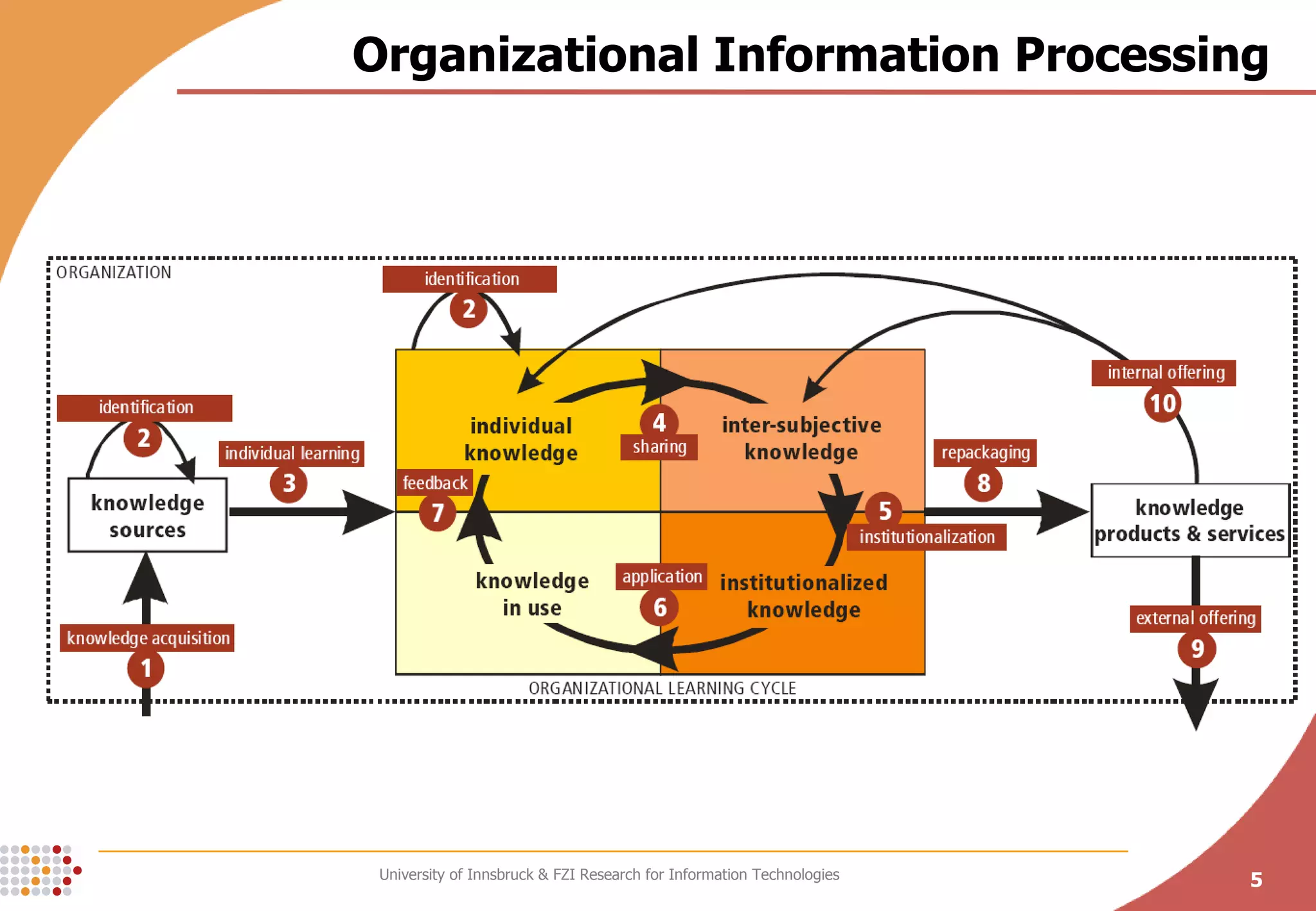
Organizational Information Processing
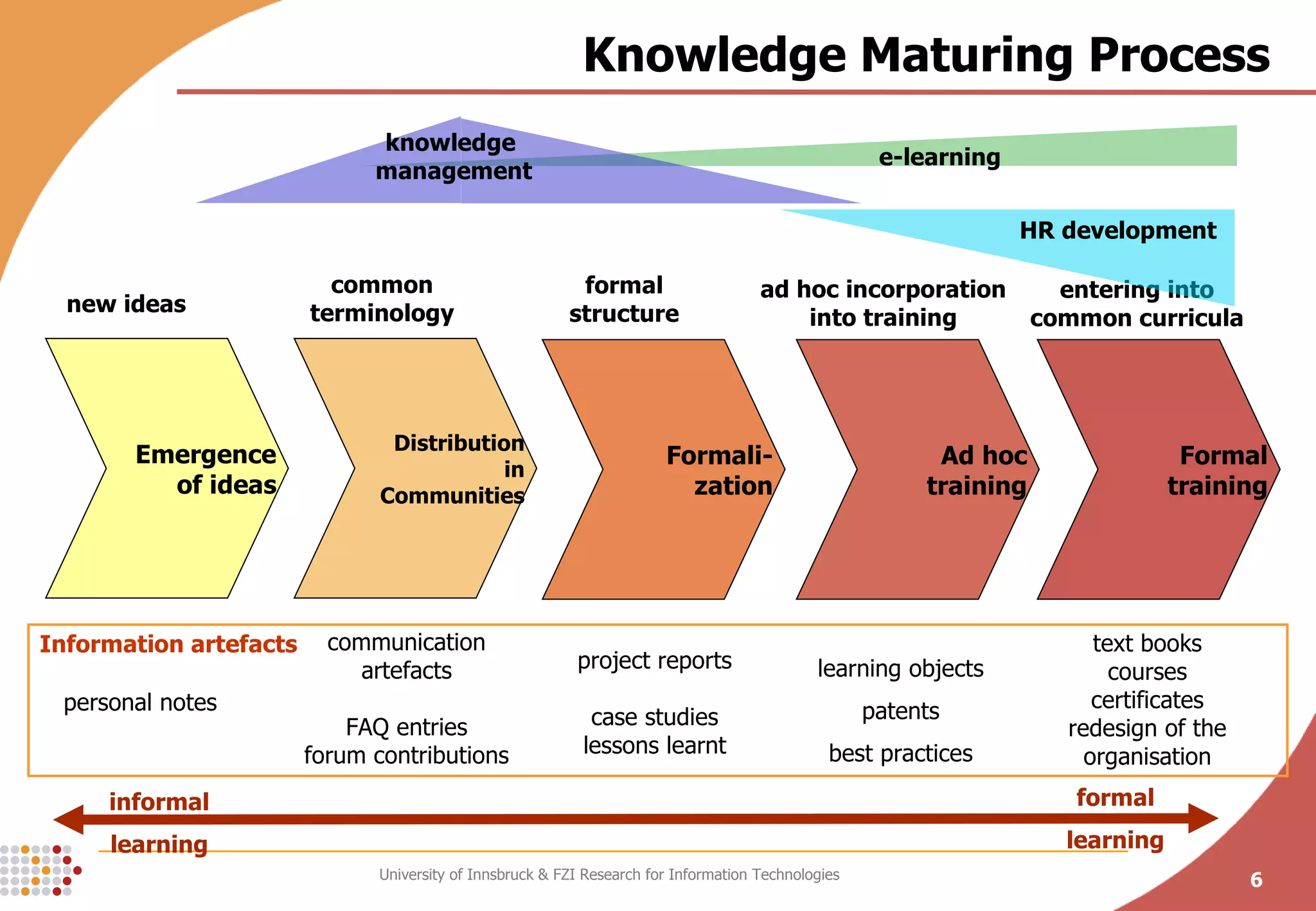
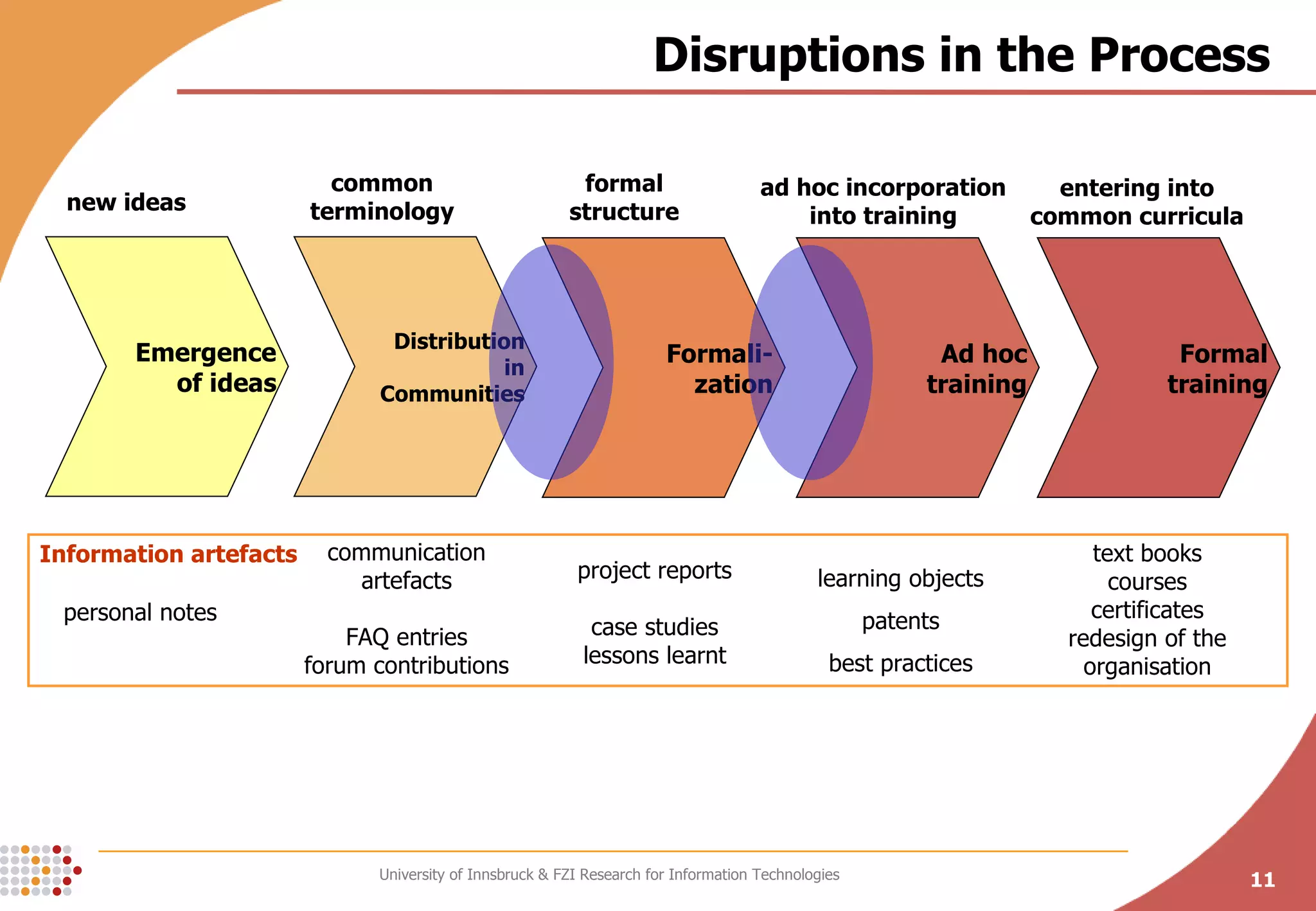
Knowledge Maturing Process Emergence of ideas Distribution in Communities Formali- zation Formal training new ideas common terminology ad hoc incorporation into training entering into common curricula communication artefacts FAQ entries forum contributions text books courses certificates redesign of the organisation learning objects patents best practices personal notes Ad hoc training project reports case studies lessons learnt formal structure Information artefacts e-learning knowledge  management HR development informal learning formal learning
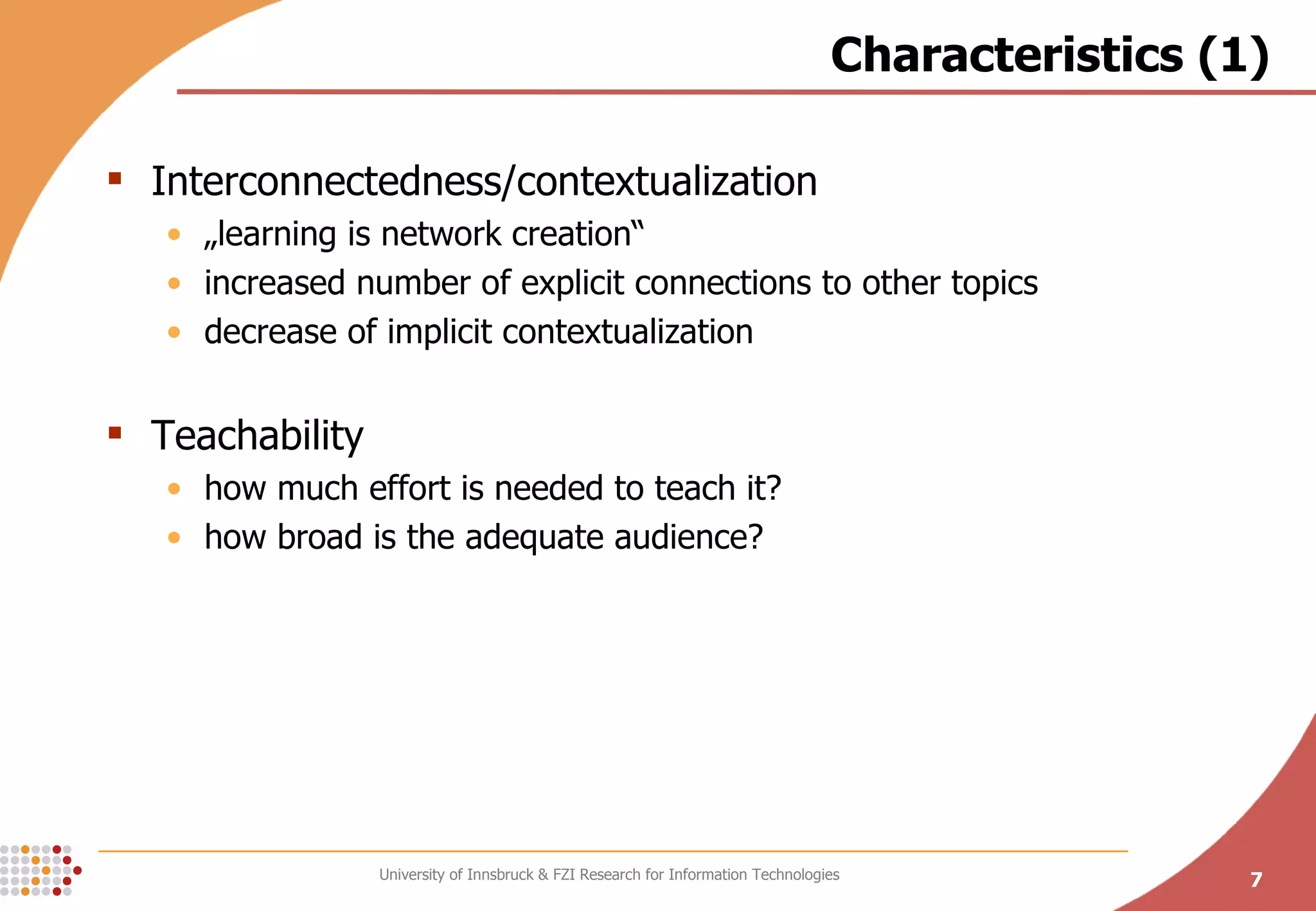
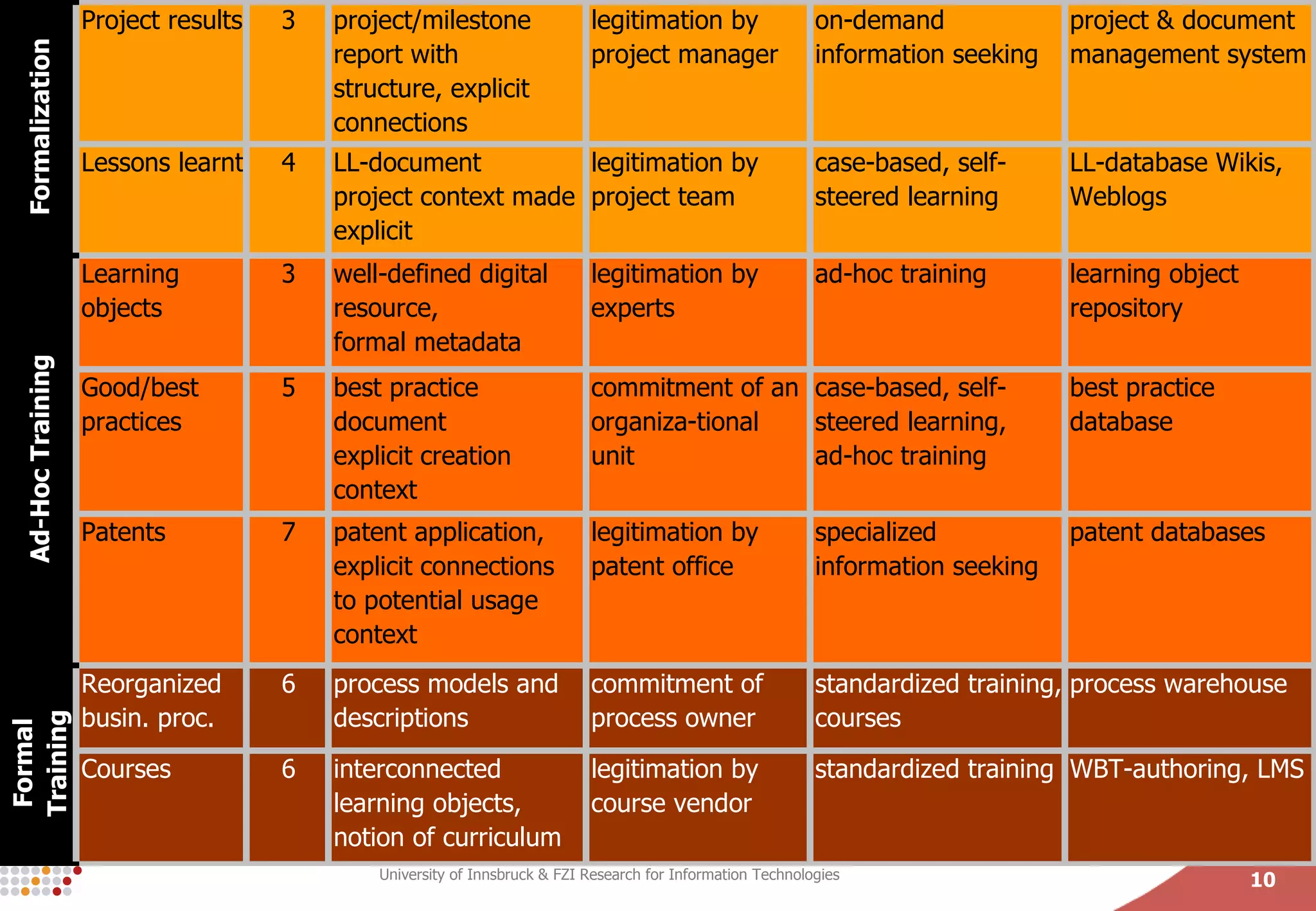
Characteristics (1) Interconnectedness/contextualization „ learning is network creation“ increased number of explicit connections to other topics decrease of implicit contextualization Teachability how much effort is needed to teach it? how broad is the adequate audience?
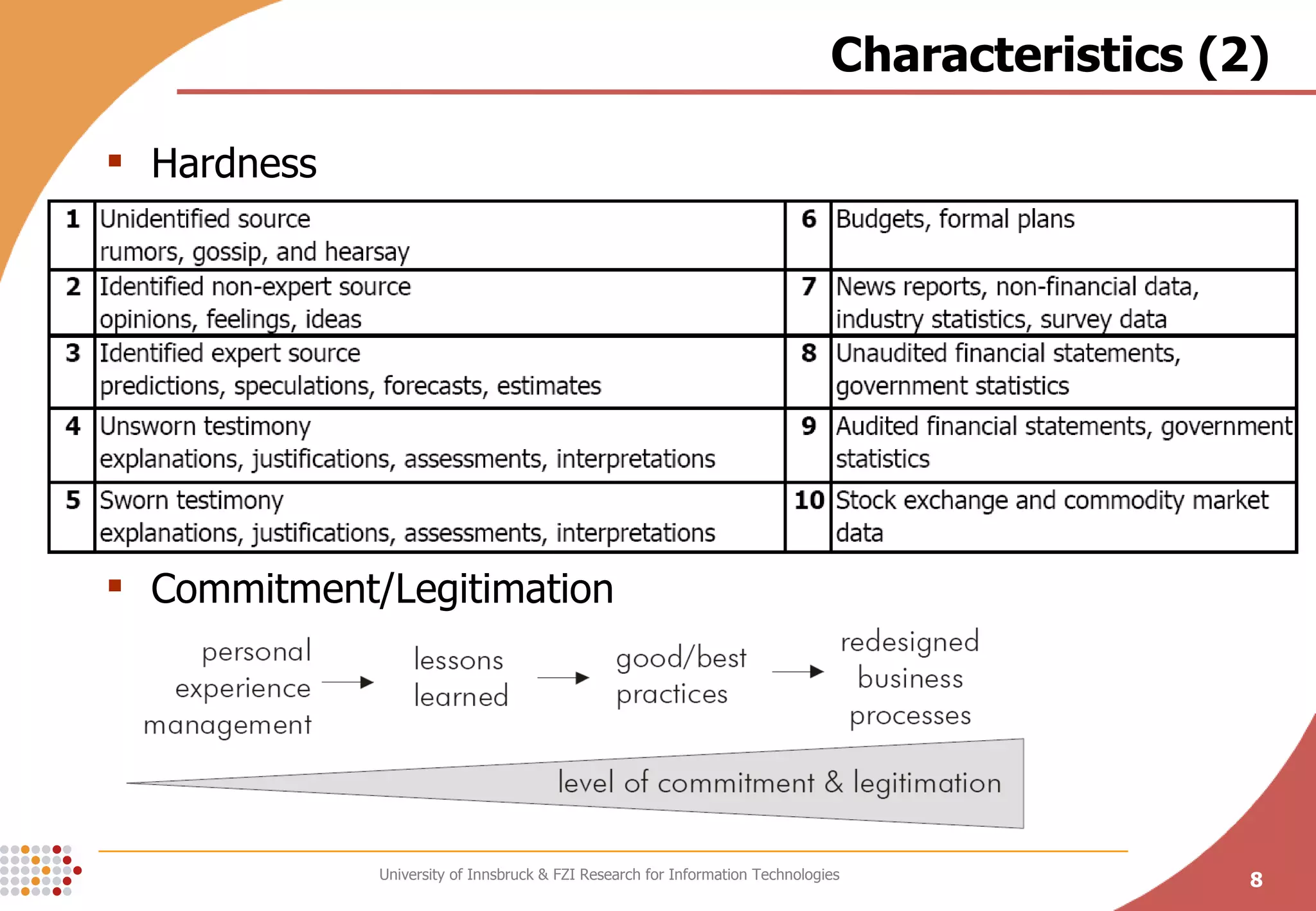
Characteristics (2) Hardness Commitment/Legitimation
 
 
Disruptions in the Process Emergence of ideas Distribution in Communities Formali- zation Formal training new ideas common terminology ad hoc incorporation into training entering into common curricula communication artefacts FAQ entries forum contributions text books courses certificates redesign of the organisation learning objects patents best practices personal notes Ad hoc training project reports case studies lessons learnt formal structure Information artefacts
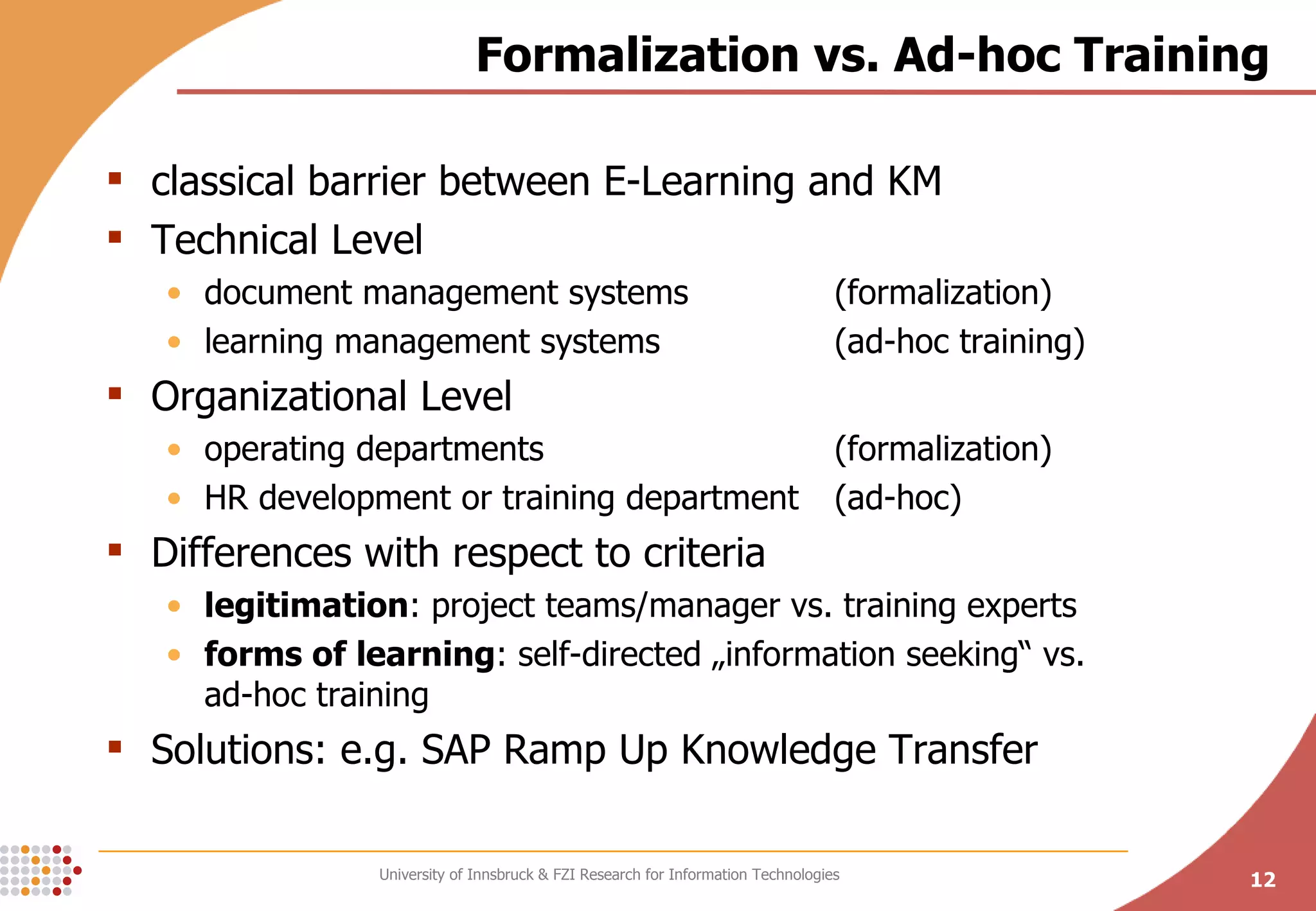
Formalization vs. Ad-hoc Training classical barrier between E-Learning and KM Technical Level document management systems  (formalization) learning management systems  (ad-hoc training) Organizational Level operating departments  (formalization) HR development or training department  (ad-hoc) Differences with respect to criteria legitimation : project teams/manager vs. training experts forms of learning : self-directed „information seeking“ vs.  ad-hoc training Solutions: e.g. SAP Ramp Up Knowledge Transfer
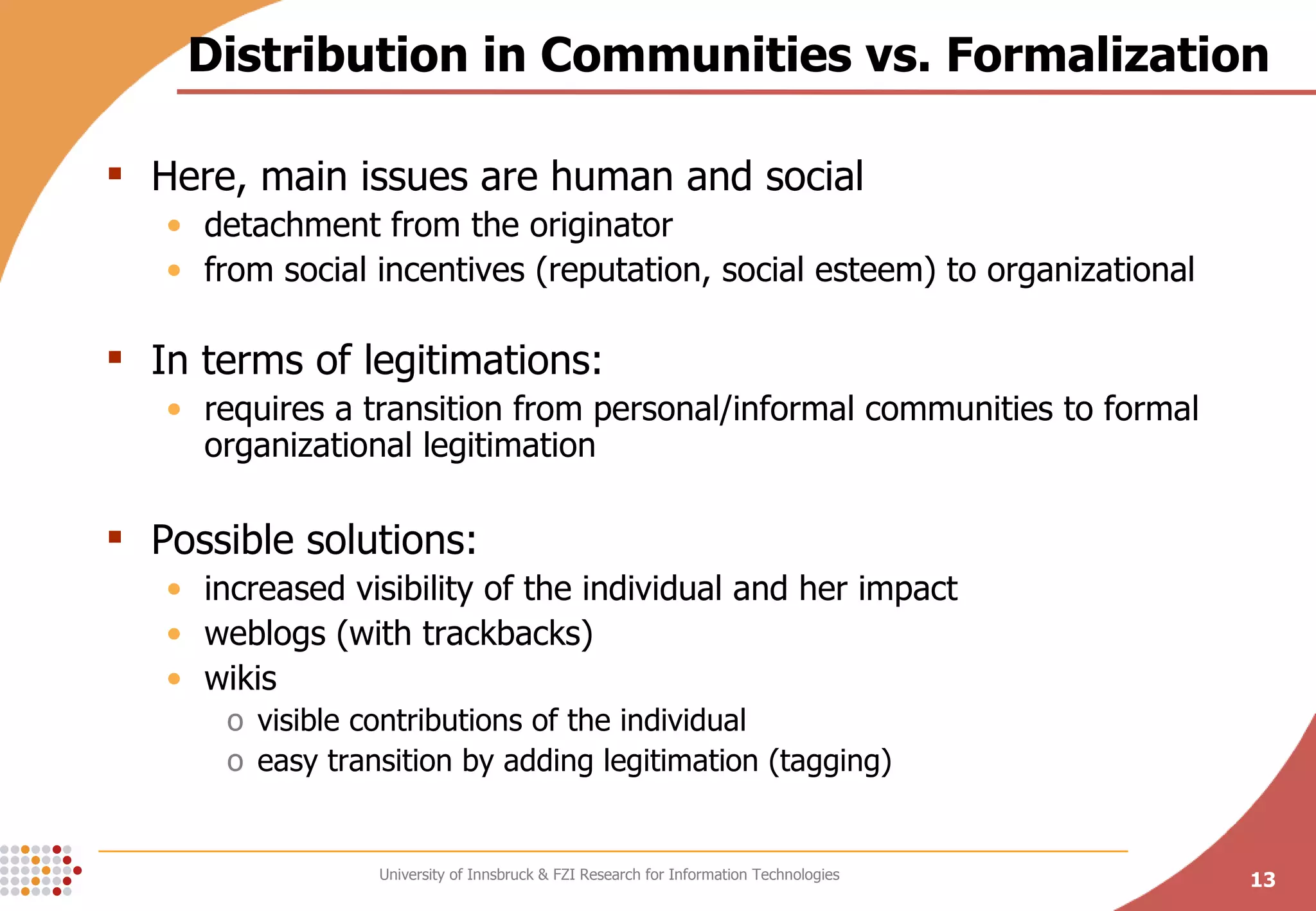
Distribution in Communities vs. Formalization Here, main issues are human and social detachment from the originator from social incentives (reputation, social esteem) to organizational In terms of legitimations:  requires a transition from personal/informal communities to formal organizational legitimation Possible solutions: increased visibility of the individual and her impact weblogs (with trackbacks) wikis  visible contributions of the individual easy transition by adding legitimation (tagging)
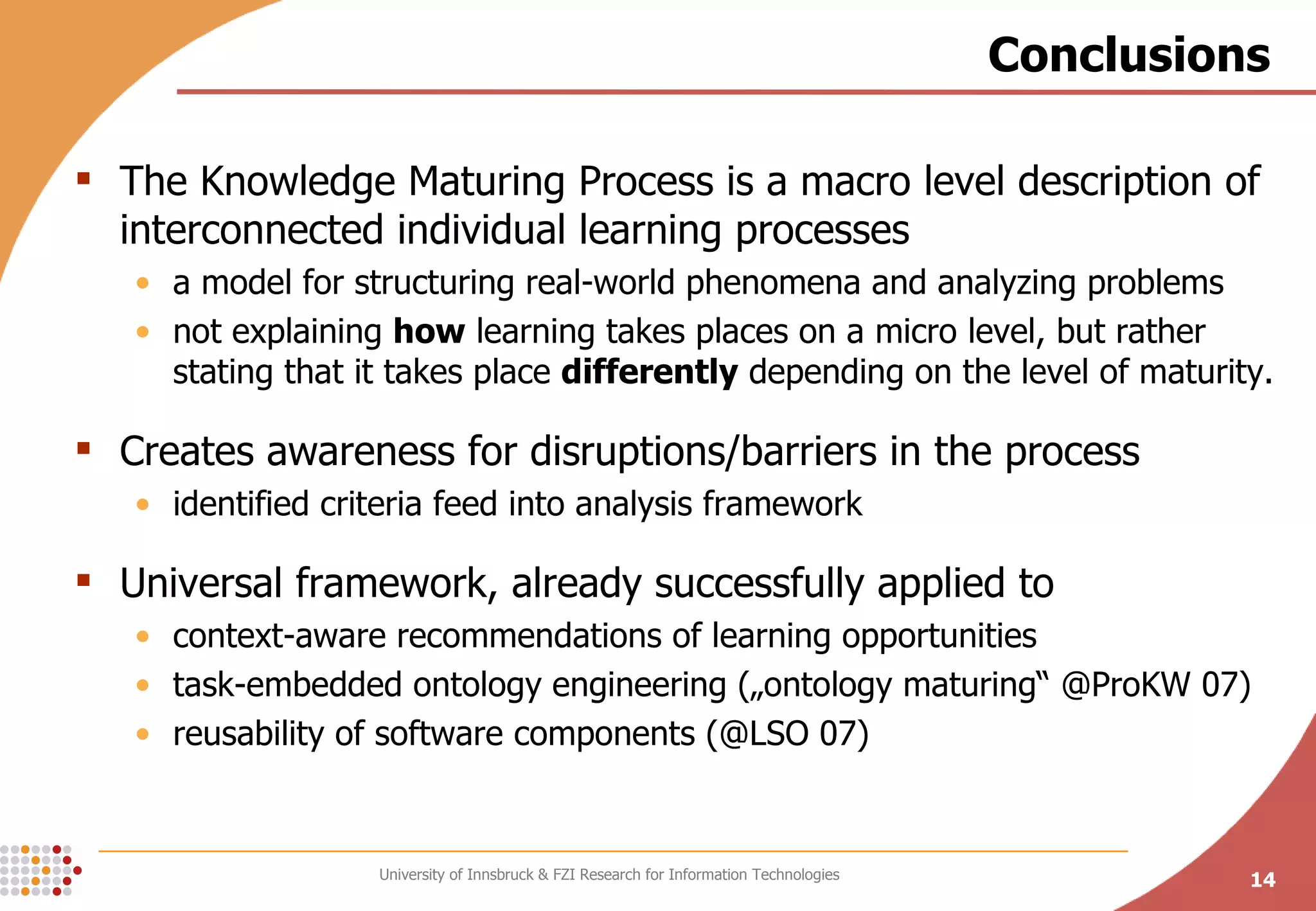
Conclusions The Knowledge Maturing Process is a macro level description of interconnected individual learning processes a model for structuring real-world phenomena and analyzing problems not explaining  how  learning takes places on a micro level, but rather stating that it takes place  differently  depending on the level of maturity. Creates awareness for disruptions/barriers in the process identified criteria feed into analysis framework Universal framework, already successfully applied to  context-aware recommendations of learning opportunities task-embedded ontology engineering („ontology maturing“ @ProKW 07) reusability of software components (@LSO 07)
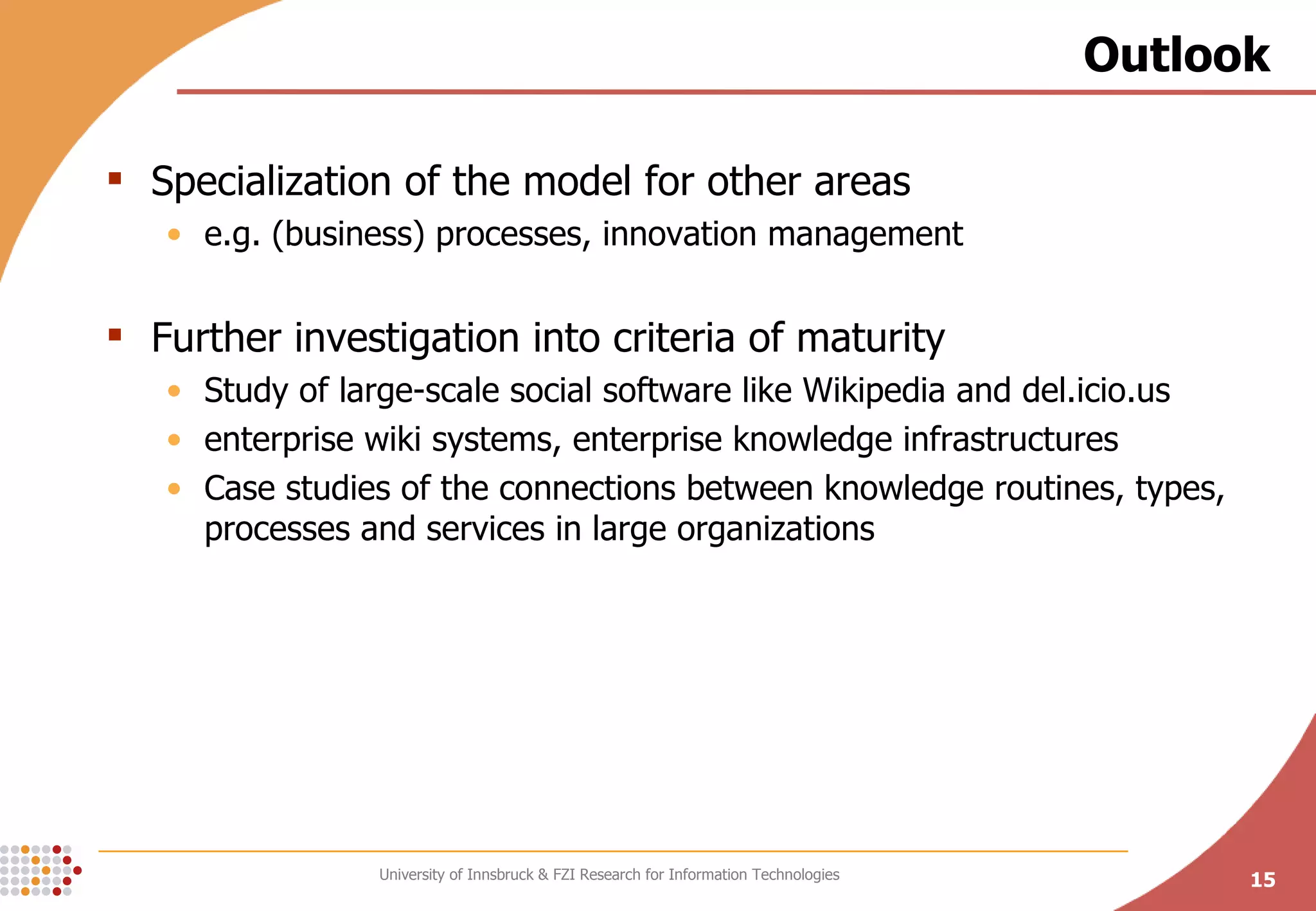
Outlook Specialization of the model for other areas e.g. (business) processes, innovation management Further investigation into criteria of maturity Study of large-scale social software like Wikipedia and del.icio.us enterprise wiki systems, enterprise knowledge infrastructures Case studies of the connections between knowledge routines, types, processes and services in large organizations

Characterizing Knowledge Maturing - A Conceptual Process Model Integrating E-Learning and Knowledge Management

  • 1.
    Characterizing Knowledge Maturing:A Conceptual Process Model for Integrating E-Learning and Knowledge Management 2 University of Innsbruck School of Management Information Systems [email_address] http://iwi.uibk.ac.at/ 2 FZI Research Center for Information Technologies Information Process Engineering Karlsruhe, GERMANY [email_address] http://www.fzi.de/ipe Ronald Maier 1 Andreas Schmidt 2
  • 2.
    Outline Motivation KnowledgeMaturing Process: the model Criteria for characterizing the different phases Two examples for disruptions in the process formalization vs. ad-hoc training distribution in communities vs. formalization Conclusions
  • 3.
    Motivation The "knowledgeflow" in companies is far from optimal although various LMS, KMS and other learning support systems are in place Key problems: (implicit) conceptual differences between the different disciplines that deal with “learning in organizations” current models suggest a rather smooth transition and ignore the differences
  • 4.
    Observations Analysis ofthe knowledge flow The nature of knowledge changes deepened level of understanding increasingly conceived as a part of a broader whole metaphors: consolidate or mature Different forms of learning are appropriate for different levels of maturity emergent ideas cannot be taught via seminars or courses variet y of content types available in organizations which represent knowledge and are used in ad-hoc learning situations standardized courses are efficient for well-established bodies of knowledge
  • 5.
  • 6.
    Knowledge Maturing ProcessEmergence of ideas Distribution in Communities Formali- zation Formal training new ideas common terminology ad hoc incorporation into training entering into common curricula communication artefacts FAQ entries forum contributions text books courses certificates redesign of the organisation learning objects patents best practices personal notes Ad hoc training project reports case studies lessons learnt formal structure Information artefacts e-learning knowledge management HR development informal learning formal learning
  • 7.
    Characteristics (1) Interconnectedness/contextualization„ learning is network creation“ increased number of explicit connections to other topics decrease of implicit contextualization Teachability how much effort is needed to teach it? how broad is the adequate audience?
  • 8.
    Characteristics (2) HardnessCommitment/Legitimation
  • 9.
  • 10.
  • 11.
    Disruptions in theProcess Emergence of ideas Distribution in Communities Formali- zation Formal training new ideas common terminology ad hoc incorporation into training entering into common curricula communication artefacts FAQ entries forum contributions text books courses certificates redesign of the organisation learning objects patents best practices personal notes Ad hoc training project reports case studies lessons learnt formal structure Information artefacts
  • 12.
    Formalization vs. Ad-hocTraining classical barrier between E-Learning and KM Technical Level document management systems (formalization) learning management systems (ad-hoc training) Organizational Level operating departments (formalization) HR development or training department (ad-hoc) Differences with respect to criteria legitimation : project teams/manager vs. training experts forms of learning : self-directed „information seeking“ vs. ad-hoc training Solutions: e.g. SAP Ramp Up Knowledge Transfer
  • 13.
    Distribution in Communitiesvs. Formalization Here, main issues are human and social detachment from the originator from social incentives (reputation, social esteem) to organizational In terms of legitimations: requires a transition from personal/informal communities to formal organizational legitimation Possible solutions: increased visibility of the individual and her impact weblogs (with trackbacks) wikis visible contributions of the individual easy transition by adding legitimation (tagging)
  • 14.
    Conclusions The KnowledgeMaturing Process is a macro level description of interconnected individual learning processes a model for structuring real-world phenomena and analyzing problems not explaining how learning takes places on a micro level, but rather stating that it takes place differently depending on the level of maturity. Creates awareness for disruptions/barriers in the process identified criteria feed into analysis framework Universal framework, already successfully applied to context-aware recommendations of learning opportunities task-embedded ontology engineering („ontology maturing“ @ProKW 07) reusability of software components (@LSO 07)
  • 15.
    Outlook Specialization ofthe model for other areas e.g. (business) processes, innovation management Further investigation into criteria of maturity Study of large-scale social software like Wikipedia and del.icio.us enterprise wiki systems, enterprise knowledge infrastructures Case studies of the connections between knowledge routines, types, processes and services in large organizations