Ch 36- Skeletal,
Muscular, and
Integumentary
Systems
36.1 Skeletal System
36.2 Muscular System
36.3 Integumentary System
36-1 Skeletal System
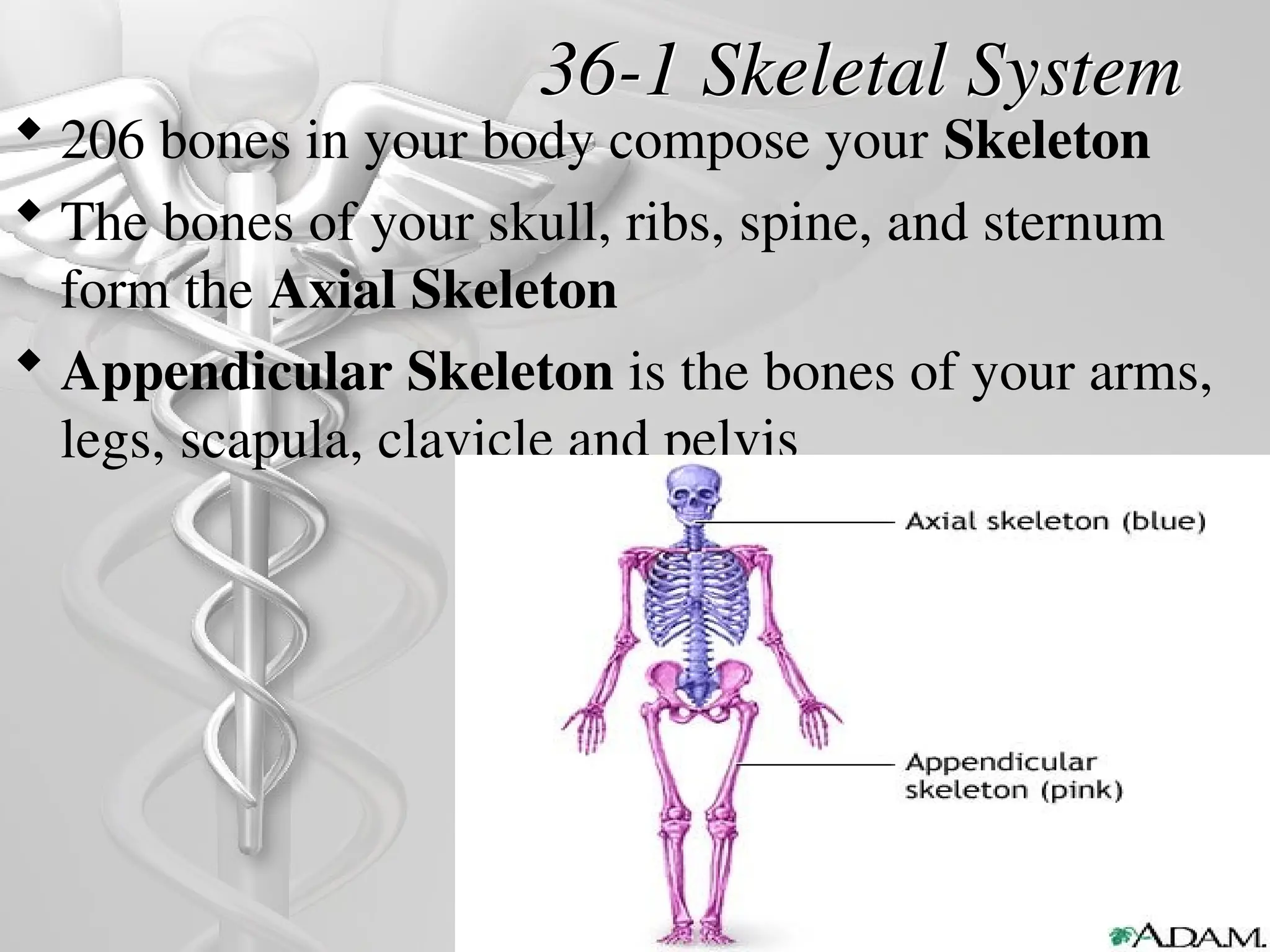
 206 bones in your body compose your Skeleton
 The bones of your skull, ribs, spine, and sternum
form the Axial Skeleton
 Appendicular Skeleton is the bones of your arms,
legs, scapula, clavicle and pelvis
36-1 Skeletal System
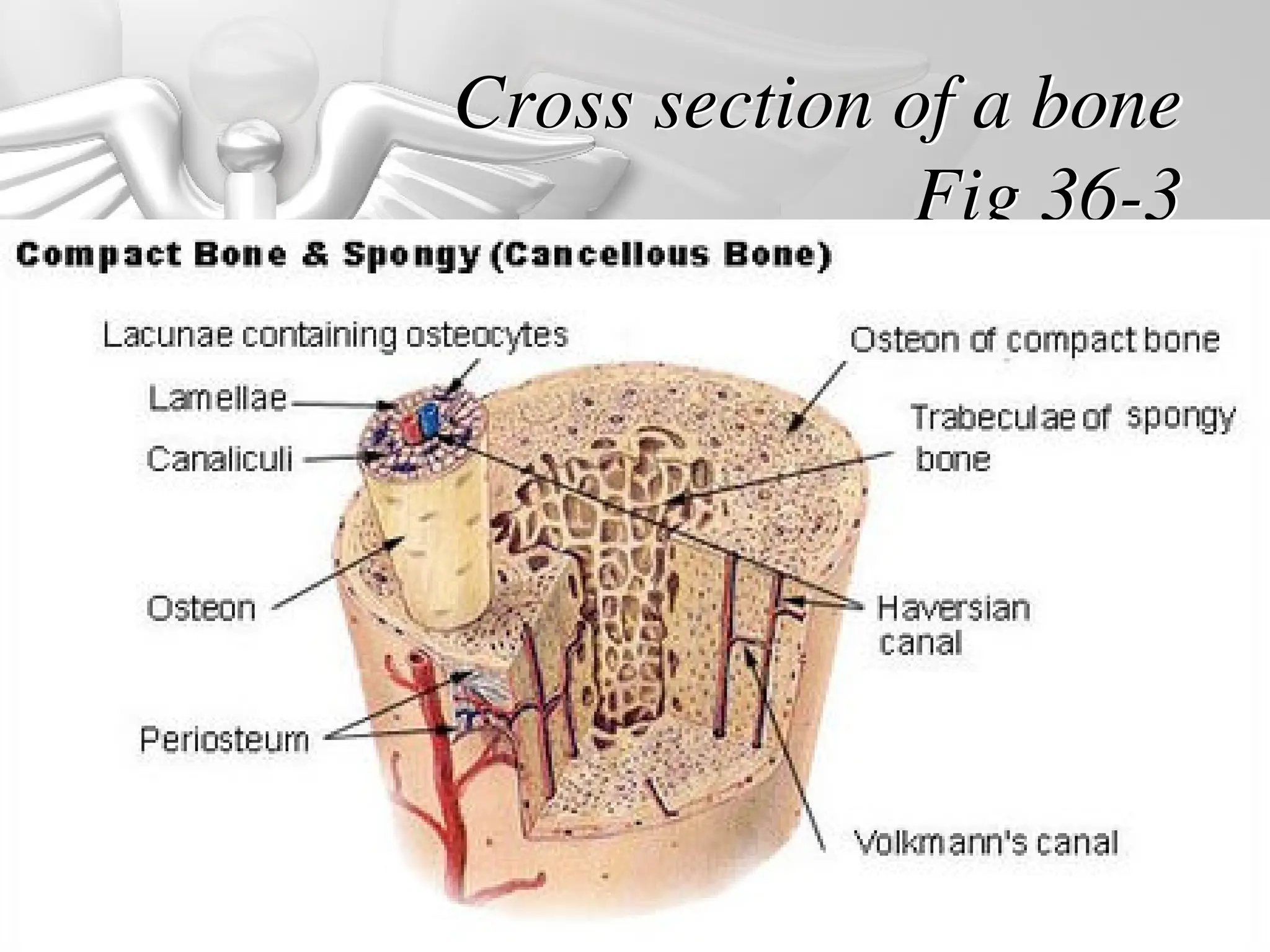
 The bone’s surface is covered by a tough membrane called
Periosteum
 Compact Bone is the layer under the periosteum which is
composed of a mineral crystal cylinders called Haversian
Canals which contain blood vessels.
 In between haversian canals are Osteocytes which are the
living bone
 A network of connective tissue inside the compact bone is
called Spongy Bone. (Hard for support)
 Bone Marrow is a soft tissue in the spongy bone that produces
red and white blood cells and also stores fat for energy reserve
Cross section of a bone
Fig 36-3
36-1 Cont
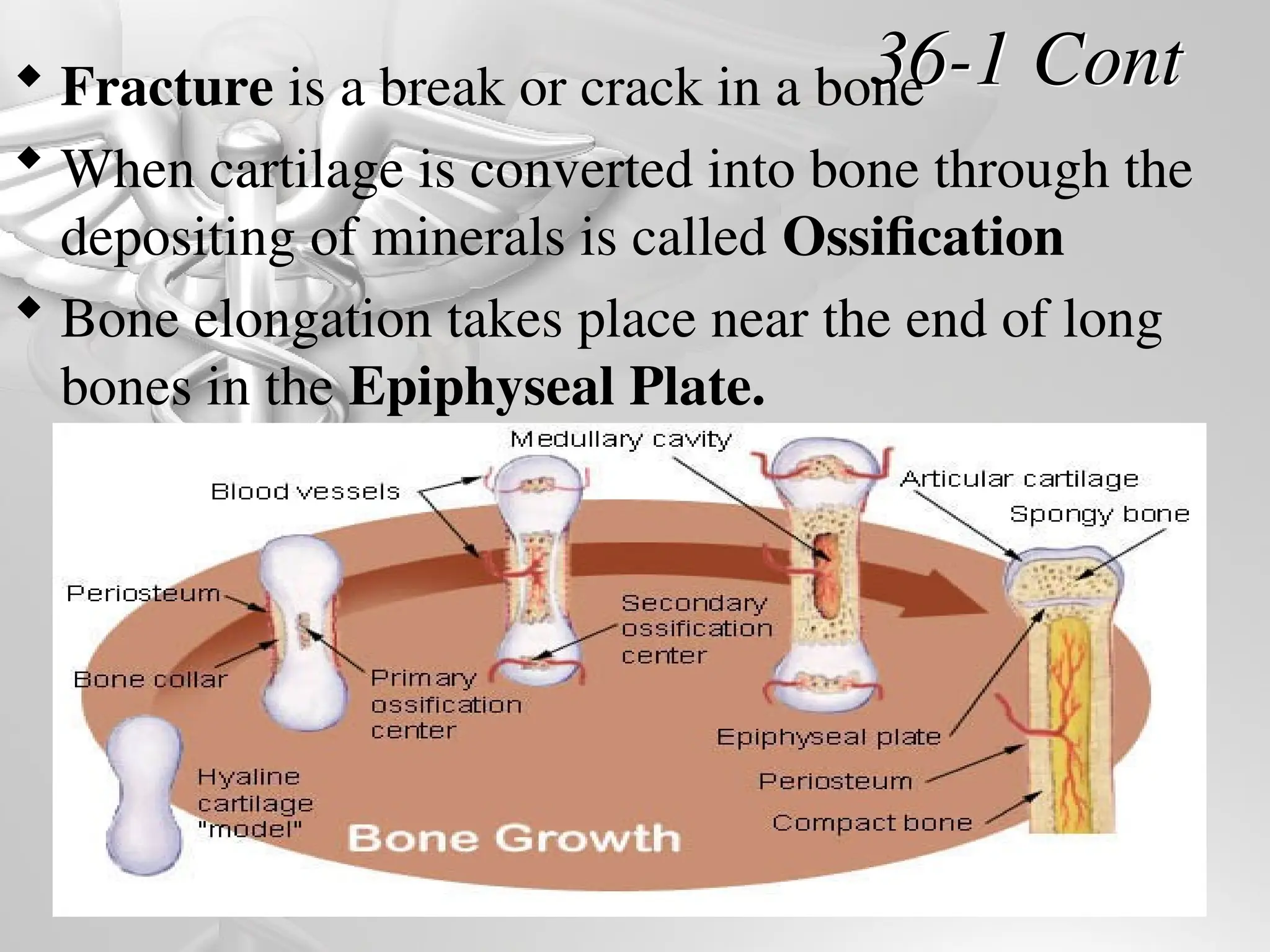
 Fracture is a break or crack in a bone
 When cartilage is converted into bone through the
depositing of minerals is called Ossification
 Bone elongation takes place near the end of long
bones in the Epiphyseal Plate.
36-1
 The place where two bones meet is a Joint
 Movable Joint- Majority of joints in the body in
which allows a wide range of movements
 Fixed Joint- Prevent movement (Bony plates that
compose the Skull)
 Semimovable Joints- permits limited movement-
Example-Spine
 Tough bands of connective tissue, called
Ligaments, hold the bones of the joint in place
 The term Arthritis is used to describe painful,
swollen joints
Questions
 Pg 925 (1-5)
36-2 Muscular System
 Skeletal muscle tissue is made up of elongated cells
called Muscle Fibers
 Each fiber has dark and light lines called Striation
 Fascicles are the dense bundles of muscle fibers
 Voluntary Muscles are consciously controlled
 Skeletal Muscles
 Because most of its movements cannot be
consciously controlled, Smooth and Cardiac muscle
is referred to as Involuntary Muscles
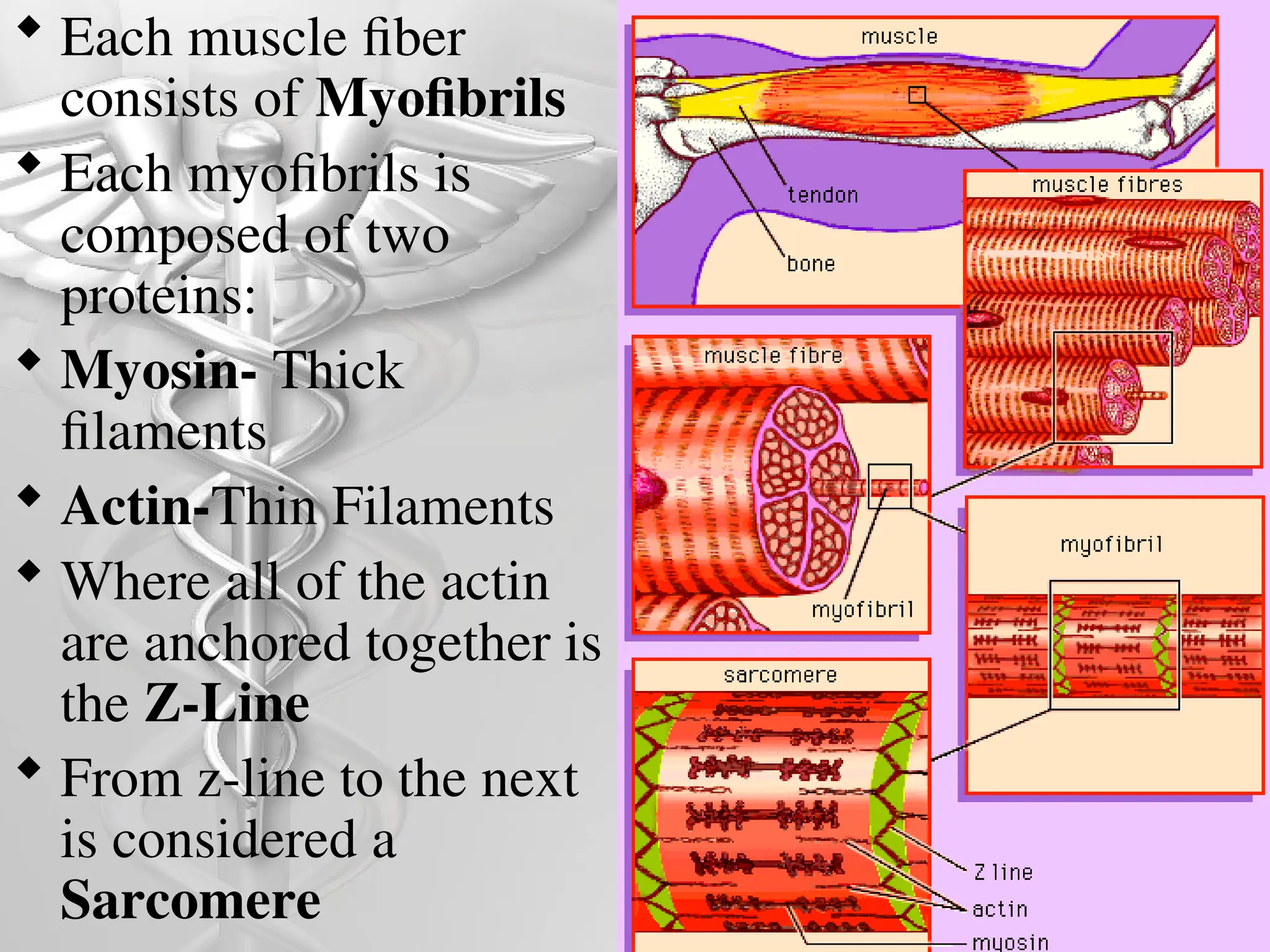
 Each muscle fiber
consists of Myofibrils
 Each myofibrils is
composed of two
proteins:
 Myosin- Thick
filaments
 Actin-Thin Filaments
 Where all of the actin
are anchored together is
the Z-Line
 From z-line to the next
is considered a
Sarcomere
36-2 Muscular System
 Muscle are attached to periosteum by a Tendon
 The point where a muscle attaches to a stationary bone is
called the Origin
 The point where a muscle attaches to a moving bone is
called the Insertion
 Flexor- Muscle that bends the joint-Bicep
 Extensor- Muscle that straightens the joint- Triceps
 Neuromuscular junction is to point in which the motor
neuron and a skeletal muscle meet
 The neurotransmitter released at this junction is
Acetylcholine
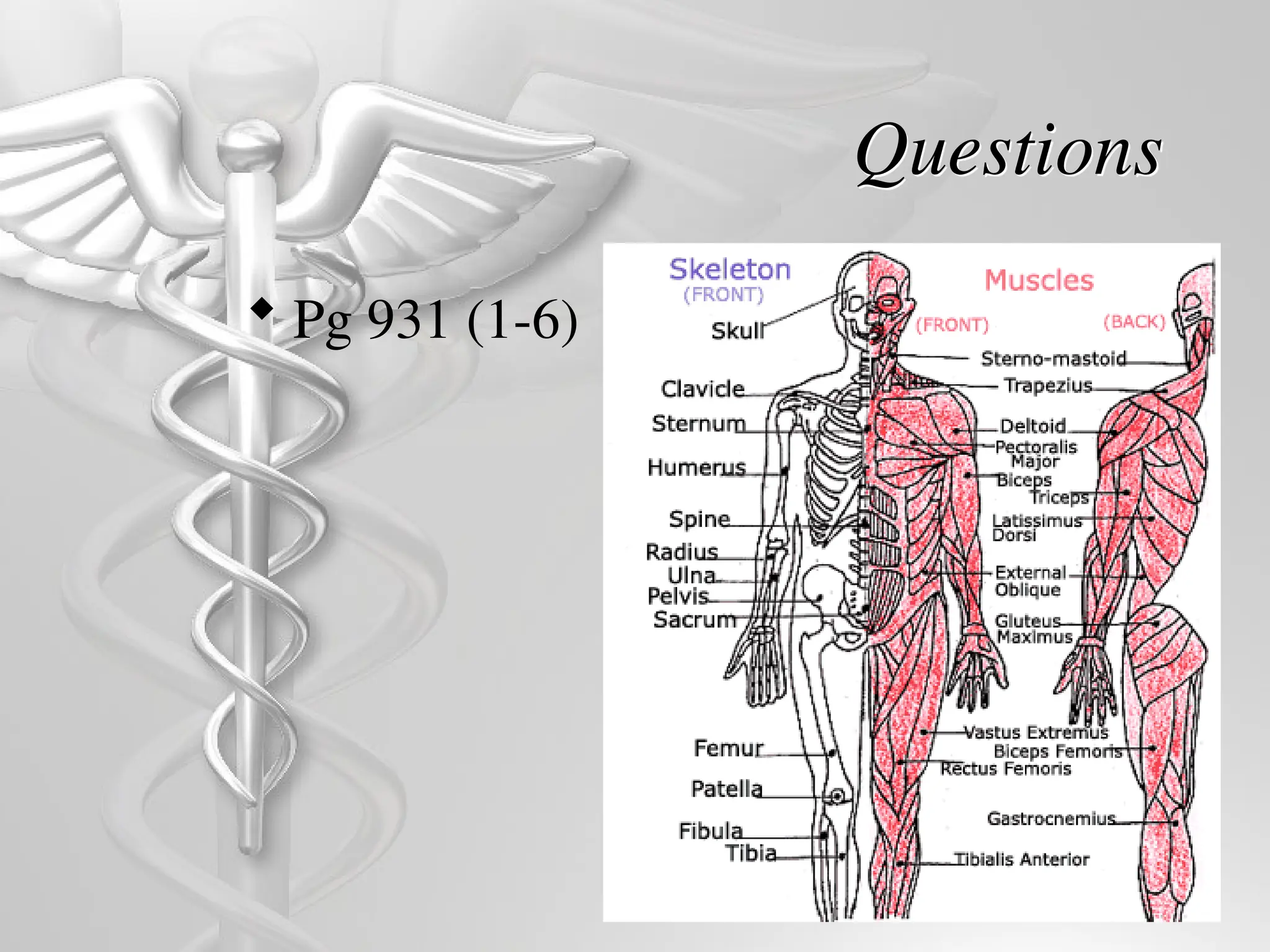
Questions
 Pg 931 (1-6)
36-3 Integumentary
System (Skin)
 Skin is the body’s largest organ
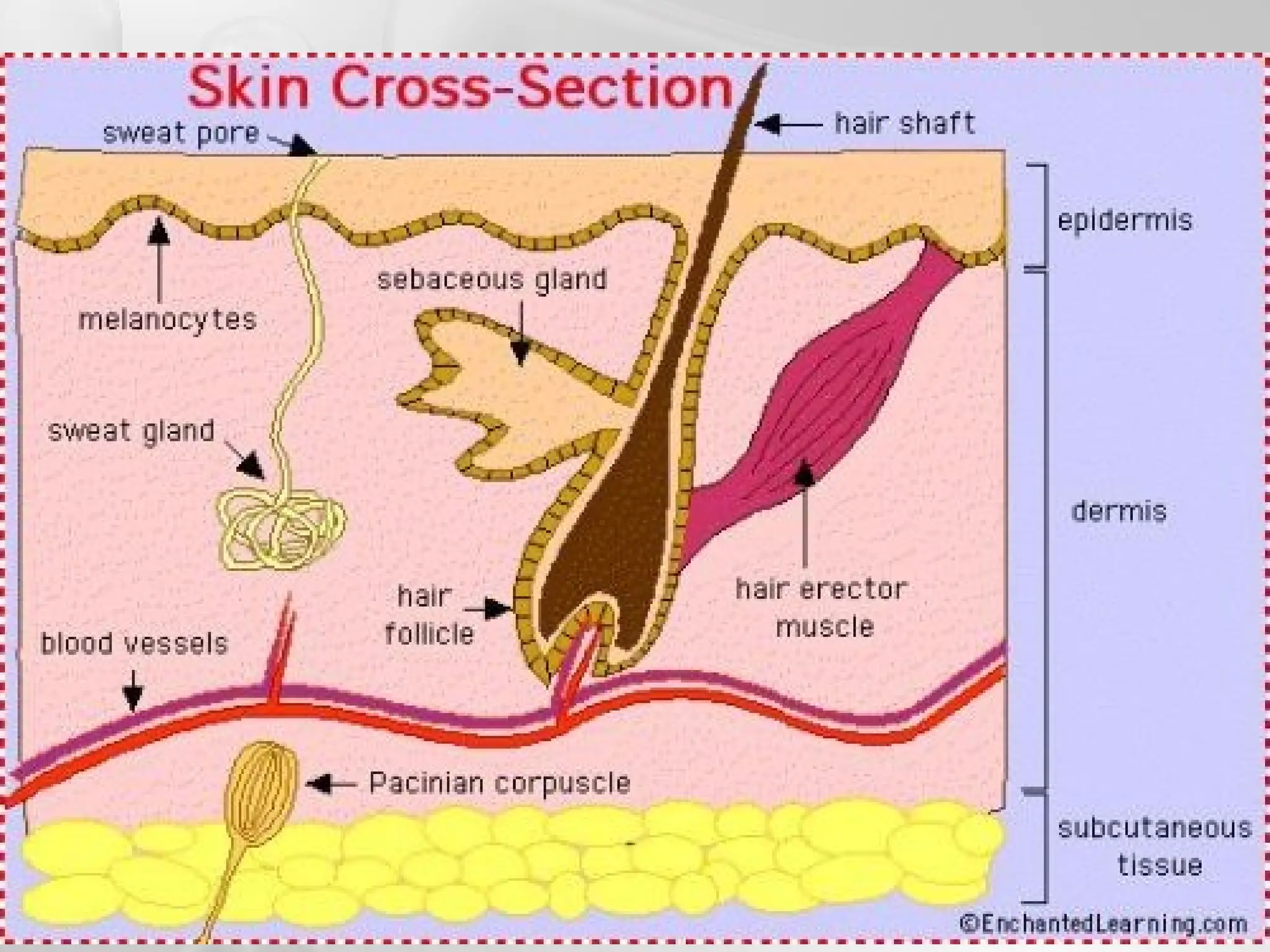
 The outer layer of the skin, Epidermis, is composed of
layers of thin Epithelial cells (Dead)
 Keratin- A protein in epidermal cells which makes it
leathery and waterproof
 A color pigment in skin called Melanin, is what absorbed
Ultra Violet light to protect us
 The inner layer of living skin, Dermis, and has specialized
structures such as Sensory Neurons, Blood Vessels, Muscle
Fibers, Hair Follicles, and Glands
36-3 Cont..
 Hair, which protects and insulates the body is produced in
the dermis in pits called Hair Follicles
 Exocrine glands- Glands that release secretion through
ducts in the skin
 Glands that release excess water, salt and Urea are called
Sweat Glands
 Oil Glands, Which are found in large numbers on the face
and scalp produce a fatty substance known as Sebum
 Excess amount of Sebum, dead cells and bacteria produces
the skin disorder Acne
Book Questions
 Pg 936- (1-6)
 HW if you don’t finish
 Pg 939 (1-20) complete sentences
Chapter_36_Skeletal_Muscular_and_Integ.ppt

  • 1.
    Ch 36- Skeletal, Muscular,and Integumentary Systems 36.1 Skeletal System 36.2 Muscular System 36.3 Integumentary System
  • 2.
    36-1 Skeletal System 206 bones in your body compose your Skeleton  The bones of your skull, ribs, spine, and sternum form the Axial Skeleton  Appendicular Skeleton is the bones of your arms, legs, scapula, clavicle and pelvis
  • 3.
    36-1 Skeletal System The bone’s surface is covered by a tough membrane called Periosteum  Compact Bone is the layer under the periosteum which is composed of a mineral crystal cylinders called Haversian Canals which contain blood vessels.  In between haversian canals are Osteocytes which are the living bone  A network of connective tissue inside the compact bone is called Spongy Bone. (Hard for support)  Bone Marrow is a soft tissue in the spongy bone that produces red and white blood cells and also stores fat for energy reserve
  • 4.
    Cross section ofa bone Fig 36-3
  • 5.
    36-1 Cont  Fractureis a break or crack in a bone  When cartilage is converted into bone through the depositing of minerals is called Ossification  Bone elongation takes place near the end of long bones in the Epiphyseal Plate.
  • 6.
    36-1  The placewhere two bones meet is a Joint  Movable Joint- Majority of joints in the body in which allows a wide range of movements  Fixed Joint- Prevent movement (Bony plates that compose the Skull)  Semimovable Joints- permits limited movement- Example-Spine  Tough bands of connective tissue, called Ligaments, hold the bones of the joint in place  The term Arthritis is used to describe painful, swollen joints
  • 7.
  • 8.
    36-2 Muscular System Skeletal muscle tissue is made up of elongated cells called Muscle Fibers  Each fiber has dark and light lines called Striation  Fascicles are the dense bundles of muscle fibers  Voluntary Muscles are consciously controlled  Skeletal Muscles  Because most of its movements cannot be consciously controlled, Smooth and Cardiac muscle is referred to as Involuntary Muscles
  • 9.
     Each musclefiber consists of Myofibrils  Each myofibrils is composed of two proteins:  Myosin- Thick filaments  Actin-Thin Filaments  Where all of the actin are anchored together is the Z-Line  From z-line to the next is considered a Sarcomere
  • 10.
    36-2 Muscular System Muscle are attached to periosteum by a Tendon  The point where a muscle attaches to a stationary bone is called the Origin  The point where a muscle attaches to a moving bone is called the Insertion  Flexor- Muscle that bends the joint-Bicep  Extensor- Muscle that straightens the joint- Triceps  Neuromuscular junction is to point in which the motor neuron and a skeletal muscle meet  The neurotransmitter released at this junction is Acetylcholine
  • 11.
  • 12.
    36-3 Integumentary System (Skin) Skin is the body’s largest organ  The outer layer of the skin, Epidermis, is composed of layers of thin Epithelial cells (Dead)  Keratin- A protein in epidermal cells which makes it leathery and waterproof  A color pigment in skin called Melanin, is what absorbed Ultra Violet light to protect us  The inner layer of living skin, Dermis, and has specialized structures such as Sensory Neurons, Blood Vessels, Muscle Fibers, Hair Follicles, and Glands
  • 14.
    36-3 Cont..  Hair,which protects and insulates the body is produced in the dermis in pits called Hair Follicles  Exocrine glands- Glands that release secretion through ducts in the skin  Glands that release excess water, salt and Urea are called Sweat Glands  Oil Glands, Which are found in large numbers on the face and scalp produce a fatty substance known as Sebum  Excess amount of Sebum, dead cells and bacteria produces the skin disorder Acne
  • 15.
    Book Questions  Pg936- (1-6)  HW if you don’t finish  Pg 939 (1-20) complete sentences