Learning Outcomes
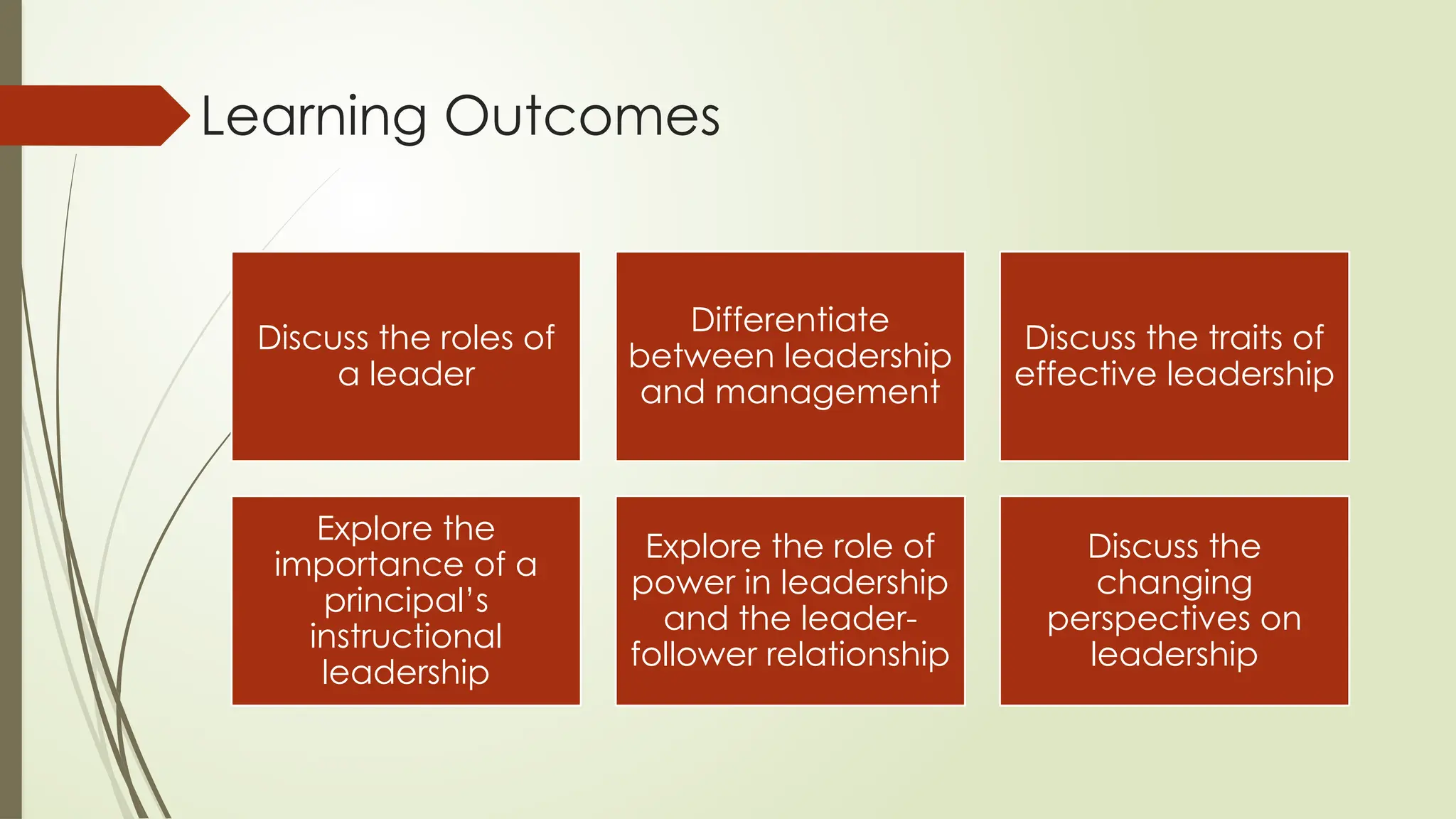
Discuss theroles of
a leader
Differentiate
between leadership
and management
Discuss the traits of
effective leadership
Explore the
importance of a
principal’s
instructional
leadership
Explore the role of
power in leadership
and the leader-
follower relationship
Discuss the
changing
perspectives on
leadership
3.
Definition of Leadership
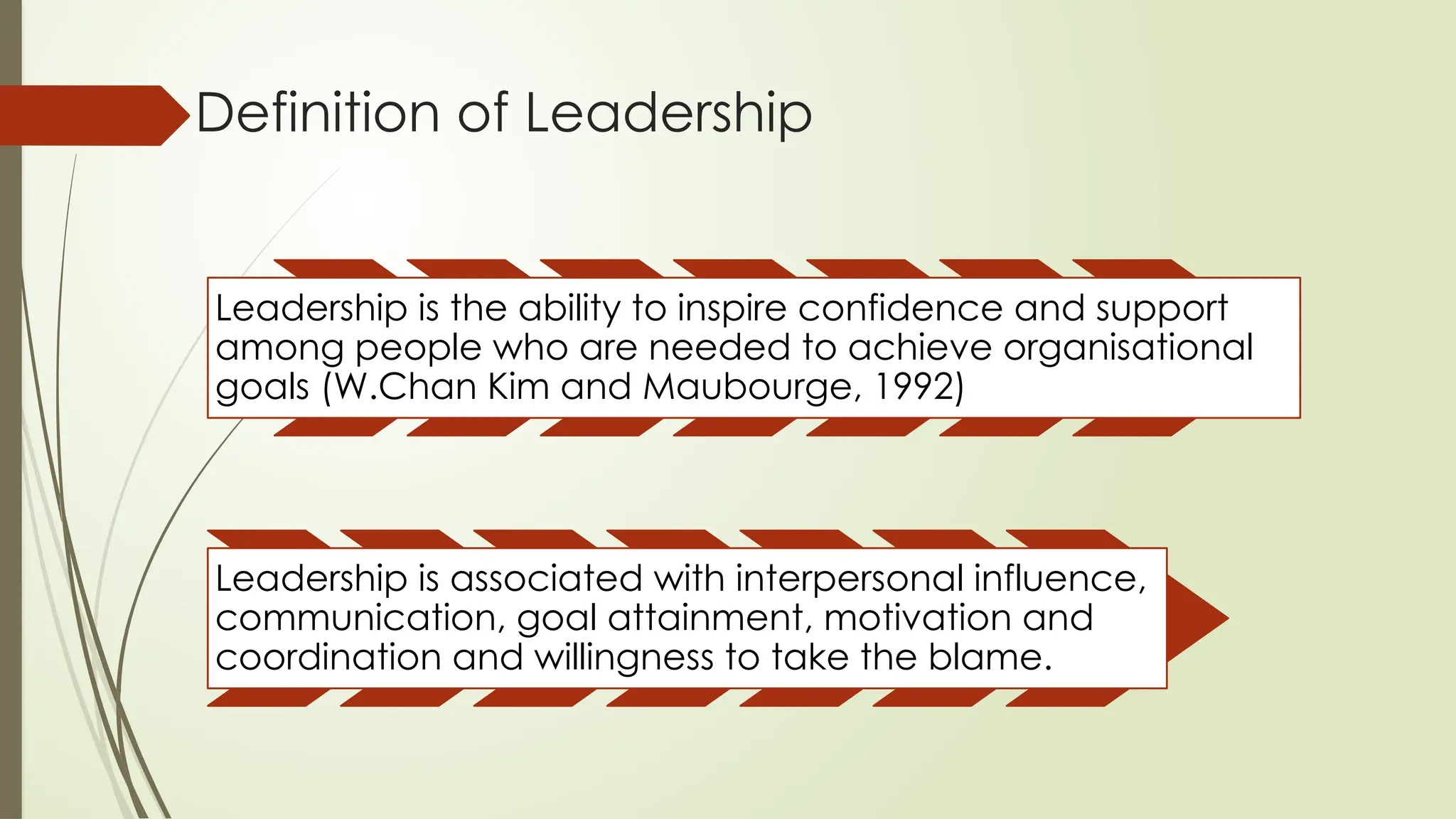
Leadershipis the ability to inspire confidence and support
among people who are needed to achieve organisational
goals (W.Chan Kim and Maubourge, 1992)
Leadership is associated with interpersonal influence,
communication, goal attainment, motivation and
coordination and willingness to take the blame.
4.
Functions of Managementand Leadership
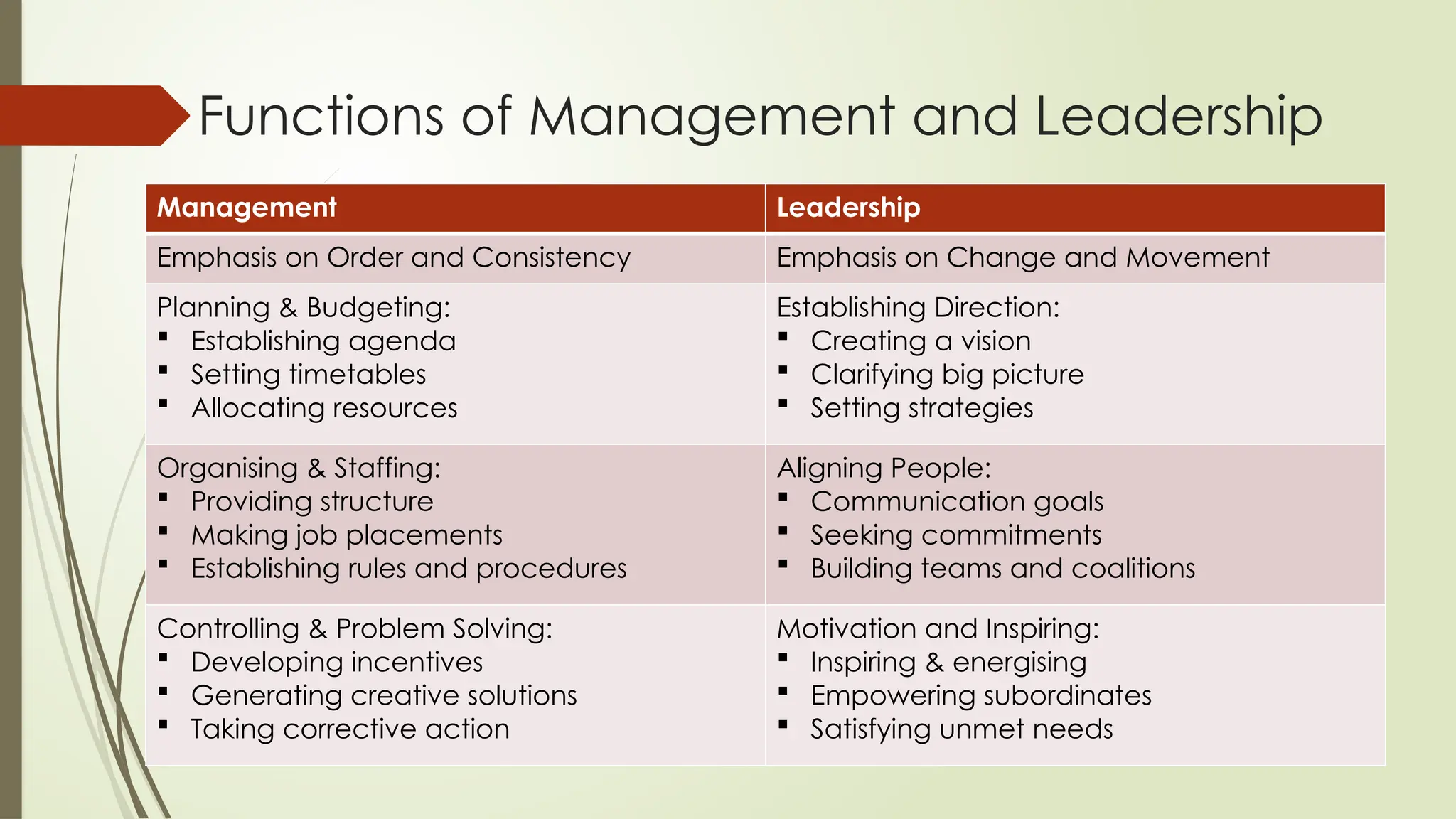
Management Leadership
Emphasis on Order and Consistency Emphasis on Change and Movement
Planning & Budgeting:
Establishing agenda
Setting timetables
Allocating resources
Establishing Direction:
Creating a vision
Clarifying big picture
Setting strategies
Organising & Staffing:
Providing structure
Making job placements
Establishing rules and procedures
Aligning People:
Communication goals
Seeking commitments
Building teams and coalitions
Controlling & Problem Solving:
Developing incentives
Generating creative solutions
Taking corrective action
Motivation and Inspiring:
Inspiring & energising
Empowering subordinates
Satisfying unmet needs
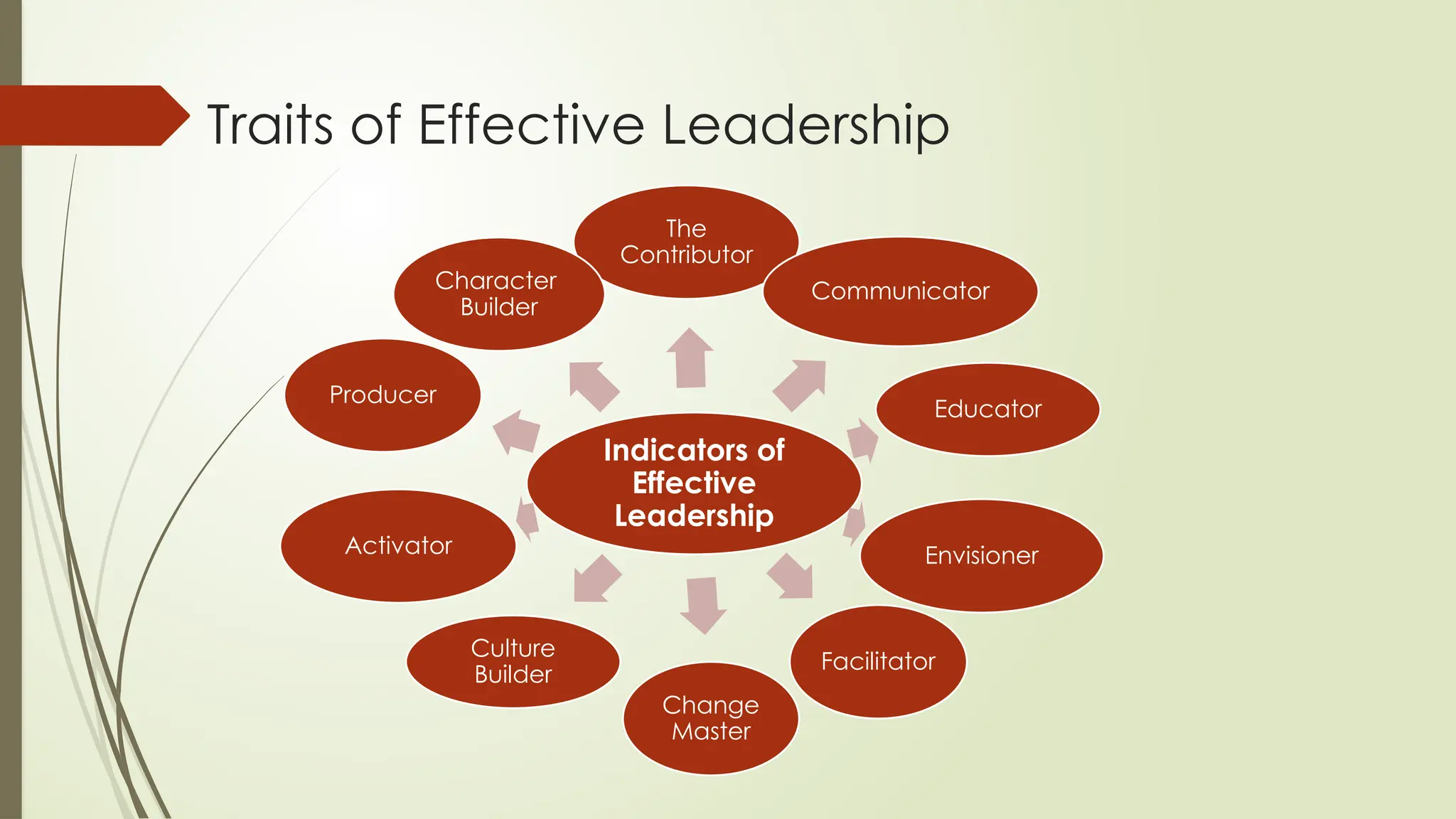
Traits of EffectiveLeadership
Indicators of
Effective
Leadership
The
Contributor
Communicator
Educator
Envisioner
Facilitator
Change
Master
Culture
Builder
Activator
Producer
Character
Builder
7.
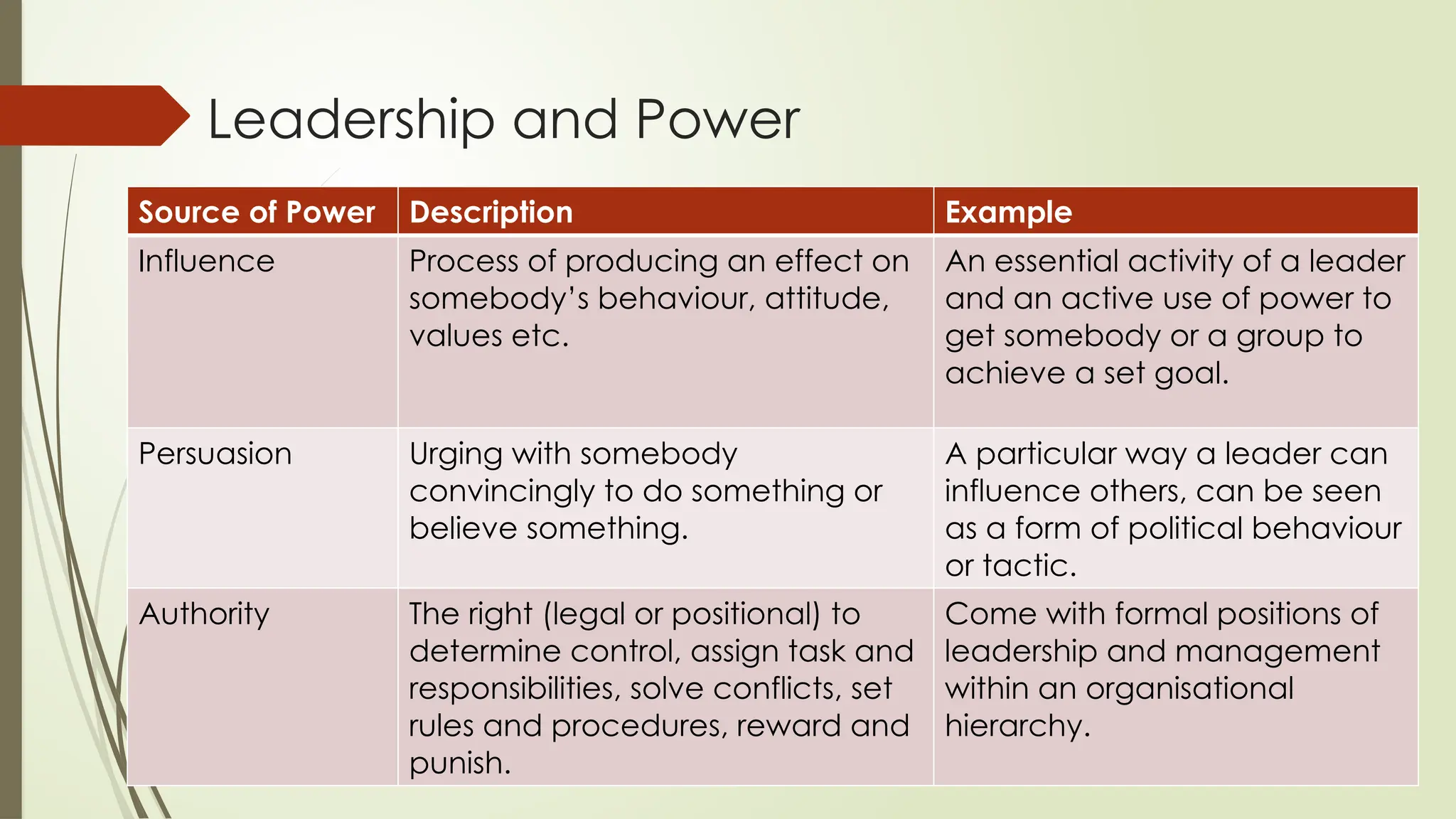
Leadership and Power
Sourceof Power Description Example
Influence Process of producing an effect on
somebody’s behaviour, attitude,
values etc.
An essential activity of a leader
and an active use of power to
get somebody or a group to
achieve a set goal.
Persuasion Urging with somebody
convincingly to do something or
believe something.
A particular way a leader can
influence others, can be seen
as a form of political behaviour
or tactic.
Authority The right (legal or positional) to
determine control, assign task and
responsibilities, solve conflicts, set
rules and procedures, reward and
punish.
Come with formal positions of
leadership and management
within an organisational
hierarchy.
8.
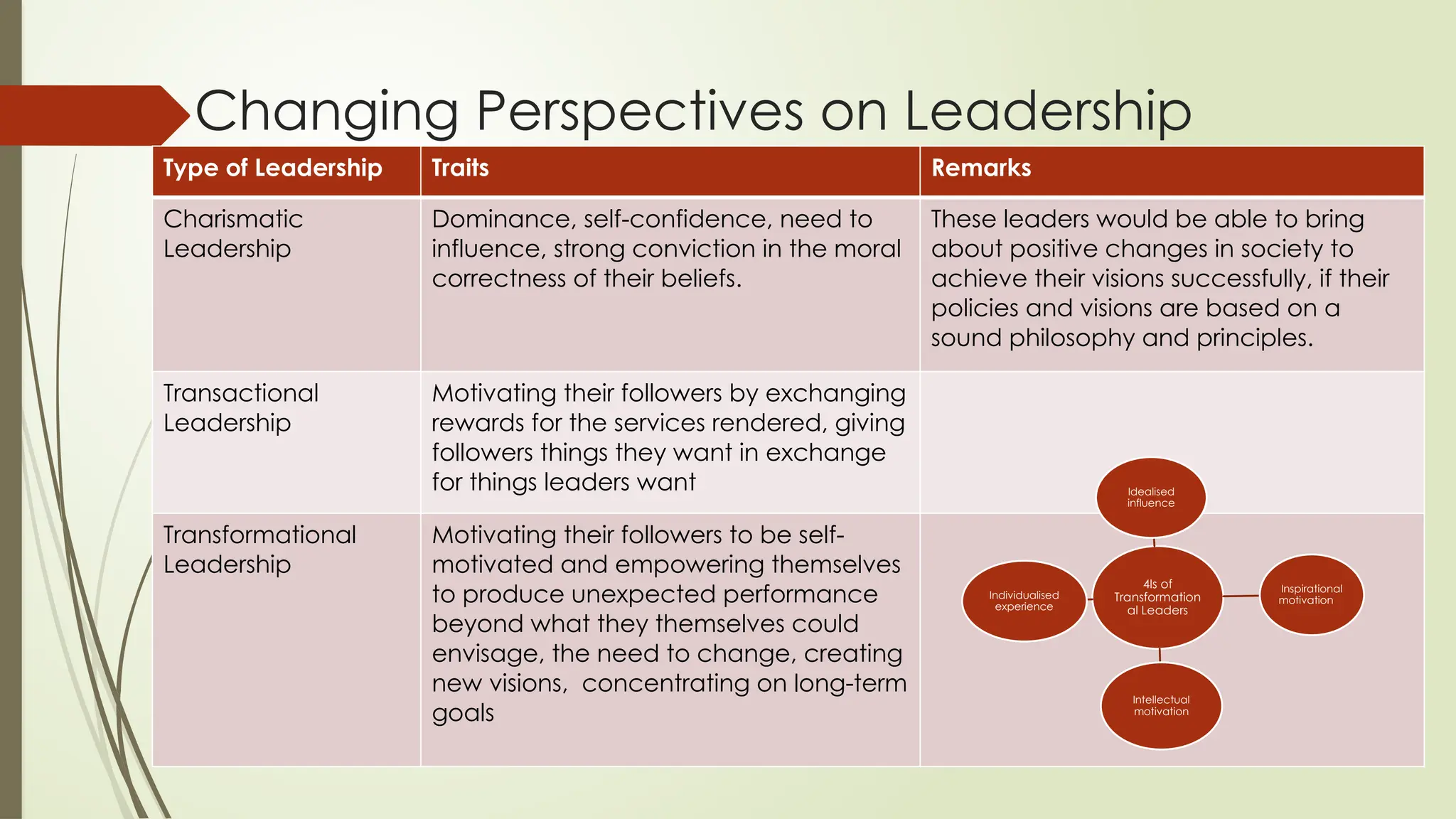
Changing Perspectives onLeadership
Type of Leadership Traits Remarks
Charismatic
Leadership
Dominance, self-confidence, need to
influence, strong conviction in the moral
correctness of their beliefs.
These leaders would be able to bring
about positive changes in society to
achieve their visions successfully, if their
policies and visions are based on a
sound philosophy and principles.
Transactional
Leadership
Motivating their followers by exchanging
rewards for the services rendered, giving
followers things they want in exchange
for things leaders want
Transformational
Leadership
Motivating their followers to be self-
motivated and empowering themselves
to produce unexpected performance
beyond what they themselves could
envisage, the need to change, creating
new visions, concentrating on long-term
goals
4Is of
Transformation
al Leaders
Idealised
influence
Inspirational
motivation
Intellectual
motivation
Individualised
experience
9.
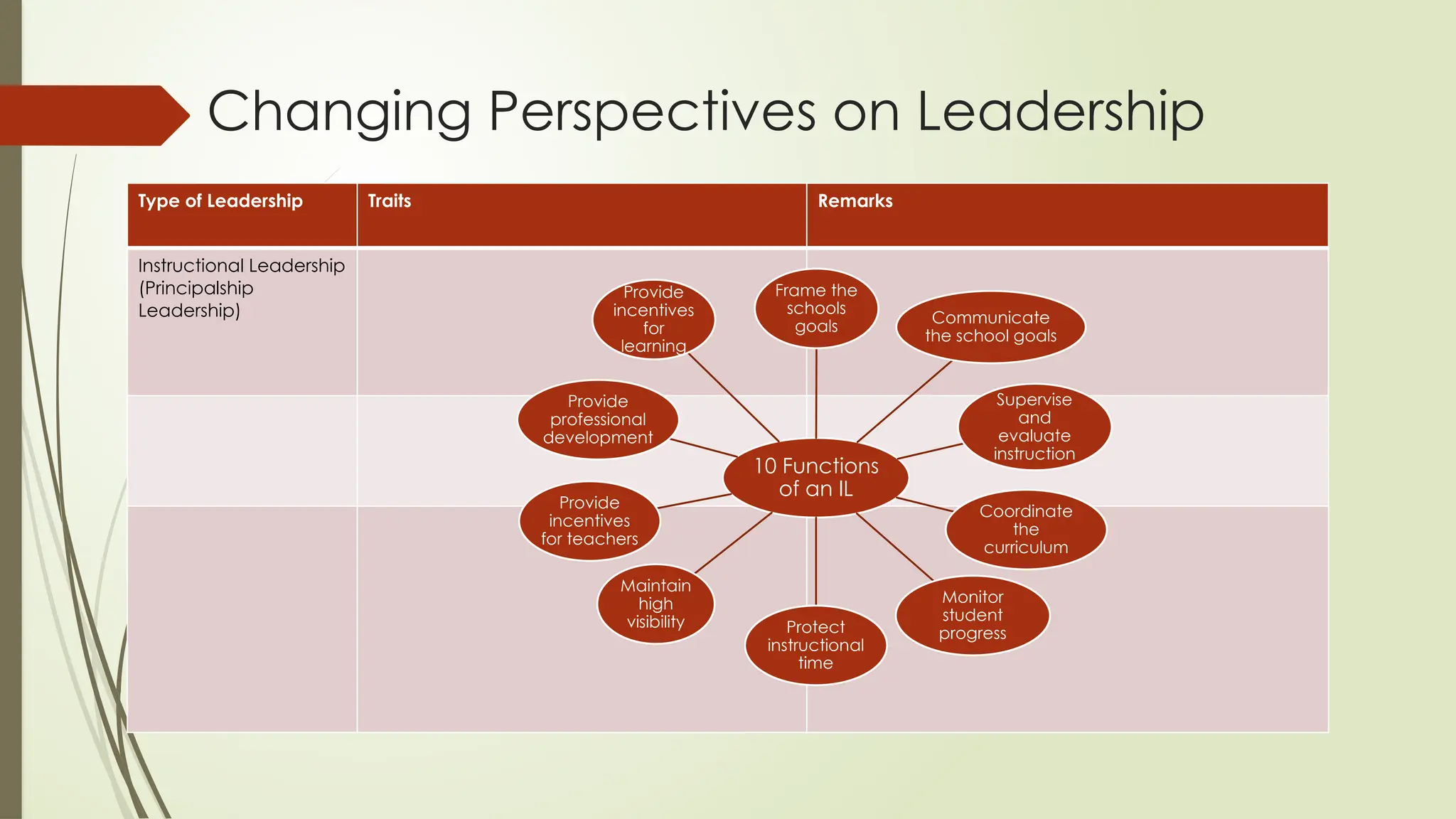
Changing Perspectives onLeadership
Type of Leadership Traits Remarks
Instructional Leadership
(Principalship
Leadership)
10 Functions
of an IL
Frame the
schools
goals Communicate
the school goals
Supervise
and
evaluate
instruction
Coordinate
the
curriculum
Monitor
student
progress
Protect
instructional
time
Maintain
high
visibility
Provide
incentives
for teachers
Provide
professional
development
Provide
incentives
for
learning