CHAPTER 3
Perspective and Approaches in
the Study of Human
Development
ILO: Associate human perspectives and
approaches with specific learning principles.
Perspectives in Human Development
 Learning Paradigm
a. Classical Conditioning
b. Operant Conditioning
c. Social Cognitive Learning Theory
 Socio-Cultural Theories
a. Socio-Cultural Theory of Lev Vygotsky
b. The Cognitive Theory of Development of Jean Piaget
 Ethology- Evolutionary Socio-Biological
a. Ethological Perspective of Konrad Lorenz
b. Attachment Theories
 System Approach
a. The Contextualism Theory of Richard Lerner
b. The Ecological System Theory of Urie Bronfenbrenner
Learning Paradigm
 Work on the assumption that people undergo the
stages of development through the process of
interaction with one’s environment via,
observation, conditioning, reward and punishment
system.
 The major premise of the learning theories
generally revolves around the understanding of
the relationship of stimulus and response
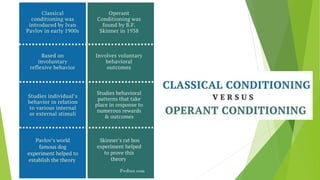
Classical Conditioning
Pavlov
a learning process that occurs when two stimuli are
repeatedly paired: a response that is at first elicited by the
second stimulus is eventually elicited by the first stimulus
alone.
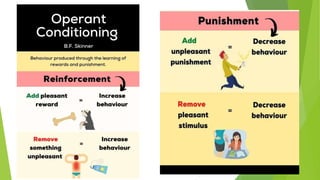
Operant Conditioning
B.F. Skinner
Operant conditioning, sometimes referred to as
instrumental conditioning, is a method of learning that
uses rewards and punishment to modify behavior.
Through operant conditioning, behavior that is
rewarded is likely to be repeated, and behavior that is
punished will rarely occur.
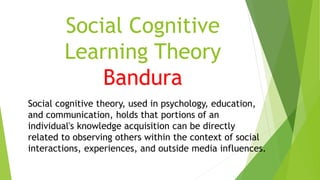
Social Cognitive
Learning Theory
Bandura
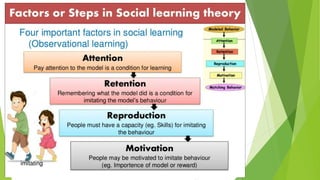
Social cognitive theory, used in psychology, education,
and communication, holds that portions of an
individual's knowledge acquisition can be directly
related to observing others within the context of social
interactions, experiences, and outside media influences.
Socio-Cultural Theories
 Highlights the influence of the collective
experience of people found in the same cultural
orientation.
 It assumes the centrality of culture, such as
language and communication as well as social
norms in the developmental process.
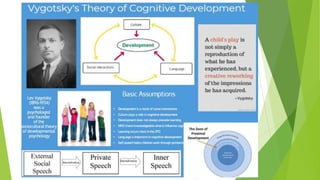
Socio-Cultural Theory
Lev Vygotsky
What is Sociocultural Theory? The sociocultural theory stresses
the role that social interaction plays in psychological
development. It suggests that human learning is largely a social
process and that our cognitive functions are formed based on
our interactions with those around us who are "more skilled."
The Cognitive Theory
of Development
Jean Piaget
The cognitive development theory is based on the
development of human intelligence. The central
concept of the theory is that children actively
construct their own cognition or knowledge as a result
of their independent explorations.
Ethology- Evolutionary and
Socio-biological
 Accounts genetic and adaptation to one’s changing
environment
 Due to the process of maturation, inherited
characteristics unfold according to one’s readiness.
 Changes brought about by development is a result of
one’s need to adapt therefore they serve survival
function.
Ethological Perspective
Konrad Lorenz
Attachment Theories
John Bowlby, Mary Ainsworth &
Melanie Klein
attachment theory, in developmental psychology, is
the theory that humans are born with a need to form a
close emotional bond with a caregiver and that such a
bond will develop during the first six months of a
child's life if the caregiver is appropriately responsive.
System Approach
 Integrated (genes, culture, and learning) view
about human development.
 Human person is a product of interaction between
nature and nurture.
The Contextualism
Theory
Richard Lerner
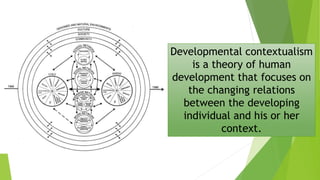
Developmental contextualism
is a theory of human
development that focuses on
the changing relations
between the developing
individual and his or her
context.
The Ecological System
Theory
Urie Bronfenbrenner
Bronfenbrenner's ecological systems theory is one of
the most accepted explanations regarding the
influence of social environments on human
development. This theory argues that the environment
you grow up in effects every facet of your life.
HUMAN
DEVELOPMENT
PERSPECTIVE
CENTRAL
ASSUMPTION
TEACHER’S ROLE
TO LEARNING
STUDENT’S ROLE
TO LEARNING
LEARNING
PRINCIPLES
TEACHING
STRATEGIES
Learning Paradigm
Socio-Cultural
Paradigm
Ethology-
Evolutionary and
Sociobiological
System Approach
ACTIVITY AND ASSESSMENT
Summarize the different perspectives presented earlier and think of teaching
approaches that are aligned with the learning principle you were able to learn in this
chapter.

CHAPTER-3-Perspective-and-Approaches-in-the-Study-of-Haman-Development.pptx

  • 1.
    CHAPTER 3 Perspective andApproaches in the Study of Human Development ILO: Associate human perspectives and approaches with specific learning principles.
  • 2.
    Perspectives in HumanDevelopment  Learning Paradigm a. Classical Conditioning b. Operant Conditioning c. Social Cognitive Learning Theory  Socio-Cultural Theories a. Socio-Cultural Theory of Lev Vygotsky b. The Cognitive Theory of Development of Jean Piaget  Ethology- Evolutionary Socio-Biological a. Ethological Perspective of Konrad Lorenz b. Attachment Theories  System Approach a. The Contextualism Theory of Richard Lerner b. The Ecological System Theory of Urie Bronfenbrenner
  • 3.
    Learning Paradigm  Workon the assumption that people undergo the stages of development through the process of interaction with one’s environment via, observation, conditioning, reward and punishment system.  The major premise of the learning theories generally revolves around the understanding of the relationship of stimulus and response
  • 4.
    Classical Conditioning Pavlov a learningprocess that occurs when two stimuli are repeatedly paired: a response that is at first elicited by the second stimulus is eventually elicited by the first stimulus alone.
  • 7.
    Operant Conditioning B.F. Skinner Operantconditioning, sometimes referred to as instrumental conditioning, is a method of learning that uses rewards and punishment to modify behavior. Through operant conditioning, behavior that is rewarded is likely to be repeated, and behavior that is punished will rarely occur.
  • 10.
    Social Cognitive Learning Theory Bandura Socialcognitive theory, used in psychology, education, and communication, holds that portions of an individual's knowledge acquisition can be directly related to observing others within the context of social interactions, experiences, and outside media influences.
  • 12.
    Socio-Cultural Theories  Highlightsthe influence of the collective experience of people found in the same cultural orientation.  It assumes the centrality of culture, such as language and communication as well as social norms in the developmental process.
  • 13.
    Socio-Cultural Theory Lev Vygotsky Whatis Sociocultural Theory? The sociocultural theory stresses the role that social interaction plays in psychological development. It suggests that human learning is largely a social process and that our cognitive functions are formed based on our interactions with those around us who are "more skilled."
  • 16.
    The Cognitive Theory ofDevelopment Jean Piaget The cognitive development theory is based on the development of human intelligence. The central concept of the theory is that children actively construct their own cognition or knowledge as a result of their independent explorations.
  • 18.
    Ethology- Evolutionary and Socio-biological Accounts genetic and adaptation to one’s changing environment  Due to the process of maturation, inherited characteristics unfold according to one’s readiness.  Changes brought about by development is a result of one’s need to adapt therefore they serve survival function.
  • 19.
  • 21.
    Attachment Theories John Bowlby,Mary Ainsworth & Melanie Klein attachment theory, in developmental psychology, is the theory that humans are born with a need to form a close emotional bond with a caregiver and that such a bond will develop during the first six months of a child's life if the caregiver is appropriately responsive.
  • 23.
    System Approach  Integrated(genes, culture, and learning) view about human development.  Human person is a product of interaction between nature and nurture.
  • 24.
  • 25.
    Developmental contextualism is atheory of human development that focuses on the changing relations between the developing individual and his or her context.
  • 26.
    The Ecological System Theory UrieBronfenbrenner Bronfenbrenner's ecological systems theory is one of the most accepted explanations regarding the influence of social environments on human development. This theory argues that the environment you grow up in effects every facet of your life.
  • 28.
    HUMAN DEVELOPMENT PERSPECTIVE CENTRAL ASSUMPTION TEACHER’S ROLE TO LEARNING STUDENT’SROLE TO LEARNING LEARNING PRINCIPLES TEACHING STRATEGIES Learning Paradigm Socio-Cultural Paradigm Ethology- Evolutionary and Sociobiological System Approach ACTIVITY AND ASSESSMENT Summarize the different perspectives presented earlier and think of teaching approaches that are aligned with the learning principle you were able to learn in this chapter.