โ€ข Forecasting refers to the practice of predicting what will
happen in the future by taking into consideration events in
the past and present. Basically, it is a decision-making
tool that helps businesses cope with the impact of the
futureโ€™s uncertainty by examining historical data and
trends. It is a planning tool that enables businesses to
chart their next moves and create budgets that will
hopefully cover whatever uncertainties may occur.
PLANNING
โ€ข Planning is the function of management that involves
setting objectives and determining a course of action for
achieving those objectives. Planning requires that
managers be aware of environmental conditions facing
their organization and forecast future conditions.
โ€ข Planning is one of the most important project
management and time management techniques. Planning
is preparing a sequence of action steps to achieve some
specific goal. If a person does it effectively, they can
reduce much the necessary time and effort of achieving
the goal. A plan is like a map.
โ€œFOREWARNED IS TO BE
FOREARMEDโ€
โ€ข said to mean that if you know about something before it
happens, you can be prepared for it.
FLUCTUATION IN ASSET
REQUIREMENTS
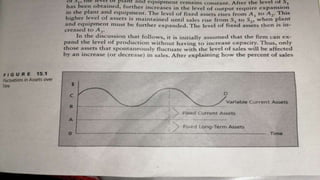
โ€ข The fluctuating current assets represent the seasonal
build-ups that occur, such as inventories before Christmas
and receivables after Christmas. The fluctuating current
asset levels should be financed short-term since we donโ€™t
want to pay financing charges all year if we only need the
money for a four-month period.
โ€ข FLUCTUATION-an irregular rising and falling in number or
amount.
FORECASTING EXTERNAL FINANCIAL REQUIREMENTS:
PERCENT OF SALES
โ€ข Forecasting technique that assumes specific assets and
liabilities will vay directly with the level of sales.
โ€ข The percent of sales method is a financial forecasting
model in which all of a business's accounts โ€” financial
line items like costs of goods sold, inventory, and cash โ€”
are calculated as a percentage of sales. Those
percentages are then applied to future sales estimates to
project each line item's future value.
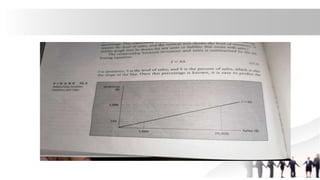
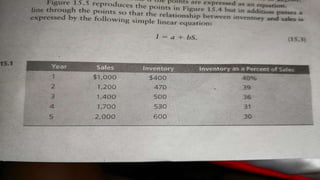
โ€ข The previous section illustrates the percent of sales
technique of forecasting, which asserts that if an asset or
liability is some percent of sales and sales expand by
some percentage, then the assets and liabilities will also
expand by the same percentage.
THE PERCENT OF SALES SUMMARIZED ASA AN EQUATION
โ€ข Companies with a percentage of sales business model
focus their budget on its relevance. Although businesses
with a percentage of sales model are less likely to shy
away from investing in advertising, sales force and other
sales-related costs, they invest in those things only to the
degree that they are profitable.
Forecasting External Financial
Requirements: Regression Analysis
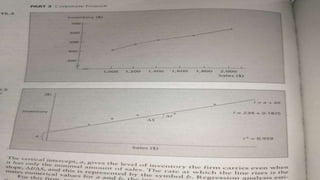
โ€ข An alternative to the percent of sales is regression
analysis, which uses the relationship between the asset or
liability and sales over several years
Forecasting External Requirements:
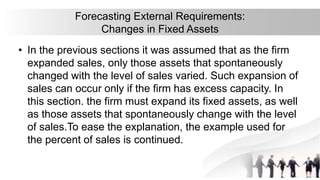
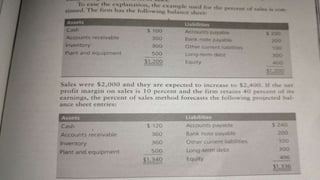
Changes in Fixed Assets
โ€ข In the previous sections it was assumed that as the firm
expanded sales, only those assets that spontaneously
changed with the level of sales varied. Such expansion of
sales can occur only if the firm has excess capacity. In
this section. the firm must expand its fixed assets, as well
as those assets that spontaneously change with the level
of sales.To ease the explanation, the example used for
the percent of sales is continued.
SUMMARY
โ€ข Management constructs strategic plans that establish
general goals for a firm. The strategies designed to meet
the goals are executed by the various execu tives
responsible for a firm's operations, marketing, and
finance. Financial plans must fit within the general
strategic plan of a firm. These plans require forecasts of
when a firm will need outside sources of finance.
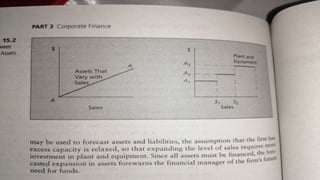
โ€ข Some assets, such as accounts receivable and inventory,
automatically expand with increases in a firm's sales.
Other assets, such as plant and equipment, have to be
increased after a firm reaches a certain level of sales,
Once capacity is reached, further expansion will require
additional investment in plant and equipment.
โ€ข All assets have to be financed, so projecting a firm's level of
assets is crucial to the financial health of a firm. One forecasting
technique uses the per cent of sales. It expresses all assets and
liabilities that spontaneously change with the level of sales as a
percent of sales. That percentage is then used to forecast the
future level of these assets and liabilities as sales increase. A
more sophisticated forecasting technique uses estimated
equations (regression analysis) to estimate the level of assets and
liabilities associated with various levels of sales.
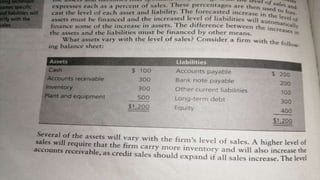
โ€ข Either technique may be used to construct a projected
balance sheet that indicates a firm's estimated future
assets, future liabilities, and future equity. If the estimated
assets exceed the estimated liabilities plus equity, the
finan cial manager must plan today to find the finance
required by the forecast of the firm's future assets,

Chapter15 Forecasting

  • 2.
    โ€ข Forecasting refersto the practice of predicting what will happen in the future by taking into consideration events in the past and present. Basically, it is a decision-making tool that helps businesses cope with the impact of the futureโ€™s uncertainty by examining historical data and trends. It is a planning tool that enables businesses to chart their next moves and create budgets that will hopefully cover whatever uncertainties may occur.
  • 3.
    PLANNING โ€ข Planning isthe function of management that involves setting objectives and determining a course of action for achieving those objectives. Planning requires that managers be aware of environmental conditions facing their organization and forecast future conditions. โ€ข Planning is one of the most important project management and time management techniques. Planning is preparing a sequence of action steps to achieve some specific goal. If a person does it effectively, they can reduce much the necessary time and effort of achieving the goal. A plan is like a map.
  • 4.
    โ€œFOREWARNED IS TOBE FOREARMEDโ€ โ€ข said to mean that if you know about something before it happens, you can be prepared for it.
  • 5.
    FLUCTUATION IN ASSET REQUIREMENTS โ€ขThe fluctuating current assets represent the seasonal build-ups that occur, such as inventories before Christmas and receivables after Christmas. The fluctuating current asset levels should be financed short-term since we donโ€™t want to pay financing charges all year if we only need the money for a four-month period. โ€ข FLUCTUATION-an irregular rising and falling in number or amount.
  • 8.
    FORECASTING EXTERNAL FINANCIALREQUIREMENTS: PERCENT OF SALES โ€ข Forecasting technique that assumes specific assets and liabilities will vay directly with the level of sales. โ€ข The percent of sales method is a financial forecasting model in which all of a business's accounts โ€” financial line items like costs of goods sold, inventory, and cash โ€” are calculated as a percentage of sales. Those percentages are then applied to future sales estimates to project each line item's future value.
  • 10.
    โ€ข The previoussection illustrates the percent of sales technique of forecasting, which asserts that if an asset or liability is some percent of sales and sales expand by some percentage, then the assets and liabilities will also expand by the same percentage. THE PERCENT OF SALES SUMMARIZED ASA AN EQUATION
  • 12.
    โ€ข Companies witha percentage of sales business model focus their budget on its relevance. Although businesses with a percentage of sales model are less likely to shy away from investing in advertising, sales force and other sales-related costs, they invest in those things only to the degree that they are profitable.
  • 13.
    Forecasting External Financial Requirements:Regression Analysis โ€ข An alternative to the percent of sales is regression analysis, which uses the relationship between the asset or liability and sales over several years
  • 16.
    Forecasting External Requirements: Changesin Fixed Assets โ€ข In the previous sections it was assumed that as the firm expanded sales, only those assets that spontaneously changed with the level of sales varied. Such expansion of sales can occur only if the firm has excess capacity. In this section. the firm must expand its fixed assets, as well as those assets that spontaneously change with the level of sales.To ease the explanation, the example used for the percent of sales is continued.
  • 18.
    SUMMARY โ€ข Management constructsstrategic plans that establish general goals for a firm. The strategies designed to meet the goals are executed by the various execu tives responsible for a firm's operations, marketing, and finance. Financial plans must fit within the general strategic plan of a firm. These plans require forecasts of when a firm will need outside sources of finance.
  • 19.
    โ€ข Some assets,such as accounts receivable and inventory, automatically expand with increases in a firm's sales. Other assets, such as plant and equipment, have to be increased after a firm reaches a certain level of sales, Once capacity is reached, further expansion will require additional investment in plant and equipment.
  • 20.
    โ€ข All assetshave to be financed, so projecting a firm's level of assets is crucial to the financial health of a firm. One forecasting technique uses the per cent of sales. It expresses all assets and liabilities that spontaneously change with the level of sales as a percent of sales. That percentage is then used to forecast the future level of these assets and liabilities as sales increase. A more sophisticated forecasting technique uses estimated equations (regression analysis) to estimate the level of assets and liabilities associated with various levels of sales.
  • 21.
    โ€ข Either techniquemay be used to construct a projected balance sheet that indicates a firm's estimated future assets, future liabilities, and future equity. If the estimated assets exceed the estimated liabilities plus equity, the finan cial manager must plan today to find the finance required by the forecast of the firm's future assets,