FINANCIAL
  INTERMEDIATION
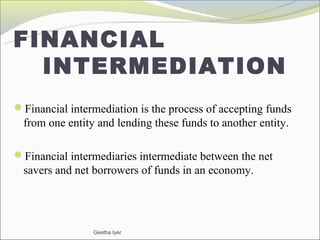
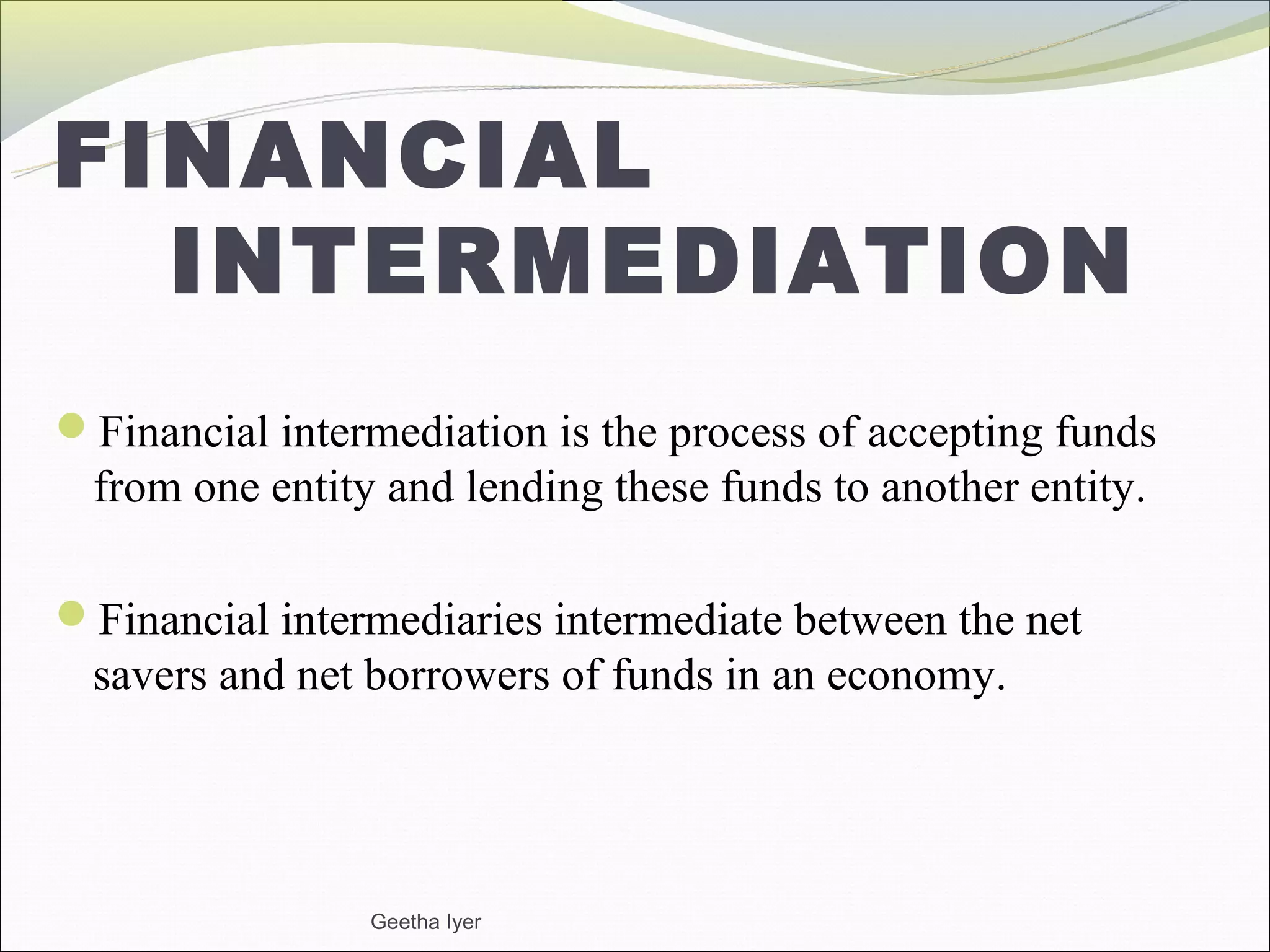
Financial intermediation is the process of accepting funds
  from one entity and lending these funds to another entity.

Financial intermediaries intermediate between the net
  savers and net borrowers of funds in an economy.


                 Geetha Iyer
The Process of Financial
Intermediation
     NET                                  NET BORROWER
    SAVER


                     SECONDARY    MONEY
                     SECURITIES             SE
       MO                                  PR CU
         NE                                  IM RIT
            Y
                                               AR I E
                                                 Y S

                          FINANCIAL
                          INTERMEDIARY


            Geetha Iyer
Financial Institutions
 RATIONALE FOR FINANCIAL
   INTERMEDIATION

   Reduction in Transaction Costs
   Diversification benefits
   Maturity and Liquidity Transformation


             Geetha Iyer
Financial Institutions
 IMPORTANCE OF FINANCIAL
  INTERMEDIATION

     Financial intermediaries are very important
      compared to financial markets as providers of funds
      to the net borrowers


              Geetha Iyer
Financial Institutions
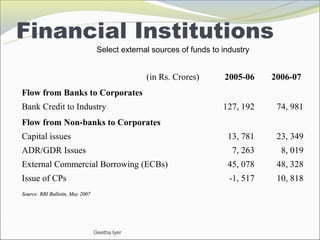
                                  Select external sources of funds to industry


                                                (in Rs. Crores)       2005-06     2006-07
Flow from Banks to Corporates
Bank Credit to Industry                                               127, 192     74, 981
Flow from Non-banks to Corporates
Capital issues                                                         13, 781     23, 349
ADR/GDR Issues                                                           7, 263     8, 019
External Commercial Borrowing (ECBs)                                   45, 078     48, 328
Issue of CPs                                                            -1, 517    10, 818
Source: RBI Bulletin, May 2007


                                 Geetha Iyer
Financial Institutions
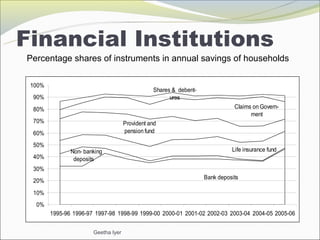
Percentage shares of instruments in annual savings of households

 100%
                                                Shares & debent-
 90%                                                  ures
 80%                                                                          Claims on Govern-
                                                                                    ment
 70%                                 Provident and
 60%                                 pension fund

 50%
               Non- banking                                                  Life insurance fund
 40%            deposits
 30%
                                                                   Bank deposits
 20%

 10%
  0%
        1995-96 1996-97 1997-98 1998-99 1999-00 2000-01 2001-02 2002-03 2003-04 2004-05 2005-06


                       Geetha Iyer
Financial Institutions
                      CATEGORIES OF
                       FINANCIAL
                       INSTITUTIONS

     Depository institutions
     Finance Companies
     Contractual institutions
     Mutual funds

               Geetha Iyer
Financial Institutions
 REGULATION OF FINANCIAL INTERMEDIARIES

   The central argument in favor of regulation of financial
    services is that financial products and services are different
    from other services .
   Regulations can be designed to deal with moral hazard and
    curb excessive risk taking by financial intermediaries.


                 Geetha Iyer

Chapter1 financial intermediary

  • 1.
    FINANCIAL INTERMEDIATION Financialintermediation is the process of accepting funds from one entity and lending these funds to another entity. Financial intermediaries intermediate between the net savers and net borrowers of funds in an economy. Geetha Iyer
  • 2.
    The Process ofFinancial Intermediation NET NET BORROWER SAVER SECONDARY MONEY SECURITIES SE MO PR CU NE IM RIT Y AR I E Y S FINANCIAL INTERMEDIARY Geetha Iyer
  • 3.
    Financial Institutions  RATIONALEFOR FINANCIAL INTERMEDIATION  Reduction in Transaction Costs  Diversification benefits  Maturity and Liquidity Transformation Geetha Iyer
  • 4.
    Financial Institutions  IMPORTANCEOF FINANCIAL INTERMEDIATION  Financial intermediaries are very important compared to financial markets as providers of funds to the net borrowers Geetha Iyer
  • 5.
    Financial Institutions Select external sources of funds to industry (in Rs. Crores) 2005-06 2006-07 Flow from Banks to Corporates Bank Credit to Industry 127, 192 74, 981 Flow from Non-banks to Corporates Capital issues 13, 781 23, 349 ADR/GDR Issues 7, 263 8, 019 External Commercial Borrowing (ECBs) 45, 078 48, 328 Issue of CPs -1, 517 10, 818 Source: RBI Bulletin, May 2007 Geetha Iyer
  • 6.
    Financial Institutions Percentage sharesof instruments in annual savings of households 100% Shares & debent- 90% ures 80% Claims on Govern- ment 70% Provident and 60% pension fund 50% Non- banking Life insurance fund 40% deposits 30% Bank deposits 20% 10% 0% 1995-96 1996-97 1997-98 1998-99 1999-00 2000-01 2001-02 2002-03 2003-04 2004-05 2005-06 Geetha Iyer
  • 7.
    Financial Institutions  CATEGORIES OF FINANCIAL INSTITUTIONS  Depository institutions  Finance Companies  Contractual institutions  Mutual funds Geetha Iyer
  • 8.
    Financial Institutions  REGULATIONOF FINANCIAL INTERMEDIARIES  The central argument in favor of regulation of financial services is that financial products and services are different from other services .  Regulations can be designed to deal with moral hazard and curb excessive risk taking by financial intermediaries. Geetha Iyer

Editor's Notes

  • #3 Difference between brokers and financial intermediary, financial assets
  • #9 Prudential regulation, conduct of business regulation, credence goods , safety nets and moral hazards