CHAPTER- IV
DATA ANALYSIS AND INTERPRETATION OF
FINDINGS
Data analysis is the process of organizing and synthesizing data in such a way
that research question can be answered and tested.
This chapter deals with the data analysis and interpretation of the data
collected through structured knowledge questionnaire. Analysis and interpretation of
data obtained from structured knowledge questionnaire regarding prevention and
management of perineal tear during normal delivery. Then the findings were printed
in different graphs and tables of percentage.
Analysis defined as the “categorizing” ordering manipulating & summarizing
of data to obtain access to research questions. The purpose of analysis is to reduce
data to on intelligible & interpretable form, so that the relation of research problem
can be studied and tested.
This chapter presents the analysis and interpretation of the data collected to
assess the knowledge of staff nurses regarding prevention and management of
perineal tear during normal delivery at selected Hospitals of Lucknow. The data was
analyzed based on the following objectives.
Objectives Of The Study
1. To assess knowledge of staff nurses regarding prevention and management of
perineal tear during normal delivery.
2. To find association between knowledge regarding prevention and management
of perineal tear with selected demographic variables.
Hypotheses
To achieve the stated objective, the following hypothesis were formulated:
 H0: There is no significant association between the knowledge scores of s
t
a
f
f
nurses in terms of perineal tear and selected demographic variables.
 H1: There is significant association between the knowledge scores of s
t
a
f
f
nurses in terms of perineal tear and selected demographic variables.
ORGANIZATION OF THE STUDY FINDING
The data was analyzed, interpreted and presented in the table and graph. Both
descriptive and inferential statistics was used for data analysis. The finding of the
study was organized and presented in the following section:
Section I: Description of demographic variables of the staff nurses.
Section II: Assess the knowledge levels of staff nurses regarding perineal tear.
Section III: Association between knowledge levels of staff nurses with demographic
variables regarding perineal tear.
SECTION I: DESCRIPTION OF DEMOGRAPHIC VARIABLES
OF THE STAFF NURSES
Frequency and percentage distribution of staff nurses according to socio
demographic variables
Table No.: 4.1 Distribution Of Staff Nurses According To Age
N = 250
S. No. Demographic Variable Frequency Percentage (%)
1.
Age (In years)
21 – 30 65 26%
31 – 40 110 44%
41 – 50 45 18%
51 – 60 30 12%
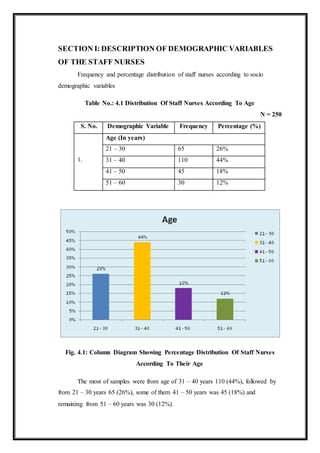
Fig. 4.1: Column Diagram Showing Percentage Distribution Of Staff Nurses
According To Their Age
The most of samples were from age of 31 – 40 years 110 (44%), followed by
from 21 – 30 years 65 (26%), some of them 41 – 50 years was 45 (18%) and
remaining from 51 – 60 years was 30 (12%).
Table No.: 4.2 Distribution Of Staff Nurses According To Gender
N = 250
S. No. Demographic Variable Frequency Percentage (%)
2.
Gender
Male 130 52%
Female 120 48%
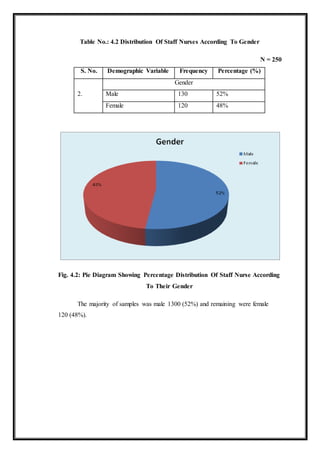
Fig. 4.2: Pie Diagram Showing Percentage Distribution Of Staff Nurse According
To Their Gender
The majority of samples was male 1300 (52%) and remaining were female
120 (48%).
Table No.: 4.3 Distribution Of Staff Nurses According To Educational
Qualification
N = 250
S. No. Demographic Variable Frequency Percentage (%)
3.
Educational Qualification
GNM 75 30%
PB B.Sc. Nursing 65 26%
B. Sc. Nursing 90 36%
M.Sc. Nursing 20 08%
Fig. 4.3: Cylindrical Diagram Showing Percentage Distribution Of Staff Nurses
According To Their Educational Qualification
The most of samples 90 (36%) have done B.Sc. Nursing followed by 75 (30%)
have done G.N.M., 65 (26%) have done PB B.Sc. nursing and remaining 20 (08%)
was M.Sc. nursing.
Table No.: 4.4 Distribution Of Staff Nurses According To Work Experience
N = 250
S. No. Demographic Variable Frequency Percentage (%)
4.
Work Experience
< 5 years 55 22%
5 – 15 years 110 44%
16 – 25 years 50 20%
> 25 years 35 14%
Fig. 4.4: Cone Diagram Showing Percentage Distribution Of Staff Nurses
According To Their Work Experience
Most of samples 110 (44%) have 5 to 15 years experience and other was 55
(22%) have less than 5 years experience and remaining 50 (20%) have 16 – 25 years
of experience and remaining 35 (14%) have more than 25 years experience.
Table No.: 4.5 Distribution Of Staff Nurses According To Work Experience In
Labor Room
N = 250
S. No. Demographic Variable Frequency Percentage (%)
5.
Work Experience in Labor Room
< 5 years 75 30%
5 – 15 years 115 46%
16 – 20 years 40 16%
> 20 years 20 08%
Fig. 4.5: Pyramid Diagram Showing Percentage Distribution Of Staff Nurses
According To Their Experience In Labour Room
Most of samples 115 (46%) from 5 to 15 years work experience in labour
room following by 75 (30%) have less than 5 years work experience in labour room
and some of them 40 (16%) have 16 to 20 years and remaining 20 (08%) have more
than 20 years work experience in labour room
Table No.: 4.6 Distribution Of Staff Nurses According To Previous Knowledge
N = 250
S. No. Demographic Variable Frequency Percentage (%)
6.
Previous knowledge
Yes 140 56%
No 110 44%
Fig. 4.6: Pie Diagram Showing Percentage Distribution Of Staff Nurses
According To Their Previous Knowledge
Most of samples about 140 (56%) have previous knowledge regarding perineal
tear and remaining 110 (44%) have not previous knowledge
SECTION II: ASSESS THE KNOWLEDGE LEVELS OF STAFF
NURSES REGARDING PERINEALTEAR
There were 250 staff nurses taken for the study. Each of them had to answer
30 questions. The level of knowledge assess by given the questionnaire and take
response to questionnaire and correct answers were recorded and the mean, mean
percentage, median and standard deviation of the test scores were obtained as below:
a) Table – 4.7: Comparison Of Level Of Knowledge Score Of Staff Nurses
Regarding Prevention And Management Of Perineal Tear
S. No. Level Of Knowledge Frequency Percentage
1. Poor (<50%) 70 28%
2. Average (51% to 65%) 85 34%
3. Good (> 65%) 95 38%
The table no. 4.7 showed the comparison of level of knowledge of staff nurses
regarding prevention and management of perineal tear. With regard to scores, 70
(28%) staff nurses had poor knowledge, 85 (34%) staff nurses had average knowledge
and 95 (38%) staff nurses had good knowledge regarding prevention and management
of perineal tear.
b) Area Wise Level Of Knowledge Score Of Staff Nurses Regarding
Prevention And Management Of Perineal Tear
Table – 4.8: Area Wise Level Of Knowledge Score Of Staff Nurses
S.
No.
Aspect Of Knowledge
Max.
Score
Mean
Mean%
Median
Standard
Deviation
1.
Questionnaires related to
concept of perineal tear
11 7.94 72.18% 8 2.00
2.
Questionnaires related to
prevention of perineal
tear
06 3.70 61.66% 4 1.04
3.
Questionnaires related to
management of perineal
tear
13 10.76 82.76% 11 1.68
Total 30 22.40 74.66% 22 2.91
The above table no. 4.8 shows the summary of statistical outcomes of level of
knowledge scores of staff nurses regarding prevention and management of perineal
tear. The structured knowledge questionnaire consists of three parts i.e.
Questionnaires related to concept of perineal tear, Questionnaires related to
prevention of perineal tear and Questionnaires related to management of perineal tear.
The mean, mean percentage, median and standard deviation of first part that was
related to concept of perineal tear, were 7.94, 72.18%, 8 and 2.00 respectively.
Regarding pre-vention of perineal tear the mean, mean percentage, median and
standard deviation were 3.70, 61.66%, 4, and 1.04 respectively. About management of
perineal tear the mean, mean percentage, median and standard deviation was 10.76,
82.76%, 11 and 1.68 respectively. The overall level of knowledge of staff nurses
regarding prevention and management of perineal tear the mean, mean percentage,
median and standard deviation were 22.40, 74.66%, 22 and 2.91 respectively.
SECTION III: ASSOCIATION BETWEEN KNOWLEDGE
LEVELS OF STAFF NURSES WITH DEMOGRAPHIC
VARIABLES REGARDING PERINEAL TEAR
Table No. 4.9: Association Between Knowledge Levels Of Staff Nurses
With Demographic Variable
N = 250
S. No. Variables Level ofknowledge Df X2
Value
Table
Value
Remarks
Poor Average Good
1.
Age
6 7.06 12.59 NS
21 – 30 32 19 14
31 – 40 55 44 11
41 – 50 22 15 6
51 – 60 17 8 7
2.
Gender
2 3.70 5.99 NS
Male 70 35 25
Female 60 25 35
3.
Educational qualification
6 23.16 12.59 S
GNM 35 24 16
PB B.Sc. nursing 18 15 32
B.Sc. nursing 18 22 50
M.Sc. nursing 6 5 9
4.
Work experience
6 19.11 12.59 S
< 5 years 12 13 30
5 – 15 year 28 45 37
16 – 25 years 18 9 23
> 25 years 5 8 22
5.
Experience in labour room
6 13.67 12.59 S
< 5 years 32 18 25
5 – 15 years 48 36 31
16 – 20 years 9 15 16
> 20 years 5 3 12
6.
Previous Knowledge
2 6.47 5.99 S
Yes 30 40 70
No 35 37 38
Table no. 4.9 revealed that:
 The tabulated value of chi square at 6 df was 12.59 and calculated value
was
7.06. So there was not significance association between the levels of
knowledge with age of staff nurses at 0.05 level of significance.
 The tabulated value of chi square at 2 df was 5.99 and calculated value
was
3.70. So there was no significance association between the levels of
knowledge with gender of staff nurses at 0.05 level of significance.
 The tabulated value of chi square at 6 df was 12.59 and calculated value
was
23.16. So there was significance association between the levels of
knowledge with educational qualification of staff nurses at 0.05 level of
significance.
 The tabulated value of chi square at 6 df was 12.59 and calculated value
was
19.11. So there was significance association between the levels of
knowledge with work experience of staff nurses at 0.05 level of
significance.
 The tabulated value of chi square at 6 df was 12.59 and calculated value
was
13.67. So there was significance association between the levels of
knowledge with work experience in labour room of staff nurses at 0.05
level of significance.
 The tabulated value of chi square at 2 df was 5.99 and calculated value
was
6.47. So there was significance association between the levels of
knowledge with previous knowledge of staff nurses at 0.05 level of
significance.
SUMMARY
This chapter dealt with the data analysis and interpretation of data
collected through structured questionnaire on prevention and management of
perineal tear among staff nurses, the research hypothesis was tested. The
association between knowledge level of staff nurses on perineal tear with
selected demographic variables were assessed.

Chapter iv data analysis and interpretation

  • 1.
    CHAPTER- IV DATA ANALYSISAND INTERPRETATION OF FINDINGS Data analysis is the process of organizing and synthesizing data in such a way that research question can be answered and tested. This chapter deals with the data analysis and interpretation of the data collected through structured knowledge questionnaire. Analysis and interpretation of data obtained from structured knowledge questionnaire regarding prevention and management of perineal tear during normal delivery. Then the findings were printed in different graphs and tables of percentage. Analysis defined as the “categorizing” ordering manipulating & summarizing of data to obtain access to research questions. The purpose of analysis is to reduce data to on intelligible & interpretable form, so that the relation of research problem can be studied and tested. This chapter presents the analysis and interpretation of the data collected to assess the knowledge of staff nurses regarding prevention and management of perineal tear during normal delivery at selected Hospitals of Lucknow. The data was analyzed based on the following objectives. Objectives Of The Study 1. To assess knowledge of staff nurses regarding prevention and management of perineal tear during normal delivery. 2. To find association between knowledge regarding prevention and management of perineal tear with selected demographic variables.
  • 2.
    Hypotheses To achieve thestated objective, the following hypothesis were formulated:  H0: There is no significant association between the knowledge scores of s t a f f nurses in terms of perineal tear and selected demographic variables.  H1: There is significant association between the knowledge scores of s t a f f nurses in terms of perineal tear and selected demographic variables. ORGANIZATION OF THE STUDY FINDING The data was analyzed, interpreted and presented in the table and graph. Both descriptive and inferential statistics was used for data analysis. The finding of the study was organized and presented in the following section: Section I: Description of demographic variables of the staff nurses. Section II: Assess the knowledge levels of staff nurses regarding perineal tear. Section III: Association between knowledge levels of staff nurses with demographic variables regarding perineal tear.
  • 3.
    SECTION I: DESCRIPTIONOF DEMOGRAPHIC VARIABLES OF THE STAFF NURSES Frequency and percentage distribution of staff nurses according to socio demographic variables Table No.: 4.1 Distribution Of Staff Nurses According To Age N = 250 S. No. Demographic Variable Frequency Percentage (%) 1. Age (In years) 21 – 30 65 26% 31 – 40 110 44% 41 – 50 45 18% 51 – 60 30 12% Fig. 4.1: Column Diagram Showing Percentage Distribution Of Staff Nurses According To Their Age The most of samples were from age of 31 – 40 years 110 (44%), followed by from 21 – 30 years 65 (26%), some of them 41 – 50 years was 45 (18%) and remaining from 51 – 60 years was 30 (12%).
  • 4.
    Table No.: 4.2Distribution Of Staff Nurses According To Gender N = 250 S. No. Demographic Variable Frequency Percentage (%) 2. Gender Male 130 52% Female 120 48% Fig. 4.2: Pie Diagram Showing Percentage Distribution Of Staff Nurse According To Their Gender The majority of samples was male 1300 (52%) and remaining were female 120 (48%).
  • 5.
    Table No.: 4.3Distribution Of Staff Nurses According To Educational Qualification N = 250 S. No. Demographic Variable Frequency Percentage (%) 3. Educational Qualification GNM 75 30% PB B.Sc. Nursing 65 26% B. Sc. Nursing 90 36% M.Sc. Nursing 20 08% Fig. 4.3: Cylindrical Diagram Showing Percentage Distribution Of Staff Nurses According To Their Educational Qualification The most of samples 90 (36%) have done B.Sc. Nursing followed by 75 (30%) have done G.N.M., 65 (26%) have done PB B.Sc. nursing and remaining 20 (08%) was M.Sc. nursing.
  • 6.
    Table No.: 4.4Distribution Of Staff Nurses According To Work Experience N = 250 S. No. Demographic Variable Frequency Percentage (%) 4. Work Experience < 5 years 55 22% 5 – 15 years 110 44% 16 – 25 years 50 20% > 25 years 35 14% Fig. 4.4: Cone Diagram Showing Percentage Distribution Of Staff Nurses According To Their Work Experience Most of samples 110 (44%) have 5 to 15 years experience and other was 55 (22%) have less than 5 years experience and remaining 50 (20%) have 16 – 25 years of experience and remaining 35 (14%) have more than 25 years experience.
  • 7.
    Table No.: 4.5Distribution Of Staff Nurses According To Work Experience In Labor Room N = 250 S. No. Demographic Variable Frequency Percentage (%) 5. Work Experience in Labor Room < 5 years 75 30% 5 – 15 years 115 46% 16 – 20 years 40 16% > 20 years 20 08% Fig. 4.5: Pyramid Diagram Showing Percentage Distribution Of Staff Nurses According To Their Experience In Labour Room Most of samples 115 (46%) from 5 to 15 years work experience in labour room following by 75 (30%) have less than 5 years work experience in labour room and some of them 40 (16%) have 16 to 20 years and remaining 20 (08%) have more than 20 years work experience in labour room
  • 8.
    Table No.: 4.6Distribution Of Staff Nurses According To Previous Knowledge N = 250 S. No. Demographic Variable Frequency Percentage (%) 6. Previous knowledge Yes 140 56% No 110 44% Fig. 4.6: Pie Diagram Showing Percentage Distribution Of Staff Nurses According To Their Previous Knowledge Most of samples about 140 (56%) have previous knowledge regarding perineal tear and remaining 110 (44%) have not previous knowledge
  • 9.
    SECTION II: ASSESSTHE KNOWLEDGE LEVELS OF STAFF NURSES REGARDING PERINEALTEAR There were 250 staff nurses taken for the study. Each of them had to answer 30 questions. The level of knowledge assess by given the questionnaire and take response to questionnaire and correct answers were recorded and the mean, mean percentage, median and standard deviation of the test scores were obtained as below: a) Table – 4.7: Comparison Of Level Of Knowledge Score Of Staff Nurses Regarding Prevention And Management Of Perineal Tear S. No. Level Of Knowledge Frequency Percentage 1. Poor (<50%) 70 28% 2. Average (51% to 65%) 85 34% 3. Good (> 65%) 95 38% The table no. 4.7 showed the comparison of level of knowledge of staff nurses regarding prevention and management of perineal tear. With regard to scores, 70 (28%) staff nurses had poor knowledge, 85 (34%) staff nurses had average knowledge and 95 (38%) staff nurses had good knowledge regarding prevention and management of perineal tear.
  • 10.
    b) Area WiseLevel Of Knowledge Score Of Staff Nurses Regarding Prevention And Management Of Perineal Tear Table – 4.8: Area Wise Level Of Knowledge Score Of Staff Nurses S. No. Aspect Of Knowledge Max. Score Mean Mean% Median Standard Deviation 1. Questionnaires related to concept of perineal tear 11 7.94 72.18% 8 2.00 2. Questionnaires related to prevention of perineal tear 06 3.70 61.66% 4 1.04 3. Questionnaires related to management of perineal tear 13 10.76 82.76% 11 1.68 Total 30 22.40 74.66% 22 2.91 The above table no. 4.8 shows the summary of statistical outcomes of level of knowledge scores of staff nurses regarding prevention and management of perineal tear. The structured knowledge questionnaire consists of three parts i.e. Questionnaires related to concept of perineal tear, Questionnaires related to prevention of perineal tear and Questionnaires related to management of perineal tear. The mean, mean percentage, median and standard deviation of first part that was related to concept of perineal tear, were 7.94, 72.18%, 8 and 2.00 respectively. Regarding pre-vention of perineal tear the mean, mean percentage, median and standard deviation were 3.70, 61.66%, 4, and 1.04 respectively. About management of perineal tear the mean, mean percentage, median and standard deviation was 10.76, 82.76%, 11 and 1.68 respectively. The overall level of knowledge of staff nurses regarding prevention and management of perineal tear the mean, mean percentage, median and standard deviation were 22.40, 74.66%, 22 and 2.91 respectively.
  • 11.
    SECTION III: ASSOCIATIONBETWEEN KNOWLEDGE LEVELS OF STAFF NURSES WITH DEMOGRAPHIC VARIABLES REGARDING PERINEAL TEAR Table No. 4.9: Association Between Knowledge Levels Of Staff Nurses With Demographic Variable N = 250 S. No. Variables Level ofknowledge Df X2 Value Table Value Remarks Poor Average Good 1. Age 6 7.06 12.59 NS 21 – 30 32 19 14 31 – 40 55 44 11 41 – 50 22 15 6 51 – 60 17 8 7 2. Gender 2 3.70 5.99 NS Male 70 35 25 Female 60 25 35 3. Educational qualification 6 23.16 12.59 S GNM 35 24 16 PB B.Sc. nursing 18 15 32 B.Sc. nursing 18 22 50 M.Sc. nursing 6 5 9 4. Work experience 6 19.11 12.59 S < 5 years 12 13 30 5 – 15 year 28 45 37 16 – 25 years 18 9 23 > 25 years 5 8 22 5. Experience in labour room 6 13.67 12.59 S < 5 years 32 18 25 5 – 15 years 48 36 31 16 – 20 years 9 15 16 > 20 years 5 3 12
  • 12.
    6. Previous Knowledge 2 6.475.99 S Yes 30 40 70 No 35 37 38 Table no. 4.9 revealed that:  The tabulated value of chi square at 6 df was 12.59 and calculated value was 7.06. So there was not significance association between the levels of knowledge with age of staff nurses at 0.05 level of significance.  The tabulated value of chi square at 2 df was 5.99 and calculated value was 3.70. So there was no significance association between the levels of knowledge with gender of staff nurses at 0.05 level of significance.  The tabulated value of chi square at 6 df was 12.59 and calculated value was 23.16. So there was significance association between the levels of knowledge with educational qualification of staff nurses at 0.05 level of significance.  The tabulated value of chi square at 6 df was 12.59 and calculated value was 19.11. So there was significance association between the levels of knowledge with work experience of staff nurses at 0.05 level of significance.  The tabulated value of chi square at 6 df was 12.59 and calculated value was 13.67. So there was significance association between the levels of knowledge with work experience in labour room of staff nurses at 0.05 level of significance.  The tabulated value of chi square at 2 df was 5.99 and calculated value was 6.47. So there was significance association between the levels of knowledge with previous knowledge of staff nurses at 0.05 level of significance.
  • 13.
    SUMMARY This chapter dealtwith the data analysis and interpretation of data collected through structured questionnaire on prevention and management of perineal tear among staff nurses, the research hypothesis was tested. The association between knowledge level of staff nurses on perineal tear with selected demographic variables were assessed.