Representing Object-Oriented
Concepts with UML

1
Recognizing Representations of
Significant UML Elements
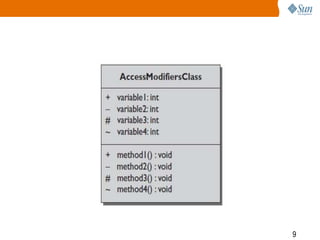
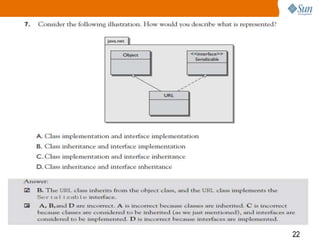
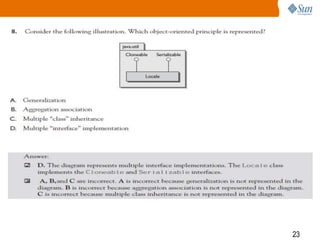
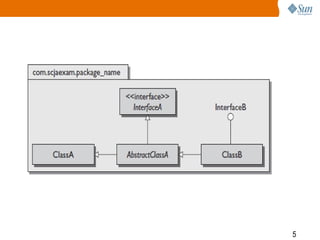
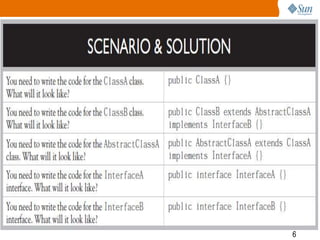
• Exam Objective 2.1 Recognize the UML representation of
classes, (including attributes and operations, abstract
classes, and interfaces), the UML representation of
inheritance (both implementation and interface), and the
UML representation of class member visibility modifiers
(-/private and +/public).

2
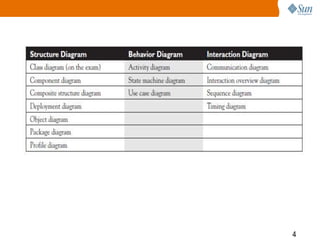
• The SCJA exam requires minimum knowledge of the
UML Infrastructure and Superstructure specifications.
Of the 14 UML diagram types, the class diagram is the
only diagram type on the exam.
• There is value in understanding UML diagrams and
features that are outside the scope of this exam.
• So in your independent research on UML, don’t
ignore the other diagram types since this knowledge
will surely come in handy later for you at work.

3
4
5
6
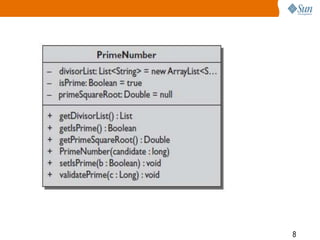
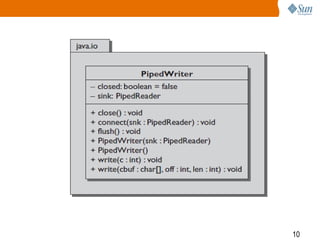
• Attributes Compartment :
[<visibility>] <variable_name> [: <type>] [= default_value]
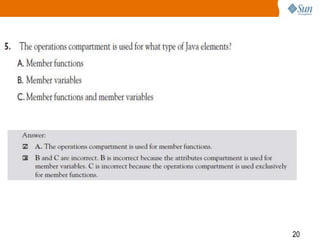
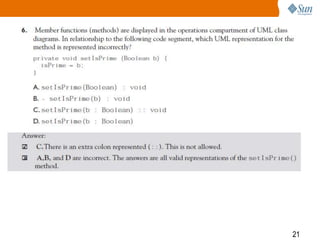
• Operations Compartment :
[<visibility>] <method_name> [<parameter-list>] [: <return-type>]

7
8
9
10
Recognizing Representations of UML
Associations
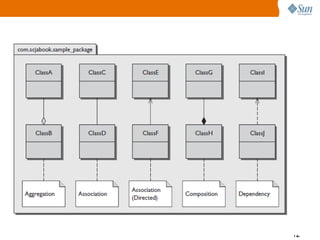
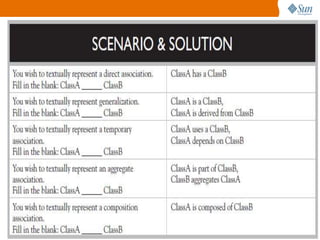
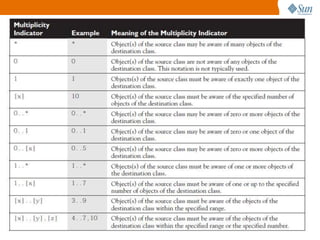
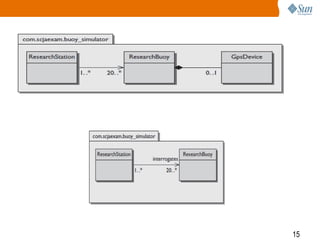
• Exam Objective 2.2 Recognize the UML representation of
class associations, compositions, association multiplicity
indicators, and association navigation indicators.

11
12
13
14
15
16
17
18
19
20
21
22
23
24
25
26
27

Chapter 9:Representing Object-Oriented Concepts with UML

  • 1.
  • 2.
    Recognizing Representations of SignificantUML Elements • Exam Objective 2.1 Recognize the UML representation of classes, (including attributes and operations, abstract classes, and interfaces), the UML representation of inheritance (both implementation and interface), and the UML representation of class member visibility modifiers (-/private and +/public). 2
  • 3.
    • The SCJAexam requires minimum knowledge of the UML Infrastructure and Superstructure specifications. Of the 14 UML diagram types, the class diagram is the only diagram type on the exam. • There is value in understanding UML diagrams and features that are outside the scope of this exam. • So in your independent research on UML, don’t ignore the other diagram types since this knowledge will surely come in handy later for you at work. 3
  • 4.
  • 5.
  • 6.
  • 7.
    • Attributes Compartment: [<visibility>] <variable_name> [: <type>] [= default_value] • Operations Compartment : [<visibility>] <method_name> [<parameter-list>] [: <return-type>] 7
  • 8.
  • 9.
  • 10.
  • 11.
    Recognizing Representations ofUML Associations • Exam Objective 2.2 Recognize the UML representation of class associations, compositions, association multiplicity indicators, and association navigation indicators. 11
  • 12.
  • 13.
  • 14.
  • 15.
  • 16.
  • 17.
  • 18.
  • 19.
  • 20.
  • 21.
  • 22.
  • 23.
  • 24.
  • 25.
  • 26.
  • 27.