Yozette Williams
Urinary System
 Cath.
 C & S
 CRF
 HD
 UTI
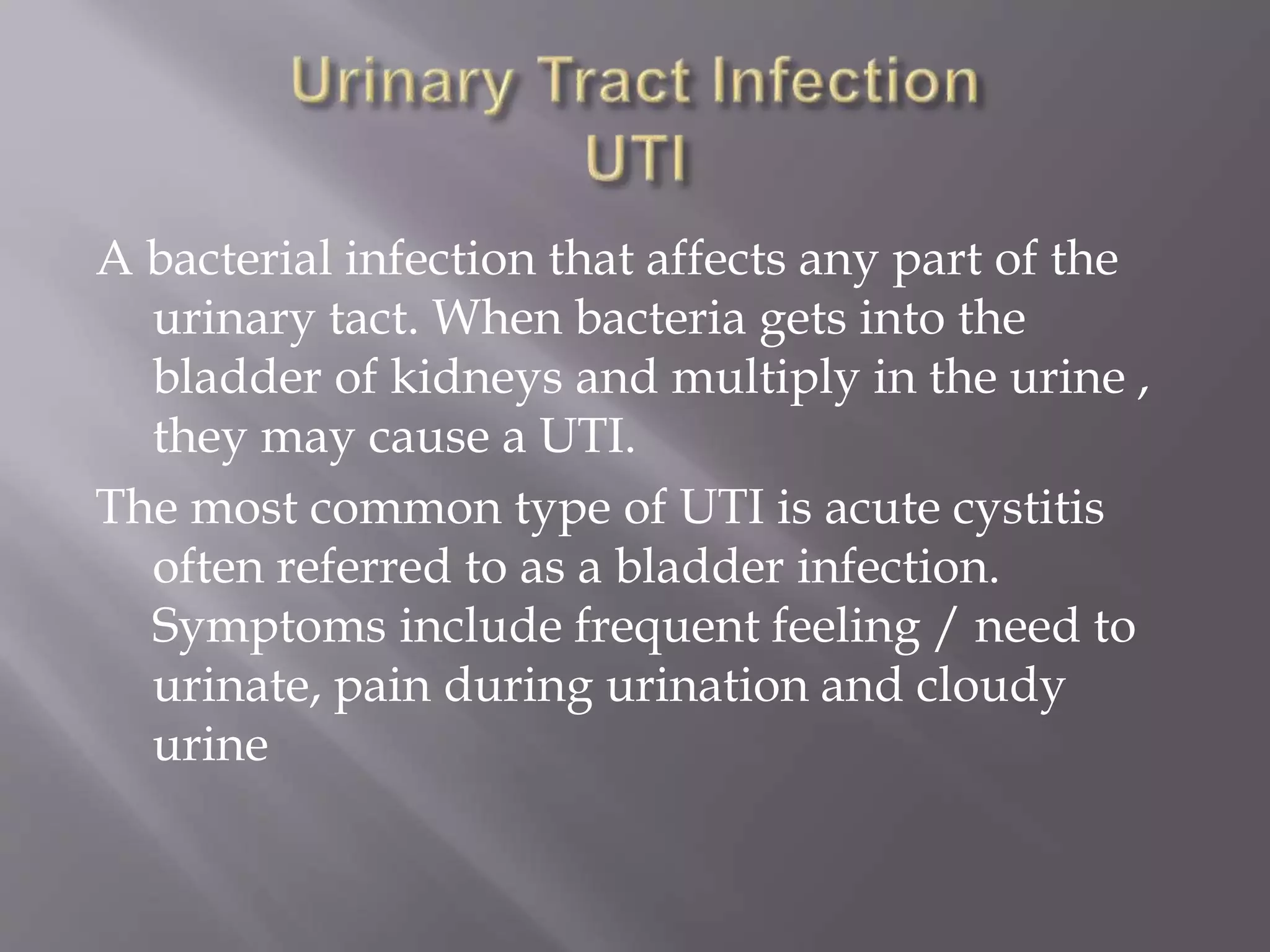
A bacterial infection that affects any part of the
urinary tact. When bacteria gets into the
bladder of kidneys and multiply in the urine ,
they may cause a UTI.
The most common type of UTI is acute cystitis
often referred to as a bladder infection.
Symptoms include frequent feeling / need to
urinate, pain during urination and cloudy
urine
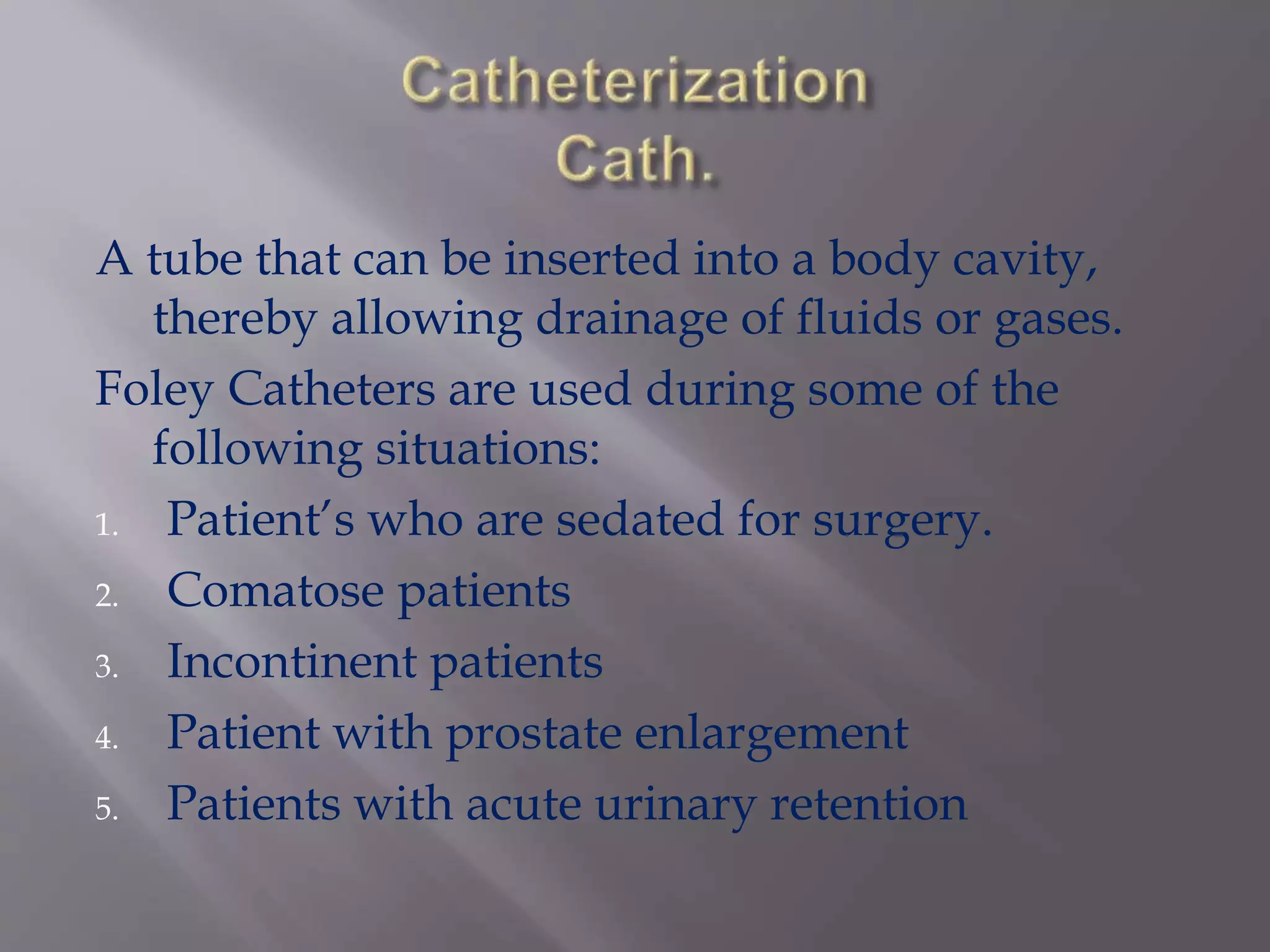
A tube that can be inserted into a body cavity,
thereby allowing drainage of fluids or gases.
Foley Catheters are used during some of the
following situations:
1. Patient’s who are sedated for surgery.
2. Comatose patients
3. Incontinent patients
4. Patient with prostate enlargement
5. Patients with acute urinary retention
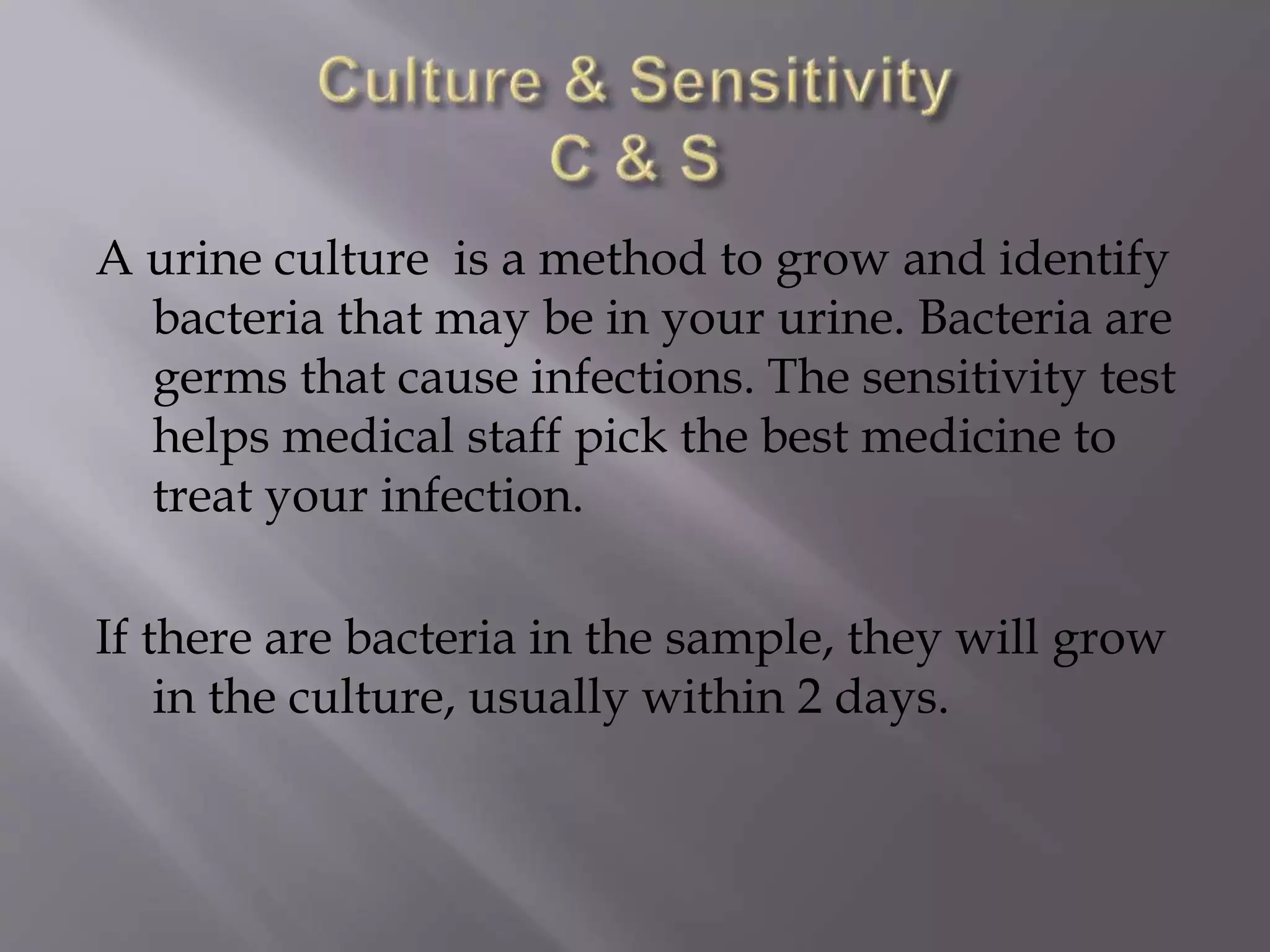
A urine culture is a method to grow and identify
bacteria that may be in your urine. Bacteria are
germs that cause infections. The sensitivity test
helps medical staff pick the best medicine to
treat your infection.
If there are bacteria in the sample, they will grow
in the culture, usually within 2 days.
A progressive loss in renal function over a period of
months or years. The symptoms worsening may
include generally unwell felling, and reduce in
appetite, it can mostly be detected as increase in
serum creatinine or protein in the urine.
There are stages of renal failure
1. Signs of mild kidney disease but with normal
GFR.(glomerular filtration rate).
2. Mild with reduced GFR.
3. Moderate chronic renal insufficiency
4. Severe chronic renal insufficiency
5. End-Stage renal failure.
Hemodialysis is a method for removing waste
products such as creatinine and urea as well as free
water from the blood, when kidneys are in renal
failure. Hemodialysis is one of three renal
replacement therapies. (the other two being renal
transplant; or peritoneal dialysis).
Hemodialysis can be an outpatient or inpatient
therapy. Access is through one of three means
1. Catheter
2. AV Fistula
3. AV Graft
The creation of these types of vascular accesses
require surgery.

Chapter 9 presentation

  • 1.
  • 2.
     Cath.  C& S  CRF  HD  UTI
  • 3.
    A bacterial infectionthat affects any part of the urinary tact. When bacteria gets into the bladder of kidneys and multiply in the urine , they may cause a UTI. The most common type of UTI is acute cystitis often referred to as a bladder infection. Symptoms include frequent feeling / need to urinate, pain during urination and cloudy urine
  • 4.
    A tube thatcan be inserted into a body cavity, thereby allowing drainage of fluids or gases. Foley Catheters are used during some of the following situations: 1. Patient’s who are sedated for surgery. 2. Comatose patients 3. Incontinent patients 4. Patient with prostate enlargement 5. Patients with acute urinary retention
  • 5.
    A urine cultureis a method to grow and identify bacteria that may be in your urine. Bacteria are germs that cause infections. The sensitivity test helps medical staff pick the best medicine to treat your infection. If there are bacteria in the sample, they will grow in the culture, usually within 2 days.
  • 6.
    A progressive lossin renal function over a period of months or years. The symptoms worsening may include generally unwell felling, and reduce in appetite, it can mostly be detected as increase in serum creatinine or protein in the urine. There are stages of renal failure 1. Signs of mild kidney disease but with normal GFR.(glomerular filtration rate). 2. Mild with reduced GFR. 3. Moderate chronic renal insufficiency 4. Severe chronic renal insufficiency 5. End-Stage renal failure.
  • 7.
    Hemodialysis is amethod for removing waste products such as creatinine and urea as well as free water from the blood, when kidneys are in renal failure. Hemodialysis is one of three renal replacement therapies. (the other two being renal transplant; or peritoneal dialysis). Hemodialysis can be an outpatient or inpatient therapy. Access is through one of three means 1. Catheter 2. AV Fistula 3. AV Graft The creation of these types of vascular accesses require surgery.