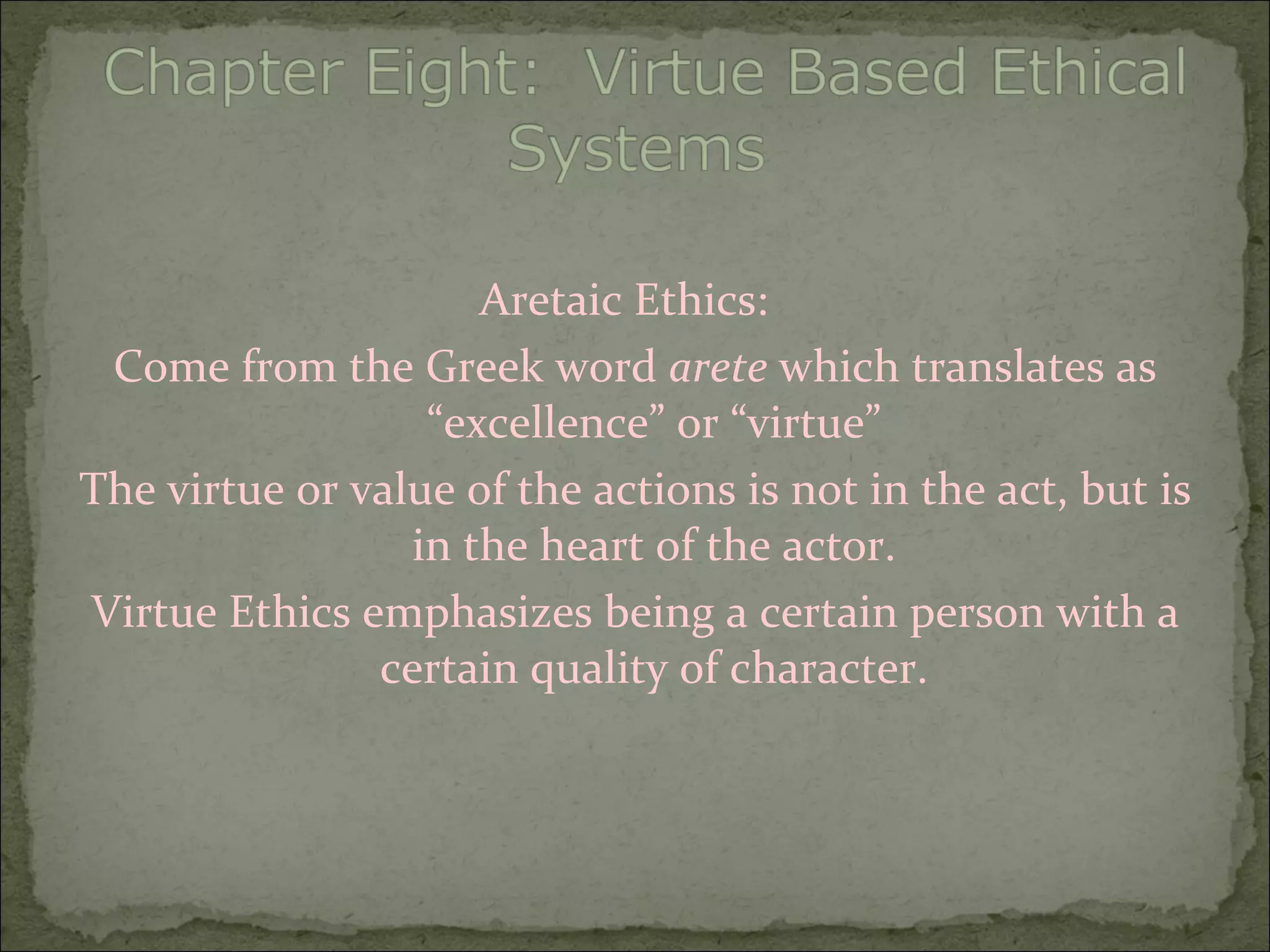
Aretaic Ethics:  Come from the Greek word  arete  which translates as “excellence” or “virtue” The virtue or value of the actions is not in the act, but is in the heart of the actor. Virtue Ethics emphasizes being a certain person with a certain quality of character.
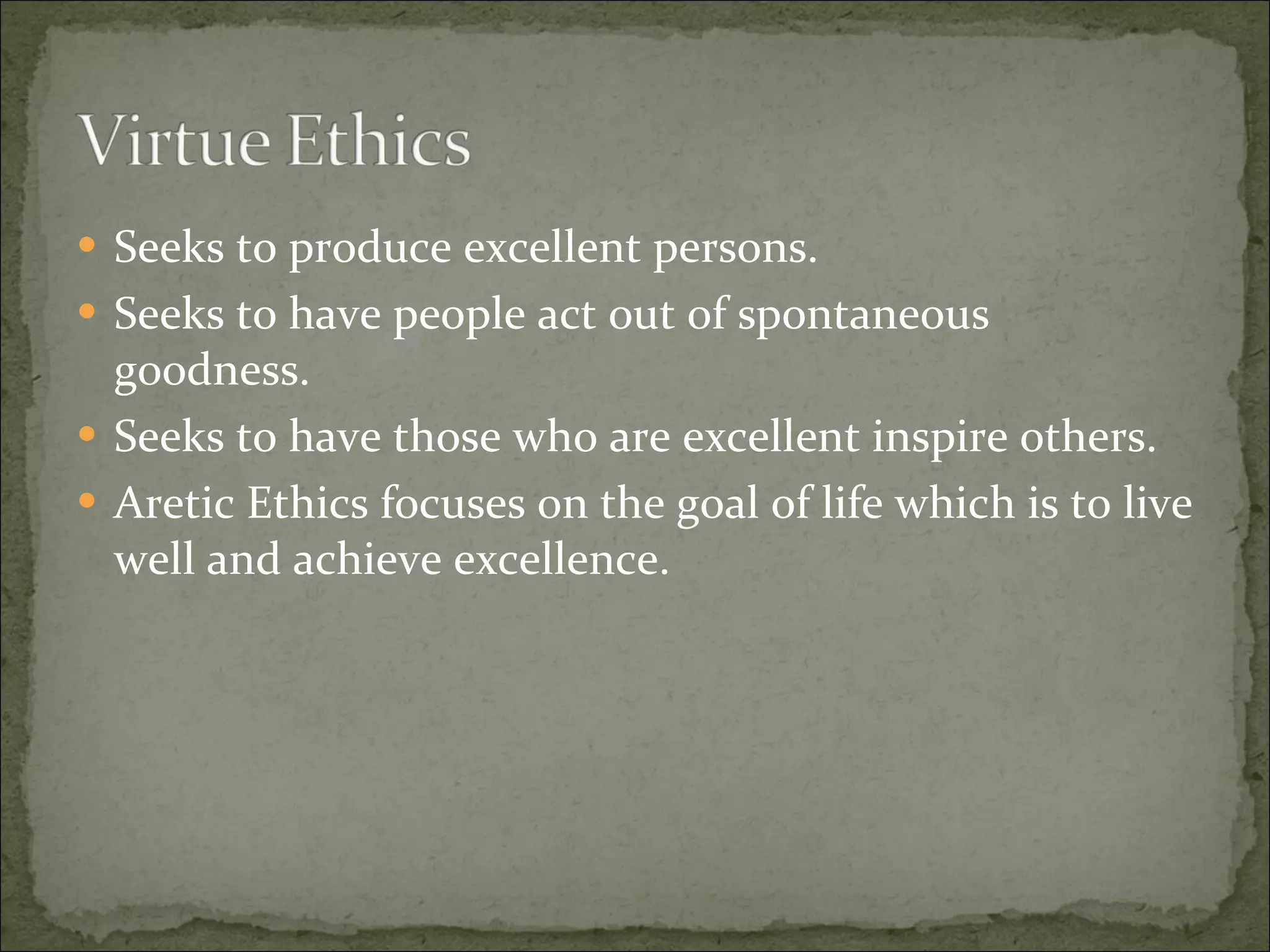
Seeks to produce excellent persons. Seeks to have people act out of spontaneous goodness. Seeks to have those who are excellent inspire others. Aretic Ethics focuses on the goal of life which is to live well and achieve excellence.
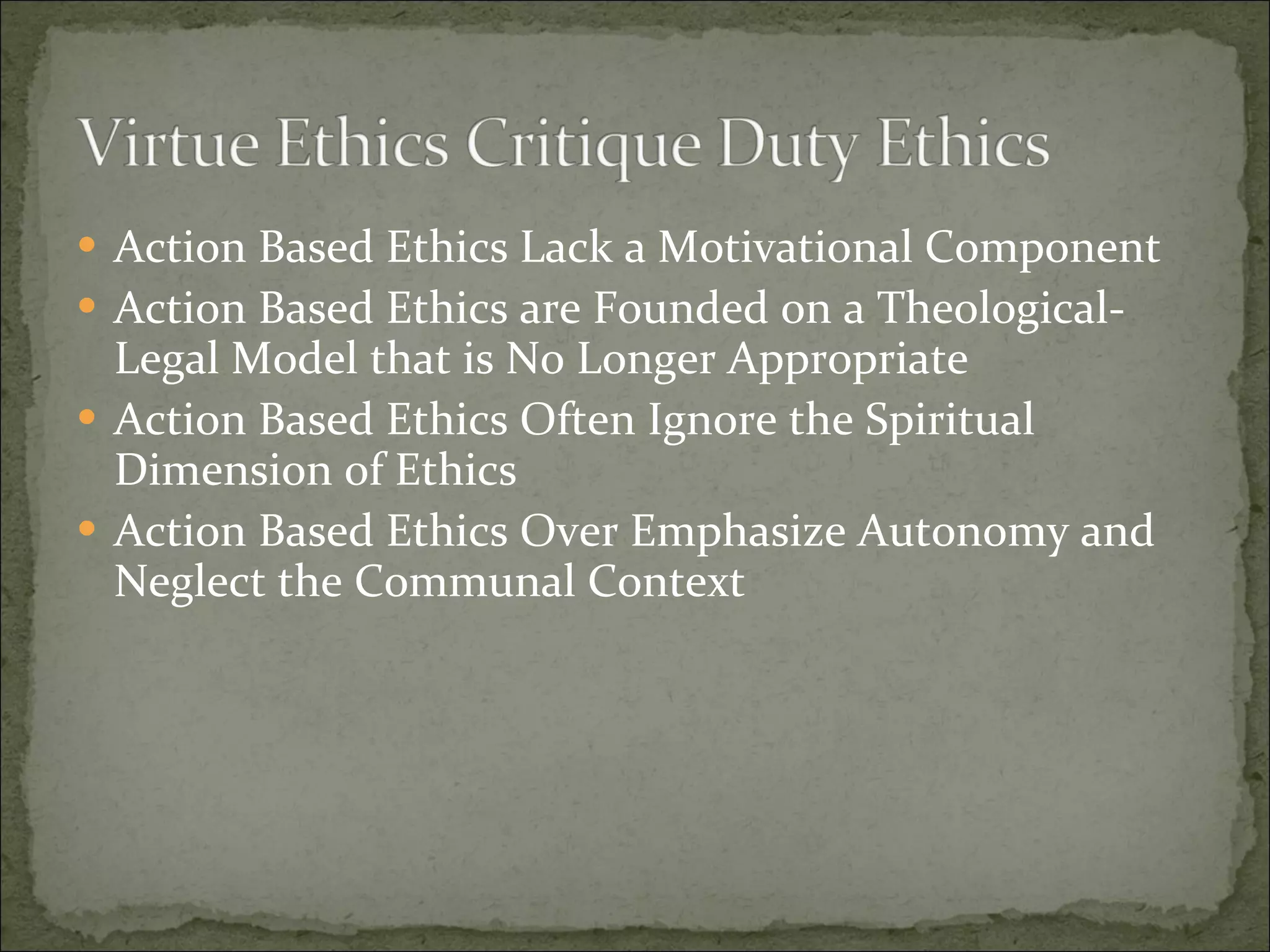
Action Based Ethics Lack a Motivational Component Action Based Ethics are Founded on a Theological-Legal Model that is No Longer Appropriate Action Based Ethics Often Ignore the Spiritual Dimension of Ethics Action Based Ethics Over Emphasize Autonomy and Neglect the Communal Context
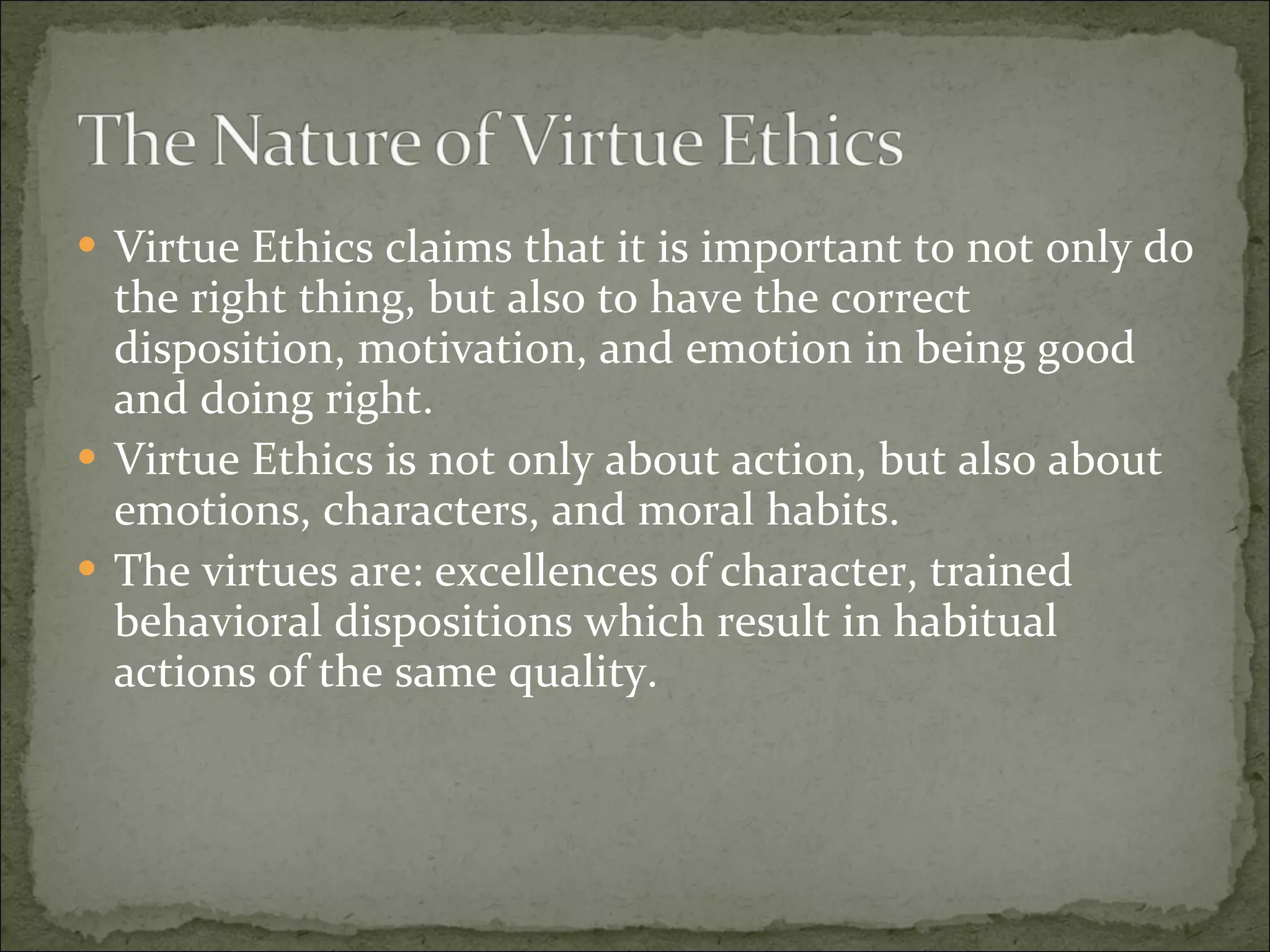
Virtue Ethics claims that it is important to not only do the right thing, but also to have the correct disposition, motivation, and emotion in being good and doing right. Virtue Ethics is not only about action, but also about emotions, characters, and moral habits. The virtues are: excellences of character, trained behavioral dispositions which result in habitual actions of the same quality.
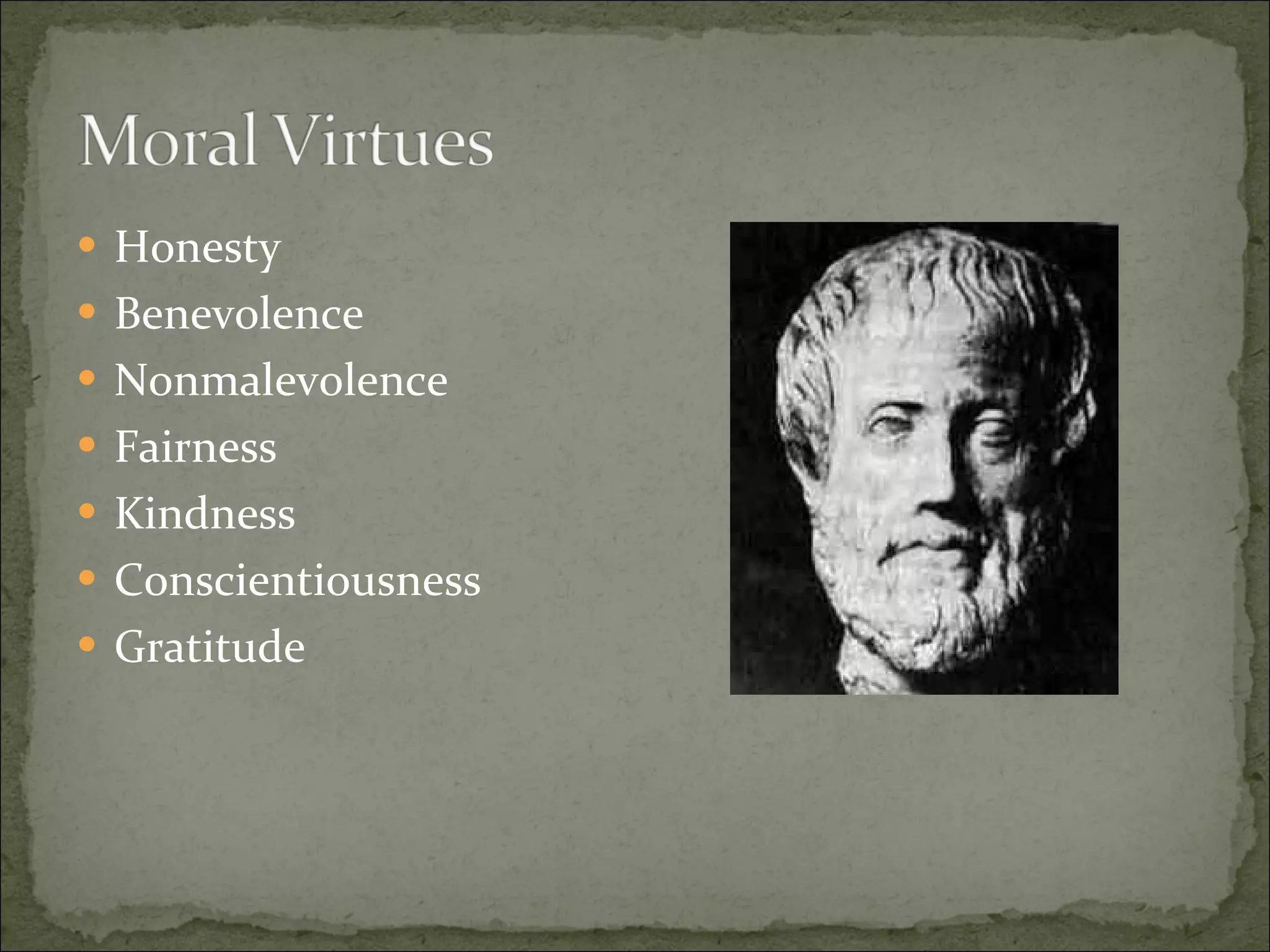
Honesty Benevolence Nonmalevolence Fairness Kindness Conscientiousness Gratitude
Courage Optimism Rationality Self-Control Patience Endurance Industry Musical Talent Cleanliness Wit
To achieve a state of well being (eudaimonia), proper social institutions are necessary. The moral person cannot exist apart from a political setting that enables him or her to develop the requisite virtues for the good life. Ethics is therefore considered a branch of politics.
Humanity has an essence, or function. The function of humans is to use their reason in pursuit of the good life. Moral virtues are different from intellectual ones. By living well, we acquire the right habits. These habits are the virtues.
Virtues exist between a mean that has excess and deficiency at either end. We need to choose along this mean the proper course of action, towards the right conclusion. People have unequal ability to be virtuous.  Some have great ability; some lack it entirely. Some people are worthless, natural slaves.
Father Maximilian Kolbe Jesus Socrates Gandhi Mother Theresa All of their lives have exhibited appropriate attitudes and dispositions of Virtue Ethics.
Pure Aretaic Ethics:  Virtues are dominant and have intrinsic value. Standard Deontic Ethics:  Action guiding principles are the essence of morality. Complementarity Ethics or Pluralist Ethics: Holds that both Aretaic and Deontic Ethics are necessary for an adequate and complete system.
Carol Gilligan:  Research indicates that on average a woman’s moral point of view is different from a man’s moral point of view. Women focus on particular relationships. Women focus on the process, not on the principles. Men focus on the principles of justice and rights.
Gilligan states that the two perspectives are not competitive, but that men and women develop their moral outlooks in a different manner. Care-Ethics:  The thesis that attitudes like caring and sensitivity to context are an important aspect of the moral life. This is close to the Christian ethical theory of Agapeism (Agape is Greek for love).

Chapter 8: Virtue Based Ethics

  • 1.
    Aretaic Ethics: Come from the Greek word arete which translates as “excellence” or “virtue” The virtue or value of the actions is not in the act, but is in the heart of the actor. Virtue Ethics emphasizes being a certain person with a certain quality of character.
  • 2.
    Seeks to produceexcellent persons. Seeks to have people act out of spontaneous goodness. Seeks to have those who are excellent inspire others. Aretic Ethics focuses on the goal of life which is to live well and achieve excellence.
  • 3.
    Action Based EthicsLack a Motivational Component Action Based Ethics are Founded on a Theological-Legal Model that is No Longer Appropriate Action Based Ethics Often Ignore the Spiritual Dimension of Ethics Action Based Ethics Over Emphasize Autonomy and Neglect the Communal Context
  • 4.
    Virtue Ethics claimsthat it is important to not only do the right thing, but also to have the correct disposition, motivation, and emotion in being good and doing right. Virtue Ethics is not only about action, but also about emotions, characters, and moral habits. The virtues are: excellences of character, trained behavioral dispositions which result in habitual actions of the same quality.
  • 5.
    Honesty Benevolence NonmalevolenceFairness Kindness Conscientiousness Gratitude
  • 6.
    Courage Optimism RationalitySelf-Control Patience Endurance Industry Musical Talent Cleanliness Wit
  • 7.
    To achieve astate of well being (eudaimonia), proper social institutions are necessary. The moral person cannot exist apart from a political setting that enables him or her to develop the requisite virtues for the good life. Ethics is therefore considered a branch of politics.
  • 8.
    Humanity has anessence, or function. The function of humans is to use their reason in pursuit of the good life. Moral virtues are different from intellectual ones. By living well, we acquire the right habits. These habits are the virtues.
  • 9.
    Virtues exist betweena mean that has excess and deficiency at either end. We need to choose along this mean the proper course of action, towards the right conclusion. People have unequal ability to be virtuous. Some have great ability; some lack it entirely. Some people are worthless, natural slaves.
  • 10.
    Father Maximilian KolbeJesus Socrates Gandhi Mother Theresa All of their lives have exhibited appropriate attitudes and dispositions of Virtue Ethics.
  • 11.
    Pure Aretaic Ethics: Virtues are dominant and have intrinsic value. Standard Deontic Ethics: Action guiding principles are the essence of morality. Complementarity Ethics or Pluralist Ethics: Holds that both Aretaic and Deontic Ethics are necessary for an adequate and complete system.
  • 12.
    Carol Gilligan: Research indicates that on average a woman’s moral point of view is different from a man’s moral point of view. Women focus on particular relationships. Women focus on the process, not on the principles. Men focus on the principles of justice and rights.
  • 13.
    Gilligan states thatthe two perspectives are not competitive, but that men and women develop their moral outlooks in a different manner. Care-Ethics: The thesis that attitudes like caring and sensitivity to context are an important aspect of the moral life. This is close to the Christian ethical theory of Agapeism (Agape is Greek for love).