Download to read offline
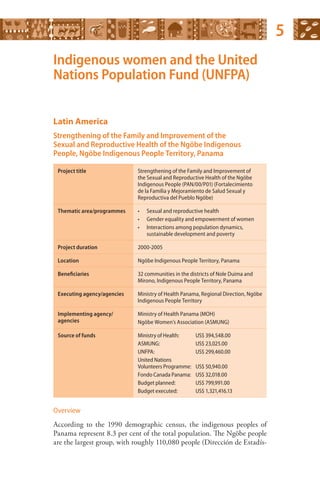


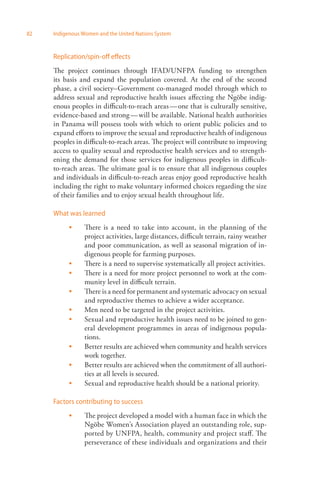




The project aimed to improve sexual and reproductive health for the Ngöbe indigenous people in Panama by strengthening families and communities. It trained local health workers, improved access to health services, and conducted education campaigns around related issues. Over time, it helped reduce maternal mortality, empowered indigenous women, and influenced national policies, though sustainability remained a challenge due to factors like government priorities and poverty in the region.


