suitable targets for 2030, with the 
proposed goal of ‘leaving no-one behind’ 
and eliminating (extreme) poverty. The 
international community, including 
organisations such as the World Bank, 
appear to be coalescing around an 
ambitious goal to bring extreme poverty 
to below 3% and boost incomes for the 
bottom 40% of the population in every 
country by 2030 (emphasis added).4 
Parallel to the post-2015 MDG process, 
the African Union (AU) launched its 
Agenda 2063 in 2013 as a ‘call for action 
to all segments of African society to work 
together to build a prosperous and united 
Africa’.5 Agenda 2063 purposefully looks 
much further ahead, to a date 100 years 
from the establishment of the Organization 
of African Unity (OAU) in 1963. In doing 
so, the AU (the successor to the OAU) 
admits that ‘[f]ifty years is, undoubtedly, 
IN 1990 THE INTERNATIONAL 
community agreed to halve the rate of 
extreme poverty by 2015. Specifically, 
target 1.A in the Millennium Development 
Goals (MDGs) called for cutting in half 
‘the proportion of people whose income 
is less than [US]$1,25 a day’1 – the 
widely recognised definition of ‘extreme’ 
poverty. This target was met in 2010, five 
years ahead of the deadline, largely (but 
not exclusively) through the remarkable 
progress made in China.2 Although 
700 million fewer people lived in extreme 
poverty, the UN estimated that 1,2 billion 
people still lived on less than US$1,25 
a day in 2013, although more recent 
recalculations could see that figure 
reduced by about one-quarter.3 
As part of the process leading up to 
the finalisation of the post-2015 MDGs, 
attention has now turned to defining 
an extremely long development planning 
horizon’6 and notes that it will be rolling 
out plans for 10 and 25 years, and 
include various short-term action plans. 
After the scheduled adoption of the 
specifics of Agenda 2063 at the mid-year 
AU Summit in June 2014, the first 
10-year implementation plan is scheduled 
for approval in January 2015 and will 
be accompanied by a comprehensive 
monitoring and evaluation framework.7 
In many senses Agenda 2063 is rooted in 
a different development philosophy than 
that of the MDGs, finding its inspiration 
in the Lagos Plan of Action, the Abuja 
Treaty and the New Partnership for 
Africa’s Development (NEPAD). It reflects 
an ambitious effort by Africans to accept 
greater ownership and chart a new 
direction for the future that has inclusive 
growth and the elimination of extreme 
Summary 
The eradication of extreme poverty is a key component of the post-2015 
MDG process and the African Union’s Agenda 2063. This paper uses the 
International Futures forecasting system to explore this goal and finds that 
many African states are unlikely to make this target by 2030. In addition to 
the use of country-level targets, this paper argues in favour of a goal that 
would see Africa as a whole reducing extreme poverty to below 20% by 2030 
(15% using 2011 purchasing power parity), and to below 3% by 2063. 
AFRICAN FUTURES PAPER 10 | AUGUST 2014 
Reducing poverty in Africa 
Realistic targets for the post-2015 MDGs 
and Agenda 2063 
Sara Turner, Jakkie Cilliers and Barry Hughes
2 REDUCING POVERTY IN AFRICA: REALISTIC TARGETS FOR THE POST-2015 MDGS AND AGENDA 2063 
AFRICAN FUTURES PAPER 
poverty as key components. In private 
conversations, NEPAD officials consider 
the MDGs as setting a minimum ‘floor’ 
(particularly for the elimination of poverty), 
with Agenda 2063 a more ambitious and 
aspirational vision. 
It is essential that both the MDG 2030 
and Agenda 2063 processes succeed if 
the world is to sustain the momentum of 
the past 20 years in the face of serious 
global uncertainty. A focus on Africa is 
essential to this mission, because the 
degree and severity of poverty in many 
African countries are among the most 
significant on the planet. Other regions 
have made progress in the last 20 years 
due to a benign global context and 
sustained high levels of national growth 
in key countries such as China. It is far 
less certain that African countries will 
enjoy a similar favourable economic 
climate, that the collective economies of 
the continent’s 55 countries can sustain 
the same levels of growth year on year, 
or that growth will translate into the same 
degree of poverty reduction. 
The authors have used the International 
Futures (IFs) forecasting system (version 
7,05) to analyse the prospects for 
poverty reduction in Africa up to 2063. 
The IFs base case forecast suggests 
that even though African countries 
should see steady improvements, 
the majority will fail to meet the 3% 
extreme poverty goal by 2030 if current 
dynamics remain unchanged. After 
explaining our approach, modelling the 
same within IFs and comparing the 
results with others, we conclude that 
this extreme poverty target is not a 
reasonable goal for many African states, 
and that it is insensitive to the varying 
initial conditions African countries 
face. Setting aggressive targets is an 
admirable goal, but these targets need 
to be reasonable and achievable. 
We therefore argue in favour of setting 
a goal that would see African states on 
average reducing extreme poverty (income 
below US$1,25) to below 10% by 2045, 
and reducing extreme poverty to below 
3% by 2063. By 2030, African countries 
are likely to be at very different levels in 
terms of extreme poverty. Because of 
these significant country-level differences, 
and the different policy measures needed 
to effectively reduce poverty in different 
country contexts, we further recommend 
that the AU consider setting additional 
country-level targets to meet the specific 
needs of member countries. In particular, 
we advocate paying attention to chronic 
poverty (defined as income below 
US$0,70), since the majority of extremely 
poor Africans in sub-Saharan Africa 
find themselves significantly below even 
the US$1,25 level. 
Background and 
measurement 
Research continues to struggle with 
definitional and measurement questions 
that confound attempts to assess the 
dynamics of poverty and inequality. 
Developments over the last decade, 
including improvements in national data 
and the adoption of standard definitions, 
have eased but not eliminated these 
burdens. This is particularly true for 
Africa, where data limitations remain 
significant and affect accurate estimates 
of current trends. The recent rebasing 
of the Nigerian economy (now formally 
acknowledged as the largest in Africa), 
which saw an increase in the size of its 
gross domestic product (GDP) by 89%, 
illustrates the challenges in using current 
data for forecasts.8 
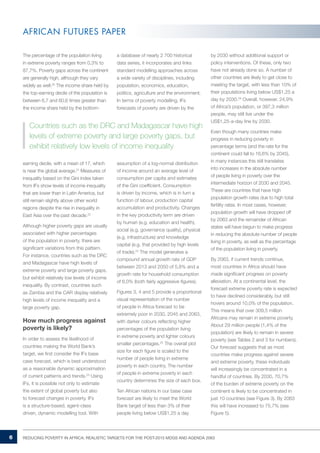
This goal would see African states reducing extreme 
poverty to below 10% by 2045, and 3% by 2063 
INCOME BELOW 
BELOW 20% BY 2030 
BELOW 10% BY 2045 
BELOW 3% BY 2063 
$1,25
AFRICAN FUTURES PAPER 10 • AUGUST 2014 3 
In April 2014 the International 
Comparison Program (ICP) at the World 
Bank released the summary results 
from its revised estimates that produce 
internationally comparable price and 
volume measures for GDP and its 
component expenditures.9 The measures 
are based on purchasing power parity 
(PPP), now using 2011 as reference year. 
The results have had a profound impact 
on estimates of global poverty, including 
for Africa. Previous GDP estimates were 
based on 2005 as reference year. The 
Center for Global Development (CGP) 
and the Brookings Institution, using 
different methodologies, were among the 
first organisations to release new poverty 
estimates. These new estimates and 
their potential impact on our forecasts 
are discussed below (see section 
headed ‘World Bank PPP calculations’). 
Elsewhere we retain the use of the 2005 
economic data. 
Estimates of poverty are based on two 
pieces of information: the average level 
of income or (better) consumption in 
a country, and the distribution of the 
population around that mean. The 
former can be estimated on the basis 
of reported income or consumption 
from data acquired through either 
national accounts or surveys. Survey 
estimates of income and consumption 
tend to yield lower estimates than do 
national accounts data. There is little 
consensus on which basis is superior. 
As a result, initial estimates of poverty 
may vary widely. IFs bases its estimates 
of poverty on survey data drawn from 
the PovcalNet data hosted by the 
World Bank, adjusting the model’s own 
national accounts-based estimates 
to match estimates produced by the 
survey methodologies. These estimates 
form the initialisation point for our 
forecasts of poverty, which are driven 
by the model’s forecasts of change in 
national accounts and distribution of 
income. Although the model currently 
initialises from 2010 data, we have 
chosen to use 2013 as a first marker 
for the forecasts set out below, given 
that that year is the Agenda 2063 start 
date. As a result, all our values for 2013 
are estimates drawn from the model 
(rooted in the PovcalNet survey data) 
rather than taken directly from the data 
of international organisations. 
Estimates of poverty are commonly 
expressed as the percentage of a 
population below a certain standard 
of living, typically US$1,25 per day at 
2005 PPP. This measure is attractive 
because it allows for cross-country 
comparisons. Using other general or 
nation-specific poverty lines may be 
more relevant for discussing poverty 
within countries, since these can take 
into account local levels of income. For 
example, as large numbers of people 
in China and India begin to escape 
poverty, alternative poverty lines are 
gaining popularity. These include US$2 
and even US$5 a day. Other lines have 
been developed to capture those who 
have moved out of poverty but could 
still fall back into it, and for certain 
regions of the world.10 
Extreme and chronic poverty are 
both reasonable concepts to frame 
discussions of poverty in the poorest 
country contexts. The former is useful 
because it is widely understood and 
used in poverty literature, while the latter 
captures concepts that are particularly 
relevant to the African context. 
While many people in low-income 
countries may be poor, only some 
are affected by overlapping, dynamic 
challenges that prevent them from 
escaping poverty even in times of 
economic growth. Those who remain 
poor over long periods of time and who 
frequently transmit poverty between 
generations are termed ‘chronically 
poor’.11 Evidence suggests that even 
as countries are making progress in 
reducing overall poverty rates, significant 
numbers of people still qualify as 
chronically poor.12 We return to this 
distinction later in this paper. 
The Chronic Poverty Research Center 
(CPRC) uses severe poverty as a proxy 
for chronic poverty in the absence of 
better measures. This paper does so 
as well, both to maintain consistency 
with the chronic poverty framework 
described below and because the 
US$0,70 line remains particularly relevant 
when discussing the poor in sub- 
Saharan Africa. The line of US$0,70 a 
day, also referred to as severe poverty, 
is relevant as it represents the average 
consumption of poor people (those in 
the bottom decile) on the continent.13 
However, severe poverty most likely 
understates the extent of chronic poverty 
because the chronically poor exist both 
at higher income levels and below the 
severe poverty line.14 For this reason it 
is important not to overemphasise the 
role of severe poverty in Africa. Chronic 
poverty may exist across consumption 
levels, and it is the conceptual attraction 
of a framework that emphasises national 
policy efforts to reduce poverty that 
drives our use of it in this paper. 
Just as there are many uncertainties and 
definitional issues surrounding poverty, 
similar challenges exist in discussions 
of inequality. There is a variety of ways 
to measure income inequality within a 
population. One of the most frequently 
used is the Gini index, which expresses 
the inequality of income distribution from 
0 to 1, with 0 corresponding to complete 
equality and 1 to complete inequality. The 
strength of this measure is that it is easy 
to understand: higher values indicate 
increasing levels of inequality within a 
population. Unfortunately, the measure 
is relatively insensitive to the specifics 
of how income is distributed within a 
population. This means that multiple 
income distributions may produce the 
same overall Gini coefficient. (Other 
measures of inequality, such as the
4 REDUCING POVERTY IN AFRICA: REALISTIC TARGETS FOR THE POST-2015 MDGS AND AGENDA 2063 
AFRICAN FUTURES PAPER 
Atkinson and Theil indices, are better 
able to express where inequality exists 
within a population but have less intuitive 
interpretations.) Another strength of the 
Gini index is that it can be used in log-normal 
representations of income as the 
standard deviation of the distribution, as 
it is used within IFs. 
Conceptual variety is another issue 
encountered when discussing the 
dynamics of poverty globally. When one 
looks at the difference between extreme 
poverty, severe poverty, chronic poverty 
and poverty vulnerability, it is important to 
bear in mind that, while there is overlap 
among these terms, each captures a 
slightly different facet of poverty. Each of 
these indicators may thus have a different 
relevance in different settings. 
In the following section we discuss 
the drivers of poverty that have been 
identified in literature and that form the 
conceptual frame for this analysis. 
Current levels of poverty 
in Africa 
The world has achieved tremendous 
declines in poverty in recent decades. 
This progress has occurred unevenly, 
with China and the rest of East Asia 
experiencing declines in excess of two 
percentage points a year.15 India and 
the rest of South Asia have also made 
progress, with poverty rates declining at 
a rate of approximately one percentage 
point a year. Latin America and Africa 
have done least well in the last 20 years, 
with rates of absolute poverty declining 
quite slowly if at all (see Figure 1). Latin 
America and Africa have, on average, 
experienced slower rates of economic 
growth and shown higher levels of 
inequality than other regions. 
The IFs base case estimate (using the 
data and thresholds that predate the 
ICP revision to 2011 as reference year) is 
that, in 2013, about 14,7% of the world’s 
population (1,04 billion people) still lived 
below the threshold for extreme poverty, 
of which 33% (400 million people) lived in 
Africa. This makes Africa the region with 
the second largest number of people 
living in absolute poverty and with the 
highest rate of poverty as a percentage 
of its population.16 While South Asia had 
more people living in absolute poverty, 
Figure 1: Percentage of population in extreme poverty (<US$1,25 a day 
PPP, 15-year moving average) 
50 
45 
40 
35 
30 
25 
20 
15 
10 
5 
0 
1985 1990 1995 2000 2005 2010 
UNDP Latin America and the Caribbean UNDP South Asia 
UNDP East Asia and the Pacific World Africa 
Source: International Futures version 7,05
AFRICAN FUTURES PAPER 10 • AUGUST 2014 5 
when adjusted for population size the 
burden of poverty in Africa is more severe 
than in South Asia.17 While 36,3% of 
the population in Africa live on less than 
US$1,25 a day, about 24,2% do so in 
South Asia. 
If we consider the line for severe poverty 
(US$0,70 a day), about 207 million 
Africans live below it, constituting on 
average half of those living in extreme 
poverty. This is significant because it 
implies that the extreme poverty gap 
in Africa is large (that is, many live far 
below US$1,25), making it harder to 
achieve reductions in extreme poverty. 
Additionally, based on the CPRC’s 
use of US$0,70 as a proxy for chronic 
poverty, it means that a large proportion 
of the poor in Africa are likely to be 
chronically poor. 
While the continental picture may 
appear bleak, some countries have 
already met the World Bank target. 
These include all the North African 
countries, as well as Gabon, Mauritius 
and the Seychelles. In general, however, 
countries in sub-Saharan Africa have 
not fared as well. This is not always 
because of a lack of growth. Some 
countries (such as the extreme case of 
Equatorial Guinea, but also a country 
such as Botswana) have experienced 
very rapid rates of growth, but have 
been unable to efficiently translate 
growth into poverty reduction. On the 
other hand, Cameroon, Egypt, Ghana, 
Kenya, Mali, Mauritania, Senegal, 
Swaziland, Tunisia and Uganda have all 
been relatively efficient in transmitting 
income growth into poverty reduction.18 
In percentage terms, the highest 
concentrations of severe poverty 
(<US$0,7 a day) are located in 
Madagascar, the Democratic Republic 
of the Congo (DRC), Liberia, Burundi, 
Malawi, the Central African Republic 
(CAR), Zimbabwe, Zambia, Rwanda and 
Somalia. The highest concentrations of 
extreme poverty (<US$1,25 a day) as 
percentage of the population are in the 
DRC, Liberia, Burundi, Madagascar, 
Malawi, Zambia, Zimbabwe, the CAR, 
Somalia, Rwanda and Tanzania. 
The 10 countries with the largest 
populations of severely poor are Nigeria, 
the DRC, Madagascar, Tanzania, Kenya, 
Malawi, Mozambique, Zimbabwe, 
Zambia and Ethiopia. In terms of 
absolute numbers living in extreme 
poverty (<US$1,25 a day), Nigeria, the 
DRC, Tanzania, Ethiopia, Madagascar, 
Kenya, Mozambique, Uganda and 
Malawi all have populations of greater 
than 10 million living in extreme poverty, 
with a total of 278 million in these nine 
countries alone. 
African countries vary widely in the extent 
and depth of extreme poverty and the 
degree of income inequality. 
Figure 2: Poverty rate <US$1,25 a day, poverty gap, and ratio of income share held by 90th percentile to 
income share held by 10th percentile (most recent data, variable years)19 
Source: World Bank, PovCalNet database, International Futures v. 7,05, Tableau Public version 8,1 
Congo, Democratic Republic of 
Liberia 
Burundi 
Madagascar 
Malawi 
Zambia 
Nigeria 
Tanzania 
Rwanda 
Central African Republic 
Mozambique 
Angola 
Congo, Republic of 
Sierra Leone 
Mali 
Comoros 
Burkina Faso 
Niger 
Kenya 
Guinea 
Swaziland 
Ethiopia 
Togo 
Uganda 
Senegal 
Namibia 
Ghana 
Cote d’Ivoire 
Mauritania 
Sudan 
South Africa 
Cameroon 
Gabon 
Morocco 
Egypt, Arab Republic of 
Tunisia 
Seychelles 
90 
80 
70 
60 
50 
40 
30 
20 
10 
0 
90 
80 
70 
60 
50 
40 
30 
20 
10 
0 
Percentage of population living in extreme poverty 
Poverty gap 
Percentage of population living in extreme poverty Poverty gap
6 REDUCING POVERTY IN AFRICA: REALISTIC TARGETS FOR THE POST-2015 MDGS AND AGENDA 2063 
AFRICAN FUTURES PAPER 
The percentage of the population living 
in extreme poverty ranges from 0,3% to 
87,7%. Poverty gaps across the continent 
are generally high, although they vary 
widely as well.20 The income share held by 
the top-earning decile of the population is 
between 6,7 and 60,6 times greater than 
the income share held by the bottom-earning 
decile, with a mean of 17, which 
is near the global average.21 Measures of 
inequality based on the Gini index taken 
from IFs show levels of income inequality 
that are lower than in Latin America, but 
still remain slightly above other world 
regions despite the rise in inequality in 
East Asia over the past decade.22 
Although higher poverty gaps are usually 
associated with higher percentages 
of the population in poverty, there are 
significant variations from this pattern. 
For instance, countries such as the DRC 
and Madagascar have high levels of 
extreme poverty and large poverty gaps, 
but exhibit relatively low levels of income 
inequality. By contrast, countries such 
as Zambia and the CAR display relatively 
high levels of income inequality and a 
large poverty gap. 
How much progress against 
poverty is likely? 
In order to assess the likelihood of 
countries making the World Bank’s 
target, we first consider the IFs base 
case forecast, which is best understood 
as a reasonable dynamic approximation 
of current patterns and trends.23 Using 
IFs, it is possible not only to estimate 
the extent of global poverty but also 
to forecast changes in poverty. IFs 
is a structure-based, agent-class 
driven, dynamic modelling tool. With 
a database of nearly 2 700 historical 
data series, it incorporates and links 
standard modelling approaches across 
a wide variety of disciplines, including 
population, economics, education, 
politics, agriculture and the environment. 
In terms of poverty modelling, IFs 
forecasts of poverty are driven by the 
assumption of a log-normal distribution 
of income around an average level of 
consumption per capita and estimates 
of the Gini coefficient. Consumption 
is driven by income, which is in turn a 
function of labour, production capital 
accumulation and productivity. Changes 
in the key productivity term are driven 
by human (e.g. education and health), 
social (e.g. governance quality), physical 
(e.g. infrastructure) and knowledge 
capital (e.g. that provided by high levels 
of trade).24 The model generates a 
compound annual growth rate of GDP 
between 2013 and 2050 of 5,8% and a 
growth rate for household consumption 
of 6,0% (both fairly aggressive figures). 
Figures 3, 4 and 5 provide a proportional 
visual representation of the number 
of people in Africa forecast to be 
extremely poor in 2030, 2045 and 2063, 
with darker colours reflecting higher 
percentages of the population living 
in extreme poverty and lighter colours 
smaller percentages.25 The overall plot 
size for each figure is scaled to the 
number of people living in extreme 
poverty in each country. The number 
of people in extreme poverty in each 
country determines the size of each box. 
Ten African nations in our base case 
forecast are likely to meet the World 
Bank target of less than 3% of their 
people living below US$1,25 a day 
by 2030 without additional support or 
policy interventions. Of these, only two 
have not already done so. A number of 
other countries are likely to get close to 
meeting the target, with less than 10% of 
their populations living below US$1,25 a 
day by 2030.29 Overall, however, 24,9% 
of Africa’s population, or 397,3 million 
people, may still live under the 
US$1,25-a-day line by 2030. 
Even though many countries make 
progress in reducing poverty in 
percentage terms (and the rate for the 
continent could fall to 16,6% by 2045), 
in many instances this still translates 
into increases in the absolute number 
of people living in poverty over the 
intermediate horizon of 2030 and 2045. 
These are countries that have high 
population growth rates due to high total 
fertility rates. In most cases, however, 
population growth will have dropped off 
by 2063 and the remainder of African 
states will have begun to make progress 
in reducing the absolute number of people 
living in poverty, as well as the percentage 
of the population living in poverty. 
By 2063, if current trends continue, 
most countries in Africa should have 
made significant progress on poverty 
alleviation. At a continental level, the 
forecast extreme poverty rate is expected 
to have declined considerably, but still 
hovers around 10,0% of the population. 
This means that over 309,5 million 
Africans may remain in extreme poverty. 
About 29 million people (1,4% of the 
population) are likely to remain in severe 
poverty (see Tables 2 and 3 for numbers). 
Our forecast suggests that as most 
countries make progress against severe 
and extreme poverty, these individuals 
will increasingly be concentrated in a 
handful of countries. By 2030, 70,7% 
of the burden of extreme poverty on the 
continent is likely to be concentrated in 
just 10 countries (see Figure 3). By 2063 
this will have increased to 75,7% (see 
Figure 5). 
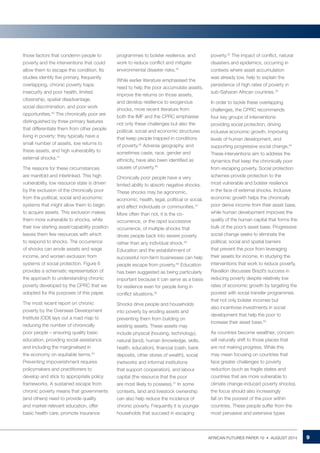
Countries such as the DRC and Madagascar have high 
levels of extreme poverty and large poverty gaps, but 
exhibit relatively low levels of income inequality
AFRICAN FUTURES PAPER 10 • AUGUST 2014 7 
TOTAL NUMBER OF 
EXTREME POOR: 
346 MILLION (M) 
PER CENT OF AFRICAN 
POPULATION IN EXTREME 
POVERTY: 16,6% 
SHARE OF GLOBAL 
EXTREME POVERTY 
IN AFRICA: 73,7% 
Figure 3: 2030 area diagram – population and per cent of population in extreme poverty in Africa26 
Source: International Futures version 7,05, Tableau Public version 8,1 
TOTAL NUMBER OF 
EXTREME POOR IN AFRICA: 
397,3 MILLION (M) 
PER CENT OF AFRICAN 
POPULATION IN EXTREME 
POVERTY: 24,9% 
SHARE OF GLOBAL 
EXTREME POVERTY 
IN AFRICA: 60,3 % 
Figure 5: 2063 area diagram – population and per cent of population in extreme poverty in Africa28 
Source: International Futures version 7,05, Tableau Public version 8,1 
TOTAL NUMBER OF 
EXTREME POOR: 
250,2 MILLION (M) 
PER CENT OF AFRICAN 
POPULATION IN EXTREME 
POVERTY: 10,0% 
SHARE OF GLOBAL 
EXTREME POVERTY 
IN AFRICA: 80,0 % 
Madagascar 
54,1M 
84,9% 
Nigeria 
26,6M 
6,4% 
Niger 
25,5M 
37,5% 
Chad 
17,9M 
40,9% 
Somalia 
15,3M 
46,5% 
Malawi 
14,0M / 32,1% 
Kenya 
14,0M / 14,3% 
Mali 
11,3M / 25,6% 
Burundi 
6,5M / 24,0% 
Congo, 
Democratic 
Republic of 
24,7M 
14,6% 
Figure 4: 2045 area diagram – population and per cent of population in extreme poverty in Africa27 
Source: International Futures version 7,05, Tableau Public version 8,1 
Congo, Democratic Republic of 
53,9M 
38,5% 
Madagascar 
44,3M 
89,5% 
Nigeria 
38,8M 
11,4% 
Niger 
26,3M 
53,9% 
Kenya 
23,2M 
27,9% 
Malawi 
19,9M 
56,3% 
Mali 
16,7M 
48,0% 
Somalia 
14,0M 
57,4% 
Chad 
13,4M / 41,9% 
Burundi 
11,5M / 51,9% 
Nigeria 
62,3M 
24,5% 
Congo, Democratic Republic of 
62,2M 
59,5% 
Madagascar 
32,2M 
88,8% 
Kenya 
25,1M 
38,6% 
Tanzania 
21,7M 
29,1% 
Malawi 
17,1M 
65,5% 
Niger 
16,7M 
52,3% 
Uganda 
16,0M 
25,8% 
Ethiopia 
13,9M 
10,2% 
Mali 
13,8M 
55,8%
8 REDUCING POVERTY IN AFRICA: REALISTIC TARGETS FOR THE POST-2015 MDGS AND AGENDA 2063 
AFRICAN FUTURES PAPER 
Drivers of change in poverty 
The drivers of change in poverty can 
be framed in a number of ways. At a 
macroeconomic level there are two 
proximate drivers of poverty rate 
reduction: economic growth and 
reductions in inequality. Economic 
growth, if relatively evenly distributed 
across a society, tends to raise 
individual income, drawing people 
out of poverty.30 Distribution-neutral 
economic growth will thus reduce the 
percentage of people living in poverty, 
although the absolute numbers may 
remain constant or even grow. Similarly, 
reductions in inequality over time have a 
significant impact on poverty.31 
Economic growth in Asia, and China 
in particular, has driven much of the 
remarkable reductions in poverty over 
the last decade. China has reduced its 
extreme poverty rate from over 60% in 
1990 to less than 10% in 2010 (even 
with a substantial deterioration in income 
distribution). This translates to 566 million 
fewer people living in extreme poverty in 
2010 than in 1990.32 No other country 
has come close to achieving a similar 
rate of progress on poverty, raising 
questions about other countries’ chances 
of achieving similar gains. 
Distributional patterns can, of course, 
mediate the impact of growth. High initial 
levels of inequality can form a significant 
barrier to both reductions in poverty 
(in part because they can increase 
poverty gaps) and future growth 
rates (in part because they undercut 
social consensus), and reductions 
in inequality can increase the effect 
that economic growth has on poverty 
reduction.33 While growth is shown to 
help in poverty reduction, the strength 
of this relationship varies widely across 
countries.34 Some of the significant 
differences in poverty reduction in 
countries such as Botswana, which 
saw very high growth rates but relatively 
modest levels of poverty reduction, 
and Ghana, which experienced much 
more modest growth but relatively more 
poverty reduction, are partly attributable 
to differences in initial income 
distribution.35 Analysis by Fosu, and a 
separate analysis by Ali and Thorbecke, 
suggests that income distribution may 
be an important component of efforts to 
reduce poverty in sub-Saharan Africa.36 
Globally, sub-Saharan Africa is second 
only to Latin America and the Caribbean 
in having a high average Gini coefficient. 
All other regions have substantially lower 
levels of inequality. This implies that 
the impact of economic growth may 
be muted in Africa, raising the relative 
importance of redistributive growth 
policies for poverty reduction. 
Microeconomic work is useful as an 
additional frame from which to consider 
the dynamics of poverty and the ways 
in which national policy choices can 
support the poor.37 While work in this 
area is on-going, one useful construct 
emphasises the ways in which individuals 
and households move into and out of 
severe poverty as a result of life events 
that harm a person’s ability to earn 
income and accumulate assets. In 
this framework, poverty is a condition 
that people may move into and out of 
multiple times during their lifetimes, 
and national or subnational policies 
may have significant impacts on these 
processes. We noted previously that 
those who remain poor over long periods 
of time and who frequently transmit 
poverty between generations are termed 
‘chronically poor’.38 Significantly, as many 
African states begin to see accelerated 
growth (which can support permanent 
escapes from poverty for many people), 
those who are left behind will suffer 
increasingly from the kinds of dynamic, 
integrated challenges emphasised in the 
chronic poverty literature.39 
The CPRC has produced important work 
on the dynamics of poverty, focusing on 
Shock 
vulnerability 
and low risk 
mitigation 
capacity 
Political, 
social and 
economic 
exclusion 
Low asset 
quantity and 
quality 
Poor work 
opportunities 
and low 
wages 
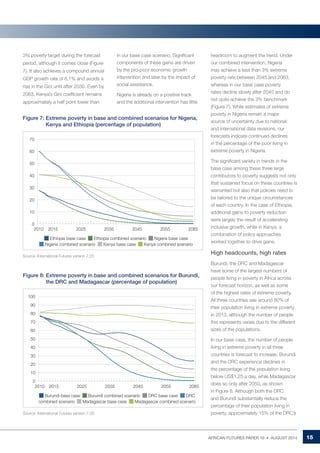
Figure 6: Simplified model of the 
interactions that drive and 
sustain chronic poverty44 
Source: Authors’ synthesis based on Andrew 
Shepherd et al., The geography of poverty, 
disasters and climate extremes in 2030, London: 
Overseas Development Institute, 2013, http:// 
www.odi.org.uk/sites/odi.org.uk/files/odi-assets/ 
publications-opinion-files/8637.pdf; Andrew 
Shepherd, Tackling chronic poverty: the policy 
implications of research on chronic poverty and 
poverty dynamics, London: Chronic Poverty 
Research Centre, 2011
AFRICAN FUTURES PAPER 10 • AUGUST 2014 9 
those factors that condemn people to 
poverty and the interventions that could 
allow them to escape this condition. Its 
studies identify five primary, frequently 
overlapping, chronic poverty traps: 
insecurity and poor health, limited 
citizenship, spatial disadvantage, 
social discrimination, and poor work 
opportunities.40 The chronically poor are 
distinguished by three primary features 
that differentiate them from other people 
living in poverty: they typically have a 
small number of assets, low returns to 
these assets, and high vulnerability to 
external shocks.41 
The reasons for these circumstances 
are manifold and interlinked. This high 
vulnerability, low resource state is driven 
by the exclusion of the chronically poor 
from the political, social and economic 
systems that might allow them to begin 
to acquire assets. This exclusion makes 
them more vulnerable to shocks, while 
their low starting asset/capability position 
leaves them few resources with which 
to respond to shocks. The occurrence 
of shocks can erode assets and wage 
income, and worsen exclusion from 
systems of social protection. Figure 6 
provides a schematic representation of 
the approach to understanding chronic 
poverty developed by the CPRC that we 
adopted for the purposes of this paper. 
The most recent report on chronic 
poverty by the Overseas Development 
Institute (ODI) lays out a road map to 
reducing the number of chronically 
poor people – ensuring quality basic 
education, providing social assistance 
and including the marginalised in 
the economy on equitable terms.42 
Preventing impoverishment requires 
policymakers and practitioners to 
develop and stick to appropriate policy 
frameworks. A sustained escape from 
chronic poverty means that governments 
(and others) need to provide quality 
and market-relevant education, offer 
basic health care, promote insurance 
programmes to bolster resilience, and 
work to reduce conflict and mitigate 
environmental disaster risks.43 
While earlier literature emphasised the 
need to help the poor accumulate assets, 
improve the returns on those assets, 
and develop resilience to exogenous 
shocks, more recent literature from 
both the IMF and the CPRC emphasise 
not only these challenges but also the 
political, social and economic structures 
that keep people trapped in conditions 
of poverty.45 Adverse geography, and 
sometimes caste, race, gender and 
ethnicity, have also been identified as 
causes of poverty.46 
Chronically poor people have a very 
limited ability to absorb negative shocks. 
These shocks may be agronomic, 
economic, health, legal, political or social, 
and affect individuals or communities.47 
More often than not, it is the co-occurrence, 
or the rapid successive 
occurrence, of multiple shocks that 
drives people back into severe poverty 
rather than any individual shock.48 
Education and the establishment of 
successful non-farm businesses can help 
people escape from poverty.49 Education 
has been suggested as being particularly 
important because it can serve as a basis 
for resilience even for people living in 
conflict situations.50 
Shocks drive people and households 
into poverty by eroding assets and 
preventing them from building on 
existing assets. These assets may 
include physical (housing, technology), 
natural (land), human (knowledge, skills, 
health, education), financial (cash, bank 
deposits, other stores of wealth), social 
(networks and informal institutions 
that support cooperation), and labour 
capital (the resource that the poor 
are most likely to possess).51 In some 
contexts, land and livestock ownership 
can also help reduce the incidence of 
chronic poverty. Frequently it is younger 
households that succeed in escaping 
poverty.52 The impact of conflict, natural 
disasters and epidemics, occurring in 
contexts where asset accumulation 
was already low, help to explain the 
persistence of high rates of poverty in 
sub-Saharan African countries.53 
In order to tackle these overlapping 
challenges, the CPRC recommends 
four key groups of interventions: 
providing social protection, driving 
inclusive economic growth, improving 
levels of human development, and 
supporting progressive social change.54 
These interventions aim to address the 
dynamics that keep the chronically poor 
from escaping poverty. Social protection 
schemes provide protection to the 
most vulnerable and bolster resilience 
in the face of external shocks. Inclusive 
economic growth helps the chronically 
poor derive income from their asset base, 
while human development improves the 
quality of the human capital that forms the 
bulk of the poor’s asset base. Progressive 
social change seeks to eliminate the 
political, social and spatial barriers 
that prevent the poor from leveraging 
their assets for income. In studying the 
interventions that work to reduce poverty, 
Ravallion discusses Brazil’s success in 
reducing poverty despite relatively low 
rates of economic growth by targeting the 
poorest with social transfer programmes 
that not only bolster incomes but 
also incentivise investments in social 
development that help the poor to 
increase their asset base.55 
As countries become wealthier, concern 
will naturally shift to those places that 
are not making progress. While this 
may mean focusing on countries that 
face greater challenges to poverty 
reduction (such as fragile states and 
countries that are more vulnerable to 
climate change-induced poverty shocks), 
the focus should also increasingly 
fall on the poorest of the poor within 
countries. These people suffer from the 
most pervasive and extensive types
10 REDUCING POVERTY IN AFRICA: REALISTIC TARGETS FOR THE POST-2015 MDGS AND AGENDA 2063 
AFRICAN FUTURES PAPER 
of exclusion, adverse inclusion and 
exploitation. They remain poor because 
social compacts between governments 
and these sectors of society are not 
functioning. State action is the only way 
to reach these people, and reaching 
them is crucial in meeting income 
goals for severe and extreme poverty 
elimination, as well as for meeting 
broader health and development goals 
missed in the last round of the MDGs. 
These people disproportionately 
represent the world’s under-nourished, 
under-educated and excluded.56 
How can we eliminate 
poverty? 
Building on the analysis presented earlier, 
there are several reasons why we frame 
our interventions using a micro-dynamic, 
chronic poverty-centred approach to 
poverty reduction. Firstly, while rapid 
economic growth was enough to move 
large numbers of people out of extreme 
poverty in China, the same may not be 
true of African countries; several decades 
of economic growth near 10% annually 
is highly unlikely for an entire continent. 
Gearing our approach to the drivers 
that create and sustain poverty traps 
places more emphasis on the structures 
that create and sustain poverty and 
that can be affected by national policy. 
This approach is in line with literature 
on relationships between growth, 
inequality and redistributive policy by 
emphasising investments in health, 
education, infrastructure and agriculture 
for poverty reduction.57 Additionally, 
by focusing on those who are severely 
poor, we capture a large proportion of 
those who are chronically poor. This is 
important, because sub-Saharan Africa 
is one of the major contributors to the 
global population of the chronically 
poor.58 Finally, by gearing our approach 
to poverty reduction to address the 
dynamics that drive people into poverty 
and keep them there, we place ourselves 
on a better footing to cope with future 
uncertainties such as climate change.59 
Conceptually, our approach builds on 
the recent work of the CPRC to tackle 
chronic poverty. While the CPRC paper 
used IFs to present baseline, optimistic 
and pessimistic scenarios for poverty 
reduction, our analysis adds to this 
work in two key ways.60 First, it seeks 
to discuss African regions and countries 
in greater detail. Second, regarding 
the intervention analysis, we strive to 
consider the four different components of 
its policy proposals and their interactions 
in more detail. The interventions 
themselves also build upon prior work 
by the Frederick S Pardee Center for 
International Futures for the World 
Bank, as well as work conducted for the 
African Futures Project insofar as these 
interventions fall within the scope of the 
CPRC’s policy concerns.61 
The first pillar of chronic poverty 
reduction in the CPRC’s framework is 
social assistance, and this has been 
central to the CPRC’s research work for 
some time. In its most recent work it calls 
for packages of social assistance, social 
insurance and social protection targeting 
different sources of vulnerability. Social 
assistance in the form of conditional and 
unconditional cash transfers, and income 
supplements in cash or in kind, has been 
shown to help create conditions that 
support people to move out of poverty.62 
Social insurance can be used to help the 
vulnerable to adapt to shocks without 
suffering the kinds of losses that drive 
or keep them in poverty. Many countries 
These interventions aim to address the dynamics 
that keep the chronically poor from escaping poverty 
EDUCATION HAS BEEN 
SUGGESTED AS BEING 
PARTICULARLY IMPORTANT, 
BECAUSE IT CAN SERVE AS 
A BASIS FOR RESILIENCE 
EVEN FOR PEOPLE LIVING 
IN CONFLICT SITUATIONS
AFRICAN FUTURES PAPER 10 • AUGUST 2014 11 
already have programmes like these, but 
they are fragmented and not typically 
part of a broader package of social 
protection schemes. 
Social assistance, insurance and 
protection programmes are very finely 
grained policy instruments, and our 
ability to model these in IFs remains 
somewhat limited. To simulate the kind of 
programme expansions and streamlining 
that would allow the development of 
more comprehensive social support 
programmes, we model this package of 
interventions by increasing government 
expenditure on welfare and pension 
transfers while increasing government 
revenue and external financial assistance 
in support of the processes of scale-up 
and streamlining to simplify the structure 
and number of social assistance 
programmes in place in many of these 
countries. Interventions involving 
foreign assistance are taken from the 
work with the World Bank and echo its 
commitments to funding. Increases in 
social assistance are targeted so that 
African nations achieve a similar rate of 
social welfare spending as the average in 
Latin America and Southeast Asia. 
The second pillar of the CPRC framework 
is pro-poor economic growth. This pillar 
relies on promoting growth in a balanced 
form, which incorporates the poor 
on good terms. This means pursuing 
economic diversification; a focus on 
those sectors that can support the poor, 
including the development of small- and 
medium-sized enterprises; and efforts to 
develop underserved regions. This entails 
increases in investment in infrastructure 
to offset the impact of those parts 
of countries that have inadequate 
connections to commercial centres. This 
package of interventions also includes 
significant investments in agriculture, 
increasing the poor’s access to improved 
agricultural inputs, and increasing the 
adoption of modern and traditional 
technologies that support farming. 
We model this pillar using a combination 
of agricultural improvements developed 
for an earlier publication on a green 
revolution in Africa and designed to 
increase not only agricultural yields but 
also domestic demand for food through 
programmes such as cash transfers.63 
We also include improvements to 
infrastructure, especially rural roads, 
water and sanitation, information and 
communications technology, and 
electricity. We also include increases in 
government regulatory quality to address 
the inefficiencies that keep poor people 
from participating effectively in markets. 
This set of interventions models increases 
in security through decreases in the risk 
of conflict. This could be generated by 
increasing the effectiveness and scope of 
domestic or AU peacekeeping forces and 
investments in conflict prevention.64 
The third pillar involves the human 
development of those who are the 
hardest to reach. This pillar focuses 
on the provision of education 
through secondary schools, and on 
improving quality and access. It also 
emphasises the need for universal 
primary healthcare. To model these, we 
include improvements in spending on 
education, intake, survival and transition; 
simulating a system that is more efficient 
at not just getting students into the 
educational system but also keeping 
them enrolled and training secondary 
school graduates. To some extent, the 
improvements in survival serve as a proxy 
for improvements in educational quality. 
Our health interventions emphasise the 
reduction of diseases that can easily 
be treated by a functioning health care 
system and that have a disproportionate 
impact on the poor, especially malaria, 
respiratory infections, diarrheal diseases 
and other communicable diseases. 
They also emphasise the declines in 
fertility that could be gained from the 
effective provision of universal healthcare. 
Because of the disproportionate impact 
of malaria on mortality and productivity in 
sub-Saharan Africa, we place particular 
emphasis on the role that malaria 
eradication could play in supporting 
human development in Africa. 
The final pillar of the CPRC framework is 
progressive social change. This requires 
addressing the inequalities that keep 
people in poverty even when others are 
making progress. These barriers can be 
spatial, gender, caste, religion or ethnicity 
related, among many others, but have 
a significant impact on trajectories of 
poverty reduction. This intervention 
focuses on creating an understanding 
among policymakers that the chronically 
poor are constrained by structural factors 
rather than individual characteristics, and 
on taking steps to address those factors. 
We mainly focus on gender inequality, 
improving gender empowerment and 
reducing the time to achieve gender 
parity in education. 
A summary of the intervention 
clusters within IFs is presented in 
Table 1. The technical detail on the 
interventions done within IFs is provided 
in a separate annex. 
Impact of efforts to reduce 
poverty 
Overall findings are summarised in Table 2 
and include the base case forecast, the 
impact of each of the four intervention 
clusters, and the combined impact of all 
four on the percentage of the population 
living in poverty. Table 3 summarises the 
intervention impact on the number of 
people living in poverty up to 2063. 
The combined effect of our interventions 
has a significant impact on both severe 
and extreme poverty in Africa. In our 
combined intervention we see the 
percentage of the population in severe 
poverty declining by 4,2 percentage 
points over the base case by 2030, 
while extreme poverty declines by 
6,5 percentage points. This translates to
12 REDUCING POVERTY IN AFRICA: REALISTIC TARGETS FOR THE POST-2015 MDGS AND AGENDA 2063 
AFRICAN FUTURES PAPER 
73,2 million fewer people living in severe 
poverty and 117,9 million fewer living 
in extreme poverty on the continent by 
2030 (Table 3). However, despite the 
improvements in poverty levels, these 
figures still represent 7,2% and 18,4% 
of the total population (Table 2). This 
suggests that even with a concerted 
effort to reduce poverty, Africa is unlikely 
to achieve 2030 target to eliminate 
extreme poverty. In fact, only three 
additional countries make the goal.66 
It isn’t until 2063 in our combined 
scenario that we see extreme poverty 
approaching the level suggested as a 
target by the World Bank and others. 
With regard to inequality and economic 
growth, this intervention framework 
provides benefits to both, constraining 
the slight rise of inequality on the 
continent in our base case out to mid-century. 
While in our base case, domestic 
Gini rises from 0,43 to 0,44 by 2030 and 
0,46 by 2063, our combined intervention 
results in Gini remaining 0,43 up to 
2030 and reaching only 0,44 by 2063. 
When it comes to economic growth, this 
approach leads to early benefits over 
the base case, but following 2030 we 
see a decline in the growth rate, until 
this intervention package performs no 
better than the base case by 2063. The 
compound annual growth rate for GDP 
in our combined intervention is 7,1% 
up to 2050 and 7,3% for household 
consumption. This suggests that our 
interventions do have significant impacts 
on the economic growth prospects for 
the continent, boosting growth by about 
1,3% per year relative to the base case. 
It also suggests that even though our 
forecasts on poverty reduction appear 
extremely conservative, the impact of our 
assumptions leads to quite aggressive 
forecasts for economic growth 
going forward. 
The greatest poverty reduction by 
2030 comes from pro-poor economic 
Progressive social change requires addressing the 
inequalities that keep people in poverty even when 
others are making progress 
Table 1: Summary of intervention clusters65 
Intervention cluster Description Components used in IFs 
Social assistance Non-contributory (i.e. does not depend 
on ability to pay) social protection that 
is designed to prevent destitution or the 
intergenerational transmission of poverty 
• Increase in government spending on welfare 
• Funding support from international agencies for scale-up 
• Increases in government revenue 
• Increases in government effectiveness to tax and redistribute and 
modest declines in corruption 
Pro-poor economic 
growth 
Economic growth designed to support 
incorporation of the poor on good terms 
and to provide benefits across sectors of 
society 
• Investments in infrastructure 
• Investments in agriculture 
• Stimulation of agricultural demand 
• Improvements in government regulatory quality 
• Decreases in conflict 
Human development 
for the hard-to-reach 
Provision of high-quality education that is 
linked to labour market needs and universal 
healthcare that is free at the point of delivery 
• Improvements in education and education expenditure 
• Provision of universal healthcare, especially targeting 
communicable disease 
Progressive social 
change 
Changes to the social institutions that 
permit discrimination and unequal power 
relationships 
• Improvements in gender empowerment 
• Decreased time to achieve gender parity in education 
• Improvement in female labour force participation
AFRICAN FUTURES PAPER 10 • AUGUST 2014 13 
growth, reflecting the rapid impact 
of efforts to improve agricultural 
production and domestic demand. The 
benefits of human development do not 
really begin to help the severely poor 
until 2063, but they do begin accruing 
earlier for the extremely poor. Social 
assistance has an increasing effect 
across our time frame. This may be 
related to the upfront costs of setting 
up and administrating a functioning 
national social assistance system and 
the taxation system to fund it. Our 
scenario for progressive social change 
is relatively pessimistic about the 
possibilities that this has for bringing 
large numbers of people out of poverty 
using these interventions alone. This 
may be partly attributed to the fact that 
we were only really able to represent 
one aspect of discrimination (gender) in 
our scenario analysis. 
Comparison to other 
forecasts 
Comparing our interventions to other 
forecasts, we find that the impacts of 
our interventions line up relatively well 
with those of other researchers. The 
CPRC has done scenario analysis 
of possibilities for severe poverty 
reduction globally, and Burt, Hughes 
and Milante have also conducted 
scenario analysis of extreme poverty 
reduction possibilities in the so-called 
fragile states.67 While neither of these 
is a perfect corollary of our analysis 
in terms of geography or intervention 
focus, there is significant overlap. In 
order to facilitate comparison, we have 
rebuilt the scenarios developed by Burt 
et al. to cover all African states, and 
we have done our best to replicate 
the work of the CPRC in an updated 
version of IFs.68 
What we find is that the impacts of 
our interventions closely approximate 
those of the CPRC’s optimistic scenario 
on the basis of our reconstruction of 
its method. Compared to the work of 
Burt et al., we see that up to 2036 the 
intervention package developed to echo 
the chronic poverty framework has 
up to a 2,9 percentage point greater 
impact on the per cent of people living 
below US$0,70 a day (a difference of 
nearly 40 million people).69 Starting in 
the 2030s, however, the World Bank 
interventions have a greater impact on 
poverty than do those based on the 
chronic poverty literature. 
The interventions used by Burt et al. 
include a greater emphasis on reducing 
protectionism, increasing inward flows 
of capital, increasing investment, and 
boosting tertiary spending and enrolment, 
in addition to other interventions similar 
Table 2: Percentage of the population in Africa in poverty (15-year moving average) in the base case and 
intervention cluster scenarios 
US$0,70 a day US$1,25 a day 
2030 2045 2063 2030 2045 2063 
Base 11,4 7,4 4,4 24,9 16,6 10,0 
Social 10,5 5,7 2,8 23,4 13,5 6,8 
Pro-poor 8,5 4,5 2,8 20,8 11,8 6,7 
Human 10,6 5,6 2,8 23,6 13,4 6,9 
Progressive 11,2 6,9 3,8 24,5 15,8 9,1 
Combined 7,2 2,9 1,4 18,4 7,7 3,4 
Source: International Futures version 7,05 
Table 3: Number of people in poverty in millions (15-year moving average) in the base case and intervention 
cluster scenarios 
US$0,70 a day US$1,25 a day 
2030 2045 2063 2030 2045 2063 
Base 182,4 152,6 110,1 397,3 346,0 250,2 
Social 167,8 117,7 70,3 372,9 276,6 166,8 
Pro-poor 133,8 91,6 68,3 329,9 240,9 166,3 
Human 163,6 104,6 59,2 363,8 249,8 145,8 
Progressive 178,7 142,2 95,7 391,4 327,6 226,3 
Combined 109,2 52,1 29,0 279,4 141,2 70,8 
Source: International Futures version 7,05
14 REDUCING POVERTY IN AFRICA: REALISTIC TARGETS FOR THE POST-2015 MDGS AND AGENDA 2063 
AFRICAN FUTURES PAPER 
to those used in this paper. This paper 
also includes a much stronger emphasis 
on agricultural improvements that provide 
good traction against poverty in the short 
term. Over the longer time horizon, the 
World Bank interventions may result in 
greater acceleration of poverty reduction 
than do our interventions. 
Country comparisons 
Continental targets are appealing 
because they measure progress against 
the same goal, and provide a simple 
heuristic that policymakers can hold in 
their minds. However, they may not be 
appropriate for every context. To assess 
the appropriateness of continental 
targets we consider the likelihood 
of progress and responsiveness to 
interventions to reduce poverty in two 
groups of countries. 
The first group consists of countries with 
large number of people living in extreme 
poverty (but low rates out of the total 
population) and includes Ethiopia, Kenya 
and Nigeria. The second group consists 
of countries with both high extreme 
poverty headcounts and high rates of 
extreme poverty. This group includes 
Burundi, the DRC and Madagascar. 
High headcounts, low rates 
Ethiopia, Kenya and Nigeria are 
significant contributors to the number of 
people living in extreme poverty in our 
initial year, but they have comparatively 
low rates of extreme poverty, in the range 
of 25% to 50% of the population in 
2013 estimates. In Ethiopia and Nigeria 
the number and the percentage of the 
population living in extreme poverty are 
forecast to decline in our base case. In 
Kenya, the absolute number of people 
living in extreme poverty is forecast to 
increase to just over 25 million by 2035 
before beginning to decline, while the 
percentage of the population in poverty 
stagnates until approximately 2030 
before also beginning to drop. Ethiopia 
is the only country forecast to make the 
3% extreme poverty target before 2063 
without intervention. 
Under our combined intervention 
scenario, Ethiopia achieves the World 
Bank goal by 2036, about seven years 
sooner than in our base case (see 
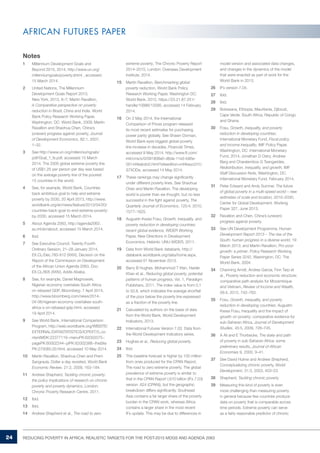
Figure 7), driven primarily by pro-poor 
economic growth. 
Kenya makes the most significant gains 
in this group in our combined intervention 
scenario, but does not quite achieve a 
We find that the impacts of our interventions line up 
relatively well with those of other researchers 
Table 4: Reductions in millions of people in poverty due to different intervention clusters (15-year moving 
average) relative to the base case 
US$0,70 a day US$1,25 a day 
2030 2045 2063 2030 2045 2063 
Base – – – – – – 
Social 14,6 34,9 39,8 24,4 69,4 83,4 
Pro-poor 48,6 61,0 41,8 67,4 105,1 83,9 
Human 18,8 48,0 50,9 33,5 96,2 104,4 
Progressive 3,7 10,4 14,4 5,9 18,4 23,9 
Combined 73,2 100,5 81,1 117,9 204,8 179,3 
Source: International Futures version 7,05
AFRICAN FUTURES PAPER 10 • AUGUST 2014 15 
3% poverty target during the forecast 
period, although it comes close (Figure 
7). It also achieves a compound annual 
GDP growth rate of 6,1% and avoids a 
rise in the Gini until after 2030. Even by 
2063, Kenya’s Gini coefficient remains 
approximately a half point lower than 
in our base case scenario. Significant 
components of these gains are driven 
by the pro-poor economic growth 
intervention and later by the impact of 
social assistance. 
Nigeria is already on a positive track 
and the additional intervention has little 
headroom to augment the trend. Under 
our combined intervention, Nigeria 
may achieve a less than 3% extreme 
poverty rate between 2045 and 2063, 
whereas in our base case poverty 
rates decline slowly after 2045 and do 
not quite achieve the 3% benchmark 
(Figure 7). While estimates of extreme 
poverty in Nigeria remain a major 
source of uncertainty due to national 
and international data revisions, our 
forecasts indicate continued declines 
in the percentage of the poor living in 
extreme poverty in Nigeria. 
The significant variety in trends in the 
base case among these three large 
contributors to poverty suggests not only 
that sustained focus on these countries is 
warranted but also that policies need to 
be tailored to the unique circumstances 
of each country. In the case of Ethiopia, 
additional gains to poverty reduction 
were largely the result of accelerating 
inclusive growth, while in Kenya, a 
combination of policy approaches 
worked together to drive gains. 
High headcounts, high rates 
Burundi, the DRC and Madagascar 
have some of the largest numbers of 
people living in poverty in Africa across 
our forecast horizon, as well as some 
of the highest rates of extreme poverty. 
All three countries see around 80% of 
their population living in extreme poverty 
in 2013, although the number of people 
this represents varies due to the different 
sizes of the populations. 
In our base case, the number of people 
living in extreme poverty in all three 
countries is forecast to increase. Burundi 
and the DRC experience declines in 
the percentage of the population living 
below US$1,25 a day, while Madagascar 
does so only after 2050, as shown 
in Figure 8. Although both the DRC 
and Burundi substantially reduce the 
percentage of their population living in 
poverty, approximately 15% of the DRC’s 
Figure 7: Extreme poverty in base and combined scenarios for Nigeria, 
Kenya and Ethiopia (percentage of population) 
70 
60 
50 
40 
30 
20 
10 
0 
2010 2015 2025 2035 2045 2055 2065 
Ethiopia base case Ethiopia combined scenario Nigeria base case 
Nigeria combined scenario Kenya base case Kenya combined scenario 
Source: International Futures version 7,05 
Figure 8: Extreme poverty in base and combined scenarios for Burundi, 
the DRC and Madagascar (percentage of population) 
100 
90 
80 
70 
60 
50 
40 
30 
20 
10 
0 
2010 2015 2025 2035 2045 2055 2065 
Burundi base case Burundi combined scenario DRC base case DRC 
combined scenario Madagascar base case Madagascar combined scenario 
Source: International Futures version 7,05
16 REDUCING POVERTY IN AFRICA: REALISTIC TARGETS FOR THE POST-2015 MDGS AND AGENDA 2063 
AFRICAN FUTURES PAPER 
population remain in extreme poverty up 
to 2063, while in Burundi nearly 25% of 
the population remain in extreme poverty. 
Under our interventions, both Burundi and 
the DRC see significant improvements 
in progress against extreme poverty, 
which allows the DRC to achieve a 3% 
poverty target by the early 2050s (Figure 
8). Although Burundi doesn’t quite make 
the target, it gets close as well. Both 
countries derive most of these gains from 
economic growth, but in the DRC, social 
assistance and human development 
provide additional strong sources of gain. 
Madagascar, whose poverty rate is high 
and forecast to remain so through 2064, 
is only able to achieve slight declines in 
the percentage of the population living in 
extreme poverty. 
What drives these differences? 
Table 5 represents some of the factors 
that drive the speed and depth of 
poverty reduction and helps explain 
why some countries make significant 
progress against poverty in our base 
case and are more responsive to poverty 
reduction efforts. This is not a complete 
listing, and other factors may also have 
significant impacts. Understanding 
how these interact on a country basis 
is key to setting appropriate targets for 
future poverty reduction and deducing 
the plausible impact of efforts to speed 
poverty reduction. 
When looking at the first group of 
countries (those with high headcounts 
and relatively low poverty rates), 
Ethiopia’s progress in both the base 
case and the combined scenario is partly 
the product of its relatively high rate of 
expected economic growth, relatively low 
level of inequality, smaller poverty gap, 
and relatively low population growth rate. 
In Kenya and Nigeria, initial inequality is 
higher and expected economic growth 
is lower. However, in our interventions, 
Kenya derives the greatest reductions 
in Gini and the greatest boost to its 
GDP growth rate (the compound annual 
growth rate [CAGR] is 6,1% up to 
2063, while it increases less than 0,75 
percentage points relative to the base 
case for Nigeria and Ethiopia to 6,0% 
and 7,3% respectively). 
Considering the second group of 
countries, we find that they have 
Policies need to be tailored to the unique 
circumstances of each country 
Table 5: Factors driving poverty reduction progress 
GDP 
growth rate 
2013–2063 
(CAGR) 
Population 
growth rate 
2013–2063 
(CAGR) 
Initial 
Gini index 
(2013) 
Initial 
poverty gap 
(2013) 
Ethiopia 6,58 1,91 0,35 7,6 
Kenya 5,01 1,7 0,48 17,18 
Nigeria 5,26 1,88 0,5 30,5 
Burundi 5,42 2,15 0,35 35,2 
DRC 6,33 2,03 0,44 43,43 
Madagascar 1,8 2,16 0,43 44,79 
Source: International Futures version 7,05; authors’ calculations 
BURUNDI, THE DRC AND 
MADAGASCAR HAVE SOME OF 
THE LARGEST NUMBERS OF 
PEOPLE LIVING IN POVERTY 
IN AFRICA ACROSS OUR 
FORECAST HORIZON
AFRICAN FUTURES PAPER 10 • AUGUST 2014 17 
significantly higher poverty gaps and 
somewhat higher population growth 
rates than the first. In Madagascar, the 
double burden of low economic growth 
and high population growth means that 
the absolute number of people living 
in poverty is expected to increase, 
while the percentage remains high. 
Unfortunately, we also find that under 
our interventions, Madagascar fails to 
significantly improve its already low 
GDP growth rate (the CAGR is 2,5% up 
to 2063 as compared to 1,8% in our 
base case), even though the distribution 
improves across our forecast horizon 
as a result of our interventions. Both 
Burundi and the DRC do relatively well 
in our base case, in part because they 
experience high levels of economic 
growth. Even though population growth 
is high in these countries, this is partially 
offset by the rapid forecast growth. 
Under our combined intervention, 
economic growth increases significantly 
for both Burundi and the DRC. The 
CAGR for Burundi is 6,7% up to 2063 
and 7,9% for the DRC. 
What this analysis helps to demonstrate 
is that, even among countries that 
appear to share similarities regarding 
poverty, there are significant differences 
in how effectively they are able to 
reduce poverty rates. These differences 
arise from the combination of a variety 
of initial factors, as well as others not 
discussed above, that influence not 
only the progress of countries in the 
absence of interventions but also their 
responsiveness to these interventions. 
For policymakers the lesson is that 
even though continental goals have 
significant appeal in terms of simplicity, 
they may be ineffective in setting targets 
that help national policymakers to 
design poverty reduction strategies. In 
short, a 3% target may be a good place 
to start, but it should be revisited after 
further analysis (like that which we have 
begun here). 
World Bank PPP calculations 
We noted earlier that the recently 
released revision of PPP from 2005 
to 2011 as new reference year by the 
World Bank’s ICP is of fundamental 
importance to the forecasting of global 
poverty. This release captures very 
significant changes in prices and PPP 
across time and countries. Thus far, our 
forecasts have used 2005 as reference 
year. The ICP revision has temporarily 
disrupted the poverty measurement and 
forecasting communities as analysts sort 
out its implications for contemporary 
poverty levels. 
Like others, we have made preliminary 
re-estimates of current poverty levels 
and preliminary forecasts using 2011 
as reference year, but await the 
reassessment of household purchasing 
power for every country, based on the 
new prices and consumption patterns.70 
Thereafter the global poverty line itself 
will be re-estimated. Collectively these 
developments should eventually allow 
for a new global standard as part of the 
targets to be included in the 2030 MDG 
process and Agenda 2063. 
In general, the new values suggest that 
global poverty levels are significantly 
lower than previously understood and 
that the remaining burden of extreme 
poverty globally has decisively shifted to 
sub-Saharan Africa. Although we wait 
for more settled analysis of the new and 
rebased estimates before converting 
our analysis over to them completely, 
it is important that we compare our 
preliminary measurement revisions with 
early revisions in other projects and that 
we discuss how our revisions affect 
the base case and alternative scenario 
forecasts used in this paper. 
Impact on initial poverty 
estimates 
The Center for Global Development 
(CGD) and the Brookings Institution 
were among the first to publish revised 
estimates of global poverty in light of 
the revised PPP estimates from the 
ICP. The CGD followed the approach 
used by PovCalNet to adjust income 
by the change in private consumption 
per capita from national accounts 
data. Although it calculates a revised 
equivalent income value for the US$1,25 
poverty line to take account of inflation 
(US$1,44), it does not use this line to 
report its country level results.71 
Brookings authors Laurence Chandy 
and Homi Kharas used the same 
initial adjustment of purchasing power 
estimates but took the analysis several 
steps further, first calculating a new 
poverty line for 2011 (US$1,55) that 
represents the same standard of living as 
the US$1,25-a-day line in 2005 prices.72 
They then included new estimates of 
household consumption for Nigeria 
and India (respectively home to the 
largest and third largest populations of 
extreme poverty in the world). Although 
the final Brookings estimates are most 
consistent with accepted practice 
in poverty estimation, we compare 
Brookings’ first-step estimates to those 
of the CGD and our own estimates, as 
these are the most closely comparable. 
The estimates are that extreme global 
poverty has decreased from a 2010 
estimate of 1,2 billion people living below 
the US$1,25 poverty line in 2005 US 
dollars to either 872 million (Brookings 
estimate using an updated poverty line of 
US$1,55; same authors estimate poverty 
at 571,3 million using US$1,25 in 2011 
PPP), 616 million (the CGD using the 
updated PPPs but the US$1,25-a-day 
poverty line) or 771,8 million (IFs using a 
poverty line of US$1,25 but 2011 GDP 
figures). This does make our forecast the 
most conservative of the three, but it is 
necessary to wait for the dust to settle 
around the new numbers before making 
any final assessments. Calculations 
on poverty, including the forecasts
18 REDUCING POVERTY IN AFRICA: REALISTIC TARGETS FOR THE POST-2015 MDGS AND AGENDA 2063 
AFRICAN FUTURES PAPER 
presented in this paper, therefore need 
to be interpreted with care. 
We first compare our results to those 
of Brookings at a regional level. 
As shown in Table 6, our estimates are 
higher than those of Brookings in three 
regions: Asia and Pacific, sub-Saharan 
Africa, and South and West Asia. 
Of these, the discrepancies in South 
and West Asia are the most significant. 
They are largely due to differences in 
the estimates of extreme poverty in 
India (where our estimate for millions 
in extreme poverty is approximately 
double that of Brookings; see Table 7). 
Table 7 also includes the results from 
Brookings using a recalculated extreme 
poverty line of US$1,55. 
Comparing with the CGD at a country 
level, we see variation in IFs estimates 
relative to those of the CGD. IFs 
estimates are higher in India, Nigeria, 
Bangladesh and Kenya, and lower than 
the CGD estimates in China, Brazil and 
Ghana. It is also possible to directly 
compare estimates from Brookings 
for India and Nigeria. In this case IFs 
estimates are higher than those of 
Brookings for India, but lower for Nigeria. 
As a result of the new PPPs, IFs 
estimates of extreme poverty globally 
in 2010 drop from 1,2 billion people to 
783,1 million. Declines also register in 
Africa with our base case estimate for 
2010, changing from 430,9 million to 
331,2 million. Half of this decline is due 
to re-estimations of poverty in Nigeria 
from 99,6 to 57,5 million. Poverty 
figures were revised upwards in only 
seven countries within IFs, in all cases 
by less than one million people, while 
16 countries experienced downward 
revisions of over one million.73 On 
average, the new PPP estimates 
resulted in a 6,9 percentage point drop 
in estimates of extreme poverty in Africa 
within IFs for 2010. 
Impact on poverty forecasts 
In most cases, significant changes 
in the poverty estimates for 2010 did 
not translate into significant changes 
in the base case trend of our poverty 
estimates. Although our new poverty 
estimates were significantly lower in 
the base year, this difference tended 
to decrease over time until both the 
new and old estimates reached similar 
levels at some point in the future. On 
average, our base case forecasts were 
approximately four percentage points 
lower across the forecast horizon as a 
result of incorporating the 2011 PPP 
values into our poverty estimates. In the 
few cases where the difference between 
the new and old estimate increased, 
this occurred in countries where the 
number of individuals in extreme poverty 
was forecast to increase. These cases 
included Somalia, Sudan, Burundi, 
Niger and the DRC. In short, although 
the revisions to the base year estimates 
are significant, they are incorporated 
into the model in a way that moderates 
their impact. 
Under the new estimates, three more 
countries make the US$1,25 target by 
2030 in the base case than under the old 
estimates (Table 8). This gain is sustained 
across our other two time horizons of 
2045 and 2063, but does not increase 
much – only four additional countries 
make a US$1,25 target by 2063. A 
similar story is seen in our intervention 
scenarios, where only one additional 
The estimates are that extreme global poverty 
has decreased to either 872 million, 616 million 
or 771,8 million 
783,1 MILLION 
1,2 BILLION 
PEOPLE TO 
AS A RESULT OF THE 
NEW PPPs, IFs ESTIMATES 
OF EXTREME POVERTY 
GLOBALLY IN 2010 
DROP FROM
AFRICAN FUTURES PAPER 10 • AUGUST 2014 19 
country makes the target by 2030, and 
only two more make the target by 2063. 
Countries that reached a 3% target did 
so an average of nine years sooner than 
under the old PPPs, with a median of 
4,5 years sooner. In short, although the 
overall number of countries that achieved 
a 3% extreme poverty target did not 
increase significantly, those that made 
progress did so much faster. The story 
is similar in our combined intervention 
scenario, in which countries achieve the 
goal an average of 3,6 years sooner than 
they did under the old ICP PPP values. 
Conclusions 
This paper has sought to accomplish 
three things. First, it assessed the 
likelihood of African states achieving 
a 3% target for extreme poverty by 
2030, given their current developmental 
paths. Second, it modelled a number of 
aggressive but reasonable interventions, 
based on chronic poverty literature, to 
determine the possibilities for increasing 
poverty reduction. Third, given that even 
under our combined intervention a large 
number of African states are unlikely to 
make the 3% extreme poverty target 
by 2030, we consider some reasonable 
alternative targets and goals for African 
states. We reach this conclusion in spite 
of robust forecast economic growth for 
the continent, and an income distribution 
that becomes only slightly worse over the 
forecast period. 
We found that microeconomic 
interventions that draw deeply on the 
work of the CPRC and echo many 
of the policy prescriptions offered in 
recent literature, including by the Africa 
Progress Panel, succeed in driving gains 
in many places on the continent. The 
modelling done in this paper appears 
to show that many countries in Africa 
could converge on extreme poverty 
rates of less than 10% by the middle 
of the century. They do not, however, 
allow for achieving a 3% poverty rate 
by 2030.74 These interventions included 
modelling the effects of an economic 
growth plan that specifically targets 
the inclusion of underserved groups 
and regions through investments in 
agriculture and infrastructure. Over 
the medium to long term, investments 
in human development and social 
assistance, including in quality primary 
and secondary education, universal 
healthcare and an effectively managed 
social assistance programme, could 
also help to reduce poverty in a number 
of additional countries. These efforts 
seem broadly applicable across different 
circumstances, but not all countries 
respond equally well to them. 
Although we find the emerging global 
target to be unreasonable for many 
African countries, we do see value in 
setting a high, aggressive yet reasonable 
target through which the AU could 
measure continental progress towards 
Agenda 2063. We argue in favour of 
setting a goal that would see African 
states collectively achieving a target 
of reducing extreme poverty (income 
below US$1,25) to below 20% by 2030 
(or below 15% using 2011 PPPs), and 
Table 6: Comparison of IFs and Brookings 2010 poverty estimates by 
region (millions of people) 
IFs (UNESCO 
groups) 
US$1,25, 
2011 PPP 
Brookings 
US$1,25, 
2011 PPP 
Difference 
(in millions) 
East Asia & the Pacific 136,5 105,9 30,6 
Europe and Central Asia 1,2 2,6 -1,4 
Latin America & the Caribbean 25,7 26,8 -1,0 
Sub-Saharan Africa 325,9 299,8 26,1 
Middle East and North Africa 4,7 2,0 2,7 
South Asia 278,7 134,2 144,5 
Total 772,8 571,3 201,5 
Source: Laurence Chandy and Homi Kharas, What do new price data mean for the goal of ending 
extreme poverty, Brookings Institution, 5 May 2014, http://www.brookings.edu/blogs/up-front/ 
posts/2014/05/05-data-extreme-poverty-chandy-kharas; International Futures version 7,05 
Table 7: Comparison of IFs, CGD and Brookings 2010 poverty estimates 
for selected countries (millions of people) 
IFs 
US$1,25 a 
day 2011 
PPP 
CGD 
US$1,25 
2011 PPP 
Brookings 
US$1,25 
2011 PPP 
Brookings 
US$1,55 
2011 PPP 
India 219,9 102,3 98,0 179,6 
China 86,6 99,1 137,6 
Nigeria 57,5 50,5 76,3 67,1 
Bangladesh 40,6 27,5 48,3 
Brazil 6,3 10,1 12,5 
Kenya 13,5 5,6 10,4 
Ghana 1,9 ~5,3 7,7 
Source: Laurence Chandy and Homi Kharas, What do new price data mean for the goal of ending 
extreme poverty, Brookings Institution, 5 May 2014, http://www.brookings.edu/blogs/up-front/ 
posts/2014/05/05-data-extreme-poverty-chandy-kharas; Sarah Dykstra, Charles Kenny and Justin 
Sandefur, Global absolute poverty fell by almost half on Tuesday, Center for Global Development, 2 May 
2014, http://www.cgdev.org/blog/global-absolute-poverty-fell-almost-half-tuesday; International Futures 
version 7,05
20 REDUCING POVERTY IN AFRICA: REALISTIC TARGETS FOR THE POST-2015 MDGS AND AGENDA 2063 
AFRICAN FUTURES PAPER 
reducing extreme poverty to below 3% 
by 2063. Because of the significant 
differences in current poverty levels 
and other initial conditions that drive 
poverty in African states, and therefore 
in the wide variety of policy measures 
needed to effectively reduce poverty in 
these contexts, we further recommend 
that the AU consider setting individual 
country level targets. In particular, 
we advocate increased attention to 
the issue of chronic poverty, which 
requires national political will in order 
to address the overlapping structural 
challenges that keep the chronically poor 
trapped in poverty for long periods. We 
argue for a greater focus on inequality 
and the structural transformation of 
African economies. 
Our results may seem pessimistic 
about the prospects for extremely rapid 
poverty reduction in Africa. However, 
they remained robust across a number 
of different assumption tests and 
formulations of intervention packages 
(beyond the interventions extensively 
discussed above), as well as changes 
in measurement. During the writing of 
this paper, the ICP released its revisions 
of global PPP estimates. As others 
have noted, this is the equivalent of 
a ‘statistical earthquake’ and had a 
correspondingly large effect on our 
poverty measurements. However, when 
we checked the impact of those revisions 
(which include the effect of the Nigerian 
GDP rebase) we found that although 
our initial poverty estimates were sharply 
affected, the overall prospects for 
achieving the 3% extreme poverty target 
remained similar for most countries. Prior 
to the recent ICP update, the consensus 
among most analysts was that since 
a large proportion of Africa’s extremely 
poor population live significantly below 
the US$1,25 level, future progress would 
Even under our combined intervention a large 
number of African states are unlikely to make 
the 3% extreme poverty target by 2030 
Table 8: Number of countries making the US$1,25-a-day target under old and new estimates 
2011 PPP estimates 2005 PPP estimates 
2030 2045 2063 2030 2045 2063 
Base case 14 21 29 11 15 25 
Intervention 15 30 43 14 26 41 
Source: International Futures version 7,05 
Table 9: Additional countries achieving 3% poverty target under 2011 PPPs 
2030 2045 2063 
Base case Republic of the Congo 
Ghana 
Sudan 
Cameroon 
Cape Verde 
Mauritania 
Nigeria 
Sudan 
Eritrea 
Nigeria 
Sudan 
South Sudan 
Combined intervention Republic of the Congo Namibia 
Nigeria 
Rwanda 
Zambia 
Benin 
Mali 
Source: International Futures version 7,05
AFRICAN FUTURES PAPER 10 • AUGUST 2014 21 
take time. This differs considerably from 
the situation that allowed China and then 
India to make such rapid strides recently 
in alleviating extreme poverty.75 Many of 
those concerns remain valid, in spite of 
the new numbers. 
Other factors not modelled here 
may also contribute to changing the 
dynamics of poverty reduction. Beyond 
growth, structure and distribution, 
external developments may intrude and 
bend the curve. For example, we have 
not looked at the role of remittances, 
nor have we focused on moving heavily 
towards export-led growth, which has 
been a major driver of poverty reduction 
in other regions.76 We have also not 
looked at the possibly very negative 
consequences of climate change. 
These caveats aside, it has taken 
20 years, from 1990 to 2010, to cut the 
share of the population of the developing 
world living in extreme poverty by half 
and much of the low-hanging fruit may 
be gone, meaning that growth alone 
may not be sufficient to continue the 
progress seen thus far. The future is 
deeply uncertain, and our scenarios 
represent a limited range of outcomes. 
As national leaders and the policy 
community continue discussions on the 
appropriate targets for the next round of 
development goals up to 2030 (for the 
next round of MDGs) and 2063 (in the 
case of Agenda 2063), it is clear that a 
significant part of the remaining burden 
of extreme poverty is now located in sub- 
Saharan Africa. Current measurements 
(such as updated versions of the 
US$0,70 and US$1,25 poverty lines) 
remain important here, as much as the 
introduction of new poverty lines of 
US$2 and even US$5 may be useful in 
measuring progress elsewhere. 
That said, there is room for African 
policymakers to develop policies that 
have the potential to significantly increase 
the rate at which poverty declines. These 
policies should be country specific, but 
thinking about poverty reduction in an 
integrated, scenario-based way may 
help policymakers to better frame their 
thinking going forward. 
The World Bank, African Development 
Bank, UN Economic Commission for 
Africa, AU and Africa’s various Regional 
Economic Communities need to move 
beyond broad-brush targets set at 
high levels of aggregation and focus on 
supporting the development of national 
targets. National policymakers must 
take the lead in determining appropriate 
development goals and milestones 
specific to their domestic circumstances, 
and use scenario planning and 
intervention analysis such as that set out 
in this paper to help frame their thinking 
to support goal-setting at regional, 
continental and international levels.
22 REDUCING POVERTY IN AFRICA: REALISTIC TARGETS FOR THE POST-2015 MDGS AND AGENDA 2063 
AFRICAN FUTURES PAPER 
Annex: About IFs and 
interventions 
International Futures (IFs) is large-scale, 
long-term, highly integrated modelling 
software housed at the Frederick S 
Pardee Center for International Futures at 
the Josef Korbel School of International 
Studies at the University of Denver. The 
model forecasts hundreds of variables 
for 186 countries to the year 2100 
using more than 2 700 historical series 
and sophisticated algorithms based on 
correlations found in academic literature. 
IFs is designed to help policymakers 
and researchers think more concretely 
about potential futures and then design 
aggressive yet reasonable policy 
targets to meet those goals. Although 
thinking about the future is an inherently 
uncertain task, that doesn’t mean that it 
is impossible to think about many future 
possibilities in a structured manner. 
IFs facilitates this in three ways. First, it 
allows users to see past relationships 
between variables and how they 
have developed and interacted over 
time. Second, using these dynamic 
relationships, we are able to build a 
base case forecast that incorporates 
these trends and their interactions. This 
base case represents where the world 
seems to be going given our history and 
current circumstances and policies, and 
an absence of any major shock to the 
system (wars, pandemics, etc.). Third, 
scenario analysis augments the base 
case by exploring the leverage that 
policymakers have to push the systems 
to more desirable outcomes. 
The IFs software consists of 11 main 
modules: population, economics, 
energy, agriculture, infrastructure, health, 
education, socio-political, international 
political, technology and the environment. 
Each module is tightly connected with 
the other modules, creating dynamic 
relationships among variables across the 
entire system. 
The interventions included in each policy 
are as follows: 
Social assistance 
Parameter Degree of change Timeframe 
govhhtrnwelm 100% increase in government transfers to unskilled households 20 years 
xwbloanr Growth rate in World Bank lending doubles 10 years 
ximfcreditr Growth rate in IMF lending doubles 10 years 
govrevm 20% increase in government revenues 5 years 
goveffectsetar +1 standard error above expected level of government revenues – 
govcorruptm 66% increase in government transparency (declines in corruption perceptions) 15 years 
Pro-poor economic growth 
Parameter Degree of change Timeframe 
govriskm 20% decline in risk of violent conflict 15 years 
sfintlwaradd -1 decline in risk of internal war 15 years 
sanitnoconsetar -1 standard error below expected level of sanitation connectivity – 
watsafenoconsetar -1 standard error below expected level of water connectivity – 
ylm 76% increase in yields 21 years 
ylmax Set at country level – 
tgrld 0,00902 target for growth in cultivated land – 
agdemm 40% increase in crop demand, 20% increase in meat demand 15 years 
aginvm 20% increase in investment in agriculture 15 years 
ictbroadmobilsetar +1 standard error above expected level of broadband connectivity – 
ictmobilsetar +1 standard error above expected level of mobile connections – 
infraelecaccsetar +1 standard error above expected level of electricity connections – 
infraroadraisetar +1 standard error above expected level of rural road access – 
govregqualsetar +1 standard error above expected level of government regulatory quality –
AFRICAN FUTURES PAPER 10 • AUGUST 2014 23 
Progressive social change 
Parameter Degree of change Timeframe 
edprigndreqintn Years to gender parity in primary education intake 10 years 
edprigndreqsur Years to gender parity in primary education survival 10 years 
edseclowrgndreqtran Years to gender parity in lower secondary transition 13 years 
edseclowrgndreqsurv Years to gender parity in lower secondary survival 13 years 
edsecupprgndreqtran Years to gender parity in upper secondary transition 20 years 
edsecupprgndreqsurv Years to gender parity in upper secondary survival 20 years 
gemm 20% increase in level of gender empowerment 5 years 
labshrfemm 50% increase in female participation in the labourforce 45 years 
Human development for the hard-to-reach 
Parameter Degree of change Timeframe 
edpriintngr 2,2 growth rate in primary education intake – 
edprisurgr 1,2 growth rate in primary education survival – 
edseclowrtrangr 1 growth rate in lower secondary transition – 
edseclowrsurvgr 0,8 growth rate in lower secondary survival – 
edsecupprtrangr 0,5 growth rate in upper secondary transition – 
edsecupprsurvgr 0,3 growth rate in upper secondary survival – 
edexppconv Years to expenditure per student on primary schooling convergence with function 20 years 
edexpslconv Years to expenditure per student on lower secondary schooling convergence with function 20 years 
edexpsuconv Years to expenditure per student on upper secondary schooling convergence with function 20 years 
edbudgon Off – no additional priority for education spending – 
hlmodelsw On – 
hltechshift 1,5 increase in the rate of technological progress against disease (helps low income states 
converge faster) 
– 
tfrm 45% decline in total fertility rate 45 years 
hivtadvr 0,6% rate of technical advance in control of HIV – 
aidsdrtadvr 1% rate of technical advance in control of AIDs – 
hlmortm Malaria eradication (95% eradicated by 2065) 60 years 
hlmortm 40% decline in diarrheal disease 55 years 
hlmortm 40% decline in respiratory infections 55 years 
hlmortm 40% decline in other infectious diseases 55 years 
hlwatsansw On – 
hlmlnsw On – 
hlobsw On – 
hlsmimpsw On – 
hlvehsw On – 
hlmortmodsw On – 
malnm 50% decline in malnutrition 40 years 
hltrpvm 50% decline in traffic deaths 25 years 
hlsolfuelsw On – 
ensolfuelsetar 50% decline in use of solid fuels –
24 REDUCING POVERTY IN AFRICA: REALISTIC TARGETS FOR THE POST-2015 MDGS AND AGENDA 2063 
AFRICAN FUTURES PAPER 
Notes 
1 Millennium Development Goals and 
Beyond 2015, 2014, http://www.un.org/ 
millenniumgoals/poverty.shtml , accessed 
15 March 2014. 
2 United Nations, The Millennium 
Development Goals Report 2013, 
New York, 2013, 6–7; Martin Ravallion, 
A Comparative perspective on poverty 
reduction in Brazil, China and India, World 
Bank Policy Research Working Paper, 
Washington, DC: World Bank, 2009; Martin 
Ravallion and Shaohua Chen, China’s 
(uneven) progress against poverty, Journal 
of Development Economics, 82:1, 2007, 
1–32. 
3 See http://www.un.org/millenniumgoals/ 
pdf/Goal_1_fs.pdf, accessed 15 March 
2014. The 2005 global extreme poverty line 
of US$1,25 per person per day was based 
on the average poverty line of the poorest 
15 countries in the world. 
4 See, for example, World Bank, Countries 
back ambitious goal to help end extreme 
poverty by 2030, 20 April 2013, http://www. 
worldbank.org/en/news/feature/2013/04/20/ 
countries-back-goal-to-end-extreme-poverty-by- 
2030, accessed 15 March 2014. 
5 About Agenda 2063, http://agenda2063. 
au.int/en/about, accessed 15 March 2014. 
6 Ibid. 
7 See Executive Council, Twenty-Fourth 
Ordinary Session, 21–28 January 2014, 
EX.CL/Dec.783-812 (XXIV), Decision on the 
Report of the Commission on Development 
of the African Union Agenda 2063, Doc. 
EX.CL/805 (XXIV), Addis Ababa. 
8 See, for example, Daniel Magnowski, 
Nigerian economy overtakes South Africa 
on rebased GDP, Bloomberg, 7 April 2014, 
http://www.bloomberg.com/news/2014- 
04-06/nigerian-economy-overtakes-south-africa- 
s-on-rebased-gdp.html, accessed 
19 April 2014. 
9 See World Bank, International Comparison 
Program, http://web.worldbank.org/WBSITE/ 
EXTERNAL/DATASTATISTICS/ICPEXT/0,,co 
ntentMDK:22377119~menuPK:62002075~ 
pagePK:60002244~piPK:62002388~theSite 
PK:270065,00.html, accessed 10 May 2014. 
10 Martin Ravallion, Shaohua Chen and Prem 
Sangraula, Dollar a day revisited, World Bank 
Economic Review, 21:2, 2009, 163–184. 
11 Andrew Shepherd, Tackling chronic poverty: 
the policy implications of research on chronic 
poverty and poverty dynamics, London: 
Chronic Poverty Research Centre, 2011. 
12 Ibid. 
13 Ibid. 
14 Andrew Shepherd et al., The road to zero 
extreme poverty, The Chronic Poverty Report 
2014–2015, London: Overseas Development 
Institute, 2014. 
15 Martin Ravallion, Benchmarking global 
poverty reduction, World Bank Policy 
Research Working Paper, Washington DC: 
World Bank, 2012, https://23.21.67.251/ 
handle/10986/12095, accessed 14 February 
2014. 
16 On 2 May 2014, the International 
Comparison of Prices program released 
its most recent estimates for purchasing 
power parity globally. See Shawn Donnan, 
World Bank eyes biggest global poverty 
line increase in decades, Financial Times, 
accessed 9 May 2014, http://www.ft.com/ 
intl/cms/s/0/091808e0-d6da-11e3-b95e- 
00144feabdc0.html?siteedition=intl#axzz31U 
S7XODe, accessed 14 May 2014. 
17 These rankings may change significantly 
under different poverty lines. See Shaohua 
Chen and Martin Ravallion, The developing 
world is poorer than we thought, but no less 
successful in the fight against poverty, The 
Quarterly Journal of Economics, 125:4, 2010, 
1577–1625. 
18 Augustin Kwasi Fosu, Growth, inequality, and 
poverty reduction in developing countries: 
recent global evidence, WIDER Working 
Paper, New Directions in Development 
Economics, Helsinki: UNU-WIDER, 2011. 
19 Data from World Bank databank, http:// 
databank.worldbank.org/data/home.aspx, 
accessed 01 November 2013. 
20 Barry B Hughes, Mohammod T Irfan, Haider 
Khan et al., Reducing global poverty, potential 
patterns of human progress, Vol. 1, Paradigm 
Publishers, 2011. The index value is from 0,1 
to 52,8, which indicates the average shortfall 
of the poor below the poverty line expressed 
as a fraction of the poverty line. 
21 Calculated by authors on the basis of data 
from the World Bank, World Development 
Indicators, 2013. 
22 International Futures Version 7.03. Data from 
the World Development Indicators series. 
23 Hughes et al., Reducing global poverty. 
24 Ibid. 
25 This baseline forecast is higher by 100 million 
from ones produced for the CPAN Report, 
The road to zero extreme poverty. The global 
prevalence of extreme poverty is similar to 
that in the CPAN Report (.610 billion (IFs 7.03) 
version .624 (CPAN)), but the geographic 
breakdown differs significantly. Southeast 
Asia contains a far larger share of the poverty 
burden in the CPAN work, whereas Africa 
contains a larger share in the most recent 
IFs update. This may be due to differences in 
model version and associated data changes, 
and changes in the dynamics of the model 
that were enacted as part of work for the 
World Bank in 2013. 
26 IFs version 7.04. 
27 Ibid. 
28 Ibid. 
29 Botswana, Ethiopia, Mauritania, Djibouti, 
Cape Verde, South Africa, Republic of Congo 
and Ghana. 
30 Fosu, Growth, inequality, and poverty 
reduction in developing countries; 
International Monetary Fund, Fiscal policy 
and income inequality, IMF Policy Paper, 
Washington, DC: International Monetary 
Fund, 2014; Jonathan D Ostry, Andrew 
Berg and Charalambos G Tsangarides, 
Redistribution, inequality, and growth, IMF 
Staff Discussion Note, Washington, DC: 
International Monetary Fund, February 2014. 
31 Peter Edward and Andy Sumner, The future 
of global poverty in a multi-speed world – new 
estimates of scale and location, 2010–2030, 
Center for Global Development, Working 
Paper 327, June 2013. 
32 Ravallion and Chen, China’s (uneven) 
progress against poverty. 
33 See UN Development Programme, Human 
Development Report 2013 – The rise of the 
South: human progress in a diverse world, 19 
March 2013; and Martin Ravallion, Pro-poor 
growth: a primer, Policy Research Working 
Paper Series 3242, Washington, DC: The 
World Bank, 2004. 
34 Channing Arndt, Andres Garcia, Finn Tarp et 
al., Poverty reduction and economic structure: 
comparative path analysis for Mozambique 
and Vietnam, Review of Income and Wealth, 
58:4, 2012, 742–763. 
35 Fosu, Growth, inequality, and poverty 
reduction in developing countries; Augustin 
Kwasi Fosu, Inequality and the impact of 
growth on poverty: comparative evidence for 
sub-Saharan Africa, Journal of Development 
Studies, 45:5, 2009, 726–745. 
36 A Ali and E Thorbecke, The state and path 
of poverty in sub-Saharan Africa: some 
preliminary results, Journal of African 
Economies 9, 2000, 9–41. 
37 See David Hulme and Andrew Shepherd, 
Conceptualizing chronic poverty, World 
Development, 31:3, 2003, 403–23. 
38 Shepherd, Tackling chronic poverty 
39 Measuring this kind of poverty is even 
more challenging than measuring poverty 
in general because few countries produce 
data on poverty that is comparable across 
time periods. Extreme poverty can serve 
as a fairly reasonable predictor of chronic
AFRICAN FUTURES PAPER 10 • AUGUST 2014 25 
poverty, but it is not sufficient because it 
omits those who are chronically but not 
severely poor. However, in the absence of 
better data it must serve as one of the only 
available indicators. 
40 Shepherd, Tackling chronic poverty. 
41 Bob Baulch (ed.), Why poverty persists: 
poverty dynamics in Asia and Africa, 
Cheltenham: Edward Elgar, 2011, 12. 
42 Shepherd et al., The road to zero extreme 
poverty. 
43 Ibid. 
44 Authors’ synthesis based on Andrew 
Shepherd et al., The geography of poverty, 
disasters and climate extremes in 2030, 
London: Overseas Development Institute, 
2013, http://www.odi.org.uk/sites/odi.org. 
uk/files/odi-assets/publications-opinion-files/ 
8637.pdf, accessed 18 March 2014; 
Shepherd, Tackling chronic poverty. 
45 Ostry, Berg and Tsangarides, Redistribution, 
inequality, and growth. 
46 See Hulme and Shepherd, Conceptualizing 
chronic poverty; and Tim Braunholtz-Speight, 
Policy responses to discrimination and their 
contribution to tackling chronic poverty, 
Chronic Poverty Research Centre Working 
Paper 2008–09, London: Chronic Poverty 
Research Centre, 2009, http://ssrn.com/ 
abstract=1755039, accessed 11 March 
2014. 
47 Baulch (ed.), Why poverty persists, 17. 
48 Ibid, 18. 
49 Sosina Bezu, Christopher B Barrett and Stein 
T Holden, Does the nonfarm economy offer 
pathways for upward mobility? Evidence 
from a panel data study in Ethiopia, World 
Development 40:8, 2012, 1634–1646; 
Tavneet Suri, David Tschirley, Charity Irungu 
et al., Rural incomes, inequality and poverty 
dynamics in Kenya, Working Paper 30/2008, 
Nairobi: Tegemeo Institute of Agricultural and 
Policy Development, 2008. 
50 K Bird, K Higgins and A McKay, Conflict, 
education and the intergenerational 
transmission of poverty in northern Uganda, 
Journal of International Development 22:7, 
2010, 1183–1196. 
51 Baulch (ed.), Why poverty persists, 13. 
52 Shepherd, Tackling chronic poverty, 45. 
53 Shepherd et al., The geography of poverty. 
54 Shepherd, Tackling chronic poverty. 
55 Ravallion, A Comparative perspective on 
poverty reduction. 
56 Shepherd, Tackling chronic poverty. 
57 The literature on these topics is vast. For a 
review of the role of redistributive policies 
on growth see Ostry, Berg and Tsangarides, 
Redistribution, inequality, and growth. For 
a review of the role of conditional cash 
transfers, see Naila Kabeer, Caio Piza and 
Linnet Taylor, What are the economic impacts 
of conditional cash transfer programmes: 
a systematic review of the evidence, 
Technical Report, London: EPPI-Centre, 
Social Science Research Unit, Institute of 
Education, University of London, 2012, 
https://23.21.67.251/handle/10986/12095, 
15 March 2014. A good review of the role 
social assistance played in Brazil’s poverty 
reduction efforts comes from Ravallion, 
A comparative perspective on poverty 
reduction. On infrastructure investment’s role 
in poverty reduction, see Shenggen Fan, 
Linxiu Zhang and Xiaobo Zhang, Growth, 
inequality, and poverty in rural China: the 
role of public investments, Washington, 
DC: International Food Policy Research 
Institute, 2002. In terms of reviewing the 
role of agriculture in poverty reduction, 
see Martin Ravallion, Shaohua Chen and 
Prem Sangraula, New evidence on the 
urbanization of global poverty, Population and 
Development Review, 33, 2007, 667–702; 
S Wiggins, Can the smallholder model deliver 
poverty reduction and food security for a 
rapidly growing population in Africa, Expert 
Meeting on How to Feed the World in 2050, 
Rome, 12–13 October 2009, http://www.fao. 
org/fileadmin/templates/wsfs/ docs/expert_ 
paper/16-Wiggins-Africa-Smallholders.pdf, 
28 March 2014; and World Bank, World 
Development Report 2008, Washington DC: 
World Bank, 2008. 
58 Shepherd et al., The road to zero extreme 
poverty, 11. 
59 Ibid.; and Shepherd et al., The geography of 
poverty. 
60 Shepherd et al., The road to zero extreme 
poverty, 106. 
61 Hughes et al., Reducing global poverty; and 
Barry B Hughes, Devin K Joshi, Jonathan 
D Moyer et al., Strengthening governance 
globally, Potential Patterns of Human 
Progress Series, Vol. 5, Boulder, CO: 
Paradigm Publishers 2014. Also see Jonathan 
Moyer and Graham S Emde, Malaria no more, 
African Futures Brief 5, 2012; Jonathan Moyer 
and Eric Firnhaber, Cultivating the future, 
African Futures Brief 4, 2012; Keith Gehring, 
Mohammod T Irfan, Patrick McLennan et al., 
Knowledge empowers Africa, African Futures 
Brief 2, 2011; Mark Eshbaugh, Greg Maly, 
Jonathan D Moyer et al., Putting the brakes 
on road traffic fatalities, African Futures Brief 
3, 2012; Mark Eshbaugh, Eric Firnhaber, 
Patrick McLennan et al., Taps and toilets, 
African futures Brief 1, 2011, http://www. 
issafrica.org/futures/publications/policy-brief. 
In addition, see Alison Burt, Barry Hughes 
and Garry Milante, Eradicating poverty in 
fragile states: prospects of reaching the ‘high-hanging’ 
fruit by 2030, Washington DC: World 
Bank (forthcoming). 
62 While literature from the CPRC is strongly 
supportive of this, other research has also 
found evidence for this relationship. See Dale 
Huntington, The impact of conditional cash 
transfers on health outcomes and the use of 
health services in low- and middle-income 
countries: RHL commentary, The WHO 
Reproductive Health Library, Geneva: World 
Health Organization, 2010, http://apps.who. 
int/rhl/effective_practice_and_organizing_ 
care/CD008137_huntingtond_com/en/ 
accessed, 3 March 2014; Sarah Bairdab, 
Francisco HG Ferreirac, Berk Özlerde et al., 
Conditional, unconditional and everything 
in between: a systematic review of the 
effects of cash transfer programmes on 
schooling outcomes, Journal of Development 
Effectiveness, 6:1, 2014, 1–43; DFID, DFID 
cash transfers literature review, United 
Kingdom: Department for International 
Development, 2011. 
63 Moyer and Firnhaber, Cultivating the future. 
64 See Jakkie Cilliers and Julia Schunemann, 
The future of intrastate conflict in Africa: more 
violence or greater peace?, ISS Paper 246, 
2013, http://www.issafrica.org/iss-today/ 
the-future-of-intra-state-conflict-in-africa, 
accessed 25 February 2014. 
65 Shepherd et al., The road to zero extreme 
poverty, 156–157. 
66 These are Sudan, Cameroon and Sierra 
Leone. As discussed earlier, forecasts for 
Angola and Sierra Leone are likely already 
overly aggressive. Ghana makes the goal in 
2031, according to our forecast. 
67 Burt, Hughes and Milante, Eradicating poverty 
in fragile states. 
68 In order to apply the Burt, Hughes, Milante 
framework to our paper we applied their 
package of extended interventions to our 
country grouping and compared the impact 
of our interventions, which were applied to 
all countries in the continent, with the impact 
of their interventions on all of the African 
states defined as fragile by the World Bank. 
For our comparison with the CPRC, we tried 
to replicate its interventions (which reported 
the degree of change but not the time frame 
over which it was enacted) by using the same 
parameter changes it did, applied over a 10- 
year time frame for rollout starting in 2015. 
69 Initial estimates of poverty in all these 
scenarios differ slightly because some of 
the parameters can only be set as initial 
conditions.
26 REDUCING POVERTY IN AFRICA: REALISTIC TARGETS FOR THE POST-2015 MDGS AND AGENDA 2063 
AFRICAN FUTURES PAPER 
70 We have used the ratio of GDP per capita 
at PPP values from 2011 and 2005 to shift 
our national account-based estimates of 
household consumption and to compute 
initial revised estimates of poverty at both 
US$0,70 and US$1,25 per day, while keeping 
our 2005-based values. In general these 
new estimates will be lower, in some cases 
substantially lower. We will not convert our 
poverty forecasts to the new ICP values 
until the larger community has converged in 
interpretation around the proper procedures 
and new poverty levels. 
71 See Sarah Dykstra, Charles Kenny and Justin 
Sandefur, Global absolute poverty fell by 
almost half on Tuesday, Center for Global 
Development, 2 May, 2014, http://www. 
cgdev.org/blog/global-absolute-poverty-fell-almost- 
half-tuesday, accessed. Note that we 
use their corrected numbers. 
72 Laurence Chandy and Homi Kharas, 
What do new price data mean for 
the goal of ending extreme poverty, 
Brookings Institution, 5 May 2014, http:// 
www.brookings.edu/blogs/up-front/ 
posts/2014/05/05-data-extreme-poverty-chandy- 
kharas, accessed 18 May 2014. 
73 Revised down by >1 million: Nigeria, Sudan, 
Ghana, Ethiopia, Kenya, Madagascar, Mali, 
Zambia, Côte d’Ivoire, Angola, Eritrea, DRC, 
Tanzania, Burundi, Niger and Zimbabwe. 
Revised upwards: Seychelles, Malawi, 
Botswana, Gambia, CAR, Mozambique 
and Chad. 
74 Kevin Watkins et al., Grain fish money 
financing Africa’s green and blue revolutions, 
African Progress Panel, 2014. 
75 This is set out in detail in Laurence Chandy, 
Natasha Ledlie and Veronika Penciakova, 
The final countdown: prospects for 
ending extreme poverty by 2030, The 
Brookings Institution, Global Views, Policy 
Paper 2013–04, April 2013, http://www. 
brookings.edu/~/media/Research/Files/ 
Reports/2013/04/ending%20extreme%20 
poverty%20chandy/The_Final_Countdown. 
pdf, accessed 22 May 2014. 
76 AfDB 2013, African economic outlook, 44.
SUBSCRIPTIONS TO ISS PUBLICATIONS 
If you would like to subscribe to ISS publications, complete the form below and return it to the ISS with a cheque, or a postal/money 
order for the correct amount, made payable to the Institute for Security Studies (marked not transferable). You may also deposit your 
payment into the following bank account, quoting the reference: PUBSPAY + your surname. If you would like to subscribe to the SA 
Crime Quarterly only, please quote the reference SACQ + your surname. 
ISS bank details: 
FNB, Brooklyn, Branch Code: 251345 
Account number: 62447764201 
Swift code: FIRNZAJJXXX 
Kindly fax, email or mail the subscription form and proof of payment to: 
ISS Publication Subscriptions, PO Box 1787, Brooklyn Square, 0075, Pretoria, South Africa 
ISS contact details: (Tel) +27 12 346 9500, (Fax) +27 12 460 0998, Email: pubs@issafrica.org 
Website: www.issafrica.org 
Title Surname Initials 
Organisation 
Position 
Postal Address 
Postal Code Country 
Tel Fax Email 
Please note that the African Security Review (ASR) is now published by Taylor & Francis. Kindly refer to the Taylor 
& Francis website www.informaworld.com/rasr, subscription inquiries can be forwarded to Helen White (Helen.White@tandf.co.uk). 
For orders in sub-Saharan Africa, contact Unisa Press, PO Box 392, Unisa, 0003, South Africa. 
(Tel) +27 12 429 3449; Email: journalsubs@unisa.ac.za 
PERSONAL DETAILS 
* Angola; Botswana; Burundi; Congo-Brazzaville; Democratic Republic of the Congo; Gabon, Kenya, Lesotho, Madagascar; Malawi, Mauritius; 
Mozambique; Namibia; Reunion; Rwanda; Seychelles; Swaziland; Tanzania; Uganda; Zambia; Zimbabwe (formerly African Postal Union countries). 
PUBLICATIONS 
SOUTH 
AFRICA 
AFRICAN 
COUNTRIES* INTERNATIONAL 
ISS Monographs (Approx. 4 per year) R130 US$ 40 US$ 50 
ISS Papers (Approx. 10 per year) R150 US$ 45 US$ 55 
SA Crime Quarterly (4 issues per year) R115 US$ 30 US$ 40 
Comprehensive subscription 
(Monographs, Papers and SA Crime Quarterly) 
R550 US$ 130 US$ 150 
SUBSCRIPTIONS INDICATE COST The ISS is an African 
organisation that aims to 
enhance human security 
by providing independent 
and authoritative research, 
expert policy analysis, training 
and technical assistance. 
ISS Monographs only 
ISS Papers only 
SA Crime Quarterly only 
Comprehensive subscription 
TOTAL
AFRICAN FUTURES PAPER 
© 2014, Institute for Security Studies 
Copyright in the volume as a whole is vested in the Institute for Security Studies, and no part may be 
reproduced in whole or in part without the express permission, in writing, of both the authors and the 
publishers. 
The opinions expressed do not necessarily reflect those of the ISS, its trustees, members of the 
Advisory Council or donors. Authors contribute to ISS publications in their personal capacity. 
ISS Pretoria 
Block C, Brooklyn Court, 
361 Veale Street 
New Muckleneuk, 
Pretoria, South Africa 
Tel: +27 12 346 9500 
Fax: +27 12 460 0998 
pretoria@issafrica.org 
The Frederick 
S. Pardee Center 
for International 
Futures 
Josef Korbel School of 
International Studies 
University of Denver 
2201 South Gaylord Street 
Denver, CO 80208-0500 
Tel: 303-871-4320 
pardee.center@du.edu 
www.issafrica.org/futures 
http://pardee.du.edu 
@AfricanFutures 
www/facebook.com/ 
AfricaFuturesProject 
About the authors 
Sara Turner is a Research Associate at the Frederick S. Pardee Center for 
International Futures, where she has been involved in research on health, 
human development, and international politics. She holds a master’s 
degree from the Josef Korbel School of International Studies at the 
University of Denver. 
Jakkie Cilliers is the Executive Director of the Institute for Security 
Studies. He is an Extraordinary Professor in the Centre of Human Rights 
and the Department of Political Sciences, Faculty Humanities at the 
University of Pretoria. 
Barry B Hughes is John Evans Professor at the Josef Korbel School of 
International Studies and Director of the Frederick S. Pardee Center for 
International Futures, at the University of Denver. He initiated and leads 
the development of the International Futures forecasting system and is 
Series Editor for the Patterns of Potential Human Progress series. 
Acknowledgements 
This paper was made possible with support from the Hanns Seidel 
Foundation. The ISS is grateful for support from the members of the ISS 
Partnership Forum: the governments of Australia, Canada, Denmark, 
Finland, Japan, Netherlands, Norway, Sweden and the US. 
About the African Futures Project 
The African Futures Project is a collaboration between the Institute 
for Security Studies (ISS) and the Frederick S. Pardee Center for 
International Futures at the Josef Korbel School of International Studies, 
University of Denver. The African Futures Project uses the International 
Futures (IFs) model to produce forward-looking, policy-relevant analysis 
based on exploration of possible trajectories for human development, 
economic growth and socio-political change in Africa under varying 
policy environments over the next four decades. 
African Futures Paper 10

REDUCING POVERTY IN AFRICA: REALISTIC TARGETS FOR THE POST-2015 MDG's AND AGENDA 2063 AFRICAN FUTURES

  • 1.
    suitable targets for2030, with the proposed goal of ‘leaving no-one behind’ and eliminating (extreme) poverty. The international community, including organisations such as the World Bank, appear to be coalescing around an ambitious goal to bring extreme poverty to below 3% and boost incomes for the bottom 40% of the population in every country by 2030 (emphasis added).4 Parallel to the post-2015 MDG process, the African Union (AU) launched its Agenda 2063 in 2013 as a ‘call for action to all segments of African society to work together to build a prosperous and united Africa’.5 Agenda 2063 purposefully looks much further ahead, to a date 100 years from the establishment of the Organization of African Unity (OAU) in 1963. In doing so, the AU (the successor to the OAU) admits that ‘[f]ifty years is, undoubtedly, IN 1990 THE INTERNATIONAL community agreed to halve the rate of extreme poverty by 2015. Specifically, target 1.A in the Millennium Development Goals (MDGs) called for cutting in half ‘the proportion of people whose income is less than [US]$1,25 a day’1 – the widely recognised definition of ‘extreme’ poverty. This target was met in 2010, five years ahead of the deadline, largely (but not exclusively) through the remarkable progress made in China.2 Although 700 million fewer people lived in extreme poverty, the UN estimated that 1,2 billion people still lived on less than US$1,25 a day in 2013, although more recent recalculations could see that figure reduced by about one-quarter.3 As part of the process leading up to the finalisation of the post-2015 MDGs, attention has now turned to defining an extremely long development planning horizon’6 and notes that it will be rolling out plans for 10 and 25 years, and include various short-term action plans. After the scheduled adoption of the specifics of Agenda 2063 at the mid-year AU Summit in June 2014, the first 10-year implementation plan is scheduled for approval in January 2015 and will be accompanied by a comprehensive monitoring and evaluation framework.7 In many senses Agenda 2063 is rooted in a different development philosophy than that of the MDGs, finding its inspiration in the Lagos Plan of Action, the Abuja Treaty and the New Partnership for Africa’s Development (NEPAD). It reflects an ambitious effort by Africans to accept greater ownership and chart a new direction for the future that has inclusive growth and the elimination of extreme Summary The eradication of extreme poverty is a key component of the post-2015 MDG process and the African Union’s Agenda 2063. This paper uses the International Futures forecasting system to explore this goal and finds that many African states are unlikely to make this target by 2030. In addition to the use of country-level targets, this paper argues in favour of a goal that would see Africa as a whole reducing extreme poverty to below 20% by 2030 (15% using 2011 purchasing power parity), and to below 3% by 2063. AFRICAN FUTURES PAPER 10 | AUGUST 2014 Reducing poverty in Africa Realistic targets for the post-2015 MDGs and Agenda 2063 Sara Turner, Jakkie Cilliers and Barry Hughes
  • 2.
    2 REDUCING POVERTYIN AFRICA: REALISTIC TARGETS FOR THE POST-2015 MDGS AND AGENDA 2063 AFRICAN FUTURES PAPER poverty as key components. In private conversations, NEPAD officials consider the MDGs as setting a minimum ‘floor’ (particularly for the elimination of poverty), with Agenda 2063 a more ambitious and aspirational vision. It is essential that both the MDG 2030 and Agenda 2063 processes succeed if the world is to sustain the momentum of the past 20 years in the face of serious global uncertainty. A focus on Africa is essential to this mission, because the degree and severity of poverty in many African countries are among the most significant on the planet. Other regions have made progress in the last 20 years due to a benign global context and sustained high levels of national growth in key countries such as China. It is far less certain that African countries will enjoy a similar favourable economic climate, that the collective economies of the continent’s 55 countries can sustain the same levels of growth year on year, or that growth will translate into the same degree of poverty reduction. The authors have used the International Futures (IFs) forecasting system (version 7,05) to analyse the prospects for poverty reduction in Africa up to 2063. The IFs base case forecast suggests that even though African countries should see steady improvements, the majority will fail to meet the 3% extreme poverty goal by 2030 if current dynamics remain unchanged. After explaining our approach, modelling the same within IFs and comparing the results with others, we conclude that this extreme poverty target is not a reasonable goal for many African states, and that it is insensitive to the varying initial conditions African countries face. Setting aggressive targets is an admirable goal, but these targets need to be reasonable and achievable. We therefore argue in favour of setting a goal that would see African states on average reducing extreme poverty (income below US$1,25) to below 10% by 2045, and reducing extreme poverty to below 3% by 2063. By 2030, African countries are likely to be at very different levels in terms of extreme poverty. Because of these significant country-level differences, and the different policy measures needed to effectively reduce poverty in different country contexts, we further recommend that the AU consider setting additional country-level targets to meet the specific needs of member countries. In particular, we advocate paying attention to chronic poverty (defined as income below US$0,70), since the majority of extremely poor Africans in sub-Saharan Africa find themselves significantly below even the US$1,25 level. Background and measurement Research continues to struggle with definitional and measurement questions that confound attempts to assess the dynamics of poverty and inequality. Developments over the last decade, including improvements in national data and the adoption of standard definitions, have eased but not eliminated these burdens. This is particularly true for Africa, where data limitations remain significant and affect accurate estimates of current trends. The recent rebasing of the Nigerian economy (now formally acknowledged as the largest in Africa), which saw an increase in the size of its gross domestic product (GDP) by 89%, illustrates the challenges in using current data for forecasts.8 This goal would see African states reducing extreme poverty to below 10% by 2045, and 3% by 2063 INCOME BELOW BELOW 20% BY 2030 BELOW 10% BY 2045 BELOW 3% BY 2063 $1,25
  • 3.
    AFRICAN FUTURES PAPER10 • AUGUST 2014 3 In April 2014 the International Comparison Program (ICP) at the World Bank released the summary results from its revised estimates that produce internationally comparable price and volume measures for GDP and its component expenditures.9 The measures are based on purchasing power parity (PPP), now using 2011 as reference year. The results have had a profound impact on estimates of global poverty, including for Africa. Previous GDP estimates were based on 2005 as reference year. The Center for Global Development (CGP) and the Brookings Institution, using different methodologies, were among the first organisations to release new poverty estimates. These new estimates and their potential impact on our forecasts are discussed below (see section headed ‘World Bank PPP calculations’). Elsewhere we retain the use of the 2005 economic data. Estimates of poverty are based on two pieces of information: the average level of income or (better) consumption in a country, and the distribution of the population around that mean. The former can be estimated on the basis of reported income or consumption from data acquired through either national accounts or surveys. Survey estimates of income and consumption tend to yield lower estimates than do national accounts data. There is little consensus on which basis is superior. As a result, initial estimates of poverty may vary widely. IFs bases its estimates of poverty on survey data drawn from the PovcalNet data hosted by the World Bank, adjusting the model’s own national accounts-based estimates to match estimates produced by the survey methodologies. These estimates form the initialisation point for our forecasts of poverty, which are driven by the model’s forecasts of change in national accounts and distribution of income. Although the model currently initialises from 2010 data, we have chosen to use 2013 as a first marker for the forecasts set out below, given that that year is the Agenda 2063 start date. As a result, all our values for 2013 are estimates drawn from the model (rooted in the PovcalNet survey data) rather than taken directly from the data of international organisations. Estimates of poverty are commonly expressed as the percentage of a population below a certain standard of living, typically US$1,25 per day at 2005 PPP. This measure is attractive because it allows for cross-country comparisons. Using other general or nation-specific poverty lines may be more relevant for discussing poverty within countries, since these can take into account local levels of income. For example, as large numbers of people in China and India begin to escape poverty, alternative poverty lines are gaining popularity. These include US$2 and even US$5 a day. Other lines have been developed to capture those who have moved out of poverty but could still fall back into it, and for certain regions of the world.10 Extreme and chronic poverty are both reasonable concepts to frame discussions of poverty in the poorest country contexts. The former is useful because it is widely understood and used in poverty literature, while the latter captures concepts that are particularly relevant to the African context. While many people in low-income countries may be poor, only some are affected by overlapping, dynamic challenges that prevent them from escaping poverty even in times of economic growth. Those who remain poor over long periods of time and who frequently transmit poverty between generations are termed ‘chronically poor’.11 Evidence suggests that even as countries are making progress in reducing overall poverty rates, significant numbers of people still qualify as chronically poor.12 We return to this distinction later in this paper. The Chronic Poverty Research Center (CPRC) uses severe poverty as a proxy for chronic poverty in the absence of better measures. This paper does so as well, both to maintain consistency with the chronic poverty framework described below and because the US$0,70 line remains particularly relevant when discussing the poor in sub- Saharan Africa. The line of US$0,70 a day, also referred to as severe poverty, is relevant as it represents the average consumption of poor people (those in the bottom decile) on the continent.13 However, severe poverty most likely understates the extent of chronic poverty because the chronically poor exist both at higher income levels and below the severe poverty line.14 For this reason it is important not to overemphasise the role of severe poverty in Africa. Chronic poverty may exist across consumption levels, and it is the conceptual attraction of a framework that emphasises national policy efforts to reduce poverty that drives our use of it in this paper. Just as there are many uncertainties and definitional issues surrounding poverty, similar challenges exist in discussions of inequality. There is a variety of ways to measure income inequality within a population. One of the most frequently used is the Gini index, which expresses the inequality of income distribution from 0 to 1, with 0 corresponding to complete equality and 1 to complete inequality. The strength of this measure is that it is easy to understand: higher values indicate increasing levels of inequality within a population. Unfortunately, the measure is relatively insensitive to the specifics of how income is distributed within a population. This means that multiple income distributions may produce the same overall Gini coefficient. (Other measures of inequality, such as the
  • 4.
    4 REDUCING POVERTYIN AFRICA: REALISTIC TARGETS FOR THE POST-2015 MDGS AND AGENDA 2063 AFRICAN FUTURES PAPER Atkinson and Theil indices, are better able to express where inequality exists within a population but have less intuitive interpretations.) Another strength of the Gini index is that it can be used in log-normal representations of income as the standard deviation of the distribution, as it is used within IFs. Conceptual variety is another issue encountered when discussing the dynamics of poverty globally. When one looks at the difference between extreme poverty, severe poverty, chronic poverty and poverty vulnerability, it is important to bear in mind that, while there is overlap among these terms, each captures a slightly different facet of poverty. Each of these indicators may thus have a different relevance in different settings. In the following section we discuss the drivers of poverty that have been identified in literature and that form the conceptual frame for this analysis. Current levels of poverty in Africa The world has achieved tremendous declines in poverty in recent decades. This progress has occurred unevenly, with China and the rest of East Asia experiencing declines in excess of two percentage points a year.15 India and the rest of South Asia have also made progress, with poverty rates declining at a rate of approximately one percentage point a year. Latin America and Africa have done least well in the last 20 years, with rates of absolute poverty declining quite slowly if at all (see Figure 1). Latin America and Africa have, on average, experienced slower rates of economic growth and shown higher levels of inequality than other regions. The IFs base case estimate (using the data and thresholds that predate the ICP revision to 2011 as reference year) is that, in 2013, about 14,7% of the world’s population (1,04 billion people) still lived below the threshold for extreme poverty, of which 33% (400 million people) lived in Africa. This makes Africa the region with the second largest number of people living in absolute poverty and with the highest rate of poverty as a percentage of its population.16 While South Asia had more people living in absolute poverty, Figure 1: Percentage of population in extreme poverty (<US$1,25 a day PPP, 15-year moving average) 50 45 40 35 30 25 20 15 10 5 0 1985 1990 1995 2000 2005 2010 UNDP Latin America and the Caribbean UNDP South Asia UNDP East Asia and the Pacific World Africa Source: International Futures version 7,05
  • 5.
    AFRICAN FUTURES PAPER10 • AUGUST 2014 5 when adjusted for population size the burden of poverty in Africa is more severe than in South Asia.17 While 36,3% of the population in Africa live on less than US$1,25 a day, about 24,2% do so in South Asia. If we consider the line for severe poverty (US$0,70 a day), about 207 million Africans live below it, constituting on average half of those living in extreme poverty. This is significant because it implies that the extreme poverty gap in Africa is large (that is, many live far below US$1,25), making it harder to achieve reductions in extreme poverty. Additionally, based on the CPRC’s use of US$0,70 as a proxy for chronic poverty, it means that a large proportion of the poor in Africa are likely to be chronically poor. While the continental picture may appear bleak, some countries have already met the World Bank target. These include all the North African countries, as well as Gabon, Mauritius and the Seychelles. In general, however, countries in sub-Saharan Africa have not fared as well. This is not always because of a lack of growth. Some countries (such as the extreme case of Equatorial Guinea, but also a country such as Botswana) have experienced very rapid rates of growth, but have been unable to efficiently translate growth into poverty reduction. On the other hand, Cameroon, Egypt, Ghana, Kenya, Mali, Mauritania, Senegal, Swaziland, Tunisia and Uganda have all been relatively efficient in transmitting income growth into poverty reduction.18 In percentage terms, the highest concentrations of severe poverty (<US$0,7 a day) are located in Madagascar, the Democratic Republic of the Congo (DRC), Liberia, Burundi, Malawi, the Central African Republic (CAR), Zimbabwe, Zambia, Rwanda and Somalia. The highest concentrations of extreme poverty (<US$1,25 a day) as percentage of the population are in the DRC, Liberia, Burundi, Madagascar, Malawi, Zambia, Zimbabwe, the CAR, Somalia, Rwanda and Tanzania. The 10 countries with the largest populations of severely poor are Nigeria, the DRC, Madagascar, Tanzania, Kenya, Malawi, Mozambique, Zimbabwe, Zambia and Ethiopia. In terms of absolute numbers living in extreme poverty (<US$1,25 a day), Nigeria, the DRC, Tanzania, Ethiopia, Madagascar, Kenya, Mozambique, Uganda and Malawi all have populations of greater than 10 million living in extreme poverty, with a total of 278 million in these nine countries alone. African countries vary widely in the extent and depth of extreme poverty and the degree of income inequality. Figure 2: Poverty rate <US$1,25 a day, poverty gap, and ratio of income share held by 90th percentile to income share held by 10th percentile (most recent data, variable years)19 Source: World Bank, PovCalNet database, International Futures v. 7,05, Tableau Public version 8,1 Congo, Democratic Republic of Liberia Burundi Madagascar Malawi Zambia Nigeria Tanzania Rwanda Central African Republic Mozambique Angola Congo, Republic of Sierra Leone Mali Comoros Burkina Faso Niger Kenya Guinea Swaziland Ethiopia Togo Uganda Senegal Namibia Ghana Cote d’Ivoire Mauritania Sudan South Africa Cameroon Gabon Morocco Egypt, Arab Republic of Tunisia Seychelles 90 80 70 60 50 40 30 20 10 0 90 80 70 60 50 40 30 20 10 0 Percentage of population living in extreme poverty Poverty gap Percentage of population living in extreme poverty Poverty gap
  • 6.
    6 REDUCING POVERTYIN AFRICA: REALISTIC TARGETS FOR THE POST-2015 MDGS AND AGENDA 2063 AFRICAN FUTURES PAPER The percentage of the population living in extreme poverty ranges from 0,3% to 87,7%. Poverty gaps across the continent are generally high, although they vary widely as well.20 The income share held by the top-earning decile of the population is between 6,7 and 60,6 times greater than the income share held by the bottom-earning decile, with a mean of 17, which is near the global average.21 Measures of inequality based on the Gini index taken from IFs show levels of income inequality that are lower than in Latin America, but still remain slightly above other world regions despite the rise in inequality in East Asia over the past decade.22 Although higher poverty gaps are usually associated with higher percentages of the population in poverty, there are significant variations from this pattern. For instance, countries such as the DRC and Madagascar have high levels of extreme poverty and large poverty gaps, but exhibit relatively low levels of income inequality. By contrast, countries such as Zambia and the CAR display relatively high levels of income inequality and a large poverty gap. How much progress against poverty is likely? In order to assess the likelihood of countries making the World Bank’s target, we first consider the IFs base case forecast, which is best understood as a reasonable dynamic approximation of current patterns and trends.23 Using IFs, it is possible not only to estimate the extent of global poverty but also to forecast changes in poverty. IFs is a structure-based, agent-class driven, dynamic modelling tool. With a database of nearly 2 700 historical data series, it incorporates and links standard modelling approaches across a wide variety of disciplines, including population, economics, education, politics, agriculture and the environment. In terms of poverty modelling, IFs forecasts of poverty are driven by the assumption of a log-normal distribution of income around an average level of consumption per capita and estimates of the Gini coefficient. Consumption is driven by income, which is in turn a function of labour, production capital accumulation and productivity. Changes in the key productivity term are driven by human (e.g. education and health), social (e.g. governance quality), physical (e.g. infrastructure) and knowledge capital (e.g. that provided by high levels of trade).24 The model generates a compound annual growth rate of GDP between 2013 and 2050 of 5,8% and a growth rate for household consumption of 6,0% (both fairly aggressive figures). Figures 3, 4 and 5 provide a proportional visual representation of the number of people in Africa forecast to be extremely poor in 2030, 2045 and 2063, with darker colours reflecting higher percentages of the population living in extreme poverty and lighter colours smaller percentages.25 The overall plot size for each figure is scaled to the number of people living in extreme poverty in each country. The number of people in extreme poverty in each country determines the size of each box. Ten African nations in our base case forecast are likely to meet the World Bank target of less than 3% of their people living below US$1,25 a day by 2030 without additional support or policy interventions. Of these, only two have not already done so. A number of other countries are likely to get close to meeting the target, with less than 10% of their populations living below US$1,25 a day by 2030.29 Overall, however, 24,9% of Africa’s population, or 397,3 million people, may still live under the US$1,25-a-day line by 2030. Even though many countries make progress in reducing poverty in percentage terms (and the rate for the continent could fall to 16,6% by 2045), in many instances this still translates into increases in the absolute number of people living in poverty over the intermediate horizon of 2030 and 2045. These are countries that have high population growth rates due to high total fertility rates. In most cases, however, population growth will have dropped off by 2063 and the remainder of African states will have begun to make progress in reducing the absolute number of people living in poverty, as well as the percentage of the population living in poverty. By 2063, if current trends continue, most countries in Africa should have made significant progress on poverty alleviation. At a continental level, the forecast extreme poverty rate is expected to have declined considerably, but still hovers around 10,0% of the population. This means that over 309,5 million Africans may remain in extreme poverty. About 29 million people (1,4% of the population) are likely to remain in severe poverty (see Tables 2 and 3 for numbers). Our forecast suggests that as most countries make progress against severe and extreme poverty, these individuals will increasingly be concentrated in a handful of countries. By 2030, 70,7% of the burden of extreme poverty on the continent is likely to be concentrated in just 10 countries (see Figure 3). By 2063 this will have increased to 75,7% (see Figure 5). Countries such as the DRC and Madagascar have high levels of extreme poverty and large poverty gaps, but exhibit relatively low levels of income inequality
  • 7.
    AFRICAN FUTURES PAPER10 • AUGUST 2014 7 TOTAL NUMBER OF EXTREME POOR: 346 MILLION (M) PER CENT OF AFRICAN POPULATION IN EXTREME POVERTY: 16,6% SHARE OF GLOBAL EXTREME POVERTY IN AFRICA: 73,7% Figure 3: 2030 area diagram – population and per cent of population in extreme poverty in Africa26 Source: International Futures version 7,05, Tableau Public version 8,1 TOTAL NUMBER OF EXTREME POOR IN AFRICA: 397,3 MILLION (M) PER CENT OF AFRICAN POPULATION IN EXTREME POVERTY: 24,9% SHARE OF GLOBAL EXTREME POVERTY IN AFRICA: 60,3 % Figure 5: 2063 area diagram – population and per cent of population in extreme poverty in Africa28 Source: International Futures version 7,05, Tableau Public version 8,1 TOTAL NUMBER OF EXTREME POOR: 250,2 MILLION (M) PER CENT OF AFRICAN POPULATION IN EXTREME POVERTY: 10,0% SHARE OF GLOBAL EXTREME POVERTY IN AFRICA: 80,0 % Madagascar 54,1M 84,9% Nigeria 26,6M 6,4% Niger 25,5M 37,5% Chad 17,9M 40,9% Somalia 15,3M 46,5% Malawi 14,0M / 32,1% Kenya 14,0M / 14,3% Mali 11,3M / 25,6% Burundi 6,5M / 24,0% Congo, Democratic Republic of 24,7M 14,6% Figure 4: 2045 area diagram – population and per cent of population in extreme poverty in Africa27 Source: International Futures version 7,05, Tableau Public version 8,1 Congo, Democratic Republic of 53,9M 38,5% Madagascar 44,3M 89,5% Nigeria 38,8M 11,4% Niger 26,3M 53,9% Kenya 23,2M 27,9% Malawi 19,9M 56,3% Mali 16,7M 48,0% Somalia 14,0M 57,4% Chad 13,4M / 41,9% Burundi 11,5M / 51,9% Nigeria 62,3M 24,5% Congo, Democratic Republic of 62,2M 59,5% Madagascar 32,2M 88,8% Kenya 25,1M 38,6% Tanzania 21,7M 29,1% Malawi 17,1M 65,5% Niger 16,7M 52,3% Uganda 16,0M 25,8% Ethiopia 13,9M 10,2% Mali 13,8M 55,8%
  • 8.
    8 REDUCING POVERTYIN AFRICA: REALISTIC TARGETS FOR THE POST-2015 MDGS AND AGENDA 2063 AFRICAN FUTURES PAPER Drivers of change in poverty The drivers of change in poverty can be framed in a number of ways. At a macroeconomic level there are two proximate drivers of poverty rate reduction: economic growth and reductions in inequality. Economic growth, if relatively evenly distributed across a society, tends to raise individual income, drawing people out of poverty.30 Distribution-neutral economic growth will thus reduce the percentage of people living in poverty, although the absolute numbers may remain constant or even grow. Similarly, reductions in inequality over time have a significant impact on poverty.31 Economic growth in Asia, and China in particular, has driven much of the remarkable reductions in poverty over the last decade. China has reduced its extreme poverty rate from over 60% in 1990 to less than 10% in 2010 (even with a substantial deterioration in income distribution). This translates to 566 million fewer people living in extreme poverty in 2010 than in 1990.32 No other country has come close to achieving a similar rate of progress on poverty, raising questions about other countries’ chances of achieving similar gains. Distributional patterns can, of course, mediate the impact of growth. High initial levels of inequality can form a significant barrier to both reductions in poverty (in part because they can increase poverty gaps) and future growth rates (in part because they undercut social consensus), and reductions in inequality can increase the effect that economic growth has on poverty reduction.33 While growth is shown to help in poverty reduction, the strength of this relationship varies widely across countries.34 Some of the significant differences in poverty reduction in countries such as Botswana, which saw very high growth rates but relatively modest levels of poverty reduction, and Ghana, which experienced much more modest growth but relatively more poverty reduction, are partly attributable to differences in initial income distribution.35 Analysis by Fosu, and a separate analysis by Ali and Thorbecke, suggests that income distribution may be an important component of efforts to reduce poverty in sub-Saharan Africa.36 Globally, sub-Saharan Africa is second only to Latin America and the Caribbean in having a high average Gini coefficient. All other regions have substantially lower levels of inequality. This implies that the impact of economic growth may be muted in Africa, raising the relative importance of redistributive growth policies for poverty reduction. Microeconomic work is useful as an additional frame from which to consider the dynamics of poverty and the ways in which national policy choices can support the poor.37 While work in this area is on-going, one useful construct emphasises the ways in which individuals and households move into and out of severe poverty as a result of life events that harm a person’s ability to earn income and accumulate assets. In this framework, poverty is a condition that people may move into and out of multiple times during their lifetimes, and national or subnational policies may have significant impacts on these processes. We noted previously that those who remain poor over long periods of time and who frequently transmit poverty between generations are termed ‘chronically poor’.38 Significantly, as many African states begin to see accelerated growth (which can support permanent escapes from poverty for many people), those who are left behind will suffer increasingly from the kinds of dynamic, integrated challenges emphasised in the chronic poverty literature.39 The CPRC has produced important work on the dynamics of poverty, focusing on Shock vulnerability and low risk mitigation capacity Political, social and economic exclusion Low asset quantity and quality Poor work opportunities and low wages Figure 6: Simplified model of the interactions that drive and sustain chronic poverty44 Source: Authors’ synthesis based on Andrew Shepherd et al., The geography of poverty, disasters and climate extremes in 2030, London: Overseas Development Institute, 2013, http:// www.odi.org.uk/sites/odi.org.uk/files/odi-assets/ publications-opinion-files/8637.pdf; Andrew Shepherd, Tackling chronic poverty: the policy implications of research on chronic poverty and poverty dynamics, London: Chronic Poverty Research Centre, 2011
  • 9.
    AFRICAN FUTURES PAPER10 • AUGUST 2014 9 those factors that condemn people to poverty and the interventions that could allow them to escape this condition. Its studies identify five primary, frequently overlapping, chronic poverty traps: insecurity and poor health, limited citizenship, spatial disadvantage, social discrimination, and poor work opportunities.40 The chronically poor are distinguished by three primary features that differentiate them from other people living in poverty: they typically have a small number of assets, low returns to these assets, and high vulnerability to external shocks.41 The reasons for these circumstances are manifold and interlinked. This high vulnerability, low resource state is driven by the exclusion of the chronically poor from the political, social and economic systems that might allow them to begin to acquire assets. This exclusion makes them more vulnerable to shocks, while their low starting asset/capability position leaves them few resources with which to respond to shocks. The occurrence of shocks can erode assets and wage income, and worsen exclusion from systems of social protection. Figure 6 provides a schematic representation of the approach to understanding chronic poverty developed by the CPRC that we adopted for the purposes of this paper. The most recent report on chronic poverty by the Overseas Development Institute (ODI) lays out a road map to reducing the number of chronically poor people – ensuring quality basic education, providing social assistance and including the marginalised in the economy on equitable terms.42 Preventing impoverishment requires policymakers and practitioners to develop and stick to appropriate policy frameworks. A sustained escape from chronic poverty means that governments (and others) need to provide quality and market-relevant education, offer basic health care, promote insurance programmes to bolster resilience, and work to reduce conflict and mitigate environmental disaster risks.43 While earlier literature emphasised the need to help the poor accumulate assets, improve the returns on those assets, and develop resilience to exogenous shocks, more recent literature from both the IMF and the CPRC emphasise not only these challenges but also the political, social and economic structures that keep people trapped in conditions of poverty.45 Adverse geography, and sometimes caste, race, gender and ethnicity, have also been identified as causes of poverty.46 Chronically poor people have a very limited ability to absorb negative shocks. These shocks may be agronomic, economic, health, legal, political or social, and affect individuals or communities.47 More often than not, it is the co-occurrence, or the rapid successive occurrence, of multiple shocks that drives people back into severe poverty rather than any individual shock.48 Education and the establishment of successful non-farm businesses can help people escape from poverty.49 Education has been suggested as being particularly important because it can serve as a basis for resilience even for people living in conflict situations.50 Shocks drive people and households into poverty by eroding assets and preventing them from building on existing assets. These assets may include physical (housing, technology), natural (land), human (knowledge, skills, health, education), financial (cash, bank deposits, other stores of wealth), social (networks and informal institutions that support cooperation), and labour capital (the resource that the poor are most likely to possess).51 In some contexts, land and livestock ownership can also help reduce the incidence of chronic poverty. Frequently it is younger households that succeed in escaping poverty.52 The impact of conflict, natural disasters and epidemics, occurring in contexts where asset accumulation was already low, help to explain the persistence of high rates of poverty in sub-Saharan African countries.53 In order to tackle these overlapping challenges, the CPRC recommends four key groups of interventions: providing social protection, driving inclusive economic growth, improving levels of human development, and supporting progressive social change.54 These interventions aim to address the dynamics that keep the chronically poor from escaping poverty. Social protection schemes provide protection to the most vulnerable and bolster resilience in the face of external shocks. Inclusive economic growth helps the chronically poor derive income from their asset base, while human development improves the quality of the human capital that forms the bulk of the poor’s asset base. Progressive social change seeks to eliminate the political, social and spatial barriers that prevent the poor from leveraging their assets for income. In studying the interventions that work to reduce poverty, Ravallion discusses Brazil’s success in reducing poverty despite relatively low rates of economic growth by targeting the poorest with social transfer programmes that not only bolster incomes but also incentivise investments in social development that help the poor to increase their asset base.55 As countries become wealthier, concern will naturally shift to those places that are not making progress. While this may mean focusing on countries that face greater challenges to poverty reduction (such as fragile states and countries that are more vulnerable to climate change-induced poverty shocks), the focus should also increasingly fall on the poorest of the poor within countries. These people suffer from the most pervasive and extensive types
  • 10.
    10 REDUCING POVERTYIN AFRICA: REALISTIC TARGETS FOR THE POST-2015 MDGS AND AGENDA 2063 AFRICAN FUTURES PAPER of exclusion, adverse inclusion and exploitation. They remain poor because social compacts between governments and these sectors of society are not functioning. State action is the only way to reach these people, and reaching them is crucial in meeting income goals for severe and extreme poverty elimination, as well as for meeting broader health and development goals missed in the last round of the MDGs. These people disproportionately represent the world’s under-nourished, under-educated and excluded.56 How can we eliminate poverty? Building on the analysis presented earlier, there are several reasons why we frame our interventions using a micro-dynamic, chronic poverty-centred approach to poverty reduction. Firstly, while rapid economic growth was enough to move large numbers of people out of extreme poverty in China, the same may not be true of African countries; several decades of economic growth near 10% annually is highly unlikely for an entire continent. Gearing our approach to the drivers that create and sustain poverty traps places more emphasis on the structures that create and sustain poverty and that can be affected by national policy. This approach is in line with literature on relationships between growth, inequality and redistributive policy by emphasising investments in health, education, infrastructure and agriculture for poverty reduction.57 Additionally, by focusing on those who are severely poor, we capture a large proportion of those who are chronically poor. This is important, because sub-Saharan Africa is one of the major contributors to the global population of the chronically poor.58 Finally, by gearing our approach to poverty reduction to address the dynamics that drive people into poverty and keep them there, we place ourselves on a better footing to cope with future uncertainties such as climate change.59 Conceptually, our approach builds on the recent work of the CPRC to tackle chronic poverty. While the CPRC paper used IFs to present baseline, optimistic and pessimistic scenarios for poverty reduction, our analysis adds to this work in two key ways.60 First, it seeks to discuss African regions and countries in greater detail. Second, regarding the intervention analysis, we strive to consider the four different components of its policy proposals and their interactions in more detail. The interventions themselves also build upon prior work by the Frederick S Pardee Center for International Futures for the World Bank, as well as work conducted for the African Futures Project insofar as these interventions fall within the scope of the CPRC’s policy concerns.61 The first pillar of chronic poverty reduction in the CPRC’s framework is social assistance, and this has been central to the CPRC’s research work for some time. In its most recent work it calls for packages of social assistance, social insurance and social protection targeting different sources of vulnerability. Social assistance in the form of conditional and unconditional cash transfers, and income supplements in cash or in kind, has been shown to help create conditions that support people to move out of poverty.62 Social insurance can be used to help the vulnerable to adapt to shocks without suffering the kinds of losses that drive or keep them in poverty. Many countries These interventions aim to address the dynamics that keep the chronically poor from escaping poverty EDUCATION HAS BEEN SUGGESTED AS BEING PARTICULARLY IMPORTANT, BECAUSE IT CAN SERVE AS A BASIS FOR RESILIENCE EVEN FOR PEOPLE LIVING IN CONFLICT SITUATIONS
  • 11.
    AFRICAN FUTURES PAPER10 • AUGUST 2014 11 already have programmes like these, but they are fragmented and not typically part of a broader package of social protection schemes. Social assistance, insurance and protection programmes are very finely grained policy instruments, and our ability to model these in IFs remains somewhat limited. To simulate the kind of programme expansions and streamlining that would allow the development of more comprehensive social support programmes, we model this package of interventions by increasing government expenditure on welfare and pension transfers while increasing government revenue and external financial assistance in support of the processes of scale-up and streamlining to simplify the structure and number of social assistance programmes in place in many of these countries. Interventions involving foreign assistance are taken from the work with the World Bank and echo its commitments to funding. Increases in social assistance are targeted so that African nations achieve a similar rate of social welfare spending as the average in Latin America and Southeast Asia. The second pillar of the CPRC framework is pro-poor economic growth. This pillar relies on promoting growth in a balanced form, which incorporates the poor on good terms. This means pursuing economic diversification; a focus on those sectors that can support the poor, including the development of small- and medium-sized enterprises; and efforts to develop underserved regions. This entails increases in investment in infrastructure to offset the impact of those parts of countries that have inadequate connections to commercial centres. This package of interventions also includes significant investments in agriculture, increasing the poor’s access to improved agricultural inputs, and increasing the adoption of modern and traditional technologies that support farming. We model this pillar using a combination of agricultural improvements developed for an earlier publication on a green revolution in Africa and designed to increase not only agricultural yields but also domestic demand for food through programmes such as cash transfers.63 We also include improvements to infrastructure, especially rural roads, water and sanitation, information and communications technology, and electricity. We also include increases in government regulatory quality to address the inefficiencies that keep poor people from participating effectively in markets. This set of interventions models increases in security through decreases in the risk of conflict. This could be generated by increasing the effectiveness and scope of domestic or AU peacekeeping forces and investments in conflict prevention.64 The third pillar involves the human development of those who are the hardest to reach. This pillar focuses on the provision of education through secondary schools, and on improving quality and access. It also emphasises the need for universal primary healthcare. To model these, we include improvements in spending on education, intake, survival and transition; simulating a system that is more efficient at not just getting students into the educational system but also keeping them enrolled and training secondary school graduates. To some extent, the improvements in survival serve as a proxy for improvements in educational quality. Our health interventions emphasise the reduction of diseases that can easily be treated by a functioning health care system and that have a disproportionate impact on the poor, especially malaria, respiratory infections, diarrheal diseases and other communicable diseases. They also emphasise the declines in fertility that could be gained from the effective provision of universal healthcare. Because of the disproportionate impact of malaria on mortality and productivity in sub-Saharan Africa, we place particular emphasis on the role that malaria eradication could play in supporting human development in Africa. The final pillar of the CPRC framework is progressive social change. This requires addressing the inequalities that keep people in poverty even when others are making progress. These barriers can be spatial, gender, caste, religion or ethnicity related, among many others, but have a significant impact on trajectories of poverty reduction. This intervention focuses on creating an understanding among policymakers that the chronically poor are constrained by structural factors rather than individual characteristics, and on taking steps to address those factors. We mainly focus on gender inequality, improving gender empowerment and reducing the time to achieve gender parity in education. A summary of the intervention clusters within IFs is presented in Table 1. The technical detail on the interventions done within IFs is provided in a separate annex. Impact of efforts to reduce poverty Overall findings are summarised in Table 2 and include the base case forecast, the impact of each of the four intervention clusters, and the combined impact of all four on the percentage of the population living in poverty. Table 3 summarises the intervention impact on the number of people living in poverty up to 2063. The combined effect of our interventions has a significant impact on both severe and extreme poverty in Africa. In our combined intervention we see the percentage of the population in severe poverty declining by 4,2 percentage points over the base case by 2030, while extreme poverty declines by 6,5 percentage points. This translates to
  • 12.
    12 REDUCING POVERTYIN AFRICA: REALISTIC TARGETS FOR THE POST-2015 MDGS AND AGENDA 2063 AFRICAN FUTURES PAPER 73,2 million fewer people living in severe poverty and 117,9 million fewer living in extreme poverty on the continent by 2030 (Table 3). However, despite the improvements in poverty levels, these figures still represent 7,2% and 18,4% of the total population (Table 2). This suggests that even with a concerted effort to reduce poverty, Africa is unlikely to achieve 2030 target to eliminate extreme poverty. In fact, only three additional countries make the goal.66 It isn’t until 2063 in our combined scenario that we see extreme poverty approaching the level suggested as a target by the World Bank and others. With regard to inequality and economic growth, this intervention framework provides benefits to both, constraining the slight rise of inequality on the continent in our base case out to mid-century. While in our base case, domestic Gini rises from 0,43 to 0,44 by 2030 and 0,46 by 2063, our combined intervention results in Gini remaining 0,43 up to 2030 and reaching only 0,44 by 2063. When it comes to economic growth, this approach leads to early benefits over the base case, but following 2030 we see a decline in the growth rate, until this intervention package performs no better than the base case by 2063. The compound annual growth rate for GDP in our combined intervention is 7,1% up to 2050 and 7,3% for household consumption. This suggests that our interventions do have significant impacts on the economic growth prospects for the continent, boosting growth by about 1,3% per year relative to the base case. It also suggests that even though our forecasts on poverty reduction appear extremely conservative, the impact of our assumptions leads to quite aggressive forecasts for economic growth going forward. The greatest poverty reduction by 2030 comes from pro-poor economic Progressive social change requires addressing the inequalities that keep people in poverty even when others are making progress Table 1: Summary of intervention clusters65 Intervention cluster Description Components used in IFs Social assistance Non-contributory (i.e. does not depend on ability to pay) social protection that is designed to prevent destitution or the intergenerational transmission of poverty • Increase in government spending on welfare • Funding support from international agencies for scale-up • Increases in government revenue • Increases in government effectiveness to tax and redistribute and modest declines in corruption Pro-poor economic growth Economic growth designed to support incorporation of the poor on good terms and to provide benefits across sectors of society • Investments in infrastructure • Investments in agriculture • Stimulation of agricultural demand • Improvements in government regulatory quality • Decreases in conflict Human development for the hard-to-reach Provision of high-quality education that is linked to labour market needs and universal healthcare that is free at the point of delivery • Improvements in education and education expenditure • Provision of universal healthcare, especially targeting communicable disease Progressive social change Changes to the social institutions that permit discrimination and unequal power relationships • Improvements in gender empowerment • Decreased time to achieve gender parity in education • Improvement in female labour force participation
  • 13.
    AFRICAN FUTURES PAPER10 • AUGUST 2014 13 growth, reflecting the rapid impact of efforts to improve agricultural production and domestic demand. The benefits of human development do not really begin to help the severely poor until 2063, but they do begin accruing earlier for the extremely poor. Social assistance has an increasing effect across our time frame. This may be related to the upfront costs of setting up and administrating a functioning national social assistance system and the taxation system to fund it. Our scenario for progressive social change is relatively pessimistic about the possibilities that this has for bringing large numbers of people out of poverty using these interventions alone. This may be partly attributed to the fact that we were only really able to represent one aspect of discrimination (gender) in our scenario analysis. Comparison to other forecasts Comparing our interventions to other forecasts, we find that the impacts of our interventions line up relatively well with those of other researchers. The CPRC has done scenario analysis of possibilities for severe poverty reduction globally, and Burt, Hughes and Milante have also conducted scenario analysis of extreme poverty reduction possibilities in the so-called fragile states.67 While neither of these is a perfect corollary of our analysis in terms of geography or intervention focus, there is significant overlap. In order to facilitate comparison, we have rebuilt the scenarios developed by Burt et al. to cover all African states, and we have done our best to replicate the work of the CPRC in an updated version of IFs.68 What we find is that the impacts of our interventions closely approximate those of the CPRC’s optimistic scenario on the basis of our reconstruction of its method. Compared to the work of Burt et al., we see that up to 2036 the intervention package developed to echo the chronic poverty framework has up to a 2,9 percentage point greater impact on the per cent of people living below US$0,70 a day (a difference of nearly 40 million people).69 Starting in the 2030s, however, the World Bank interventions have a greater impact on poverty than do those based on the chronic poverty literature. The interventions used by Burt et al. include a greater emphasis on reducing protectionism, increasing inward flows of capital, increasing investment, and boosting tertiary spending and enrolment, in addition to other interventions similar Table 2: Percentage of the population in Africa in poverty (15-year moving average) in the base case and intervention cluster scenarios US$0,70 a day US$1,25 a day 2030 2045 2063 2030 2045 2063 Base 11,4 7,4 4,4 24,9 16,6 10,0 Social 10,5 5,7 2,8 23,4 13,5 6,8 Pro-poor 8,5 4,5 2,8 20,8 11,8 6,7 Human 10,6 5,6 2,8 23,6 13,4 6,9 Progressive 11,2 6,9 3,8 24,5 15,8 9,1 Combined 7,2 2,9 1,4 18,4 7,7 3,4 Source: International Futures version 7,05 Table 3: Number of people in poverty in millions (15-year moving average) in the base case and intervention cluster scenarios US$0,70 a day US$1,25 a day 2030 2045 2063 2030 2045 2063 Base 182,4 152,6 110,1 397,3 346,0 250,2 Social 167,8 117,7 70,3 372,9 276,6 166,8 Pro-poor 133,8 91,6 68,3 329,9 240,9 166,3 Human 163,6 104,6 59,2 363,8 249,8 145,8 Progressive 178,7 142,2 95,7 391,4 327,6 226,3 Combined 109,2 52,1 29,0 279,4 141,2 70,8 Source: International Futures version 7,05
  • 14.
    14 REDUCING POVERTYIN AFRICA: REALISTIC TARGETS FOR THE POST-2015 MDGS AND AGENDA 2063 AFRICAN FUTURES PAPER to those used in this paper. This paper also includes a much stronger emphasis on agricultural improvements that provide good traction against poverty in the short term. Over the longer time horizon, the World Bank interventions may result in greater acceleration of poverty reduction than do our interventions. Country comparisons Continental targets are appealing because they measure progress against the same goal, and provide a simple heuristic that policymakers can hold in their minds. However, they may not be appropriate for every context. To assess the appropriateness of continental targets we consider the likelihood of progress and responsiveness to interventions to reduce poverty in two groups of countries. The first group consists of countries with large number of people living in extreme poverty (but low rates out of the total population) and includes Ethiopia, Kenya and Nigeria. The second group consists of countries with both high extreme poverty headcounts and high rates of extreme poverty. This group includes Burundi, the DRC and Madagascar. High headcounts, low rates Ethiopia, Kenya and Nigeria are significant contributors to the number of people living in extreme poverty in our initial year, but they have comparatively low rates of extreme poverty, in the range of 25% to 50% of the population in 2013 estimates. In Ethiopia and Nigeria the number and the percentage of the population living in extreme poverty are forecast to decline in our base case. In Kenya, the absolute number of people living in extreme poverty is forecast to increase to just over 25 million by 2035 before beginning to decline, while the percentage of the population in poverty stagnates until approximately 2030 before also beginning to drop. Ethiopia is the only country forecast to make the 3% extreme poverty target before 2063 without intervention. Under our combined intervention scenario, Ethiopia achieves the World Bank goal by 2036, about seven years sooner than in our base case (see Figure 7), driven primarily by pro-poor economic growth. Kenya makes the most significant gains in this group in our combined intervention scenario, but does not quite achieve a We find that the impacts of our interventions line up relatively well with those of other researchers Table 4: Reductions in millions of people in poverty due to different intervention clusters (15-year moving average) relative to the base case US$0,70 a day US$1,25 a day 2030 2045 2063 2030 2045 2063 Base – – – – – – Social 14,6 34,9 39,8 24,4 69,4 83,4 Pro-poor 48,6 61,0 41,8 67,4 105,1 83,9 Human 18,8 48,0 50,9 33,5 96,2 104,4 Progressive 3,7 10,4 14,4 5,9 18,4 23,9 Combined 73,2 100,5 81,1 117,9 204,8 179,3 Source: International Futures version 7,05
  • 15.
    AFRICAN FUTURES PAPER10 • AUGUST 2014 15 3% poverty target during the forecast period, although it comes close (Figure 7). It also achieves a compound annual GDP growth rate of 6,1% and avoids a rise in the Gini until after 2030. Even by 2063, Kenya’s Gini coefficient remains approximately a half point lower than in our base case scenario. Significant components of these gains are driven by the pro-poor economic growth intervention and later by the impact of social assistance. Nigeria is already on a positive track and the additional intervention has little headroom to augment the trend. Under our combined intervention, Nigeria may achieve a less than 3% extreme poverty rate between 2045 and 2063, whereas in our base case poverty rates decline slowly after 2045 and do not quite achieve the 3% benchmark (Figure 7). While estimates of extreme poverty in Nigeria remain a major source of uncertainty due to national and international data revisions, our forecasts indicate continued declines in the percentage of the poor living in extreme poverty in Nigeria. The significant variety in trends in the base case among these three large contributors to poverty suggests not only that sustained focus on these countries is warranted but also that policies need to be tailored to the unique circumstances of each country. In the case of Ethiopia, additional gains to poverty reduction were largely the result of accelerating inclusive growth, while in Kenya, a combination of policy approaches worked together to drive gains. High headcounts, high rates Burundi, the DRC and Madagascar have some of the largest numbers of people living in poverty in Africa across our forecast horizon, as well as some of the highest rates of extreme poverty. All three countries see around 80% of their population living in extreme poverty in 2013, although the number of people this represents varies due to the different sizes of the populations. In our base case, the number of people living in extreme poverty in all three countries is forecast to increase. Burundi and the DRC experience declines in the percentage of the population living below US$1,25 a day, while Madagascar does so only after 2050, as shown in Figure 8. Although both the DRC and Burundi substantially reduce the percentage of their population living in poverty, approximately 15% of the DRC’s Figure 7: Extreme poverty in base and combined scenarios for Nigeria, Kenya and Ethiopia (percentage of population) 70 60 50 40 30 20 10 0 2010 2015 2025 2035 2045 2055 2065 Ethiopia base case Ethiopia combined scenario Nigeria base case Nigeria combined scenario Kenya base case Kenya combined scenario Source: International Futures version 7,05 Figure 8: Extreme poverty in base and combined scenarios for Burundi, the DRC and Madagascar (percentage of population) 100 90 80 70 60 50 40 30 20 10 0 2010 2015 2025 2035 2045 2055 2065 Burundi base case Burundi combined scenario DRC base case DRC combined scenario Madagascar base case Madagascar combined scenario Source: International Futures version 7,05
  • 16.
    16 REDUCING POVERTYIN AFRICA: REALISTIC TARGETS FOR THE POST-2015 MDGS AND AGENDA 2063 AFRICAN FUTURES PAPER population remain in extreme poverty up to 2063, while in Burundi nearly 25% of the population remain in extreme poverty. Under our interventions, both Burundi and the DRC see significant improvements in progress against extreme poverty, which allows the DRC to achieve a 3% poverty target by the early 2050s (Figure 8). Although Burundi doesn’t quite make the target, it gets close as well. Both countries derive most of these gains from economic growth, but in the DRC, social assistance and human development provide additional strong sources of gain. Madagascar, whose poverty rate is high and forecast to remain so through 2064, is only able to achieve slight declines in the percentage of the population living in extreme poverty. What drives these differences? Table 5 represents some of the factors that drive the speed and depth of poverty reduction and helps explain why some countries make significant progress against poverty in our base case and are more responsive to poverty reduction efforts. This is not a complete listing, and other factors may also have significant impacts. Understanding how these interact on a country basis is key to setting appropriate targets for future poverty reduction and deducing the plausible impact of efforts to speed poverty reduction. When looking at the first group of countries (those with high headcounts and relatively low poverty rates), Ethiopia’s progress in both the base case and the combined scenario is partly the product of its relatively high rate of expected economic growth, relatively low level of inequality, smaller poverty gap, and relatively low population growth rate. In Kenya and Nigeria, initial inequality is higher and expected economic growth is lower. However, in our interventions, Kenya derives the greatest reductions in Gini and the greatest boost to its GDP growth rate (the compound annual growth rate [CAGR] is 6,1% up to 2063, while it increases less than 0,75 percentage points relative to the base case for Nigeria and Ethiopia to 6,0% and 7,3% respectively). Considering the second group of countries, we find that they have Policies need to be tailored to the unique circumstances of each country Table 5: Factors driving poverty reduction progress GDP growth rate 2013–2063 (CAGR) Population growth rate 2013–2063 (CAGR) Initial Gini index (2013) Initial poverty gap (2013) Ethiopia 6,58 1,91 0,35 7,6 Kenya 5,01 1,7 0,48 17,18 Nigeria 5,26 1,88 0,5 30,5 Burundi 5,42 2,15 0,35 35,2 DRC 6,33 2,03 0,44 43,43 Madagascar 1,8 2,16 0,43 44,79 Source: International Futures version 7,05; authors’ calculations BURUNDI, THE DRC AND MADAGASCAR HAVE SOME OF THE LARGEST NUMBERS OF PEOPLE LIVING IN POVERTY IN AFRICA ACROSS OUR FORECAST HORIZON
  • 17.
    AFRICAN FUTURES PAPER10 • AUGUST 2014 17 significantly higher poverty gaps and somewhat higher population growth rates than the first. In Madagascar, the double burden of low economic growth and high population growth means that the absolute number of people living in poverty is expected to increase, while the percentage remains high. Unfortunately, we also find that under our interventions, Madagascar fails to significantly improve its already low GDP growth rate (the CAGR is 2,5% up to 2063 as compared to 1,8% in our base case), even though the distribution improves across our forecast horizon as a result of our interventions. Both Burundi and the DRC do relatively well in our base case, in part because they experience high levels of economic growth. Even though population growth is high in these countries, this is partially offset by the rapid forecast growth. Under our combined intervention, economic growth increases significantly for both Burundi and the DRC. The CAGR for Burundi is 6,7% up to 2063 and 7,9% for the DRC. What this analysis helps to demonstrate is that, even among countries that appear to share similarities regarding poverty, there are significant differences in how effectively they are able to reduce poverty rates. These differences arise from the combination of a variety of initial factors, as well as others not discussed above, that influence not only the progress of countries in the absence of interventions but also their responsiveness to these interventions. For policymakers the lesson is that even though continental goals have significant appeal in terms of simplicity, they may be ineffective in setting targets that help national policymakers to design poverty reduction strategies. In short, a 3% target may be a good place to start, but it should be revisited after further analysis (like that which we have begun here). World Bank PPP calculations We noted earlier that the recently released revision of PPP from 2005 to 2011 as new reference year by the World Bank’s ICP is of fundamental importance to the forecasting of global poverty. This release captures very significant changes in prices and PPP across time and countries. Thus far, our forecasts have used 2005 as reference year. The ICP revision has temporarily disrupted the poverty measurement and forecasting communities as analysts sort out its implications for contemporary poverty levels. Like others, we have made preliminary re-estimates of current poverty levels and preliminary forecasts using 2011 as reference year, but await the reassessment of household purchasing power for every country, based on the new prices and consumption patterns.70 Thereafter the global poverty line itself will be re-estimated. Collectively these developments should eventually allow for a new global standard as part of the targets to be included in the 2030 MDG process and Agenda 2063. In general, the new values suggest that global poverty levels are significantly lower than previously understood and that the remaining burden of extreme poverty globally has decisively shifted to sub-Saharan Africa. Although we wait for more settled analysis of the new and rebased estimates before converting our analysis over to them completely, it is important that we compare our preliminary measurement revisions with early revisions in other projects and that we discuss how our revisions affect the base case and alternative scenario forecasts used in this paper. Impact on initial poverty estimates The Center for Global Development (CGD) and the Brookings Institution were among the first to publish revised estimates of global poverty in light of the revised PPP estimates from the ICP. The CGD followed the approach used by PovCalNet to adjust income by the change in private consumption per capita from national accounts data. Although it calculates a revised equivalent income value for the US$1,25 poverty line to take account of inflation (US$1,44), it does not use this line to report its country level results.71 Brookings authors Laurence Chandy and Homi Kharas used the same initial adjustment of purchasing power estimates but took the analysis several steps further, first calculating a new poverty line for 2011 (US$1,55) that represents the same standard of living as the US$1,25-a-day line in 2005 prices.72 They then included new estimates of household consumption for Nigeria and India (respectively home to the largest and third largest populations of extreme poverty in the world). Although the final Brookings estimates are most consistent with accepted practice in poverty estimation, we compare Brookings’ first-step estimates to those of the CGD and our own estimates, as these are the most closely comparable. The estimates are that extreme global poverty has decreased from a 2010 estimate of 1,2 billion people living below the US$1,25 poverty line in 2005 US dollars to either 872 million (Brookings estimate using an updated poverty line of US$1,55; same authors estimate poverty at 571,3 million using US$1,25 in 2011 PPP), 616 million (the CGD using the updated PPPs but the US$1,25-a-day poverty line) or 771,8 million (IFs using a poverty line of US$1,25 but 2011 GDP figures). This does make our forecast the most conservative of the three, but it is necessary to wait for the dust to settle around the new numbers before making any final assessments. Calculations on poverty, including the forecasts
  • 18.
    18 REDUCING POVERTYIN AFRICA: REALISTIC TARGETS FOR THE POST-2015 MDGS AND AGENDA 2063 AFRICAN FUTURES PAPER presented in this paper, therefore need to be interpreted with care. We first compare our results to those of Brookings at a regional level. As shown in Table 6, our estimates are higher than those of Brookings in three regions: Asia and Pacific, sub-Saharan Africa, and South and West Asia. Of these, the discrepancies in South and West Asia are the most significant. They are largely due to differences in the estimates of extreme poverty in India (where our estimate for millions in extreme poverty is approximately double that of Brookings; see Table 7). Table 7 also includes the results from Brookings using a recalculated extreme poverty line of US$1,55. Comparing with the CGD at a country level, we see variation in IFs estimates relative to those of the CGD. IFs estimates are higher in India, Nigeria, Bangladesh and Kenya, and lower than the CGD estimates in China, Brazil and Ghana. It is also possible to directly compare estimates from Brookings for India and Nigeria. In this case IFs estimates are higher than those of Brookings for India, but lower for Nigeria. As a result of the new PPPs, IFs estimates of extreme poverty globally in 2010 drop from 1,2 billion people to 783,1 million. Declines also register in Africa with our base case estimate for 2010, changing from 430,9 million to 331,2 million. Half of this decline is due to re-estimations of poverty in Nigeria from 99,6 to 57,5 million. Poverty figures were revised upwards in only seven countries within IFs, in all cases by less than one million people, while 16 countries experienced downward revisions of over one million.73 On average, the new PPP estimates resulted in a 6,9 percentage point drop in estimates of extreme poverty in Africa within IFs for 2010. Impact on poverty forecasts In most cases, significant changes in the poverty estimates for 2010 did not translate into significant changes in the base case trend of our poverty estimates. Although our new poverty estimates were significantly lower in the base year, this difference tended to decrease over time until both the new and old estimates reached similar levels at some point in the future. On average, our base case forecasts were approximately four percentage points lower across the forecast horizon as a result of incorporating the 2011 PPP values into our poverty estimates. In the few cases where the difference between the new and old estimate increased, this occurred in countries where the number of individuals in extreme poverty was forecast to increase. These cases included Somalia, Sudan, Burundi, Niger and the DRC. In short, although the revisions to the base year estimates are significant, they are incorporated into the model in a way that moderates their impact. Under the new estimates, three more countries make the US$1,25 target by 2030 in the base case than under the old estimates (Table 8). This gain is sustained across our other two time horizons of 2045 and 2063, but does not increase much – only four additional countries make a US$1,25 target by 2063. A similar story is seen in our intervention scenarios, where only one additional The estimates are that extreme global poverty has decreased to either 872 million, 616 million or 771,8 million 783,1 MILLION 1,2 BILLION PEOPLE TO AS A RESULT OF THE NEW PPPs, IFs ESTIMATES OF EXTREME POVERTY GLOBALLY IN 2010 DROP FROM
  • 19.
    AFRICAN FUTURES PAPER10 • AUGUST 2014 19 country makes the target by 2030, and only two more make the target by 2063. Countries that reached a 3% target did so an average of nine years sooner than under the old PPPs, with a median of 4,5 years sooner. In short, although the overall number of countries that achieved a 3% extreme poverty target did not increase significantly, those that made progress did so much faster. The story is similar in our combined intervention scenario, in which countries achieve the goal an average of 3,6 years sooner than they did under the old ICP PPP values. Conclusions This paper has sought to accomplish three things. First, it assessed the likelihood of African states achieving a 3% target for extreme poverty by 2030, given their current developmental paths. Second, it modelled a number of aggressive but reasonable interventions, based on chronic poverty literature, to determine the possibilities for increasing poverty reduction. Third, given that even under our combined intervention a large number of African states are unlikely to make the 3% extreme poverty target by 2030, we consider some reasonable alternative targets and goals for African states. We reach this conclusion in spite of robust forecast economic growth for the continent, and an income distribution that becomes only slightly worse over the forecast period. We found that microeconomic interventions that draw deeply on the work of the CPRC and echo many of the policy prescriptions offered in recent literature, including by the Africa Progress Panel, succeed in driving gains in many places on the continent. The modelling done in this paper appears to show that many countries in Africa could converge on extreme poverty rates of less than 10% by the middle of the century. They do not, however, allow for achieving a 3% poverty rate by 2030.74 These interventions included modelling the effects of an economic growth plan that specifically targets the inclusion of underserved groups and regions through investments in agriculture and infrastructure. Over the medium to long term, investments in human development and social assistance, including in quality primary and secondary education, universal healthcare and an effectively managed social assistance programme, could also help to reduce poverty in a number of additional countries. These efforts seem broadly applicable across different circumstances, but not all countries respond equally well to them. Although we find the emerging global target to be unreasonable for many African countries, we do see value in setting a high, aggressive yet reasonable target through which the AU could measure continental progress towards Agenda 2063. We argue in favour of setting a goal that would see African states collectively achieving a target of reducing extreme poverty (income below US$1,25) to below 20% by 2030 (or below 15% using 2011 PPPs), and Table 6: Comparison of IFs and Brookings 2010 poverty estimates by region (millions of people) IFs (UNESCO groups) US$1,25, 2011 PPP Brookings US$1,25, 2011 PPP Difference (in millions) East Asia & the Pacific 136,5 105,9 30,6 Europe and Central Asia 1,2 2,6 -1,4 Latin America & the Caribbean 25,7 26,8 -1,0 Sub-Saharan Africa 325,9 299,8 26,1 Middle East and North Africa 4,7 2,0 2,7 South Asia 278,7 134,2 144,5 Total 772,8 571,3 201,5 Source: Laurence Chandy and Homi Kharas, What do new price data mean for the goal of ending extreme poverty, Brookings Institution, 5 May 2014, http://www.brookings.edu/blogs/up-front/ posts/2014/05/05-data-extreme-poverty-chandy-kharas; International Futures version 7,05 Table 7: Comparison of IFs, CGD and Brookings 2010 poverty estimates for selected countries (millions of people) IFs US$1,25 a day 2011 PPP CGD US$1,25 2011 PPP Brookings US$1,25 2011 PPP Brookings US$1,55 2011 PPP India 219,9 102,3 98,0 179,6 China 86,6 99,1 137,6 Nigeria 57,5 50,5 76,3 67,1 Bangladesh 40,6 27,5 48,3 Brazil 6,3 10,1 12,5 Kenya 13,5 5,6 10,4 Ghana 1,9 ~5,3 7,7 Source: Laurence Chandy and Homi Kharas, What do new price data mean for the goal of ending extreme poverty, Brookings Institution, 5 May 2014, http://www.brookings.edu/blogs/up-front/ posts/2014/05/05-data-extreme-poverty-chandy-kharas; Sarah Dykstra, Charles Kenny and Justin Sandefur, Global absolute poverty fell by almost half on Tuesday, Center for Global Development, 2 May 2014, http://www.cgdev.org/blog/global-absolute-poverty-fell-almost-half-tuesday; International Futures version 7,05
  • 20.
    20 REDUCING POVERTYIN AFRICA: REALISTIC TARGETS FOR THE POST-2015 MDGS AND AGENDA 2063 AFRICAN FUTURES PAPER reducing extreme poverty to below 3% by 2063. Because of the significant differences in current poverty levels and other initial conditions that drive poverty in African states, and therefore in the wide variety of policy measures needed to effectively reduce poverty in these contexts, we further recommend that the AU consider setting individual country level targets. In particular, we advocate increased attention to the issue of chronic poverty, which requires national political will in order to address the overlapping structural challenges that keep the chronically poor trapped in poverty for long periods. We argue for a greater focus on inequality and the structural transformation of African economies. Our results may seem pessimistic about the prospects for extremely rapid poverty reduction in Africa. However, they remained robust across a number of different assumption tests and formulations of intervention packages (beyond the interventions extensively discussed above), as well as changes in measurement. During the writing of this paper, the ICP released its revisions of global PPP estimates. As others have noted, this is the equivalent of a ‘statistical earthquake’ and had a correspondingly large effect on our poverty measurements. However, when we checked the impact of those revisions (which include the effect of the Nigerian GDP rebase) we found that although our initial poverty estimates were sharply affected, the overall prospects for achieving the 3% extreme poverty target remained similar for most countries. Prior to the recent ICP update, the consensus among most analysts was that since a large proportion of Africa’s extremely poor population live significantly below the US$1,25 level, future progress would Even under our combined intervention a large number of African states are unlikely to make the 3% extreme poverty target by 2030 Table 8: Number of countries making the US$1,25-a-day target under old and new estimates 2011 PPP estimates 2005 PPP estimates 2030 2045 2063 2030 2045 2063 Base case 14 21 29 11 15 25 Intervention 15 30 43 14 26 41 Source: International Futures version 7,05 Table 9: Additional countries achieving 3% poverty target under 2011 PPPs 2030 2045 2063 Base case Republic of the Congo Ghana Sudan Cameroon Cape Verde Mauritania Nigeria Sudan Eritrea Nigeria Sudan South Sudan Combined intervention Republic of the Congo Namibia Nigeria Rwanda Zambia Benin Mali Source: International Futures version 7,05
  • 21.
    AFRICAN FUTURES PAPER10 • AUGUST 2014 21 take time. This differs considerably from the situation that allowed China and then India to make such rapid strides recently in alleviating extreme poverty.75 Many of those concerns remain valid, in spite of the new numbers. Other factors not modelled here may also contribute to changing the dynamics of poverty reduction. Beyond growth, structure and distribution, external developments may intrude and bend the curve. For example, we have not looked at the role of remittances, nor have we focused on moving heavily towards export-led growth, which has been a major driver of poverty reduction in other regions.76 We have also not looked at the possibly very negative consequences of climate change. These caveats aside, it has taken 20 years, from 1990 to 2010, to cut the share of the population of the developing world living in extreme poverty by half and much of the low-hanging fruit may be gone, meaning that growth alone may not be sufficient to continue the progress seen thus far. The future is deeply uncertain, and our scenarios represent a limited range of outcomes. As national leaders and the policy community continue discussions on the appropriate targets for the next round of development goals up to 2030 (for the next round of MDGs) and 2063 (in the case of Agenda 2063), it is clear that a significant part of the remaining burden of extreme poverty is now located in sub- Saharan Africa. Current measurements (such as updated versions of the US$0,70 and US$1,25 poverty lines) remain important here, as much as the introduction of new poverty lines of US$2 and even US$5 may be useful in measuring progress elsewhere. That said, there is room for African policymakers to develop policies that have the potential to significantly increase the rate at which poverty declines. These policies should be country specific, but thinking about poverty reduction in an integrated, scenario-based way may help policymakers to better frame their thinking going forward. The World Bank, African Development Bank, UN Economic Commission for Africa, AU and Africa’s various Regional Economic Communities need to move beyond broad-brush targets set at high levels of aggregation and focus on supporting the development of national targets. National policymakers must take the lead in determining appropriate development goals and milestones specific to their domestic circumstances, and use scenario planning and intervention analysis such as that set out in this paper to help frame their thinking to support goal-setting at regional, continental and international levels.
  • 22.
    22 REDUCING POVERTYIN AFRICA: REALISTIC TARGETS FOR THE POST-2015 MDGS AND AGENDA 2063 AFRICAN FUTURES PAPER Annex: About IFs and interventions International Futures (IFs) is large-scale, long-term, highly integrated modelling software housed at the Frederick S Pardee Center for International Futures at the Josef Korbel School of International Studies at the University of Denver. The model forecasts hundreds of variables for 186 countries to the year 2100 using more than 2 700 historical series and sophisticated algorithms based on correlations found in academic literature. IFs is designed to help policymakers and researchers think more concretely about potential futures and then design aggressive yet reasonable policy targets to meet those goals. Although thinking about the future is an inherently uncertain task, that doesn’t mean that it is impossible to think about many future possibilities in a structured manner. IFs facilitates this in three ways. First, it allows users to see past relationships between variables and how they have developed and interacted over time. Second, using these dynamic relationships, we are able to build a base case forecast that incorporates these trends and their interactions. This base case represents where the world seems to be going given our history and current circumstances and policies, and an absence of any major shock to the system (wars, pandemics, etc.). Third, scenario analysis augments the base case by exploring the leverage that policymakers have to push the systems to more desirable outcomes. The IFs software consists of 11 main modules: population, economics, energy, agriculture, infrastructure, health, education, socio-political, international political, technology and the environment. Each module is tightly connected with the other modules, creating dynamic relationships among variables across the entire system. The interventions included in each policy are as follows: Social assistance Parameter Degree of change Timeframe govhhtrnwelm 100% increase in government transfers to unskilled households 20 years xwbloanr Growth rate in World Bank lending doubles 10 years ximfcreditr Growth rate in IMF lending doubles 10 years govrevm 20% increase in government revenues 5 years goveffectsetar +1 standard error above expected level of government revenues – govcorruptm 66% increase in government transparency (declines in corruption perceptions) 15 years Pro-poor economic growth Parameter Degree of change Timeframe govriskm 20% decline in risk of violent conflict 15 years sfintlwaradd -1 decline in risk of internal war 15 years sanitnoconsetar -1 standard error below expected level of sanitation connectivity – watsafenoconsetar -1 standard error below expected level of water connectivity – ylm 76% increase in yields 21 years ylmax Set at country level – tgrld 0,00902 target for growth in cultivated land – agdemm 40% increase in crop demand, 20% increase in meat demand 15 years aginvm 20% increase in investment in agriculture 15 years ictbroadmobilsetar +1 standard error above expected level of broadband connectivity – ictmobilsetar +1 standard error above expected level of mobile connections – infraelecaccsetar +1 standard error above expected level of electricity connections – infraroadraisetar +1 standard error above expected level of rural road access – govregqualsetar +1 standard error above expected level of government regulatory quality –
  • 23.
    AFRICAN FUTURES PAPER10 • AUGUST 2014 23 Progressive social change Parameter Degree of change Timeframe edprigndreqintn Years to gender parity in primary education intake 10 years edprigndreqsur Years to gender parity in primary education survival 10 years edseclowrgndreqtran Years to gender parity in lower secondary transition 13 years edseclowrgndreqsurv Years to gender parity in lower secondary survival 13 years edsecupprgndreqtran Years to gender parity in upper secondary transition 20 years edsecupprgndreqsurv Years to gender parity in upper secondary survival 20 years gemm 20% increase in level of gender empowerment 5 years labshrfemm 50% increase in female participation in the labourforce 45 years Human development for the hard-to-reach Parameter Degree of change Timeframe edpriintngr 2,2 growth rate in primary education intake – edprisurgr 1,2 growth rate in primary education survival – edseclowrtrangr 1 growth rate in lower secondary transition – edseclowrsurvgr 0,8 growth rate in lower secondary survival – edsecupprtrangr 0,5 growth rate in upper secondary transition – edsecupprsurvgr 0,3 growth rate in upper secondary survival – edexppconv Years to expenditure per student on primary schooling convergence with function 20 years edexpslconv Years to expenditure per student on lower secondary schooling convergence with function 20 years edexpsuconv Years to expenditure per student on upper secondary schooling convergence with function 20 years edbudgon Off – no additional priority for education spending – hlmodelsw On – hltechshift 1,5 increase in the rate of technological progress against disease (helps low income states converge faster) – tfrm 45% decline in total fertility rate 45 years hivtadvr 0,6% rate of technical advance in control of HIV – aidsdrtadvr 1% rate of technical advance in control of AIDs – hlmortm Malaria eradication (95% eradicated by 2065) 60 years hlmortm 40% decline in diarrheal disease 55 years hlmortm 40% decline in respiratory infections 55 years hlmortm 40% decline in other infectious diseases 55 years hlwatsansw On – hlmlnsw On – hlobsw On – hlsmimpsw On – hlvehsw On – hlmortmodsw On – malnm 50% decline in malnutrition 40 years hltrpvm 50% decline in traffic deaths 25 years hlsolfuelsw On – ensolfuelsetar 50% decline in use of solid fuels –
  • 24.
    24 REDUCING POVERTYIN AFRICA: REALISTIC TARGETS FOR THE POST-2015 MDGS AND AGENDA 2063 AFRICAN FUTURES PAPER Notes 1 Millennium Development Goals and Beyond 2015, 2014, http://www.un.org/ millenniumgoals/poverty.shtml , accessed 15 March 2014. 2 United Nations, The Millennium Development Goals Report 2013, New York, 2013, 6–7; Martin Ravallion, A Comparative perspective on poverty reduction in Brazil, China and India, World Bank Policy Research Working Paper, Washington, DC: World Bank, 2009; Martin Ravallion and Shaohua Chen, China’s (uneven) progress against poverty, Journal of Development Economics, 82:1, 2007, 1–32. 3 See http://www.un.org/millenniumgoals/ pdf/Goal_1_fs.pdf, accessed 15 March 2014. The 2005 global extreme poverty line of US$1,25 per person per day was based on the average poverty line of the poorest 15 countries in the world. 4 See, for example, World Bank, Countries back ambitious goal to help end extreme poverty by 2030, 20 April 2013, http://www. worldbank.org/en/news/feature/2013/04/20/ countries-back-goal-to-end-extreme-poverty-by- 2030, accessed 15 March 2014. 5 About Agenda 2063, http://agenda2063. au.int/en/about, accessed 15 March 2014. 6 Ibid. 7 See Executive Council, Twenty-Fourth Ordinary Session, 21–28 January 2014, EX.CL/Dec.783-812 (XXIV), Decision on the Report of the Commission on Development of the African Union Agenda 2063, Doc. EX.CL/805 (XXIV), Addis Ababa. 8 See, for example, Daniel Magnowski, Nigerian economy overtakes South Africa on rebased GDP, Bloomberg, 7 April 2014, http://www.bloomberg.com/news/2014- 04-06/nigerian-economy-overtakes-south-africa- s-on-rebased-gdp.html, accessed 19 April 2014. 9 See World Bank, International Comparison Program, http://web.worldbank.org/WBSITE/ EXTERNAL/DATASTATISTICS/ICPEXT/0,,co ntentMDK:22377119~menuPK:62002075~ pagePK:60002244~piPK:62002388~theSite PK:270065,00.html, accessed 10 May 2014. 10 Martin Ravallion, Shaohua Chen and Prem Sangraula, Dollar a day revisited, World Bank Economic Review, 21:2, 2009, 163–184. 11 Andrew Shepherd, Tackling chronic poverty: the policy implications of research on chronic poverty and poverty dynamics, London: Chronic Poverty Research Centre, 2011. 12 Ibid. 13 Ibid. 14 Andrew Shepherd et al., The road to zero extreme poverty, The Chronic Poverty Report 2014–2015, London: Overseas Development Institute, 2014. 15 Martin Ravallion, Benchmarking global poverty reduction, World Bank Policy Research Working Paper, Washington DC: World Bank, 2012, https://23.21.67.251/ handle/10986/12095, accessed 14 February 2014. 16 On 2 May 2014, the International Comparison of Prices program released its most recent estimates for purchasing power parity globally. See Shawn Donnan, World Bank eyes biggest global poverty line increase in decades, Financial Times, accessed 9 May 2014, http://www.ft.com/ intl/cms/s/0/091808e0-d6da-11e3-b95e- 00144feabdc0.html?siteedition=intl#axzz31U S7XODe, accessed 14 May 2014. 17 These rankings may change significantly under different poverty lines. See Shaohua Chen and Martin Ravallion, The developing world is poorer than we thought, but no less successful in the fight against poverty, The Quarterly Journal of Economics, 125:4, 2010, 1577–1625. 18 Augustin Kwasi Fosu, Growth, inequality, and poverty reduction in developing countries: recent global evidence, WIDER Working Paper, New Directions in Development Economics, Helsinki: UNU-WIDER, 2011. 19 Data from World Bank databank, http:// databank.worldbank.org/data/home.aspx, accessed 01 November 2013. 20 Barry B Hughes, Mohammod T Irfan, Haider Khan et al., Reducing global poverty, potential patterns of human progress, Vol. 1, Paradigm Publishers, 2011. The index value is from 0,1 to 52,8, which indicates the average shortfall of the poor below the poverty line expressed as a fraction of the poverty line. 21 Calculated by authors on the basis of data from the World Bank, World Development Indicators, 2013. 22 International Futures Version 7.03. Data from the World Development Indicators series. 23 Hughes et al., Reducing global poverty. 24 Ibid. 25 This baseline forecast is higher by 100 million from ones produced for the CPAN Report, The road to zero extreme poverty. The global prevalence of extreme poverty is similar to that in the CPAN Report (.610 billion (IFs 7.03) version .624 (CPAN)), but the geographic breakdown differs significantly. Southeast Asia contains a far larger share of the poverty burden in the CPAN work, whereas Africa contains a larger share in the most recent IFs update. This may be due to differences in model version and associated data changes, and changes in the dynamics of the model that were enacted as part of work for the World Bank in 2013. 26 IFs version 7.04. 27 Ibid. 28 Ibid. 29 Botswana, Ethiopia, Mauritania, Djibouti, Cape Verde, South Africa, Republic of Congo and Ghana. 30 Fosu, Growth, inequality, and poverty reduction in developing countries; International Monetary Fund, Fiscal policy and income inequality, IMF Policy Paper, Washington, DC: International Monetary Fund, 2014; Jonathan D Ostry, Andrew Berg and Charalambos G Tsangarides, Redistribution, inequality, and growth, IMF Staff Discussion Note, Washington, DC: International Monetary Fund, February 2014. 31 Peter Edward and Andy Sumner, The future of global poverty in a multi-speed world – new estimates of scale and location, 2010–2030, Center for Global Development, Working Paper 327, June 2013. 32 Ravallion and Chen, China’s (uneven) progress against poverty. 33 See UN Development Programme, Human Development Report 2013 – The rise of the South: human progress in a diverse world, 19 March 2013; and Martin Ravallion, Pro-poor growth: a primer, Policy Research Working Paper Series 3242, Washington, DC: The World Bank, 2004. 34 Channing Arndt, Andres Garcia, Finn Tarp et al., Poverty reduction and economic structure: comparative path analysis for Mozambique and Vietnam, Review of Income and Wealth, 58:4, 2012, 742–763. 35 Fosu, Growth, inequality, and poverty reduction in developing countries; Augustin Kwasi Fosu, Inequality and the impact of growth on poverty: comparative evidence for sub-Saharan Africa, Journal of Development Studies, 45:5, 2009, 726–745. 36 A Ali and E Thorbecke, The state and path of poverty in sub-Saharan Africa: some preliminary results, Journal of African Economies 9, 2000, 9–41. 37 See David Hulme and Andrew Shepherd, Conceptualizing chronic poverty, World Development, 31:3, 2003, 403–23. 38 Shepherd, Tackling chronic poverty 39 Measuring this kind of poverty is even more challenging than measuring poverty in general because few countries produce data on poverty that is comparable across time periods. Extreme poverty can serve as a fairly reasonable predictor of chronic
  • 25.
    AFRICAN FUTURES PAPER10 • AUGUST 2014 25 poverty, but it is not sufficient because it omits those who are chronically but not severely poor. However, in the absence of better data it must serve as one of the only available indicators. 40 Shepherd, Tackling chronic poverty. 41 Bob Baulch (ed.), Why poverty persists: poverty dynamics in Asia and Africa, Cheltenham: Edward Elgar, 2011, 12. 42 Shepherd et al., The road to zero extreme poverty. 43 Ibid. 44 Authors’ synthesis based on Andrew Shepherd et al., The geography of poverty, disasters and climate extremes in 2030, London: Overseas Development Institute, 2013, http://www.odi.org.uk/sites/odi.org. uk/files/odi-assets/publications-opinion-files/ 8637.pdf, accessed 18 March 2014; Shepherd, Tackling chronic poverty. 45 Ostry, Berg and Tsangarides, Redistribution, inequality, and growth. 46 See Hulme and Shepherd, Conceptualizing chronic poverty; and Tim Braunholtz-Speight, Policy responses to discrimination and their contribution to tackling chronic poverty, Chronic Poverty Research Centre Working Paper 2008–09, London: Chronic Poverty Research Centre, 2009, http://ssrn.com/ abstract=1755039, accessed 11 March 2014. 47 Baulch (ed.), Why poverty persists, 17. 48 Ibid, 18. 49 Sosina Bezu, Christopher B Barrett and Stein T Holden, Does the nonfarm economy offer pathways for upward mobility? Evidence from a panel data study in Ethiopia, World Development 40:8, 2012, 1634–1646; Tavneet Suri, David Tschirley, Charity Irungu et al., Rural incomes, inequality and poverty dynamics in Kenya, Working Paper 30/2008, Nairobi: Tegemeo Institute of Agricultural and Policy Development, 2008. 50 K Bird, K Higgins and A McKay, Conflict, education and the intergenerational transmission of poverty in northern Uganda, Journal of International Development 22:7, 2010, 1183–1196. 51 Baulch (ed.), Why poverty persists, 13. 52 Shepherd, Tackling chronic poverty, 45. 53 Shepherd et al., The geography of poverty. 54 Shepherd, Tackling chronic poverty. 55 Ravallion, A Comparative perspective on poverty reduction. 56 Shepherd, Tackling chronic poverty. 57 The literature on these topics is vast. For a review of the role of redistributive policies on growth see Ostry, Berg and Tsangarides, Redistribution, inequality, and growth. For a review of the role of conditional cash transfers, see Naila Kabeer, Caio Piza and Linnet Taylor, What are the economic impacts of conditional cash transfer programmes: a systematic review of the evidence, Technical Report, London: EPPI-Centre, Social Science Research Unit, Institute of Education, University of London, 2012, https://23.21.67.251/handle/10986/12095, 15 March 2014. A good review of the role social assistance played in Brazil’s poverty reduction efforts comes from Ravallion, A comparative perspective on poverty reduction. On infrastructure investment’s role in poverty reduction, see Shenggen Fan, Linxiu Zhang and Xiaobo Zhang, Growth, inequality, and poverty in rural China: the role of public investments, Washington, DC: International Food Policy Research Institute, 2002. In terms of reviewing the role of agriculture in poverty reduction, see Martin Ravallion, Shaohua Chen and Prem Sangraula, New evidence on the urbanization of global poverty, Population and Development Review, 33, 2007, 667–702; S Wiggins, Can the smallholder model deliver poverty reduction and food security for a rapidly growing population in Africa, Expert Meeting on How to Feed the World in 2050, Rome, 12–13 October 2009, http://www.fao. org/fileadmin/templates/wsfs/ docs/expert_ paper/16-Wiggins-Africa-Smallholders.pdf, 28 March 2014; and World Bank, World Development Report 2008, Washington DC: World Bank, 2008. 58 Shepherd et al., The road to zero extreme poverty, 11. 59 Ibid.; and Shepherd et al., The geography of poverty. 60 Shepherd et al., The road to zero extreme poverty, 106. 61 Hughes et al., Reducing global poverty; and Barry B Hughes, Devin K Joshi, Jonathan D Moyer et al., Strengthening governance globally, Potential Patterns of Human Progress Series, Vol. 5, Boulder, CO: Paradigm Publishers 2014. Also see Jonathan Moyer and Graham S Emde, Malaria no more, African Futures Brief 5, 2012; Jonathan Moyer and Eric Firnhaber, Cultivating the future, African Futures Brief 4, 2012; Keith Gehring, Mohammod T Irfan, Patrick McLennan et al., Knowledge empowers Africa, African Futures Brief 2, 2011; Mark Eshbaugh, Greg Maly, Jonathan D Moyer et al., Putting the brakes on road traffic fatalities, African Futures Brief 3, 2012; Mark Eshbaugh, Eric Firnhaber, Patrick McLennan et al., Taps and toilets, African futures Brief 1, 2011, http://www. issafrica.org/futures/publications/policy-brief. In addition, see Alison Burt, Barry Hughes and Garry Milante, Eradicating poverty in fragile states: prospects of reaching the ‘high-hanging’ fruit by 2030, Washington DC: World Bank (forthcoming). 62 While literature from the CPRC is strongly supportive of this, other research has also found evidence for this relationship. See Dale Huntington, The impact of conditional cash transfers on health outcomes and the use of health services in low- and middle-income countries: RHL commentary, The WHO Reproductive Health Library, Geneva: World Health Organization, 2010, http://apps.who. int/rhl/effective_practice_and_organizing_ care/CD008137_huntingtond_com/en/ accessed, 3 March 2014; Sarah Bairdab, Francisco HG Ferreirac, Berk Özlerde et al., Conditional, unconditional and everything in between: a systematic review of the effects of cash transfer programmes on schooling outcomes, Journal of Development Effectiveness, 6:1, 2014, 1–43; DFID, DFID cash transfers literature review, United Kingdom: Department for International Development, 2011. 63 Moyer and Firnhaber, Cultivating the future. 64 See Jakkie Cilliers and Julia Schunemann, The future of intrastate conflict in Africa: more violence or greater peace?, ISS Paper 246, 2013, http://www.issafrica.org/iss-today/ the-future-of-intra-state-conflict-in-africa, accessed 25 February 2014. 65 Shepherd et al., The road to zero extreme poverty, 156–157. 66 These are Sudan, Cameroon and Sierra Leone. As discussed earlier, forecasts for Angola and Sierra Leone are likely already overly aggressive. Ghana makes the goal in 2031, according to our forecast. 67 Burt, Hughes and Milante, Eradicating poverty in fragile states. 68 In order to apply the Burt, Hughes, Milante framework to our paper we applied their package of extended interventions to our country grouping and compared the impact of our interventions, which were applied to all countries in the continent, with the impact of their interventions on all of the African states defined as fragile by the World Bank. For our comparison with the CPRC, we tried to replicate its interventions (which reported the degree of change but not the time frame over which it was enacted) by using the same parameter changes it did, applied over a 10- year time frame for rollout starting in 2015. 69 Initial estimates of poverty in all these scenarios differ slightly because some of the parameters can only be set as initial conditions.
  • 26.
    26 REDUCING POVERTYIN AFRICA: REALISTIC TARGETS FOR THE POST-2015 MDGS AND AGENDA 2063 AFRICAN FUTURES PAPER 70 We have used the ratio of GDP per capita at PPP values from 2011 and 2005 to shift our national account-based estimates of household consumption and to compute initial revised estimates of poverty at both US$0,70 and US$1,25 per day, while keeping our 2005-based values. In general these new estimates will be lower, in some cases substantially lower. We will not convert our poverty forecasts to the new ICP values until the larger community has converged in interpretation around the proper procedures and new poverty levels. 71 See Sarah Dykstra, Charles Kenny and Justin Sandefur, Global absolute poverty fell by almost half on Tuesday, Center for Global Development, 2 May, 2014, http://www. cgdev.org/blog/global-absolute-poverty-fell-almost- half-tuesday, accessed. Note that we use their corrected numbers. 72 Laurence Chandy and Homi Kharas, What do new price data mean for the goal of ending extreme poverty, Brookings Institution, 5 May 2014, http:// www.brookings.edu/blogs/up-front/ posts/2014/05/05-data-extreme-poverty-chandy- kharas, accessed 18 May 2014. 73 Revised down by >1 million: Nigeria, Sudan, Ghana, Ethiopia, Kenya, Madagascar, Mali, Zambia, Côte d’Ivoire, Angola, Eritrea, DRC, Tanzania, Burundi, Niger and Zimbabwe. Revised upwards: Seychelles, Malawi, Botswana, Gambia, CAR, Mozambique and Chad. 74 Kevin Watkins et al., Grain fish money financing Africa’s green and blue revolutions, African Progress Panel, 2014. 75 This is set out in detail in Laurence Chandy, Natasha Ledlie and Veronika Penciakova, The final countdown: prospects for ending extreme poverty by 2030, The Brookings Institution, Global Views, Policy Paper 2013–04, April 2013, http://www. brookings.edu/~/media/Research/Files/ Reports/2013/04/ending%20extreme%20 poverty%20chandy/The_Final_Countdown. pdf, accessed 22 May 2014. 76 AfDB 2013, African economic outlook, 44.
  • 27.
    SUBSCRIPTIONS TO ISSPUBLICATIONS If you would like to subscribe to ISS publications, complete the form below and return it to the ISS with a cheque, or a postal/money order for the correct amount, made payable to the Institute for Security Studies (marked not transferable). You may also deposit your payment into the following bank account, quoting the reference: PUBSPAY + your surname. If you would like to subscribe to the SA Crime Quarterly only, please quote the reference SACQ + your surname. ISS bank details: FNB, Brooklyn, Branch Code: 251345 Account number: 62447764201 Swift code: FIRNZAJJXXX Kindly fax, email or mail the subscription form and proof of payment to: ISS Publication Subscriptions, PO Box 1787, Brooklyn Square, 0075, Pretoria, South Africa ISS contact details: (Tel) +27 12 346 9500, (Fax) +27 12 460 0998, Email: pubs@issafrica.org Website: www.issafrica.org Title Surname Initials Organisation Position Postal Address Postal Code Country Tel Fax Email Please note that the African Security Review (ASR) is now published by Taylor & Francis. Kindly refer to the Taylor & Francis website www.informaworld.com/rasr, subscription inquiries can be forwarded to Helen White (Helen.White@tandf.co.uk). For orders in sub-Saharan Africa, contact Unisa Press, PO Box 392, Unisa, 0003, South Africa. (Tel) +27 12 429 3449; Email: journalsubs@unisa.ac.za PERSONAL DETAILS * Angola; Botswana; Burundi; Congo-Brazzaville; Democratic Republic of the Congo; Gabon, Kenya, Lesotho, Madagascar; Malawi, Mauritius; Mozambique; Namibia; Reunion; Rwanda; Seychelles; Swaziland; Tanzania; Uganda; Zambia; Zimbabwe (formerly African Postal Union countries). PUBLICATIONS SOUTH AFRICA AFRICAN COUNTRIES* INTERNATIONAL ISS Monographs (Approx. 4 per year) R130 US$ 40 US$ 50 ISS Papers (Approx. 10 per year) R150 US$ 45 US$ 55 SA Crime Quarterly (4 issues per year) R115 US$ 30 US$ 40 Comprehensive subscription (Monographs, Papers and SA Crime Quarterly) R550 US$ 130 US$ 150 SUBSCRIPTIONS INDICATE COST The ISS is an African organisation that aims to enhance human security by providing independent and authoritative research, expert policy analysis, training and technical assistance. ISS Monographs only ISS Papers only SA Crime Quarterly only Comprehensive subscription TOTAL
  • 28.
    AFRICAN FUTURES PAPER © 2014, Institute for Security Studies Copyright in the volume as a whole is vested in the Institute for Security Studies, and no part may be reproduced in whole or in part without the express permission, in writing, of both the authors and the publishers. The opinions expressed do not necessarily reflect those of the ISS, its trustees, members of the Advisory Council or donors. Authors contribute to ISS publications in their personal capacity. ISS Pretoria Block C, Brooklyn Court, 361 Veale Street New Muckleneuk, Pretoria, South Africa Tel: +27 12 346 9500 Fax: +27 12 460 0998 pretoria@issafrica.org The Frederick S. Pardee Center for International Futures Josef Korbel School of International Studies University of Denver 2201 South Gaylord Street Denver, CO 80208-0500 Tel: 303-871-4320 pardee.center@du.edu www.issafrica.org/futures http://pardee.du.edu @AfricanFutures www/facebook.com/ AfricaFuturesProject About the authors Sara Turner is a Research Associate at the Frederick S. Pardee Center for International Futures, where she has been involved in research on health, human development, and international politics. She holds a master’s degree from the Josef Korbel School of International Studies at the University of Denver. Jakkie Cilliers is the Executive Director of the Institute for Security Studies. He is an Extraordinary Professor in the Centre of Human Rights and the Department of Political Sciences, Faculty Humanities at the University of Pretoria. Barry B Hughes is John Evans Professor at the Josef Korbel School of International Studies and Director of the Frederick S. Pardee Center for International Futures, at the University of Denver. He initiated and leads the development of the International Futures forecasting system and is Series Editor for the Patterns of Potential Human Progress series. Acknowledgements This paper was made possible with support from the Hanns Seidel Foundation. The ISS is grateful for support from the members of the ISS Partnership Forum: the governments of Australia, Canada, Denmark, Finland, Japan, Netherlands, Norway, Sweden and the US. About the African Futures Project The African Futures Project is a collaboration between the Institute for Security Studies (ISS) and the Frederick S. Pardee Center for International Futures at the Josef Korbel School of International Studies, University of Denver. The African Futures Project uses the International Futures (IFs) model to produce forward-looking, policy-relevant analysis based on exploration of possible trajectories for human development, economic growth and socio-political change in Africa under varying policy environments over the next four decades. African Futures Paper 10