Chapter 4
Designing Lessons and
Developing Curriculum
with Technology
Jessica Miller
EDT 576
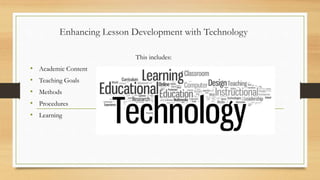
Enhancing Lesson Development with Technology
This includes:
• Academic Content
• Teaching Goals
• Methods
• Procedures
• Learning
Student Learning Objectives
• Tell "who"
Is going to do "what"
"When"
"How much" or "how often"
How it will be "measured" or "evaluated"
Understanding by Design
 Step 1: Identify desired results by understanding and
questions.
Step 2: Determine acceptable evidence and strategies.
Step 3: Plan learning experiences and instruction
through methods and objectives.
Use technology in your Lesson Plans
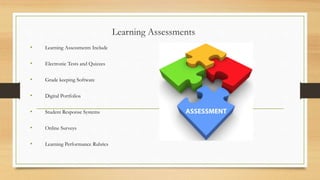
Learning Assessments
• Learning Assessments Include
• Electronic Tests and Quizzes
• Grade keeping Software
• Digital Portfolios
• Student Response Systems
• Online Surveys
• Learning Performance Rubrics
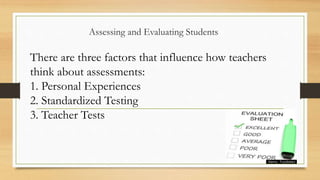
Assessing and Evaluating Students
There are three factors that influence how teachers
think about assessments:
1. Personal Experiences
2. Standardized Testing
3. Teacher Tests
Test Assessments
Norm-referenced tests: compare a student's
performance to other students of the same grade or
age.
Criterion-referenced tests: compare a student's
performance to specific objectives or standards,
not to other students.
Standards Based Assessments
• starts with national, state, or district curriculum frameworks that specify what
students are expected to know and be able to do at each grade level.
• Teachers now use electronic grading software as a virtual record-keeping
system.
Performance Assessments
• Performance assessments:
also known as Performance Evaluations.
This measures what someone actually does in a certain activity, assessing that
performance is that particular activity.
Teachers now use technology for Performance assessments and use them to evaluate
students as well as themselves.
•
Student Performance Rubrics are used to evaluate students work on their course
assignments and activities.
1. How to accurately fine the problem
2.How successfully they design a strategy for solving the problem
3. how effectively they implement the plan
4. How clearly they explain their findings and conclusions.
Resources
Maloy, R. W., Verock-O, R. E., Edwards, S. A., & Woolf, B.P.
(2011). Transforming learning with new technologies. (2nd
ed.). Boston, MA: Pearson Education Inc.

Chapter 4 jessica miller

  • 1.
    Chapter 4 Designing Lessonsand Developing Curriculum with Technology Jessica Miller EDT 576
  • 2.
    Enhancing Lesson Developmentwith Technology This includes: • Academic Content • Teaching Goals • Methods • Procedures • Learning
  • 3.
    Student Learning Objectives •Tell "who" Is going to do "what" "When" "How much" or "how often" How it will be "measured" or "evaluated"
  • 4.
    Understanding by Design Step 1: Identify desired results by understanding and questions. Step 2: Determine acceptable evidence and strategies. Step 3: Plan learning experiences and instruction through methods and objectives. Use technology in your Lesson Plans
  • 5.
    Learning Assessments • LearningAssessments Include • Electronic Tests and Quizzes • Grade keeping Software • Digital Portfolios • Student Response Systems • Online Surveys • Learning Performance Rubrics
  • 6.
    Assessing and EvaluatingStudents There are three factors that influence how teachers think about assessments: 1. Personal Experiences 2. Standardized Testing 3. Teacher Tests
  • 7.
    Test Assessments Norm-referenced tests:compare a student's performance to other students of the same grade or age. Criterion-referenced tests: compare a student's performance to specific objectives or standards, not to other students.
  • 8.
    Standards Based Assessments •starts with national, state, or district curriculum frameworks that specify what students are expected to know and be able to do at each grade level. • Teachers now use electronic grading software as a virtual record-keeping system.
  • 9.
    Performance Assessments • Performanceassessments: also known as Performance Evaluations. This measures what someone actually does in a certain activity, assessing that performance is that particular activity. Teachers now use technology for Performance assessments and use them to evaluate students as well as themselves. • Student Performance Rubrics are used to evaluate students work on their course assignments and activities. 1. How to accurately fine the problem 2.How successfully they design a strategy for solving the problem 3. how effectively they implement the plan 4. How clearly they explain their findings and conclusions.
  • 10.
    Resources Maloy, R. W.,Verock-O, R. E., Edwards, S. A., & Woolf, B.P. (2011). Transforming learning with new technologies. (2nd ed.). Boston, MA: Pearson Education Inc.