Mr. Berdinka
Digital Photography
Northern Lebanon High School
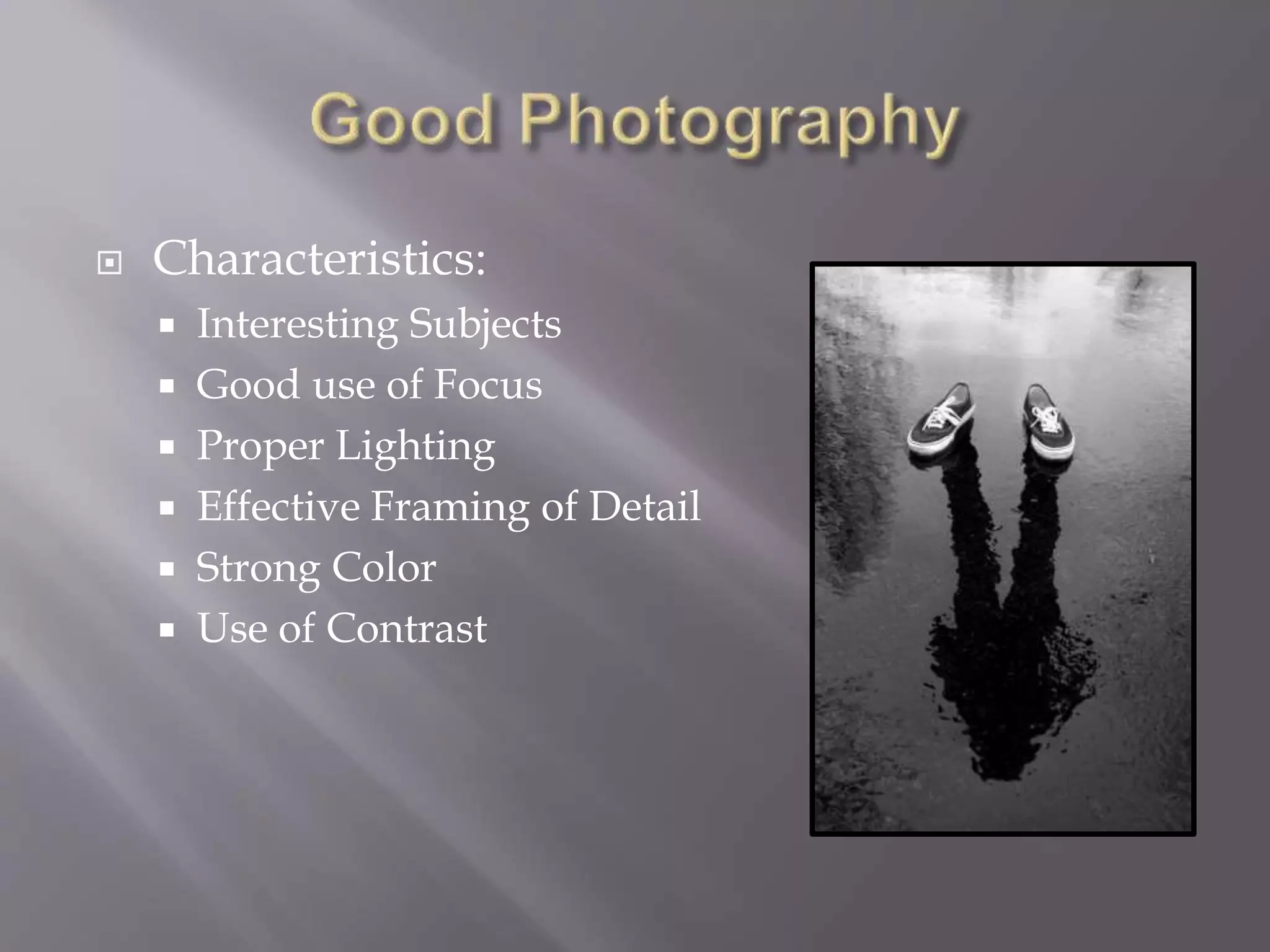
 Characteristics:
 Interesting Subjects
 Good use of Focus
 Proper Lighting
 Effective Framing of Detail
 Strong Color
 Use of Contrast
 Centered Subjects (Bulls-eye syndrome)
 Relatively small subjects
 Unbalanced use of frame
 Lack of recognition or use of the
foreground/background
 Overuse of same subjects
 Overuse of similar Point-of-View and camera
angel
 Overuse of same subject content
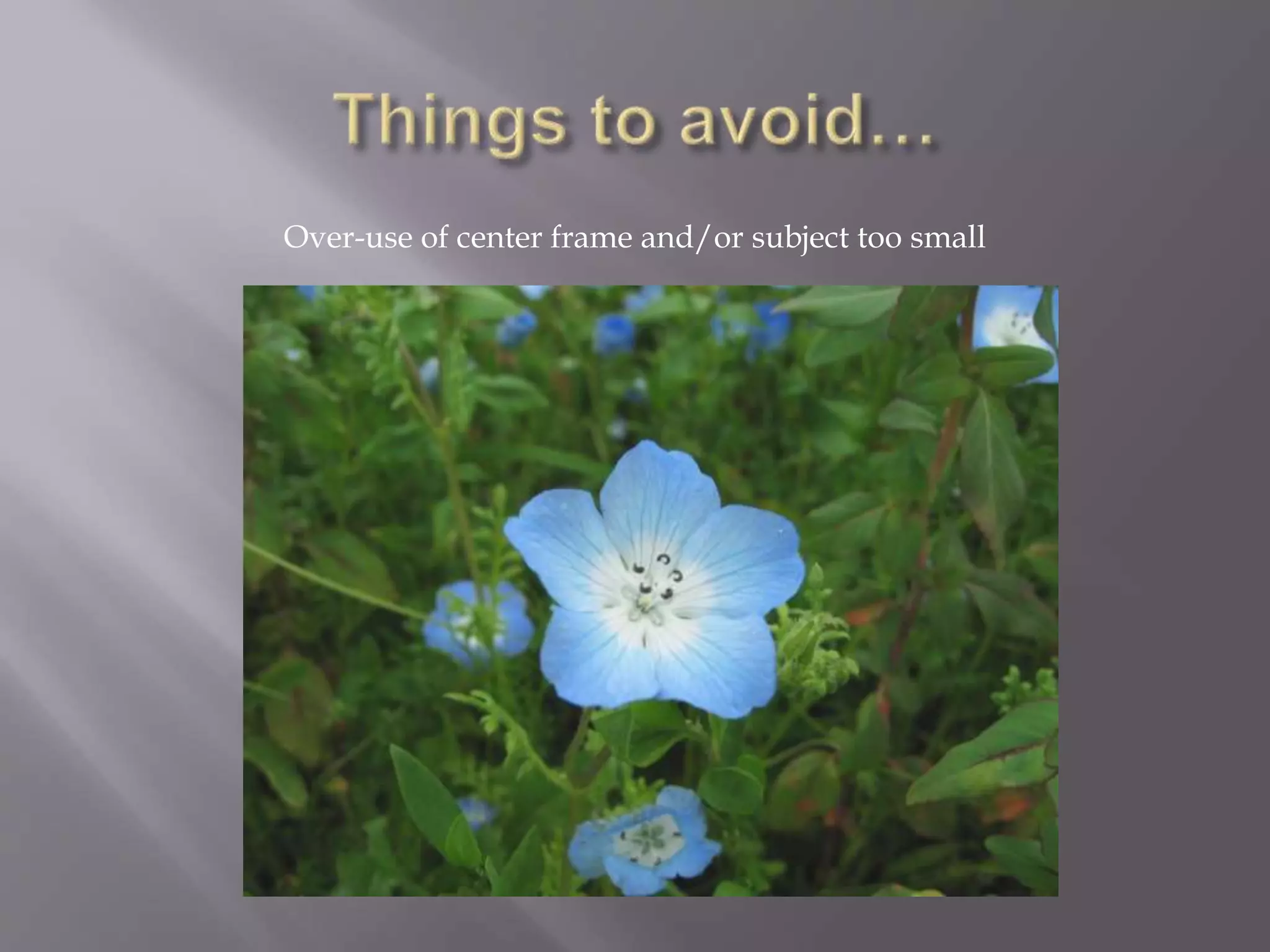
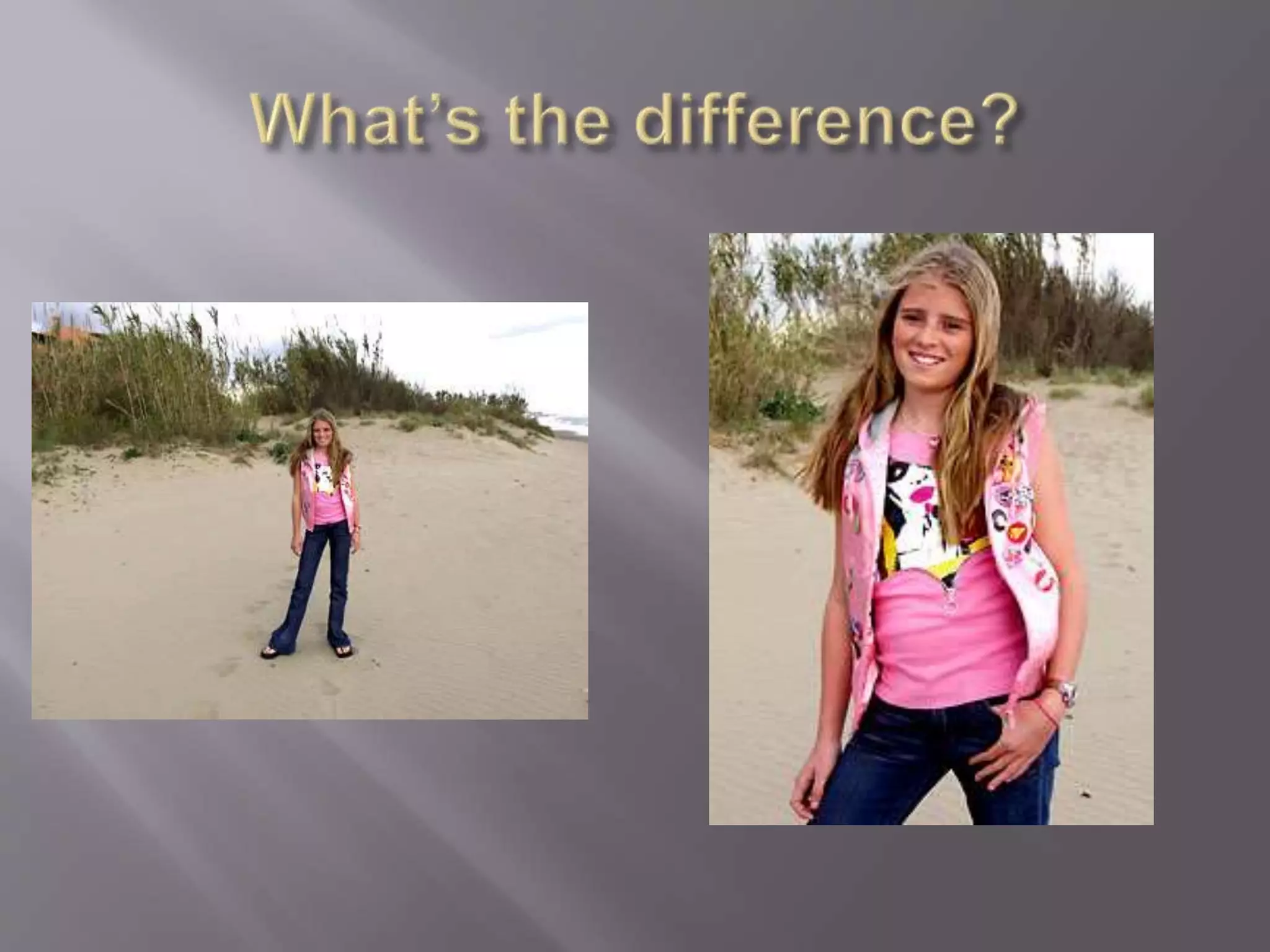
Over-use of center frame and/or subject too small
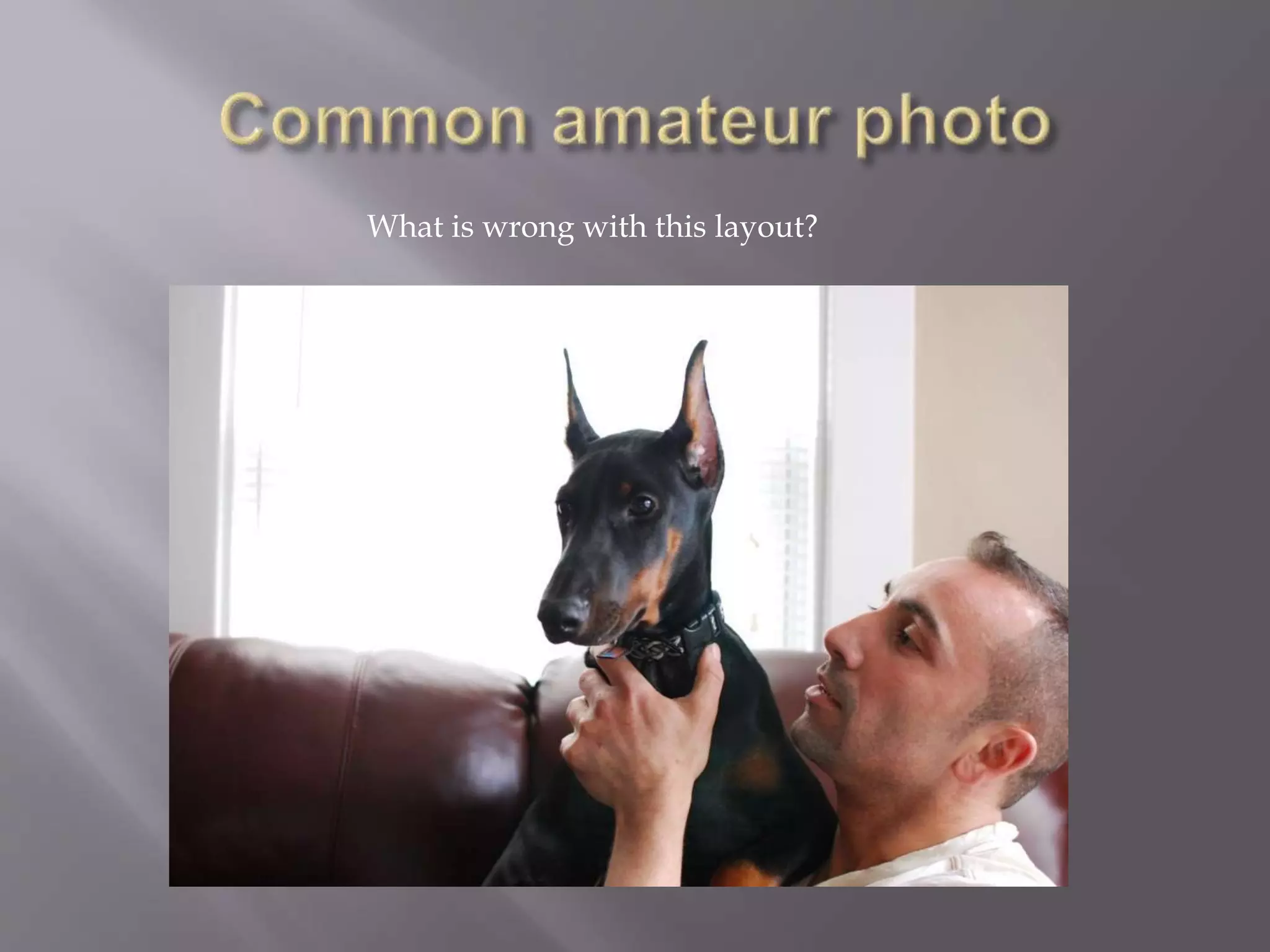
What is wrong with this layout?
 To improve the appearance and quality of your
images:
 Alter Point of View/Camera Angle
 Adjust the Exposure
 Fill the frame (use part of the subject)
 Avoid the center - Use the Rule of 1/3s
 Look for balance (symmetry/asymmetry)
 Find contrast
 Alter focus
 Add layers of detail/increase appearance of 3D
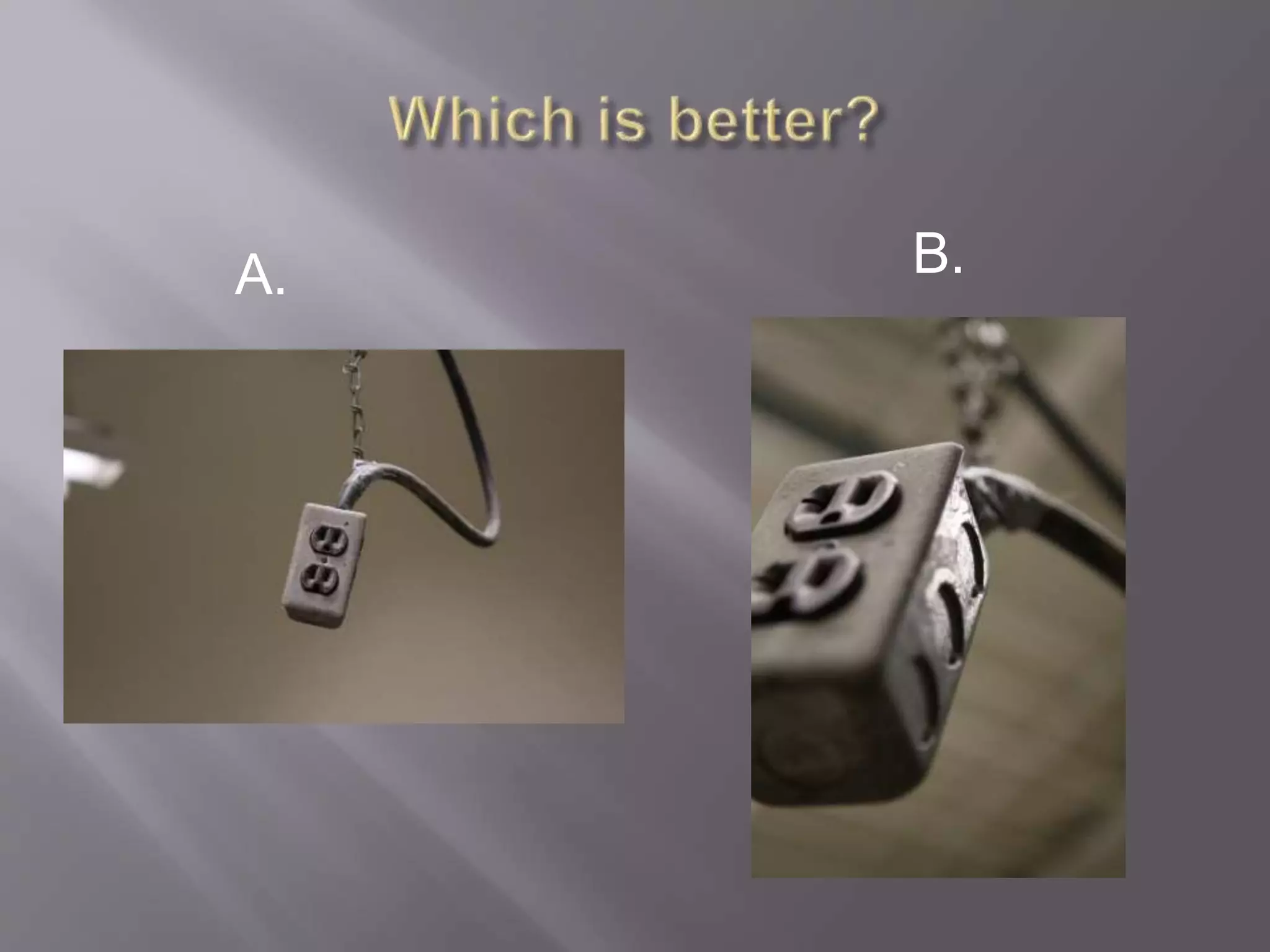
A. B.
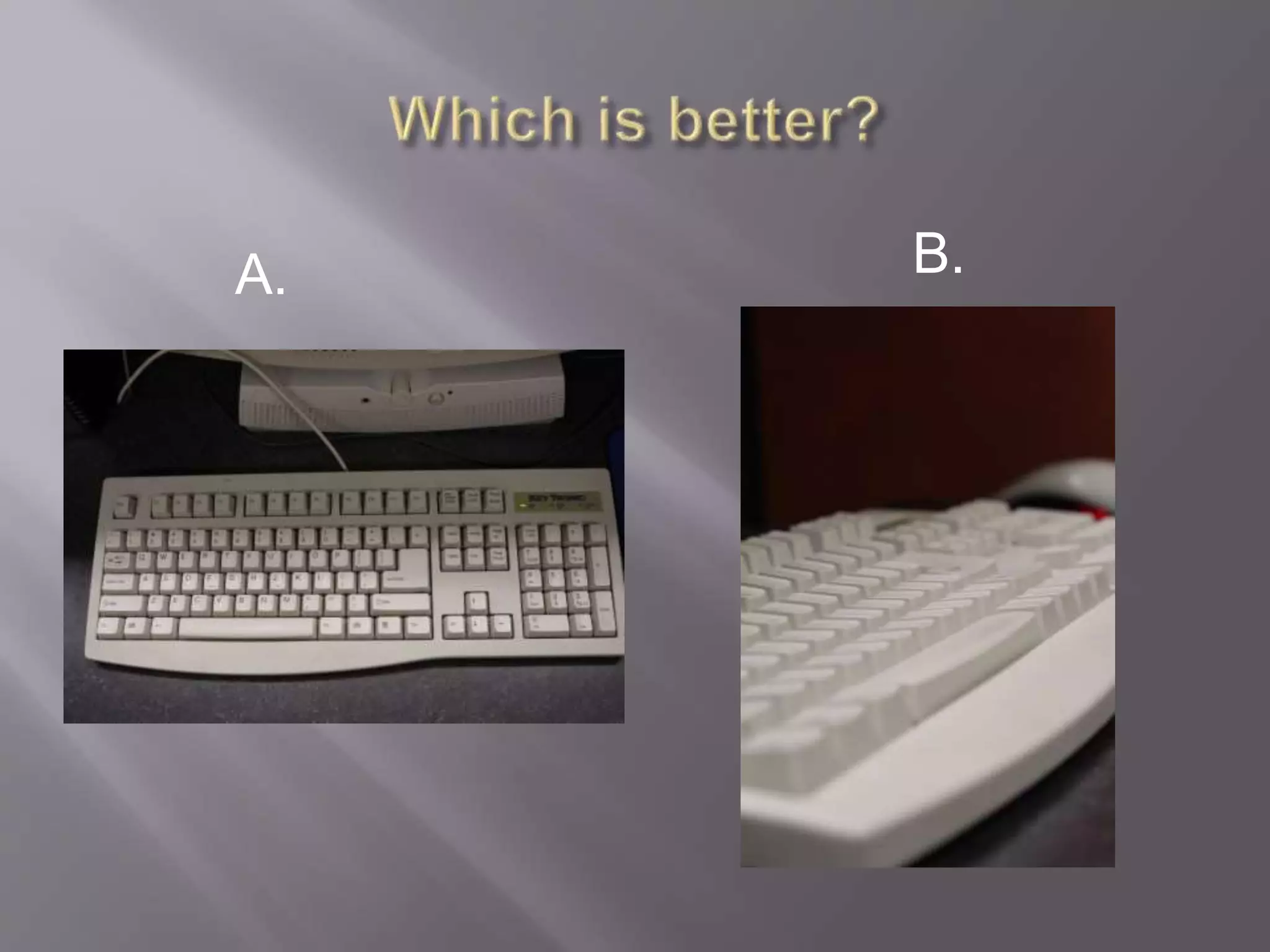
A. B.
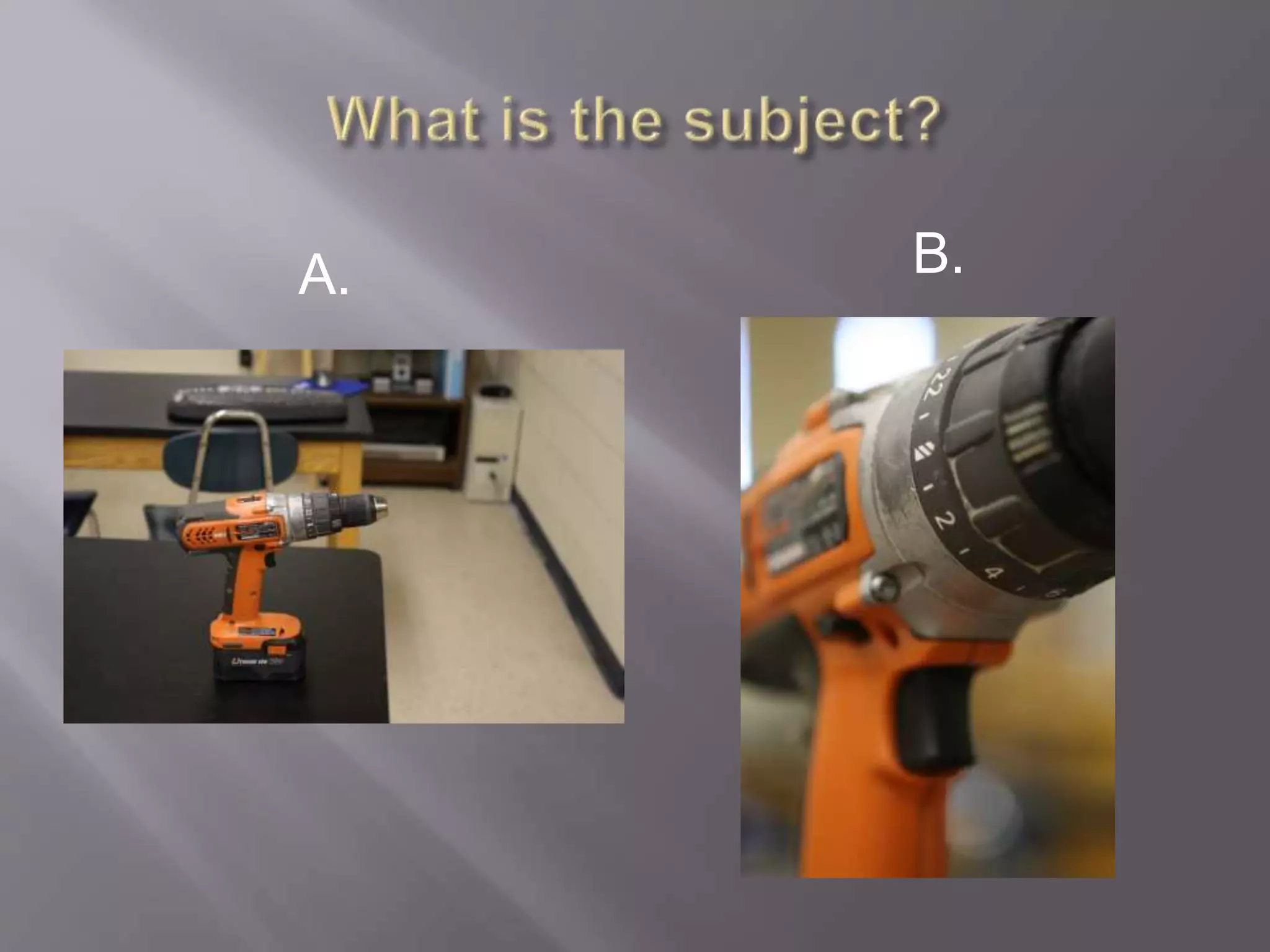
A. B.
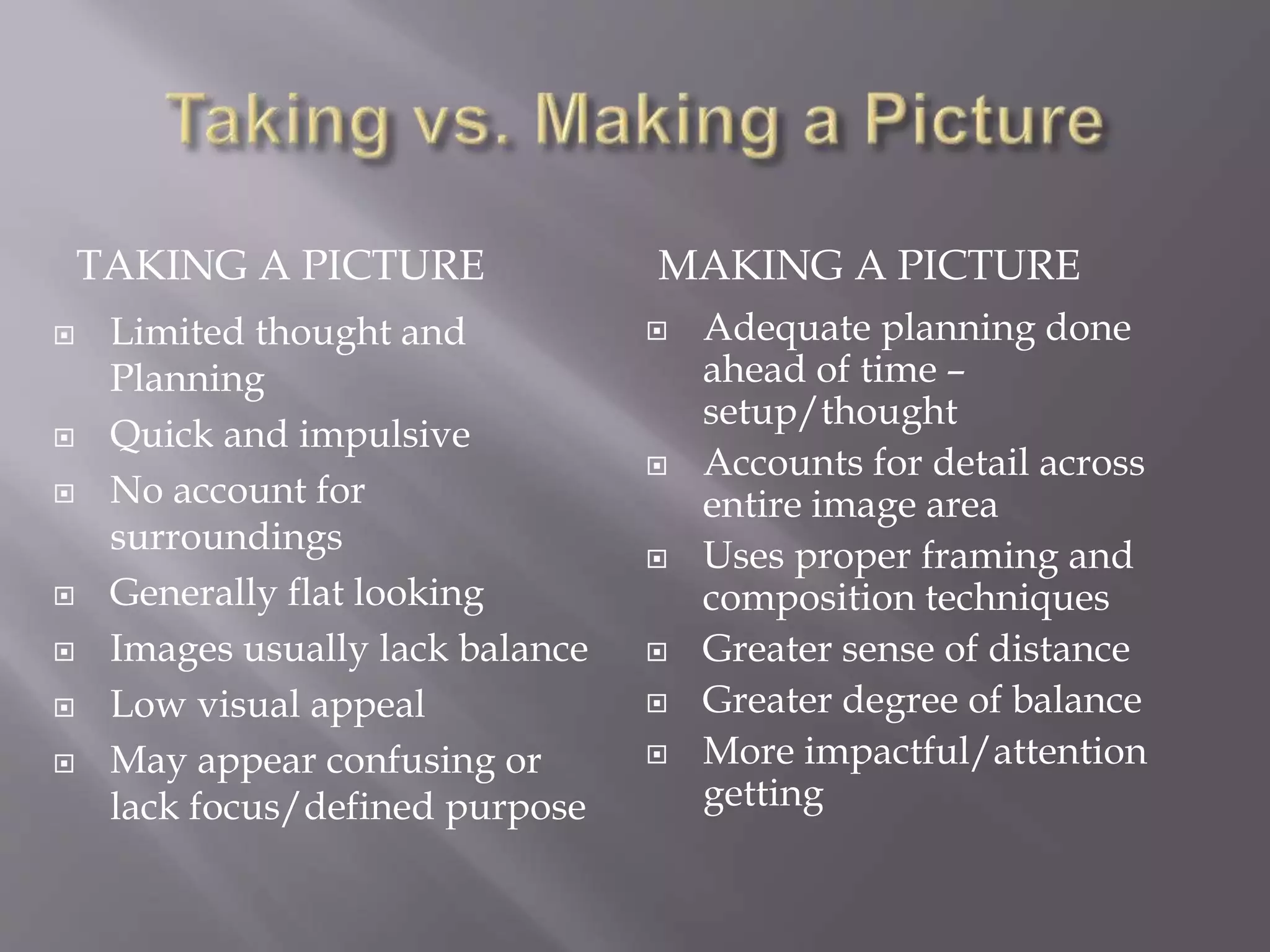
TAKING A PICTURE MAKING A PICTURE
 Limited thought and
Planning
 Quick and impulsive
 No account for
surroundings
 Generally flat looking
 Images usually lack balance
 Low visual appeal
 May appear confusing or
lack focus/defined purpose
 Adequate planning done
ahead of time –
setup/thought
 Accounts for detail across
entire image area
 Uses proper framing and
composition techniques
 Greater sense of distance
 Greater degree of balance
 More impactful/attention
getting
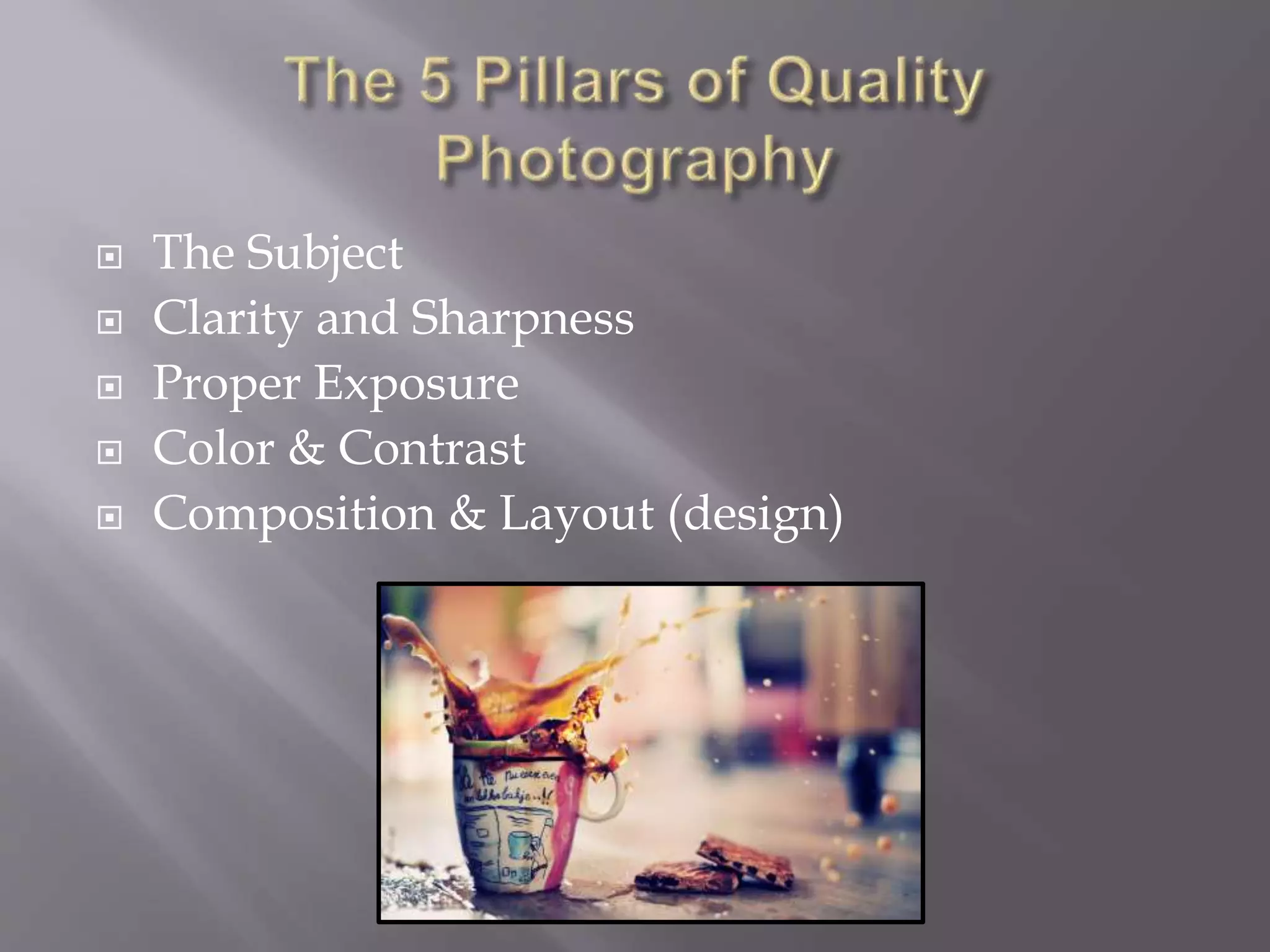
 The Subject
 Clarity and Sharpness
 Proper Exposure
 Color & Contrast
 Composition & Layout (design)
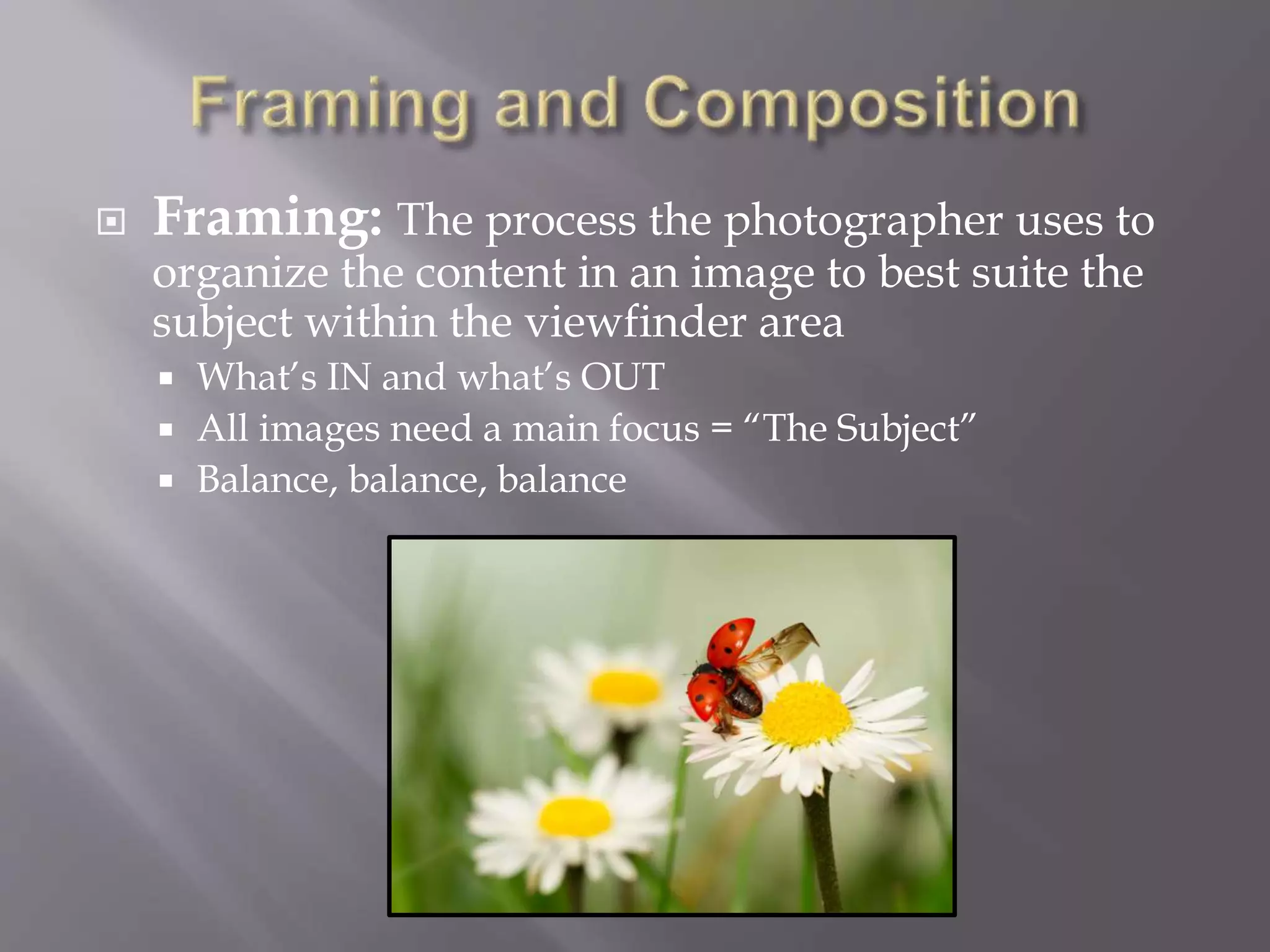
 Framing: The process the photographer uses to
organize the content in an image to best suite the
subject within the viewfinder area
 What’s IN and what’s OUT
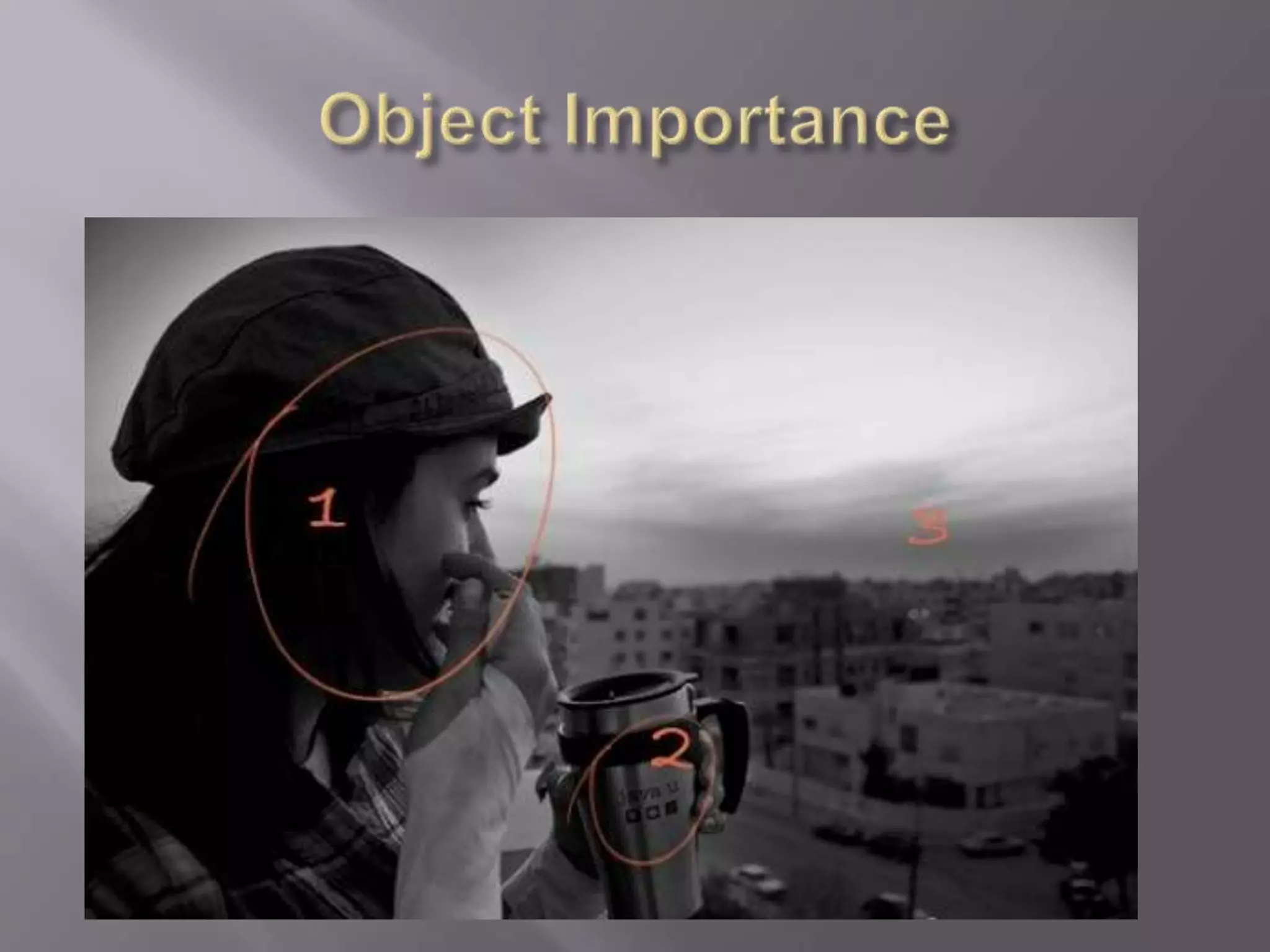
 All images need a main focus = “The Subject”
 Balance, balance, balance
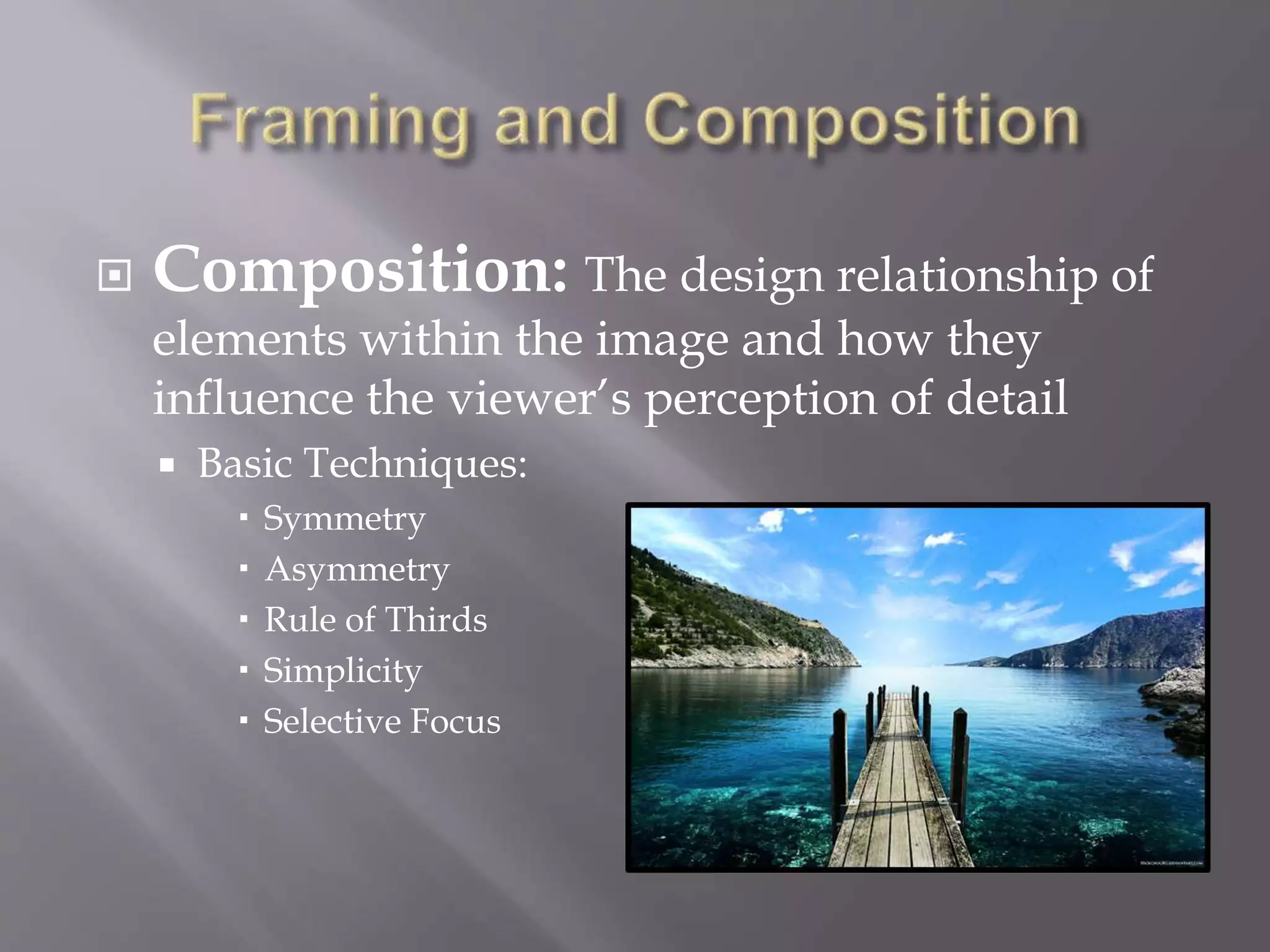
 Composition: The design relationship of
elements within the image and how they
influence the viewer’s perception of detail
 Basic Techniques:
 Symmetry
 Asymmetry
 Rule of Thirds
 Simplicity
 Selective Focus
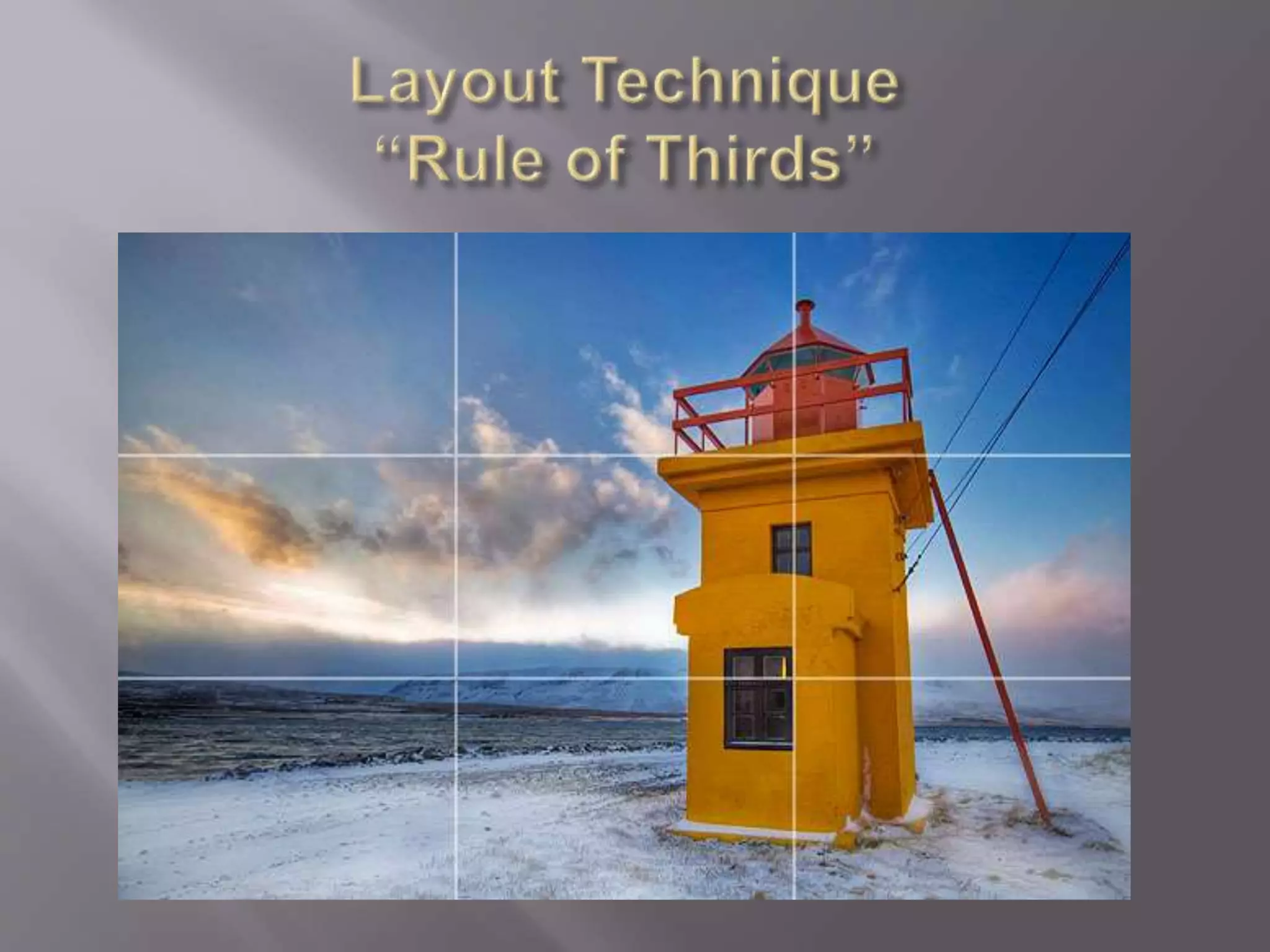
Places important detail along the third
lines/intersections of the frame
• Helps break up the frame
• Avoids using the center
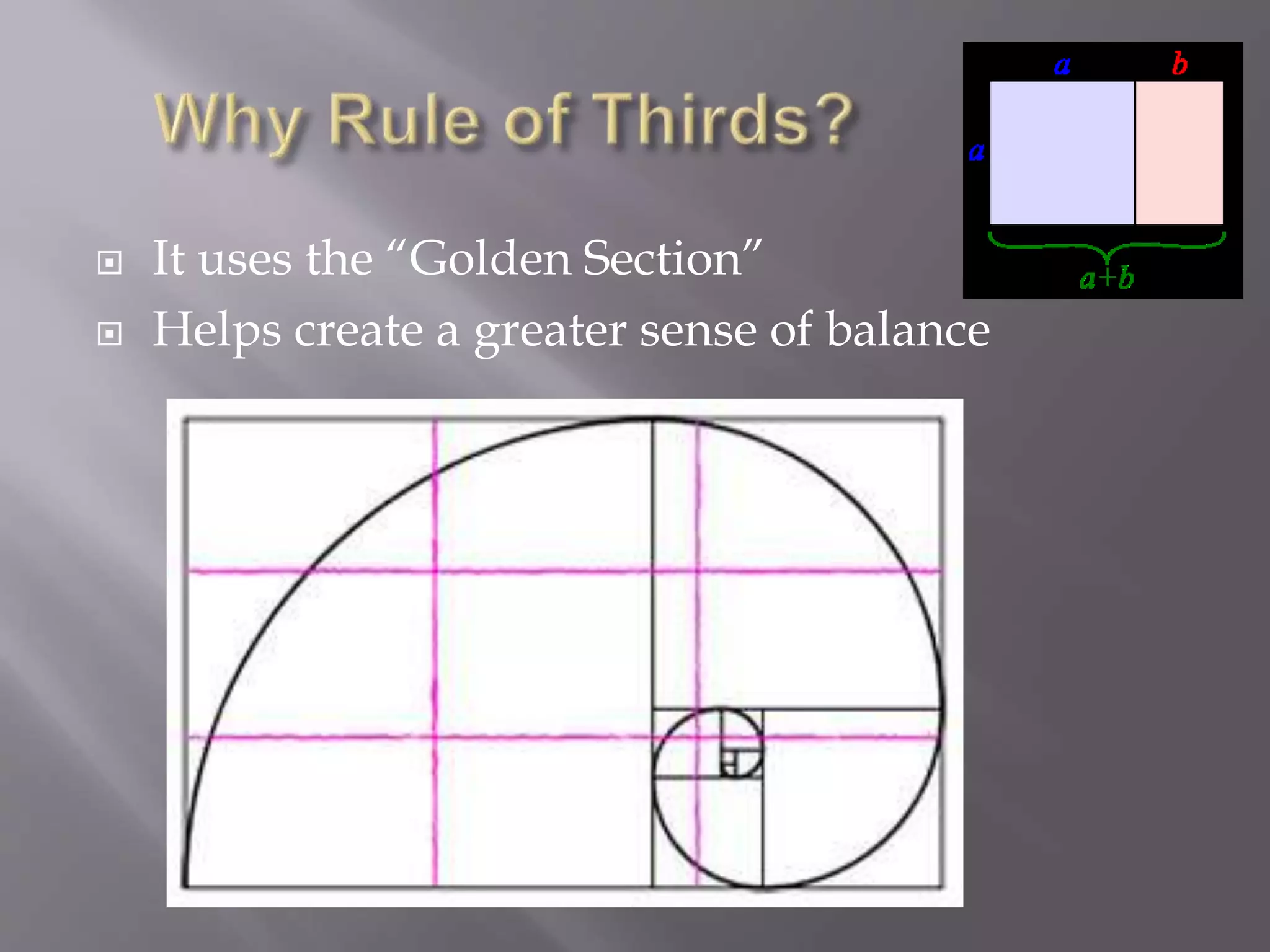
• Uses the “Golden Rule” layout to provide better balance
• Align the horizon properly across one of the horizontal 1/3
lines
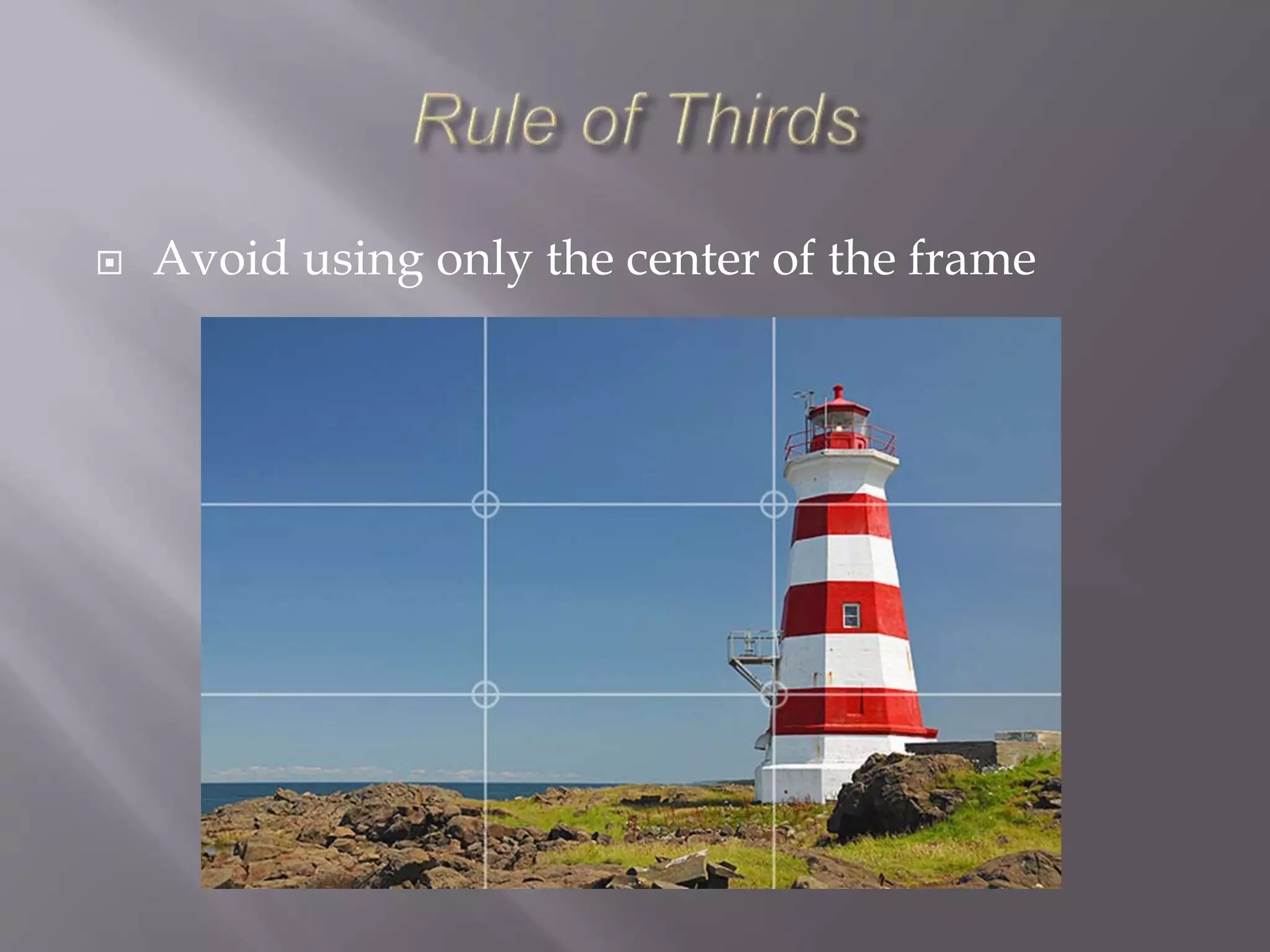
 Avoid using only the center of the frame
 It uses the “Golden Section”
 Helps create a greater sense of balance
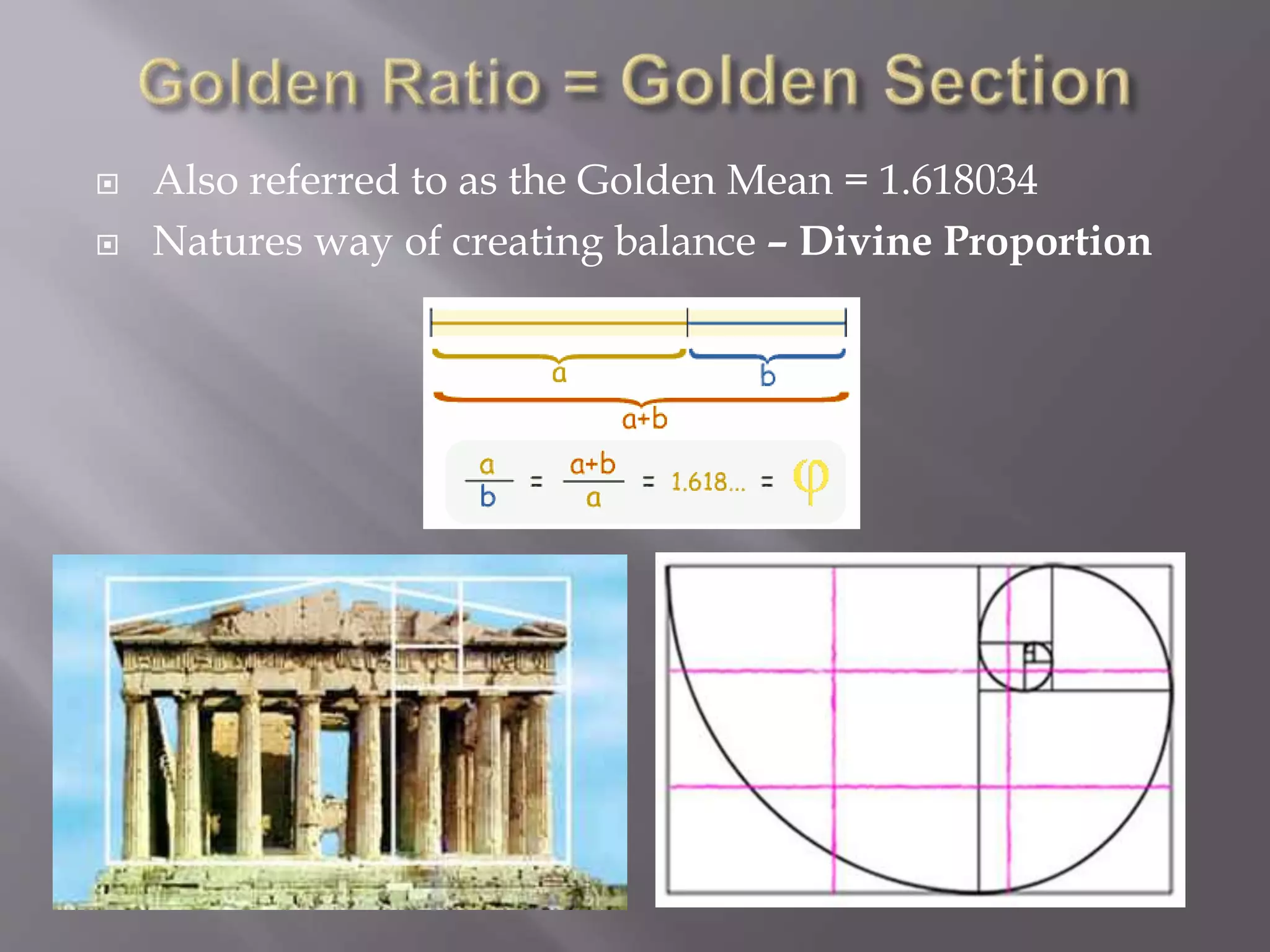
 Also referred to as the Golden Mean = 1.618034
 Natures way of creating balance – Divine Proportion
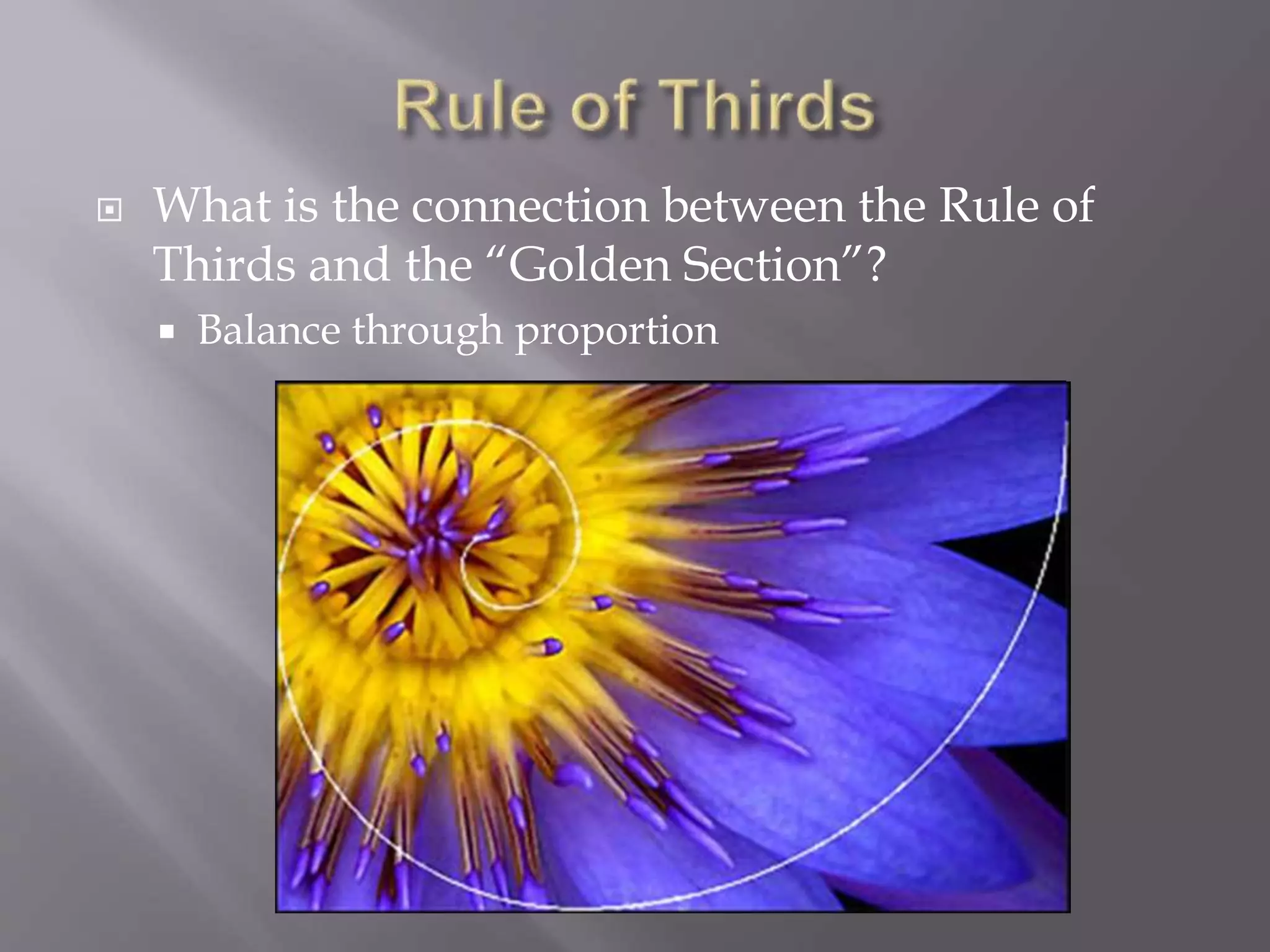
 What is the connection between the Rule of
Thirds and the “Golden Section”?
 Balance through proportion
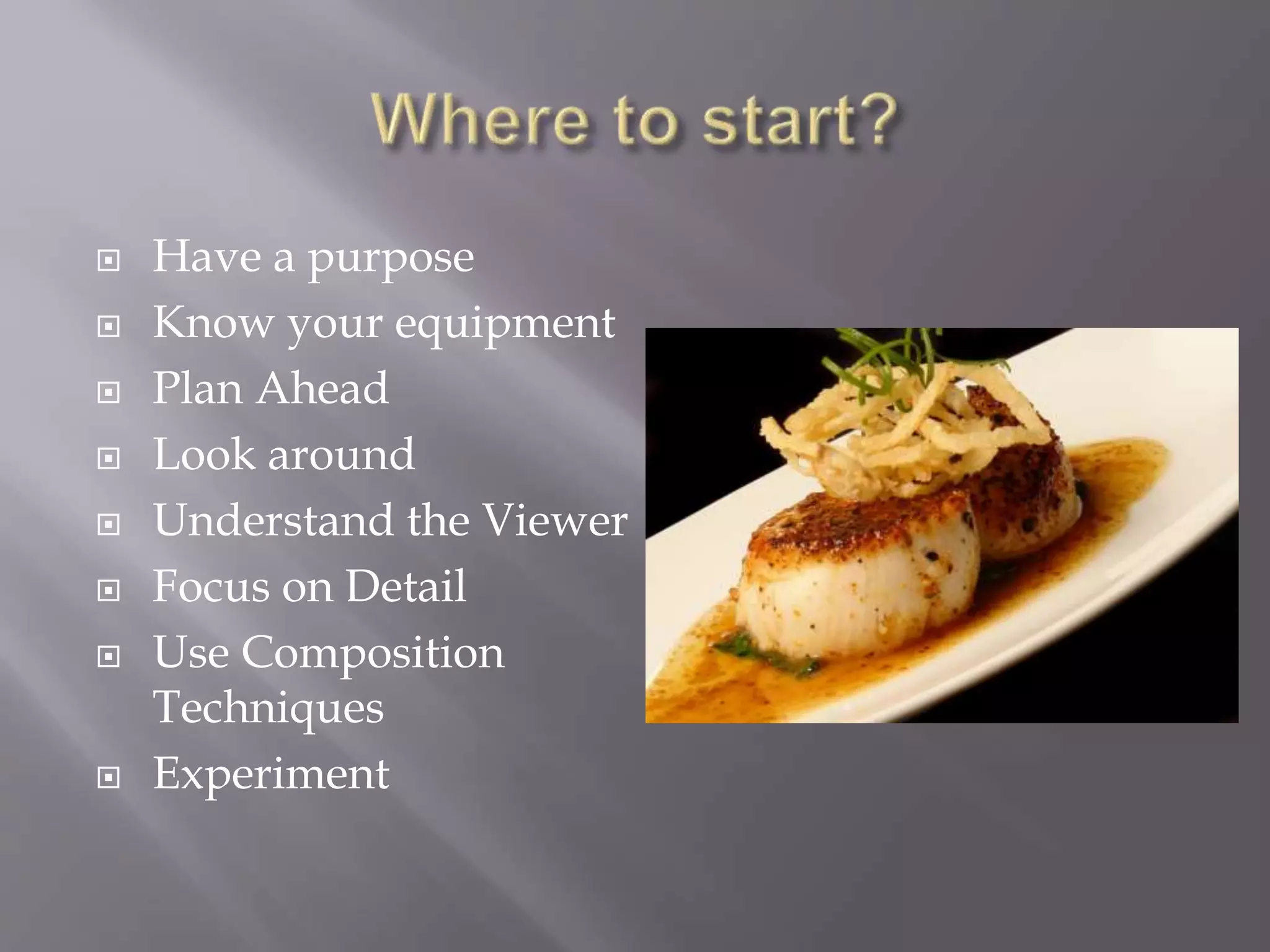
 Have a purpose
 Know your equipment
 Plan Ahead
 Look around
 Understand the Viewer
 Focus on Detail
 Use Composition
Techniques
 Experiment
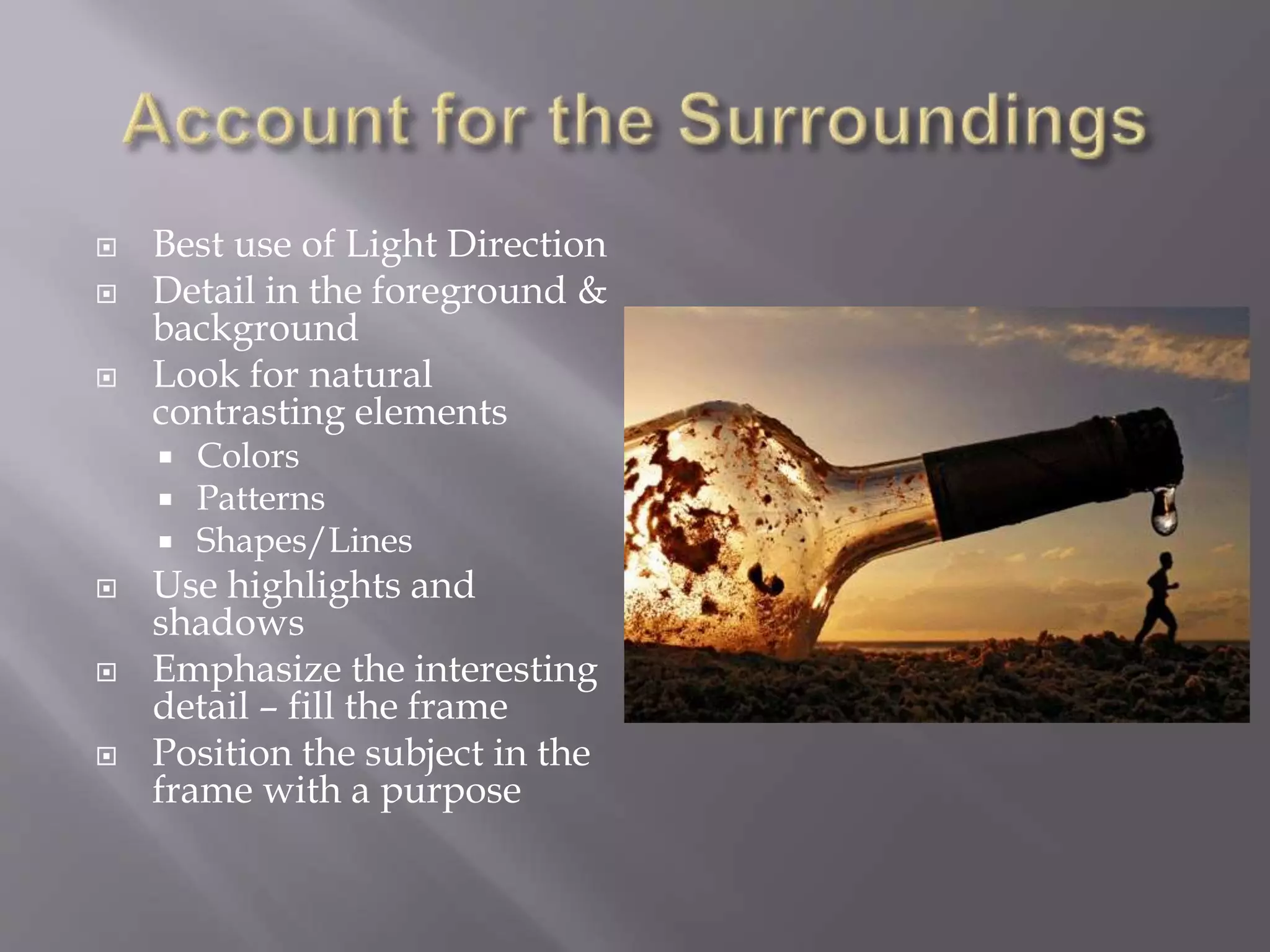
 Best use of Light Direction
 Detail in the foreground &
background
 Look for natural
contrasting elements
 Colors
 Patterns
 Shapes/Lines
 Use highlights and
shadows
 Emphasize the interesting
detail – fill the frame
 Position the subject in the
frame with a purpose
 Timing – when is the image captured, what else is
happening that can be included or avoided
 Position – where is the camera in regards to the
subject or event taking place and what POV is
being used when capturing
 When – could be time of day, day of year, season,
rush hour, evening, or night; planning is critical to
making some images come to life
 Camera Controls – F/stop for depth of field;
Shutter Speed for motion control; White Balance;
ISO speed
 What - ultimately are you trying to accomplish
and present to your audience
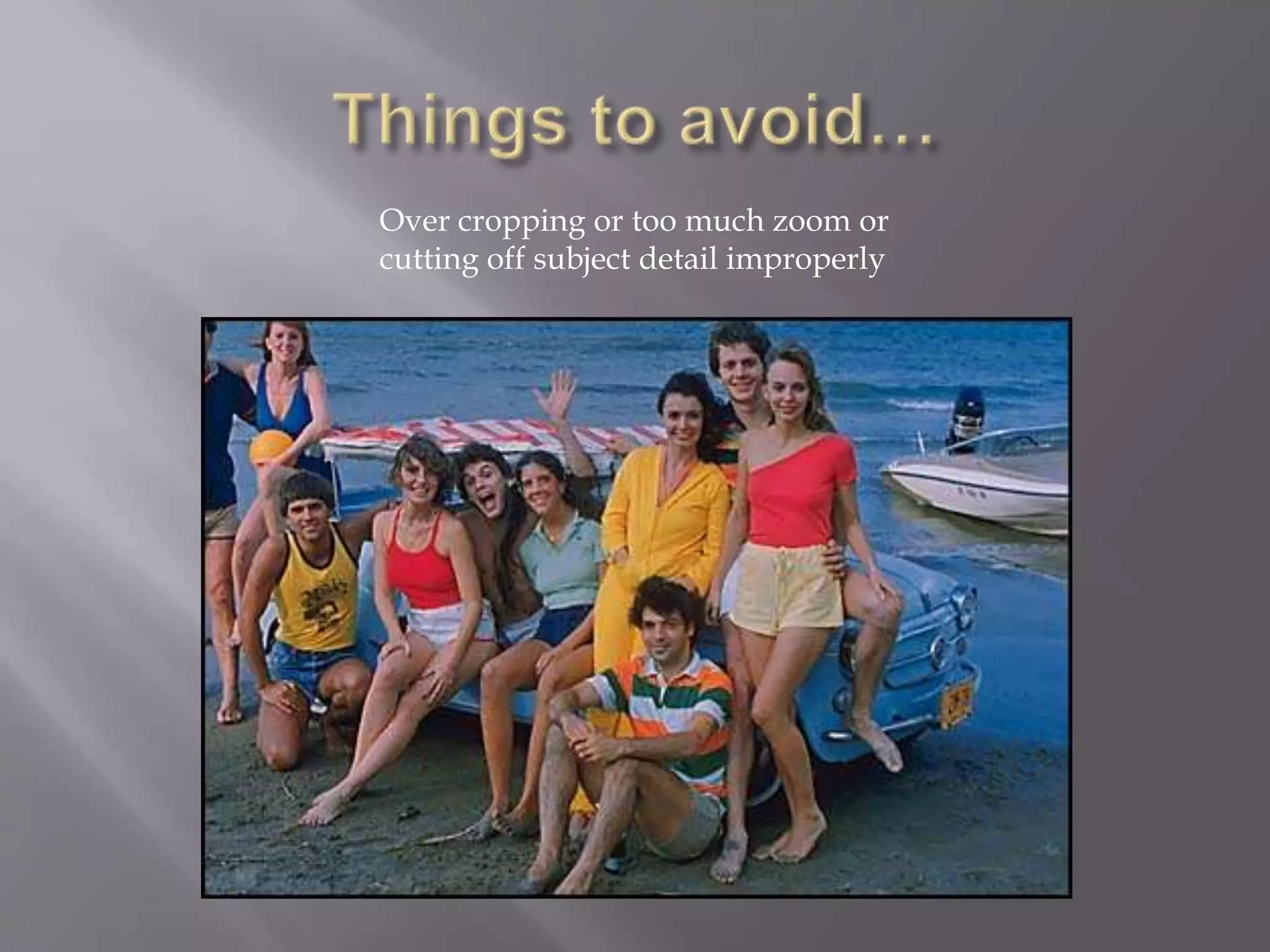
Over cropping or too much zoom or
cutting off subject detail improperly
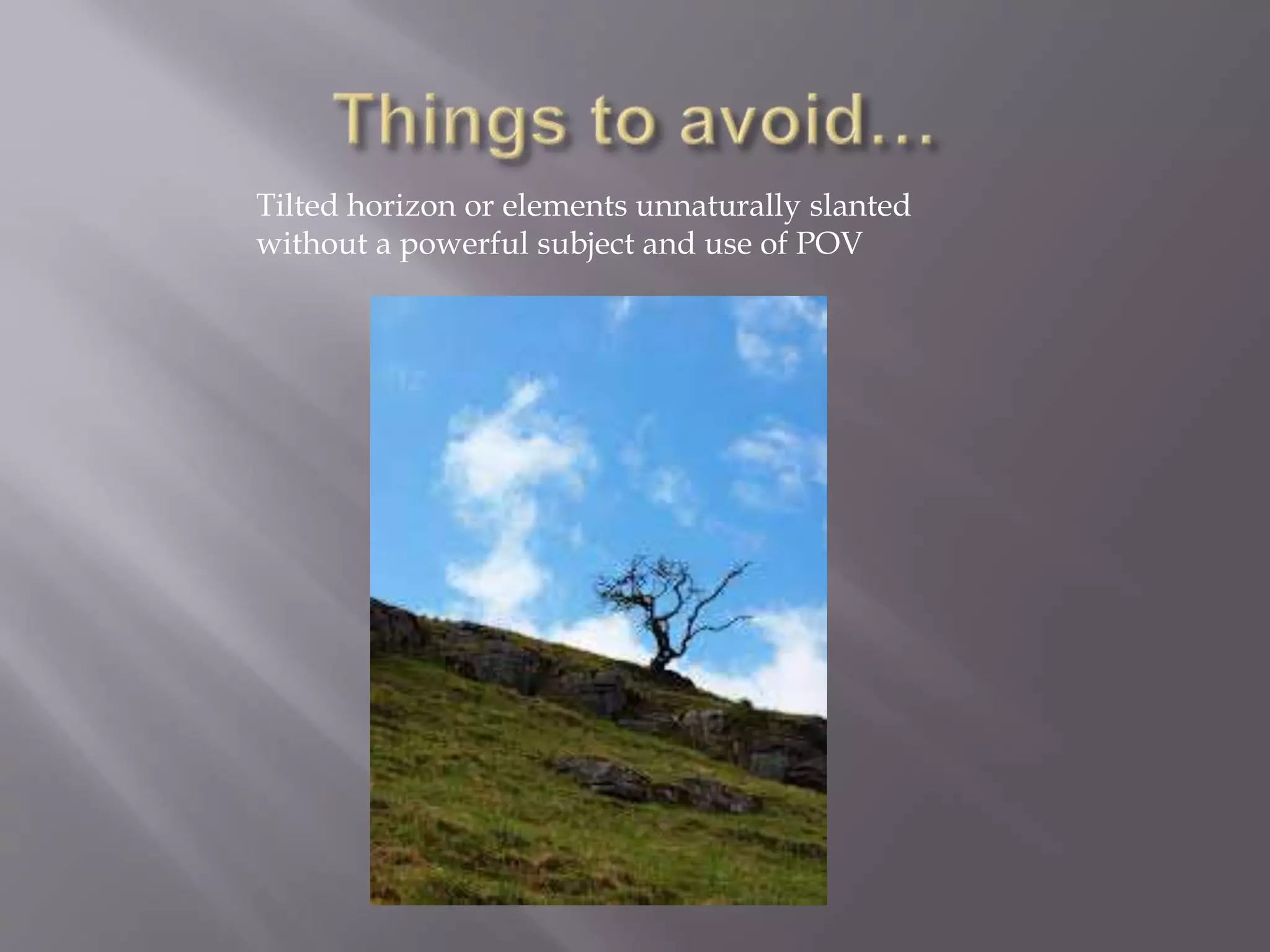
Tilted horizon or elements unnaturally slanted
without a powerful subject and use of POV
Bad Merger
Distracting glare, reflections, lens flare, or
direct sun
Poor or incorrect focal point
Objects closer to the camera that are
out-of-focus causing a distraction
Too much detail left in focus
Chapter 4 - Creating Better Pics

Chapter 4 - Creating Better Pics

  • 1.
  • 2.
     Characteristics:  InterestingSubjects  Good use of Focus  Proper Lighting  Effective Framing of Detail  Strong Color  Use of Contrast
  • 3.
     Centered Subjects(Bulls-eye syndrome)  Relatively small subjects  Unbalanced use of frame  Lack of recognition or use of the foreground/background  Overuse of same subjects  Overuse of similar Point-of-View and camera angel  Overuse of same subject content
  • 5.
    Over-use of centerframe and/or subject too small
  • 6.
    What is wrongwith this layout?
  • 7.
     To improvethe appearance and quality of your images:  Alter Point of View/Camera Angle  Adjust the Exposure  Fill the frame (use part of the subject)  Avoid the center - Use the Rule of 1/3s  Look for balance (symmetry/asymmetry)  Find contrast  Alter focus  Add layers of detail/increase appearance of 3D
  • 9.
  • 10.
  • 11.
  • 12.
    TAKING A PICTUREMAKING A PICTURE  Limited thought and Planning  Quick and impulsive  No account for surroundings  Generally flat looking  Images usually lack balance  Low visual appeal  May appear confusing or lack focus/defined purpose  Adequate planning done ahead of time – setup/thought  Accounts for detail across entire image area  Uses proper framing and composition techniques  Greater sense of distance  Greater degree of balance  More impactful/attention getting
  • 14.
     The Subject Clarity and Sharpness  Proper Exposure  Color & Contrast  Composition & Layout (design)
  • 16.
     Framing: Theprocess the photographer uses to organize the content in an image to best suite the subject within the viewfinder area  What’s IN and what’s OUT  All images need a main focus = “The Subject”  Balance, balance, balance
  • 17.
     Composition: Thedesign relationship of elements within the image and how they influence the viewer’s perception of detail  Basic Techniques:  Symmetry  Asymmetry  Rule of Thirds  Simplicity  Selective Focus
  • 18.
    Places important detailalong the third lines/intersections of the frame • Helps break up the frame • Avoids using the center • Uses the “Golden Rule” layout to provide better balance • Align the horizon properly across one of the horizontal 1/3 lines
  • 20.
     Avoid usingonly the center of the frame
  • 21.
     It usesthe “Golden Section”  Helps create a greater sense of balance
  • 22.
     Also referredto as the Golden Mean = 1.618034  Natures way of creating balance – Divine Proportion
  • 23.
     What isthe connection between the Rule of Thirds and the “Golden Section”?  Balance through proportion
  • 25.
     Have apurpose  Know your equipment  Plan Ahead  Look around  Understand the Viewer  Focus on Detail  Use Composition Techniques  Experiment
  • 26.
     Best useof Light Direction  Detail in the foreground & background  Look for natural contrasting elements  Colors  Patterns  Shapes/Lines  Use highlights and shadows  Emphasize the interesting detail – fill the frame  Position the subject in the frame with a purpose
  • 27.
     Timing –when is the image captured, what else is happening that can be included or avoided  Position – where is the camera in regards to the subject or event taking place and what POV is being used when capturing  When – could be time of day, day of year, season, rush hour, evening, or night; planning is critical to making some images come to life  Camera Controls – F/stop for depth of field; Shutter Speed for motion control; White Balance; ISO speed  What - ultimately are you trying to accomplish and present to your audience
  • 28.
    Over cropping ortoo much zoom or cutting off subject detail improperly
  • 29.
    Tilted horizon orelements unnaturally slanted without a powerful subject and use of POV
  • 30.
  • 31.
    Distracting glare, reflections,lens flare, or direct sun
  • 32.
    Poor or incorrectfocal point
  • 33.
    Objects closer tothe camera that are out-of-focus causing a distraction
  • 34.
    Too much detailleft in focus