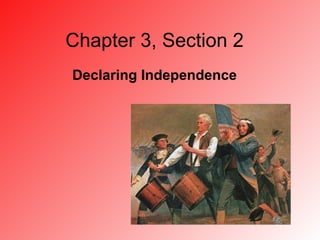
Chapter 3, Section 2
Declaring Independence
Paine’s Common Sense
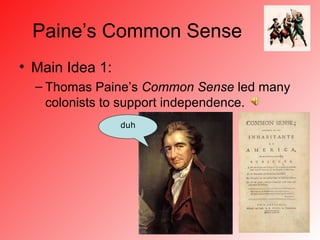
• In January of 1776, Thomas Paine,
                published a 47-page
  pamphlet entitled Common Sense.
  – Common Sense inspired
      American colonists to challenge
        British authority.
               duh
Paine’s Common Sense
• Common Sense:
  – Urged separation from Great Britain
  – Argued that citizens, not monarchs, should
    make laws
  – Argued for economic freedom and
            the right to military self-defense
  – Cried out against tyranny, the
     abuse of government power
  – Reached a wide audience, selling some
    500,000 copies
Paine’s Common Sense
• Main Idea 1:
  – Thomas Paine’s Common Sense led many
    colonists to support independence.
                 duh
Independence for Colonies
                 • Many colonial leaders
    Brilliant!     agreed with Thomas
                   Paine’s ideas in
                   Common Sense.
                 • The Second
                   Continental Congress
                   created a committee in
                   June 1776 to write a
                   document declaring
                   independence
Independence for Colonies
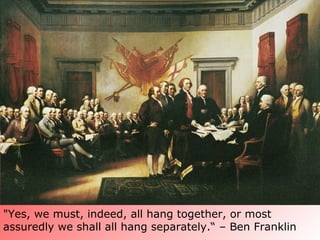
               • The Declaration of
                 Independence formally
                 announced the break
                 with Great Britain
                 – Tomas Jefferson
                          was the main
                   author
                 – It was officially approved
                   on July 4, 1776
"Yes, we must, indeed, all hang together, or most
assuredly we shall all hang separately.“ – Ben Franklin
Independence for Colonies
• The Declaration ignored many colonists
  – Did not address the rights of women
  – Did not recognize the rights of enslaved
    African Americans
Independence for Colonies
• Patriots were colonials who chose to fight
  for independence.
  – About 40 to 45 percent of Americans were
    Patriots
Independence for Colonies
• Loyalists, sometimes called Tories, were
  colonials who remained loyal to Britain.
  – About 20 to 30 percent of Americans were
    Loyalists.
• About 20-25 percent of
       colonials remained neutral.
Independence for Colonies
• Main Idea 2:
  Colonists had differing reactions to the
  Declaration of Independence.

Chapter 3, section 2

  • 1.
    Chapter 3, Section2 Declaring Independence
  • 2.
    Paine’s Common Sense •In January of 1776, Thomas Paine, published a 47-page pamphlet entitled Common Sense. – Common Sense inspired American colonists to challenge British authority. duh
  • 3.
    Paine’s Common Sense •Common Sense: – Urged separation from Great Britain – Argued that citizens, not monarchs, should make laws – Argued for economic freedom and the right to military self-defense – Cried out against tyranny, the abuse of government power – Reached a wide audience, selling some 500,000 copies
  • 4.
    Paine’s Common Sense •Main Idea 1: – Thomas Paine’s Common Sense led many colonists to support independence. duh
  • 5.
    Independence for Colonies • Many colonial leaders Brilliant! agreed with Thomas Paine’s ideas in Common Sense. • The Second Continental Congress created a committee in June 1776 to write a document declaring independence
  • 6.
    Independence for Colonies • The Declaration of Independence formally announced the break with Great Britain – Tomas Jefferson was the main author – It was officially approved on July 4, 1776
  • 7.
    "Yes, we must,indeed, all hang together, or most assuredly we shall all hang separately.“ – Ben Franklin
  • 10.
    Independence for Colonies •The Declaration ignored many colonists – Did not address the rights of women – Did not recognize the rights of enslaved African Americans
  • 11.
    Independence for Colonies •Patriots were colonials who chose to fight for independence. – About 40 to 45 percent of Americans were Patriots
  • 12.
    Independence for Colonies •Loyalists, sometimes called Tories, were colonials who remained loyal to Britain. – About 20 to 30 percent of Americans were Loyalists. • About 20-25 percent of colonials remained neutral.
  • 13.
    Independence for Colonies •Main Idea 2: Colonists had differing reactions to the Declaration of Independence.