CHAPTER 3
MULTIMODAL LITERACY
Multimodal Literacy
(O’Halloran & Lim, 2011) - is
about understanding the
different ways of knowledge
representations and
meaning-making.
2
It focuses on the design of discourse
by investigating the contributions of
specific semiotic resources (e.g.
language, gesture, images) co-
deployed across various modalities
(e.g. visual, aural, somatic).
3
Also, this focuses on interaction and
integration in constructing a
coherent multimodal text (such as
advertisements, posters, news
report, websites, films).
4
CHAPTER 3
COMMUNICATION AIDS
AND STRATEGIES
USING TOOLS IN
TECHNOLOGY
TOOLS OF TECHNOLOGY
FOR COMMUNICATION
Creating multimodal texts means the
production of spoken, written, or text
in print or digital forms. It is the
business of making meanings with
the use of technology.
6
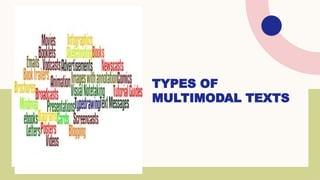
TYPES OF
MULTIMODAL TEXTS
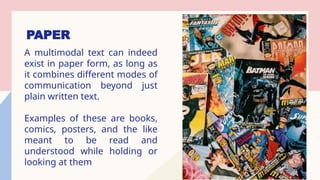
PAPER
A multimodal text can indeed
exist in paper form, as long as
it combines different modes of
communication beyond just
plain written text.
Examples of these are books,
comics, posters, and the like
meant to be read and
understood while holding or
looking at them
DIGITAL
A digital multimodal text
combines written text, visuals,
sounds, interactive elements, and
sometimes video or animation to
create an engaging and layered
experience for users.
Examples are such as slide
presentations, blogs or vlogs, web
pages, short films, videos, media
campaigns, or anything that
capitalizes on digital technology.
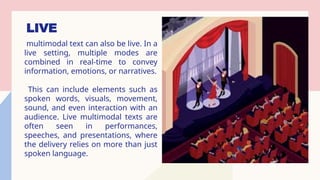
LIVE
multimodal text can also be live. In a
live setting, multiple modes are
combined in real-time to convey
information, emotions, or narratives.
This can include elements such as
spoken words, visuals, movement,
sound, and even interaction with an
audience. Live multimodal texts are
often seen in performances,
speeches, and presentations, where
the delivery relies on more than just
spoken language.
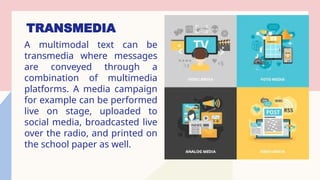
TRANSMEDIA
A multimodal text can be
transmedia where messages
are conveyed through a
combination of multimedia
platforms. A media campaign
for example can be performed
live on stage, uploaded to
social media, broadcasted live
over the radio, and printed on
the school paper as well.
To successfully create a multimodal text, you are
required to consider a few things – your purpose,
message, reader, viewer and listener.
Purpose means what you want to achieve with your
text such as to inform, to inspire, or to elicit action.
Your message is contained in the actual text you
compose.
Readers may mean fellow students, parents,
teachers or whoever you think will appreciate your
message.
If your work is in a form of a video or live
presentation, then you will have to think of who to
appeal to for your viewer/s.
12
CREATING EFFECTIVE
MULTIMODAL TEXTS
13
1. WRITTEN/LINGUISTIC
14
refers to spoken and written
language through vocabulary,
structure and grammar.
Examples:
THE SECRET OF MAKING PEOPLE
LIKE YOU
A LIITLE MISTAKE THAT COST A
FARMER $3,000 A YEAR
2. AUDIO
15
– refers to music, sound effects,
noises or silences, and the elements
of volume, pitch and rhythm
Examples:
Sleep Bank – Wolftooth
Upscotch – Jean-Thomas Cloutier
Nothing Stopping Us Now – Dan
Phillipson
3. VISUAL
16
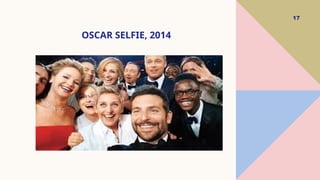
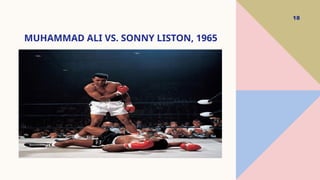
– refers to moving or still images
with the utilization of colors,
layouts, screen formats, symbols,
shot framing, distance, angle,
camera movement and subject
movement.
OSCAR SELFIE, 2014
17
MUHAMMAD ALI VS. SONNY LISTON, 1965
18
4. GESTURAL
19
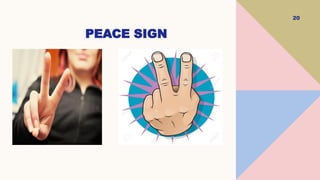
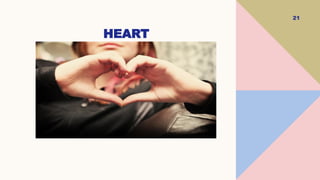
refers to the body movement,
hands and eyes, facial
expressions, demeanors, speed,
stillness, and angles.
PEACE SIGN
20
HEART
21
5. SPATIAL
22
refers to environmental and
architectural spaces, proximity,
direction, and over-all
organization of objects in a given
space.
23
24

CHAPTER 2 LM FOR Midterm Topic 2.3.pptx

  • 1.
  • 2.
    Multimodal Literacy (O’Halloran &Lim, 2011) - is about understanding the different ways of knowledge representations and meaning-making. 2
  • 3.
    It focuses onthe design of discourse by investigating the contributions of specific semiotic resources (e.g. language, gesture, images) co- deployed across various modalities (e.g. visual, aural, somatic). 3
  • 4.
    Also, this focuseson interaction and integration in constructing a coherent multimodal text (such as advertisements, posters, news report, websites, films). 4
  • 5.
    CHAPTER 3 COMMUNICATION AIDS ANDSTRATEGIES USING TOOLS IN TECHNOLOGY
  • 6.
    TOOLS OF TECHNOLOGY FORCOMMUNICATION Creating multimodal texts means the production of spoken, written, or text in print or digital forms. It is the business of making meanings with the use of technology. 6
  • 7.
  • 8.
    PAPER A multimodal textcan indeed exist in paper form, as long as it combines different modes of communication beyond just plain written text. Examples of these are books, comics, posters, and the like meant to be read and understood while holding or looking at them
  • 9.
    DIGITAL A digital multimodaltext combines written text, visuals, sounds, interactive elements, and sometimes video or animation to create an engaging and layered experience for users. Examples are such as slide presentations, blogs or vlogs, web pages, short films, videos, media campaigns, or anything that capitalizes on digital technology.
  • 10.
    LIVE multimodal text canalso be live. In a live setting, multiple modes are combined in real-time to convey information, emotions, or narratives. This can include elements such as spoken words, visuals, movement, sound, and even interaction with an audience. Live multimodal texts are often seen in performances, speeches, and presentations, where the delivery relies on more than just spoken language.
  • 11.
    TRANSMEDIA A multimodal textcan be transmedia where messages are conveyed through a combination of multimedia platforms. A media campaign for example can be performed live on stage, uploaded to social media, broadcasted live over the radio, and printed on the school paper as well.
  • 12.
    To successfully createa multimodal text, you are required to consider a few things – your purpose, message, reader, viewer and listener. Purpose means what you want to achieve with your text such as to inform, to inspire, or to elicit action. Your message is contained in the actual text you compose. Readers may mean fellow students, parents, teachers or whoever you think will appreciate your message. If your work is in a form of a video or live presentation, then you will have to think of who to appeal to for your viewer/s. 12
  • 13.
  • 14.
    1. WRITTEN/LINGUISTIC 14 refers tospoken and written language through vocabulary, structure and grammar. Examples: THE SECRET OF MAKING PEOPLE LIKE YOU A LIITLE MISTAKE THAT COST A FARMER $3,000 A YEAR
  • 15.
    2. AUDIO 15 – refersto music, sound effects, noises or silences, and the elements of volume, pitch and rhythm Examples: Sleep Bank – Wolftooth Upscotch – Jean-Thomas Cloutier Nothing Stopping Us Now – Dan Phillipson
  • 16.
    3. VISUAL 16 – refersto moving or still images with the utilization of colors, layouts, screen formats, symbols, shot framing, distance, angle, camera movement and subject movement.
  • 17.
  • 18.
    MUHAMMAD ALI VS.SONNY LISTON, 1965 18
  • 19.
    4. GESTURAL 19 refers tothe body movement, hands and eyes, facial expressions, demeanors, speed, stillness, and angles.
  • 20.
  • 21.
  • 22.
    5. SPATIAL 22 refers toenvironmental and architectural spaces, proximity, direction, and over-all organization of objects in a given space.
  • 23.
  • 24.