COMPOSING
TEXTS WHICH
INCLUDE
MULTIMODAL
ELEMENTS
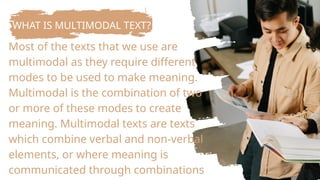
Most of the texts that we use are
multimodal as they require different
modes to be used to make meaning.
Multimodal is the combination of two
or more of these modes to create
meaning. Multimodal texts are texts
which combine verbal and non-verbal
elements, or where meaning is
communicated through combinations
WHAT IS MULTIMODAL TEXT?
WHAT IS A MODE?
It is anything that communicates
meaning. Modes include written
language, spoken language, and
patterns of meaning that are visual (still
and moving image), audio, gestural,
tactile and spatial (The New London
Group, 2000; Cope and Kalantzis, 2009).
Multimodal text can be print, physical or
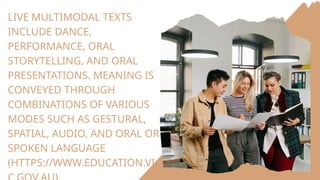
LIVE MULTIMODAL TEXTS
INCLUDE DANCE,
PERFORMANCE, ORAL
STORYTELLING, AND ORAL
PRESENTATIONS. MEANING IS
CONVEYED THROUGH
COMBINATIONS OF VARIOUS
MODES SUCH AS GESTURAL,
SPATIAL, AUDIO, AND ORAL OR
SPOKEN LANGUAGE
(HTTPS://WWW.EDUCATION.VI
DIGITAL MULTIMODAL TEXTS, SUCH AS
FILM, ANIMATION, SLIDE SHOWS, E-
POSTERS, DIGITAL STORIES, INTERACTIVE
STORIES, AND WEB PAGES, CONVEY
MEANING THROUGH COMBINATIONS OF
WRITTEN AND SPOKEN LANGUAGE,
VISUAL (STILL AND MOVING IMAGE),
AUDIO, GESTURAL AND SPATIAL MODES.
THEY CONSIDERED BY SOME AS MORE
COMPLEX DIGITAL MULTIMODAL TEXTS
PRODUCTIONS. CREATING DIGITAL
MULTIMODAL TEXTS INVOLVES USE OF
COMMUNICATION TECHNOLOGIES,
HOWEVER, MULTIMODAL TEXTS CAN
ALSO BE PAPER BASED, OR LIVE
PERFORMANCES.
THE NSW SYLLABUS FOR THE
AUSTRALIAN CURRICULUM
DEFINES MODES, MULTIMODAL
AND LANGUAGE MODES AS
“Comprising more than one mode.
A multimodal text uses a
combination of two or more
communication modes, for
example print, image and spoken
text as in film or computer
presentations.”
IT ALSO MENTIONS THAT “LANGUAGE MODES LISTENING, SPEAKING,
READING, WRITING, VIEWING AND REPRESENTING ARE OFTEN
INTEGRATED AND INTERDEPENDENT ACTIVITIES USED IN RESPONDING
TO AND COMPOSING TEXTS IN ORDER TO SHAPE MEANING” AND THAT
“ANY COMBINATION OF THE MODES MAY BE INVOLVED IN RESPONDING
TO OR COMPOSING PRINT, SOUND, VISUAL OR MULTIMEDIA TEXT.”
MULTIMODALITY
IN COMPOSITION
In the composition field, multimodal
elements are commonly defined in
terms of the five modes of
communication: linguistic, visual,
gestural, spatial, audio. These
terms are often paired with the
language of design to create a more
thorough conversation about the
different modes, especially when
referencing compositions that
combine words and images, such as
THE FIVE MODELS
(Multimodal Elements or Semiotic
Systems)
A text maybe defined as multimodal
when it combines two or more
semiotic systems.
1. Linguistic – word choice, vocabulary,
structure, grammar of oral/written
language; delivery of spoken or
written text (tone); organization into
sentences, phrases, paragraphs, etc.;
coherence of individual words and
ideas.
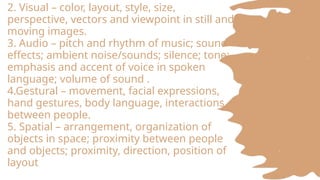
2. Visual – color, layout, style, size,
perspective, vectors and viewpoint in still and
moving images.
3. Audio – pitch and rhythm of music; sound
effects; ambient noise/sounds; silence; tone;
emphasis and accent of voice in spoken
language; volume of sound .
4.Gestural – movement, facial expressions,
hand gestures, body language, interactions
between people.
5. Spatial – arrangement, organization of
objects in space; proximity between people
and objects; proximity, direction, position of
layout
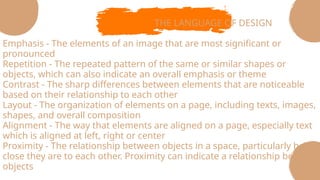
THE LANGUAGE OF DESIGN
Emphasis - The elements of an image that are most significant or
pronounced
Repetition - The repeated pattern of the same or similar shapes or
objects, which can also indicate an overall emphasis or theme
Contrast - The sharp differences between elements that are noticeable
based on their relationship to each other
Layout - The organization of elements on a page, including texts, images,
shapes, and overall composition
Alignment - The way that elements are aligned on a page, especially text
which is aligned at left, right or center
Proximity - The relationship between objects in a space, particularly how
close they are to each other. Proximity can indicate a relationship between
objects
THANK YOU
FOR
LISTENING

Composing Texts Which Include Multimodal Elements.pptx

  • 1.
  • 2.
    Most of thetexts that we use are multimodal as they require different modes to be used to make meaning. Multimodal is the combination of two or more of these modes to create meaning. Multimodal texts are texts which combine verbal and non-verbal elements, or where meaning is communicated through combinations WHAT IS MULTIMODAL TEXT?
  • 3.
    WHAT IS AMODE? It is anything that communicates meaning. Modes include written language, spoken language, and patterns of meaning that are visual (still and moving image), audio, gestural, tactile and spatial (The New London Group, 2000; Cope and Kalantzis, 2009). Multimodal text can be print, physical or
  • 4.
    LIVE MULTIMODAL TEXTS INCLUDEDANCE, PERFORMANCE, ORAL STORYTELLING, AND ORAL PRESENTATIONS. MEANING IS CONVEYED THROUGH COMBINATIONS OF VARIOUS MODES SUCH AS GESTURAL, SPATIAL, AUDIO, AND ORAL OR SPOKEN LANGUAGE (HTTPS://WWW.EDUCATION.VI
  • 5.
    DIGITAL MULTIMODAL TEXTS,SUCH AS FILM, ANIMATION, SLIDE SHOWS, E- POSTERS, DIGITAL STORIES, INTERACTIVE STORIES, AND WEB PAGES, CONVEY MEANING THROUGH COMBINATIONS OF WRITTEN AND SPOKEN LANGUAGE, VISUAL (STILL AND MOVING IMAGE), AUDIO, GESTURAL AND SPATIAL MODES. THEY CONSIDERED BY SOME AS MORE COMPLEX DIGITAL MULTIMODAL TEXTS PRODUCTIONS. CREATING DIGITAL MULTIMODAL TEXTS INVOLVES USE OF COMMUNICATION TECHNOLOGIES, HOWEVER, MULTIMODAL TEXTS CAN ALSO BE PAPER BASED, OR LIVE PERFORMANCES.
  • 6.
    THE NSW SYLLABUSFOR THE AUSTRALIAN CURRICULUM DEFINES MODES, MULTIMODAL AND LANGUAGE MODES AS “Comprising more than one mode. A multimodal text uses a combination of two or more communication modes, for example print, image and spoken text as in film or computer presentations.”
  • 7.
    IT ALSO MENTIONSTHAT “LANGUAGE MODES LISTENING, SPEAKING, READING, WRITING, VIEWING AND REPRESENTING ARE OFTEN INTEGRATED AND INTERDEPENDENT ACTIVITIES USED IN RESPONDING TO AND COMPOSING TEXTS IN ORDER TO SHAPE MEANING” AND THAT “ANY COMBINATION OF THE MODES MAY BE INVOLVED IN RESPONDING TO OR COMPOSING PRINT, SOUND, VISUAL OR MULTIMEDIA TEXT.”
  • 8.
    MULTIMODALITY IN COMPOSITION In thecomposition field, multimodal elements are commonly defined in terms of the five modes of communication: linguistic, visual, gestural, spatial, audio. These terms are often paired with the language of design to create a more thorough conversation about the different modes, especially when referencing compositions that combine words and images, such as
  • 9.
    THE FIVE MODELS (MultimodalElements or Semiotic Systems) A text maybe defined as multimodal when it combines two or more semiotic systems. 1. Linguistic – word choice, vocabulary, structure, grammar of oral/written language; delivery of spoken or written text (tone); organization into sentences, phrases, paragraphs, etc.; coherence of individual words and ideas.
  • 10.
    2. Visual –color, layout, style, size, perspective, vectors and viewpoint in still and moving images. 3. Audio – pitch and rhythm of music; sound effects; ambient noise/sounds; silence; tone; emphasis and accent of voice in spoken language; volume of sound . 4.Gestural – movement, facial expressions, hand gestures, body language, interactions between people. 5. Spatial – arrangement, organization of objects in space; proximity between people and objects; proximity, direction, position of layout
  • 11.
    THE LANGUAGE OFDESIGN Emphasis - The elements of an image that are most significant or pronounced Repetition - The repeated pattern of the same or similar shapes or objects, which can also indicate an overall emphasis or theme Contrast - The sharp differences between elements that are noticeable based on their relationship to each other Layout - The organization of elements on a page, including texts, images, shapes, and overall composition Alignment - The way that elements are aligned on a page, especially text which is aligned at left, right or center Proximity - The relationship between objects in a space, particularly how close they are to each other. Proximity can indicate a relationship between objects
  • 12.