Food quality control
Chapter One
Lecture 1
Learning objectives.
After Completing This Chapter The Learner Will Be Able To:
1.Explain The Importance Of Various Issues Related To Food Safety And
Quality
2. Understand How Food-borne Illnesses Occur
3. Know About National And International Food Standards And Their Role In
Ensuring Food Quality And Safety
4. Understand The Importance Of Food Safety Management Systems
Introduction
Food is a major determinant of health, nutritional status and
productivity of the population. It is, therefore, essential that the food
we consume is wholesome and safe. Unsafe food can lead to a large
number of food- borne diseases. You may have seen reports in the
newspapers about health problems caused by contaminated or
adulterated foods. Globally, food-borne illness is a major problem of
public health concern.
Significance
• Food safety and quality are important at the home level, but are critical in large
scale food production and processing, and also where food is freshly prepared
and served. In the past, many foods were processed at home.
• Advancement in technology and processing, higher per capita incomes
and better purchasing power as well as increased consumer demand have
led to a variety of processed foods, food for health / functional foods being
manufactured. Safety of such foods needs to be assessed.
Conti…
• The quality of food stuff, raw as well as processed is of public health
concern and must be addressed.
• A number of factors are responsible for this:
1. with fast changing lifestyles and eating habits, more people are eating
outside their homes. In commercial settings, foods are prepared in
bulk handled by many persons, thus there are more chances of food
getting contaminated.
2. There are many processed and packaged foods. Safety of these foods
is important.
3. Spices and condiments, oilseeds were processed at home in former
times and purity of these were not a concern. In today’s world, pre-
packaged individual spices, condiments, spice powders and mixes
are in demand, especially in cities and metros. Quality of even raw
food stuff besides processed foods is of public health concern and
must be addressed.
Conti…
4. Logistics governing transport of bulk food is complex and there is a long
gap between processing and consumption. Thus risk assessment and safety
management during mass production and mass distribution is critical.
5. Microbial adaptations, antibiotic resistance, altered human
susceptibility and international traveling have all contributed to
increasing incidence of food-borne microbial diseases.
Conti…
6. Nearly half of all known food-borne pathogens have been discovered
during the past 25-30 years. There are still many food borne illnesses of
unknown etiology. This is an issue of global public health concern and
there is a need to detect, identify and recognize emerging pathogens
and establish active surveillance networks, nationally and
internationally.
Conti…
7. Pollution in atmosphere, soil and water, including use of pesticides in
agriculture, bring their share of contaminants. Also use of additives
such as preservatives, colourants, flavouring agents and other
substances such as stabilisers makes the analysis of food for various
components — both nutrients and contaminants—imperative.
Conti…
Basic Concepts
• Food safety means assurance that food is acceptable for human
consumption according to its intended use. An understanding of food
safety is improved by defining two other concepts — toxicity and hazard.
• Toxicity is the capacity of a substance to produce harm or injury of any
kind under any conditions. Hazard is the relative probability that harm
or injury will result when substance is not used in a prescribed manner
and quantity. Hazards can be physical, chemical and biological causing
harmful / adverse effects on the health of consumers.
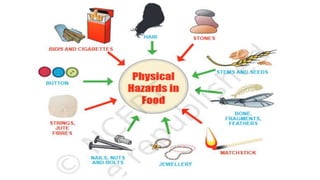
• Physical hazard is any physical material not normally found in food,
which causes illness or injury and includes wood, stones, parts of
pests, hair etc. (Fig. 1.1)
Conti…
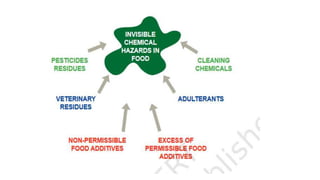
• Chemical hazards are chemicals or deleterious substances which may
be intentionally or un-intentionally added to foods. This category of
hazards includes pesticides, chemical residues, toxic metals,
polychlorinated biphenyls, preservatives, food colours and other
additives (Fig. 1.2).
Conti…
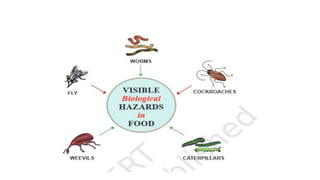
• Biological hazards are living organisms and include microbiological
organisms (Fig. 1.3 and 1.4). Those micro-organisms which are
associated with food and cause diseases are termed food-borne
pathogens. There are two types of food-borne diseases from
microbial pathogens—infections and poisoning.
Conti…
• Food infection /Food Poisoning results from ingestion of live
pathogenic organisms which multiply in the body and cause disease.
Salmonella is classic example. This organism exists in the intestinal
tract of animals. Raw milk and eggs are also sources.
• Heat destroys Salmonella, however, inadequate cooking allows some
organisms to survive. Often Salmonella is spread through cross-
contamination.
Conti…
• Food intoxication: Some bacteria produce harmful toxins which are
present in food even if pathogen has been killed. Organisms produce
toxins when the food has not been hot enough or cold enough. Toxins
in food cannot be detected by smell, appearance or taste.
• One example of such an organism is Staphylococcus aureus. Such
organisms exist in air, dust, water.
Conti…
• Among the various hazards, biological hazards are an important cause
of food-borne illnesses. In spite of all the efforts in the area of food
safety, microbial food-borne pathogens are still a serious concern and
new pathogens continue to emerge.
Conti…
• Factors that are important in the emergence of pathogens include human
host, animal hosts and their interactions with humans, the pathogen itself,
and the environment including how food is produced, processed, handled
and stored. For example, changes in host susceptibility due to malnutrition,
age and other conditions can allow for the emergence of new infections in
vulnerable populations. Genetic exchange or mutations in the organisms
can create new strains with the potential to cause disease.
Conti…
• Exposure to new pathogens through changes in eating habits, climate,
mass production, food processing and increased globalisation of the
food supply can allow pathogens to emerge in new populations or
new geographic areas. Examples are Norovirus, Rotavirus, hepatitis E
contributing to about 70 per cent of cases. New pathogens will
continue to evolve and there is a need to develop methods to isolate
them, control them and detect their presence in foods.
Conti…
• Food Quality: The term food quality refers to attributes that influence
a product’s value to consumers. This includes both negative attributes
such as spoilage, contamination, adulteration, food safety hazards as
well as positive attributes such as colour, flavour, texture. It is
therefore a holistic concept integrating factors such as nutritional
traits, sensorial properties (colour, texture, shape, appearance, taste,
flavour, odour), social considerations, safety.
Conti…
• Safety is a preliminary attribute and precursor of quality. In order to
ensure that foods are safe and of good quality, across the world
various governments and international bodies have laid down food
standards that manufacturers/suppliers are expected to adhere to.
Conti…
• Thus, all food service providers (those involved at all stages of pre-preparation and
preparation/processing, packaging and service) should adhere to good manufacturing practices
and ensure food safety.
• Salient points to be borne in mind are:
1. Quality of raw materials and water
2. Cleanliness — of the premises, personnel, equipment, food preparation and storage and
serving areas
3. Storage of food at appropriate temperature
4. Food hygiene
5. Good service practices.
Conti…

Chapter 1-Lecture 1.pptx

  • 1.
  • 2.
    Learning objectives. After CompletingThis Chapter The Learner Will Be Able To: 1.Explain The Importance Of Various Issues Related To Food Safety And Quality 2. Understand How Food-borne Illnesses Occur 3. Know About National And International Food Standards And Their Role In Ensuring Food Quality And Safety 4. Understand The Importance Of Food Safety Management Systems
  • 3.
    Introduction Food is amajor determinant of health, nutritional status and productivity of the population. It is, therefore, essential that the food we consume is wholesome and safe. Unsafe food can lead to a large number of food- borne diseases. You may have seen reports in the newspapers about health problems caused by contaminated or adulterated foods. Globally, food-borne illness is a major problem of public health concern.
  • 4.
    Significance • Food safetyand quality are important at the home level, but are critical in large scale food production and processing, and also where food is freshly prepared and served. In the past, many foods were processed at home. • Advancement in technology and processing, higher per capita incomes and better purchasing power as well as increased consumer demand have led to a variety of processed foods, food for health / functional foods being manufactured. Safety of such foods needs to be assessed.
  • 5.
    Conti… • The qualityof food stuff, raw as well as processed is of public health concern and must be addressed. • A number of factors are responsible for this: 1. with fast changing lifestyles and eating habits, more people are eating outside their homes. In commercial settings, foods are prepared in bulk handled by many persons, thus there are more chances of food getting contaminated.
  • 6.
    2. There aremany processed and packaged foods. Safety of these foods is important. 3. Spices and condiments, oilseeds were processed at home in former times and purity of these were not a concern. In today’s world, pre- packaged individual spices, condiments, spice powders and mixes are in demand, especially in cities and metros. Quality of even raw food stuff besides processed foods is of public health concern and must be addressed. Conti…
  • 7.
    4. Logistics governingtransport of bulk food is complex and there is a long gap between processing and consumption. Thus risk assessment and safety management during mass production and mass distribution is critical. 5. Microbial adaptations, antibiotic resistance, altered human susceptibility and international traveling have all contributed to increasing incidence of food-borne microbial diseases. Conti…
  • 8.
    6. Nearly halfof all known food-borne pathogens have been discovered during the past 25-30 years. There are still many food borne illnesses of unknown etiology. This is an issue of global public health concern and there is a need to detect, identify and recognize emerging pathogens and establish active surveillance networks, nationally and internationally. Conti…
  • 9.
    7. Pollution inatmosphere, soil and water, including use of pesticides in agriculture, bring their share of contaminants. Also use of additives such as preservatives, colourants, flavouring agents and other substances such as stabilisers makes the analysis of food for various components — both nutrients and contaminants—imperative. Conti…
  • 10.
    Basic Concepts • Foodsafety means assurance that food is acceptable for human consumption according to its intended use. An understanding of food safety is improved by defining two other concepts — toxicity and hazard. • Toxicity is the capacity of a substance to produce harm or injury of any kind under any conditions. Hazard is the relative probability that harm or injury will result when substance is not used in a prescribed manner and quantity. Hazards can be physical, chemical and biological causing harmful / adverse effects on the health of consumers.
  • 11.
    • Physical hazardis any physical material not normally found in food, which causes illness or injury and includes wood, stones, parts of pests, hair etc. (Fig. 1.1) Conti…
  • 13.
    • Chemical hazardsare chemicals or deleterious substances which may be intentionally or un-intentionally added to foods. This category of hazards includes pesticides, chemical residues, toxic metals, polychlorinated biphenyls, preservatives, food colours and other additives (Fig. 1.2). Conti…
  • 15.
    • Biological hazardsare living organisms and include microbiological organisms (Fig. 1.3 and 1.4). Those micro-organisms which are associated with food and cause diseases are termed food-borne pathogens. There are two types of food-borne diseases from microbial pathogens—infections and poisoning. Conti…
  • 17.
    • Food infection/Food Poisoning results from ingestion of live pathogenic organisms which multiply in the body and cause disease. Salmonella is classic example. This organism exists in the intestinal tract of animals. Raw milk and eggs are also sources. • Heat destroys Salmonella, however, inadequate cooking allows some organisms to survive. Often Salmonella is spread through cross- contamination. Conti…
  • 18.
    • Food intoxication:Some bacteria produce harmful toxins which are present in food even if pathogen has been killed. Organisms produce toxins when the food has not been hot enough or cold enough. Toxins in food cannot be detected by smell, appearance or taste. • One example of such an organism is Staphylococcus aureus. Such organisms exist in air, dust, water. Conti…
  • 20.
    • Among thevarious hazards, biological hazards are an important cause of food-borne illnesses. In spite of all the efforts in the area of food safety, microbial food-borne pathogens are still a serious concern and new pathogens continue to emerge. Conti…
  • 21.
    • Factors thatare important in the emergence of pathogens include human host, animal hosts and their interactions with humans, the pathogen itself, and the environment including how food is produced, processed, handled and stored. For example, changes in host susceptibility due to malnutrition, age and other conditions can allow for the emergence of new infections in vulnerable populations. Genetic exchange or mutations in the organisms can create new strains with the potential to cause disease. Conti…
  • 22.
    • Exposure tonew pathogens through changes in eating habits, climate, mass production, food processing and increased globalisation of the food supply can allow pathogens to emerge in new populations or new geographic areas. Examples are Norovirus, Rotavirus, hepatitis E contributing to about 70 per cent of cases. New pathogens will continue to evolve and there is a need to develop methods to isolate them, control them and detect their presence in foods. Conti…
  • 23.
    • Food Quality:The term food quality refers to attributes that influence a product’s value to consumers. This includes both negative attributes such as spoilage, contamination, adulteration, food safety hazards as well as positive attributes such as colour, flavour, texture. It is therefore a holistic concept integrating factors such as nutritional traits, sensorial properties (colour, texture, shape, appearance, taste, flavour, odour), social considerations, safety. Conti…
  • 24.
    • Safety isa preliminary attribute and precursor of quality. In order to ensure that foods are safe and of good quality, across the world various governments and international bodies have laid down food standards that manufacturers/suppliers are expected to adhere to. Conti…
  • 25.
    • Thus, allfood service providers (those involved at all stages of pre-preparation and preparation/processing, packaging and service) should adhere to good manufacturing practices and ensure food safety. • Salient points to be borne in mind are: 1. Quality of raw materials and water 2. Cleanliness — of the premises, personnel, equipment, food preparation and storage and serving areas 3. Storage of food at appropriate temperature 4. Food hygiene 5. Good service practices. Conti…