Food Safety
and
Sanitation
February 5, 2025
Discussant: Ivy H. Bual
Food safety and sanitation are
critical components of public
health, ensuring that food is
handled, prepared, and stored in
ways that minimize the risk of
foodborne illnesses. Poor food
safety practices can result in
contamination, leading to
widespread health issues. This
report highlights key concepts,
practices, and recommendations
related to food safety and
sanitation.
Importance of Food
Safety and
Sanitation
Protect consumers from foodborne illnesses caused
by bacteria, viruses, parasites, or chemical
contamination.
Food safety and sanitation aim to:
Maintain the nutritional value and quality of food
products.
Comply with legal and regulatory requirements for
food service and production.
Promote trust and satisfaction among consumers
regarding food products.
Common Food Hazards
1. Biological Hazards
A biological hazard is anything that can make you sick
through biological means. This includes things like:
- Bacteria: Tiny living things that can cause food
poisoning, infections, and other illnesses.
- Viruses: Even smaller than bacteria, viruses can cause
colds, flu, and more serious diseases.
- Parasites: Organisms that live in or on other living things
and can cause illness.
- Toxins: Poisonous substances produced by living things,
like bacteria or plants.
These hazards can be found in food, water, air, and even in
healthcare settings. It's important to be aware of them
and take steps to protect yourself, like washing your hands
and cooking food properly.
2. Chemical Hazards
Chemical hazards are substances that can harm
you if you come into contact with them. Think of
them as dangerous ingredients that can cause
problems for your body. They can be things like:
- Strong cleaners: These can burn your skin or
eyes.
- Pesticides: These can make you sick if you
breathe them in or touch them.
- Industrial chemicals: These can be very
harmful if you're exposed to them for a long time.
It's important to be careful around chemicals and
always follow the instructions on the label.
3. Physical Hazards
Physical hazards are foreign objects found in food that can
cause harm if consumed. They are one of the common food
hazards, along with biological and chemical hazards. Here
are some examples of physical hazards:
- Glass shards: From broken bottles or jars.
- Metal fragments: From machinery, cans, or jewelry.
- Plastic pieces: From packaging or equipment.
- Bones: In meat or fish.
- Stones: In fruits, vegetables, or grains.
- Wood splinters: From wooden utensils or cutting boards.
- Insects or insect parts: Found in flour, grains, or fruits.
These hazards can cause choking, injury to the mouth or
throat, or even internal damage if swa
Key Principles of Food
Safety
1. Proper Personal
Hygiene:
Food handlers should
wash hands regularly,
wear clean uniforms,
and avoid handling food
when ill.
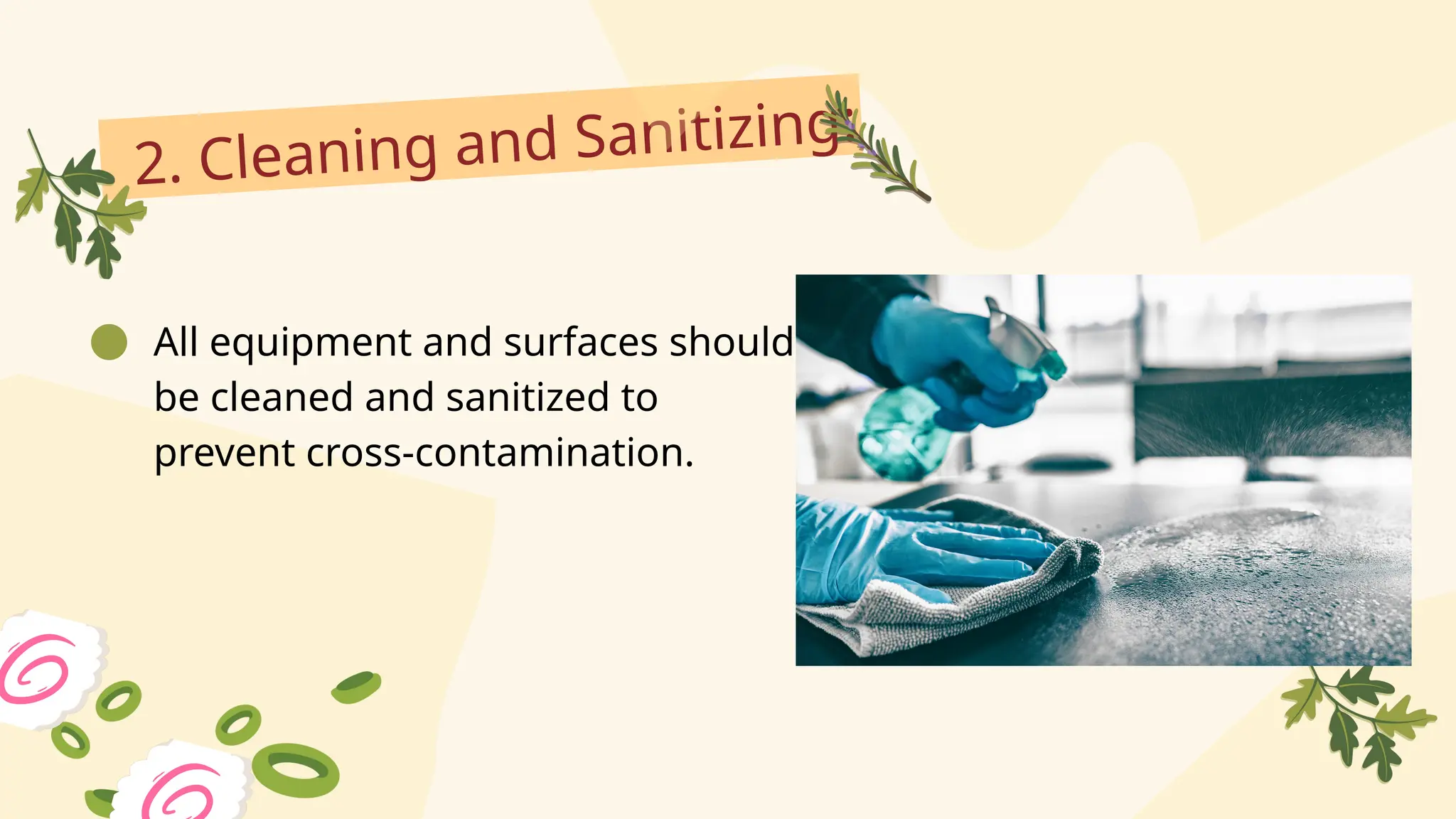
2. Cleaning and Sanitizing:
All equipment and surfaces should
be cleaned and sanitized to
prevent cross-contamination.
3. Temperature Control:
Keep hot foods at or above
135°F (57°C) and cold foods at
or below 41°F (5°C).
4. Avoiding Cross-Contamination:
Store raw and cooked foods
separately, and use separate
utensils and cutting boards for
different types of food.
5. Safe Food Storage:
Label and date all food
items, and follow the
First In, First Out (FIFO)
method to minimize
spoilage.
Sanitation
Practices
1.Proper
Cleaning
Procedures:
Use the correct cleaning
agents for different surfaces
and follow recommended
cleaning schedules.
2. Waste
Managemen
t:
Dispose of food waste
promptly and properly to
prevent pest infestations.
3. Pest
Control:
Implement measures to keep
pests away from food
preparation and storage areas.
Role of
Education in
Food Safety
Educating individuals on food
safety and sanitation practices is
essential for reducing the risk of
foodborne illnesses. This includes
training food handlers, creating
awareness among consumers,
and enforcing food safety
regulations in food
establishments.
Food safety and sanitation are vital in
ensuring public health and maintaining
consumer confidence in the food
industry. To achieve these goals:
1.Regularly train food handlers on safety
practices.
2.Conduct routine inspections of food
facilities.
3.Encourage consumers to practice safe
food handling at home.
By adhering to proper food
safety and sanitation
practices, individuals and
organizations can contribute
to a safer food supply chain,
ultimately protecting the
health of communities.
Thank You
Good Food For
Better Life

FOOD-SAFETY-AND-SANITATION!!!!!!!!!.pptx

  • 1.
    Food Safety and Sanitation February 5,2025 Discussant: Ivy H. Bual
  • 2.
    Food safety andsanitation are critical components of public health, ensuring that food is handled, prepared, and stored in ways that minimize the risk of foodborne illnesses. Poor food safety practices can result in contamination, leading to widespread health issues. This report highlights key concepts, practices, and recommendations related to food safety and sanitation.
  • 3.
    Importance of Food Safetyand Sanitation Protect consumers from foodborne illnesses caused by bacteria, viruses, parasites, or chemical contamination. Food safety and sanitation aim to: Maintain the nutritional value and quality of food products. Comply with legal and regulatory requirements for food service and production. Promote trust and satisfaction among consumers regarding food products.
  • 4.
  • 5.
    1. Biological Hazards Abiological hazard is anything that can make you sick through biological means. This includes things like: - Bacteria: Tiny living things that can cause food poisoning, infections, and other illnesses. - Viruses: Even smaller than bacteria, viruses can cause colds, flu, and more serious diseases. - Parasites: Organisms that live in or on other living things and can cause illness. - Toxins: Poisonous substances produced by living things, like bacteria or plants. These hazards can be found in food, water, air, and even in healthcare settings. It's important to be aware of them and take steps to protect yourself, like washing your hands and cooking food properly.
  • 6.
    2. Chemical Hazards Chemicalhazards are substances that can harm you if you come into contact with them. Think of them as dangerous ingredients that can cause problems for your body. They can be things like: - Strong cleaners: These can burn your skin or eyes. - Pesticides: These can make you sick if you breathe them in or touch them. - Industrial chemicals: These can be very harmful if you're exposed to them for a long time. It's important to be careful around chemicals and always follow the instructions on the label.
  • 7.
    3. Physical Hazards Physicalhazards are foreign objects found in food that can cause harm if consumed. They are one of the common food hazards, along with biological and chemical hazards. Here are some examples of physical hazards: - Glass shards: From broken bottles or jars. - Metal fragments: From machinery, cans, or jewelry. - Plastic pieces: From packaging or equipment. - Bones: In meat or fish. - Stones: In fruits, vegetables, or grains. - Wood splinters: From wooden utensils or cutting boards. - Insects or insect parts: Found in flour, grains, or fruits. These hazards can cause choking, injury to the mouth or throat, or even internal damage if swa
  • 8.
    Key Principles ofFood Safety
  • 9.
    1. Proper Personal Hygiene: Foodhandlers should wash hands regularly, wear clean uniforms, and avoid handling food when ill.
  • 10.
    2. Cleaning andSanitizing: All equipment and surfaces should be cleaned and sanitized to prevent cross-contamination.
  • 11.
    3. Temperature Control: Keephot foods at or above 135°F (57°C) and cold foods at or below 41°F (5°C).
  • 12.
    4. Avoiding Cross-Contamination: Storeraw and cooked foods separately, and use separate utensils and cutting boards for different types of food.
  • 13.
    5. Safe FoodStorage: Label and date all food items, and follow the First In, First Out (FIFO) method to minimize spoilage.
  • 14.
  • 15.
    1.Proper Cleaning Procedures: Use the correctcleaning agents for different surfaces and follow recommended cleaning schedules.
  • 16.
    2. Waste Managemen t: Dispose offood waste promptly and properly to prevent pest infestations.
  • 17.
    3. Pest Control: Implement measuresto keep pests away from food preparation and storage areas.
  • 18.
    Role of Education in FoodSafety Educating individuals on food safety and sanitation practices is essential for reducing the risk of foodborne illnesses. This includes training food handlers, creating awareness among consumers, and enforcing food safety regulations in food establishments.
  • 19.
    Food safety andsanitation are vital in ensuring public health and maintaining consumer confidence in the food industry. To achieve these goals: 1.Regularly train food handlers on safety practices. 2.Conduct routine inspections of food facilities. 3.Encourage consumers to practice safe food handling at home.
  • 20.
    By adhering toproper food safety and sanitation practices, individuals and organizations can contribute to a safer food supply chain, ultimately protecting the health of communities.
  • 21.
    Thank You Good FoodFor Better Life