CHAPTER 16: MOUSSE MOUSSELINE AND QUENNELLE
The terms mousse and mousseline are often used inter-changeably and
confused with each other.
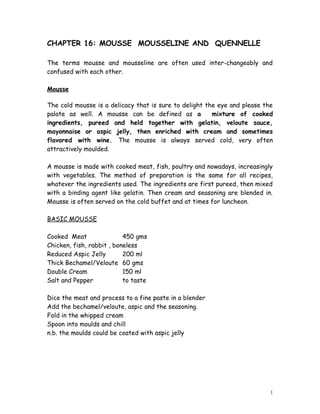
Mousse
The cold mousse is a delicacy that is sure to delight the eye and please the
palate as well. A mousse can be defined as a mixture of cooked
ingredients, pureed and held together with gelatin, veloute sauce,
mayonnaise or aspic jelly, then enriched with cream and sometimes
flavored with wine. The mousse is always served cold, very often
attractively moulded.
A mousse is made with cooked meat, fish, poultry and nowadays, increasingly
with vegetables. The method of preparation is the same for all recipes,
whatever the ingredients used. The ingredients are first pureed, then mixed
with a binding agent like gelatin. Then cream and seasoning are blended in.
Mousse is often served on the cold buffet and at times for luncheon.
BASIC MOUSSE
Cooked Meat 450 gms
Chicken, fish, rabbit , boneless
Reduced Aspic Jelly 200 ml
Thick Bechamel/Veloute 60 gms
Double Cream 150 ml
Salt and Pepper to taste
Dice the meat and process to a fine paste in a blender
Add the bechamel/veloute, aspic and the seasoning.
Fold in the whipped cream
Spoon into moulds and chill
n.b. the moulds could be coated with aspic jelly
1
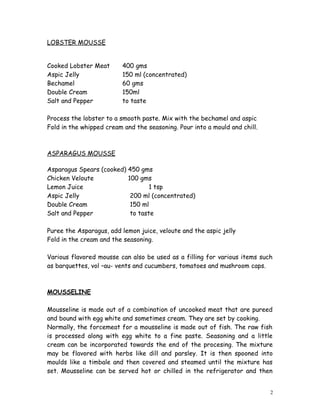
LOBSTER MOUSSE
Cooked Lobster Meat 400 gms
Aspic Jelly 150 ml (concentrated)
Bechamel 60 gms
Double Cream 150ml
Salt and Pepper to taste
Process the lobster to a smooth paste. Mix with the bechamel and aspic
Fold in the whipped cream and the seasoning. Pour into a mould and chill.
ASPARAGUS MOUSSE
Asparagus Spears (cooked) 450 gms
Chicken Veloute 100 gms
Lemon Juice 1 tsp
Aspic Jelly 200 ml (concentrated)
Double Cream 150 ml
Salt and Pepper to taste
Puree the Asparagus, add lemon juice, veloute and the aspic jelly
Fold in the cream and the seasoning.
Various flavored mousse can also be used as a filling for various items such
as barquettes, vol –au- vents and cucumbers, tomatoes and mushroom caps.
MOUSSELINE
Mousseline is made out of a combination of uncooked meat that are pureed
and bound with egg white and sometimes cream. They are set by cooking.
Normally, the forcemeat for a mousseline is made out of fish. The raw fish
is processed along with egg white to a fine paste. Seasoning and a little
cream can be incorporated towards the end of the procesing. The mixture
may be flavored with herbs like dill and parsley. It is then spooned into
moulds like a timbale and then covered and steamed until the mixture has
set. Mousseline can be served hot or chilled in the refrigerator and then
2
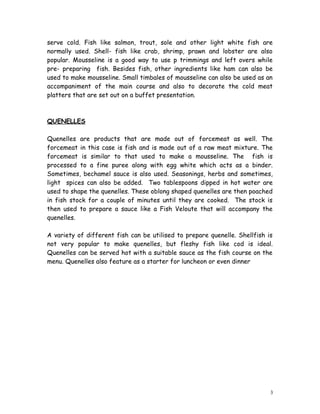
serve cold. Fish like salmon, trout, sole and other light white fish are
normally used. Shell- fish like crab, shrimp, prawn and lobster are also
popular. Mousseline is a good way to use p trimmings and left overs while
pre- preparing fish. Besides fish, other ingredients like ham can also be
used to make mousseline. Small timbales of mousseline can also be used as an
accompaniment of the main course and also to decorate the cold meat
platters that are set out on a buffet presentation.
QUENELLES
Quenelles are products that are made out of forcemeat as well. The
forcemeat in this case is fish and is made out of a raw meat mixture. The
forcemeat is similar to that used to make a mousseline. The fish is
processed to a fine puree along with egg white which acts as a binder.
Sometimes, bechamel sauce is also used. Seasonings, herbs and sometimes,
light spices can also be added. Two tablespoons dipped in hot water are
used to shape the quenelles. These oblong shaped quenelles are then poached
in fish stock for a couple of minutes until they are cooked. The stock is
then used to prepare a sauce like a Fish Veloute that will accompany the
quenelles.
A variety of different fish can be utilised to prepare quenelle. Shellfish is
not very popular to make quenelles, but fleshy fish like cod is ideal.
Quenelles can be served hot with a suitable sauce as the fish course on the
menu. Quenelles also feature as a starter for luncheon or even dinner
3
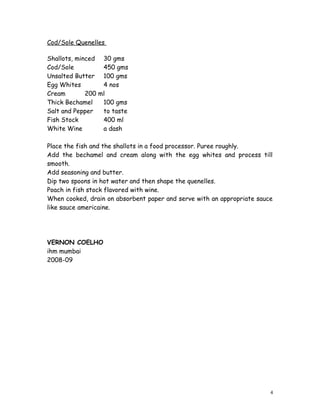
Cod/Sole Quenelles
Shallots, minced 30 gms
Cod/Sole 450 gms
Unsalted Butter 100 gms
Egg Whites 4 nos
Cream 200 ml
Thick Bechamel 100 gms
Salt and Pepper to taste
Fish Stock 400 ml
White Wine a dash
Place the fish and the shallots in a food processor. Puree roughly.
Add the bechamel and cream along with the egg whites and process till
smooth.
Add seasoning and butter.
Dip two spoons in hot water and then shape the quenelles.
Poach in fish stock flavored with wine.
When cooked, drain on absorbent paper and serve with an appropriate sauce
like sauce americaine.
VERNON COELHO
ihm mumbai
2008-09
4

Chapter 16 mousse and mousseline

  • 1.
    CHAPTER 16: MOUSSEMOUSSELINE AND QUENNELLE The terms mousse and mousseline are often used inter-changeably and confused with each other. Mousse The cold mousse is a delicacy that is sure to delight the eye and please the palate as well. A mousse can be defined as a mixture of cooked ingredients, pureed and held together with gelatin, veloute sauce, mayonnaise or aspic jelly, then enriched with cream and sometimes flavored with wine. The mousse is always served cold, very often attractively moulded. A mousse is made with cooked meat, fish, poultry and nowadays, increasingly with vegetables. The method of preparation is the same for all recipes, whatever the ingredients used. The ingredients are first pureed, then mixed with a binding agent like gelatin. Then cream and seasoning are blended in. Mousse is often served on the cold buffet and at times for luncheon. BASIC MOUSSE Cooked Meat 450 gms Chicken, fish, rabbit , boneless Reduced Aspic Jelly 200 ml Thick Bechamel/Veloute 60 gms Double Cream 150 ml Salt and Pepper to taste Dice the meat and process to a fine paste in a blender Add the bechamel/veloute, aspic and the seasoning. Fold in the whipped cream Spoon into moulds and chill n.b. the moulds could be coated with aspic jelly 1
  • 2.
    LOBSTER MOUSSE Cooked LobsterMeat 400 gms Aspic Jelly 150 ml (concentrated) Bechamel 60 gms Double Cream 150ml Salt and Pepper to taste Process the lobster to a smooth paste. Mix with the bechamel and aspic Fold in the whipped cream and the seasoning. Pour into a mould and chill. ASPARAGUS MOUSSE Asparagus Spears (cooked) 450 gms Chicken Veloute 100 gms Lemon Juice 1 tsp Aspic Jelly 200 ml (concentrated) Double Cream 150 ml Salt and Pepper to taste Puree the Asparagus, add lemon juice, veloute and the aspic jelly Fold in the cream and the seasoning. Various flavored mousse can also be used as a filling for various items such as barquettes, vol –au- vents and cucumbers, tomatoes and mushroom caps. MOUSSELINE Mousseline is made out of a combination of uncooked meat that are pureed and bound with egg white and sometimes cream. They are set by cooking. Normally, the forcemeat for a mousseline is made out of fish. The raw fish is processed along with egg white to a fine paste. Seasoning and a little cream can be incorporated towards the end of the procesing. The mixture may be flavored with herbs like dill and parsley. It is then spooned into moulds like a timbale and then covered and steamed until the mixture has set. Mousseline can be served hot or chilled in the refrigerator and then 2
  • 3.
    serve cold. Fishlike salmon, trout, sole and other light white fish are normally used. Shell- fish like crab, shrimp, prawn and lobster are also popular. Mousseline is a good way to use p trimmings and left overs while pre- preparing fish. Besides fish, other ingredients like ham can also be used to make mousseline. Small timbales of mousseline can also be used as an accompaniment of the main course and also to decorate the cold meat platters that are set out on a buffet presentation. QUENELLES Quenelles are products that are made out of forcemeat as well. The forcemeat in this case is fish and is made out of a raw meat mixture. The forcemeat is similar to that used to make a mousseline. The fish is processed to a fine puree along with egg white which acts as a binder. Sometimes, bechamel sauce is also used. Seasonings, herbs and sometimes, light spices can also be added. Two tablespoons dipped in hot water are used to shape the quenelles. These oblong shaped quenelles are then poached in fish stock for a couple of minutes until they are cooked. The stock is then used to prepare a sauce like a Fish Veloute that will accompany the quenelles. A variety of different fish can be utilised to prepare quenelle. Shellfish is not very popular to make quenelles, but fleshy fish like cod is ideal. Quenelles can be served hot with a suitable sauce as the fish course on the menu. Quenelles also feature as a starter for luncheon or even dinner 3
  • 4.
    Cod/Sole Quenelles Shallots, minced30 gms Cod/Sole 450 gms Unsalted Butter 100 gms Egg Whites 4 nos Cream 200 ml Thick Bechamel 100 gms Salt and Pepper to taste Fish Stock 400 ml White Wine a dash Place the fish and the shallots in a food processor. Puree roughly. Add the bechamel and cream along with the egg whites and process till smooth. Add seasoning and butter. Dip two spoons in hot water and then shape the quenelles. Poach in fish stock flavored with wine. When cooked, drain on absorbent paper and serve with an appropriate sauce like sauce americaine. VERNON COELHO ihm mumbai 2008-09 4