Basic Preparations, Types and
Methods of Stock, Sauce, Soup,
Marinades, and Garnish
STOCK
A thin liquid made from boiling the bones, trimmings, and
scraps of meat, chicken, or fish to extract the flavor and
nutrients.
✓ The good rich stock is the foundation of all soups.
KINDS OF STOCKS
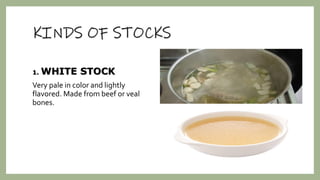
1. WHITE STOCK
Very pale in color and lightly
flavored. Made from beef or veal
bones.
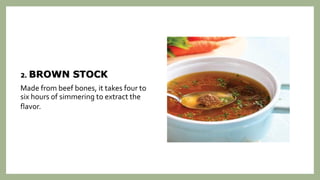
2. BROWN STOCK
Made from beef bones, it takes four to
six hours of simmering to extract the
flavor.
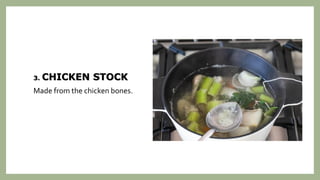
3. CHICKEN STOCK
Made from the chicken bones.
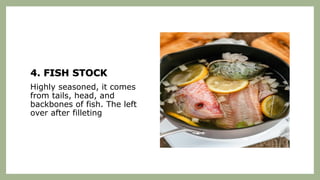
4. FISH STOCK
Highly seasoned, it comes
from tails, head, and
backbones of fish. The left
over after filleting
Cooking Stocks
The principles in cooking stocks are the same for all types:
1. Use cold water for making stock
2. Cook the stock slowly. Simmer, do not boil to avoid
blending of fats and impurities to the liquid, making it
cloudy.
3. Skim the stock carefully and remove the scum.
4. Cool the stock as quickly as possible.
5. Refrigerate the stock immediately.
SAUCE
Liquid seasonings that enhance the flavor of food.
It provide a variety of flavors and textures, and
give any dish a well-blended taste and delicious
aroma.
It adds:
1. Moistness 4. Appearance (color and shine)
2. Flavor 5. Appeal
3. Richness
TYPES OF SAUCES
A. Hot Sauces
Made just before they are to be used
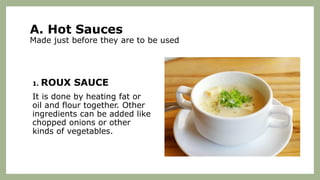
1. ROUX SAUCE
It is done by heating fat or
oil and flour together. Other
ingredients can be added like
chopped onions or other
kinds of vegetables.
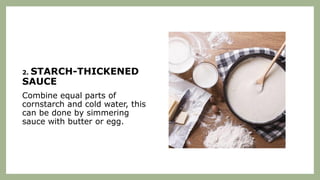
2. STARCH-THICKENED
SAUCE
Combine equal parts of
cornstarch and cold water, this
can be done by simmering
sauce with butter or egg.
B. Cold Sauces
Cooked ahead of time, then cooled
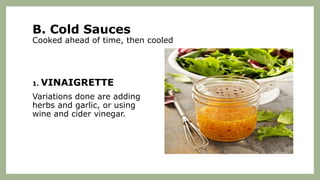
1. VINAIGRETTE
Variations done are adding
herbs and garlic, or using
wine and cider vinegar.
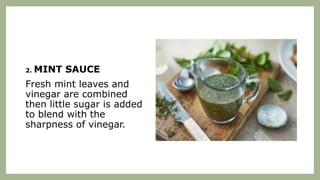
2. MINT SAUCE
Fresh mint leaves and
vinegar are combined
then little sugar is added
to blend with the
sharpness of vinegar.
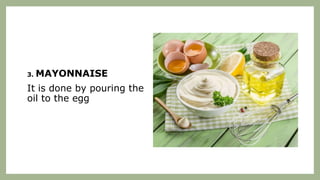
3. MAYONNAISE
It is done by pouring the
oil to the egg
Cooking Sauce
Here are the preparation techniques for a good quality sauce:
1. Grating-to get refine shreds of food like cheese for use
in the sauce.
2. Chopping-the ingredients chopped are mainly to give
flavor and taste or a part of the final sauce.
3. Whisking-vigorously is very effective in beating fluids.
The oil and egg yolks in mayonnaise are
whisked to blend and stabilize the mixture.
4. Mixing-combining ingredients together. When a recipe
calls for mixing , it means “stir with a spoon”
until all ingredients are fully distributed.
5. Blending-mixing two or more ingredients thoroughly or
by using a food processor.
6. Straining-pouring the sauce through a sieve or strainer.
The fine mesh of the strainer traps the solids,
allowing the liquid to pass through.
7. Simmering-considered “gentle cooking”
Soup
The foundation of all soup is a good stocks, the liquid in
which meat, chicken, and fish bones or vegetable tops and
cuttings are simmered to extract their flavors and essence.
Soups are classified into two, Clear Soups and Thickened
Soups.
TYPES OF SOUPS
A. Clear Soups
Thin and full of flavor, this kind of soup does not contain
solid ingredients like vegetables or meat.
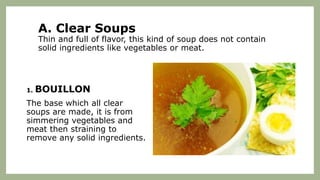
1. BOUILLON
The base which all clear
soups are made, it is from
simmering vegetables and
meat then straining to
remove any solid ingredients.
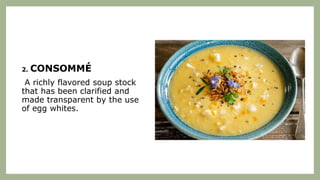
2. CONSOMMÉ
A richly flavored soup stock
that has been clarified and
made transparent by the use
of egg whites.
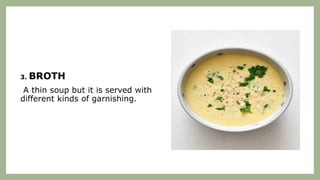
3. BROTH
A thin soup but it is served with
different kinds of garnishing.
B. Thickened Soups
That are thickened to provide a heavier consistency, made by
either adding cornstarch, pureed vegetables, noodles, or grains.
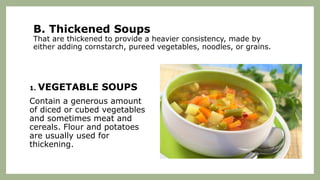
1. VEGETABLE SOUPS
Contain a generous amount
of diced or cubed vegetables
and sometimes meat and
cereals. Flour and potatoes
are usually used for
thickening.
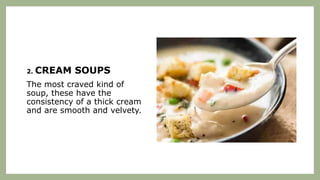
2. CREAM SOUPS
The most craved kind of
soup, these have the
consistency of a thick cream
and are smooth and velvety.
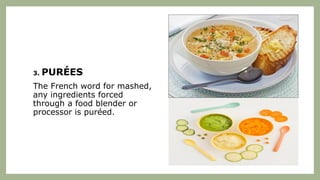
3. PURÉES
The French word for mashed,
any ingredients forced
through a food blender or
processor is puréed.
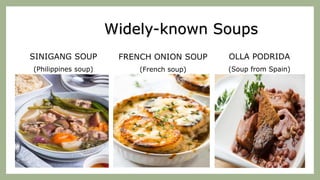
Widely-known Soups
SINIGANG SOUP
(Philippines soup)
FRENCH ONION SOUP
(French soup)
OLLA PODRIDA
(Soup from Spain)
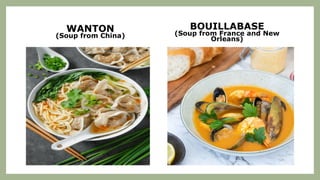
WANTON
(Soup from China)
BOUILLABASE
(Soup from France and New
Orleans)
Handling Soups
1. If hot soup will be served, serve it in a cup or bowl and if
cold soup, serve it in chilled bowl.
2. Cook in small batches as well as with other food.
3. Heat small batches frequently to replenish the steam
table with fresh soup.
4. Clear soups can be kept for longer periods if the
vegetables are cooked separately.
5. If toppings will be added to the soup, do not overload
the soup.
6. Soups are traditionally served with crackers or bread
toast or stick.
MARINADE
Marinating is done by soaking food, usually meat in a
flavorful liquid.
What is the purposes of marinade?
• To add flavor; and
• Tenderize meat, chicken and fish
The 3 Essential Components of Typical Marinade
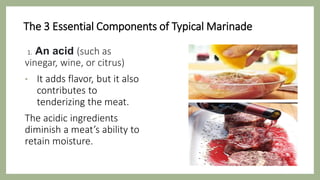
1. An acid (such as
vinegar, wine, or citrus)
• It adds flavor, but it also
contributes to
tenderizing the meat.
The acidic ingredients
diminish a meat’s ability to
retain moisture.
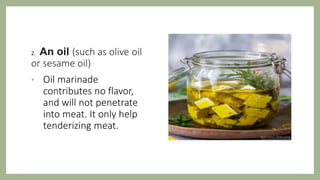
2. An oil (such as olive oil
or sesame oil)
• Oil marinade
contributes no flavor,
and will not penetrate
into meat. It only help
tenderizing meat.
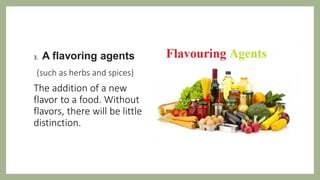
3. A flavoring agents
(such as herbs and spices)
The addition of a new
flavor to a food. Without
flavors, there will be little
distinction.
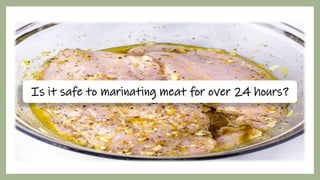
Is it safe to marinating meat for over 24 hours?
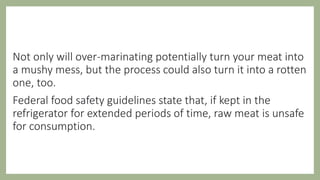
Not only will over-marinating potentially turn your meat into
a mushy mess, but the process could also turn it into a rotten
one, too.
Federal food safety guidelines state that, if kept in the
refrigerator for extended periods of time, raw meat is unsafe
for consumption.
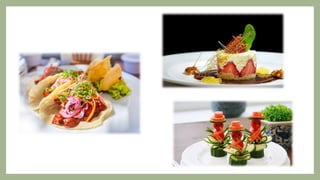
GARNISH
Consists of shaping and arranging food artistically on a
plate or platter. Garnishes are meant to compliment, give
color, and additional nutrients to a dish.
The purpose of garnishing food is to make it look pleasing
and tempting.
Garnishing Rules
1. It should be suitable to the flavor, size, and
character of the dish served.
2. It should be natural, fresh looking, and clean.
3. It should be simple and not overdone.
4. Garnishes must be edible
5. It should be neatly arranged to enhance the
presentation of the food.
6. The color should harmonize with the food being
garnished.
7. It should be interesting but not expensive.
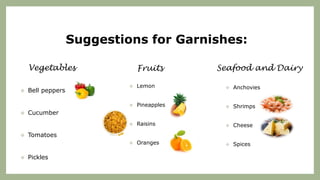
Suggestions for Garnishes:
Vegetables
❖ Bell peppers
❖ Cucumber
❖ Tomatoes
❖ Pickles
Fruits
❖ Lemon
❖ Pineapples
❖ Raisins
❖ Oranges
Seafood and Dairy
❖ Anchovies
❖ Shrimps
❖ Cheese
❖ Spices
Evaluation
1. What is the base of all soup?
2-3. Give at least two (2) important things to be consider
in Garnishing.
4-5. What are the purposes of Marinade?
5-10. Aside from the given explanations, why is it not advisable
to marinating meat for over 24 hours or more?

Basic-Preparations-Final-Copy.pdf

  • 1.
    Basic Preparations, Typesand Methods of Stock, Sauce, Soup, Marinades, and Garnish
  • 2.
    STOCK A thin liquidmade from boiling the bones, trimmings, and scraps of meat, chicken, or fish to extract the flavor and nutrients. ✓ The good rich stock is the foundation of all soups.
  • 3.
    KINDS OF STOCKS 1.WHITE STOCK Very pale in color and lightly flavored. Made from beef or veal bones.
  • 4.
    2. BROWN STOCK Madefrom beef bones, it takes four to six hours of simmering to extract the flavor.
  • 5.
    3. CHICKEN STOCK Madefrom the chicken bones.
  • 6.
    4. FISH STOCK Highlyseasoned, it comes from tails, head, and backbones of fish. The left over after filleting
  • 7.
    Cooking Stocks The principlesin cooking stocks are the same for all types: 1. Use cold water for making stock 2. Cook the stock slowly. Simmer, do not boil to avoid blending of fats and impurities to the liquid, making it cloudy. 3. Skim the stock carefully and remove the scum. 4. Cool the stock as quickly as possible. 5. Refrigerate the stock immediately.
  • 8.
    SAUCE Liquid seasonings thatenhance the flavor of food. It provide a variety of flavors and textures, and give any dish a well-blended taste and delicious aroma. It adds: 1. Moistness 4. Appearance (color and shine) 2. Flavor 5. Appeal 3. Richness
  • 9.
  • 10.
    A. Hot Sauces Madejust before they are to be used 1. ROUX SAUCE It is done by heating fat or oil and flour together. Other ingredients can be added like chopped onions or other kinds of vegetables.
  • 11.
    2. STARCH-THICKENED SAUCE Combine equalparts of cornstarch and cold water, this can be done by simmering sauce with butter or egg.
  • 12.
    B. Cold Sauces Cookedahead of time, then cooled 1. VINAIGRETTE Variations done are adding herbs and garlic, or using wine and cider vinegar.
  • 13.
    2. MINT SAUCE Freshmint leaves and vinegar are combined then little sugar is added to blend with the sharpness of vinegar.
  • 14.
    3. MAYONNAISE It isdone by pouring the oil to the egg
  • 15.
    Cooking Sauce Here arethe preparation techniques for a good quality sauce: 1. Grating-to get refine shreds of food like cheese for use in the sauce. 2. Chopping-the ingredients chopped are mainly to give flavor and taste or a part of the final sauce. 3. Whisking-vigorously is very effective in beating fluids. The oil and egg yolks in mayonnaise are whisked to blend and stabilize the mixture.
  • 16.
    4. Mixing-combining ingredientstogether. When a recipe calls for mixing , it means “stir with a spoon” until all ingredients are fully distributed. 5. Blending-mixing two or more ingredients thoroughly or by using a food processor. 6. Straining-pouring the sauce through a sieve or strainer. The fine mesh of the strainer traps the solids, allowing the liquid to pass through. 7. Simmering-considered “gentle cooking”
  • 17.
    Soup The foundation ofall soup is a good stocks, the liquid in which meat, chicken, and fish bones or vegetable tops and cuttings are simmered to extract their flavors and essence. Soups are classified into two, Clear Soups and Thickened Soups.
  • 18.
  • 19.
    A. Clear Soups Thinand full of flavor, this kind of soup does not contain solid ingredients like vegetables or meat. 1. BOUILLON The base which all clear soups are made, it is from simmering vegetables and meat then straining to remove any solid ingredients.
  • 20.
    2. CONSOMMÉ A richlyflavored soup stock that has been clarified and made transparent by the use of egg whites.
  • 21.
    3. BROTH A thinsoup but it is served with different kinds of garnishing.
  • 22.
    B. Thickened Soups Thatare thickened to provide a heavier consistency, made by either adding cornstarch, pureed vegetables, noodles, or grains. 1. VEGETABLE SOUPS Contain a generous amount of diced or cubed vegetables and sometimes meat and cereals. Flour and potatoes are usually used for thickening.
  • 23.
    2. CREAM SOUPS Themost craved kind of soup, these have the consistency of a thick cream and are smooth and velvety.
  • 24.
    3. PURÉES The Frenchword for mashed, any ingredients forced through a food blender or processor is puréed.
  • 25.
    Widely-known Soups SINIGANG SOUP (Philippinessoup) FRENCH ONION SOUP (French soup) OLLA PODRIDA (Soup from Spain)
  • 26.
    WANTON (Soup from China) BOUILLABASE (Soupfrom France and New Orleans)
  • 27.
    Handling Soups 1. Ifhot soup will be served, serve it in a cup or bowl and if cold soup, serve it in chilled bowl. 2. Cook in small batches as well as with other food. 3. Heat small batches frequently to replenish the steam table with fresh soup.
  • 28.
    4. Clear soupscan be kept for longer periods if the vegetables are cooked separately. 5. If toppings will be added to the soup, do not overload the soup. 6. Soups are traditionally served with crackers or bread toast or stick.
  • 29.
    MARINADE Marinating is doneby soaking food, usually meat in a flavorful liquid. What is the purposes of marinade? • To add flavor; and • Tenderize meat, chicken and fish
  • 30.
    The 3 EssentialComponents of Typical Marinade 1. An acid (such as vinegar, wine, or citrus) • It adds flavor, but it also contributes to tenderizing the meat. The acidic ingredients diminish a meat’s ability to retain moisture.
  • 31.
    2. An oil(such as olive oil or sesame oil) • Oil marinade contributes no flavor, and will not penetrate into meat. It only help tenderizing meat.
  • 32.
    3. A flavoringagents (such as herbs and spices) The addition of a new flavor to a food. Without flavors, there will be little distinction.
  • 33.
    Is it safeto marinating meat for over 24 hours?
  • 34.
    Not only willover-marinating potentially turn your meat into a mushy mess, but the process could also turn it into a rotten one, too. Federal food safety guidelines state that, if kept in the refrigerator for extended periods of time, raw meat is unsafe for consumption.
  • 35.
    GARNISH Consists of shapingand arranging food artistically on a plate or platter. Garnishes are meant to compliment, give color, and additional nutrients to a dish. The purpose of garnishing food is to make it look pleasing and tempting.
  • 37.
    Garnishing Rules 1. Itshould be suitable to the flavor, size, and character of the dish served. 2. It should be natural, fresh looking, and clean. 3. It should be simple and not overdone. 4. Garnishes must be edible
  • 38.
    5. It shouldbe neatly arranged to enhance the presentation of the food. 6. The color should harmonize with the food being garnished. 7. It should be interesting but not expensive.
  • 39.
    Suggestions for Garnishes: Vegetables ❖Bell peppers ❖ Cucumber ❖ Tomatoes ❖ Pickles Fruits ❖ Lemon ❖ Pineapples ❖ Raisins ❖ Oranges Seafood and Dairy ❖ Anchovies ❖ Shrimps ❖ Cheese ❖ Spices
  • 40.
    Evaluation 1. What isthe base of all soup? 2-3. Give at least two (2) important things to be consider in Garnishing. 4-5. What are the purposes of Marinade? 5-10. Aside from the given explanations, why is it not advisable to marinating meat for over 24 hours or more?