1. Identify the two types of software.
2. Compare and contrast the two types of
software.
3. Give reasons on how software can
contribute to an effective learning.
What comes in your
mind when you hear
a word “computer”?
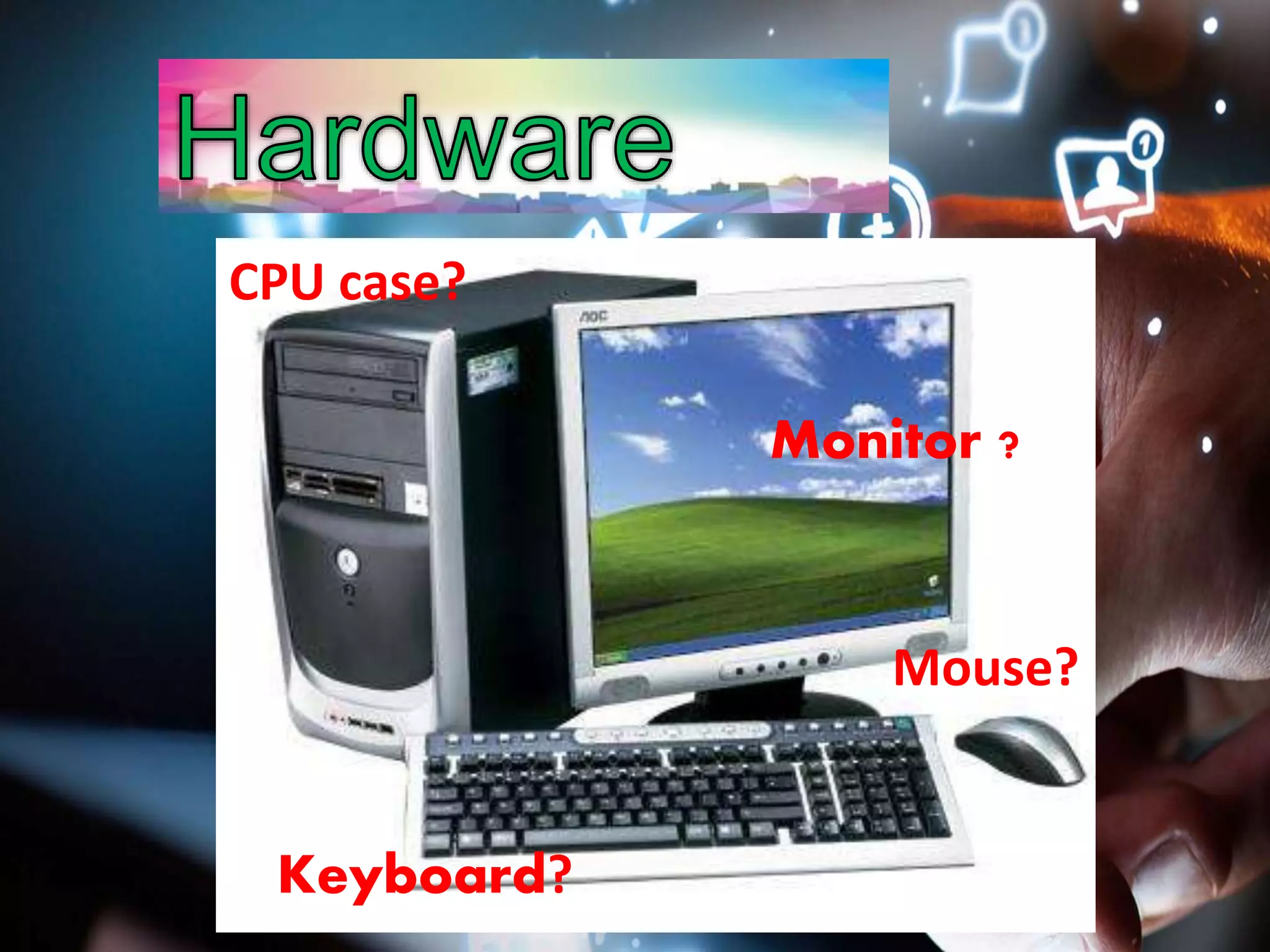
Monitor ?
Keyboard?
Mouse?
CPU case?
`
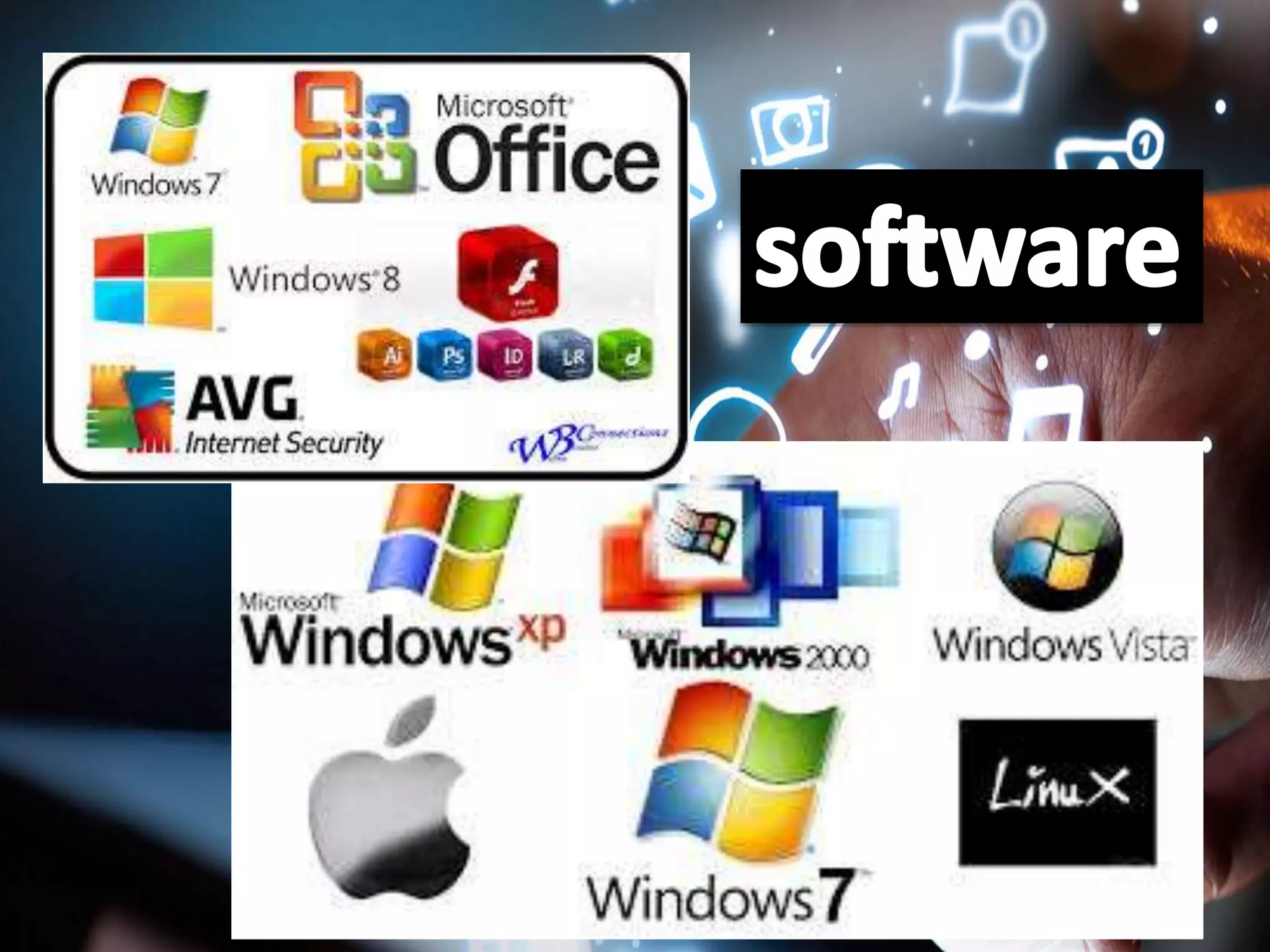
• The computer
hardware can hardly
be useful without the
program or system
that tells what the
computer machine
should do which is the
software.
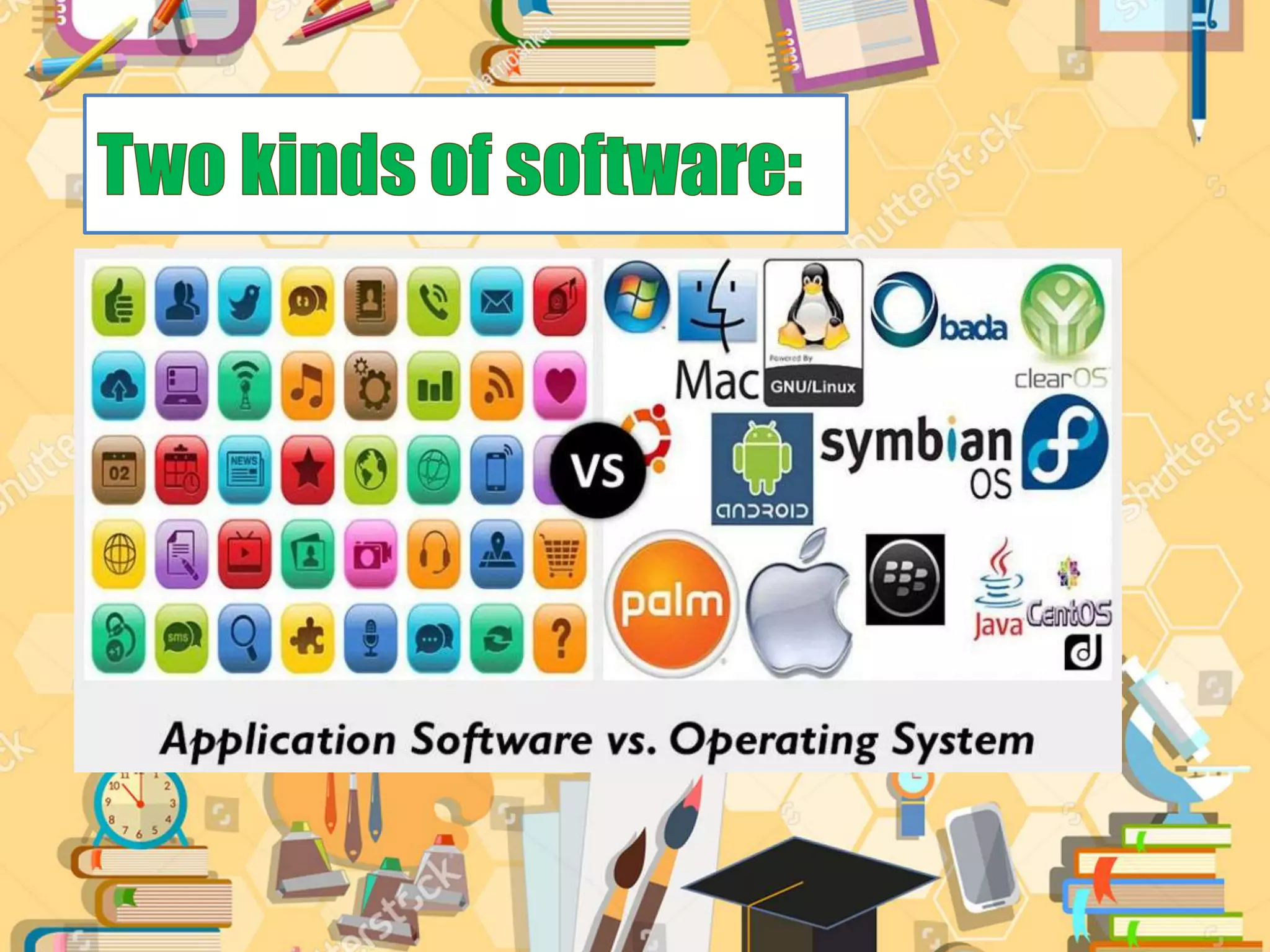
This is the operating
system that is found
or bundle inside all
computer machines.
This contains the
system that commands
the particular task or
solves a particular
problem.
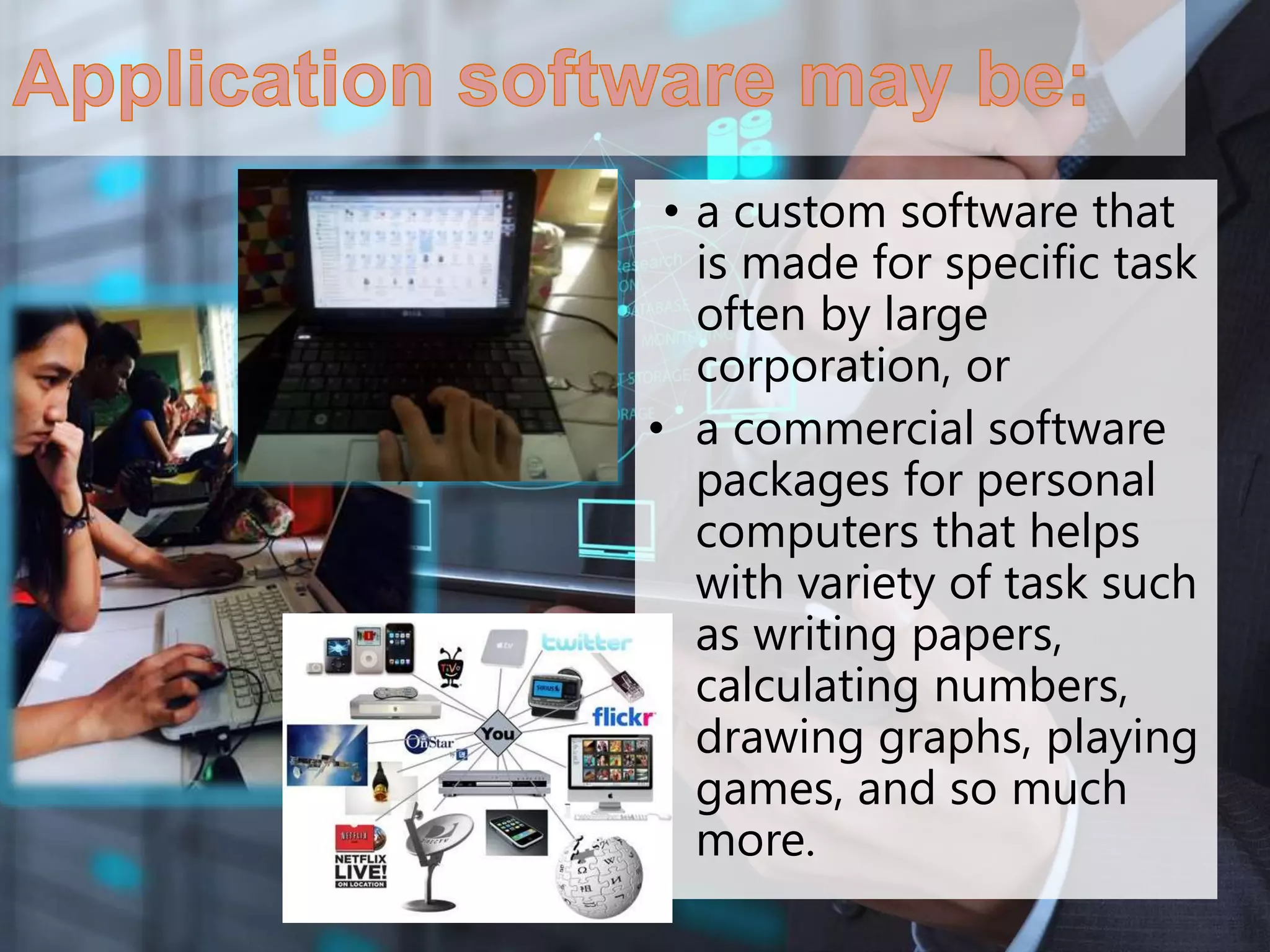
• a custom software that
is made for specific task
often by large
corporation, or
• a commercial software
packages for personal
computers that helps
with variety of task such
as writing papers,
calculating numbers,
drawing graphs, playing
games, and so much
more.
• Also referred to as a
program, Microsoft
Windows or Windows for
shot is an operating
environment between the
user and the computer
operating system.
• All called a shell, it is slayer
that creates the way the
computer should work.
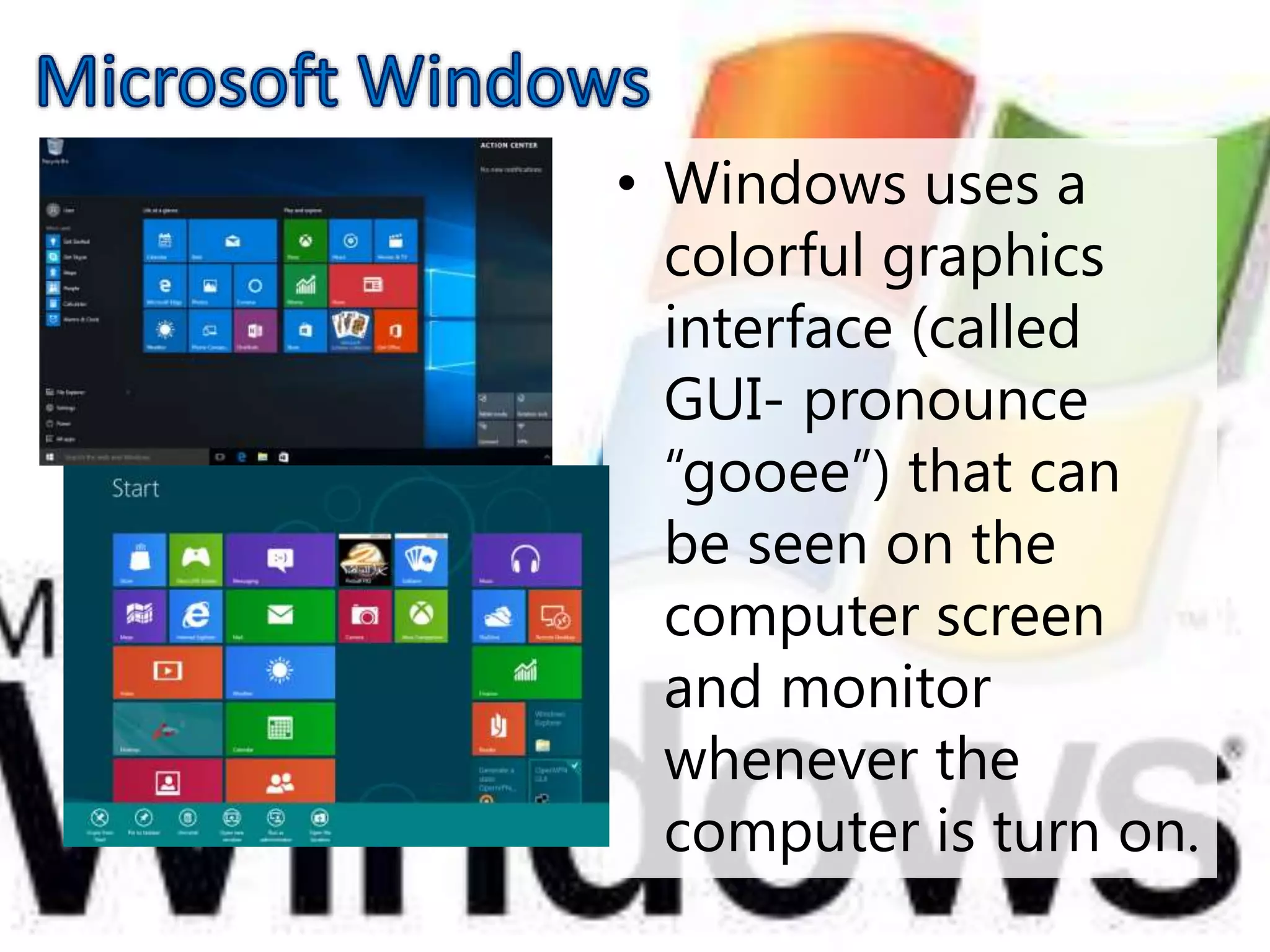
• Windows uses a
colorful graphics
interface (called
GUI- pronounce
“gooee”) that can
be seen on the
computer screen
and monitor
whenever the
computer is turn on.
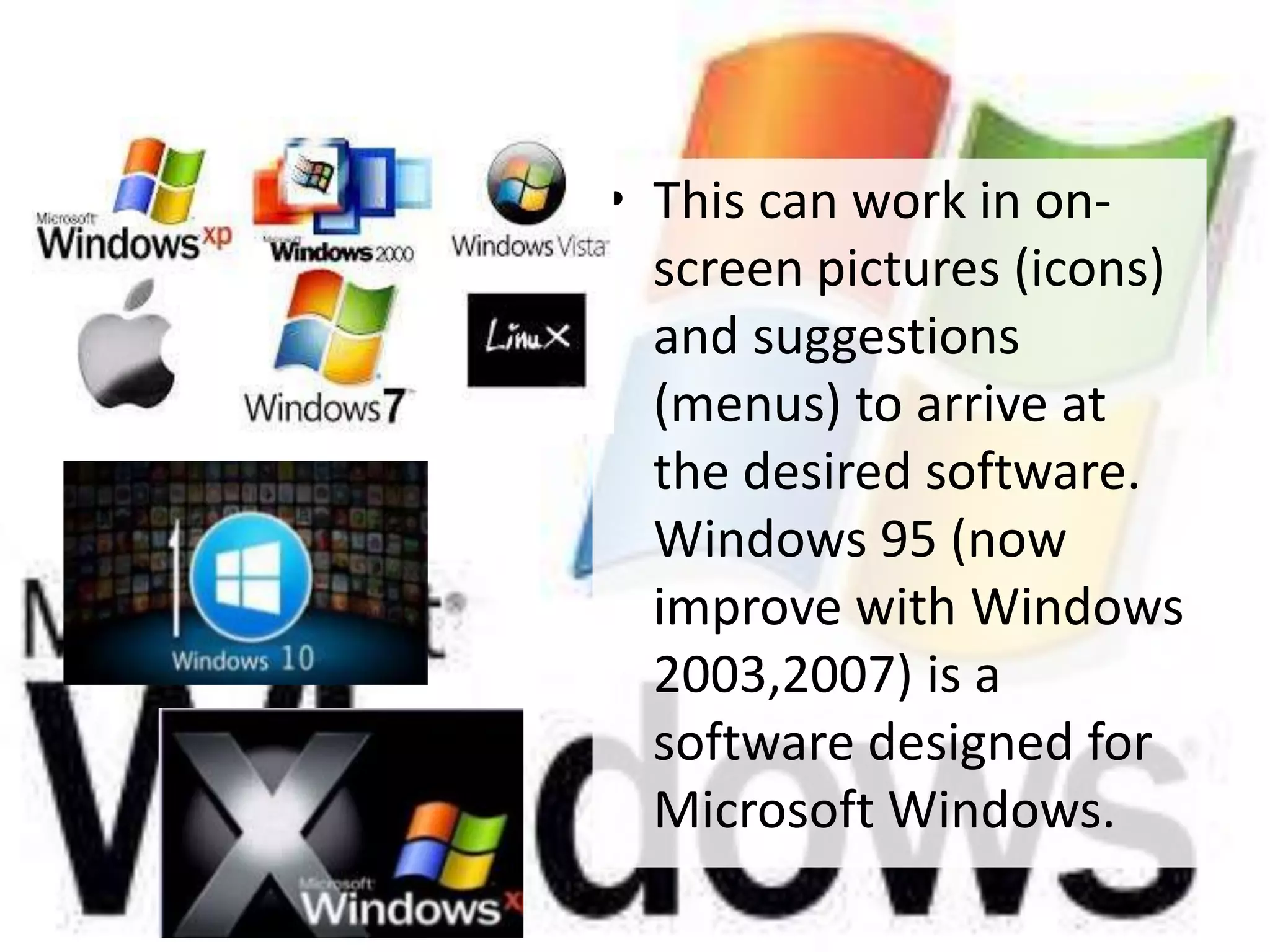
• This can work in on-
screen pictures (icons)
and suggestions
(menus) to arrive at
the desired software.
Windows 95 (now
improve with Windows
2003,2007) is a
software designed for
Microsoft Windows.
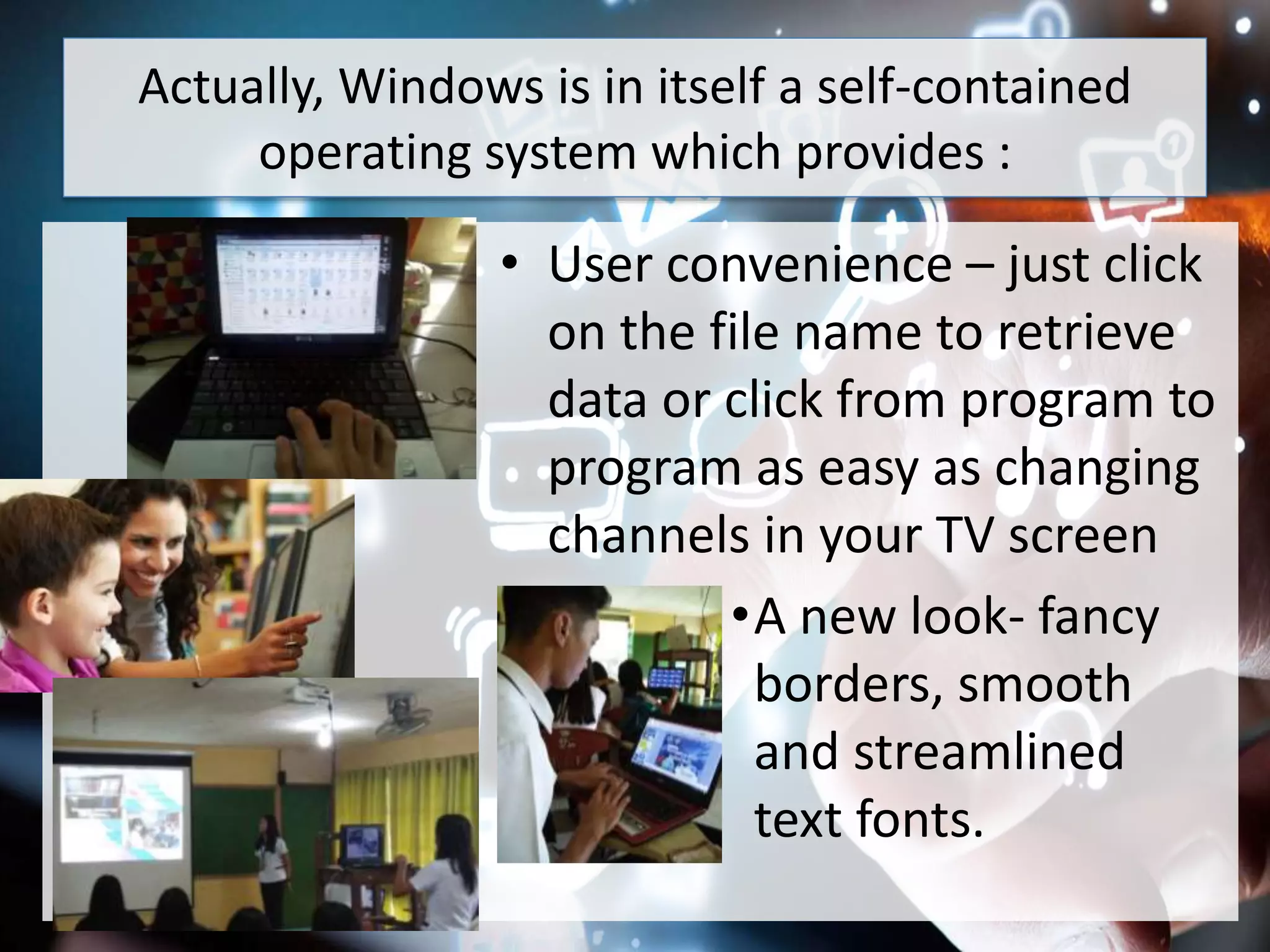
Actually, Windows is in itself a self-contained
operating system which provides :
• User convenience – just click
on the file name to retrieve
data or click from program to
program as easy as changing
channels in your TV screen
•A new look- fancy
borders, smooth
and streamlined
text fonts.
CONT…
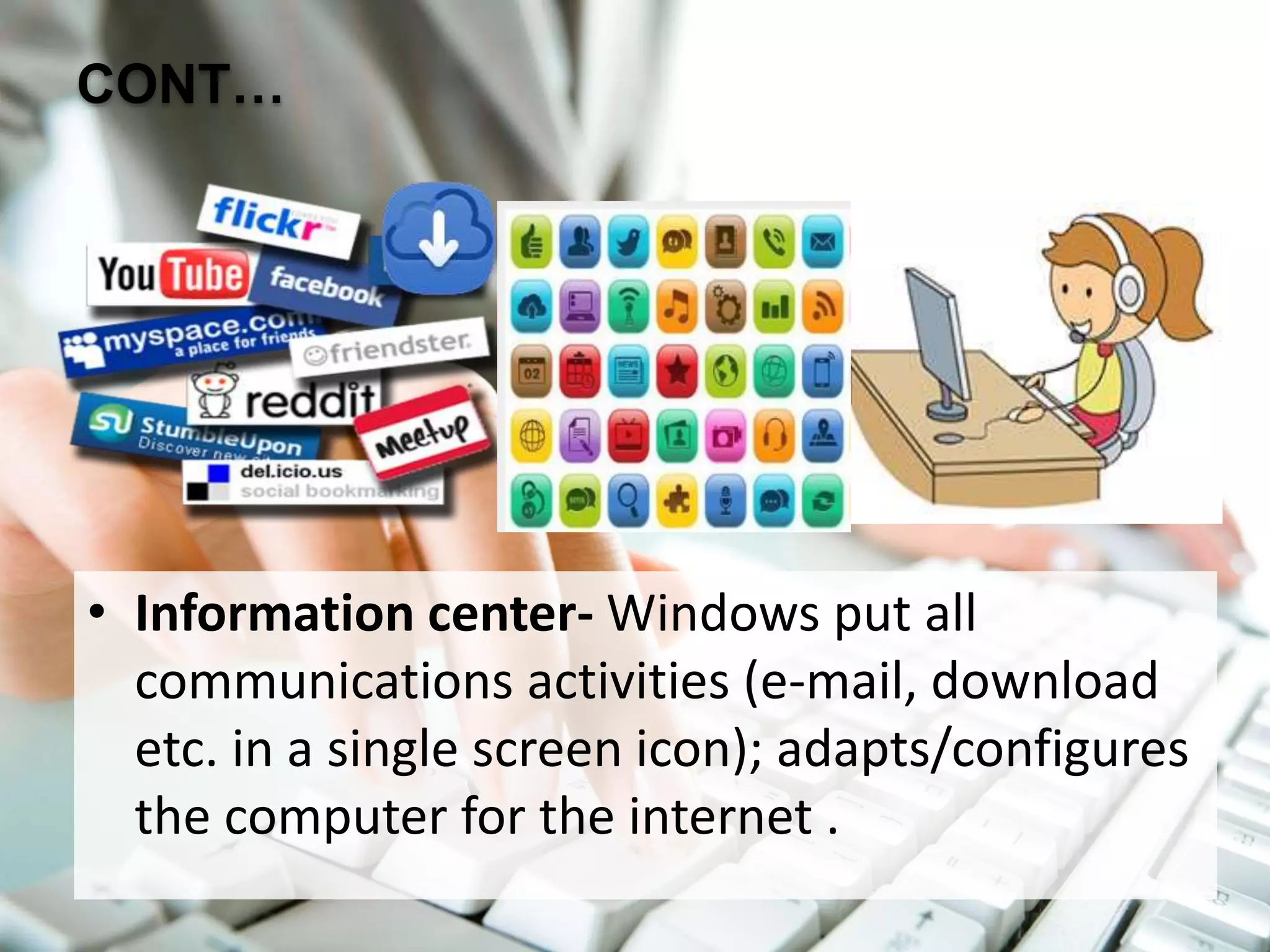
• Information center- Windows put all
communications activities (e-mail, download
etc. in a single screen icon); adapts/configures
the computer for the internet .
Cont…
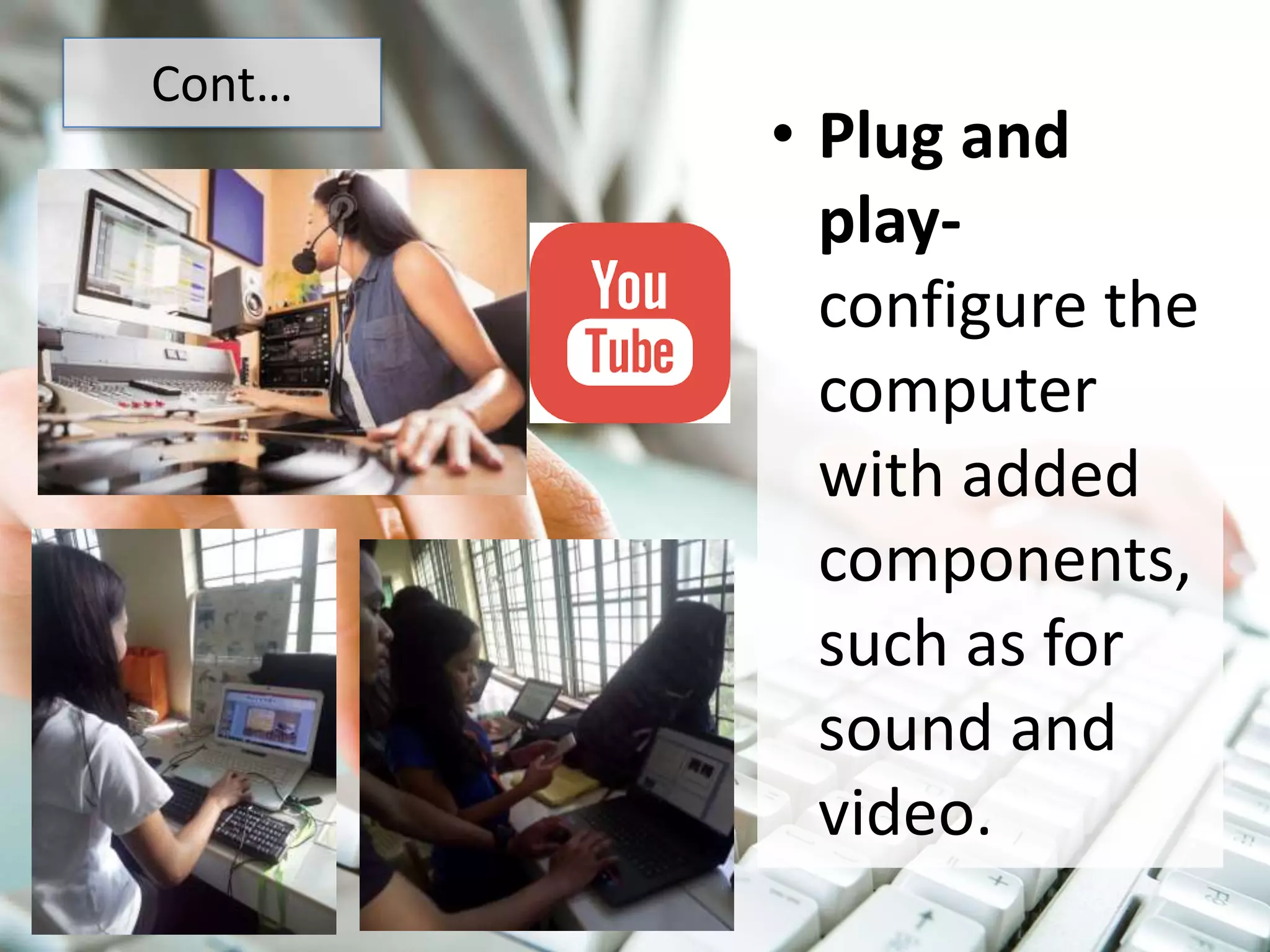
• Plug and
play-
configure the
computer
with added
components,
such as for
sound and
video.
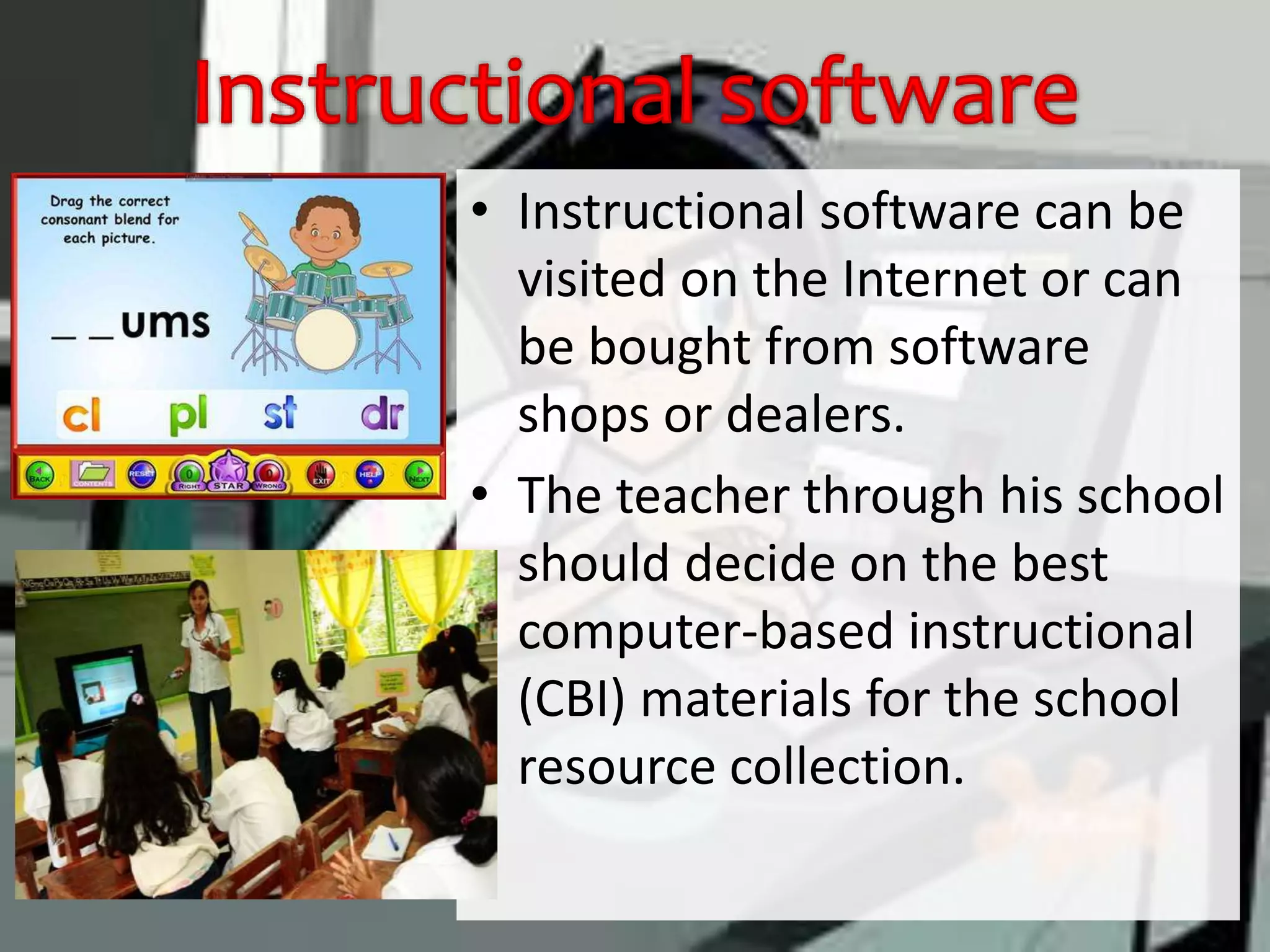
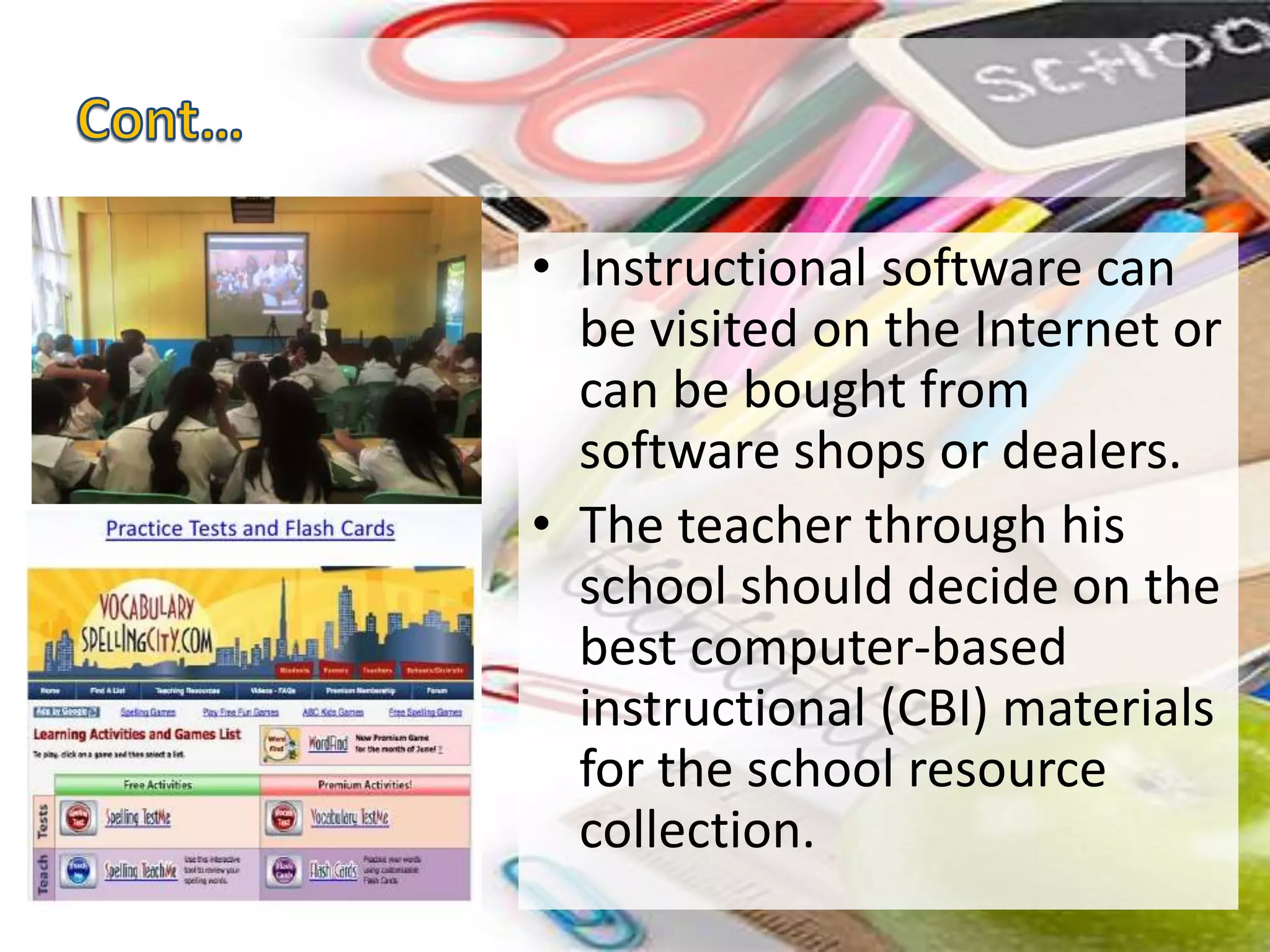
• Instructional software can be
visited on the Internet or can
be bought from software
shops or dealers.
• The teacher through his school
should decide on the best
computer-based instructional
(CBI) materials for the school
resource collection.
• Be extremely cautious in using CBIs and ‘free’
Internet materials.
• Don’t be caught up by attractive graphics, sound,
animation, pictures, video clips and music forgetting
their instructional worth
• Teachers
must evaluate
these
resources
using sound
pedagogical
principles.
• Observe clarity in the
explanations and
illustrations of concepts
and principles.
• Maintain accuracy,
coherence, logic of
information
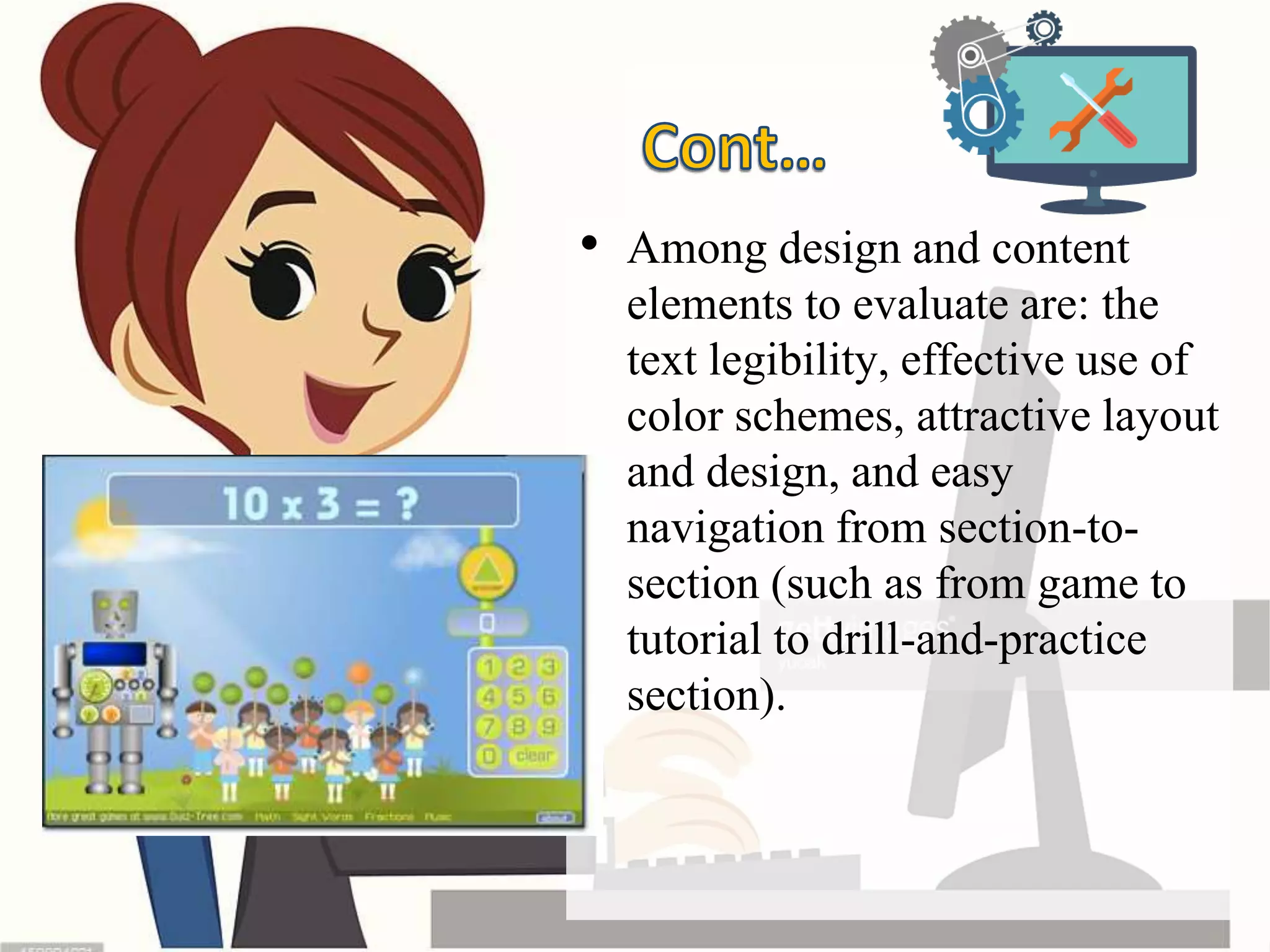
• Among design and content
elements to evaluate are: the
text legibility, effective use of
color schemes, attractive layout
and design, and easy
navigation from section-to-
section (such as from game to
tutorial to drill-and-practice
section).
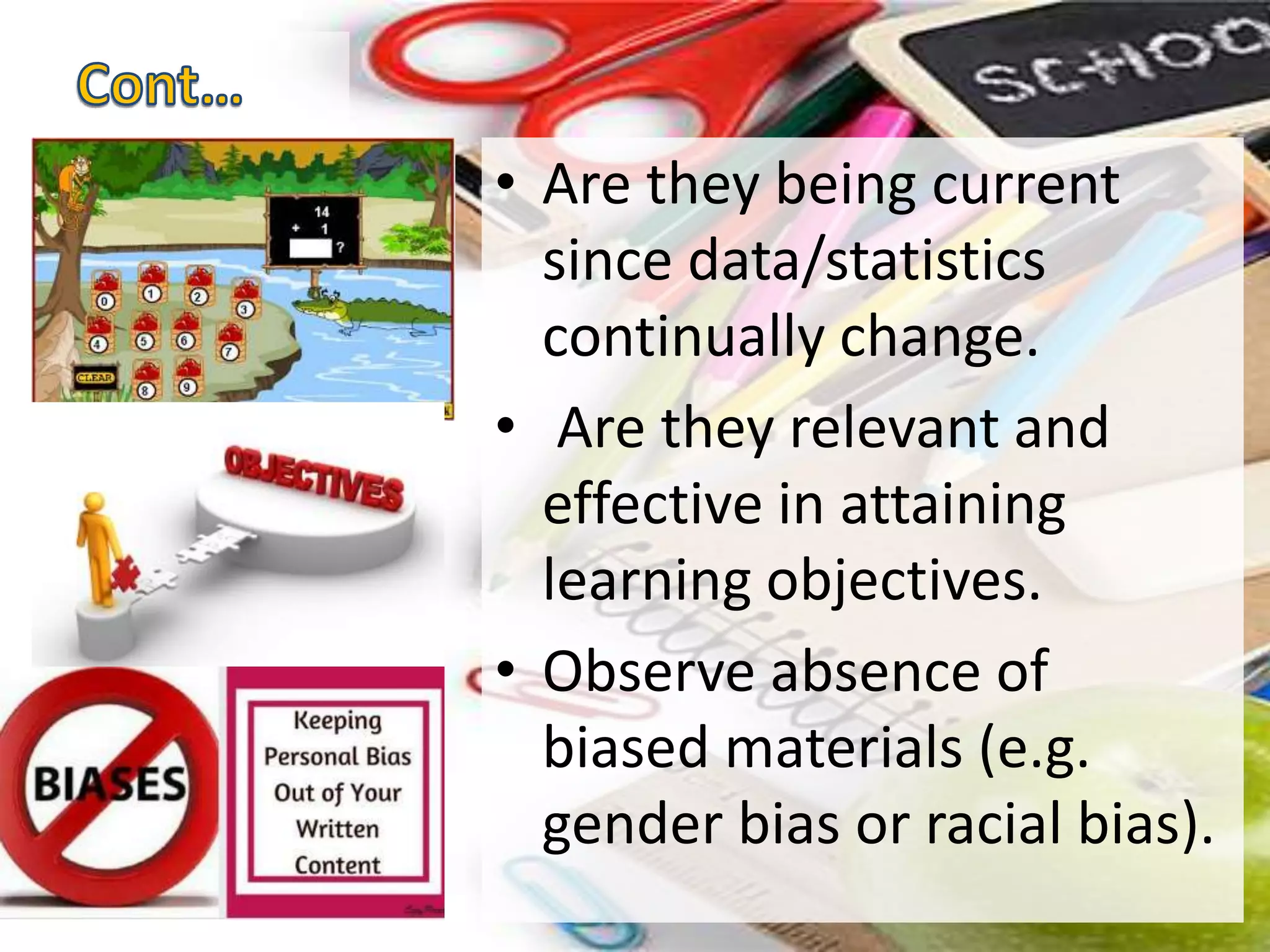
• Are they being current
since data/statistics
continually change.
• Are they relevant and
effective in attaining
learning objectives.
• Observe absence of
biased materials (e.g.
gender bias or racial bias).
• Instructional software can
be visited on the Internet or
can be bought from
software shops or dealers.
• The teacher through his
school should decide on the
best computer-based
instructional (CBI) materials
for the school resource
collection.
Activity:
Through slogan, discuss
why a teacher should
consider a software as an
Educational Resource.
National, John Santos M. Lesson 14; Software
as an Educational Resource. Retrieved
from
http://www.slideshare.net/mobile/raymij
ares/educational-teachnology-2-lesson-
14-software-as -an-educational-resource
Salvador, Sharmaine. Lesson 14: The Software
as an Educational Resource. MARCH 13,
2015. retrieved
from:https://sharmainesalvador.
wodpress. com/2016/03/13/lesson-14-
the-software-as-an-educational-resource/
Chapter 14-The Software as an Educational Resource-De la Torre, Allen R.

Chapter 14-The Software as an Educational Resource-De la Torre, Allen R.

  • 2.
    1. Identify thetwo types of software. 2. Compare and contrast the two types of software. 3. Give reasons on how software can contribute to an effective learning.
  • 3.
    What comes inyour mind when you hear a word “computer”?
  • 4.
  • 5.
  • 6.
    • The computer hardwarecan hardly be useful without the program or system that tells what the computer machine should do which is the software.
  • 8.
    This is theoperating system that is found or bundle inside all computer machines. This contains the system that commands the particular task or solves a particular problem.
  • 10.
    • a customsoftware that is made for specific task often by large corporation, or • a commercial software packages for personal computers that helps with variety of task such as writing papers, calculating numbers, drawing graphs, playing games, and so much more.
  • 11.
    • Also referredto as a program, Microsoft Windows or Windows for shot is an operating environment between the user and the computer operating system. • All called a shell, it is slayer that creates the way the computer should work.
  • 12.
    • Windows usesa colorful graphics interface (called GUI- pronounce “gooee”) that can be seen on the computer screen and monitor whenever the computer is turn on.
  • 13.
    • This canwork in on- screen pictures (icons) and suggestions (menus) to arrive at the desired software. Windows 95 (now improve with Windows 2003,2007) is a software designed for Microsoft Windows.
  • 14.
    Actually, Windows isin itself a self-contained operating system which provides : • User convenience – just click on the file name to retrieve data or click from program to program as easy as changing channels in your TV screen •A new look- fancy borders, smooth and streamlined text fonts.
  • 15.
    CONT… • Information center-Windows put all communications activities (e-mail, download etc. in a single screen icon); adapts/configures the computer for the internet .
  • 16.
    Cont… • Plug and play- configurethe computer with added components, such as for sound and video.
  • 18.
    • Instructional softwarecan be visited on the Internet or can be bought from software shops or dealers. • The teacher through his school should decide on the best computer-based instructional (CBI) materials for the school resource collection.
  • 19.
    • Be extremelycautious in using CBIs and ‘free’ Internet materials. • Don’t be caught up by attractive graphics, sound, animation, pictures, video clips and music forgetting their instructional worth
  • 20.
  • 21.
    • Observe clarityin the explanations and illustrations of concepts and principles. • Maintain accuracy, coherence, logic of information
  • 22.
    • Among designand content elements to evaluate are: the text legibility, effective use of color schemes, attractive layout and design, and easy navigation from section-to- section (such as from game to tutorial to drill-and-practice section).
  • 23.
    • Are theybeing current since data/statistics continually change. • Are they relevant and effective in attaining learning objectives. • Observe absence of biased materials (e.g. gender bias or racial bias).
  • 24.
    • Instructional softwarecan be visited on the Internet or can be bought from software shops or dealers. • The teacher through his school should decide on the best computer-based instructional (CBI) materials for the school resource collection.
  • 25.
    Activity: Through slogan, discuss whya teacher should consider a software as an Educational Resource.
  • 26.
    National, John SantosM. Lesson 14; Software as an Educational Resource. Retrieved from http://www.slideshare.net/mobile/raymij ares/educational-teachnology-2-lesson- 14-software-as -an-educational-resource Salvador, Sharmaine. Lesson 14: The Software as an Educational Resource. MARCH 13, 2015. retrieved from:https://sharmainesalvador. wodpress. com/2016/03/13/lesson-14- the-software-as-an-educational-resource/