Chapter 13
How would a day
without electricity
be like.
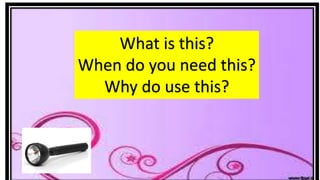
What is this?
When do you need this?
Why do use this?
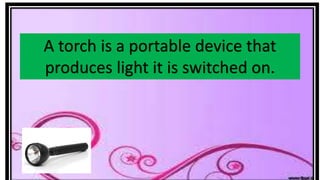
A torch is a portable device that
produces light it is switched on.
Electricity is the flow of electrical
power or charge through a material
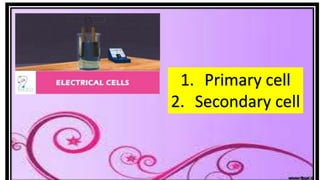
1. Primary cell
2. Secondary cell
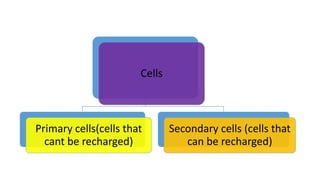
Cells
Primary cells(cells that
cant be recharged)
Secondary cells (cells that
can be recharged)
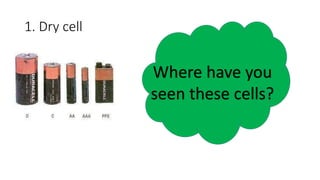
1. Dry cell
Where have you
seen these cells?
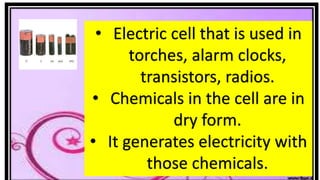
• Electric cell that is used in
torches, alarm clocks,
transistors, radios.
• Chemicals in the cell are in
dry form.
• It generates electricity with
those chemicals.
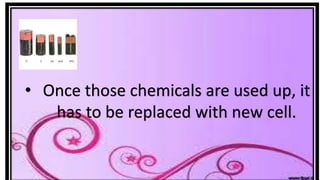
• Once those chemicals are used up, it
has to be replaced with new cell.
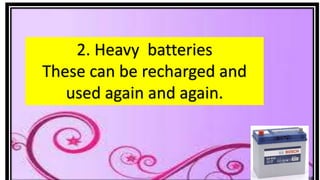
2. Heavy batteries
These can be recharged and
used again and again.
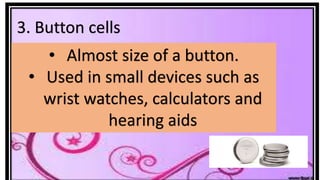
3. Button cells
• Almost size of a button.
• Used in small devices such as
wrist watches, calculators and
hearing aids
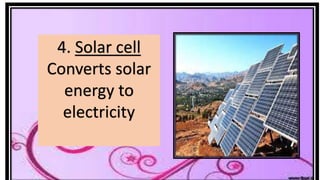
4. Solar cell
Converts solar
energy to
electricity
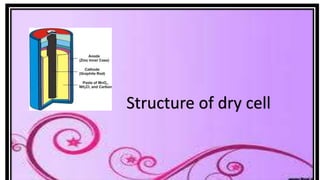
Structure of dry cell
• It has two terminals- positive (raised
part)and negative terminals(metallic
flat surface)
• Outer layer is made of metal zinc.
• Metal cap at the positive terminal is
connected to a rod made of carbon.
• A paste of ammonium chloride and a
layer of manganese oxide separate the
zinc container from carbon rod.
• When negative terminal and positive
terminal are connected through wires,
chemicals inside the dry cell react and
create electricity.
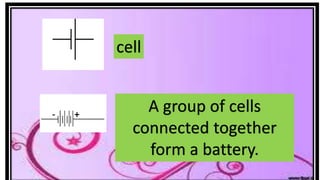
cell
A group of cells
connected together
form a battery.
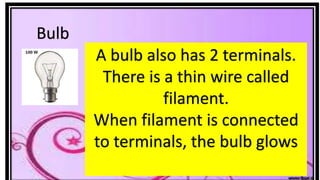
Bulb
A bulb also has 2 terminals.
There is a thin wire called
filament.
When filament is connected
to terminals, the bulb glows
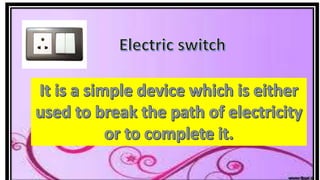
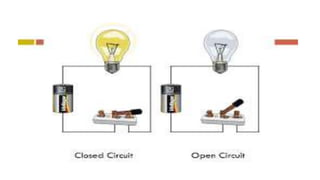
When the path for the flow of
current is complete, the switch is said
to be on and the circuit is closed.
When the path for the flow of
current is incomplete, the switch is
said to be off and the circuit is open..
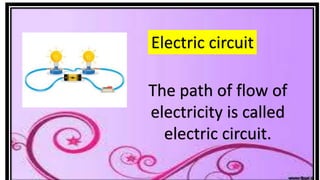
Electric circuit
The path of flow of
electricity is called
electric circuit.
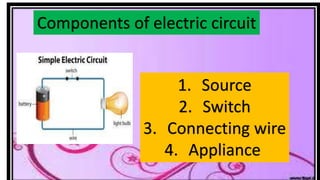
Components of electric circuit
1. Source
2. Switch
3. Connecting wire
4. Appliance
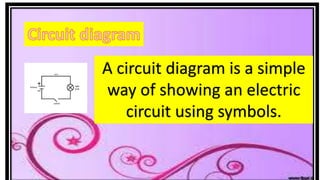
A circuit diagram is a simple
way of showing an electric
circuit using symbols.
https://www.youtube.com/watch?v=2aeDWygMRN0
• Silver and copper are good conductors
of electricity.
• Copper and aluminium is relatively
cheap and are widely used for making
electrical wires.
What are uses of electricity
around us?
Chapter 13 electricity

Chapter 13 electricity

  • 1.
  • 2.
    How would aday without electricity be like.
  • 3.
    What is this? Whendo you need this? Why do use this?
  • 4.
    A torch isa portable device that produces light it is switched on.
  • 5.
    Electricity is theflow of electrical power or charge through a material
  • 6.
    1. Primary cell 2.Secondary cell
  • 7.
    Cells Primary cells(cells that cantbe recharged) Secondary cells (cells that can be recharged)
  • 8.
    1. Dry cell Wherehave you seen these cells?
  • 9.
    • Electric cellthat is used in torches, alarm clocks, transistors, radios. • Chemicals in the cell are in dry form. • It generates electricity with those chemicals.
  • 10.
    • Once thosechemicals are used up, it has to be replaced with new cell.
  • 11.
    2. Heavy batteries Thesecan be recharged and used again and again.
  • 12.
    3. Button cells •Almost size of a button. • Used in small devices such as wrist watches, calculators and hearing aids
  • 13.
    4. Solar cell Convertssolar energy to electricity
  • 14.
  • 15.
    • It hastwo terminals- positive (raised part)and negative terminals(metallic flat surface) • Outer layer is made of metal zinc. • Metal cap at the positive terminal is connected to a rod made of carbon.
  • 16.
    • A pasteof ammonium chloride and a layer of manganese oxide separate the zinc container from carbon rod. • When negative terminal and positive terminal are connected through wires, chemicals inside the dry cell react and create electricity.
  • 17.
    cell A group ofcells connected together form a battery.
  • 18.
    Bulb A bulb alsohas 2 terminals. There is a thin wire called filament. When filament is connected to terminals, the bulb glows
  • 21.
    When the pathfor the flow of current is complete, the switch is said to be on and the circuit is closed. When the path for the flow of current is incomplete, the switch is said to be off and the circuit is open..
  • 22.
    Electric circuit The pathof flow of electricity is called electric circuit.
  • 23.
    Components of electriccircuit 1. Source 2. Switch 3. Connecting wire 4. Appliance
  • 25.
    A circuit diagramis a simple way of showing an electric circuit using symbols.
  • 26.
  • 27.
    • Silver andcopper are good conductors of electricity. • Copper and aluminium is relatively cheap and are widely used for making electrical wires.
  • 28.
    What are usesof electricity around us?