Collections
Chapter 12
12
Java Collection Frameworks
The Java collection framework is a set
of utility classes and interfaces.
Designed for working with collections of
objects
A collection is a group of objects, each of
which is known as an element in the
collection.
12
Types of Collections
Simple Collections
Sets have no duplicate elements.
Lists are ordered collections that can have
duplicate elements.
Maps
Map uses key/value pairs to associate an object
(the value) with a key.
Both sets and maps can be sorted or
unsorted.
12
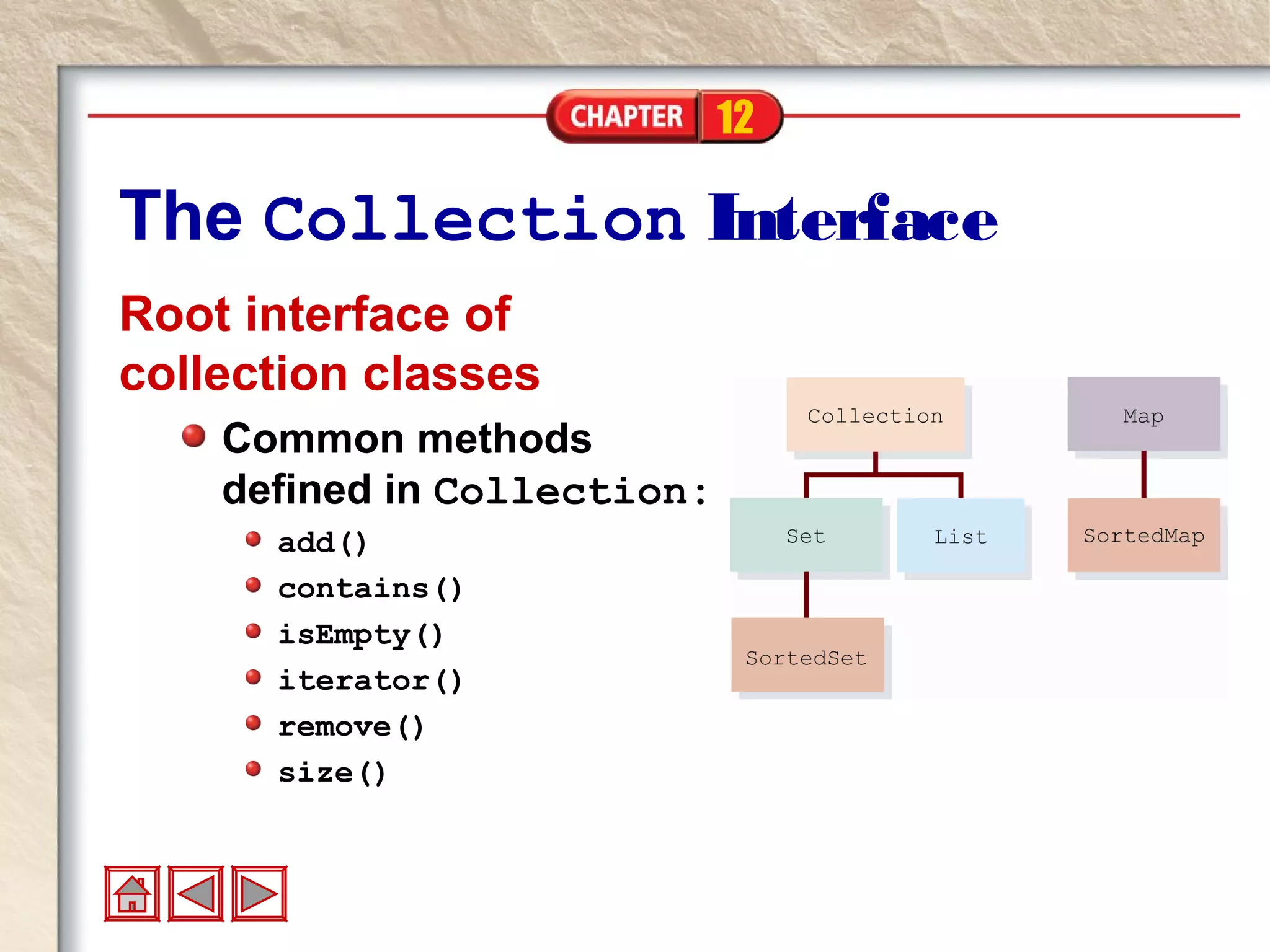
The Collection Interface
Root interface of
collection classes
Common methods
defined in Collection:
add()
contains()
isEmpty()
iterator()
remove()
size()
12
The ArrayList
ArrayList is a concrete
implementation of the List interface.
A concrete implementation is a class that
can be instantiated.
12
ArrayList vs. an Array
An ArrayList has several advantages:
Can be resized dynamically as more
objects are added
Elements can be removed from an
ArrayList
Simpler to use than an array
12
Controlling ArrayList size
Important methods:
size() returns the number of elements
ensureCapacity() sets the capacity of
the ArrayList to a certain number of
elements
trimToSize() trims an ArrayList to
only the number of elements it currently
holds to reduce memory requirements
12
Using Collections
Although objects in a collection do not
have to be of the same type:
It is not good practice to mix object types
in a collection.
You must check object type and cast to
appropriate class if heterogeneous
collections are used.
12
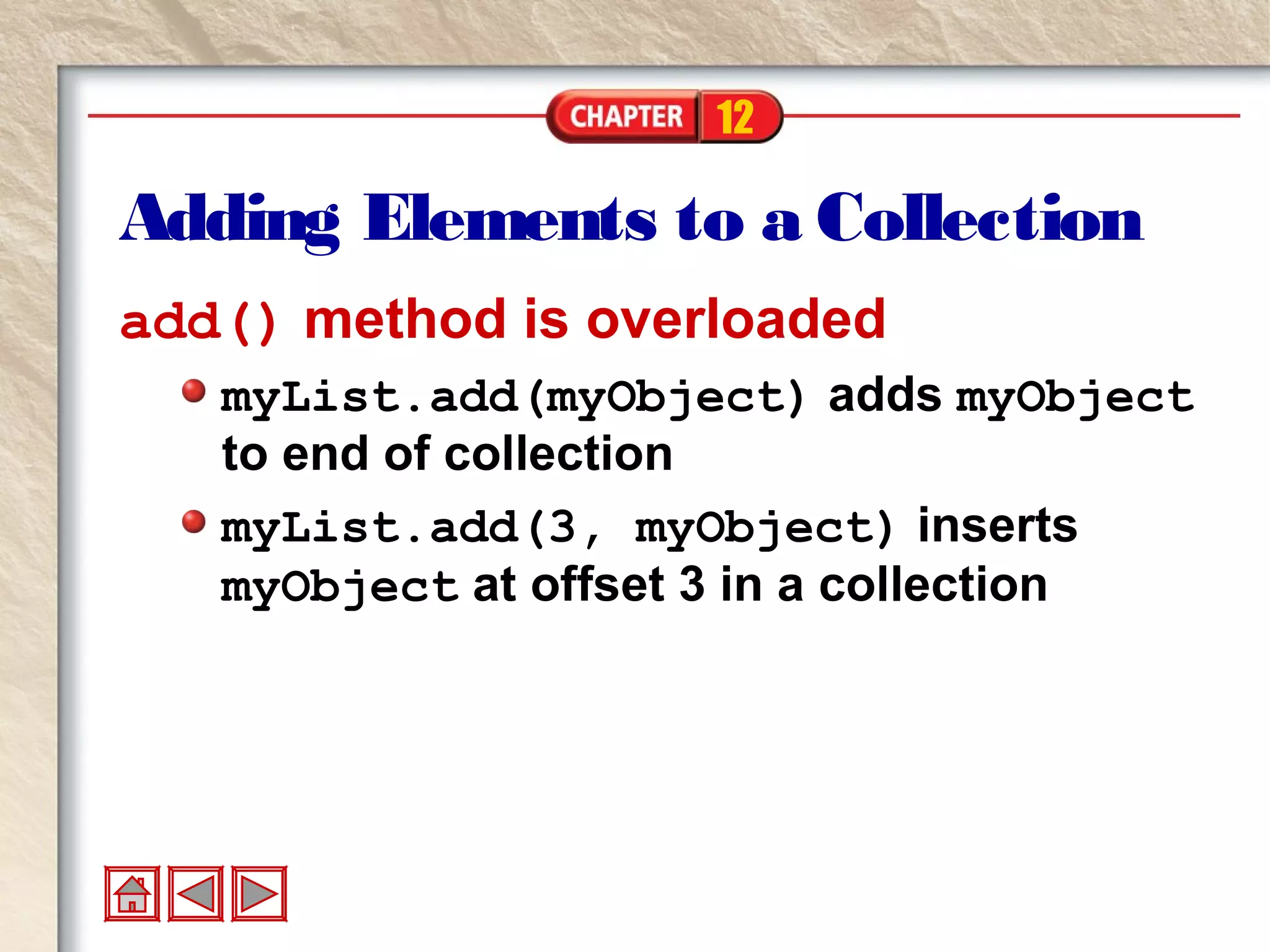
Adding Elements to a Collection
add() method is overloaded
myList.add(myObject) adds myObject
to end of collection
myList.add(3, myObject) inserts
myObject at offset 3 in a collection
12
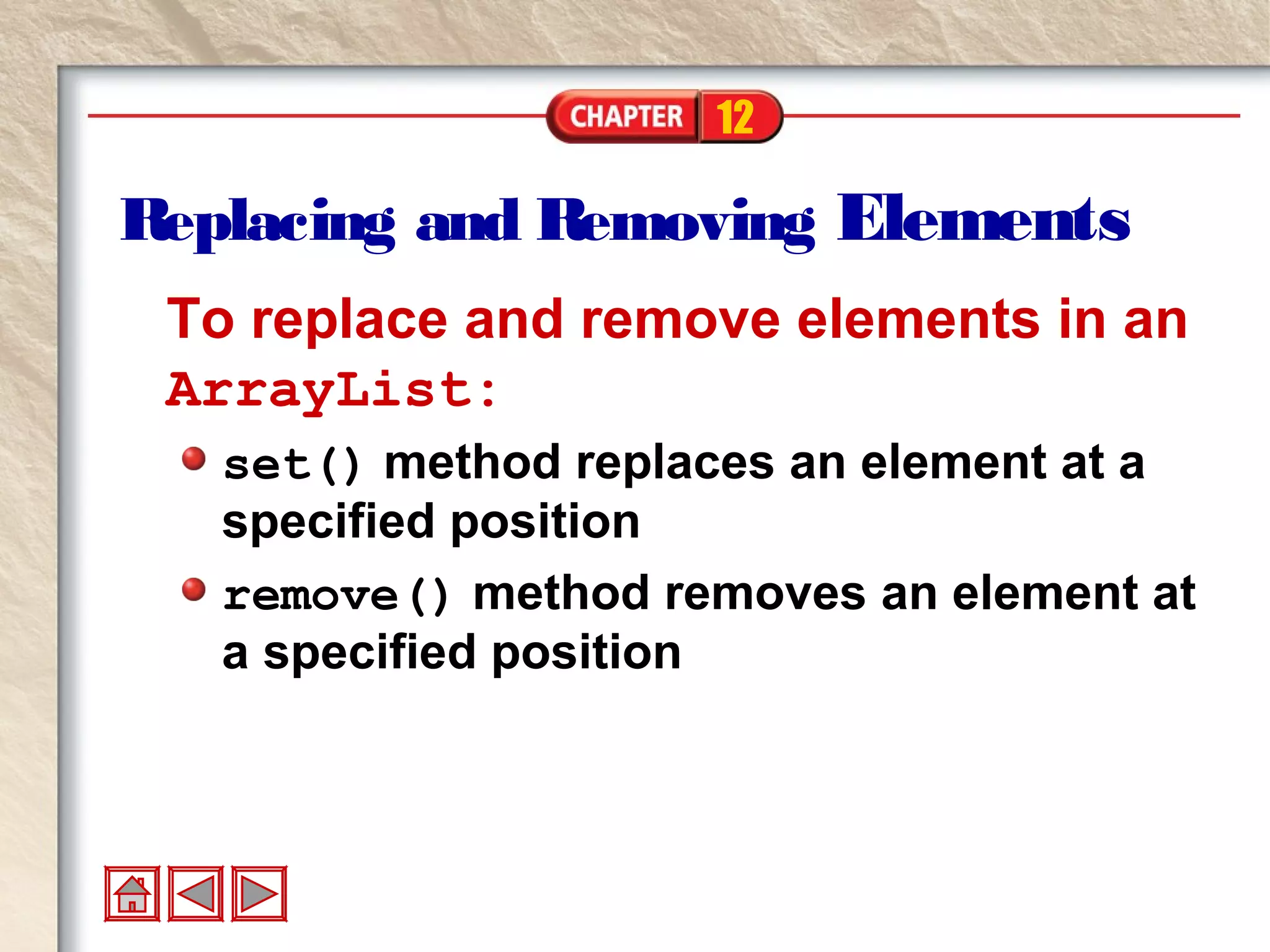
Replacing and Removing Elements
To replace and remove elements in an
ArrayList:
set() method replaces an element at a
specified position
remove() method removes an element at
a specified position

Chapter 12

  • 1.
  • 2.
    12 Java Collection Frameworks TheJava collection framework is a set of utility classes and interfaces. Designed for working with collections of objects A collection is a group of objects, each of which is known as an element in the collection.
  • 3.
    12 Types of Collections SimpleCollections Sets have no duplicate elements. Lists are ordered collections that can have duplicate elements. Maps Map uses key/value pairs to associate an object (the value) with a key. Both sets and maps can be sorted or unsorted.
  • 4.
    12 The Collection Interface Rootinterface of collection classes Common methods defined in Collection: add() contains() isEmpty() iterator() remove() size()
  • 5.
    12 The ArrayList ArrayList isa concrete implementation of the List interface. A concrete implementation is a class that can be instantiated.
  • 6.
    12 ArrayList vs. anArray An ArrayList has several advantages: Can be resized dynamically as more objects are added Elements can be removed from an ArrayList Simpler to use than an array
  • 7.
    12 Controlling ArrayList size Importantmethods: size() returns the number of elements ensureCapacity() sets the capacity of the ArrayList to a certain number of elements trimToSize() trims an ArrayList to only the number of elements it currently holds to reduce memory requirements
  • 8.
    12 Using Collections Although objectsin a collection do not have to be of the same type: It is not good practice to mix object types in a collection. You must check object type and cast to appropriate class if heterogeneous collections are used.
  • 9.
    12 Adding Elements toa Collection add() method is overloaded myList.add(myObject) adds myObject to end of collection myList.add(3, myObject) inserts myObject at offset 3 in a collection
  • 10.
    12 Replacing and RemovingElements To replace and remove elements in an ArrayList: set() method replaces an element at a specified position remove() method removes an element at a specified position