Introduction to Arrays
Chapter 10
10
What is an array?
An array is an ordered collection that
stores many elements of the same
type within one variable name.
Elements are the items in an array.
Each element is identified with an index
number.
Index numbers always start at 0 for the
first element.
10
Declaring Arrays
Identify type of array
Use square brackets
int[] myArray;
Declares an array of int values
10
Instantiating Arrays
Use the new keyword
Identify number of elements
myArray = new int[1000];
Instantiates myArray with 1000 elements
You can declare and instantiate in one
line
int[] myArray = new int[1000];
10
Putting Values in the Array
Use the index operator to assign a
value at a particular place in the array.
myArray[10] = 100;
Assigns the value 100 to the 10th element
in the array
Most programs use a for loop to
iterate the array.
10
Initializing the Array
You can initialize the array with values
at the same time the array is created.
int[] myArray = {1, 2, 3, 4, 5};
10
Determining the Length of the Array
Use the length property to find the
number of elements in the array.
System.out.println(myArray.length);
Displays the length of the array in the console
For ( int i = 0; i < myArray.length;
i++ );
Uses the length property to set up the for loop
10
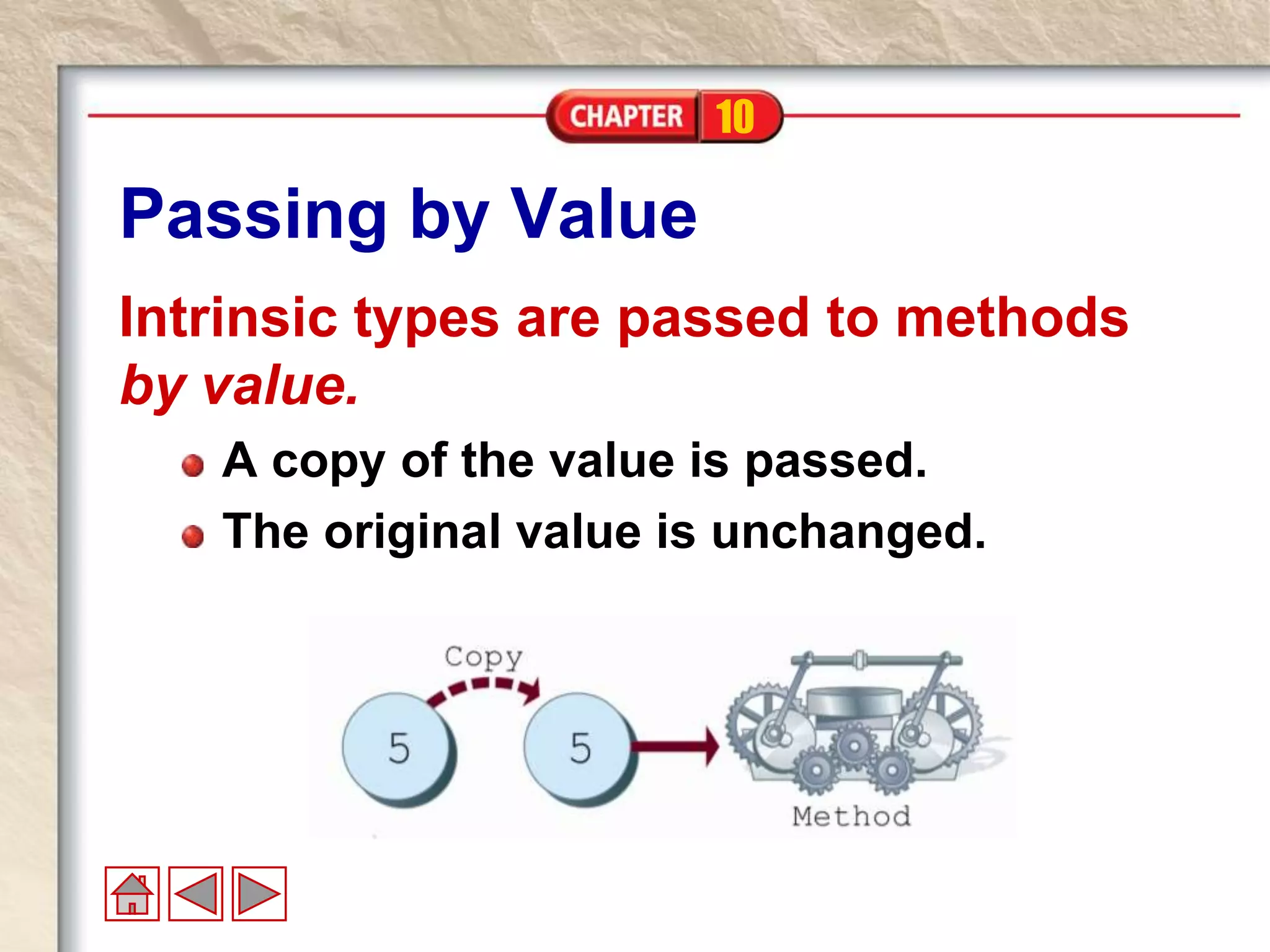
Passing by Value
Intrinsic types are passed to methods
by value.
A copy of the value is passed.
The original value is unchanged.
10
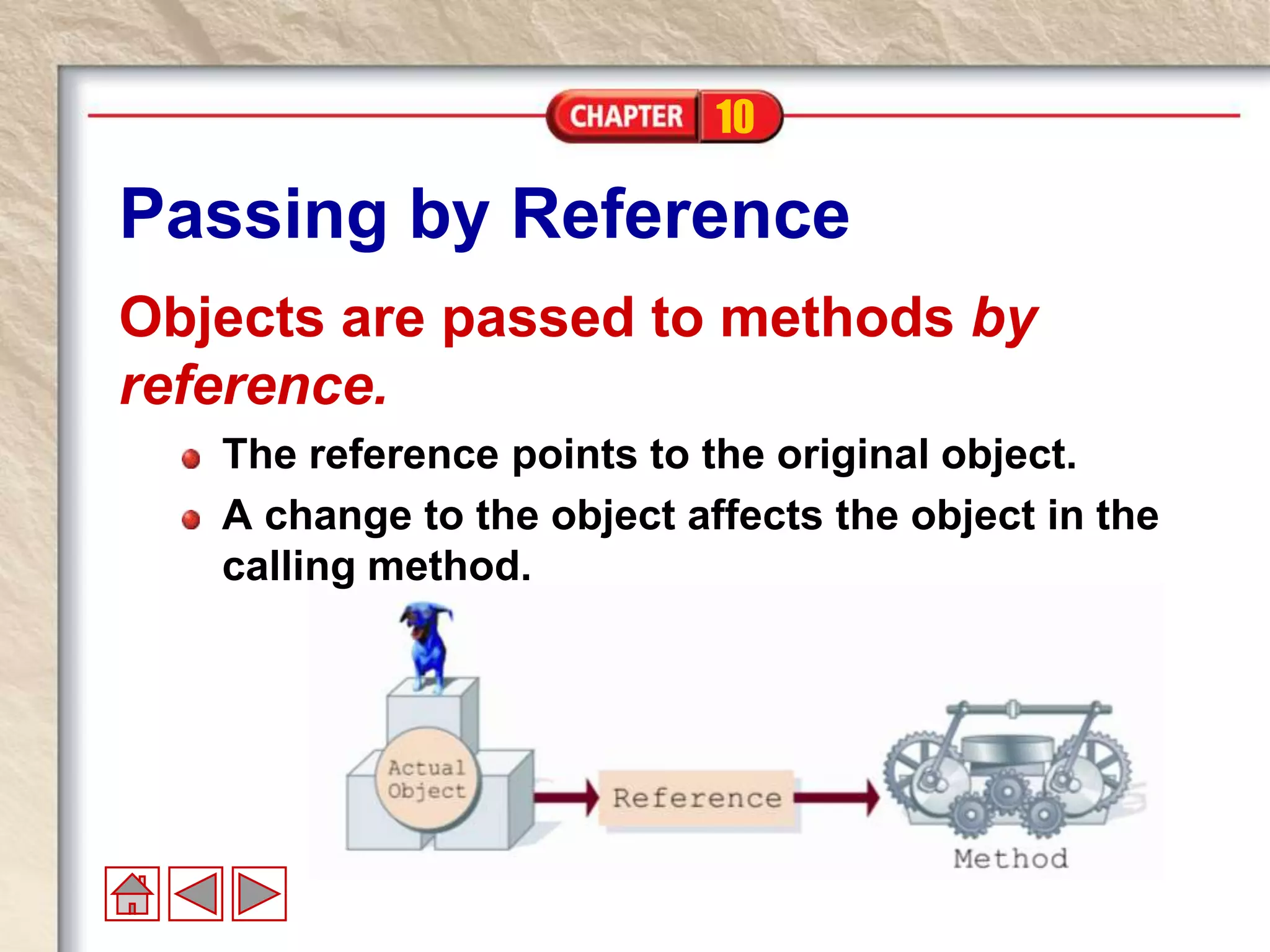
Passing by Reference
Objects are passed to methods by
reference.
The reference points to the original object.
A change to the object affects the object in the
calling method.
10
Passing Arrays to Methods
An array is an object type.
Passed by reference
Elements of arrays are not necessarily
passed by reference.
Depends on the underlying element type
Extracting int elements from an array
and passing them to a method passes
them by value
10
Using Polymorphic Objects
in an Array
An array can hold objects that:
Derive from the same base class
Implement a common interface

Chapter 10

  • 1.
  • 2.
    10 What is anarray? An array is an ordered collection that stores many elements of the same type within one variable name. Elements are the items in an array. Each element is identified with an index number. Index numbers always start at 0 for the first element.
  • 3.
    10 Declaring Arrays Identify typeof array Use square brackets int[] myArray; Declares an array of int values
  • 4.
    10 Instantiating Arrays Use thenew keyword Identify number of elements myArray = new int[1000]; Instantiates myArray with 1000 elements You can declare and instantiate in one line int[] myArray = new int[1000];
  • 5.
    10 Putting Values inthe Array Use the index operator to assign a value at a particular place in the array. myArray[10] = 100; Assigns the value 100 to the 10th element in the array Most programs use a for loop to iterate the array.
  • 6.
    10 Initializing the Array Youcan initialize the array with values at the same time the array is created. int[] myArray = {1, 2, 3, 4, 5};
  • 7.
    10 Determining the Lengthof the Array Use the length property to find the number of elements in the array. System.out.println(myArray.length); Displays the length of the array in the console For ( int i = 0; i < myArray.length; i++ ); Uses the length property to set up the for loop
  • 8.
    10 Passing by Value Intrinsictypes are passed to methods by value. A copy of the value is passed. The original value is unchanged.
  • 9.
    10 Passing by Reference Objectsare passed to methods by reference. The reference points to the original object. A change to the object affects the object in the calling method.
  • 10.
    10 Passing Arrays toMethods An array is an object type. Passed by reference Elements of arrays are not necessarily passed by reference. Depends on the underlying element type Extracting int elements from an array and passing them to a method passes them by value
  • 11.
    10 Using Polymorphic Objects inan Array An array can hold objects that: Derive from the same base class Implement a common interface