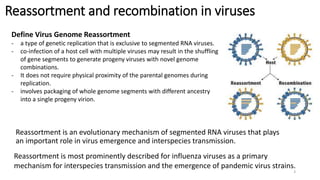
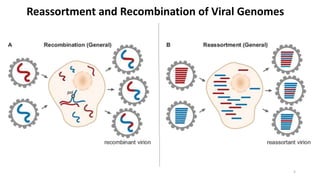
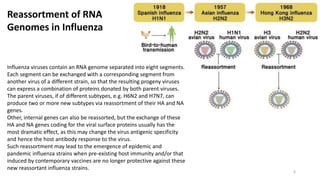
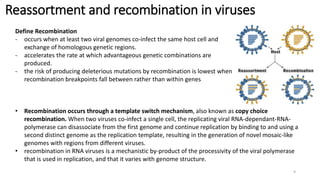
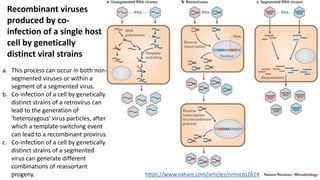
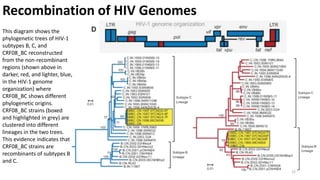
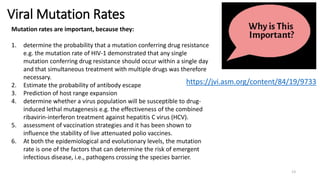
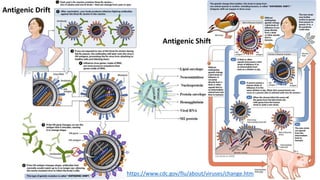
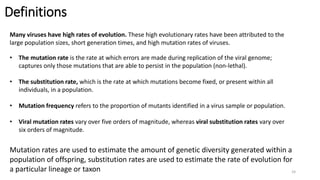
Viral mutations occur through two main mechanisms: antigenic drift and antigenic shift. Antigenic drift involves small mutations that accumulate over time and result in gradual changes to surface proteins. This allows the virus to evade existing immunity but results in related strains. Antigenic shift involves the reassortment of genome segments and results in an abrupt change where a virus acquires entirely new surface proteins. This can allow animal viruses to jump to humans, potentially causing pandemics by evading all existing immunity. RNA viruses typically mutate more rapidly than DNA viruses due to the lack of proofreading by RNA-dependent RNA polymerases during replication, though selection pressures and genome architecture also influence mutation rates.