Prepared by :
Pn. Noor Hazwani bt. Alias
SMK Sg. Maong,Kuching.
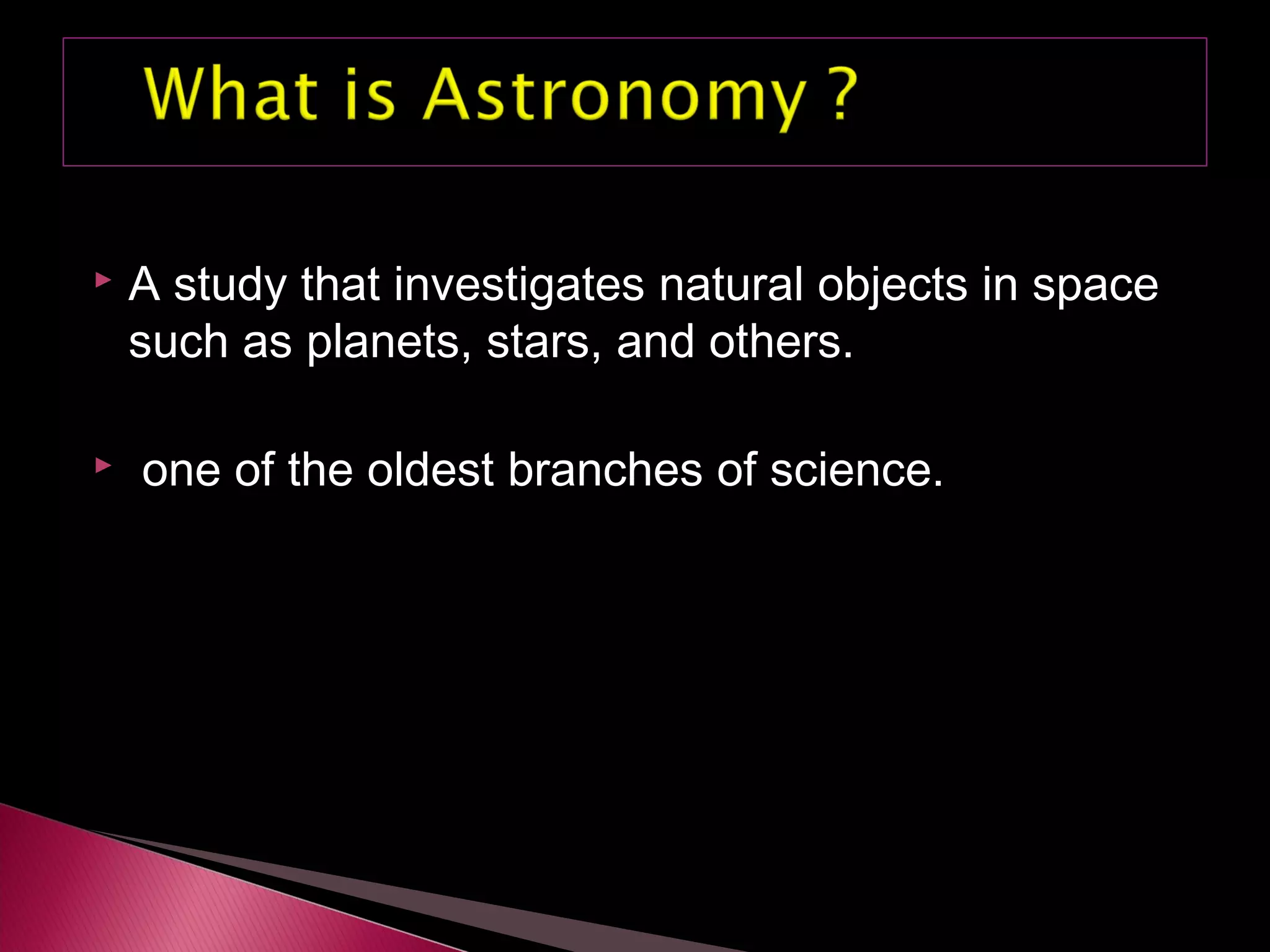
 A study that investigates natural objects in space
such as planets, stars, and others.
 one of the oldest branches of science.
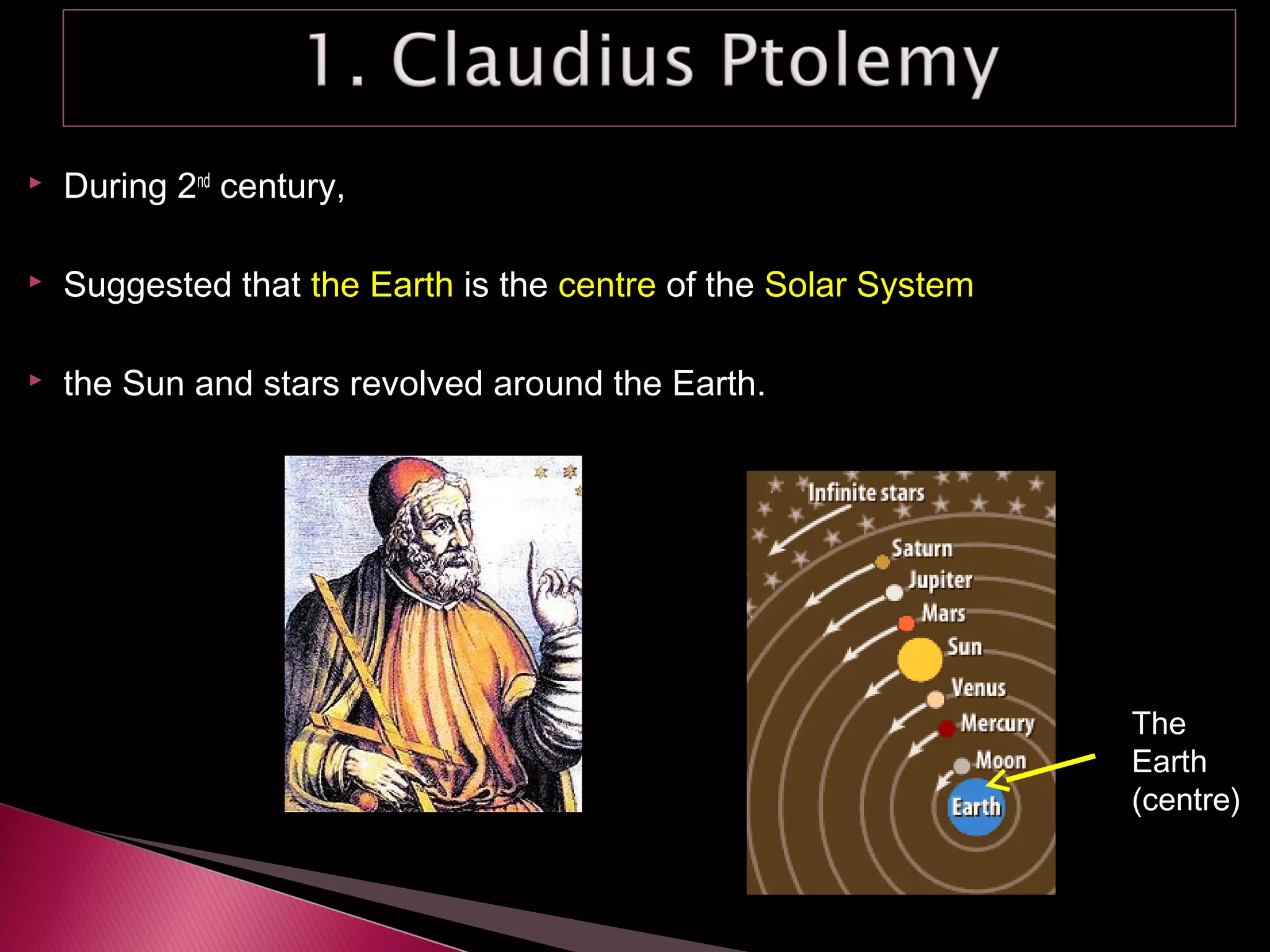
 During 2nd
century,
 Suggested that the Earth is the centre of the Solar System
 the Sun and stars revolved around the Earth.
The
Earth
(centre)
 During 16th
century,
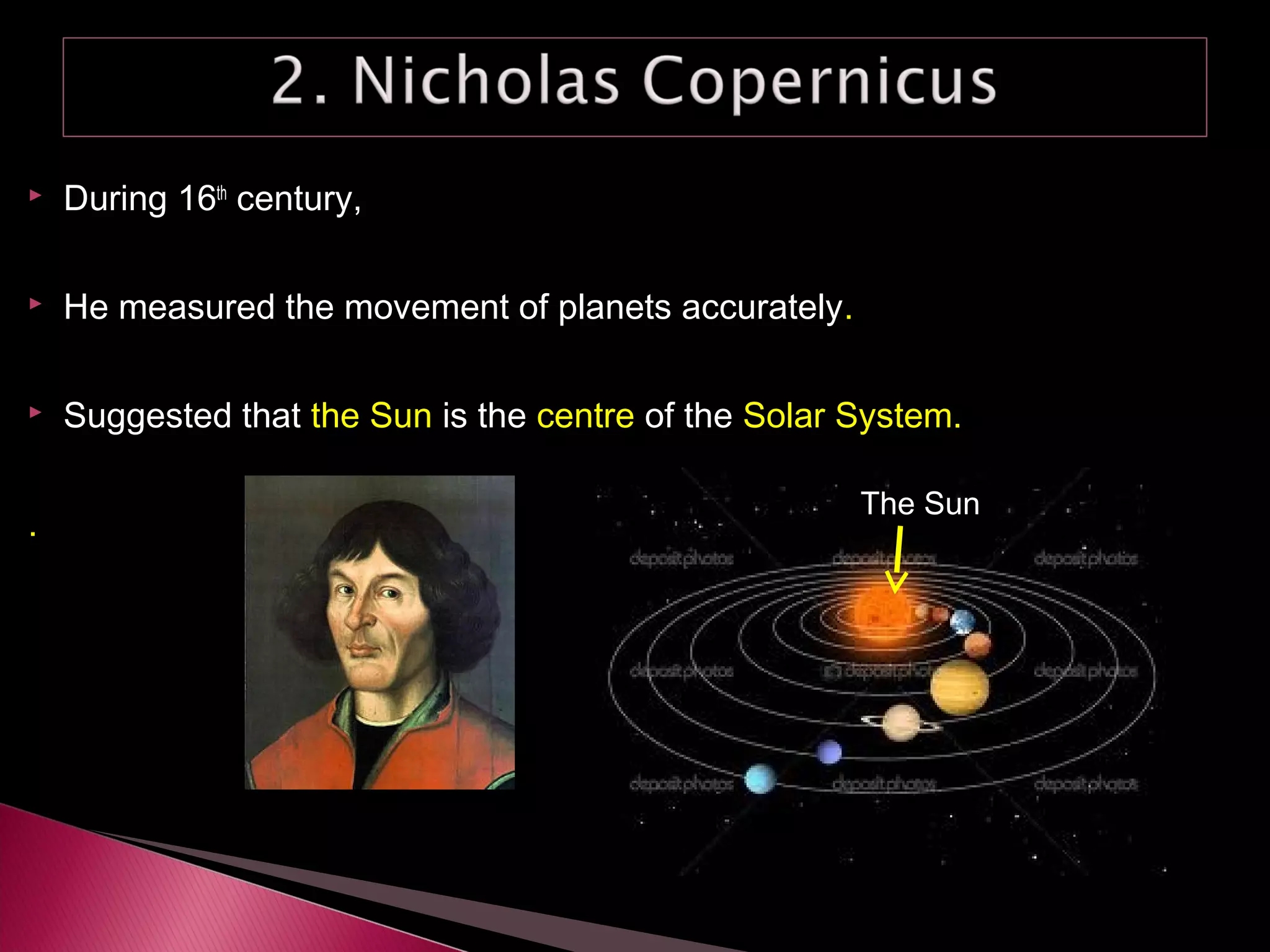
 He measured the movement of planets accurately.
 Suggested that the Sun is the centre of the Solar System.
.
The Sun
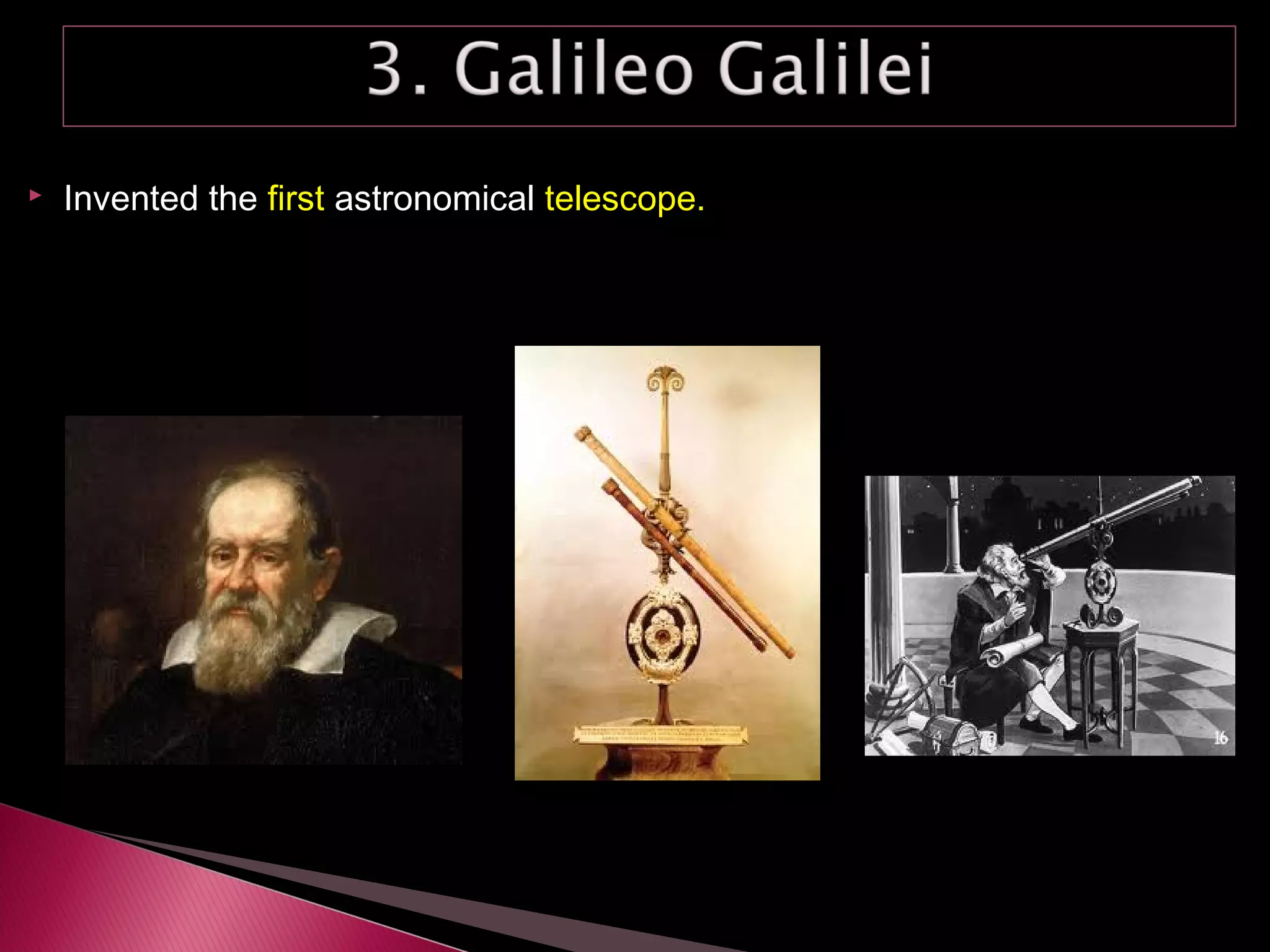
 Invented the first astronomical telescope.
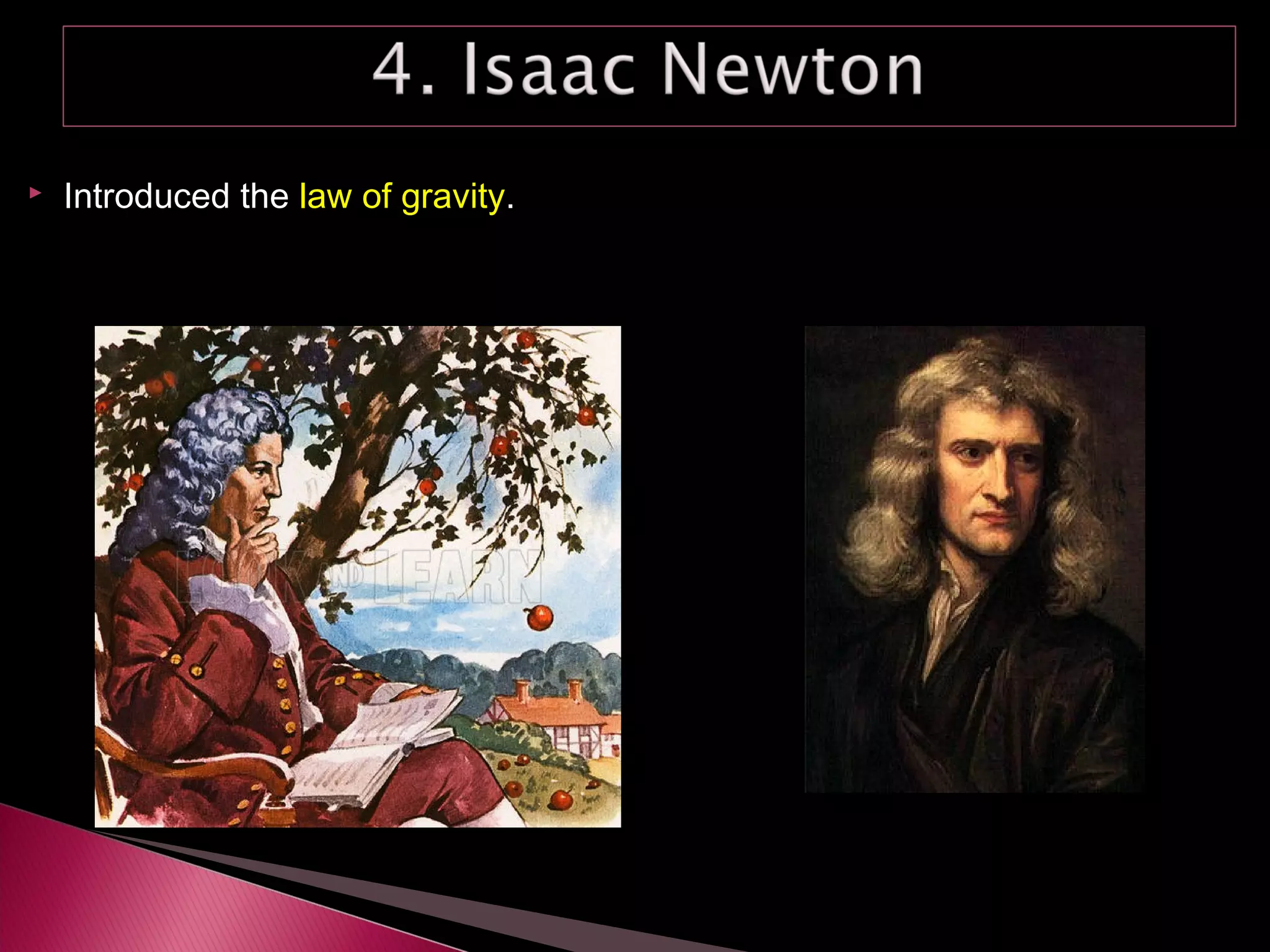
 Introduced the law of gravity.
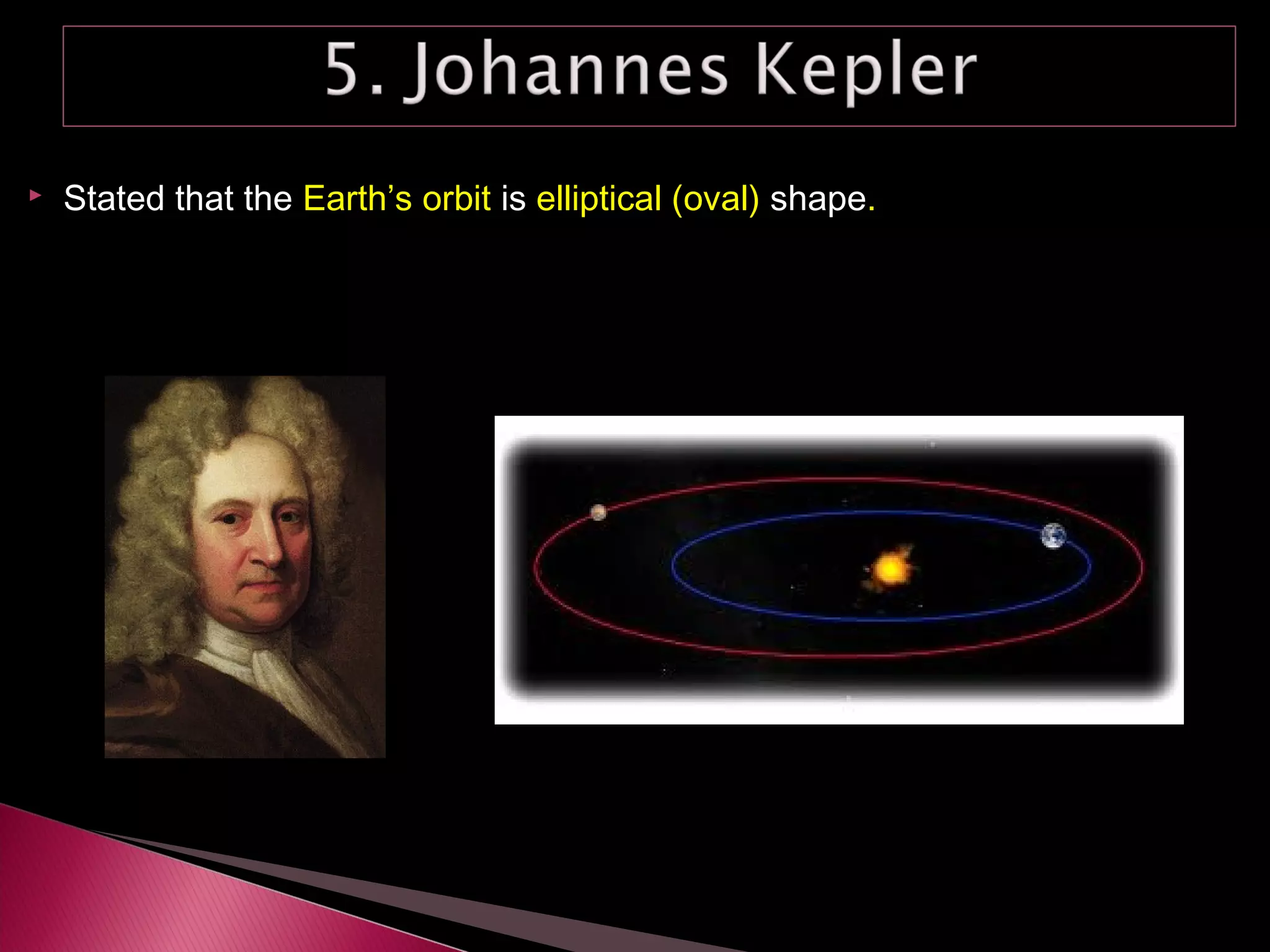
 Stated that the Earth’s orbit is elliptical (oval) shape.
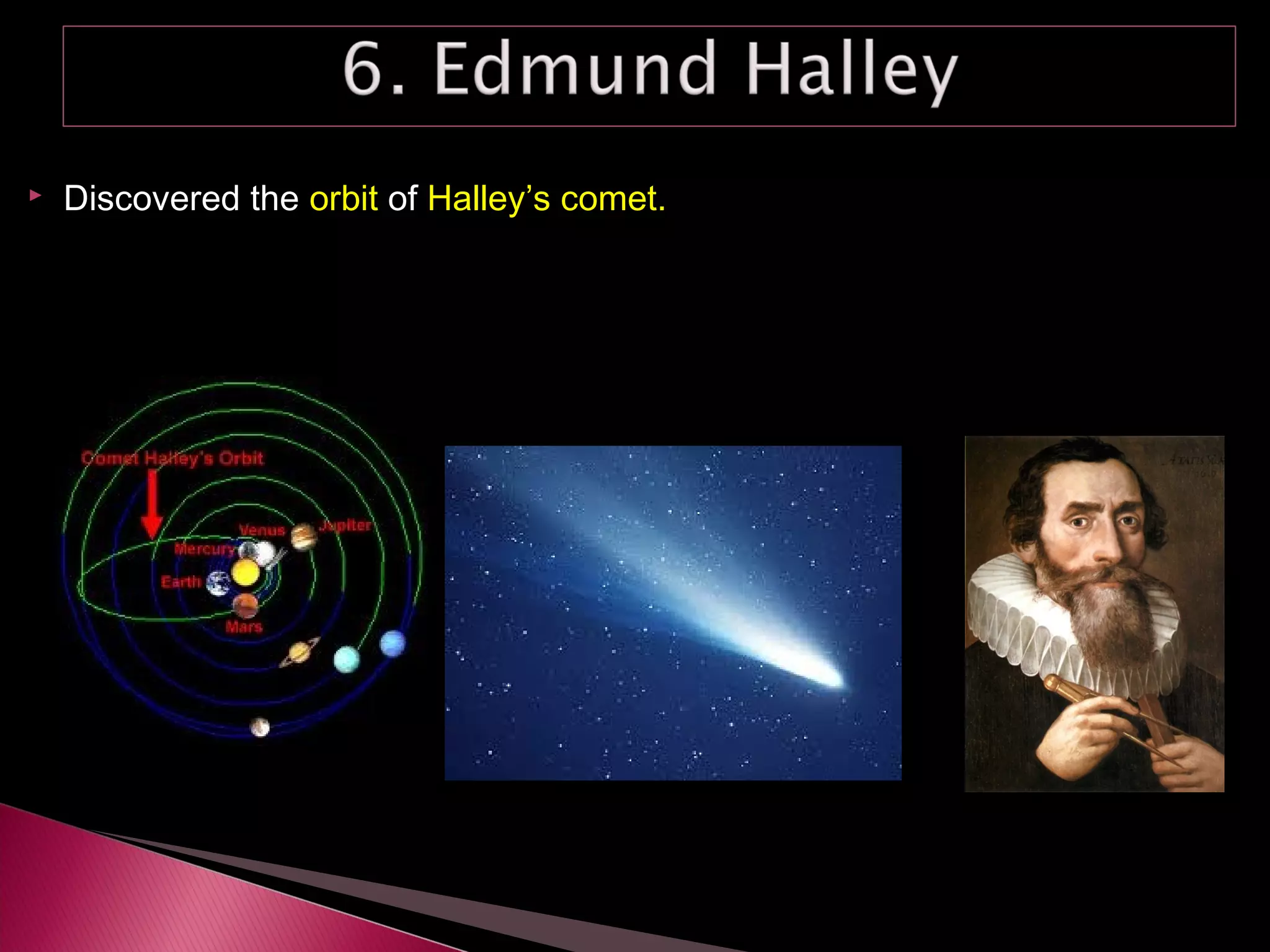
 Discovered the orbit of Halley’s comet.
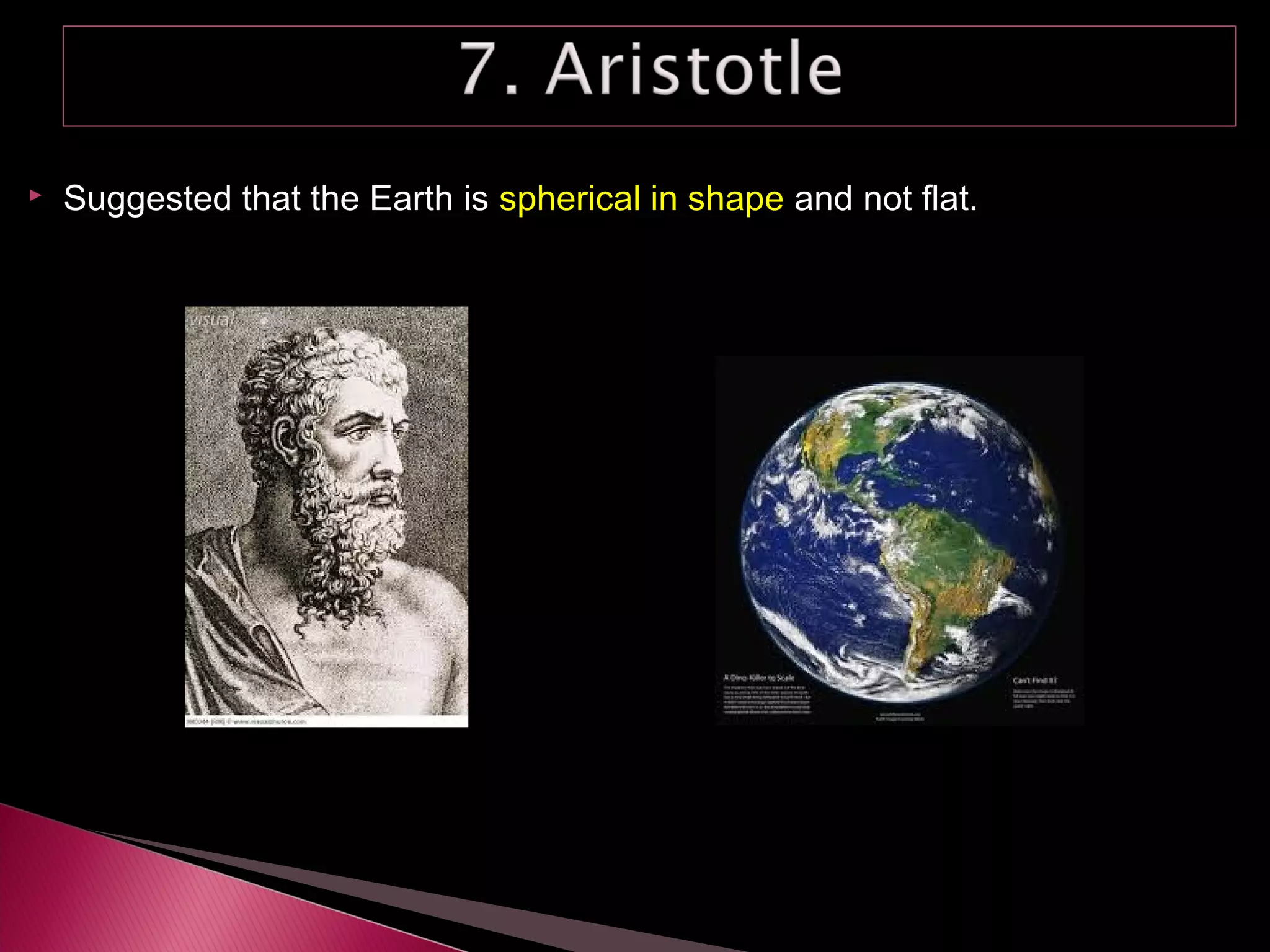
 Suggested that the Earth is spherical in shape and not flat.
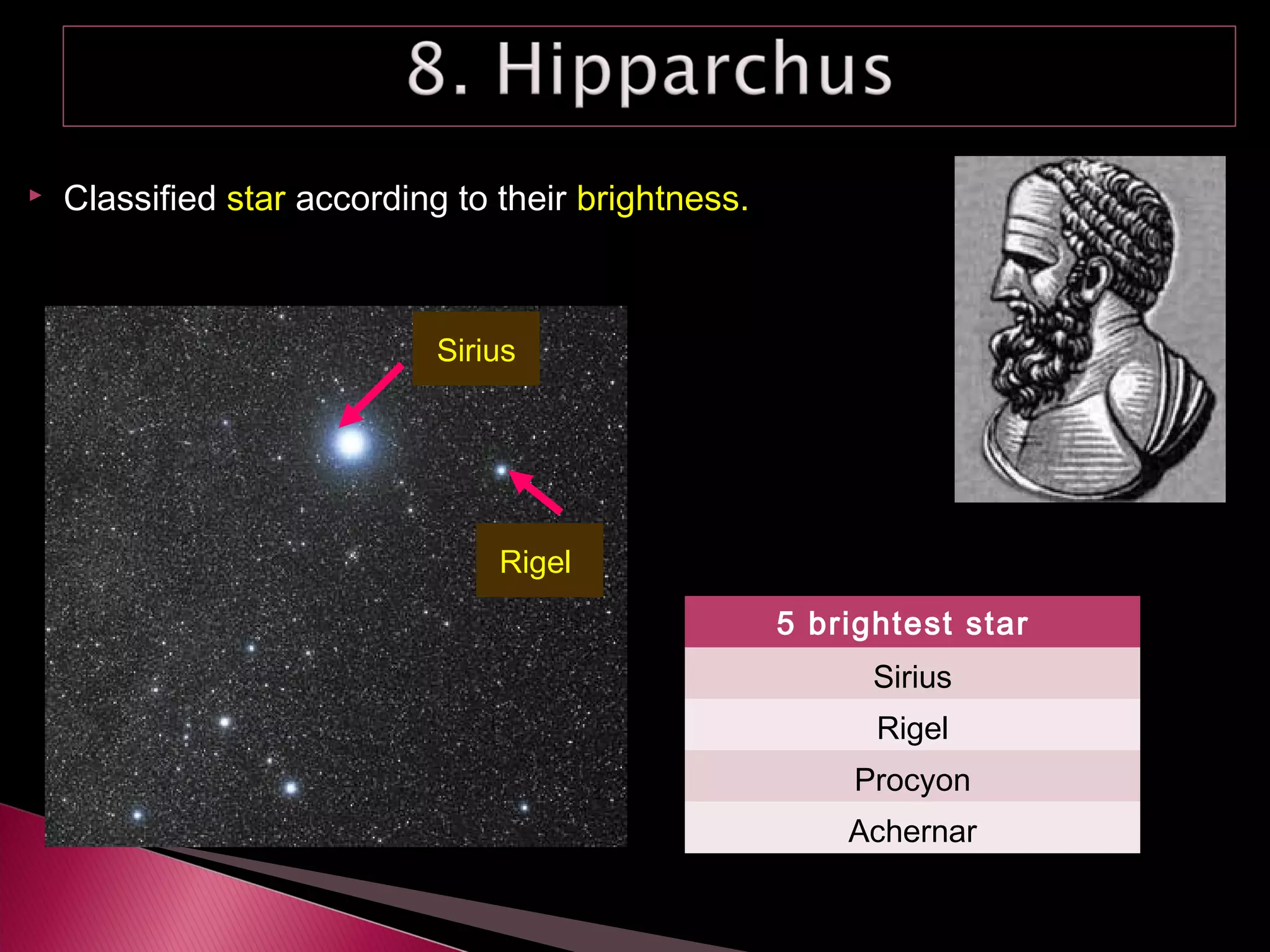
 Classified star according to their brightness.
Rigel
Sirius
Sirius
Rigel
Procyon
Achernar
5 brightest star
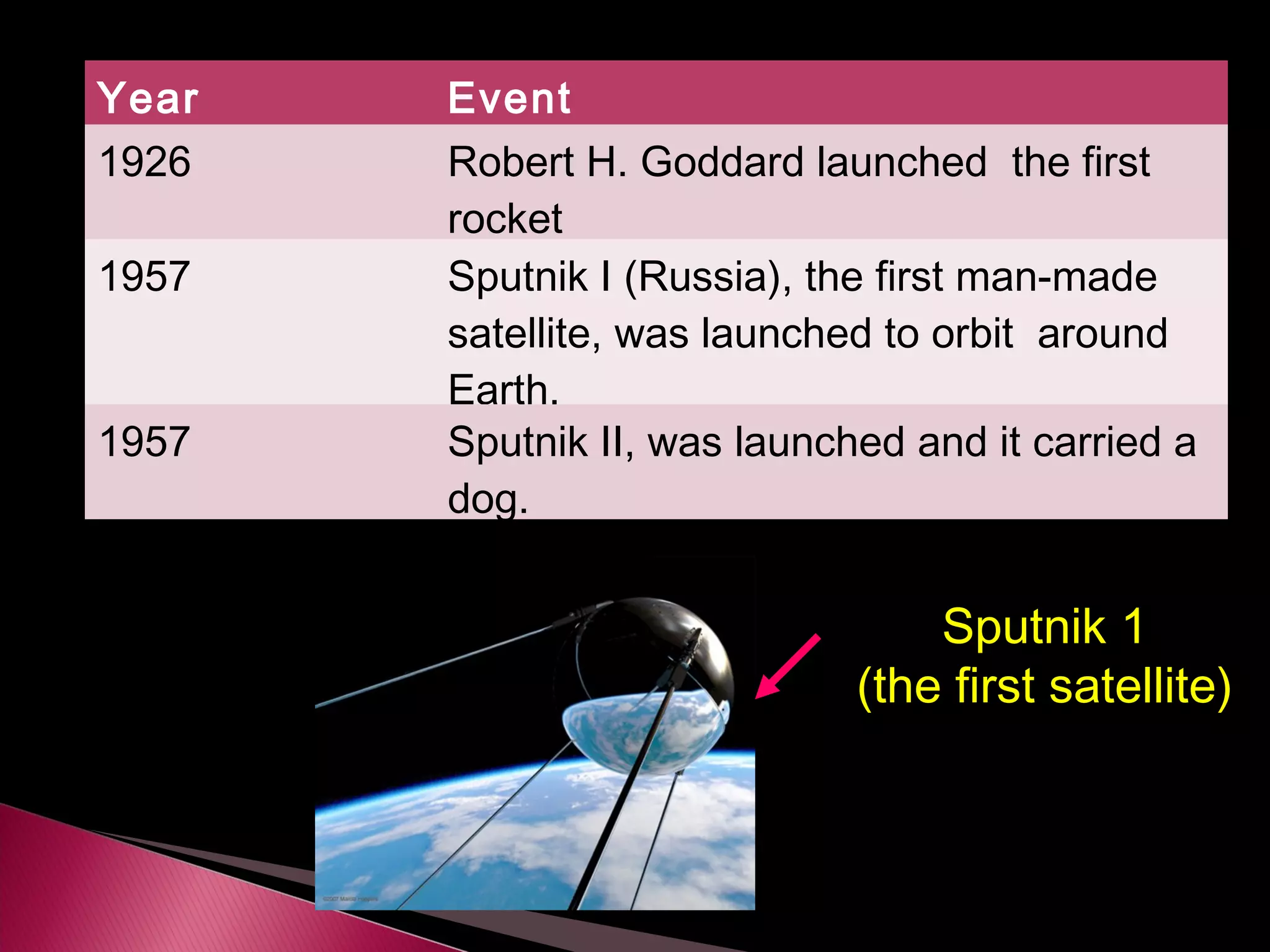
Year Event
1926 Robert H. Goddard launched the first
rocket
1957 Sputnik I (Russia), the first man-made
satellite, was launched to orbit around
Earth.
1957 Sputnik II, was launched and it carried a
dog.
Sputnik 1
(the first satellite)
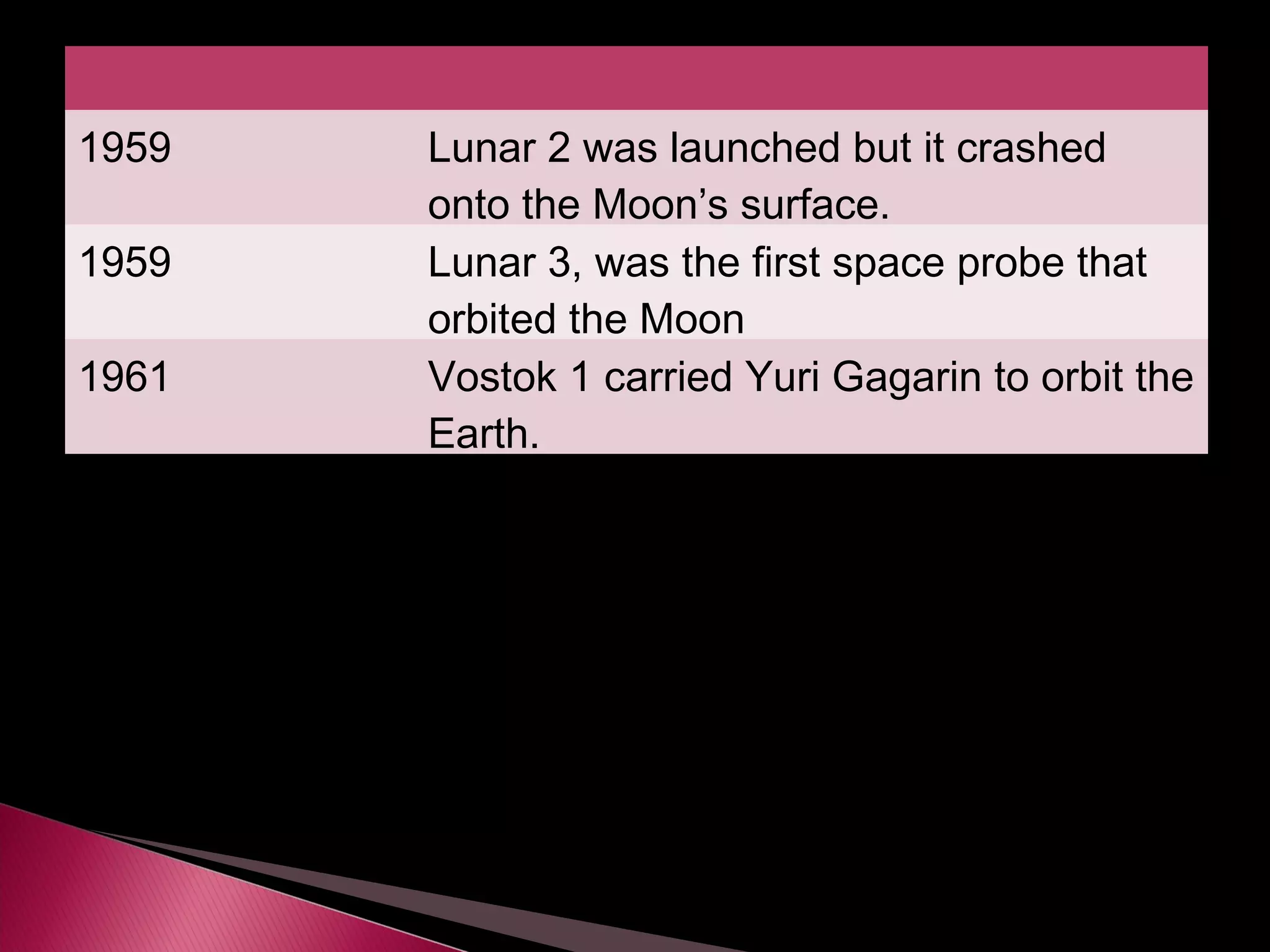
1959 Lunar 2 was launched but it crashed
onto the Moon’s surface.
1959 Lunar 3, was the first space probe that
orbited the Moon
1961 Vostok 1 carried Yuri Gagarin to orbit the
Earth.
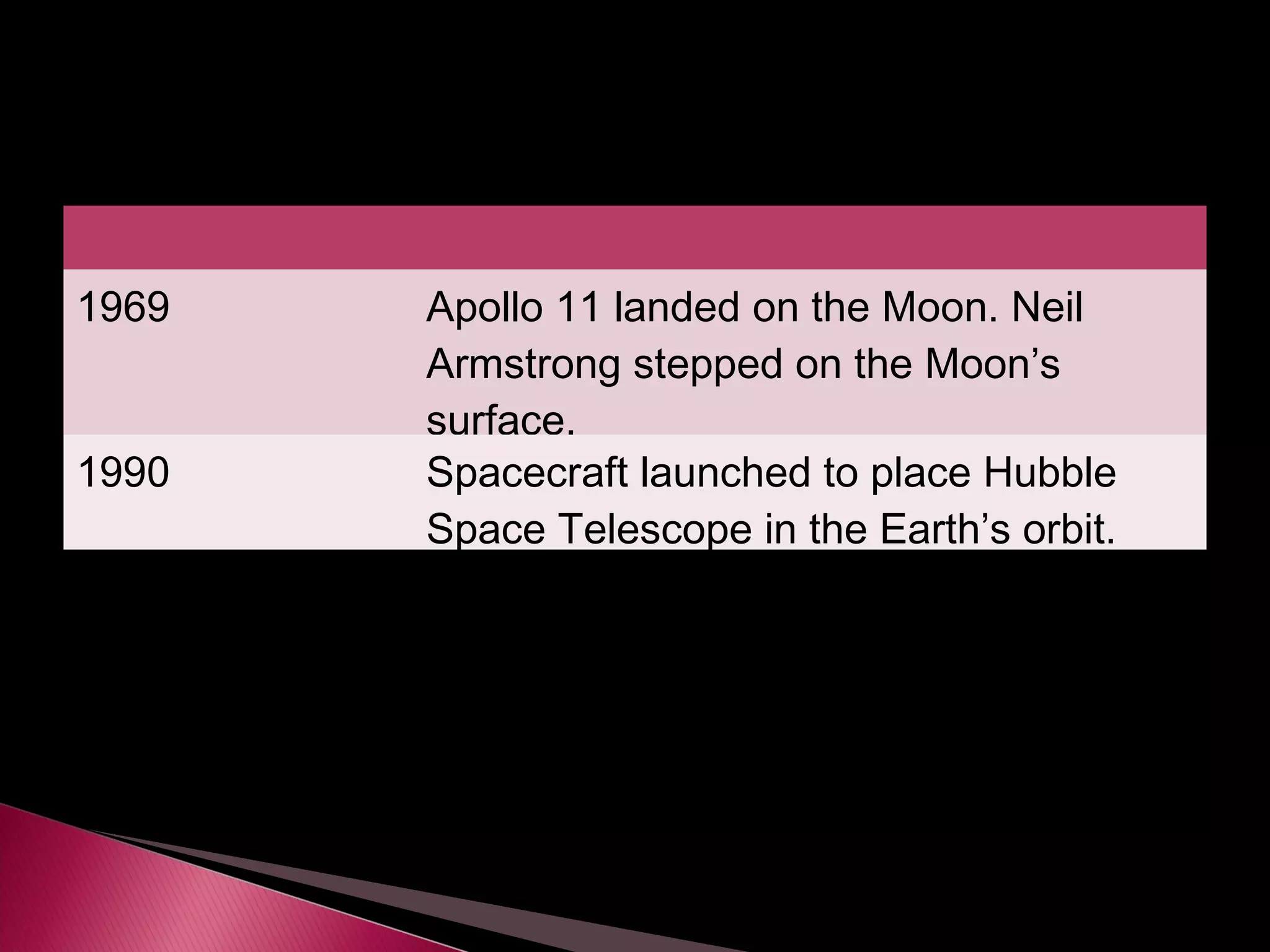
1969 Apollo 11 landed on the Moon. Neil
Armstrong stepped on the Moon’s
surface.
1990 Spacecraft launched to place Hubble
Space Telescope in the Earth’s orbit.
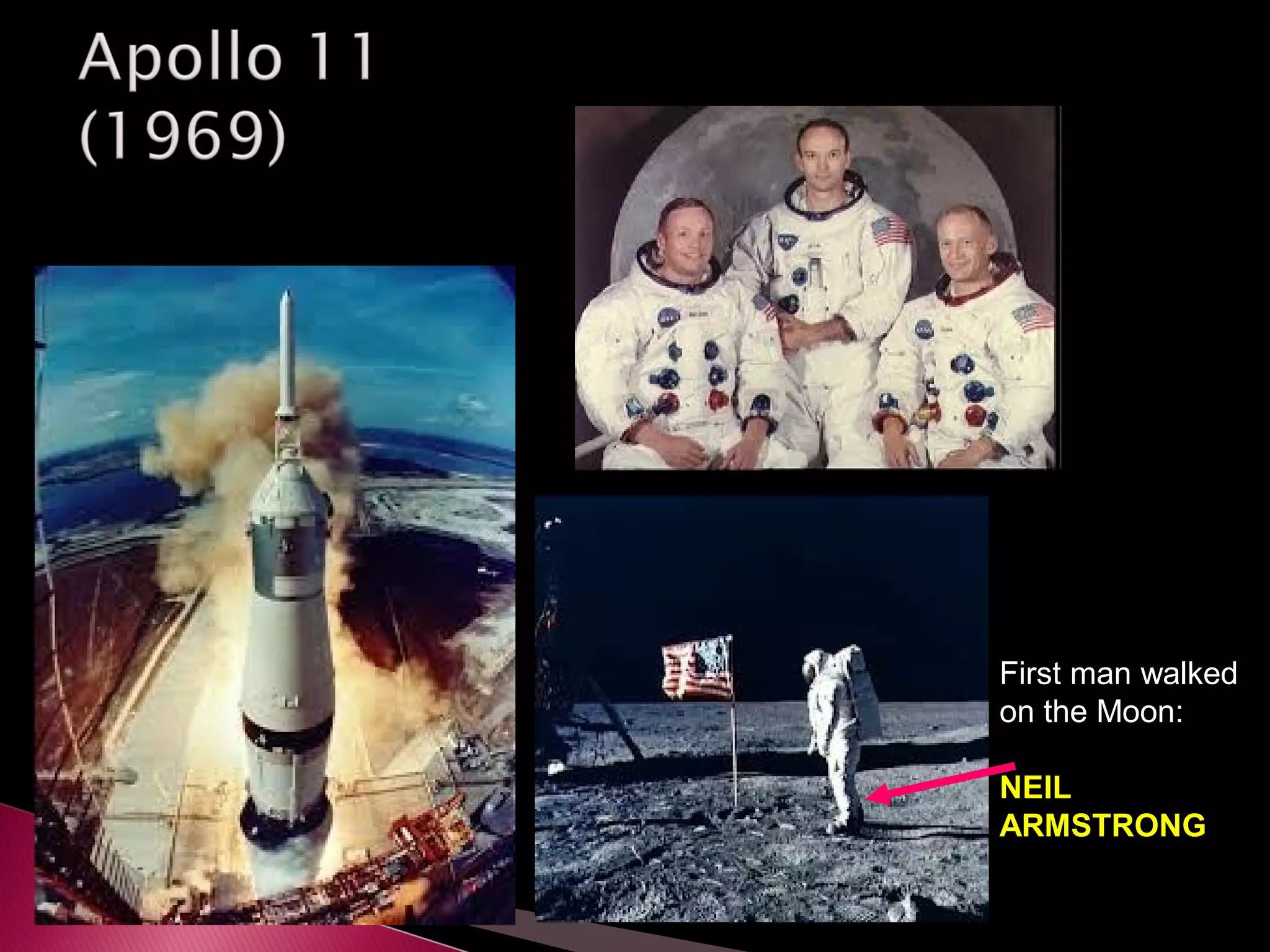
First man walked
on the Moon:
NEIL
ARMSTRONG
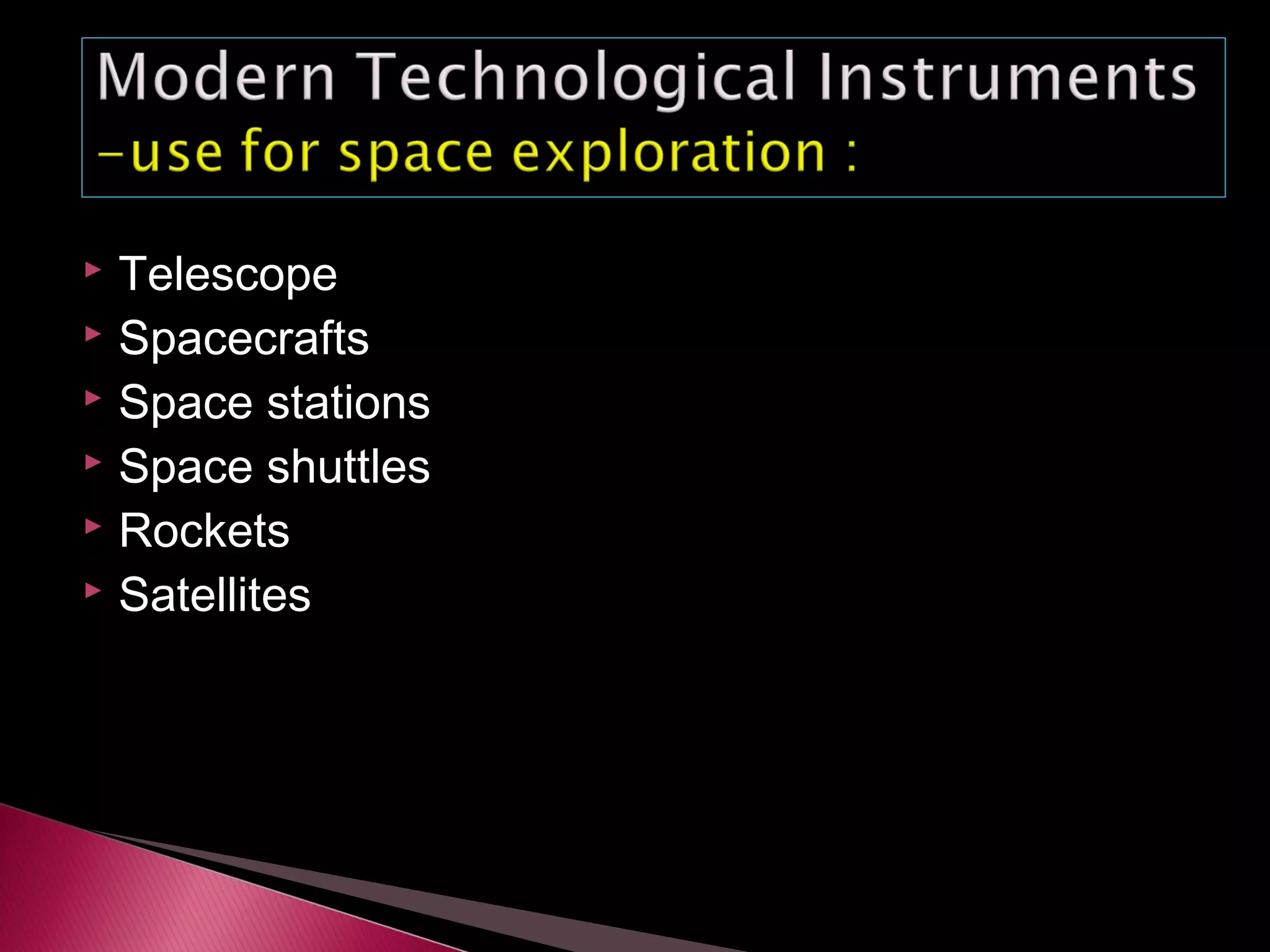
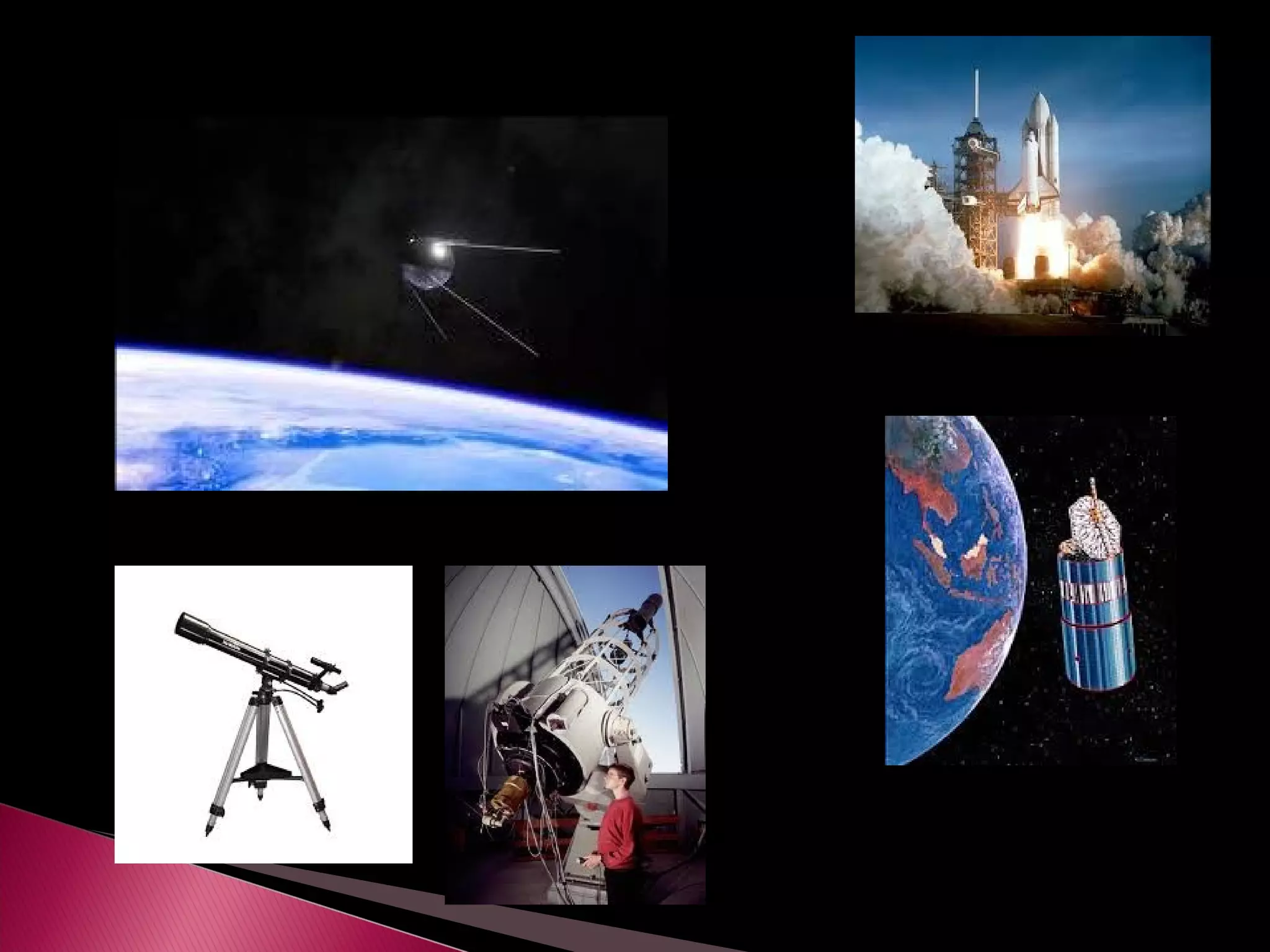
 Telescope
 Spacecrafts
 Space stations
 Space shuttles
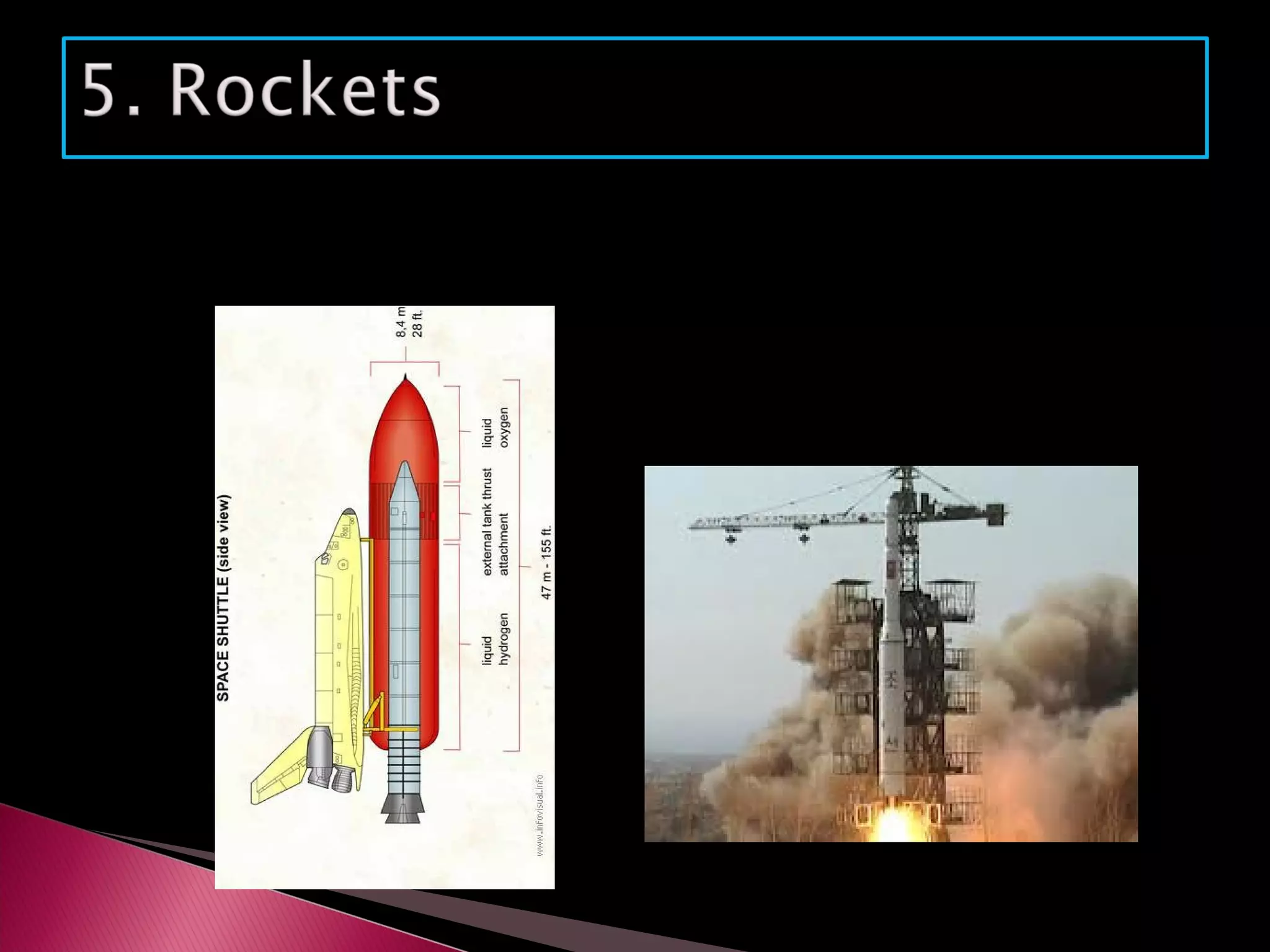
 Rockets
 Satellites
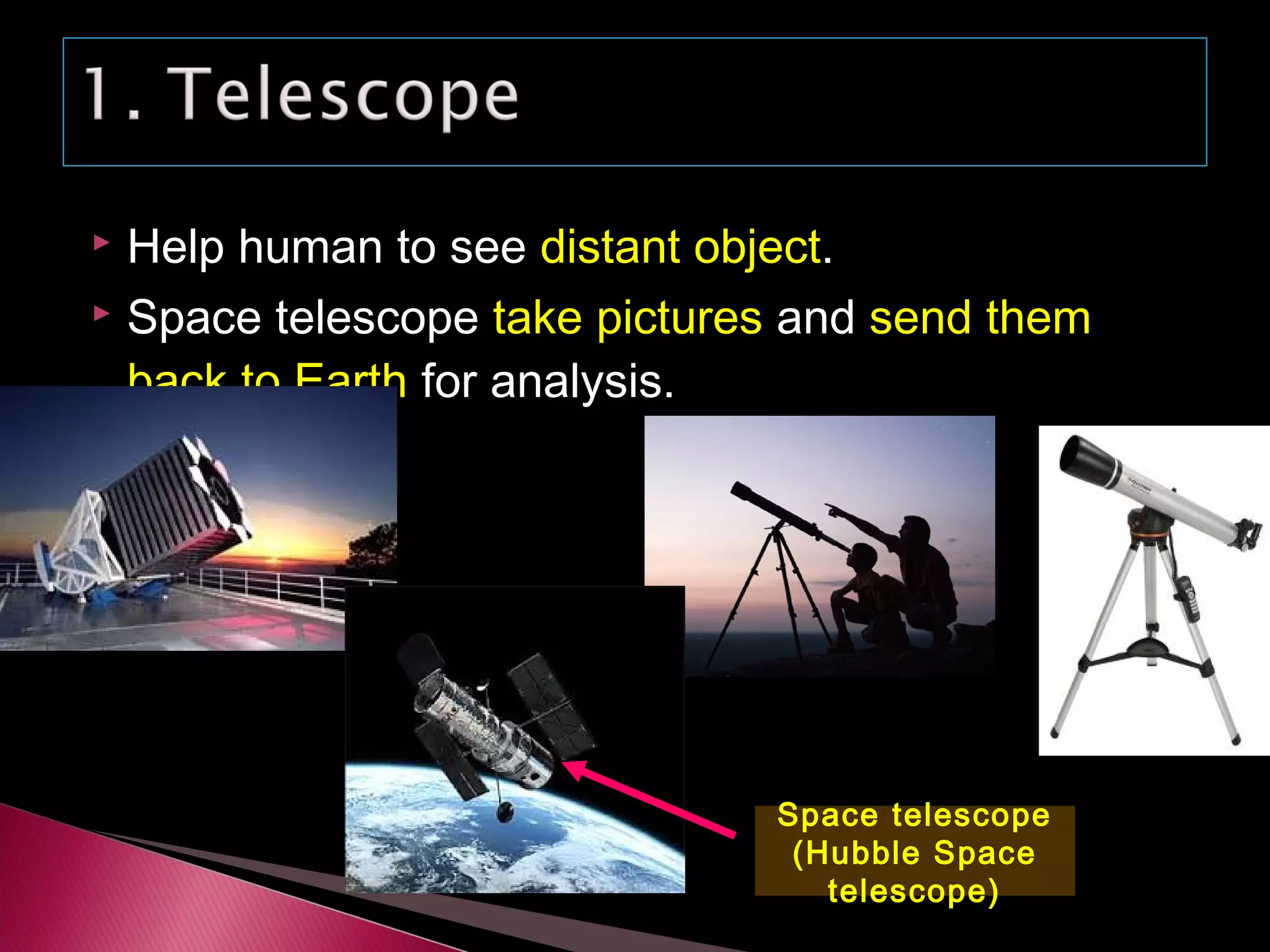
 Help human to see distant object.
 Space telescope take pictures and send them
back to Earth for analysis.
Space telescope
(Hubble Space
telescope)
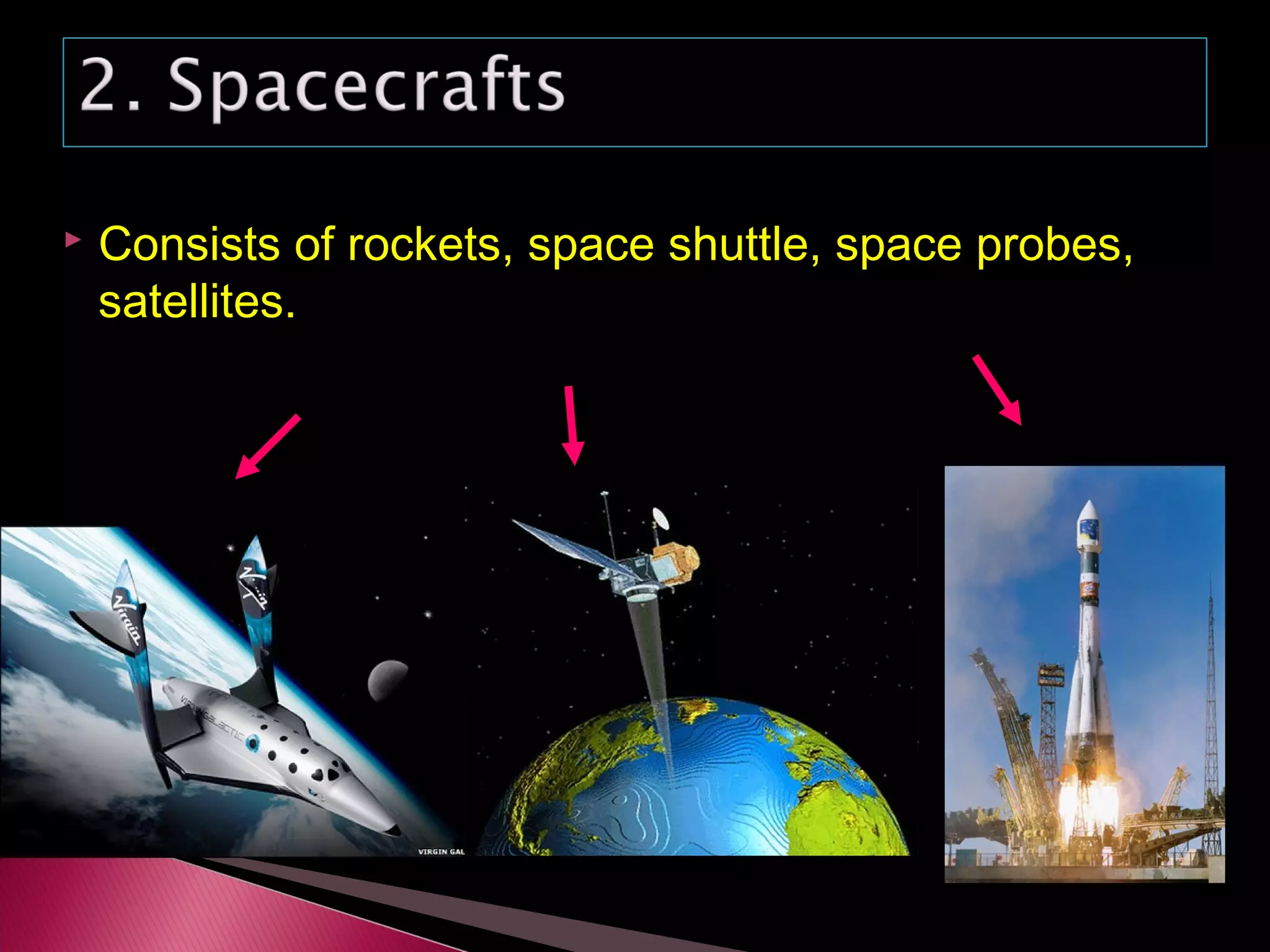
 Consists of rockets, space shuttle, space probes,
satellites.
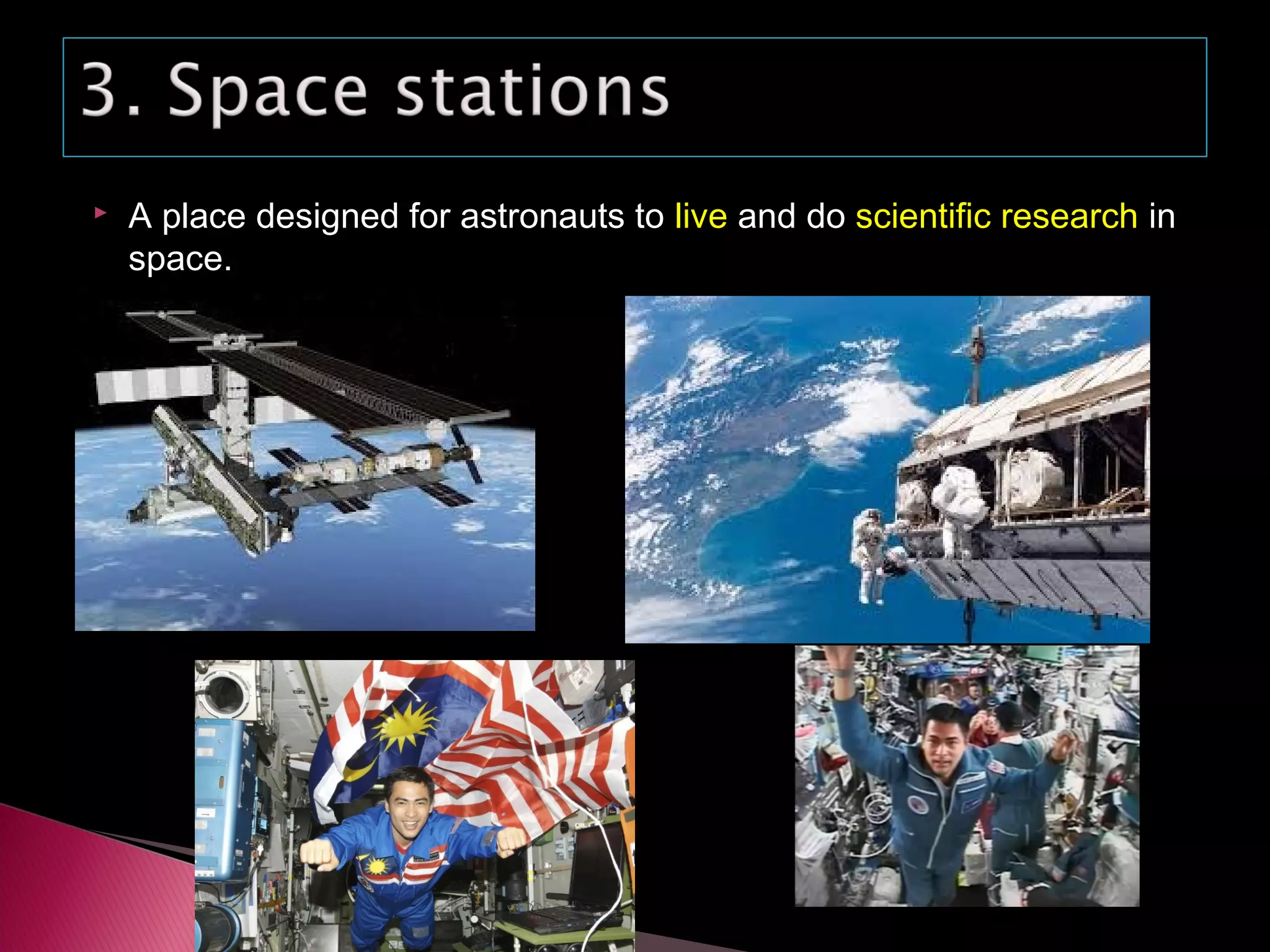
 A place designed for astronauts to live and do scientific research in
space.
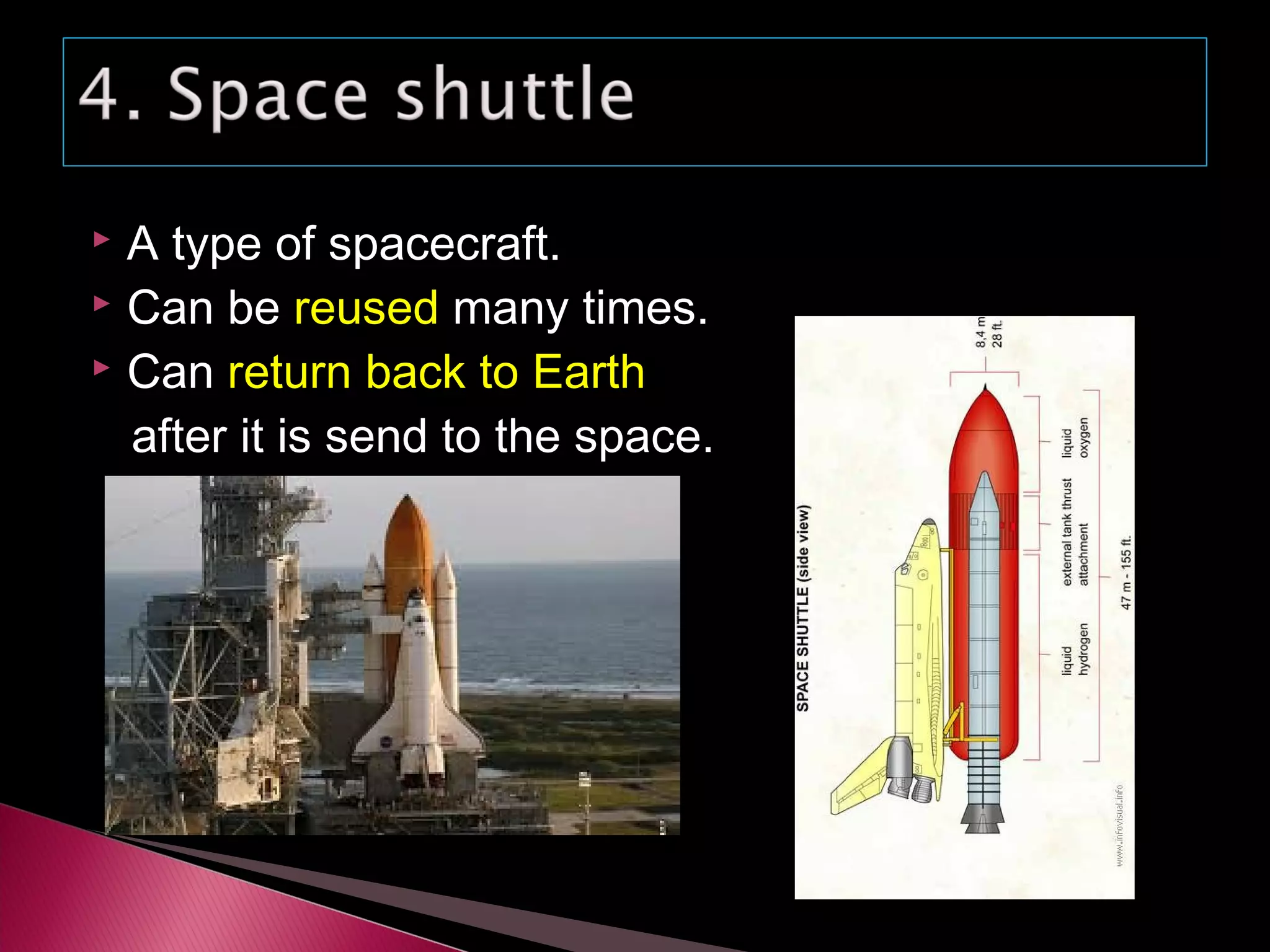
 A type of spacecraft.
 Can be reused many times.
 Can return back to Earth
after it is send to the space.
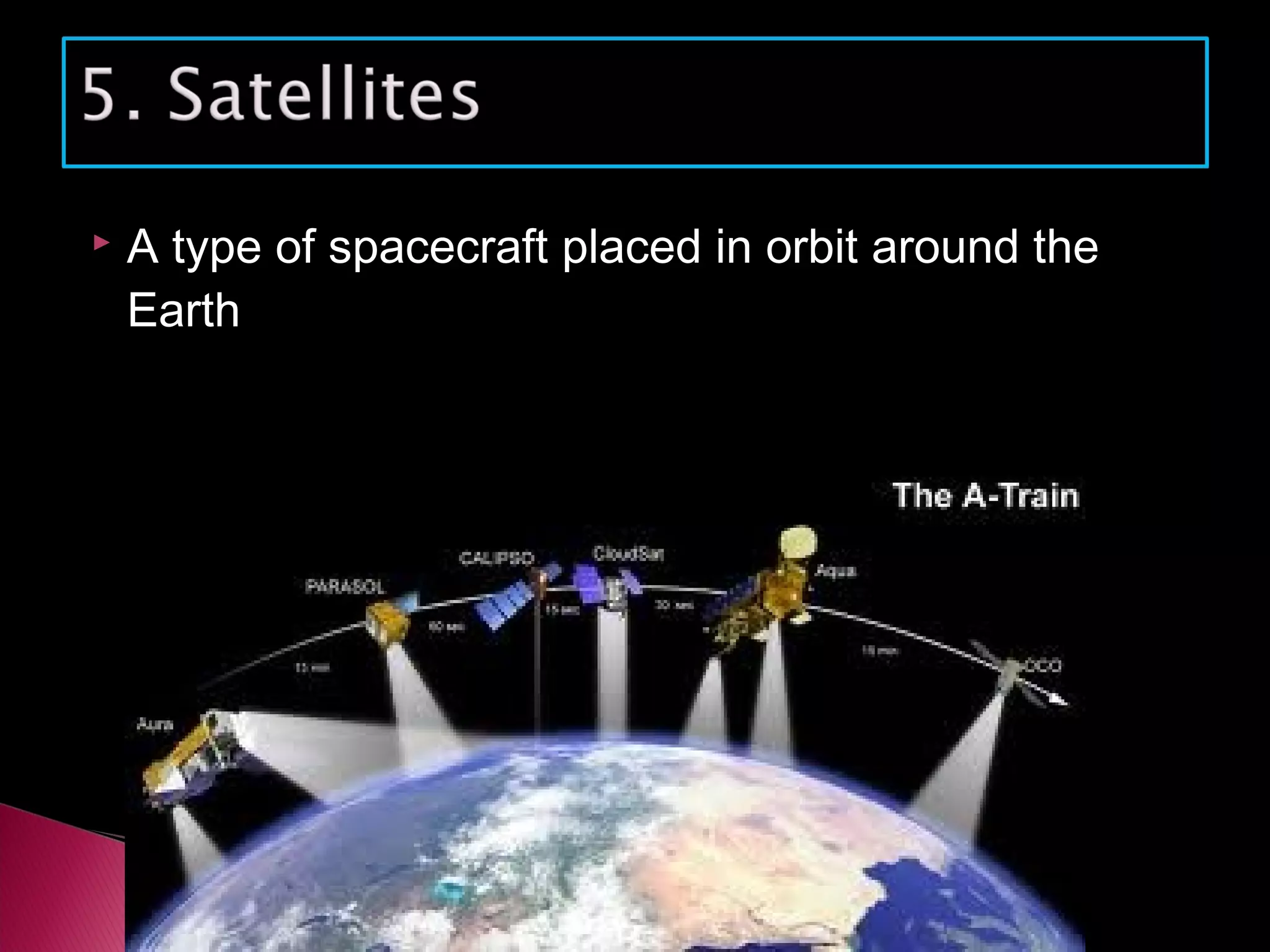
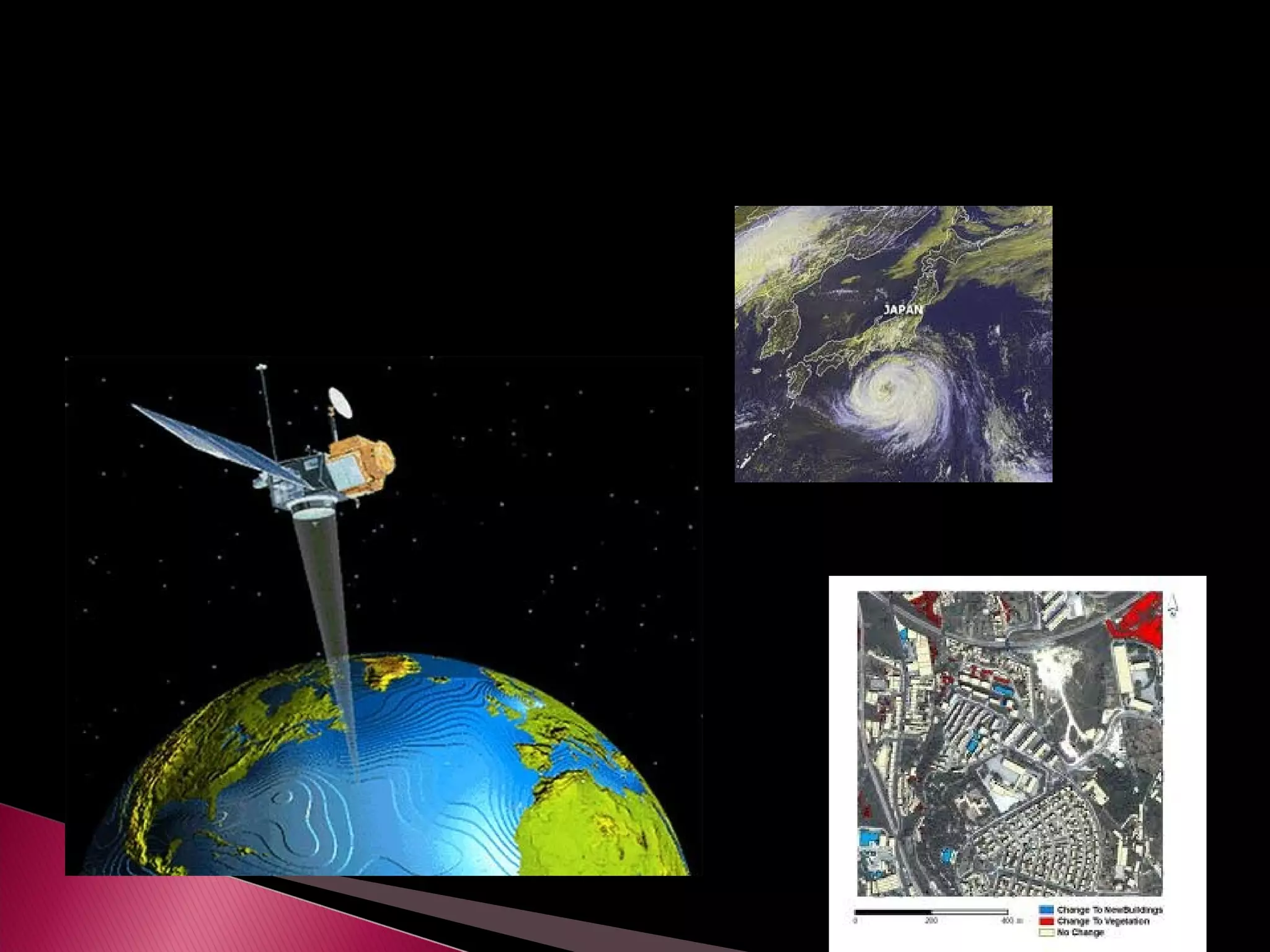
 A type of spacecraft placed in orbit around the
Earth
Chapter 10 space exploration

Chapter 10 space exploration

  • 1.
    Prepared by : Pn.Noor Hazwani bt. Alias SMK Sg. Maong,Kuching.
  • 2.
     A studythat investigates natural objects in space such as planets, stars, and others.  one of the oldest branches of science.
  • 4.
     During 2nd century, Suggested that the Earth is the centre of the Solar System  the Sun and stars revolved around the Earth. The Earth (centre)
  • 5.
     During 16th century, He measured the movement of planets accurately.  Suggested that the Sun is the centre of the Solar System. . The Sun
  • 6.
     Invented thefirst astronomical telescope.
  • 7.
     Introduced thelaw of gravity.
  • 8.
     Stated thatthe Earth’s orbit is elliptical (oval) shape.
  • 9.
     Discovered theorbit of Halley’s comet.
  • 10.
     Suggested thatthe Earth is spherical in shape and not flat.
  • 11.
     Classified staraccording to their brightness. Rigel Sirius Sirius Rigel Procyon Achernar 5 brightest star
  • 12.
    Year Event 1926 RobertH. Goddard launched the first rocket 1957 Sputnik I (Russia), the first man-made satellite, was launched to orbit around Earth. 1957 Sputnik II, was launched and it carried a dog. Sputnik 1 (the first satellite)
  • 13.
    1959 Lunar 2was launched but it crashed onto the Moon’s surface. 1959 Lunar 3, was the first space probe that orbited the Moon 1961 Vostok 1 carried Yuri Gagarin to orbit the Earth.
  • 14.
    1969 Apollo 11landed on the Moon. Neil Armstrong stepped on the Moon’s surface. 1990 Spacecraft launched to place Hubble Space Telescope in the Earth’s orbit.
  • 15.
    First man walked onthe Moon: NEIL ARMSTRONG
  • 16.
     Telescope  Spacecrafts Space stations  Space shuttles  Rockets  Satellites
  • 17.
     Help humanto see distant object.  Space telescope take pictures and send them back to Earth for analysis. Space telescope (Hubble Space telescope)
  • 18.
     Consists ofrockets, space shuttle, space probes, satellites.
  • 19.
     A placedesigned for astronauts to live and do scientific research in space.
  • 20.
     A typeof spacecraft.  Can be reused many times.  Can return back to Earth after it is send to the space.
  • 21.
     A typeof spacecraft placed in orbit around the Earth