Understanding Public Policy
Fifteenth edition
Chapter 1
Policy Analysis
Copyright © 2017, 2013, 2011 Pearson Education, Inc. All Rights Reserved
Modules (1 of 2)
• Introduction: Policy Analysis
• 1.1: What Is Public Policy?
• 1.2: Why Study Public Policy?
• 1.3: What Can Be Learned from Policy Analysis?
• 1.4: Policy Analysis and Policy Advocacy
• 1.5: Policy Analysis and the Quest for Solutions to
America’s Problems
Copyright © 2017, 2013, 2011 Pearson Education, Inc. All Rights Reserved
Modules (2 of 2)
• 1.6: Policy Analysis as Art and Craft
• Summary: Policy Analysis
Copyright © 2017, 2013, 2011 Pearson Education, Inc. All Rights Reserved
Learning Objectives
•
1.1: Define public policy and its scope
•
1.2: Explain the need to study public policy
•
1.3: Classify three learnings from policy analysis
•
1.4: Distinguish between policy analysis and policy
advocacy
•
1.5: Evaluate policy analysis as a solution to America's
problems
•
1.6: Explain why policy analysis is both an art and a craft
Copyright © 2017, 2013, 2011 Pearson Education, Inc. All Rights Reserved
Introduction: Policy Analysis
• Answers three questions
• What governments do?
• Why do they do it?
• What differences do they make?
Copyright © 2017, 2013, 2011 Pearson Education, Inc. All Rights Reserved
1.1: What Is Public Policy? (1 of 2)
Objective: Define public policy and its scope
• 1.1.1: Definition of Policy
– Definition
– Public policies
• 1.1.2: Policy Expansion and Government Growth
– Growth
– Federal spending
Copyright © 2017, 2013, 2011 Pearson Education, Inc. All Rights Reserved
Figure 1.1: The Growth of Government
Copyright © 2017, 2013, 2011 Pearson Education, Inc. All Rights Reserved
1.1: What Is Public Policy? (2 of 2)
Objective: Define public policy and its scope
• 1.1.3: Scope of Public Policy
– Not everything is reflected
– Government federal spending
Copyright © 2017, 2013, 2011 Pearson Education, Inc. All Rights Reserved
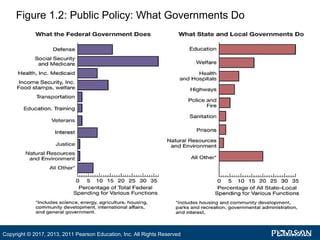
Figure 1.2: Public Policy: What Governments Do
Copyright © 2017, 2013, 2011 Pearson Education, Inc. All Rights Reserved
1.2: Why Study Public Policy?
Objective: Explain the need to study public policy
– Study of politics
– Study of public policy
Copyright © 2017, 2013, 2011 Pearson Education, Inc. All Rights Reserved
1.3: What Can Be Learned from Policy
Analysis? (1 of 2)
Objective: Classify three learnings from policy analysis
• 1.3.1: Description
– What is the government doing?
– Examples
• 1.3.2: Causes
– Definition
– Examples
Copyright © 2017, 2013, 2011 Pearson Education, Inc. All Rights Reserved
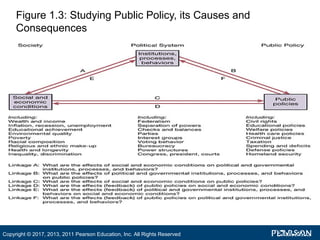
Figure 1.3: Studying Public Policy, its Causes and
Consequences
Copyright © 2017, 2013, 2011 Pearson Education, Inc. All Rights Reserved
1.3: What Can Be Learned from Policy
Analysis? (2 of 2)
Objective: Classify three learnings from policy analysis
• 1.3.3: Consequences
– Inquire about consequences
– Examples
Copyright © 2017, 2013, 2011 Pearson Education, Inc. All Rights Reserved
1.4: Policy Analysis and Policy
Advocacy
Objective: Distinguish between policy analysis and policy advocacy
– Policy analysis
– Policy advocacy
– Conclusion
Copyright © 2017, 2013, 2011 Pearson Education, Inc. All Rights Reserved
1.5: Policy Analysis and the Quest for
Solutions to America’s Problems (1 of 3)
Objective: Evaluate policy analysis as a solution to America's problems
• 1.5.1: Limits on Government Power
– Limitations
– Constraints
• 1.5.2: Disagreement over the Problem
– Disagreements
– Unresolvable issues
Copyright © 2017, 2013, 2011 Pearson Education, Inc. All Rights Reserved
1.5: Policy Analysis and the Quest for
Solutions to America’s Problems (2 of 3)
Objective: Evaluate policy analysis as a solution to America's problems
• 1.5.3: Subjectivity in Interpretation
– Policy analysis
– Social science research
• 1.5.4: Disagreement over the Problem
– Experiments on humans
– Modify behavior
Copyright © 2017, 2013, 2011 Pearson Education, Inc. All Rights Reserved
1.5: Policy Analysis and the Quest for
Solutions to America’s Problems (3 of 3)
Objective: Evaluate policy analysis as a solution to America's problems
• 1.5.5: Complexity of Human Behavior
– Impact of policies
– Contradictory solutions
Copyright © 2017, 2013, 2011 Pearson Education, Inc. All Rights Reserved
1.6: Policy Analysis as Art and Craft
Objective: Explain why policy analysis is both an art and a craft
– Art and craft
– Aaron Wildavsky’s explanation
Copyright © 2017, 2013, 2011 Pearson Education, Inc. All Rights Reserved
Summary: Policy Analysis
• Finding what governments do, why they do, what
differences it makes
• Scope of public policy has expanded
• Systems model relates societal condition to political
institutions, processes, outcomes
• Policy analysis often limited by disagreements
Copyright © 2017, 2013, 2011 Pearson Education, Inc. All Rights Reserved

Chapter 1 policy analysis (Pols 3346-D82)

  • 1.
    Understanding Public Policy Fifteenthedition Chapter 1 Policy Analysis Copyright © 2017, 2013, 2011 Pearson Education, Inc. All Rights Reserved
  • 2.
    Modules (1 of2) • Introduction: Policy Analysis • 1.1: What Is Public Policy? • 1.2: Why Study Public Policy? • 1.3: What Can Be Learned from Policy Analysis? • 1.4: Policy Analysis and Policy Advocacy • 1.5: Policy Analysis and the Quest for Solutions to America’s Problems Copyright © 2017, 2013, 2011 Pearson Education, Inc. All Rights Reserved
  • 3.
    Modules (2 of2) • 1.6: Policy Analysis as Art and Craft • Summary: Policy Analysis Copyright © 2017, 2013, 2011 Pearson Education, Inc. All Rights Reserved
  • 4.
    Learning Objectives • 1.1: Definepublic policy and its scope • 1.2: Explain the need to study public policy • 1.3: Classify three learnings from policy analysis • 1.4: Distinguish between policy analysis and policy advocacy • 1.5: Evaluate policy analysis as a solution to America's problems • 1.6: Explain why policy analysis is both an art and a craft Copyright © 2017, 2013, 2011 Pearson Education, Inc. All Rights Reserved
  • 5.
    Introduction: Policy Analysis •Answers three questions • What governments do? • Why do they do it? • What differences do they make? Copyright © 2017, 2013, 2011 Pearson Education, Inc. All Rights Reserved
  • 6.
    1.1: What IsPublic Policy? (1 of 2) Objective: Define public policy and its scope • 1.1.1: Definition of Policy – Definition – Public policies • 1.1.2: Policy Expansion and Government Growth – Growth – Federal spending Copyright © 2017, 2013, 2011 Pearson Education, Inc. All Rights Reserved
  • 7.
    Figure 1.1: TheGrowth of Government Copyright © 2017, 2013, 2011 Pearson Education, Inc. All Rights Reserved
  • 8.
    1.1: What IsPublic Policy? (2 of 2) Objective: Define public policy and its scope • 1.1.3: Scope of Public Policy – Not everything is reflected – Government federal spending Copyright © 2017, 2013, 2011 Pearson Education, Inc. All Rights Reserved
  • 9.
    Figure 1.2: PublicPolicy: What Governments Do Copyright © 2017, 2013, 2011 Pearson Education, Inc. All Rights Reserved
  • 10.
    1.2: Why StudyPublic Policy? Objective: Explain the need to study public policy – Study of politics – Study of public policy Copyright © 2017, 2013, 2011 Pearson Education, Inc. All Rights Reserved
  • 11.
    1.3: What CanBe Learned from Policy Analysis? (1 of 2) Objective: Classify three learnings from policy analysis • 1.3.1: Description – What is the government doing? – Examples • 1.3.2: Causes – Definition – Examples Copyright © 2017, 2013, 2011 Pearson Education, Inc. All Rights Reserved
  • 12.
    Figure 1.3: StudyingPublic Policy, its Causes and Consequences Copyright © 2017, 2013, 2011 Pearson Education, Inc. All Rights Reserved
  • 13.
    1.3: What CanBe Learned from Policy Analysis? (2 of 2) Objective: Classify three learnings from policy analysis • 1.3.3: Consequences – Inquire about consequences – Examples Copyright © 2017, 2013, 2011 Pearson Education, Inc. All Rights Reserved
  • 14.
    1.4: Policy Analysisand Policy Advocacy Objective: Distinguish between policy analysis and policy advocacy – Policy analysis – Policy advocacy – Conclusion Copyright © 2017, 2013, 2011 Pearson Education, Inc. All Rights Reserved
  • 15.
    1.5: Policy Analysisand the Quest for Solutions to America’s Problems (1 of 3) Objective: Evaluate policy analysis as a solution to America's problems • 1.5.1: Limits on Government Power – Limitations – Constraints • 1.5.2: Disagreement over the Problem – Disagreements – Unresolvable issues Copyright © 2017, 2013, 2011 Pearson Education, Inc. All Rights Reserved
  • 16.
    1.5: Policy Analysisand the Quest for Solutions to America’s Problems (2 of 3) Objective: Evaluate policy analysis as a solution to America's problems • 1.5.3: Subjectivity in Interpretation – Policy analysis – Social science research • 1.5.4: Disagreement over the Problem – Experiments on humans – Modify behavior Copyright © 2017, 2013, 2011 Pearson Education, Inc. All Rights Reserved
  • 17.
    1.5: Policy Analysisand the Quest for Solutions to America’s Problems (3 of 3) Objective: Evaluate policy analysis as a solution to America's problems • 1.5.5: Complexity of Human Behavior – Impact of policies – Contradictory solutions Copyright © 2017, 2013, 2011 Pearson Education, Inc. All Rights Reserved
  • 18.
    1.6: Policy Analysisas Art and Craft Objective: Explain why policy analysis is both an art and a craft – Art and craft – Aaron Wildavsky’s explanation Copyright © 2017, 2013, 2011 Pearson Education, Inc. All Rights Reserved
  • 19.
    Summary: Policy Analysis •Finding what governments do, why they do, what differences it makes • Scope of public policy has expanded • Systems model relates societal condition to political institutions, processes, outcomes • Policy analysis often limited by disagreements Copyright © 2017, 2013, 2011 Pearson Education, Inc. All Rights Reserved

Editor's Notes

  • #7 1.1.1: Definition of Policy Point 1- Definition To do or not to do Regulates conflict with society Organize society to carry on conflict with other societies Distribute symbolic rewards and material services Extract money from society Point 2- Public policies Regulate behavior Organize bureaucracies Distribute benefits Extract taxes All these things at once 1.1.2: Policy Expansion and Government Growth Point 1- Growth Policy designed to alleviate personal discomfort Measured by gross domestic product Less than 8 percent in last century In 1960s and 1970s, government expanded in size In 1990s, federal spending less than 20 percent of GDP Point 2- Federal spending Dramatic increase under Obama administration 25 percent of GDP in 2009, including a stimulus package Was kept close to 24 percent of GDP Total government spending 37 percent of GDP
  • #8 President Barack Obama signs the Patient Protection and Affordable Care Act Signed in the East Room of the White House This bill greatly expands the scope of public policy in America
  • #9 1.1.3: Scope of Public Policy Point 1- Not everything is reflected Environmental regulations and health insurance requirements Government spending a common indicator Point 2- Government federal spending Spends more on Social Security and Medicare State and local government bear the burden of education Welfare and health are more concentrated than highways
  • #10 Social Security and Medicare consume large share in federal spending Education is the largest item in local and state government spending
  • #11 Point 1- Study of politics Political science: study of who gets what, when, how More than study of governmental institutions More than study of political processes Point 2- Study of public policy Study of causes and consequences of government activity Description of content Analysis of impact Inquiry into effects Evaluation of consequences
  • #12 1.3.1: Description Point 1- What is the government doing? Can learn what government is doing in various fields An indispensable part of everyone’s education Point 2- Examples What did the Supreme Court rule in the Bakke case? What is actually mandated in the Patient Protection and Affordable Care Act? How much money are we paying in taxes? 1.3.2: Causes Point 1- Definition Inquire about the causes Why do governments do what they do? Inquire about effects of political institutions, processes, behaviors Point 2- Examples What effect does increasing older population have on Social Security and Medicare programs? What are the effects of recession on government spending?
  • #13 Linkage between political system, public policy, and social and economic conditions Systems model Triangular linkage
  • #14 1.3.3: Consequences Point 1- Inquire about consequences Learning about consequences Policy evaluation Effect of public policy on political institutions and processes Point 2- Examples What is the impact of economic policies on the president’s popularity? Does capital punishment help deter crime? Policies are independent variables Political, social, economic, cultural impacts are dependent variables
  • #15 Point 1- Policy analysis Attack critical policy issues with tools of systematic inquiry It is a socially relevant activity It is a prerequisite to prescription, advocacy, activism Point 2- Policy advocacy Prescribing what policies to pursue Requires rhetoric, persuasion, organization, activism skills Point 3- Conclusion Policy issues decided by political actors Social science research does not fare well in political arena Policy analysis sometimes produces unexpected findings Public policies do not always work as intended Political interest will accept, reject, or use findings
  • #16 1.5.1: Limits on Government Power Point 1- Limitations Easy to exaggerate the importance of policies Not clear if policies can cure all of society’s ill Point 2- Constraints Many powerful social forces Patterns of family life, class structure, and so on These forces not easily managed Some of society’s problems very intractable 1.5.2: Disagreement over the Problem Point 1- Disagreements Policy analysis cannot give solutions Acquisition of verbal and quantitative skills not enough Problems more broadly defined than raising achievement goals Point 2- Unresolvable issues Policy analysis cannot resolve value conflicts Not much to contribute in policymaking Cannot determine what is truly valuable for society
  • #17 1.5.3: Subjectivity in Interpretation Point 1- Policy analysis Deals with subjective topics Must rely on interpretation of results Professionals interpret results differently Point 2- Social science research Cannot be value-free Selection of topic affected by one’s values 1.5.4: Limitations on Design of Human Research Point 1- Experiments on humans Some controlled experiments cannot be performed Cannot pinpoint what causes educational achievement Point 2- Modify behavior When humans know they are being observed Difficult to know the exact cause
  • #18 1.5.5: Complexity of Human Behavior Point 1- Impact of policies Social problems very complex Social scientists often do not have solutions Society’s problems shaped by so many variables Point 2- Contradictory solutions Absence of reliable scientific knowledge Argue that no advice better than contradictory advice Policymakers decide on whatever little knowledge available Can measure impact of current and past policies Make information available for policymakers
  • #19 Point 1- Art and craft Art because it requires insight, creativity, imagination Craft because it requires some knowledge Policy analysis a subfield of all traditional disciplines Point 2- Aaron Wildavsky’s explanation There can be no fixed program for policy analysis Explains what has gone wrong instead of what has gone right If current efforts were judged correctly, there would be no need for analysis