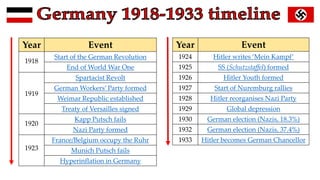
Year Event
1918
Start of the German Revolution
End of World War One
1919
Spartacist Revolt
German Workers’ Party formed
Weimar Republic established
Treaty of Versailles signed
1920
Kapp Putsch fails
Nazi Party formed
1923
France/Belgium occupy the Ruhr
Munich Putsch fails
Hyperinflation in Germany
Year Event
1924 Hitler writes ‘Mein Kampf’
1925 SS (Schutzstaffel) formed
1926 Hitler Youth formed
1927 Start of Nuremburg rallies
1928 Hitler reorganises Nazi Party
1929 Global depression
1930 German election (Nazis, 18.3%)
1932 German election (Nazis, 37.4%)
1933 Hitler becomes German Chancellor
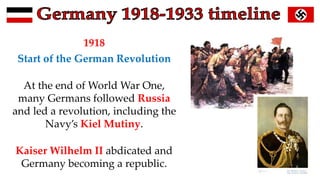
1918
Start of the German Revolution
At the end of World War One,
many Germans followed Russia
and led a revolution, including the
Navy’s Kiel Mutiny.
Kaiser Wilhelm II abdicated and
Germany becoming a republic.
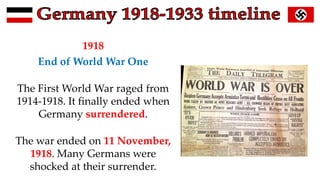
1918
End of World War One
The First World War raged from
1914-1918. It finally ended when
Germany surrendered.
The war ended on 11 November,
1918. Many Germans were
shocked at their surrender.
1919
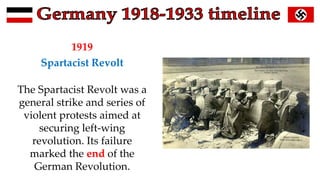
Spartacist Revolt
The Spartacist Revolt was a
general strike and series of
violent protests aimed at
securing left-wing
revolution. Its failure
marked the end of the
German Revolution.
1919
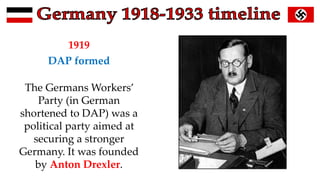
DAP formed
The Germans Workers’
Party (in German
shortened to DAP) was a
political party aimed at
securing a stronger
Germany. It was founded
by Anton Drexler.
1919
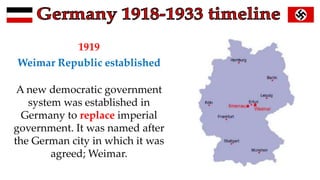
Weimar Republic established
A new democratic government
system was established in
Germany to replace imperial
government. It was named after
the German city in which it was
agreed; Weimar.
1919
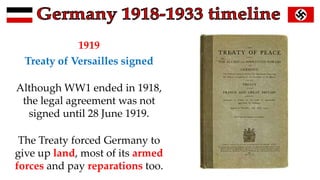
Treaty of Versailles signed
Although WW1 ended in 1918,
the legal agreement was not
signed until 28 June 1919.
The Treaty forced Germany to
give up land, most of its armed
forces and pay reparations too.
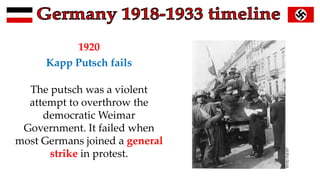
1920
Kapp Putsch fails
The putsch was a violent
attempt to overthrow the
democratic Weimar
Government. It failed when
most Germans joined a general
strike in protest.
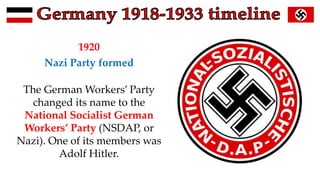
1920
Nazi Party formed
The German Workers’ Party
changed its name to the
National Socialist German
Workers’ Party (NSDAP, or
Nazi). One of its members was
Adolf Hitler.
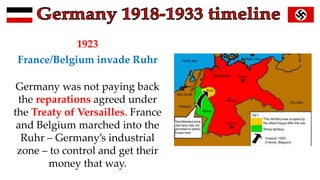
1923
France/Belgium invade Ruhr
Germany was not paying back
the reparations agreed under
the Treaty of Versailles. France
and Belgium marched into the
Ruhr – Germany’s industrial
zone – to control and get their
money that way.
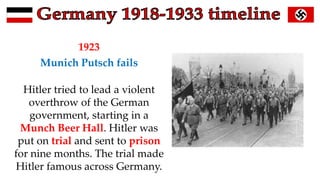
1923
Munich Putsch fails
Hitler tried to lead a violent
overthrow of the German
government, starting in a
Munch Beer Hall. Hitler was
put on trial and sent to prison
for nine months. The trial made
Hitler famous across Germany.
1923
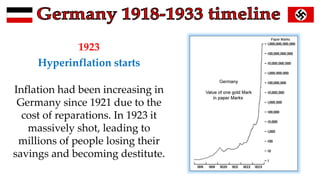
Hyperinflation starts
Inflation had been increasing in
Germany since 1921 due to the
cost of reparations. In 1923 it
massively shot, leading to
millions of people losing their
savings and becoming destitute.
1924
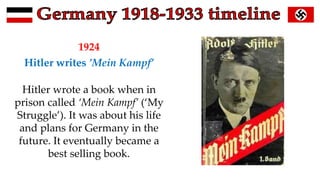
Hitler writes ’Mein Kampf’
Hitler wrote a book when in
prison called ‘Mein Kampf’ (‘My
Struggle’). It was about his life
and plans for Germany in the
future. It eventually became a
best selling book.
1925
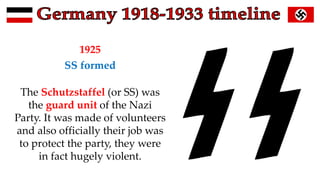
SS formed
The Schutzstaffel (or SS) was
the guard unit of the Nazi
Party. It was made of volunteers
and also officially their job was
to protect the party, they were
in fact hugely violent.
1926
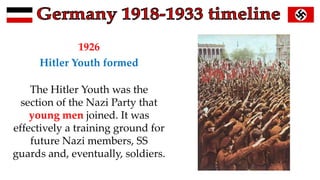
Hitler Youth formed
The Hitler Youth was the
section of the Nazi Party that
young men joined. It was
effectively a training ground for
future Nazi members, SS
guards and, eventually, soldiers.
1927
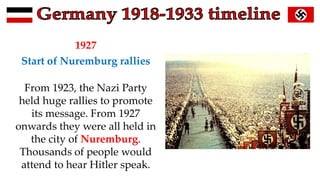
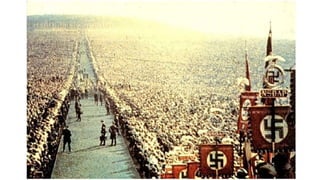
Start of Nuremburg rallies
From 1923, the Nazi Party
held huge rallies to promote
its message. From 1927
onwards they were all held in
the city of Nuremburg.
Thousands of people would
attend to hear Hitler speak.
1924-1928
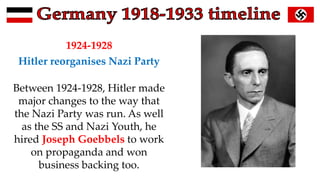
Hitler reorganises Nazi Party
Between 1924-1928, Hitler made
major changes to the way that
the Nazi Party was run. As well
as the SS and Nazi Youth, he
hired Joseph Goebbels to work
on propaganda and won
business backing too.
1929
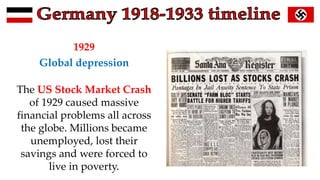
Global depression
The US Stock Market Crash
of 1929 caused massive
financial problems all across
the globe. Millions became
unemployed, lost their
savings and were forced to
live in poverty.
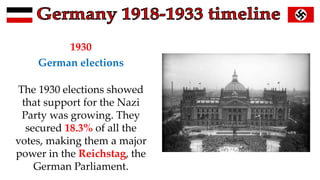
1930
German elections
The 1930 elections showed
that support for the Nazi
Party was growing. They
secured 18.3% of all the
votes, making them a major
power in the Reichstag, the
German Parliament.
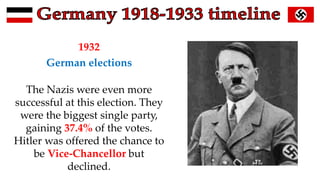
1932
German elections
The Nazis were even more
successful at this election. They
were the biggest single party,
gaining 37.4% of the votes.
Hitler was offered the chance to
be Vice-Chancellor but
declined.
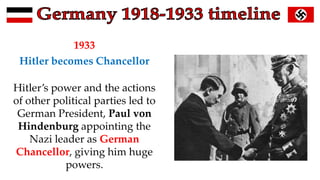
1933
Hitler becomes Chancellor
Hitler’s power and the actions
of other political parties led to
German President, Paul von
Hindenburg appointing the
Nazi leader as German
Chancellor, giving him huge
powers.

Germany 1918 133 timeline

  • 2.
    Year Event 1918 Start ofthe German Revolution End of World War One 1919 Spartacist Revolt German Workers’ Party formed Weimar Republic established Treaty of Versailles signed 1920 Kapp Putsch fails Nazi Party formed 1923 France/Belgium occupy the Ruhr Munich Putsch fails Hyperinflation in Germany Year Event 1924 Hitler writes ‘Mein Kampf’ 1925 SS (Schutzstaffel) formed 1926 Hitler Youth formed 1927 Start of Nuremburg rallies 1928 Hitler reorganises Nazi Party 1929 Global depression 1930 German election (Nazis, 18.3%) 1932 German election (Nazis, 37.4%) 1933 Hitler becomes German Chancellor
  • 3.
    1918 Start of theGerman Revolution At the end of World War One, many Germans followed Russia and led a revolution, including the Navy’s Kiel Mutiny. Kaiser Wilhelm II abdicated and Germany becoming a republic.
  • 4.
    1918 End of WorldWar One The First World War raged from 1914-1918. It finally ended when Germany surrendered. The war ended on 11 November, 1918. Many Germans were shocked at their surrender.
  • 5.
    1919 Spartacist Revolt The SpartacistRevolt was a general strike and series of violent protests aimed at securing left-wing revolution. Its failure marked the end of the German Revolution.
  • 6.
    1919 DAP formed The GermansWorkers’ Party (in German shortened to DAP) was a political party aimed at securing a stronger Germany. It was founded by Anton Drexler.
  • 7.
    1919 Weimar Republic established Anew democratic government system was established in Germany to replace imperial government. It was named after the German city in which it was agreed; Weimar.
  • 8.
    1919 Treaty of Versaillessigned Although WW1 ended in 1918, the legal agreement was not signed until 28 June 1919. The Treaty forced Germany to give up land, most of its armed forces and pay reparations too.
  • 9.
    1920 Kapp Putsch fails Theputsch was a violent attempt to overthrow the democratic Weimar Government. It failed when most Germans joined a general strike in protest.
  • 10.
    1920 Nazi Party formed TheGerman Workers’ Party changed its name to the National Socialist German Workers’ Party (NSDAP, or Nazi). One of its members was Adolf Hitler.
  • 11.
    1923 France/Belgium invade Ruhr Germanywas not paying back the reparations agreed under the Treaty of Versailles. France and Belgium marched into the Ruhr – Germany’s industrial zone – to control and get their money that way.
  • 12.
    1923 Munich Putsch fails Hitlertried to lead a violent overthrow of the German government, starting in a Munch Beer Hall. Hitler was put on trial and sent to prison for nine months. The trial made Hitler famous across Germany.
  • 13.
    1923 Hyperinflation starts Inflation hadbeen increasing in Germany since 1921 due to the cost of reparations. In 1923 it massively shot, leading to millions of people losing their savings and becoming destitute.
  • 14.
    1924 Hitler writes ’MeinKampf’ Hitler wrote a book when in prison called ‘Mein Kampf’ (‘My Struggle’). It was about his life and plans for Germany in the future. It eventually became a best selling book.
  • 15.
    1925 SS formed The Schutzstaffel(or SS) was the guard unit of the Nazi Party. It was made of volunteers and also officially their job was to protect the party, they were in fact hugely violent.
  • 16.
    1926 Hitler Youth formed TheHitler Youth was the section of the Nazi Party that young men joined. It was effectively a training ground for future Nazi members, SS guards and, eventually, soldiers.
  • 17.
    1927 Start of Nuremburgrallies From 1923, the Nazi Party held huge rallies to promote its message. From 1927 onwards they were all held in the city of Nuremburg. Thousands of people would attend to hear Hitler speak.
  • 19.
    1924-1928 Hitler reorganises NaziParty Between 1924-1928, Hitler made major changes to the way that the Nazi Party was run. As well as the SS and Nazi Youth, he hired Joseph Goebbels to work on propaganda and won business backing too.
  • 20.
    1929 Global depression The USStock Market Crash of 1929 caused massive financial problems all across the globe. Millions became unemployed, lost their savings and were forced to live in poverty.
  • 21.
    1930 German elections The 1930elections showed that support for the Nazi Party was growing. They secured 18.3% of all the votes, making them a major power in the Reichstag, the German Parliament.
  • 22.
    1932 German elections The Naziswere even more successful at this election. They were the biggest single party, gaining 37.4% of the votes. Hitler was offered the chance to be Vice-Chancellor but declined.
  • 23.
    1933 Hitler becomes Chancellor Hitler’spower and the actions of other political parties led to German President, Paul von Hindenburg appointing the Nazi leader as German Chancellor, giving him huge powers.